
Space Rescue Operations Market Report 2026
Global Outlook – By Service Type (Emergency Evacuation, On-Orbit Repair, Search And Rescue, Medical Assistance), By Vehicle Type (Manned, Unmanned), By Application (Commercial, Government, Military), By End-User (Space Agencies, Private Space Companies, Defense Organizations) – Market Size, Trends, Strategies, and Forecast to 2030
Space Rescue Operations Market Overview
• Space Rescue Operations market size has reached to $2.59 billion in 2025 • Expected to grow to $3.71 billion in 2030 at a compound annual growth rate (CAGR) of 7.4% • Growth Driver: The Escalating Number Of Space Missions Is Fueling The Market Growth Due To Increasing Demand For Communication And Emergency Support Capabilities • Market Trend: Public-Private Partnerships Strengthen Space Rescue Capabilities After ISS Emergency • North America was the largest region in 2025 and Asia-Pacific is the fastest growing region.What Is Covered Under Space Rescue Operations Market?
Space rescue operations refer to the planned or emergency actions taken to assist astronauts, spacecraft, or equipment in distress or malfunctioning space. These operations aim to ensure the safety and recovery of human life and assets in space environments such as low Earth orbit (LEO), lunar orbit, deep space, or other extraterrestrial surfaces. The main service types in space rescue operations include emergency evacuation, on-orbit repair, search and rescue, and medical assistance. Emergency evacuation refers to the rapid and reliable removal of astronauts or space assets from life-threatening situations to ensure their safety. Various vehicle types are used in these operations, including manned and unmanned vehicles. These services are applied across commercial, government, and military missions, and are utilized by various end users such as space agencies, private space companies, and defense organizations.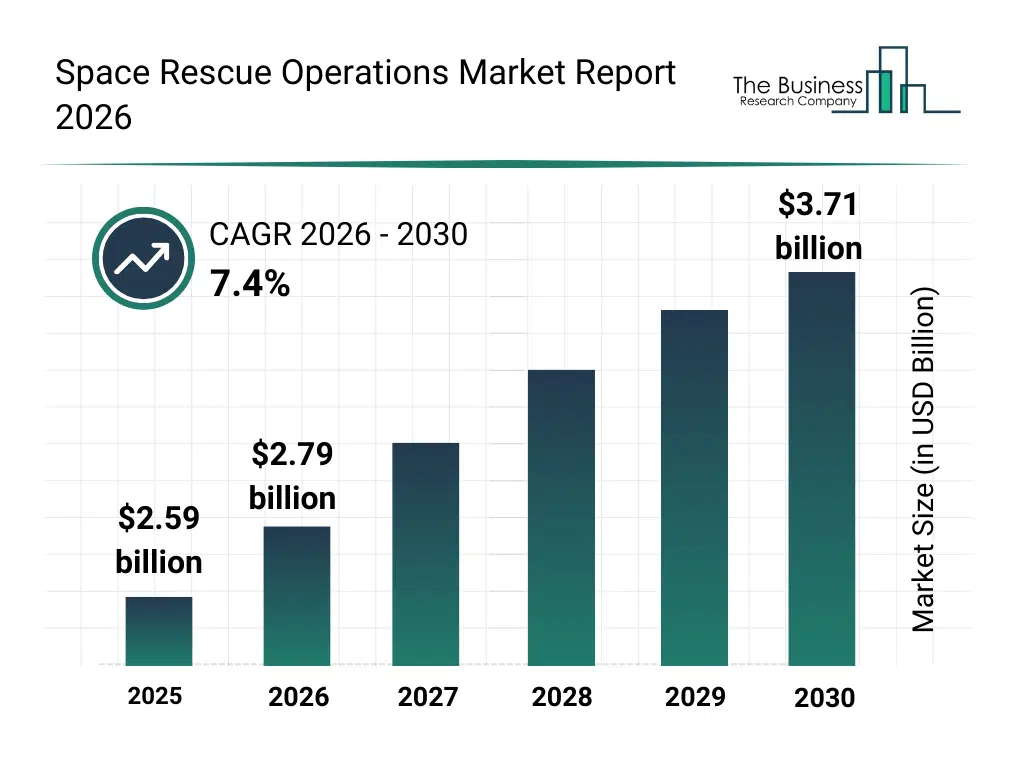
What Is The Space Rescue Operations Market Size and Share 2026?
The space rescue operations market size has grown strongly in recent years. It will grow from $2.59 billion in 2025 to $2.79 billion in 2026 at a compound annual growth rate (CAGR) of 7.7%. The growth in the historic period can be attributed to early development of emergency evacuation protocols for low earth orbit missions, initial establishment of search and rescue procedures for manned spacecraft, advancements in space-based communication systems to support distress signal monitoring, growth in telemedicine and remote medical support for astronauts, early technical assistance frameworks for in-orbit spacecraft troubleshooting.What Is The Space Rescue Operations Market Growth Forecast?
The space rescue operations market size is expected to see strong growth in the next few years. It will grow to $3.71 billion in 2030 at a compound annual growth rate (CAGR) of 7.4%. The growth in the forecast period can be attributed to expansion of dedicated space rescue fleets for lunar and deep space missions, development of autonomous and robotic systems for rapid response in emergencies, integration of advanced real-time monitoring and predictive maintenance systems, rising investment in telemedicine and remote health support technologies for extended missions, increasing collaboration between international space agencies for coordinated rescue operations. Major trends in the forecast period include increasing demand for rapid on-orbit emergency response systems, growth in commercial space missions requiring dedicated rescue support, rising implementation of modular rescue and repair architectures, expansion of telemedicine and remote medical intervention capabilities in space, advancements in multi-vehicle coordination for complex rescue missions.
Global Space Rescue Operations Market Segmentation
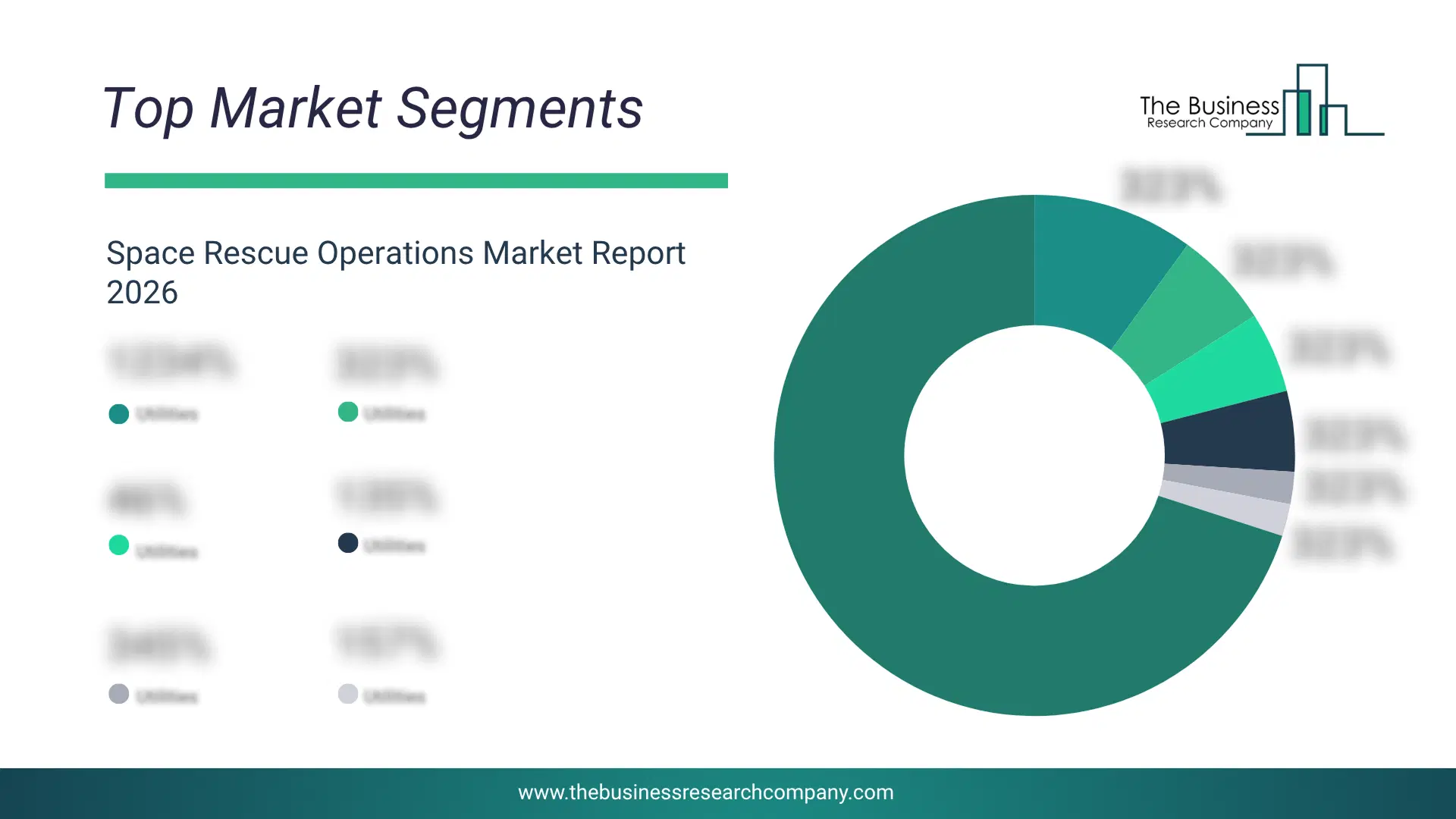
1) By Service Type: Emergency Evacuation, On-Orbit Repair, Search And Rescue, Medical Assistance 2) By Vehicle Type: Manned, Unmanned 3) By Application: Commercial, Government, Military 4) By End-User: Space Agencies, Private Space Companies, Defense Organizations Subsegments: 1) By Emergency Evacuation: Escape Pod Systems, Automated Return Vehicles, Emergency Reentry Capsules, Crew Transfer Vehicles, Evacuation Protocol Software 2) By On-Orbit Repair: Robotic Arm Systems, Satellite Refueling Units, Modular Repair Kits, Autonomous Repair Drones, Replacement Component Modules 3) By Search And Rescue: Distress Signal Tracking Systems, Space-Based Radar Systems, Beacon Communication Devices, Thermal Imaging Sensors, Search Coordination Platforms 4) By Medical Assistance: Telemedicine Systems, Space Medical Kits, Autonomous Diagnostic Tools, In-Orbit Medical Pods, Remote Vital Monitoring DevicesWhat Is Driver Of The Space Rescue Operations Market?
The escalating number of space missions is expected to propel the growth of the space rescue operations market going forward. Space missions refer to planned journeys or operations in outer space for purposes such as exploration, scientific research, satellite deployment, or national defense. The escalating number of space missions is primarily due to the growing demand for advanced communication services, as satellites enable high-speed internet, broadcasting, and secure military communication across remote and urban areas. Space rescue operations are used in space missions to ensure crew safety and mission continuity during emergencies, increasing overall reliability and operational success and enabling more ambitious exploration efforts with improved risk management strategies. For instance, in January 2024, according to the report published by Space Foundation, a US-based non-profit organization, the global space launch activity in 2024 was 223 attempts and 212 successful missions, where commercial launches saw a 50% increase over 2022, contributing to the deployment of over 2,800 satellites, up 23% from the previous year. Therefore, the escalating number of space missions is driving the growth of the space rescue operations industry.Key Players In The Global Space Rescue Operations Market
Major companies operating in the space rescue operations market are Lockheed Martin, Airbus Defence and Space, Northrop Grumman, Thales Alenia Space, SpaceX, Sierra Nevada Corporation, Axiom Space, Planet Labs, Astroscale, D-Orbit, Starfish Space, Altius Space Machines, Digantara, Vyoma, OrbitGuardians, Virgin Galactic, Boeing, Maxar Technologies, Blue Origin, Redwire Space, Collins Aerospace, Space Rescue Systems Inc., SpaceWorks Enterprises, Space Traffic Management Solutions, Privateer Space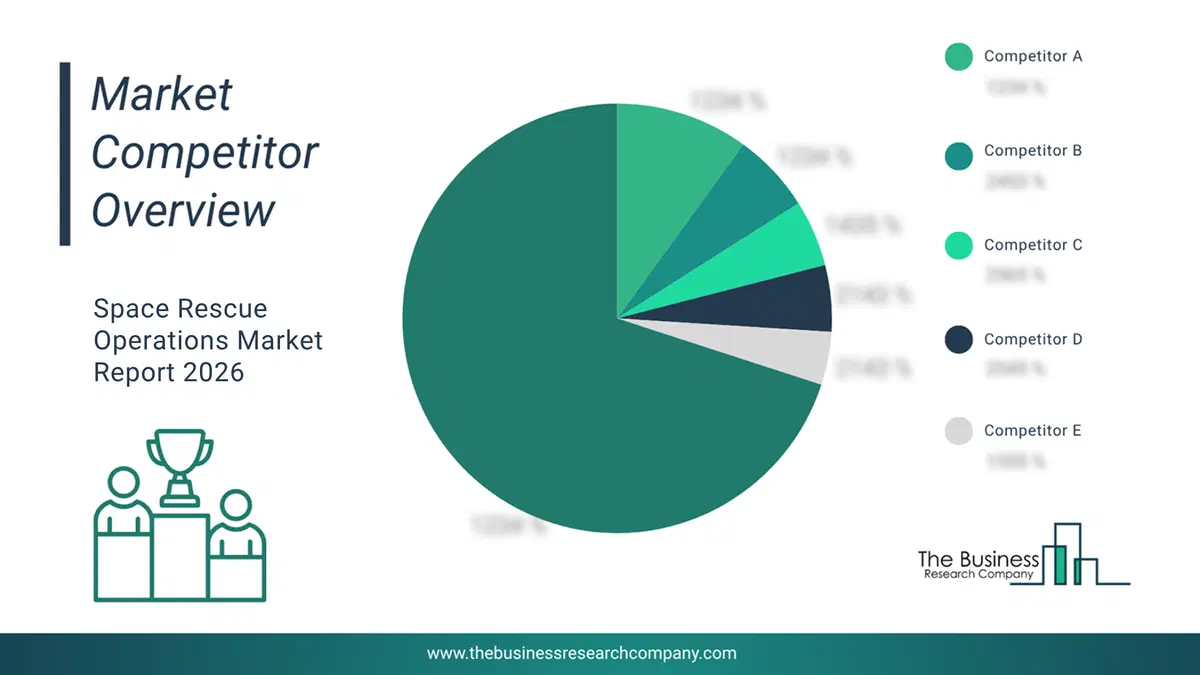
This chart is for illustrative purposes; the full report includes a detailed competitor analysis and comprehensive overview of the top 10 companies in the market.
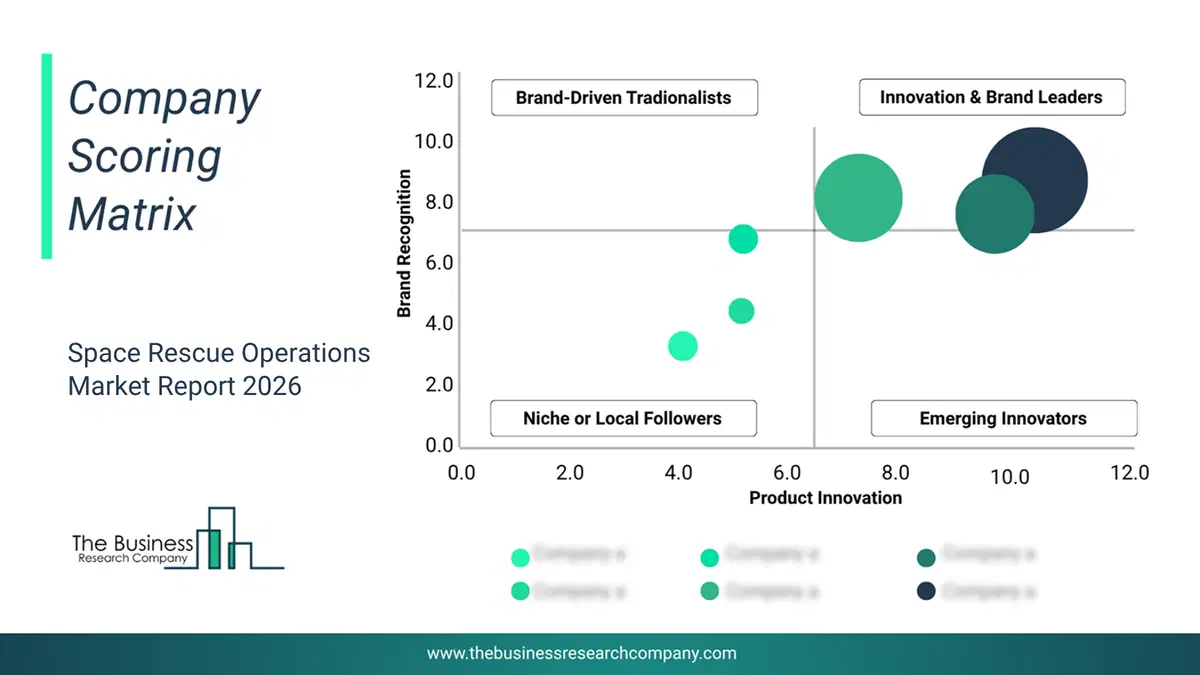
This chart maps companies by product innovation and brand strength, with bubble size indicating relative revenue, helping identify market leaders, challengers, and niche players. This is an illustrative chart; the full report provides a complete and accurate competitive analysis.
Global Space Rescue Operations Market Trends and Insights
Major companies operating in the space rescue operations market are focusing on initiating innovative missions, such as crew retrieval using commercial spacecraft to enhance safety and mission continuity for stranded astronauts. Crew retrieval using commercial spacecraft refers to safely transporting astronauts back to Earth from space missions using spacecraft developed and operated by private companies. For instance, in May 2025, the National Aeronautics and Space Administration (NASA), a U.S.-based government agency, partnered with Space Exploration Technologies Corp. (SpaceX), a U.S.-based space technology company, and launched the Crew-10 mission using the commercial Dragon spacecraft to retrieve crew members who had been stranded aboard the International Space Station (ISS) for nearly nine months following the failure of Boeing’s Starliner mission. The Starliner capsule experienced multiple technical malfunctions, including helium leaks and reaction control thruster failures, which led to the mission’s early abandonment. NASA relied on SpaceX’s Falcon 9 rocket and Dragon capsule, underscoring the critical role of commercial spaceflight companies in emergency crew recovery efforts and the increasing importance of public-private partnerships in advancing space mission safety and resilience.What Are Latest Mergers And Acquisitions In The Space Rescue Operations Market? Space Machines Partners With Indian Firms To Advance Space MAITRI Mission For Sustainable Space Operations
In September 2024, Space Machines Company Pty Ltd, an Australia-based aerospace company, partnered with Ananth Technologies Limited and Digantara Research and Technologies Private Limited to support the Space Mission for Australia-India's Technology, Research and Innovation (MAITRI) mission. This partnership supports the Space MAITRI mission by integrating Australia's in-space servicing capabilities with India's launch and testing expertise to promote sustainable space operations, including space debris management and enhanced space domain awareness. Ananth Technologies is an India-based aerospace and defense manufacturer, and Digantara is an India-based space infrastructure company specializing in space traffic management and rescue operations.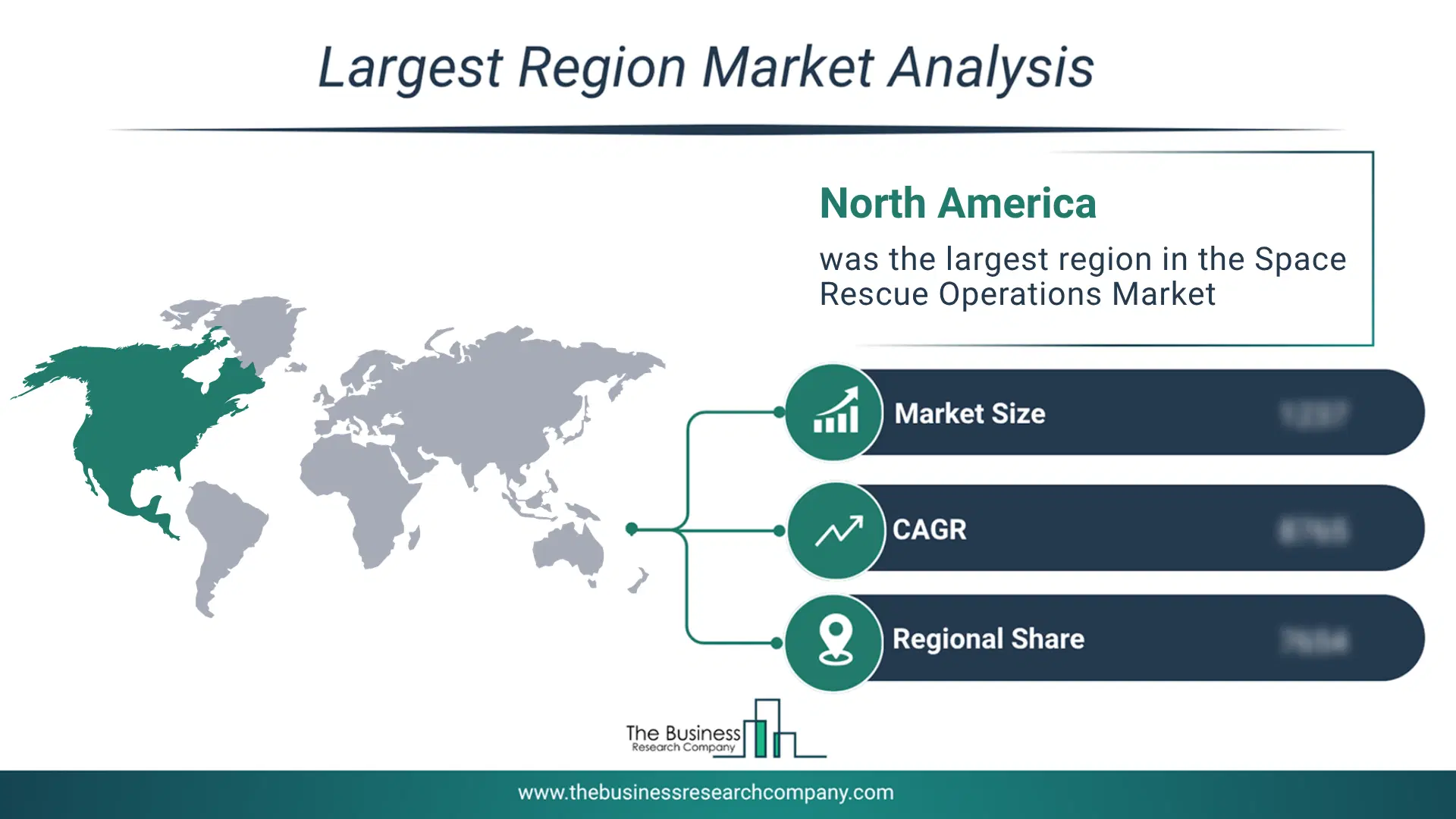
Regional Insights
North America was the largest region in the space rescue operations market in 2025. Asia-Pacific is expected to be the fastest-growing region in the forecast period. The regions covered in this market report are Asia-Pacific, South East Asia, Western Europe, Eastern Europe, North America, South America, Middle East, Africa. The countries covered in this market report are Australia, Brazil, China, France, Germany, India, Indonesia, Japan, Taiwan, Russia, South Korea, UK, USA, Canada, Italy, SpainWhat Defines the Space Rescue Operations Market?
The space rescue operations market includes revenues earned by entities by providing services such as emergency evacuation services, search and rescue missions, medical support and telemedicine, technical assistance and troubleshooting and communication and monitoring services. The market value includes the value of related goods sold by the service provider or included within the service offering. Only goods and services traded between entities or sold to end consumers are included.How is Market Value Defined and Measured?
The market value is defined as the revenues that enterprises gain from the sale of goods and/or services within the specified market and geography through sales, grants, or donations in terms of the currency (in USD unless otherwise specified). The revenues for a specified geography are consumption values that are revenues generated by organizations in the specified geography within the market, irrespective of where they are produced. It does not include revenues from resales along the supply chain, either further along the supply chain or as part of other products.
This chart presents market attractiveness based on a quantitative evaluation of growth, competition, strategic alignment, and risk, offering a clear view of opportunity areas for decision-making. This chart is for illustrative purposes; the full report contains the complete analysis.

This chart highlights the Total Addressable Market (TAM) by estimating the maximum revenue opportunity using an assumption-driven approach, supporting strategic planning and opportunity sizing across markets. The chart is illustrative; the full report provides a more comprehensive analysis.
What Key Data and Analysis Are Included in the Space Rescue Operations Market Report 2026?
The space rescue operations market research report is one of a series of new reports from The Business Research Company that provides market statistics, including industry global market size, regional shares, competitors with the market share, detailed market segments, market trends and opportunities, and any further data you may need to thrive in the space rescue operations industry. The market research report delivers a complete perspective of everything you need, with an in-depth analysis of the current and future state of the industry.Space Rescue Operations Market Report Forecast Analysis
| Report Attribute | Details |
|---|---|
| Market Size Value In 2026 | $2.79 billion |
| Revenue Forecast In 2030 | $3.71 billion |
| Growth Rate | CAGR of 7.4% from 2026 to 2030 |
| Base Year For Estimation | 2025 |
| Actual Estimates/Historical Data | 2020-2025 |
| Forecast Period | 2026 - 2030 |
| Market Representation | Revenue in USD Billion and CAGR from 2026 to 2030 |
| Segments Covered | Service Type, Vehicle Type, Application, End-User |
| Regional Scope | Asia-Pacific, Western Europe, Eastern Europe, North America, South America, Middle East, Africa |
| Country Scope | The countries covered in the space rescue operations market report are Australia, Brazil, China, France, Germany, India, Indonesia, Japan, Taiwan, Russia, South Korea, UK, USA, Canada, Italy, Spain |
| Key Companies Profiled | Lockheed Martin, Airbus Defence and Space, Northrop Grumman, Thales Alenia Space, SpaceX, Sierra Nevada Corporation, Axiom Space, Planet Labs, Astroscale, D-Orbit, Starfish Space, Altius Space Machines, Digantara, Vyoma, OrbitGuardians, Virgin Galactic, Boeing, Maxar Technologies, Blue Origin, Redwire Space, Collins Aerospace, Space Rescue Systems Inc., SpaceWorks Enterprises, Space Traffic Management Solutions, Privateer Space |
| Customization Scope | Request for Customization |
| Pricing And Purchase Options | Explore Purchase Options |