
Space Situational Awareness Market Report 2026
Global Outlook – By Solution (Service, Payload Systems, Software), By Capability (Detect, Track, And Identify (D/T/Id), Threat Warning And Assessment, Characterization), By Object (Mission-Related Debris, Rocket Bodies, Fragmentation Debris, Functional Spacecraft, Non-Functional Spacecraft, Other Objects), By Orbital Range (Near-Earth, Deep Space), By End Use (Commercial, Government And Military) – Market Size, Trends, Strategies, and Forecast to 2030
Space Situational Awareness Market Overview
• Space Situational Awareness market size has reached to $1.59 billion in 2025 • Expected to grow to $2.16 billion in 2030 at a compound annual growth rate (CAGR) of 6.4% • Growth Driver: Rising Demand For Space-Based Sensing Activities Fuels Growth In The Space Situational Awareness Market • Market Trend: Space Industry Leaders Prioritize Product Advancements • North America was the largest region and fastest growing region.Market Gains By 2030 – Top Opportunities By Segment
Market Gain identifies the most promising market opportunities by highlighting the segments or products expected to generate the highest incremental revenue growth over the next five years.
What Is Covered Under Space Situational Awareness Market?
Space situational awareness refers to tracking objects in space, including their identification, orbit determination, awareness of the environment they are working in, and prediction of future positions and potential dangers. It is used to forecast object collisions and warn space operators of potentially hazardous close approaches in order to enable collision avoidance operations. The major solutions in space situational awareness are service, payload systems, and software. The service refers to the characterization of space objects to ascertain their orbital trajectory, size, shape, mass, composition, rotational dynamics, and other parameters. The different capabilities include detect, track, and identify (d/t/id), threat warning, and assessment and characterization. The major objects include mission-related debris, rocket bodies, fragmentation debris, functional spacecraft, non-functional spacecraft, and others. The main orbital ranges are near-earth and deep space. Commercial, government, and military are the major end users.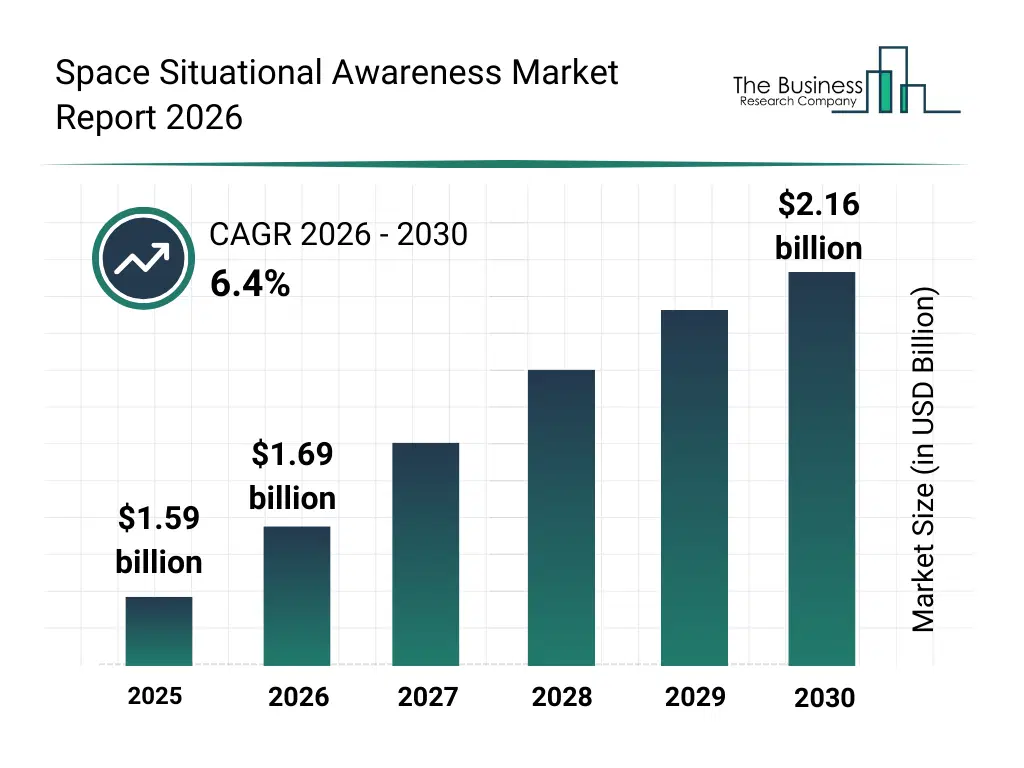
What Is The Space Situational Awareness Market Size and Share 2026?
The space situational awareness market size has grown strongly in recent years. It will grow from $1.59 billion in 2025 to $1.69 billion in 2026 at a compound annual growth rate (CAGR) of 6.4%. The growth in the historic period can be attributed to increasing deployment of radar sensors and telescopes for tracking space objects, growth in satellite launches driving demand for orbit determination and conjunction analysis, early development of space data centers and event-generation tools to monitor orbital environments, rising governmental focus on tracking space debris and re-entry predictions, expansion of mission support and navigation services for launch and early-orbit operations.What Is The Space Situational Awareness Market Growth Forecast?
The space situational awareness market size is expected to see strong growth in the next few years. It will grow to $2.16 billion in 2030 at a compound annual growth rate (CAGR) of 6.4%. The growth in the forecast period can be attributed to growing need for advanced space-debris monitoring as satellite constellations proliferate, increasing adoption of automated orbit-determination and collision-avoidance software, development of integrated space situational awareness networks combining commercial and government data sources, rising demand for real-time space-weather forecasting to protect spacecraft assets, expansion of international collaboration to enhance global space-traffic management capabilities. Major trends in the forecast period include artificial intelligence & autonomous intelligence, digitalization, cloud, big data & cybersecurity, internet of things (iot), smart infrastructure & connected ecosystems, autonomous systems, robotics & smart mobility, industry 4.0 and intelligent manufacturing.
Global Space Situational Awareness Market Segmentation
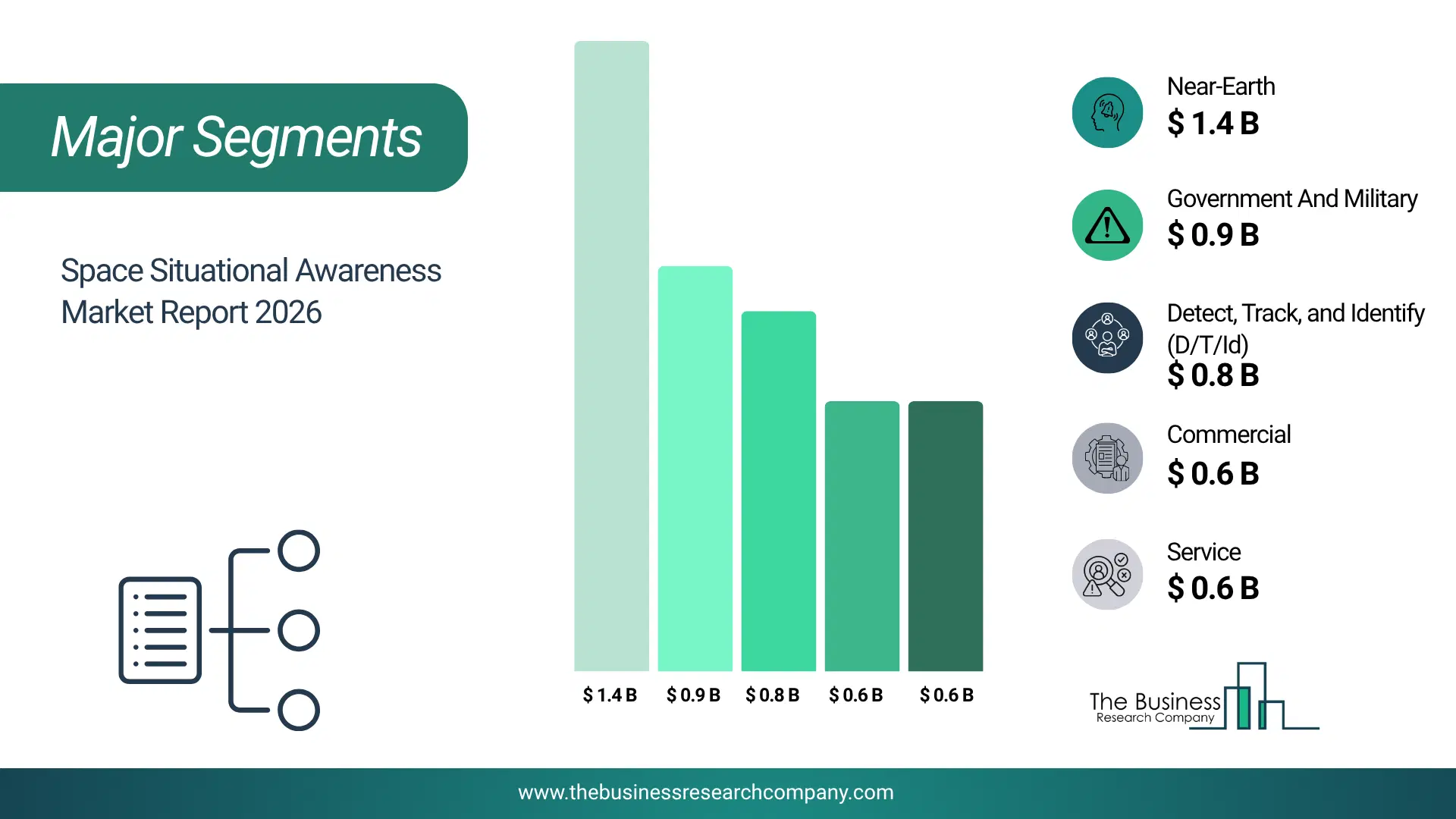
1) By Solution: Service, Payload Systems, Software 2) By Capability: Detect, Track, And Identify (D/T/Id), Threat Warning And Assessment, Characterization 3) By Object: Mission-Related Debris, Rocket Bodies, Fragmentation Debris, Functional Spacecraft, Non-Functional Spacecraft, Other Objects 4) By Orbital Range: Near-Earth, Deep Space 5) By End Use: Commercial, Government And Military Subsegments: 1) By Services: Collision Avoidance Services, Tracking and Monitoring Services, Data Analysis and Consulting Services, Debris Management Services 2) By Payload Systems: Surveillance Sensors, Radar Systems, Optical Sensors, Tracking Satellites-global-market-report" target="_blank">satellites 3) By Software: Space Object Tracking Software, Simulation and Predictive Analysis Tools, Data Visualization Software, space traffic management Software The top segments in the space situational awareness market will be: • Near-Earth will reach $1418.38 Million by 2025. • Government And Military will reach $969.9 Million by 2025. • Detect, Track, and Identify (D/T/Id) will reach $850.19 Million by 2025. • Commercial will reach $621.29 Million by 2025. • Service will reach $614.3 Million by 2025.What Is Driver Of The Space Situational Awareness Market?
The increase in demand for space-based sensing activities propels the growth of the space situational awareness market going forward. The space-based sensing activities refer to the remote sensing technology that profiles the Earth's atmosphere and ionosphere with high vertical resolution and global coverage using GNSS (such as GPS) readings acquired by low-Earth orbiting satellites. The majority of governments employ space situational awareness to plan their space activities because it makes it possible to predict the orbital paths of cataloged objects and trash. For instance, in August 2025, according to the UK Space Agency, a UK-based government agency, in 2024 satellite services, including navigation, Earth observation, meteorology, and communications, contributed $527.30 billion (£454 billion) to the UK economy, representing 18% of the nation’s total GDP. Therefore, increasing demand for space-based sensing activities is driving the growth of the space situational awareness industry.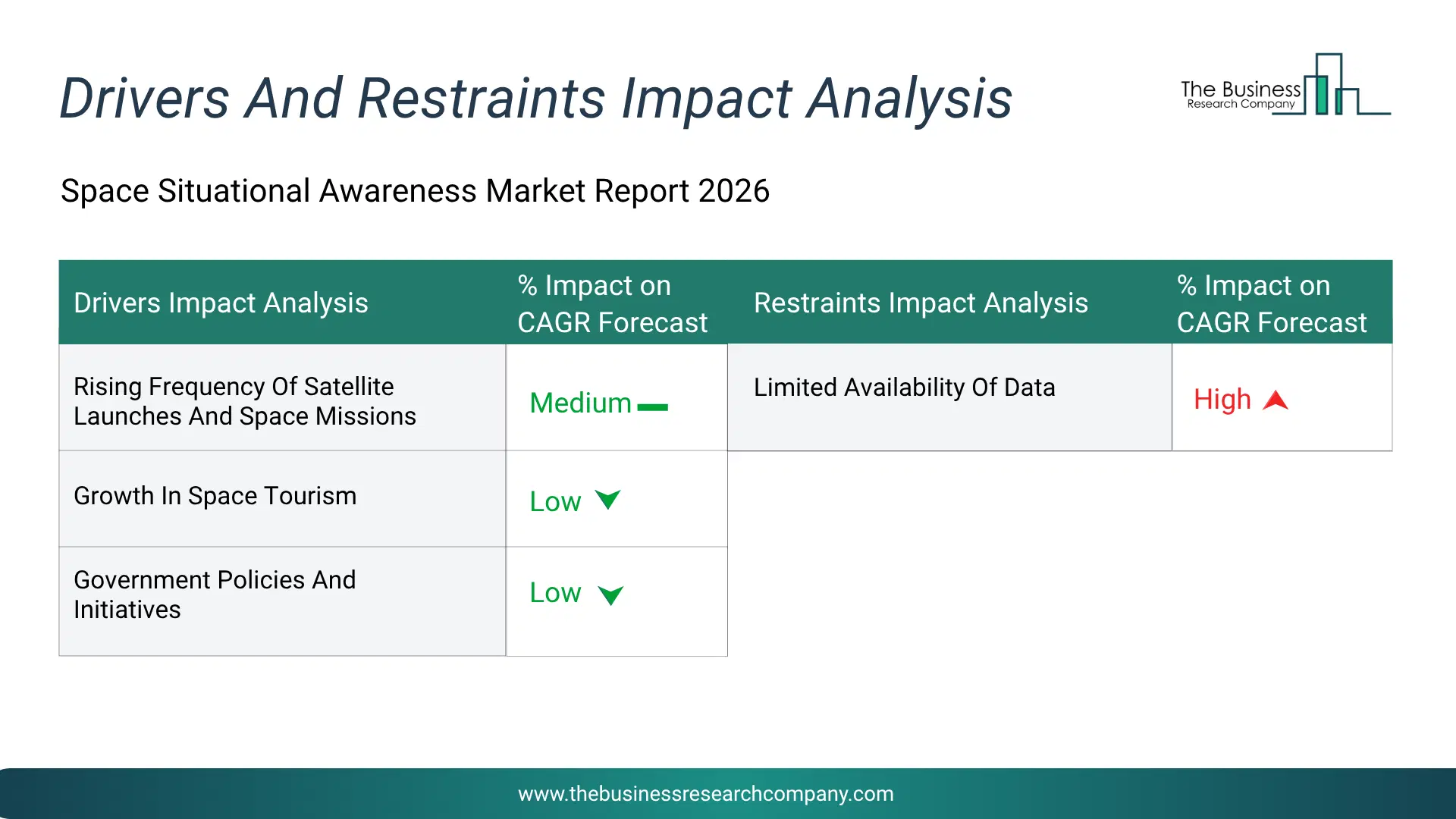
Infographic Chart Showing Key Market Drivers Analysis And Restraints For Space Situational Awareness Market
The chart presents an impact analysis of key drivers and restraints, quantifying their relative influence on the market's growth rate and helping assess the balance between growth enablers and limiting factors. This chart offers a high-level perspective; the full report contains more detailed insights.
How Will The Drivers Impact Growth In The Global Space Situational Awareness Market?
• Rising Frequency Of Satellite Launches And Space Missions (Medium) – The rising frequency of satellite launches and space missions will become a key driver of growth in the space situational awareness market by 2030. The proliferation of satellites also exacerbates the generation of space debris, which poses risks to active satellites and broader space operations. SSA systems are vital for tracking and forecasting space debris, enabling collision avoidance, and ensuring the long-term sustainability of space activities. As a result, rising frequency of satellite launches and space missions is anticipated to contributing to annual growth in the market. • Growth In Space Tourism (Low) – The growth in space tourism will become a key driver of growth in the space situational awareness market by 2030. Space tourism missions and commercial activities, such as satellite launches, introduce the need for robust safety protocols. Accurate tracking of space objects, including satellites, debris and mission vehicles, is essential to ensure the safety of tourists, astronauts, and other participants. Space Situational Awareness (SSA) systems play a critical role in collision avoidance, by providing early warnings, enabling risk management, and reducing potential hazards. The growing reliance on these systems drives increased demand for advanced SSA capabilities, such as space-based sensors, ground-based tracking networks, and AI (artificial intelligence)-powered analytics. As a result, growth in space tourism is anticipated to contributing to annual growth in the market. • Government Policies And Initiatives (Low) – The government policies and initiatives will serve as a key growth catalyst for space situational awareness market by 2030. SSA is essential to national security, particularly in defense-related space activities. Governments are allocating resources to develop SSA capabilities to track space objects, identify potential threats and safeguard critical space assets. Defense agencies depend on SSA systems to improve situational awareness for missile warning, prevent communication disruptions, and ensure secure satellite operations. Therefore, this government policies and initiatives is projected to supporting to annual growth in the market. • Increased Spending On Space Monitoring By Defense Sectors (Low) – The increased spending on space monitoring by defense sectors will serve as a key growth catalyst for space situational awareness market by 2030. Defense sectors are increasing investment in space situational awareness (SSA) capabilities to strengthen the protection of space-based assets from potential adversarial threats. Challenges such as anti-satellite weapons, jamming and cyberattacks necessitate the development of advanced SSA systems capable of monitoring, detecting, and mitigating risks. The rise in funding for SSA technologies, including radar systems, ground-based telescopes and data analysis platforms, is driving growth in this critical area. Therefore, this increased spending on space monitoring by defense sectors is projected to supporting to annual growth in the market.How Will The Restraints Impact Growth In The Global Space Situational Awareness Market?
• Limited Availability Of Data (Medium) – Limited Availability Of Data will restrict the growth of the Space Situational Awareness market during the forecast period. Effective space situational awareness requires comprehensive and accurate data on satellite positions, debris, and space weather. Limited data availability, particularly in certain orbital regimes, affects the accuracy of SSA services. Data gaps and sharing limitations between nations and commercial operators restrict the effectiveness of SSA systems and market development.Key Players In The Global Space Situational Awareness Market
Major companies operating in the space situational awareness market are Lockheed Martin Corporation, Kratos Defense & Security Solutions Inc., Polaris Alpha Advanced Systems Inc., Applied Defense Solutions, Schafer Industries, L3harris Technologies, General Dynamics Corporation, Vision Engineering Solutions, Norstar Space Data, SpaceNav LLC, Elecnor Deimos Group, ExoAnalytic Solutions Inc., Honeywell International Inc., DRS Technologies., BAE Systems, Northrop Grumman Corporation, RTX Corporation, Thales Group, ATOS SE, Elbit Systems Ltd., Leonardo S.p.A., Rheinmetall AG, Airbus SE, Boeing Co., Pratt & Whitney, Rolls-Royce Holdings plc, GE Aviation, Safran S.A., Israel Aerospace Industries, Spirit AeroSystems Inc., Triumph Group Inc., United Technologies Corporation, International Business Machines Corporation, Microsoft Corporation, Amazon Web Services Inc., Google LLC, Oracle Corporation, Cisco Systems Inc.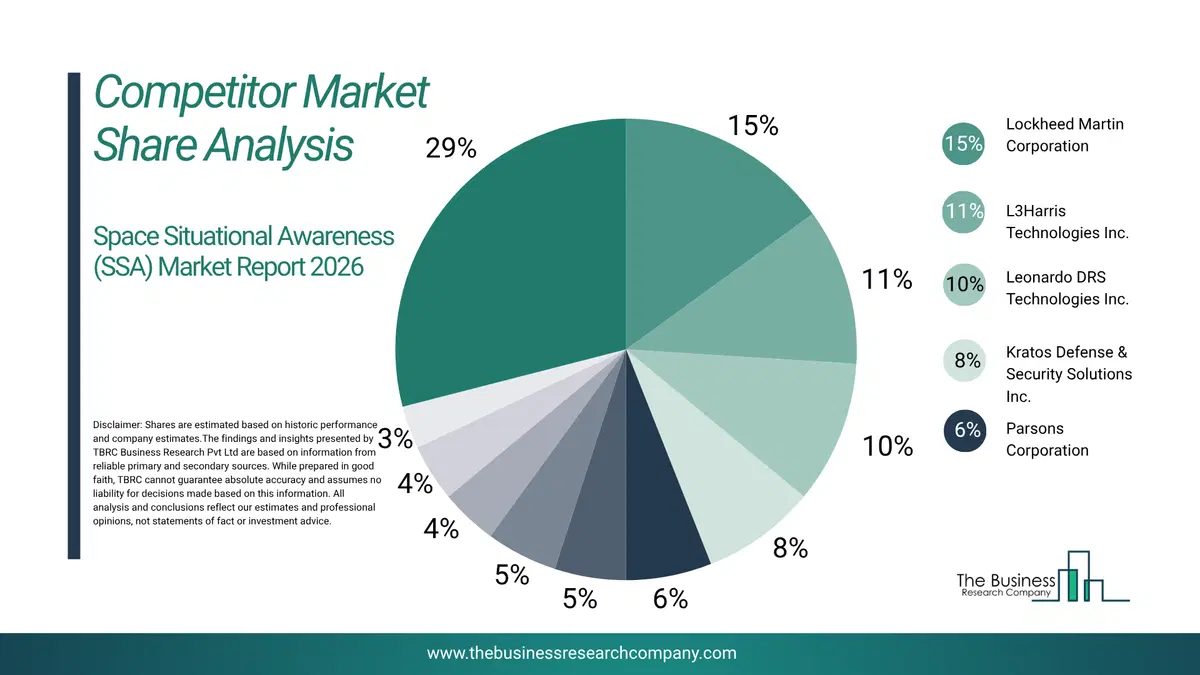
This chart is for illustrative purposes; the full report includes a detailed competitor analysis and comprehensive overview of the top 10 companies in the market.
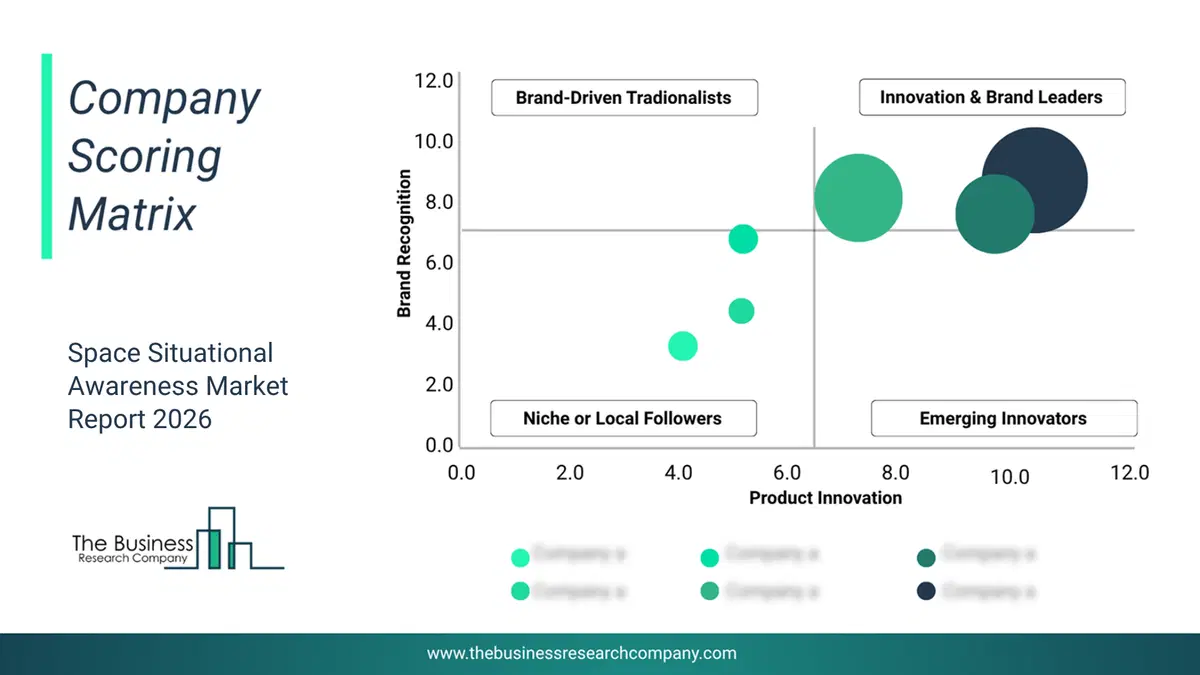
This chart maps companies by product innovation and brand strength, with bubble size indicating relative revenue, helping identify market leaders, challengers, and niche players. This is an illustrative chart; the full report provides a complete and accurate competitive analysis.
Global Space Situational Awareness Market Trends and Insights
Major companies operating in the space situational awareness market are focused on introducing space situational awareness (SSA) and space surveillance and tracking (SST) systems to enhance the monitoring of space objects, improve collision avoidance strategies, ensure the safety of satellite operations, and support regulatory compliance in the increasingly crowded orbital environment. This Innovative system is an advanced technology designed to provide comprehensive monitoring of objects in space, ensuring the safety and security of both space assets and operations. The system's API-driven design allows for easy integration with various internal radars, telescopes, classified systems, and onboard GPS. For instance, in February 2024, Integrasys SA, a US-based company, launched Orbisat, Orbisat is designed to interconnect with existing proprietary or public subsystems, allowing for automated tracking, collision avoidance, telemetry, and control functionalities. This integration is crucial for maintaining operational efficiency in increasingly congested space environments. The solution utilizes a robust database compiled from public data sources like Celestrack and Spacetrack, which is continuously updated to ensure real-time accuracy in monitoring space objects.What Are Latest Mergers And Acquisitions In The Space Situational Awareness Market? Mda Ltd. Expands Uk Presence And Space Situational Awareness Capabilities With The Acquisition
In August 2023, MDA Ltd., a Canada-based space technology company, acquired SatixFy Space Systems UK Ltd. (SSS) for an undisclosed amount. With this acquisition, MDA Ltd. can accelerate the company's market expansion in the UK and adds in-country capability to produce space satellite payloads. SatixFy Space Systems UK Ltd. (SSS) is a UK-based digital payload defense and space manufacturing company engaged in space situational awareness capabilities.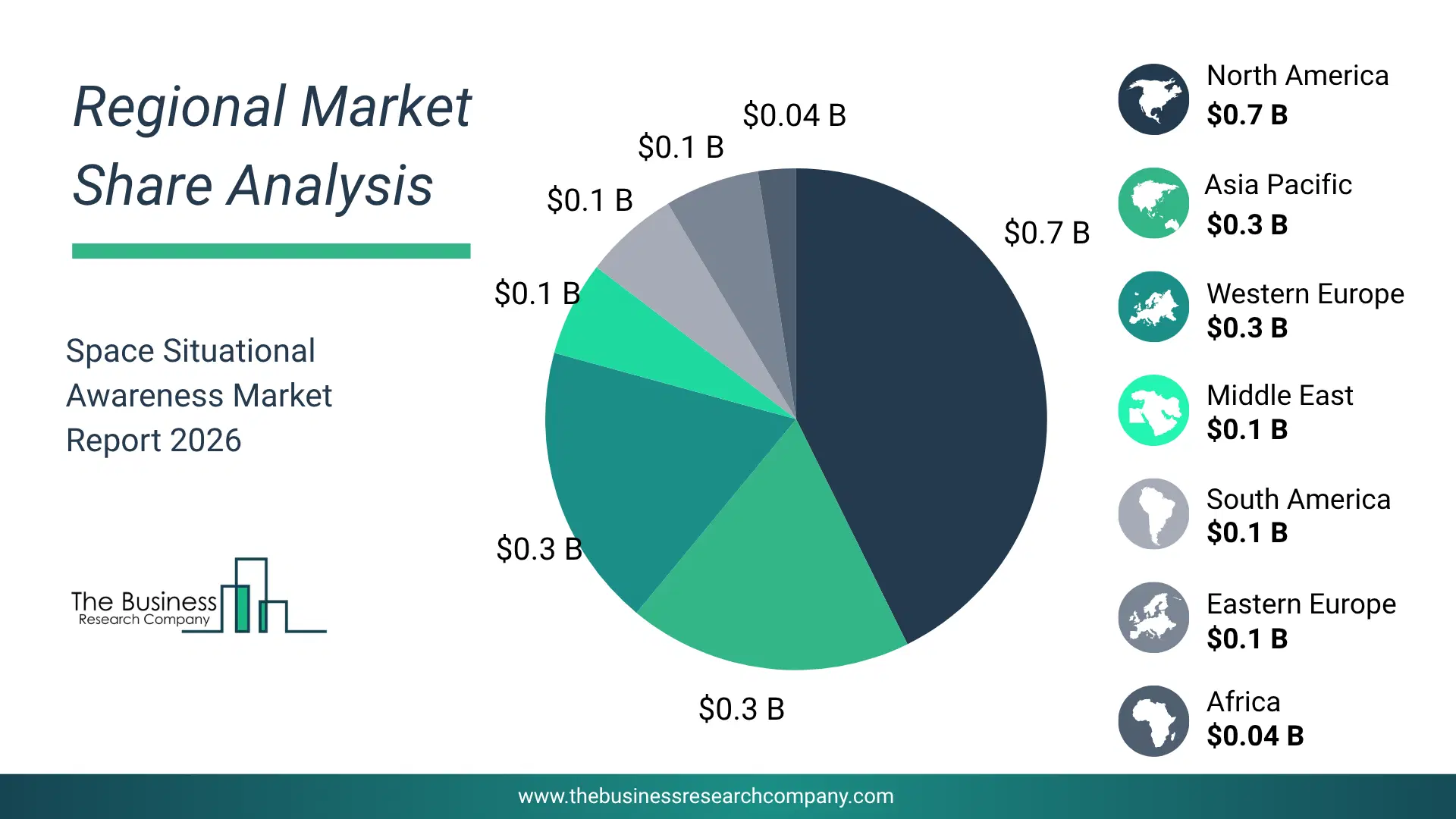
Regional Insights
North America was the largest region in the space situational awareness market in 2025. North America is expected to be the fastest growing region in the space situational awareness market share during the forecast period. The regions covered in this market report are Asia-Pacific, South East Asia, Western Europe, Eastern Europe, North America, South America, Middle East, Africa. The countries covered in this market report are Australia, Brazil, China, France, Germany, India, Indonesia, Japan, Taiwan, Russia, South Korea, UK, USA, Canada, Italy, SpainWhat Defines the Space Situational Awareness Market?
The space situational awareness market includes revenues earned by entities from space weather forecasts and warnings, radiofrequency interference notifications, disposal/end-of-life-support, tracking space debris, re-entry predictions, orbit determination, launch and early orbit phase, on-orbit conjunction assessment, mission support & navigation, de-orbit support, breakups and separations, space object identification and launch detection. The market value includes the value of related goods sold by the service provider or included within the service offering. The space situational awareness market also includes sales of radar sensors, telescopes, satellites, orbit determination tool kits, comspoc, space data center, space event generators, and joint space operations centers. Values in this market are ‘factory gate’ values, that is the value of goods sold by the manufacturers or creators of the goods, whether to other entities (including downstream manufacturers, wholesalers, distributors, and retailers) or directly to end customers. The value of goods in this market includes related services sold by the creators of the goods.How is Market Value Defined and Measured?
The market value is defined as the revenues that enterprises gain from the sale of goods and/or services within the specified market and geography through sales, grants, or donations in terms of the currency (in USD unless otherwise specified). The revenues for a specified geography are consumption values that are revenues generated by organizations in the specified geography within the market, irrespective of where they are produced. It does not include revenues from resales along the supply chain, either further along the supply chain or as part of other products.
This chart presents market attractiveness based on a quantitative evaluation of growth, competition, strategic alignment, and risk, offering a clear view of opportunity areas for decision-making. This chart is for illustrative purposes; the full report contains the complete analysis.

This chart highlights the Total Addressable Market (TAM) by estimating the maximum revenue opportunity using an assumption-driven approach, supporting strategic planning and opportunity sizing across markets. The chart is illustrative; the full report provides a more comprehensive analysis.
What Key Data and Analysis Are Included in the Space Situational Awareness Market Report 2026?
The space situational awareness market research report is one of a series of new reports from The Business Research Company that provides market statistics, including industry global market size, regional shares, competitors with the market share, detailed market segments, market trends and opportunities, and any further data you may need to thrive in the space situational awareness industry. The market research report delivers a complete perspective of everything you need, with an in-depth analysis of the current and future state of the industry.Space Situational Awareness Market Report Forecast Analysis
| Report Attribute | Details |
|---|---|
| Market Size Value In 2026 | $1.69 billion |
| Revenue Forecast In 2030 | $2.16 billion |
| Growth Rate | CAGR of 6.4% from 2026 to 2030 |
| Base Year For Estimation | 2025 |
| Actual Estimates/Historical Data | 2020-2025 |
| Forecast Period | 2026 - 2030 |
| Market Representation | Revenue in USD Billion and CAGR from 2026 to 2030 |
| Segments Covered | Solution, Capability, Object, Orbital Range, End Use |
| Regional Scope | Asia-Pacific, Western Europe, Eastern Europe, North America, South America, Middle East, Africa |
| Country Scope | The countries covered in the report are Australia, Brazil, China, France, Germany, India, Indonesia, Japan, Taiwan, Russia, South Korea, UK, USA, Canada, Italy, Spain. |
| Key Companies Profiled | Lockheed Martin Corporation, Kratos Defense & Security Solutions Inc., Polaris Alpha Advanced Systems Inc., Applied Defense Solutions, Schafer Industries, L3harris Technologies, General Dynamics Corporation, Vision Engineering Solutions, Norstar Space Data, SpaceNav LLC, Elecnor Deimos Group, ExoAnalytic Solutions Inc., Honeywell International Inc., DRS Technologies., BAE Systems, Northrop Grumman Corporation, RTX Corporation, Thales Group, ATOS SE, Elbit Systems Ltd., Leonardo S.p.A., Rheinmetall AG, Airbus SE, Boeing Co., Pratt & Whitney, Rolls-Royce Holdings plc, GE Aviation, Safran S.A., Israel Aerospace Industries, Spirit AeroSystems Inc., Triumph Group Inc., United Technologies Corporation, International Business Machines Corporation, Microsoft Corporation, Amazon Web Services Inc., Google LLC, Oracle Corporation, Cisco Systems Inc. |
| Customization Scope | Request for Customization |
| Pricing And Purchase Options | Explore Purchase Options |