
Structural Electronics Market Report 2026
Global Outlook – By Component ( Embedded Sensors, Conductive Inks, Flexible Displays, Energy Harvesting, Other Components), By Technology-Based ( Printable Electronics, Flexible Electronics, Embedded Electronics, Nanoelectronics, Thin-Film Transistors), By Functionality ( Power Generation, Power Storage, Energy Harvesting, Signal Transmission, Smart Sensors), By Application ( Automotive, Aerospace And Defense, Consumer Electronics, Healthcare, Building And Architecture, Other Applications), By End-User-Based ( Original Equipment Manufacturers (OEMs), Research and Development Institutions, Contract Manufacturers, End-Consumers, Equipment Suppliers) – Market Size, Trends, Strategies, and Forecast to 2030
Structural Electronics Market Overview
• Structural Electronics market size has reached to $2.72 billion in 2025 • Expected to grow to $4.81 billion in 2030 at a compound annual growth rate (CAGR) of 12% • Growth Driver: Rising Adoption Of Electric Vehicles Fueling The Growth Of The Market Through Technological Advancements And Efficiency Gains • Market Trend: Technological Advancements In Integrating Electronic Functionalities Into Structural Components • North America was the largest region in 2025.What Is Covered Under Structural Electronics Market?
Structural electronics is an advanced engineering discipline where electronic functionality, such as circuits, sensors, or antennas, is seamlessly integrated into the very structure or fabric of an object, rather than being added as separate components. This approach transforms passive materials into active systems, merging form and function so that a car's roof liner might itself be a solar panel, a smartphone case might be its antenna, or a wall might be a touch-sensitive control surface. The main components of structural electronics include embedded sensors, conductive inks, flexible displays, energy harvesting, and others. Embedded sensors refer to integrated sensing elements built directly into the structure of a product or material, enabling real-time monitoring, signal transmission, and enhanced functionality without the need for external devices. These components are applied across automotive, aerospace and defense, consumer electronics, healthcare, building and architecture, and others, serving end-users such as original equipment manufacturers (OEMs), research and development institutions, contract manufacturers, end-consumers, and equipment suppliers.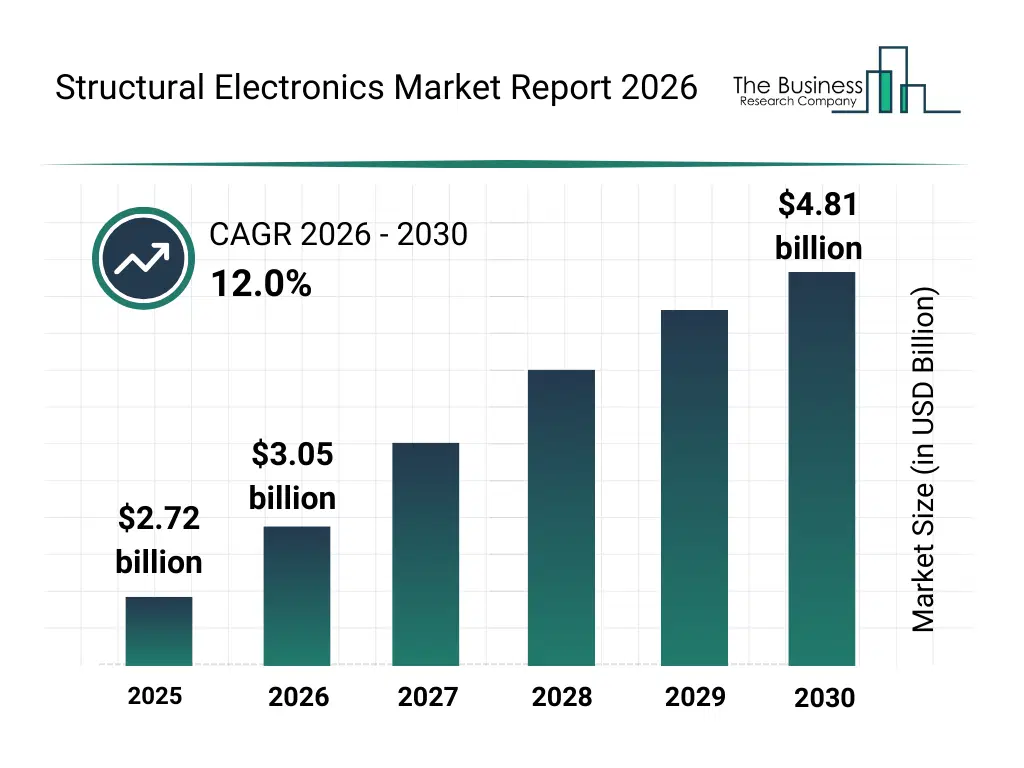
What Is The Structural Electronics Market Size 2026 And Growth Rate?
The structural electronics market size has grown rapidly in recent years. It will grow from $2.72 billion in 2025 to $3.05 billion in 2026 at a compound annual growth rate (CAGR) of 12.3%. The growth in the historic period can be attributed to advancements in flexible substrates, growth of wearable electronics, miniaturization of electronic components, rise in IoT-connected devices, development of conductive inks.What Is The Structural Electronics Market Growth Forecast?
The structural electronics market size is expected to see rapid growth in the next few years. It will grow to $4.81 billion in 2030 at a compound annual growth rate (CAGR) of 12.0%. The growth in the forecast period can be attributed to demand for energy-efficient devices, integration of smart infrastructure, growth in electric mobility, increase in embedded healthcare electronics, expansion of aerospace and defense applications. Major trends in the forecast period include structural electronics integration, embedded sensor development, flexible display adoption, energy harvesting innovations, nanoelectronics advancements.
Global Structural Electronics Market Segmentation
1) By Component: Embedded Sensors, Conductive Inks, Flexible Displays, Energy Harvesting, Other Components 2) By Technology-Based: Printable Electronics, Flexible Electronics, Embedded Electronics, Nanoelectronics, Thin-Film Transistors 3) By Functionality: Power Generation, Power Storage, Energy Harvesting, Signal Transmission, Smart Sensors 4) By Application: Automotive, Aerospace And Defense, Consumer Electronics, Healthcare, Building And Architecture, Other Applications 5) By End-User-Based: Original Equipment Manufacturers (OEMs), Research and Development Institutions, Contract Manufacturers, End-Consumers, Equipment Suppliers Subsegments: 1) By Embedded Sensors: Pressure Sensors, Temperature Sensors, Proximity Sensors, Motion And Accelerometers, Biosensors 2) By Conductive Inks: Silver Inks, Copper Inks, Carbon Inks, Nanoparticle-based Inks, Polymer-based Inks 3) By Flexible Displays: Organic Light Emitting Diode (OLED) Displays, E-Paper Displays, Liquid Crystal Display (LCD) Displays, Micro-Light Emitting Diode (LED) Displays 4) By Energy Harvesting: Photovoltaic (Solar Cells), Piezoelectric Devices, Thermoelectric Generators, Radio Frequency (RF) Harvesting 5) By Other Components: Printed Batteries, Antennas, Circuit Interconnects, Conductive AdhesivesWhat Is The Driver Of The Structural Electronics Market?
The increasing adoption of electric vehicles (EVs) is expected to create strong opportunities for the structural electronics market. Electric vehicles (EVs) refer to vehicles that are powered wholly or partially by electric motors using energy stored in batteries, rather than relying solely on internal combustion engines. The adoption of electric vehicles (EVs) is rising primarily due to increasing environmental concerns and government incentives promoting low-emission transportation. Within EVs, structural electronics are increasingly being explored to integrate electronic functionalities directly into structural components such as body panels, batteries, and chassis. This integration reduces vehicle weight, improves energy efficiency, and enables multifunctional designs that enhance performance and sustainability. For instance, in 2023, according to the International Energy Agency (IEA), a France-based intergovernmental organization, approximately 14 million new electric vehicles (EVs) were registered globally, elevating the total EV stock on roads to 40 million units. This represents a year-over-year increase of 3.5 million vehicles, or 35% growth, with electric cars capturing roughly 18% of total global car sales, up from 14% in 2022. Therefore, the increasing adoption of electric vehicles (EVs) is driving the growth of the structural electronics industry.Key Players In The Global Structural Electronics Market
Major companies operating in the structural electronics market are The Boeing Company, Panasonic Corporation, Nano Dimension Ltd., Continental Aktiengesellschaft, Flex Ltd., Heraeus Holding GmbH, 3M Company, Henkel AG & Co. KGaA, E. I. du Pont de Nemours and Company, Avery Dennison Corporation, Sun Chemical Corporation, Rogers Corporation, Zetwerk Pte. Ltd., PragmatIC Semiconductor Limited, TactoTek Oy, NovaCentrix Inc., Optomec Inc., Canatu Oy, Blue Spark Technologies Ltd., Neotech AMT AG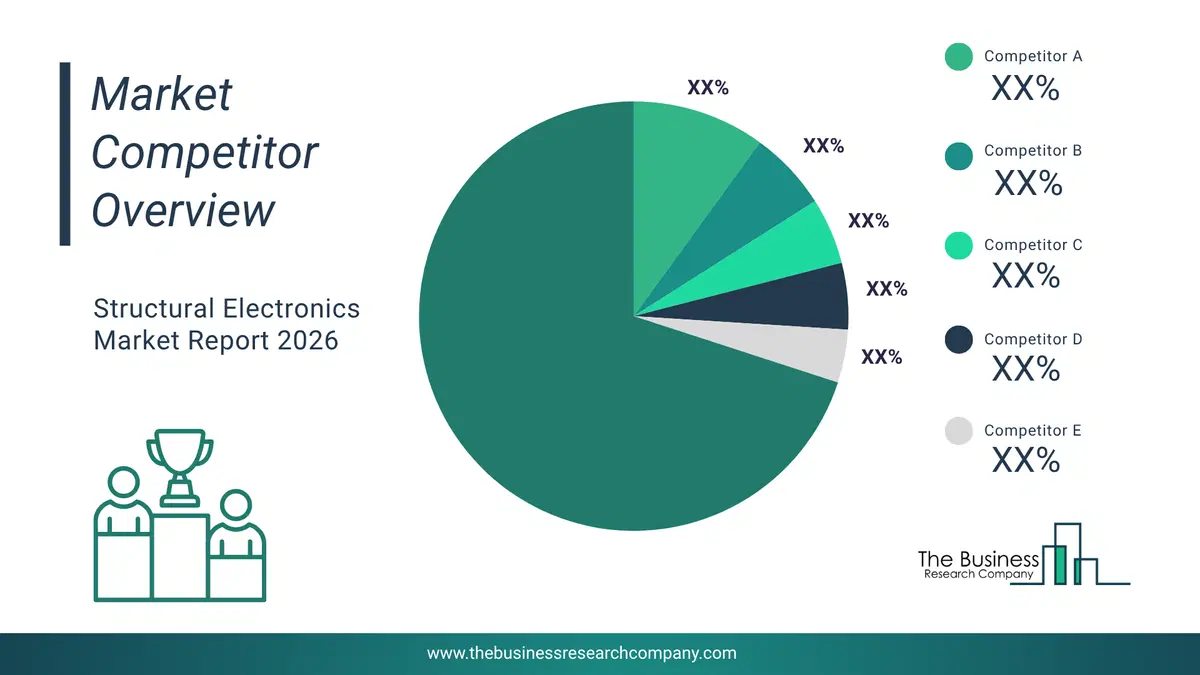
This chart is for illustrative purposes; the full report includes a detailed competitor analysis and comprehensive overview of the top 10 companies in the market.
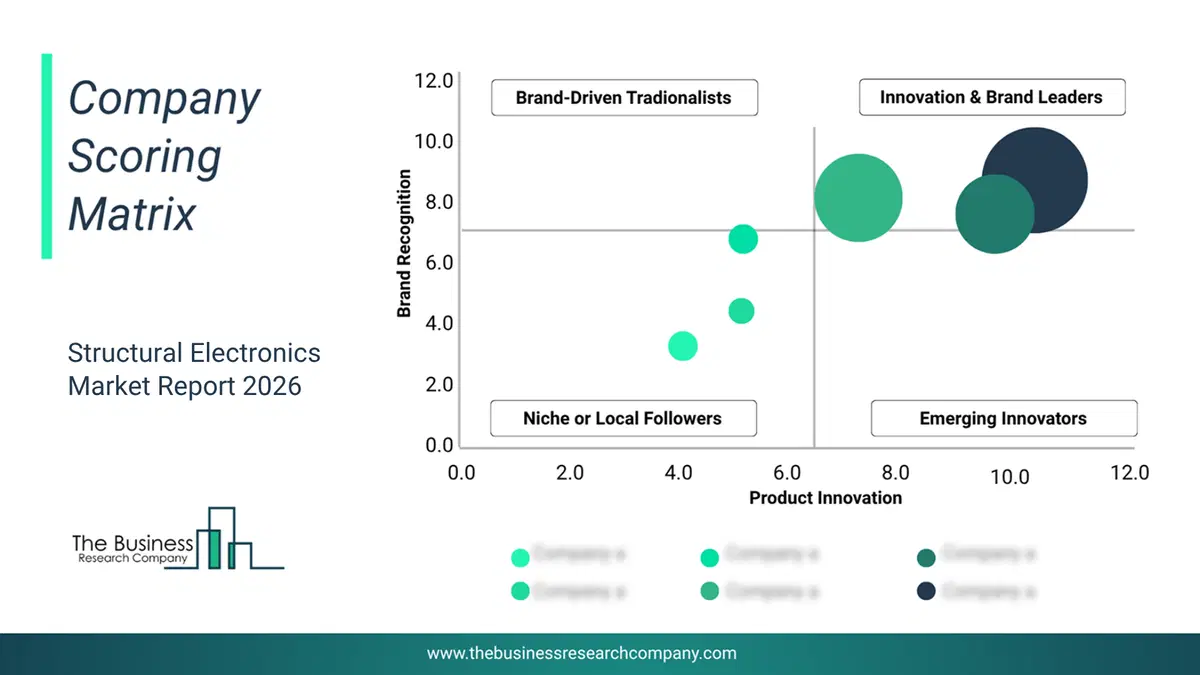
This chart maps companies by product innovation and brand strength, with bubble size indicating relative revenue, helping identify market leaders, challengers, and niche players. This is an illustrative chart; the full report provides a complete and accurate competitive analysis.
Global Structural Electronics Market Trends and Insights
Major companies operating in the structural electronics market are advancing technologies that integrate electronic functionality directly into structural components, enabling weight reduction, improved energy efficiency, and enhanced reliability. This approach embeds circuits, sensors, and other functional elements into load-bearing materials so they simultaneously provide mechanical strength and electronic capability, reducing the need for separate housings or assemblies. For example, in September 2023, Avery Dennison, a US-based materials science company, introduced its Volt Tough portfolio of electrical insulation tapes for EV battery packs. These materials enhance structural integrity and safety by mitigating risks of electrical arcing while supporting higher energy density and improved thermal management. Such innovations demonstrate how manufacturers are developing multifunctional materials that merge mechanical and electronic performance, a key trend shaping the structural electronics market.What Are Latest Mergers And Acquisitions In The Structural Electronics Market?
In July 2024, Lifeline SPAC I Plc, a Finland-based special purpose acquisition company, acquired Canatu for an undisclosed amount. With this acquisition, Lifeline SPAC I aims to combine resources with Canatu to accelerate the commercialization and global expansion of Canatu’s carbon nanotube-based structural electronics technologies. Canatu is a Finland-based deep-tech company specializing in carbon nanotube (CNT) technology.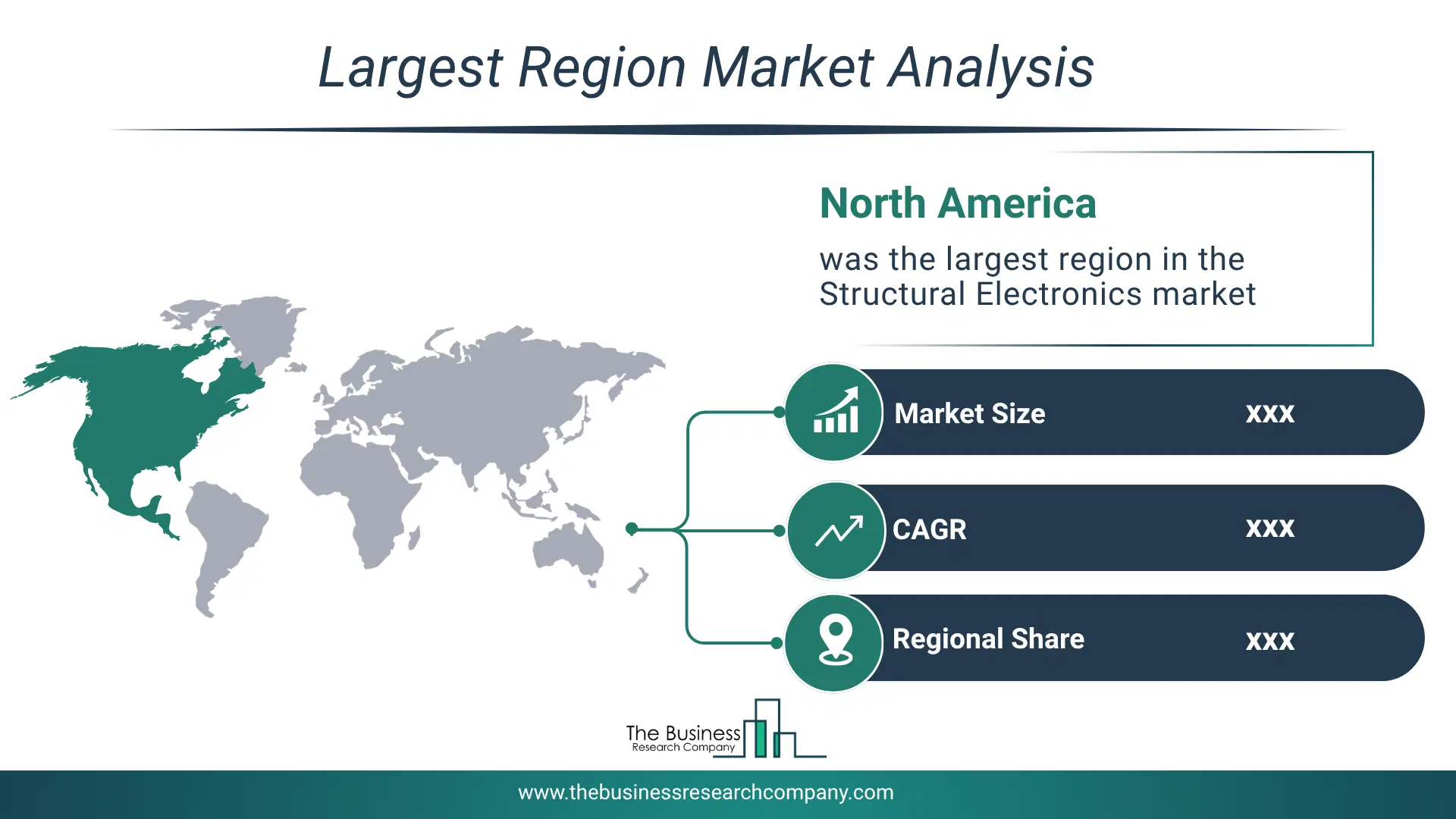
Regional Outlook
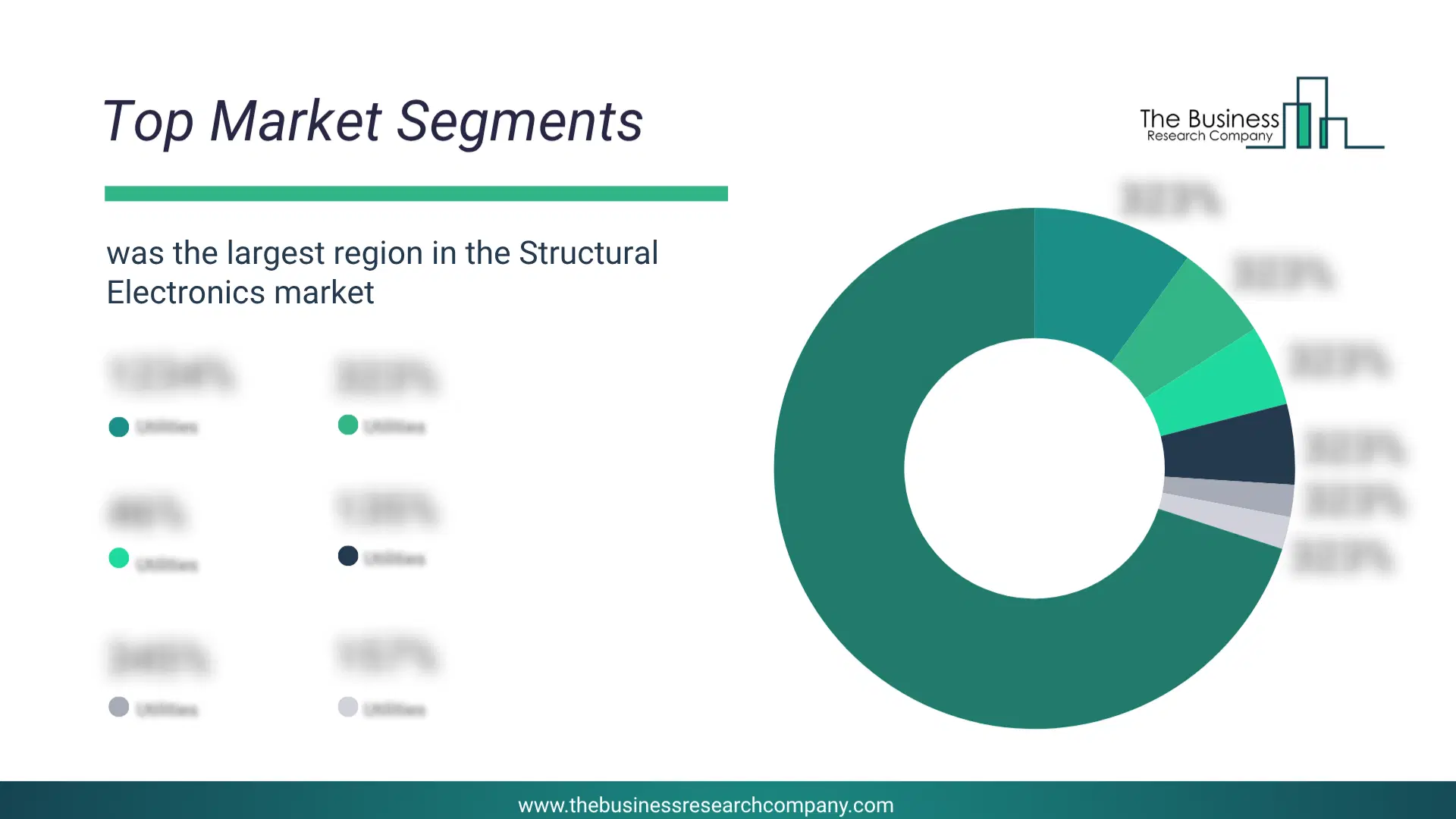
North America was the largest region in the structural electronics market in 2025. The regions covered in this market report are Asia-Pacific, South East Asia, Western Europe, Eastern Europe, North America, South America, Middle East, Africa. The countries covered in this market report are Australia, Brazil, China, France, Germany, India, Indonesia, Japan, Taiwan, Russia, South Korea, UK, USA, Canada, Italy, Spain.What Defines the Structural Electronics Market?
The structural electronics market consists of sales of structural batteries, 3D-printed electronic structures, conformal antennas, and integrated circuit-embedded panels. Values in this market are ‘factory gate’ values, that is, the value of goods sold by the manufacturers or creators of the goods, whether to other entities (including downstream manufacturers, wholesalers, distributors, and retailers) or directly to end customers. The value of goods in this market includes related services sold by the creators of the goods.How is Market Value Defined and Measured?
The market value is defined as the revenues that enterprises gain from the sale of goods and/or services within the specified market and geography through sales, grants, or donations in terms of the currency (in USD unless otherwise specified). The revenues for a specified geography are consumption values that are revenues generated by organizations in the specified geography within the market, irrespective of where they are produced. It does not include revenues from resales along the supply chain, either further along the supply chain or as part of other products.
This chart presents market attractiveness based on a quantitative evaluation of growth, competition, strategic alignment, and risk, offering a clear view of opportunity areas for decision-making. This chart is for illustrative purposes; the full report contains the complete analysis.

This chart highlights the Total Addressable Market (TAM) by estimating the maximum revenue opportunity using an assumption-driven approach, supporting strategic planning and opportunity sizing across markets. The chart is illustrative; the full report provides a more comprehensive analysis.
What Key Data and Analysis Are Included in the Structural Electronics Market Report 2026?
The structural electronics market research report is one of a series of new reports from The Business Research Company that provides market statistics, including industry global market size, regional shares, competitors with the market share, detailed market segments, market trends and opportunities, and any further data you may need to thrive in the structural electronics industry. The market research report delivers a complete perspective of everything you need, with an in-depth analysis of the current and future state of the industry.Structural Electronics Market Report Forecast Analysis
| Report Attribute | Details |
|---|---|
| Market Size Value In 2026 | $3.05 billion |
| Revenue Forecast In 2030 | $4.81 billion |
| Growth Rate | CAGR of 12% from 2026 to 2030 |
| Base Year For Estimation | 2025 |
| Actual Estimates/Historical Data | 2020-2025 |
| Forecast Period | 2026 - 2030 |
| Market Representation | Revenue in USD Billion and CAGR from 2026 to 2030 |
| Segments Covered | Component, Technology-Based, Functionality, Application, End-User-Based |
| Regional Scope | Asia-Pacific, Western Europe, Eastern Europe, North America, South America, Middle East, Africa |
| Country Scope | The countries covered in the report are Australia, Brazil, China, France, Germany, India, Indonesia, Japan, Taiwan, Russia, South Korea, UK, USA, Canada, Italy, Spain. |
| Key Companies Profiled | The Boeing Company, Panasonic Corporation, Nano Dimension Ltd., Continental Aktiengesellschaft, Flex Ltd., Heraeus Holding GmbH, 3M Company, Henkel AG & Co. KGaA, E. I. du Pont de Nemours and Company, Avery Dennison Corporation, Sun Chemical Corporation, Rogers Corporation, Zetwerk Pte. Ltd., PragmatIC Semiconductor Limited, TactoTek Oy, NovaCentrix Inc., Optomec Inc., Canatu Oy, Blue Spark Technologies Ltd., Neotech AMT AG |
| Customization Scope | Request for Customization |
| Pricing And Purchase Options | Explore Purchase Options |