
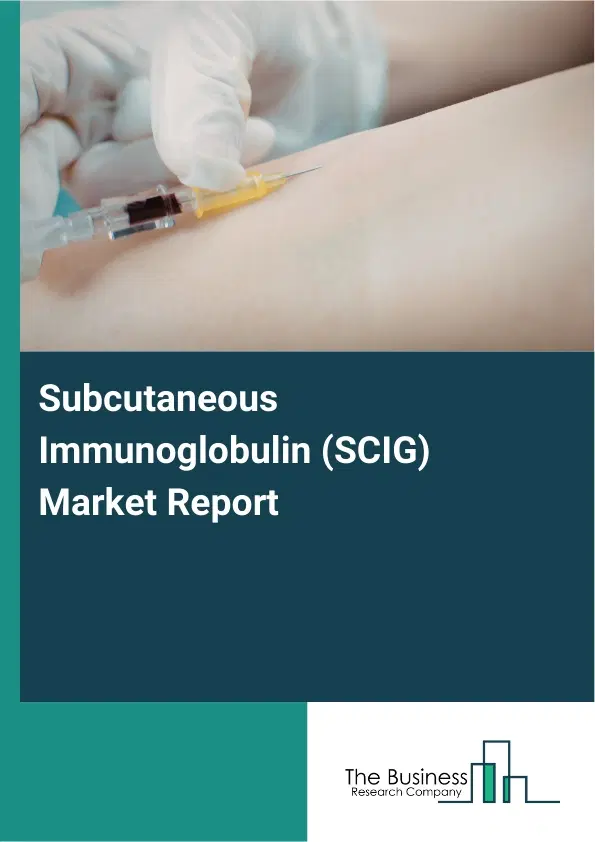
Subcutaneous Immunoglobulin (SCIG) Market Report 2026
Global Outlook – By Product Type (Immunoglobulin A (IgA), Immunoglobulin G (IgG)), By Application (Primary Immunodeficiency Disorders, Autoimmune Diseases, Neurological Disorders, Other Applications), By End-Use (Clinics, Hospitals, Homecare, Other End-Uses) – Market Size, Trends, Strategies, and Forecast to 2030
Subcutaneous Immunoglobulin (SCIG) Market Overview
• Subcutaneous Immunoglobulin (SCIG) market size has reached to $14.39 billion in 2025 • Expected to grow to $25.71 billion in 2030 at a compound annual growth rate (CAGR) of 12% • Growth Driver: Impact Of Secondary Immunodeficiency Diseases On The Subcutaneous Immunoglobulin Market • Market Trend: Advancements In Subcutaneous Immunoglobulin (SCIG) Technology Improve Treatment Convenience And Patient Self-Management • North America was the largest region in 2025 and Asia-Pacific is the fastest growing region.What Is Covered Under Subcutaneous Immunoglobulin (SCIG) Market?
Subcutaneous immunoglobulin (SCIG) refers to a method of administering immunoglobulin therapy in which the medication is delivered under the skin, rather than into a vein. This method allows for slower absorption of the medication, reducing the risk of side effects compared to intravenous administration. SCIG is used to treat various immune deficiencies, providing a convenient and effective way to boost the immune system. The main types of subcutaneous immunoglobulin (SCIG) products include immunoglobulin A (IgA), immunoglobulin G (IgG), and immunoglobulin M (IgM). IgA is a type of antibody that plays a crucial role in immune defense at mucosal surfaces. It helps prevent pathogens from entering the body through mucosal membranes. They are used for several applications, such as primary immunodeficiency disorders, autoimmune diseases, neurological disorders, and others used by various end-users, including clinics, hospitals, homecare, and others.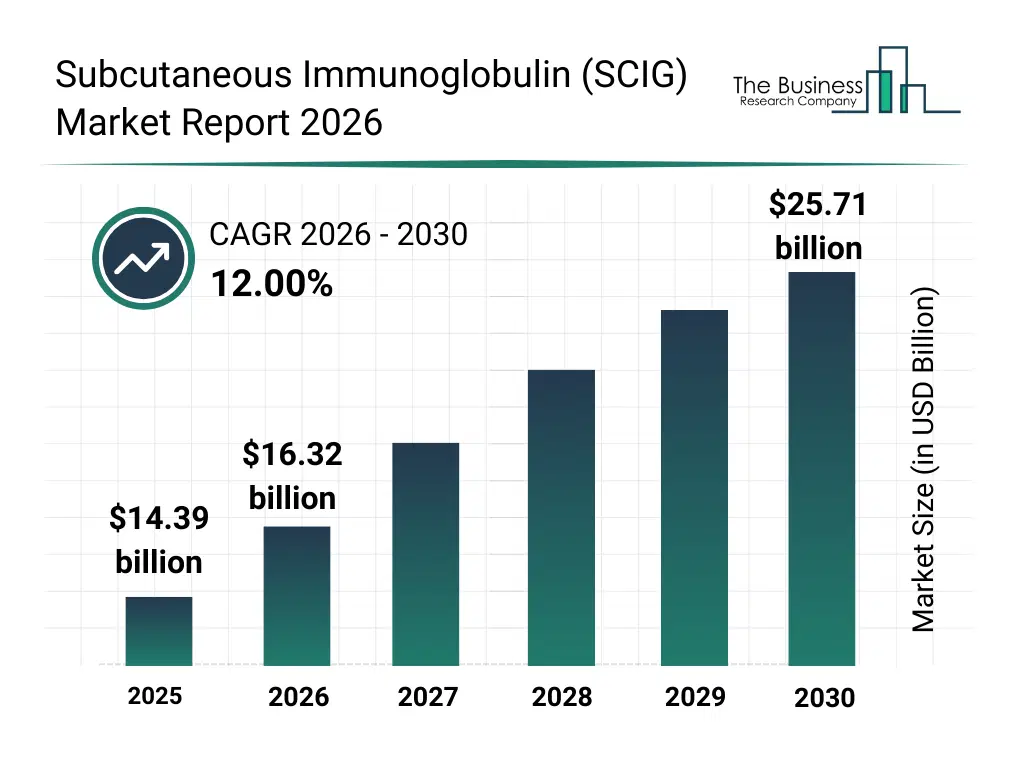
What Is The Subcutaneous Immunoglobulin (SCIG) Market Size and Share 2026?
The subcutaneous immunoglobulin (scig) market size has grown rapidly in recent years. It will grow from $14.39 billion in 2025 to $16.32 billion in 2026 at a compound annual growth rate (CAGR) of 13.4%. The growth in the historic period can be attributed to rising diagnosis of primary immunodeficiency disorders, limitations of intravenous immunoglobulin therapy, increasing need for long-term immune support, improved safety profile of scig, growing patient preference for at-home care.What Is The Subcutaneous Immunoglobulin (SCIG) Market Growth Forecast?
The subcutaneous immunoglobulin (scig) market size is expected to see rapid growth in the next few years. It will grow to $25.71 billion in 2030 at a compound annual growth rate (CAGR) of 12.0%. The growth in the forecast period can be attributed to expansion of scig indications beyond immunodeficiency, increasing healthcare focus on homecare therapies, technological advancements in infusion devices, growing prevalence of autoimmune and neurological disorders, rising demand for patient-centric treatment models. Major trends in the forecast period include growing shift from ivig to scig therapies, rising adoption of home-based immunoglobulin treatment, increasing preference for self-administration devices, expansion of scig use in chronic immune disorders, higher demand for long-term immune replacement therapy.
Global Subcutaneous Immunoglobulin (SCIG) Market Segmentation
1) By Product Type: Immunoglobulin A (IgA), Immunoglobulin G (IgG) 2) By Application: Primary Immunodeficiency Disorders, Autoimmune Diseases, Neurological Disorders, Other Applications 3) By End-Use: Clinics, Hospitals, Homecare, Other End-Uses Subsegments: 1) By Immunoglobulin A (IgA): IgA1, IgA2 2) By Immunoglobulin G (IgG): IgG1, IgG2, IgG3, IgG4What Are The Drivers Of The Subcutaneous Immunoglobulin (SCIG) Market?
The increase in the prevalence of secondary immunodeficiency diseases is expected to propel the growth of the subcutaneous immunoglobulin market going forward. Secondary immunodeficiency diseases are conditions with a reduced or compromised immune system caused by sources other than the immune system itself. The prevalence of secondary immunodeficiency diseases is driven by various factors such as aging populations, the use of immunosuppressive treatments, and environmental toxins. Subcutaneous immunoglobulin therapy provides antibodies to help strengthen the weakened immune system, especially in chronic disorders such as HIV or autoimmune diseases, thereby preventing infections and supporting immunological function during treatment. For instance, in October 2024 accroding to the HIV i-Base is a UK-based treatment activist organization in 2023, new HIV diagnoses increased by 36% among heterosexual men, rising from 445 in 2022 to 605, and by 30% among heterosexual women, rising from 602 in 2022 to 780. Therefore, the increase in the prevalence of secondary immunodeficiency diseases is driving the growth of the subcutaneous immunoglobulin market. The increasing number of neurological disorders is expected to propel the growth of the subcutaneous immunoglobulin market going forward. A neurological disorder is any disorder of the nervous system that includes anatomical, biochemical, or electrical abnormalities in the brain, spinal cord, or peripheral nerves such as acute spinal cord injury, alzheimer's dementia, amyotrophic lateral sclerosis (ALS), ataxia, brain tumors, and others. Neurological disorders are increasing due to various factors such as aging populations, environmental toxins, genetic predispositions, and lifestyle changes. Subcutaneous immunoglobulin therapy can be beneficial in neurological disorders by providing antibodies that modulate the immune response, reduce inflammation, and stabilize neuromuscular junctions, potentially slowing disease progression and improving symptoms. For instance, in March 2023, according to the Alzheimer's Association, a US-based nonprofit voluntary health organization, 6.7 million Americans aged 65 and older are living with Alzheimer's dementia, with projections indicating this could rise to 13.8 million by 2060. Therefore, the increasing number of neurological disorders is driving the growth of the subcutaneous immunoglobulin market.Key Players In The Global Subcutaneous Immunoglobulin (SCIG) Market
Major companies operating in the subcutaneous immunoglobulin (scig) market are CSL Behring, Grifols S.A., Octapharma AG, Kedrion Biopharma, LFB Group, Biotest AG, Bio Products Laboratory Ltd., ADMA Biologics Inc., Kamada Pharmaceuticals, Takeda Pharmaceutical Company Limited, Baxter International Inc., Bharat Serums and Vaccines Limited, Emergent BioSolutions Inc., Pfizer Inc., Johnson & Johnson, Lonza Group, Argenx SE, CinnaGen Co., Intas Pharmaceuticals Ltd., Dr. Reddy's Laboratories Ltd.
This chart is for illustrative purposes; the full report includes a detailed competitor analysis and comprehensive overview of the top 10 companies in the market.
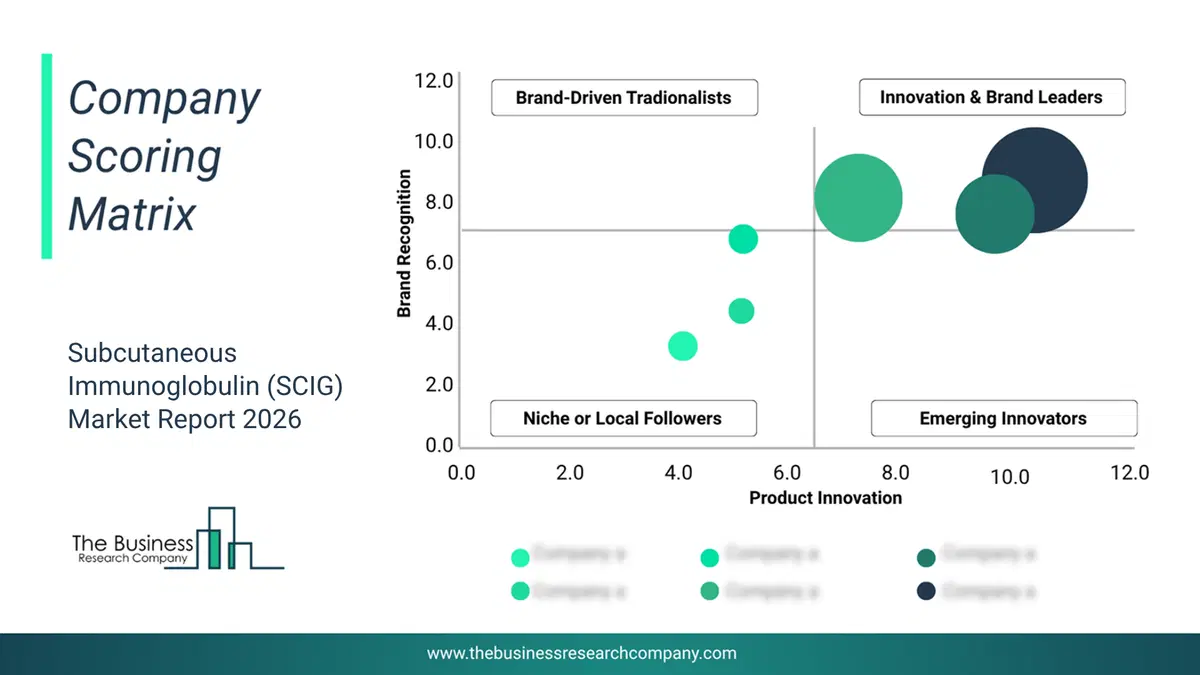
This chart maps companies by product innovation and brand strength, with bubble size indicating relative revenue, helping identify market leaders, challengers, and niche players. This is an illustrative chart; the full report provides a complete and accurate competitive analysis.
Global Subcutaneous Immunoglobulin (SCIG) Market Trends and Insights
Major companies operating in the subcutaneous immunoglobulin (SCIG) market are focusing on developing advanced solutions, such as ready-to-use prefilled formulations, to enhance treatment convenience, support self-administration, and improve the overall patient experience. Ready-to-use SCIG formulations refer to premeasured, stable immunoglobulin products designed for subcutaneous delivery, allowing patients with primary immunodeficiency and other immune disorders to administer therapy more easily outside clinical settings. For instance, in April 2023, the U.S. Food and Drug Administration (FDA) approved a 50 mL / 10 g prefilled syringe presentation of Hizentra (Immune Globulin Subcutaneous [Human] 20%), providing patients with a simplified, ready-to-use option that supports more convenient home infusion and enhances treatment adherence.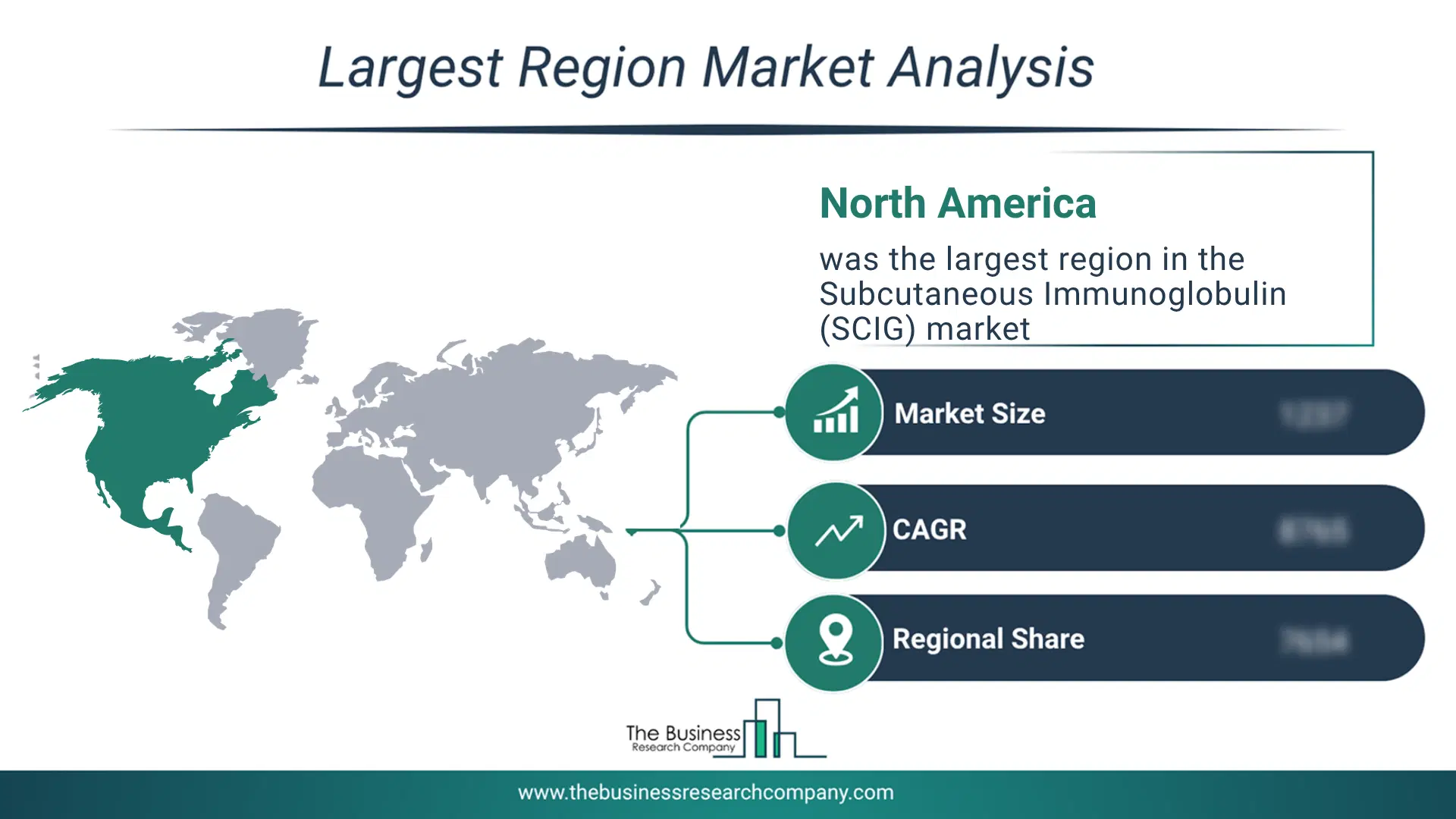
Regional Insights
North America was the largest region in the subcutaneous immunoglobulin market in 2025. Asia-Pacific is expected to be the fastest-growing region in the forecast period. The regions covered in this market report are Asia-Pacific, South East Asia, Western Europe, Eastern Europe, North America, South America, Middle East, Africa. The countries covered in this market report are Australia, Brazil, China, France, Germany, India, Indonesia, Japan, Taiwan, Russia, South Korea, UK, USA, Canada, Italy, Spain.What Defines the Subcutaneous Immunoglobulin (SCIG) Market?
The subcutaneous immunoglobulin (SCIG) market consists of revenues earned by entities by providing services such as immune system support, home-based therapy, infection prevention, personalized dosing, patient training, and support. The market value includes the value of related goods sold by the service provider or included within the service offering. The subcutaneous immunoglobulin market also includes sales of infusion pumps, needles and catheters, syringes, and sharps disposal containers. Values in this market are ‘factory gate’ values, that is the value of goods sold by the manufacturers or creators of the goods, whether to other entities (including downstream manufacturers, wholesalers, distributors and retailers) or directly to end customers. The value of goods in this market includes related services sold by the creators of the goods.How is Market Value Defined and Measured?
The market value is defined as the revenues that enterprises gain from the sale of goods and/or services within the specified market and geography through sales, grants, or donations in terms of the currency (in USD unless otherwise specified). The revenues for a specified geography are consumption values that are revenues generated by organizations in the specified geography within the market, irrespective of where they are produced. It does not include revenues from resales along the supply chain, either further along the supply chain or as part of other products.
This chart presents market attractiveness based on a quantitative evaluation of growth, competition, strategic alignment, and risk, offering a clear view of opportunity areas for decision-making. This chart is for illustrative purposes; the full report contains the complete analysis.

This chart highlights the Total Addressable Market (TAM) by estimating the maximum revenue opportunity using an assumption-driven approach, supporting strategic planning and opportunity sizing across markets. The chart is illustrative; the full report provides a more comprehensive analysis.
What Key Data and Analysis Are Included in the Subcutaneous Immunoglobulin (SCIG) Market Report 2026?
The subcutaneous immunoglobulin (scig) market research report is one of a series of new reports from The Business Research Company that provides market statistics, including industry global market size, regional shares, competitors with the market share, detailed market segments, market trends and opportunities, and any further data you may need to thrive in the subcutaneous immunoglobulin (scig) industry. The market research report delivers a complete perspective of everything you need, with an in-depth analysis of the current and future state of the industry.Subcutaneous Immunoglobulin (SCIG) Market Report Forecast Analysis
| Report Attribute | Details |
|---|---|
| Market Size Value In 2026 | $16.32 billion |
| Revenue Forecast In 2030 | $25.71 billion |
| Growth Rate | CAGR of 13.4% from 2026 to 2030 |
| Base Year For Estimation | 2025 |
| Actual Estimates/Historical Data | 2020-2025 |
| Forecast Period | 2026 - 2030 |
| Market Representation | Revenue in USD Billion and CAGR from 2026 to 2030 |
| Segments Covered | Product Type, Application, End-Use |
| Regional Scope | Asia-Pacific, Western Europe, Eastern Europe, North America, South America, Middle East, Africa |
| Country Scope | The countries covered in the report are Australia, Brazil, China, France, Germany, India, Indonesia, Japan, Taiwan, Russia, South Korea, UK, USA, Canada, Italy, Spain. |
| Key Companies Profiled | CSL Behring, Grifols S.A., Octapharma AG, Kedrion Biopharma, LFB Group, Biotest AG, Bio Products Laboratory Ltd., ADMA Biologics Inc., Kamada Pharmaceuticals, Takeda Pharmaceutical Company Limited, Baxter International Inc., Bharat Serums and Vaccines Limited, Emergent BioSolutions Inc., Pfizer Inc., Johnson & Johnson, Lonza Group, Argenx SE, CinnaGen Co., Intas Pharmaceuticals Ltd., Dr. Reddy's Laboratories Ltd. |
| Customization Scope | Request for Customization |
| Pricing And Purchase Options | Explore Purchase Options |