
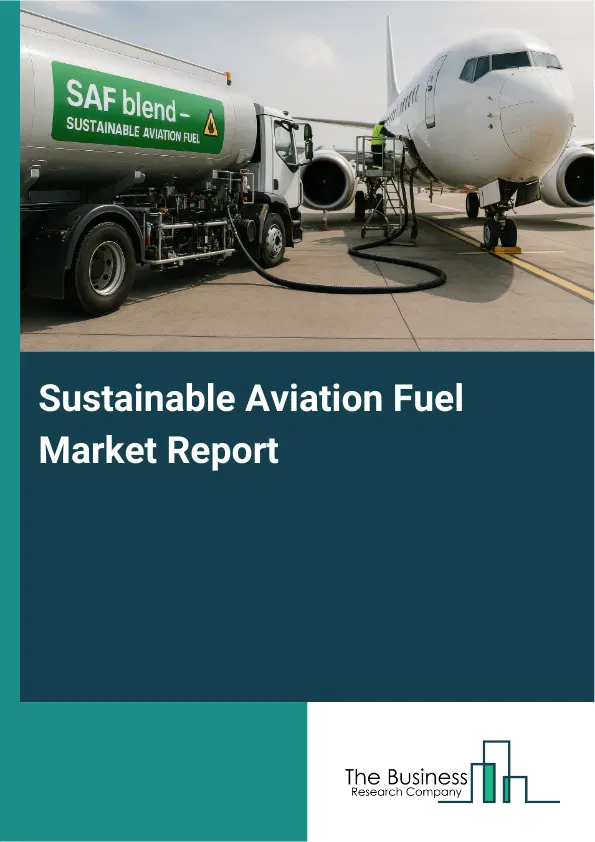
Sustainable Aviation Fuel Market Report 2026
Global Outlook – By Fuel Type (Biofuel, Power-to-Liquid, Gas-to-Liquid), By Blending Capacity (Below 30%, 30% To 50%, Above 50%), By Platform (Commercial Aviation, Military Aviation, Business And General Aviation, Unmanned Aerial Vehicles) – Market Size, Trends, Strategies, and Forecast to 2030
Sustainable Aviation Fuel Market Overview
• Sustainable Aviation Fuel market size has reached to $3.72 billion in 2025 • Expected to grow to $26.1 billion in 2030 at a compound annual growth rate (CAGR) of 46% • Growth Driver: Growth Of The Sustainable Aviation Fuel Market Fueled By Adoption Of Biofuels. • Market Trend: Lummus Technology's Ethanol-based Sustainable Aviation Fuel Technology • North America was the largest region in 2025 and Middle East is the fastest growing region.Market Gains By 2030 – Top Opportunities By Segment
Market Gain identifies the most promising market opportunities by highlighting the segments or products expected to generate the highest incremental revenue growth over the next five years.
What Is Covered Under Sustainable Aviation Fuel Market?
Sustainable aviation fuel (SAF) refers to a type of fuel that is produced from renewable and sustainable feedstocks, such as waste oils, agricultural residues, and non-food crops. SAF aims to reduce the carbon footprint of aviation by offering a more environmentally friendly alternative. It can be blended with conventional jet fuel and used in existing aircraft without requiring any modifications, making it a promising solution for reducing greenhouse gas emissions in the aviation industry. The main fuel types of the sustainable aviation fuel include biofuel, power-to-liquid, and gas-to-liquid. Biofuel refers to renewable fuels derived from biological sources such as plant oils, waste oils, and algae, which are processed to produce energy-dense fuels suitable for aviation, helping reduce carbon emissions and enhance environmental sustainability in flight operations. There are blending capacities such as below 30%, 30% to 50%, and above 50%, and they are used by several platforms include commercial aviation, military aviation, business and general aviation, and unmanned aerial vehicles.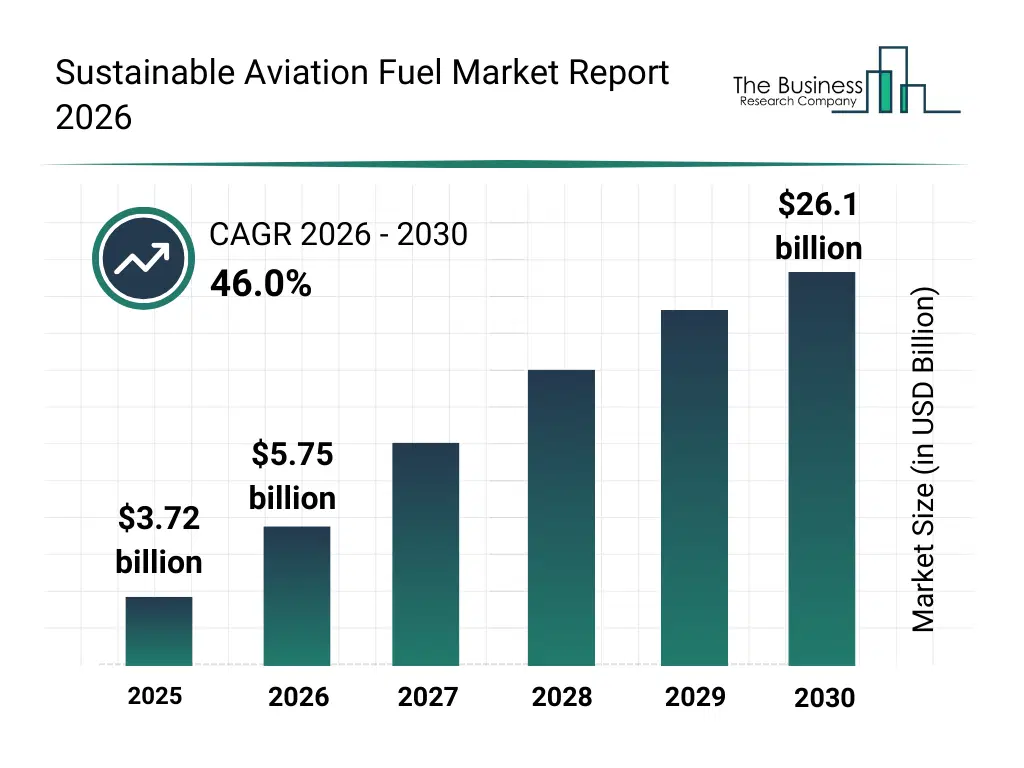
What Is The Sustainable Aviation Fuel Market Size and Share 2026?
The sustainable aviation fuel market size has grown exponentially in recent years. It will grow from $3.72 billion in 2025 to $5.75 billion in 2026 at a compound annual growth rate (CAGR) of 54.5%. The growth in the historic period can be attributed to increasing regulatory pressure to reduce aviation carbon emissions, early adoption of bio-based feedstocks for jet fuel production, technological advancements in sustainable fuel processing and refining, rising airline initiatives to integrate renewable fuels into operations, growth in infrastructure for blending and distributing sustainable aviation fuels.What Is The Sustainable Aviation Fuel Market Growth Forecast?
The sustainable aviation fuel market size is expected to see exponential growth in the next few years. It will grow to $26.1 billion in 2030 at a compound annual growth rate (CAGR) of 46.0%. The growth in the forecast period can be attributed to expansion of large-scale production facilities for sustainable aviation fuel, rising investment in advanced feedstocks such as algae and non-food crops, integration of ai and process optimization for efficient biofuel conversion, increasing adoption of saf by commercial airlines globally, development of logistics and distribution networks for seamless supply to airports and blending facilities. Major trends in the forecast period include expansion of waste-to-fuel and non-food crop feedstocks, development of high-efficiency biofuel refining technologies, increased adoption of high-blend saf in commercial aviation, growth in hydrogen- and co2-based power-to-liquid fuels, integration of saf production with airport infrastructure and logistics.
Global Sustainable Aviation Fuel Market Segmentation
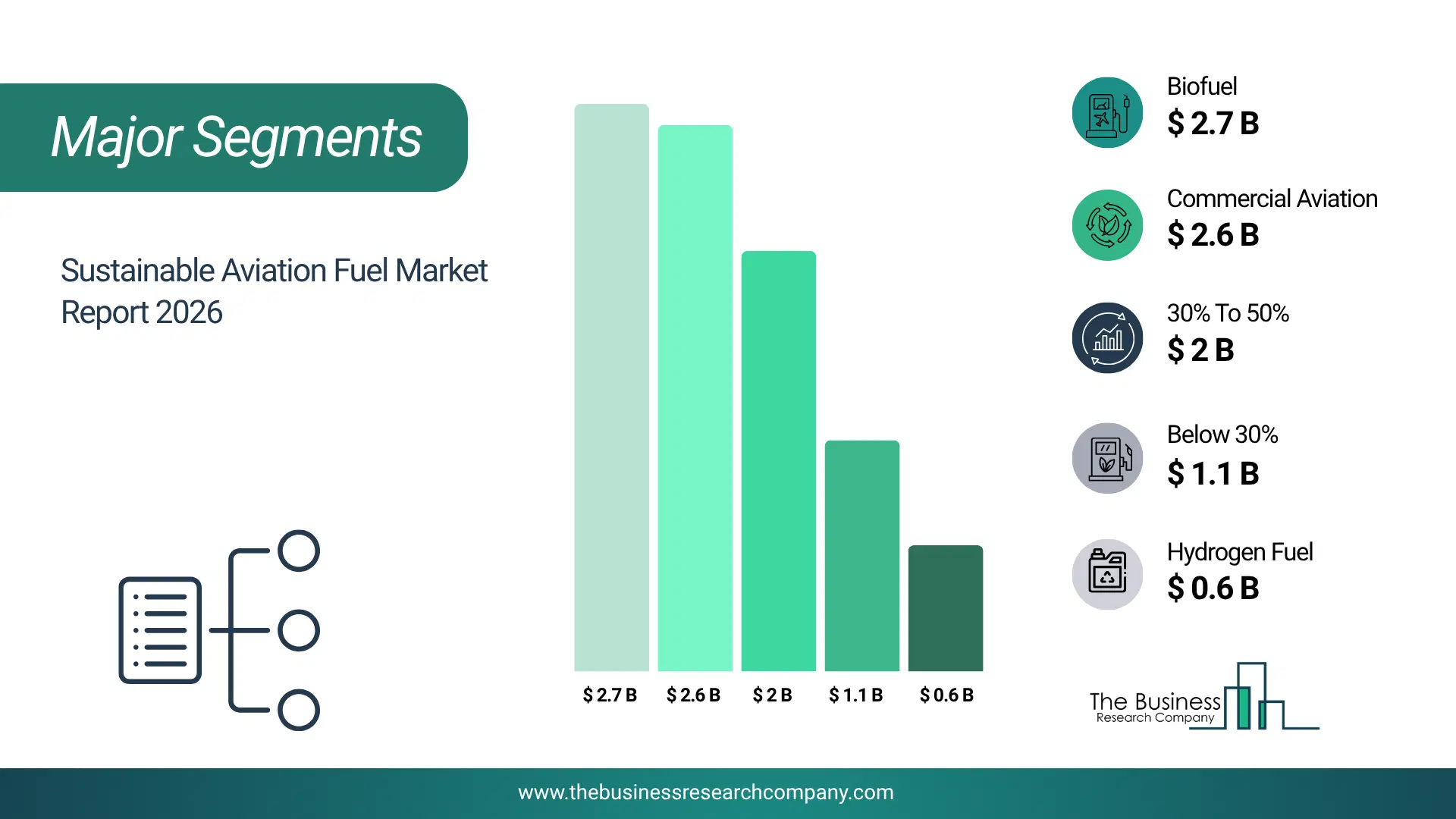
1) By Fuel Type: Biofuel, Power-to-Liquid, Gas-to-Liquid 2) By Blending Capacity: Below 30%, 30% To 50%, Above 50% 3) By Platform: Commercial Aviation, Military Aviation, Business And General Aviation, Unmanned Aerial Vehicles Subsegments: 1) By Biofuel: Biojet Fuel, Algae-based Biofuels, Vegetable Oil-based Biofuels, Waste Oil and Animal Fat-based Biofuels 2) By Power-to-Liquid: Electro-fuel (e-fuel) Production from Renewable Energy, Hydrogen-based Power-to-Liquid Fuels, CO2-to-fuel Technologies 3) By Gas-to-Liquid: Fischer-Tropsch Synthetic Fuels, Natural Gas-to-Liquid (GTL) Fuels The top segments in the sustainable aviation fuel market will be: • Biofuel will reach $2761.8 Million by 2025. • Commercial Aviation will reach $2674.01 Million by 2025. • 30% To 50% will reach $2020.42 Million by 2025. • Below 30% will reach $1117.63 Million by 2025. • Hydrogen Fuel will reach $616.93 Million by 2025.What Is Driver Of The Sustainable Aviation Fuel Market?
The surge in the adoption of biofuels is expected to propel the growth of the sustainable aviation fuel market going forward. Biofuels refer to renewable energy sources derived from plant, algal, or animal biomass. This adoption is driven by a global push for sustainable practices and the aviation industry's commitment to reducing greenhouse gas emissions. With the use of biofuels in aviation, airlines can reduce their carbon footprint and environmental impact. For instance, in December 2024, according to Eurostat, a Luxembourg-based government agency, in 2023, renewable energy accounted for 24.5% of the energy consumed in the EU, an increase from 23.0% in 2022. Therefore, the surge in the adoption of biofuels is driving the growth of the sustainable aviation fuel industry.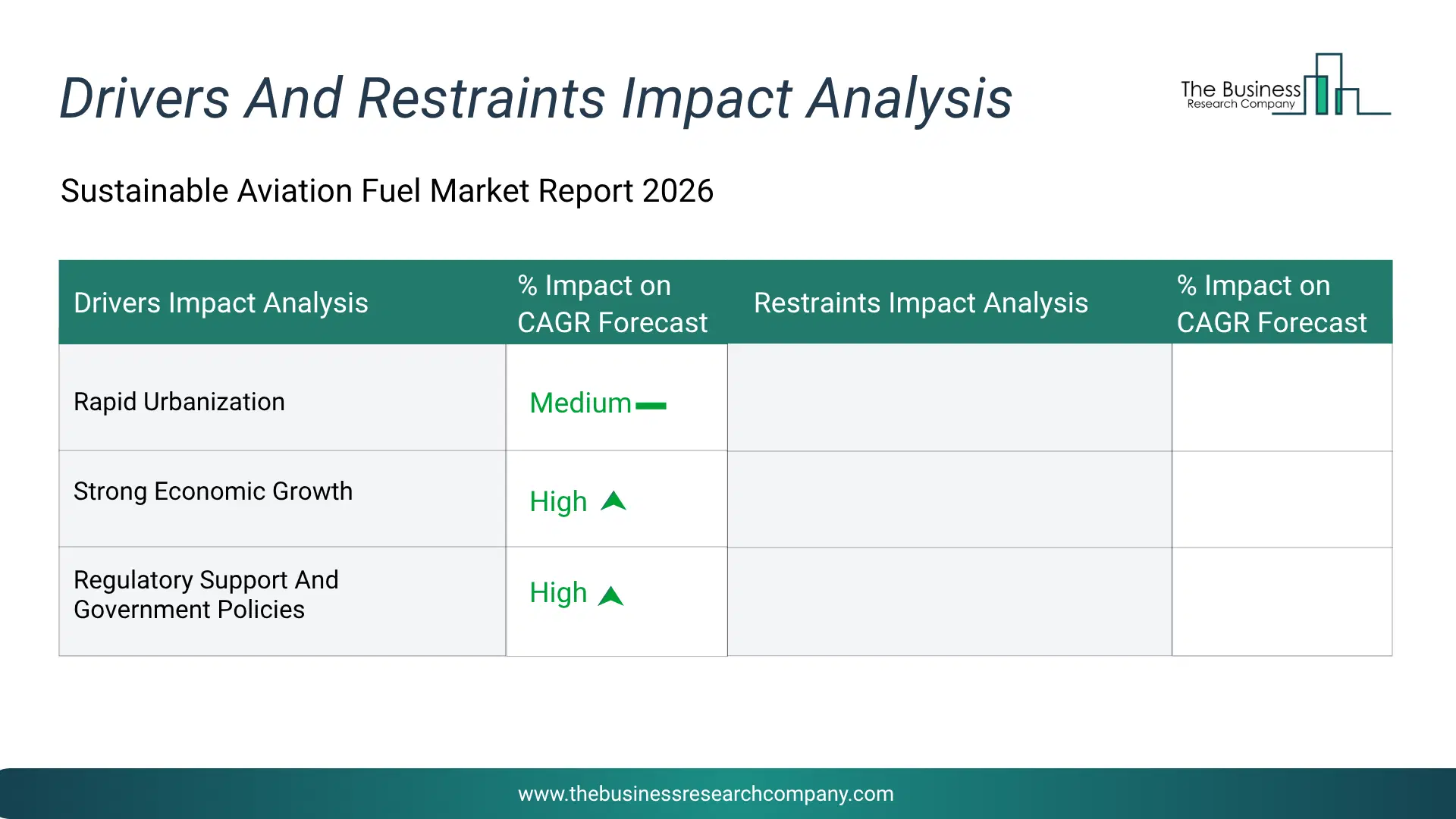
Infographic Chart Showing Key Market Drivers Analysis And Restraints For Sustainable Aviation Fuel Market
The chart presents an impact analysis of key drivers and restraints, quantifying their relative influence on the market's growth rate and helping assess the balance between growth enablers and limiting factors. This chart offers a high-level perspective; the full report contains more detailed insights.
How Will The Drivers Impact Growth In The Global Sustainable Aviation Fuel Market?
• Rapid Urbanization (Medium) – The rising urbanization will become a key driver of growth in the sustainable aviation fuel market by 2030. Rapid urbanization increases air travel demand as more people move to cities and participate in globalized activities. As a result, rising urbanization is anticipated to contributing to annual growth in the market. • Strong Economic Growth (High) – The strong economic growth will become a key driver of growth in the sustainable aviation fuel market by 2030. Strong economic growth enhances air travel demand, increasing the need for cleaner energy solutions like sustainable aviation fuel (SAF). This growth encourages investments in SAF production and infrastructure to meet both rising passenger volumes and sustainability goals. As a result, strong economic growth is anticipated to contributing to annual growth in the market. • Regulatory Support And Government Policies (High) – The regulatory support and government policies will serve as a key growth catalyst sustainable aviation fuel market by 2030. Regulatory support and government policies are anticipated to fuel the growth of the sustainable aviation fuel (SAF) market by offering incentives, subsidies, and mandates for SAF production and utilization. These measures are designed to mitigate carbon emissions in the aviation sector, with governments implementing targets to increase SAF adoption and stimulate investment in its production. Therefore, regulatory support and government policies is projected to supporting to annual growth in the market. • Environmental Regulations And Net-Zero Goals (High) – The environmental regulations and net-zero goals will serve as a key growth catalyst for sustainable aviation fuel market by 2030. The growing emphasis on environmental regulations and net-zero goals is driving the adoption of sustainable aviation fuels (SAF) to reduce carbon emissions in the aviation industry. Governments and regulatory bodies are mandating cleaner fuel options, accelerating SAF production and usage to meet carbon reduction targets. Therefore, this environmental regulations and net-zero goals will is projected to supporting to annual growth in the market.How Will The Restraints Impact Growth In The Global Sustainable Aviation Fuel Market?
• Limited Production Capacity (High) – Limited Production Capacity will restrict the growth of the Sustainable Aviation Fuel market during the forecast period. Sustainable aviation fuel production capacity is currently limited relative to the demand from the aviation industry. Production capacity constraints affect fuel availability and pricing, limiting market growth. Scaling up production requires significant investment and time, constraining the adoption of SAF in the short to medium term.Key Players In The Global Sustainable Aviation Fuel Market
Major companies operating in the sustainable aviation fuel market are Shell plc, TotalEnergies SE, BP plc, Eni S.p.A., OMV Group, Neste Oyj, Preem AB, Sustainable Aviation, Aemetis Inc., REG Synthetic Fuels LLC, Ballard Power Systems, ZeroAvia Inc., AvFuel Corporation, LanzaTech Inc., Sundrop Fuels Inc., LanzaJet Inc., Fulcrum BioEnergy Inc., SkyNRG BV, Alder Fuels, Red Rock Biofuels, SG Preston Company, Velocys Plc, WasteFuel, World Energy, SAF+ International Group, Gevo Inc., Northwest Advanced Bio-Fuels LLC., AltAir Fuels, REG Geismar LLC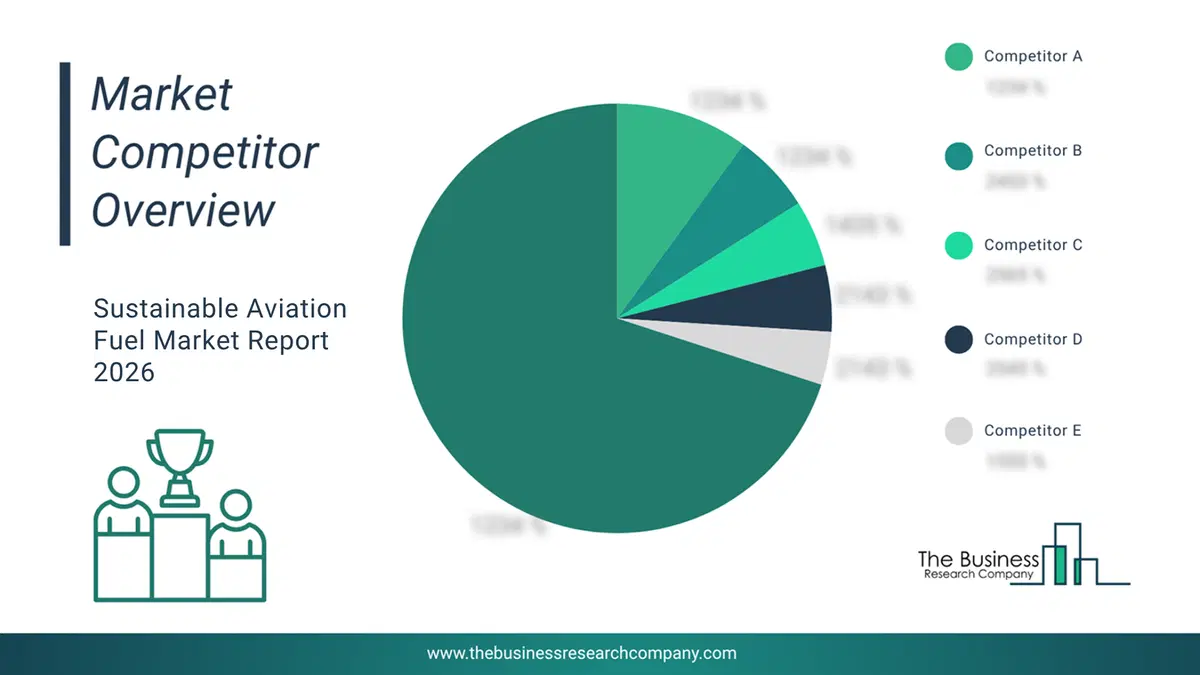
This chart is for illustrative purposes; the full report includes a detailed competitor analysis and comprehensive overview of the top 10 companies in the market.
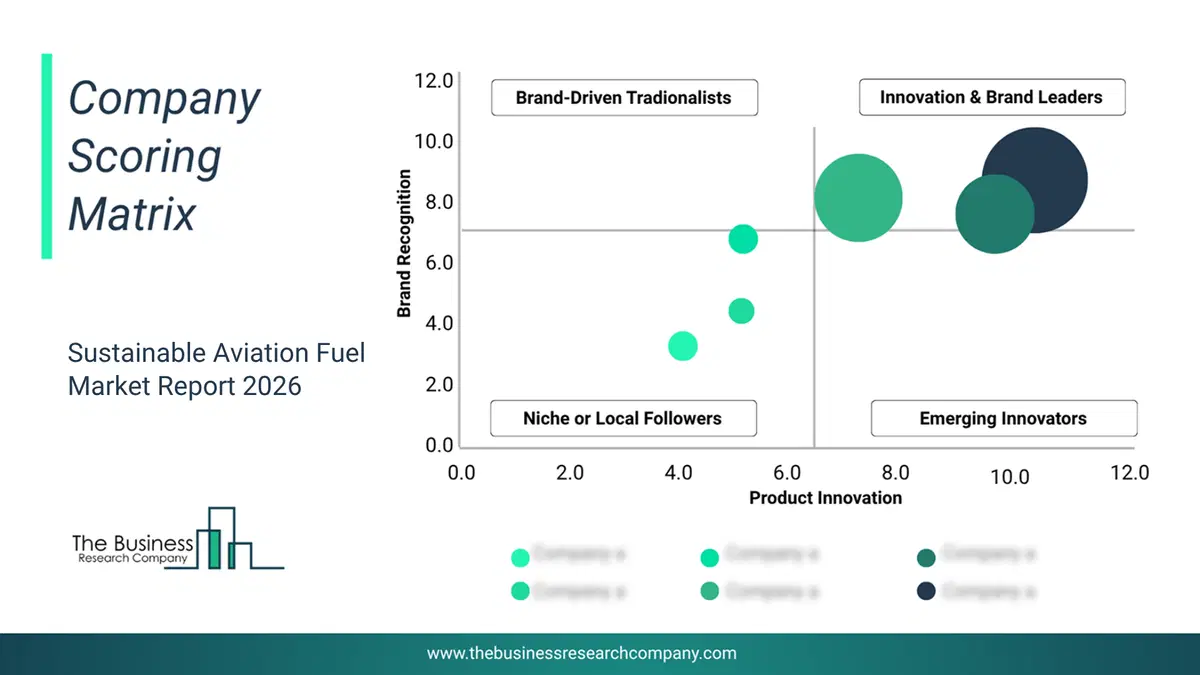
This chart maps companies by product innovation and brand strength, with bubble size indicating relative revenue, helping identify market leaders, challengers, and niche players. This is an illustrative chart; the full report provides a complete and accurate competitive analysis.
Global Sustainable Aviation Fuel Market Trends and Insights
Major companies operating in the sustainable aviation fuel market are developing innovative technologies, such as fuel process technology to reduce the environmental impact of aviation. Fuel processing technology refers to the scientific and technological aspects of processing and utilizing clean fuels, fuel-related chemicals, and advanced carbon materials and by-products. For instance, in September 2023, Lummus Technology, a US-based provider of process technologies and value-driven energy solutions, launched ethanol-based sustainable aviation fuel technology. The technology provides operators with a large-scale, commercially demonstrated solution to reduce the aviation industry’s greenhouse gas emissions. Lummus' ethanol to SAF technology offers a safe and reliable solution by integrating ethanol to ethylene (EtE), olefin oligomerization, and hydrogenation technologies in a process configuration that maximizes the final yield to SAF while minimizing capital costs (CAPEX), CO2-specific operational costs (OPEX), and carbon emissions.What Are Latest Mergers And Acquisitions In The Sustainable Aviation Fuel Market? Southwest Airlines Co. Acquires Saffire Renewables LLC To Advance Net-Zero Emissions Goals
In April 2024, Southwest Airlines Co., a US-based airline, acquired SAFFiRE Renewables LLC for an undisclosed amount. With this acquisition, Southwest Airlines Co. aims to advance its Nonstop to Net Zero plan by securing scalable sustainable aviation fuel (SAF) production through SAFFiRE Renewables’ Department of Energy–backed technology that converts agricultural residues like corn stover into renewable ethanol for low-carbon jet fuel. SAFFiRE Renewables LLC is a US-based commercial company that offers sustainable aviation fuel.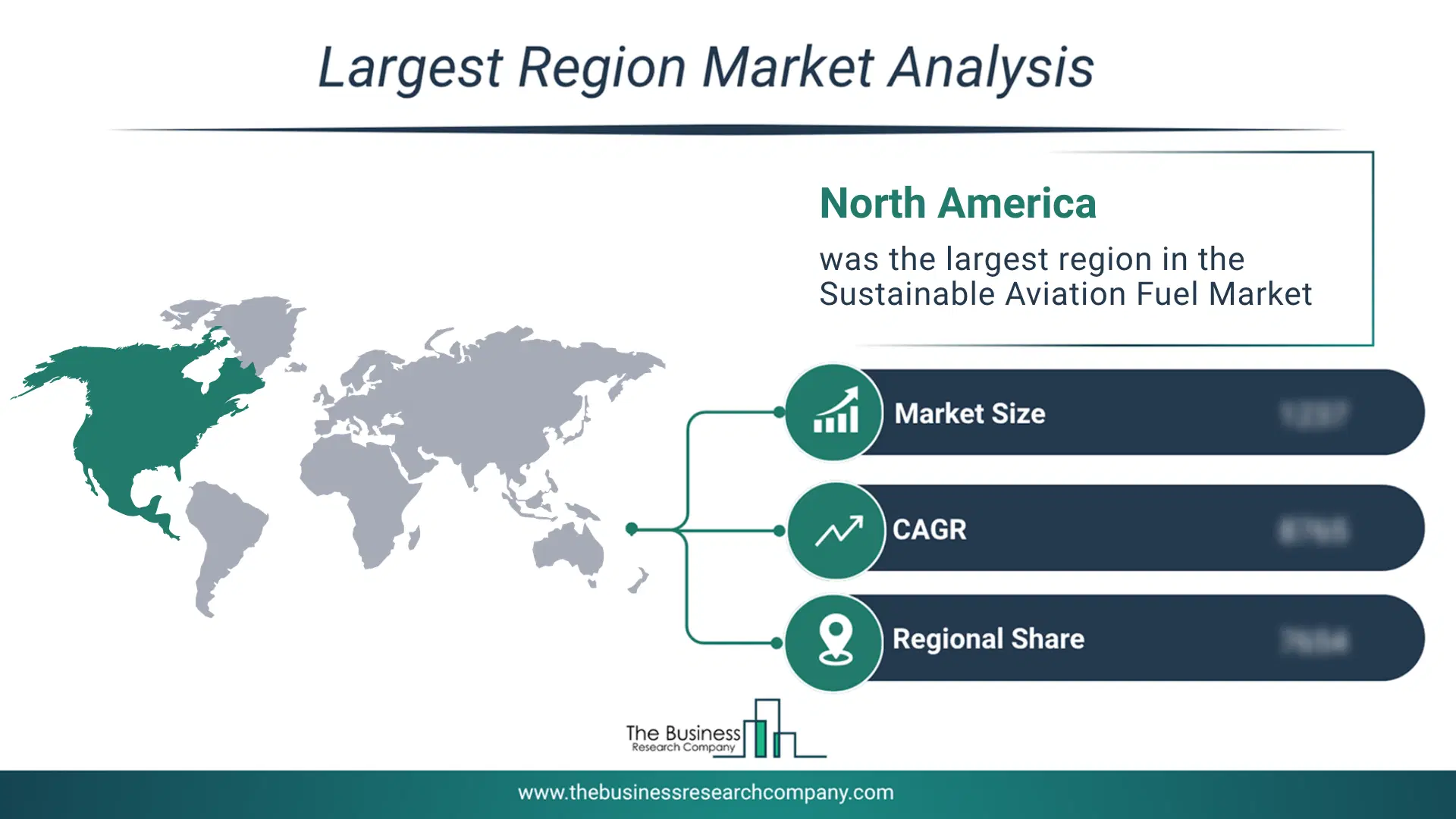
Regional Insights
North America was the largest region in the sustainable aviation fuel market in 2025. Middle East is expected to be the fastest-growing region in the forecast period. The regions covered in this market report are Asia-Pacific, South East Asia, Western Europe, Eastern Europe, North America, South America, Middle East, Africa. The countries covered in this market report are Australia, Brazil, China, France, Germany, India, Indonesia, Japan, Taiwan, Russia, South Korea, UK, USA, Canada, Italy, SpainWhat Defines the Sustainable Aviation Fuel Market?
The sustainable aviation fuel market consists of revenues earned by entities by providing services such as cultivation, processing, and refining of feedstocks into biofuels, and distribution services involve the transportation of biofuels from production facilities to airports or blending facilities. The market value includes the value of related goods sold by the service provider or included within the service offering. The sustainable aviation fuel market also includes sales of biofuel refineries, blending facilities, and transportation infrastructure. Values in this market are ‘factory gate’ values, that is the value of goods sold by the manufacturers or creators of the goods, whether to other entities (including downstream manufacturers, wholesalers, distributors and retailers) or directly to end customers. The value of goods in this market includes related services sold by the creators of the goods.How is Market Value Defined and Measured?
The market value is defined as the revenues that enterprises gain from the sale of goods and/or services within the specified market and geography through sales, grants, or donations in terms of the currency (in USD unless otherwise specified). The revenues for a specified geography are consumption values that are revenues generated by organizations in the specified geography within the market, irrespective of where they are produced. It does not include revenues from resales along the supply chain, either further along the supply chain or as part of other products.
This chart presents market attractiveness based on a quantitative evaluation of growth, competition, strategic alignment, and risk, offering a clear view of opportunity areas for decision-making. This chart is for illustrative purposes; the full report contains the complete analysis.

This chart highlights the Total Addressable Market (TAM) by estimating the maximum revenue opportunity using an assumption-driven approach, supporting strategic planning and opportunity sizing across markets. The chart is illustrative; the full report provides a more comprehensive analysis.
What Key Data and Analysis Are Included in the Sustainable Aviation Fuel Market Report 2026?
The sustainable aviation fuel market research report is one of a series of new reports from The Business Research Company that provides market statistics, including industry global market size, regional shares, competitors with the market share, detailed market segments, market trends and opportunities, and any further data you may need to thrive in the sustainable aviation fuel industry. The market research report delivers a complete perspective of everything you need, with an in-depth analysis of the current and future state of the industry.Sustainable Aviation Fuel Market Report Forecast Analysis
| Report Attribute | Details |
|---|---|
| Market Size Value In 2026 | $5.75 billion |
| Revenue Forecast In 2030 | $26.1 billion |
| Growth Rate | CAGR of 54.5% from 2026 to 2030 |
| Base Year For Estimation | 2025 |
| Actual Estimates/Historical Data | 2020-2025 |
| Forecast Period | 2026 - 2030 |
| Market Representation | Revenue in USD Billion and CAGR from 2026 to 2030 |
| Segments Covered | Fuel Type, Blending Capacity, Platform |
| Regional Scope | Asia-Pacific, Western Europe, Eastern Europe, North America, South America, Middle East, Africa |
| Country Scope | The countries covered in the report are Australia, Brazil, China, France, Germany, India, Indonesia, Japan, Taiwan, Russia, South Korea, UK, USA, Canada, Italy, Spain. |
| Key Companies Profiled | Shell plc, TotalEnergies SE, BP plc, Eni S.p.A., OMV Group, Neste Oyj, Preem AB, Sustainable Aviation, Aemetis Inc., REG Synthetic Fuels LLC, Ballard Power Systems, ZeroAvia Inc., AvFuel Corporation, LanzaTech Inc., Sundrop Fuels Inc., LanzaJet Inc., Fulcrum BioEnergy Inc., SkyNRG BV, Alder Fuels, Red Rock Biofuels, SG Preston Company, Velocys Plc, WasteFuel, World Energy, SAF+ International Group, Gevo Inc., Northwest Advanced Bio-Fuels LLC., AltAir Fuels, REG Geismar LLC |
| Customization Scope | Request for Customization |
| Pricing And Purchase Options | Explore Purchase Options |