
Synthetic Fibers Market Report 2026
Global Outlook – By Type (Polyester, Nylon, Acrylics, Polyolefin, Other Types ), By Application (Clothing, Home Furnishing, Automotive, Filtration, Other Applications ), By Distribution Channel (Online, Offline) – Market Size, Trends, Strategies, and Forecast to 2030
Synthetic Fibers Market Overview
• Synthetic Fibers market size has reached to $130.91 billion in 2025 • Expected to grow to $160.58 billion in 2030 at a compound annual growth rate (CAGR) of 4.4% • Growth Driver: The Construction Boom A Catalyst For Synthetic Fiber Market Growth • Market Trend: Innovation In The Synthetic Fiber Industry With The Rise Of Terryl Branding • Asia-Pacific was the largest region and fastest growing region.What Is Covered Under Synthetic Fibers Market?
Synthetic fibers are man-made textiles that are usually made from chemical synthesis materials, such as rayon and acetate from cellulose, or regenerated protein synthetic fibers from zein or casein, as well as fully synthetic fibers. They are designed to mimic the properties of natural fibers while offering enhanced durability, water resistance, and cost-effectiveness. The types of synthetic fibers are polyester, nylon, acrylics, polyolefin, and other types. Polyester is a group of polymers that consist basically of repeated units of an ester and are used mainly in making fibers or plastics. The applications involved are clothing, home furnishings, automotive, filtration, and other applications. The distribution channels are online and offline.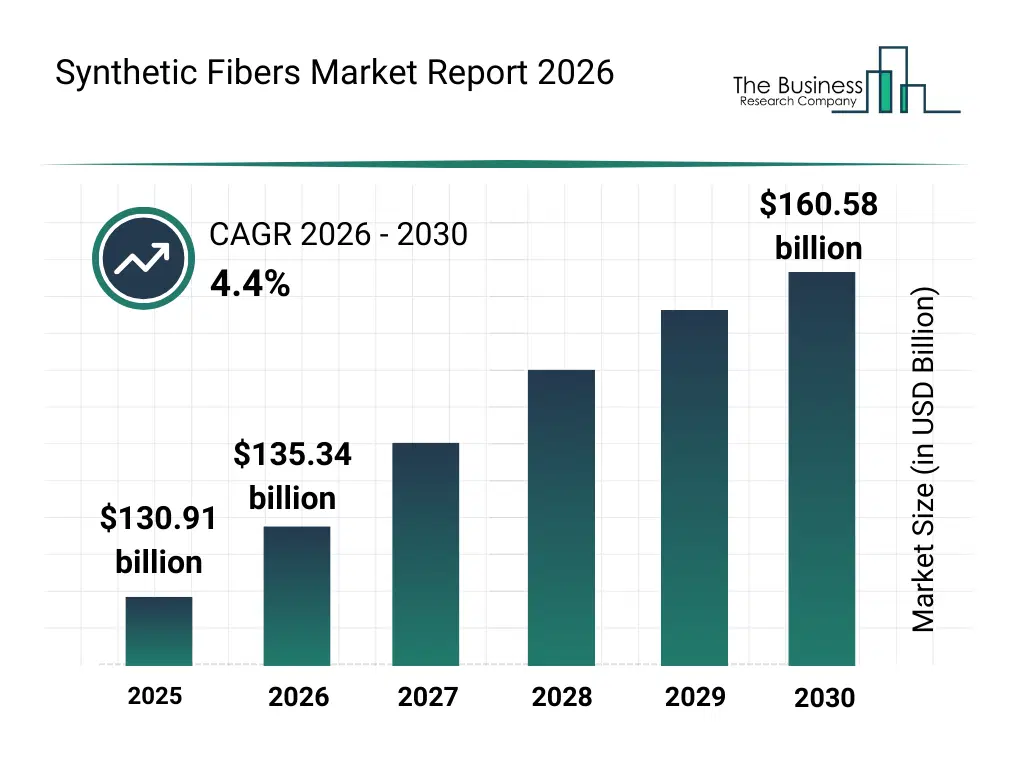
What Is The Synthetic Fibers Market Size and Share 2026?
The synthetic fibers market size has grown steadily in recent years. It will grow from $130.91 billion in 2025 to $135.34 billion in 2026 at a compound annual growth rate (CAGR) of 3.4%. The growth in the historic period can be attributed to growth of textile industry, demand for durable fabrics, expansion of apparel manufacturing, adoption of synthetic alternatives, cost efficiency advantages.What Is The Synthetic Fibers Market Growth Forecast?
The synthetic fibers market size is expected to see steady growth in the next few years. It will grow to $160.58 billion in 2030 at a compound annual growth rate (CAGR) of 4.4%. The growth in the forecast period can be attributed to growth of technical textiles, expansion of electric vehicle interiors, rising filtration demand, innovation in fiber chemistry, sustainability driven material shifts. Major trends in the forecast period include rising demand for performance textiles, expansion in automotive interior applications, growing use in filtration materials, increased adoption in home furnishings, focus on lightweight durable fibers.
Global Synthetic Fibers Market Segmentation
1) By Type: Polyester, Nylon, Acrylics, Polyolefin, Other Types 2) By Application: Clothing, Home Furnishing, Automotive, Filtration, Other Applications 3) By Distribution Channel: Online, Offline Subsegments: 1) By Polyester: PET (Polyethylene Terephthalate), PBT (Polybutylene Terephthalate) 2) By Nylon: Nylon 6, Nylon 66 3) By Acrylics: Polyacrylonitrile (PAN) 4) By Polyolefin: Polypropylene (PP), Polyethylene (PE) 5) By Other Types: Aramid, SpandexWhat Is The Driver Of The Synthetic Fibers Market?
The increasing demand for construction is expected to propel the growth of the synthetic fibers market going forward. Construction refers to the process of planning, designing, building, and assembling physical structures, facilities, or infrastructure, and it is a key driver of economic development. Synthetic fibers offer advantages such as corrosion resistance, high strength-to-weight ratios, and versatility, making them valuable in modern construction practices. For instance, in June 2025, according to Eurostat, a Luxembourg-based statistical office of the European Union, in April 2025, construction production rose by 3.0% in the euro area and by 2.5% in the EU compared with April 2024. Therefore, the increasing demand for construction is driving the growth of the synthetic fibers industry.Key Players In The Global Synthetic Fibers Market
Major companies operating in the synthetic fibers market are Bombay Dyeing & Manufacturing Company Limited, DuPont de Nemours Inc., Indorama Corporation, Lenzing AG, Mitsubishi Chemical Group Corporation, Reliance Industries Limited, Sinopec Corp, Teijin Limited, Toray Chemical Korea Inc., Toyobo Co. Ltd., Dow Chemical Company, Toho Tenax Co. Ltd., Koch Industries Inc., Formosa Plastics Corporation, TUNTEX Group Co. Ltd., Asahi Kasei Corporation, Kolon Industries Inc., Hyosung Corporation, Radici Group, Far Eastern New Century Corporation, Indorama Ventures PCL, Nan Ya Plastics Corporation, Formosa Chemicals & Fibre Corporation, China National Chemical Fiber Corp., Huvis Corporation, Unifi Inc., FiberVisions Corporation, Trevira GmbH, Advansa BV, Wellman International Ltd., Kuraray Co. Ltd., Grasim Industries Ltd., Thai Polyester Co. Ltd., JBF Industries Ltd., Polygenta Technologies Limited, Shinkong Synthetic Fibers Corporation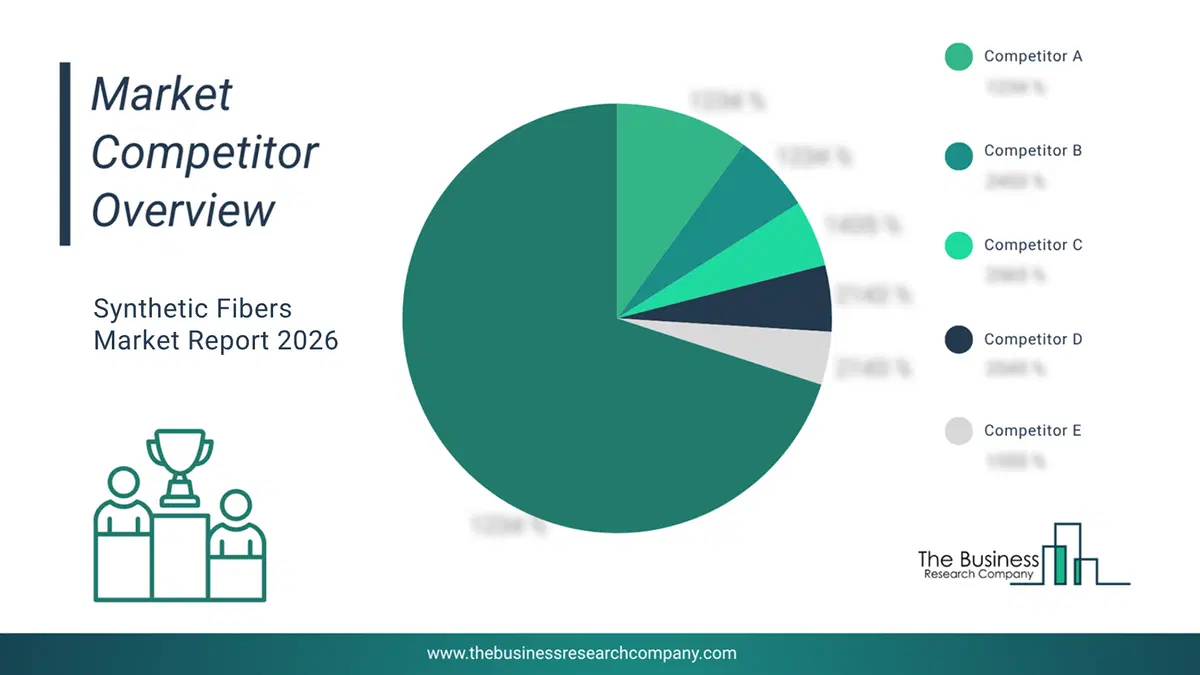
This chart is for illustrative purposes; the full report includes a detailed competitor analysis and comprehensive overview of the top 10 companies in the market.
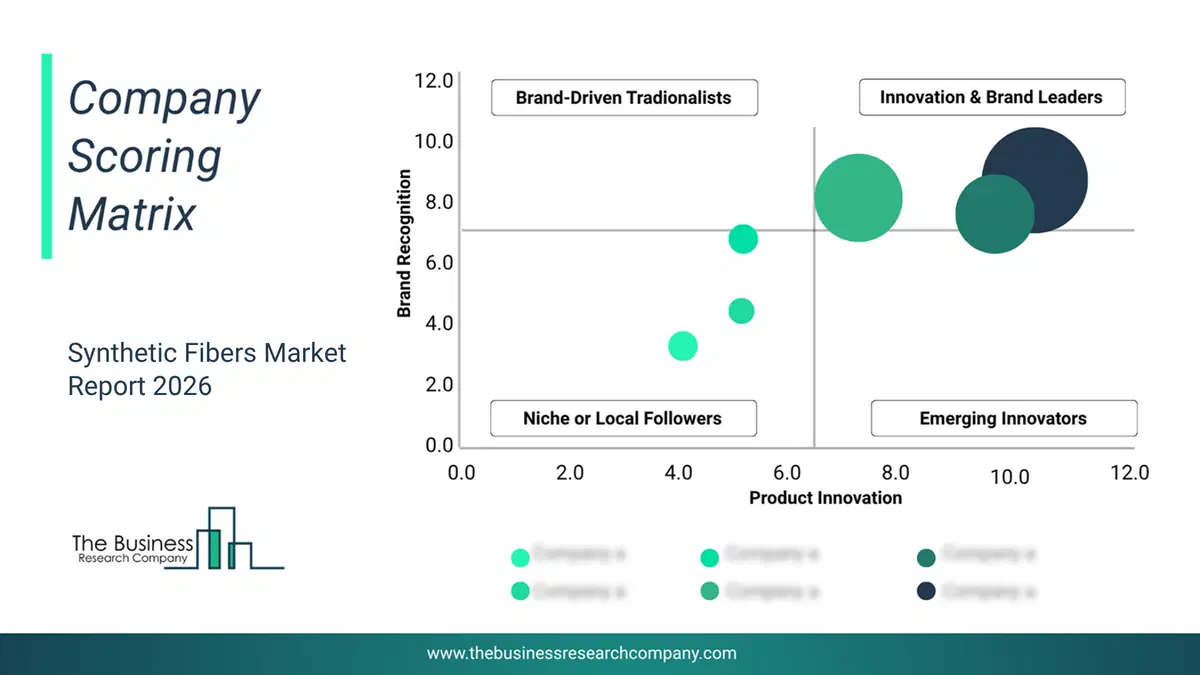
This chart maps companies by product innovation and brand strength, with bubble size indicating relative revenue, helping identify market leaders, challengers, and niche players. This is an illustrative chart; the full report provides a complete and accurate competitive analysis.
Global Synthetic Fibers Market Trends and Insights
Major companies operating in synthetic fibers are developing innovative products, such as the TERRYL brand, to drive revenues in the market. The TERRYL brand encompasses various offerings, including wellness, holidays, dining, shopping, and payment services. For instance, in 2023, Cathay launched the TERRYL brand. The new brand, known as Cathay, reflects the company's evolution into a multi-faceted travel lifestyle brand beyond just airline travel. This rebranding effort aims to capture more of each customer's spending across different platforms and facilitate interactions between the company and its customers.What Are Latest Mergers And Acquisitions In The Synthetic Fibers Market?
In September 2024, Hansae, a South Korea-based garment manufacturing company, acquired Texollini for an undisclosed amount. The acquisition enhances Hansae's capabilities in synthetic fiber production and capitalizes on the growing trend of nearshoring in Latin America. Texollini Inc. is a US-based synthetic fiber manufacturing company.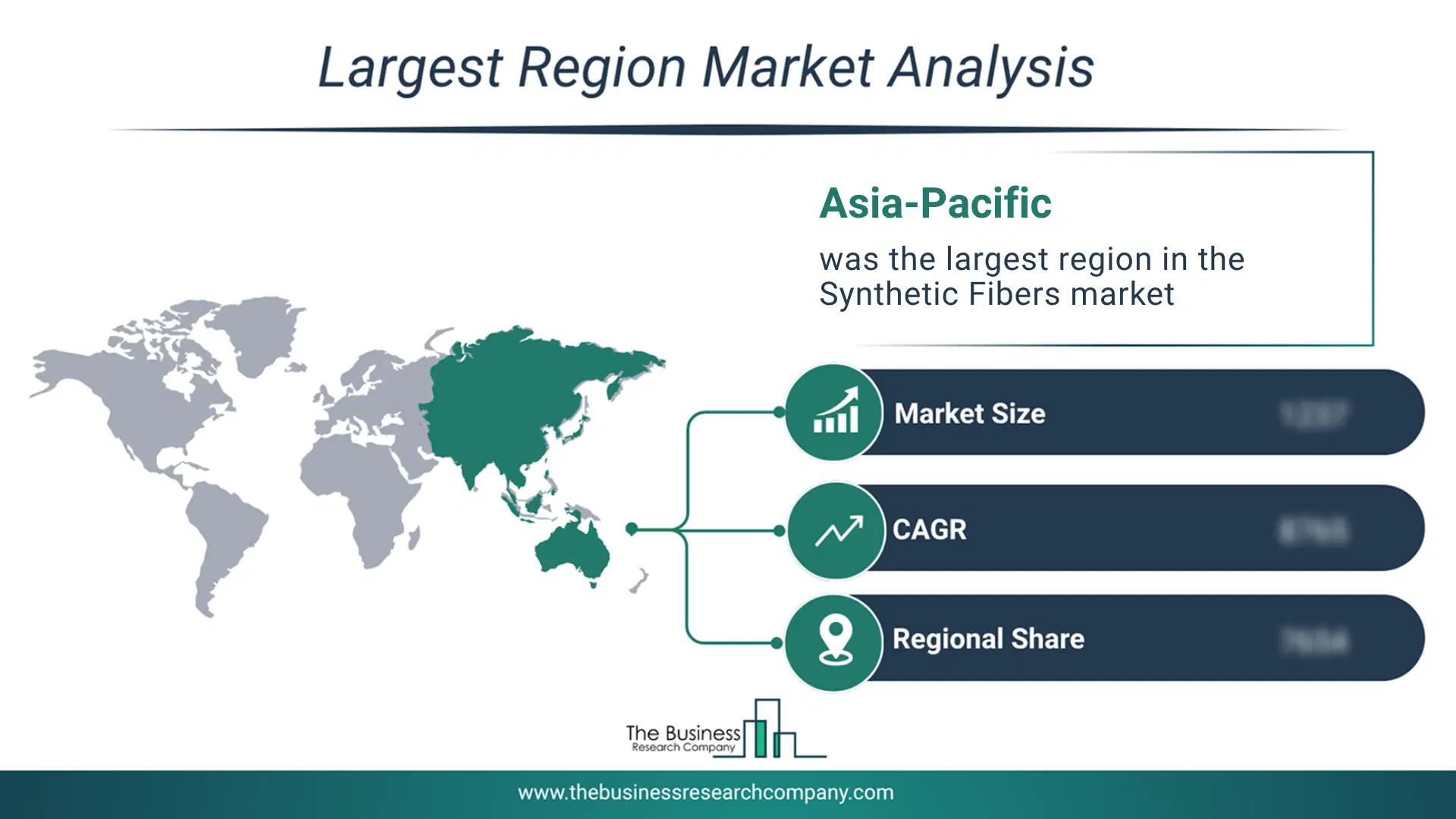
Regional Insights
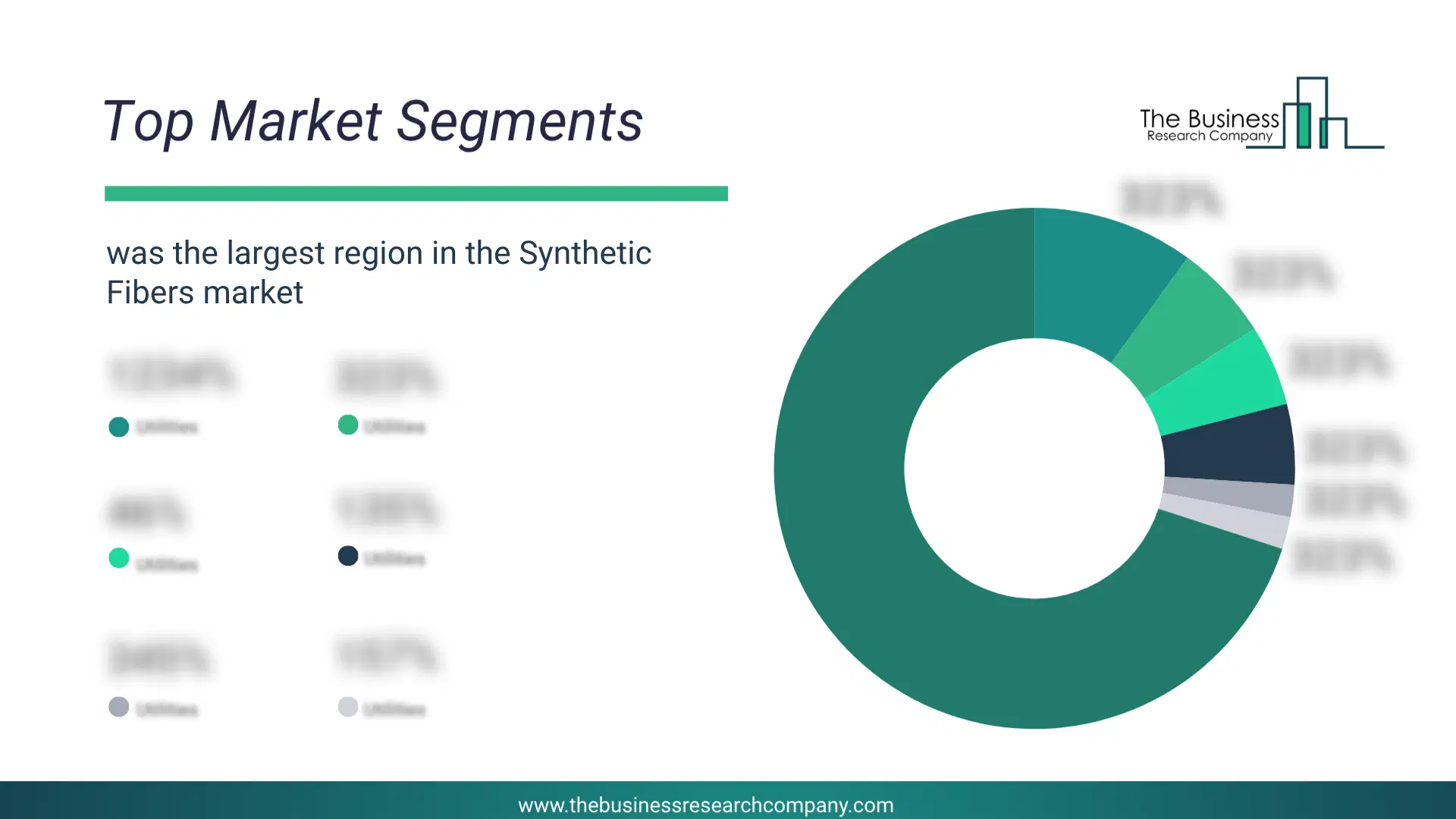
Asia-Pacific was the largest region in the synthetic fibers market in 2025. Western Europe was the second-largest region in the global synthetic fibers market share. The regions covered in this market report are Asia-Pacific, South East Asia, Western Europe, Eastern Europe, North America, South America, Middle East, Africa The countries covered in this market report are China, India, Japan, Australia, Indonesia, South Korea, Bangladesh, Thailand, Vietnam, Malaysia, Singapore, Philippines, Hong Kong, Taiwan, New Zealand, UK, Germany, France, Italy, Spain, Austria, Belgium, Denmark, Finland, Ireland, Netherlands, Norway, Portugal, Sweden, Switzerland, Russia, Czech Republic, Poland, Romania, Ukraine, USA, Canada, Mexico, Brazil, Chile, Argentina, Colombia, Peru, Saudi Arabia, Israel, Iran, Turkey, UAE, Egypt, Nigeria, South Africa.What Defines the Synthetic Fibers Market?
The synthetic fibers market consists of the sales of rayon, microfiber, and spandex synthetic fibers. Values in this market are factory gate values, that is the value of goods sold by the manufacturers or creators of the goods, whether to other entities (including downstream manufacturers, wholesalers, distributors, and retailers) or directly to end customers. The value of goods in this market includes related services sold by the creators of the goods.How is Market Value Defined and Measured?
The market value is defined as the revenues that enterprises gain from the sale of goods and/or services within the specified market and geography through sales, grants, or donations in terms of the currency (in USD unless otherwise specified). The revenues for a specified geography are consumption values that are revenues generated by organizations in the specified geography within the market, irrespective of where they are produced. It does not include revenues from resales along the supply chain, either further along the supply chain or as part of other products.
This chart presents market attractiveness based on a quantitative evaluation of growth, competition, strategic alignment, and risk, offering a clear view of opportunity areas for decision-making. This chart is for illustrative purposes; the full report contains the complete analysis.

This chart highlights the Total Addressable Market (TAM) by estimating the maximum revenue opportunity using an assumption-driven approach, supporting strategic planning and opportunity sizing across markets. The chart is illustrative; the full report provides a more comprehensive analysis.
What Key Data and Analysis Are Included in the Synthetic Fibers Market Report 2026?
The synthetic fibers market research report is one of a series of new reports from The Business Research Company that provides market statistics, including industry global market size, regional shares, competitors with the market share, detailed market segments, market trends and opportunities, and any further data you may need to thrive in the synthetic fibers industry. The market research report delivers a complete perspective of everything you need, with an in-depth analysis of the current and future state of the industry.Synthetic Fibers Market Report Forecast Analysis
| Report Attribute | Details |
|---|---|
| Market Size Value In 2026 | $135.34 billion |
| Revenue Forecast In 2030 | $160.58 billion |
| Growth Rate | CAGR of 3.4% from 2026 to 2030 |
| Base Year For Estimation | 2025 |
| Actual Estimates/Historical Data | 2020-2025 |
| Forecast Period | 2026 - 2030 |
| Market Representation | Revenue in USD Billion and CAGR from 2026 to 2030 |
| Segments Covered | Type, Application, Distribution Channel |
| Regional Scope | Asia-Pacific, Western Europe, Eastern Europe, North America, South America, Middle East, Africa |
| Country Scope | The countries covered in this market report are Australia, Brazil, China, France, Germany, India, Indonesia, Japan, Taiwan, Russia, South Korea, UK, USA, Canada, Italy, Spain |
| Key Companies Profiled | Bombay Dyeing & Manufacturing Company Limited, DuPont de Nemours Inc., Indorama Corporation, Lenzing AG, Mitsubishi Chemical Group Corporation, Reliance Industries Limited, Sinopec Corp, Teijin Limited, Toray Chemical Korea Inc., Toyobo Co. Ltd., Dow Chemical Company, Toho Tenax Co. Ltd., Koch Industries Inc., Formosa Plastics Corporation, TUNTEX Group Co. Ltd., Asahi Kasei Corporation, Kolon Industries Inc., Hyosung Corporation, Radici Group, Far Eastern New Century Corporation, Indorama Ventures PCL, Nan Ya Plastics Corporation, Formosa Chemicals & Fibre Corporation, China National Chemical Fiber Corp., Huvis Corporation, Unifi Inc., FiberVisions Corporation, Trevira GmbH, Advansa BV, Wellman International Ltd., Kuraray Co. Ltd., Grasim Industries Ltd., Thai Polyester Co. Ltd., JBF Industries Ltd., Polygenta Technologies Limited, Shinkong Synthetic Fibers Corporation |
| Customization Scope | Request for Customization |
| Pricing And Purchase Options | Explore Purchase Options |