
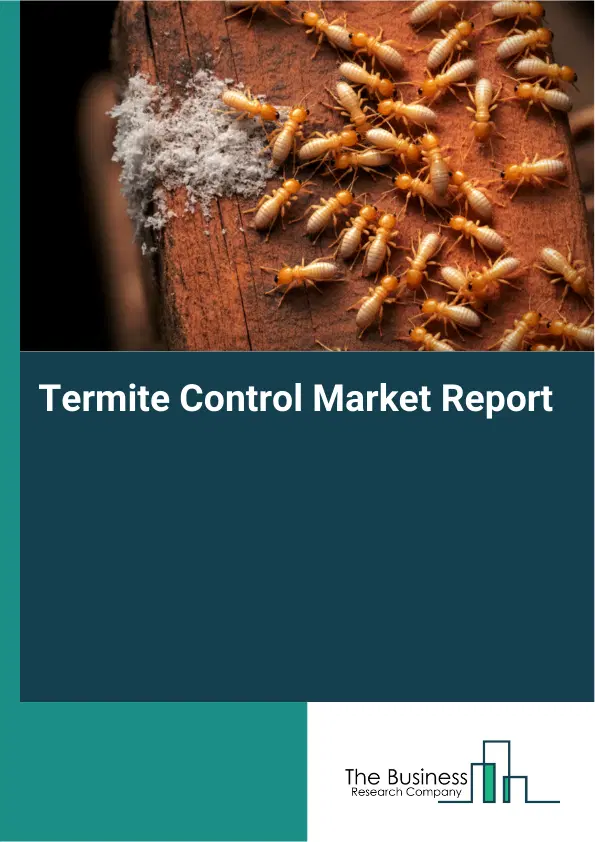
Termite Control Market Report 2026
Global Outlook – By Type (Chemical Termite Control, Physical And Mechanical Termite Control, Biological Termite Control), By Species Type (Dampwood Termites, Subterranean Termites, Drywood Termites, Other Species Types), By Application (Commercial And Industrial Sector, Residential Sector, Agriculture And Livestock Farms, Other Applications) – Market Size, Trends, Strategies, and Forecast to 2030
Termite Control Market Overview
• Termite Control market size has reached to $5.74 billion in 2025 • Expected to grow to $8.44 billion in 2030 at a compound annual growth rate (CAGR) of 8.1% • Growth Driver: Termite Control Market Expands With Increasing Demand For Infestation Prevention In Building Infrastructure • Market Trend: Strategic Partnerships Fostering Long-Term Growth For Leading Termite Control Companies • North America was the largest region in 2025 and Asia-Pacific is the fastest growing region.Market Gains By 2030 – Top Opportunities By Segment
Market Gain identifies the most promising market opportunities by highlighting the segments or products expected to generate the highest incremental revenue growth over the next five years.
What Is Covered Under Termite Control Market?
Termite control refers to the application of pesticides, except fumigants, to the ground before building a structure or in or around other structures to control termites and other invertebrate pests that eat wood. The main types of termite control are chemical termite control, physical and mechanical termite control, and biological termite control. Chemical termite control refers to termite control that uses chemicals to exterminate termites. They are administered to various species of termites, such as damp-wood termites, subterranean termites, dry-wood termites, and others. They are used in various applications, such as commercial, residential, agriculture, and others.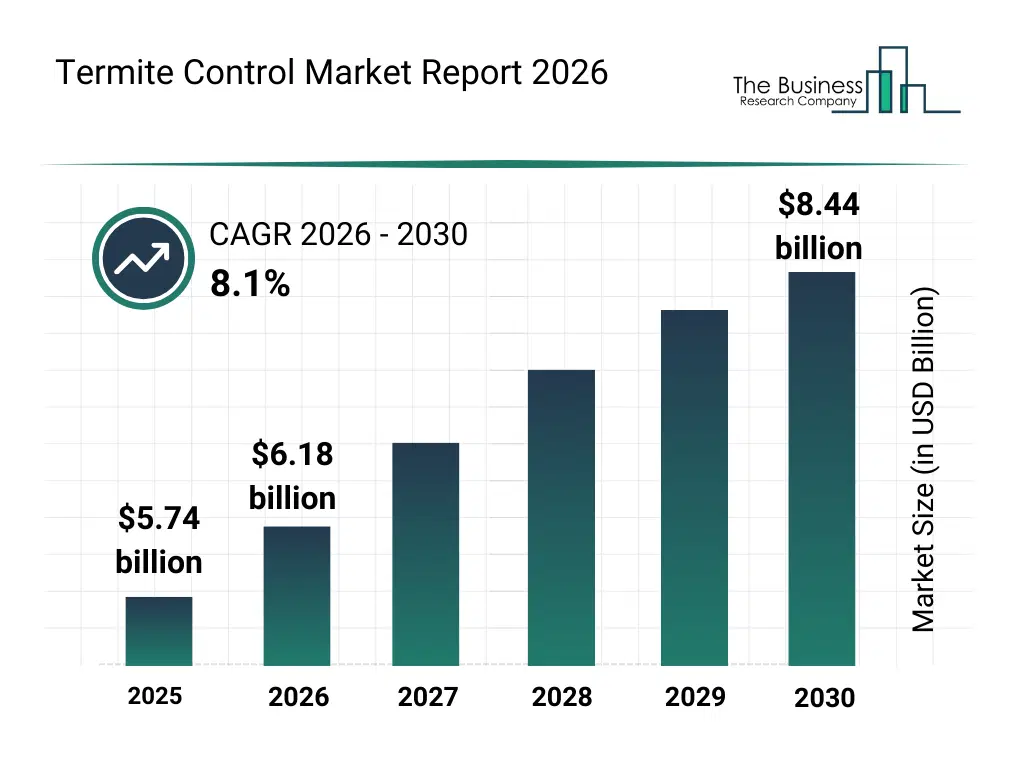
What Is The Termite Control Market Size and Share 2026?
The termite control market size has grown strongly in recent years. It will grow from $5.74 billion in 2025 to $6.18 billion in 2026 at a compound annual growth rate (CAGR) of 7.6%. The growth in the historic period can be attributed to increase in residential and commercial construction, rising termite infestation incidents, growth of urban infrastructure, increasing use of chemical pest control solutions, availability of professional pest control services.What Is The Termite Control Market Growth Forecast?
The termite control market size is expected to see strong growth in the next few years. It will grow to $8.44 billion in 2030 at a compound annual growth rate (CAGR) of 8.1%. The growth in the forecast period can be attributed to increasing demand for sustainable pest management solutions, rising adoption of biological termite control methods, expansion of construction activity in tropical regions, growing awareness of property protection, increasing regulatory focus on pesticide safety. Major trends in the forecast period include increasing adoption of integrated pest management approaches, rising demand for eco-friendly termite control solutions, growing use of baiting and monitoring systems, expansion of preventive pre-construction treatments, enhanced focus on long-term structural protection.
Global Termite Control Market Segmentation
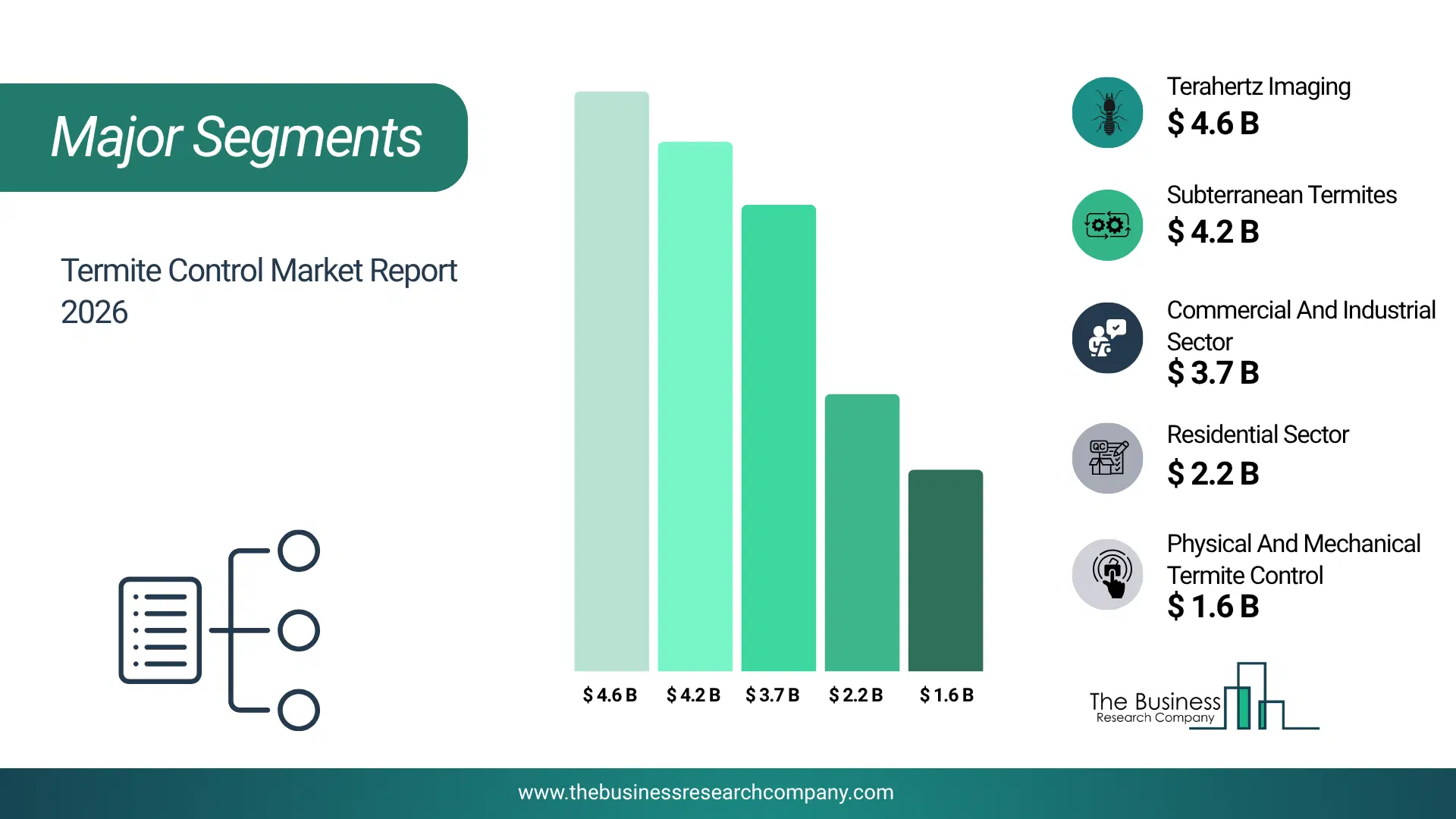
1) By Type: Chemical Termite Control, Physical And Mechanical Termite Control, Biological Termite Control 2) By Species Type: Dampwood Termites, Subterranean Termites, Drywood Termites, Other Species Types 3) By Application: Commercial And Industrial Sector, Residential Sector, Agriculture And Livestock Farms, Other Applications Subsegments: 1) By Chemical Termite Control: Liquid Pesticides, Baiting Systems 2) By Physical And Mechanical Termite Control: Physical Barriers, Moisture Control, Soil Treatment 3) By Biological Termite Control: Nematodes, Entomopathogenic Fungi, Microbial Control Agents The top segments in the termite control market will be: • Chemical Termite Control will reach $4599.94 Million by 2030. • Subterranean Termites will reach $4256.5 Million by 2030. • Commercial And Industrial Sector will reach $3697.93 Million by 2030. • Residential Sector will reach $2267.28 Million by 2030. • Physical And Mechanical Termite Control will reach $1605.91 Million by 2030.What Is The Driver Of The Termite Control Market?
Growing construction industry is significantly contributing to the growth of the termite control market going forward. The construction industry refers to the area of business and manufacturing that is concerned with building, preserving, and fixing infrastructure. Termite control is employed in the construction industry to prevent and control termite infestation in buildings which ruins the building infrastructure and deteriorate the quality of construction. For instance, in July 2023, according to the Australian Bureau of Statistics, an Australian-based government administration, reported that in the March quarter of 2023, the number of dwellings under construction increased to 240,813, up from 240,065 in 2022. Among these, new houses made up 103,778, compared to 101,240 in the previous year. Therefore, the growing construction industry will drive the market.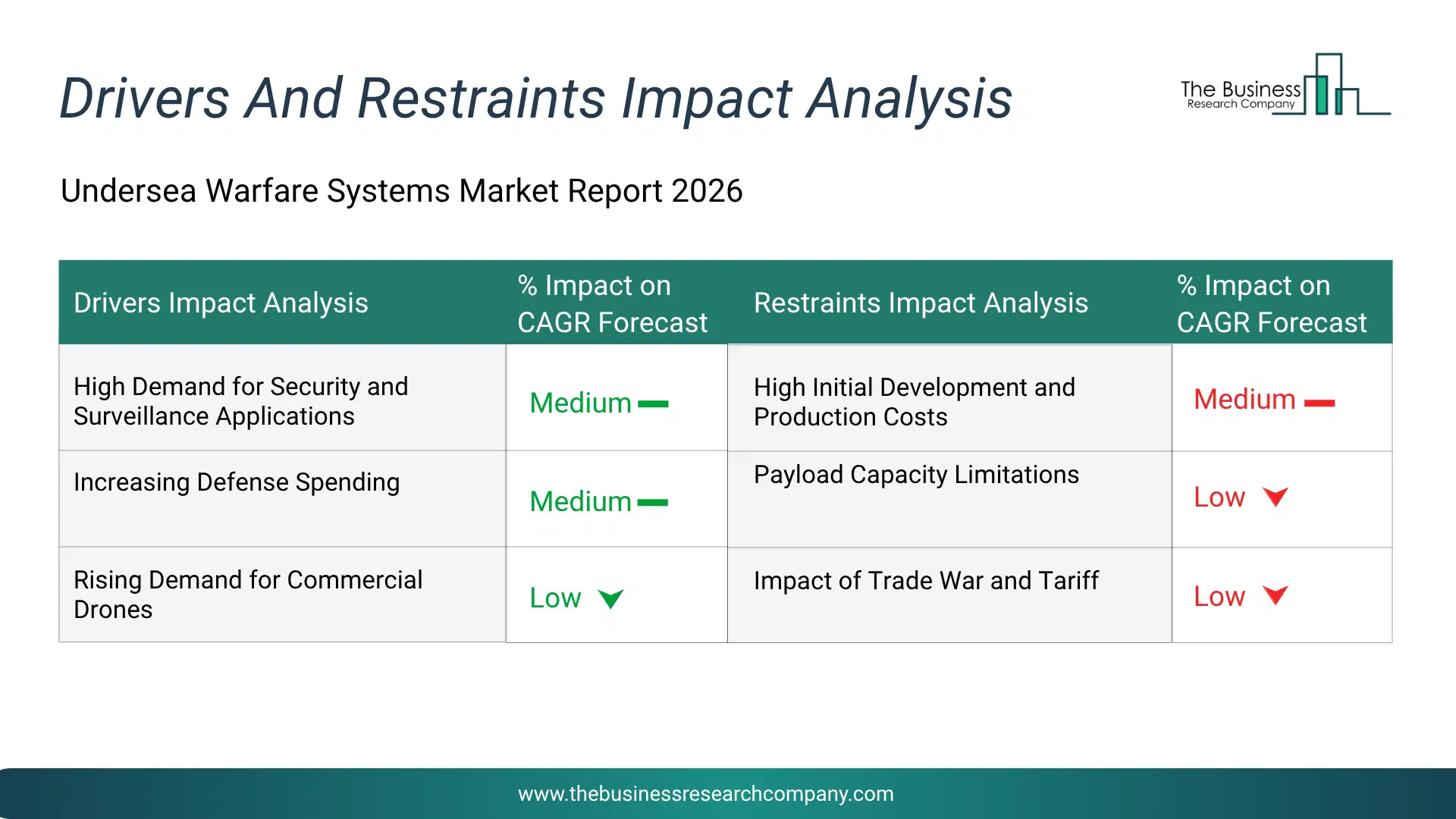
Infographic Chart Showing Key Market Drivers Analysis And Restraints For Termite Control Market
The chart presents an impact analysis of key drivers and restraints, quantifying their relative influence on the market's growth rate and helping assess the balance between growth enablers and limiting factors. This chart offers a high-level perspective; the full report contains more detailed insights.
How Will The Drivers Impact Growth In The Global Termite Control Market?
• Climate Change Expanding Termite-Prone Geographies (Medium) – During the forecast period, the climate change is expected to expand termite-prone geographies by shifting temperature and moisture conditions that influence termite survival and activity. infestation risk is likely to become more widespread and less seasonal in several regions. this will increase the need for preventive approaches, monitoring-led programs and repeat interventions. property owners and facility managers are expected to prioritize termite protection earlier in the asset lifecycle. as a result, termite control demand is expected to rise across residential, commercial and agricultural structures. as a result, growth in climate change is expected to expand termite-prone geographies growth to a 1.5% annual growth in the market. • Higher Awareness Of Long-Term Structural Damage Prevention (Medium) – During the forecast period, the rising awareness of long-term structural damage is expected to increase preventive termite control adoption. buyers are increasingly expected to treat termite protection as asset preservation rather than a reactive repair decision. this shift will encourage earlier inspections, scheduled monitoring and renewal-based service agreements. greater awareness is also expected to improve acceptance of integrated approaches across chemical, physical/mechanical and biological control options. as a result, recurring prevention programs are expected to gain stronger penetration across residential and commercial properties. consequently, rising awareness of long-term structural damage growth contributing to a 1.3% annual growth in the market. • Expansion Of Professional Pest Control Service Networks (Low) – During the forecast period, the expansion of professional pest control service networks is expected to support termite control market growth by improving service access and coverage. providers are likely to scale technician footprints, standardize inspection-to-treatment workflows and strengthen contract-based offerings. this expansion will improve response times and increase customer conversion from one-time treatment to recurring programs. greater availability of licensed services is expected to improve adoption in developing peri-urban corridors. as a result, organized service penetration is expected to increase across key end-user segments. therefore, growth in expansion of professional pest control service networks growth contributing to a 1.0% annual growth in the market. • Expansion Of Agricultural Storage Facilities (Granaries, Warehouses, Silos) (Low) – During the forecast period, expansion of agricultural storage facilities is expected to increase demand for termite control across storage and handling infrastructure. Warehouses, granaries and silos often operate in ground-contact environments with packaging and material movement that can raise termite exposure. Operators are expected to strengthen preventive inspection routines and perimeter protection to safeguard infrastructure and minimize operational disruption. This will support contract-based termite management in agriculture-linked facilities. As a result, termite control demand is expected to grow in rural and peri-urban supply-chain locations. The growth in expansion of professional pest control service networks growth contribution during the forecast period in 2025 is 0.8%.How Will The Restraints Impact Growth In The Global Termite Control Market?
• Regulatory Restrictions On Certain Termiticides (Medium) – During the forecast period, regulatory restrictions on certain termiticides are expected to increase compliance complexity for both manufacturers and applicators. Tighter requirements around labeling, permitted uses and application practices can reduce product flexibility and raise training needs. This may increase operating costs and slow the rollout of new solutions in some markets. Providers may need to adjust service protocols and shift portfolios toward compliant alternatives. As a result, regulatory friction is expected to moderate growth in regions with more restrictive pesticide frameworks. Growth affected by regulatory restrictions on certain termiticides during the forecast period in 2025 is -2.0%. • Skilled Labor Shortage (Medium) – During the forecast period, skilled labor shortages are expected to constrain capacity in termite inspection, treatment execution and recurring contract service delivery. Termite control requires trained personnel for compliant chemical application, correct barrier placement and documentation. Limited technician availability can increase lead times and restrict expansion into high-growth areas. Workforce constraints may also create cost pressure and variability in service quality across locations. As a result, labor availability is expected to remain a bottleneck even where demand is strong. Growth affected by skilled labor shortages during the forecast period in 2025 is -1.5%. • Impact Of Trade War And Tariffs (Low) – During the forecast period, trade war and tariff-related disruptions are expected to increase cost pressure across supply chains that support termite control products and equipment. Higher input costs can compress margins and contribute to pricing pressure for end users. Uncertainty in cross-border sourcing may complicate procurement planning and delay investment in capacity expansion. Providers may respond with supplier diversification or localized sourcing, but transitions can take time. As a result, tariff-driven uncertainty is expected to create periodic headwinds for cost stability and scaling plans. Growth affected by trade war and tariff during the forecast period in 2025 is -0.3%.Key Players In The Global Termite Control Market
Major companies operating in the termite control market are BASF SE, Syngenta AG, Bayer AG, FMC Corporation, Corteva Agriscience, Sumitomo Chemical Co., Ltd., MGK, Nisus Corporation, Ensystex, Rentokil Initial plc, Anticimex, Ecolab Inc., Rollins Inc., Arrow Exterminators, UPL Limited, Godrej Consumer Products Ltd., Control Solutions Inc., LANXESS AG, Mitsui Chemicals, KCC Corporation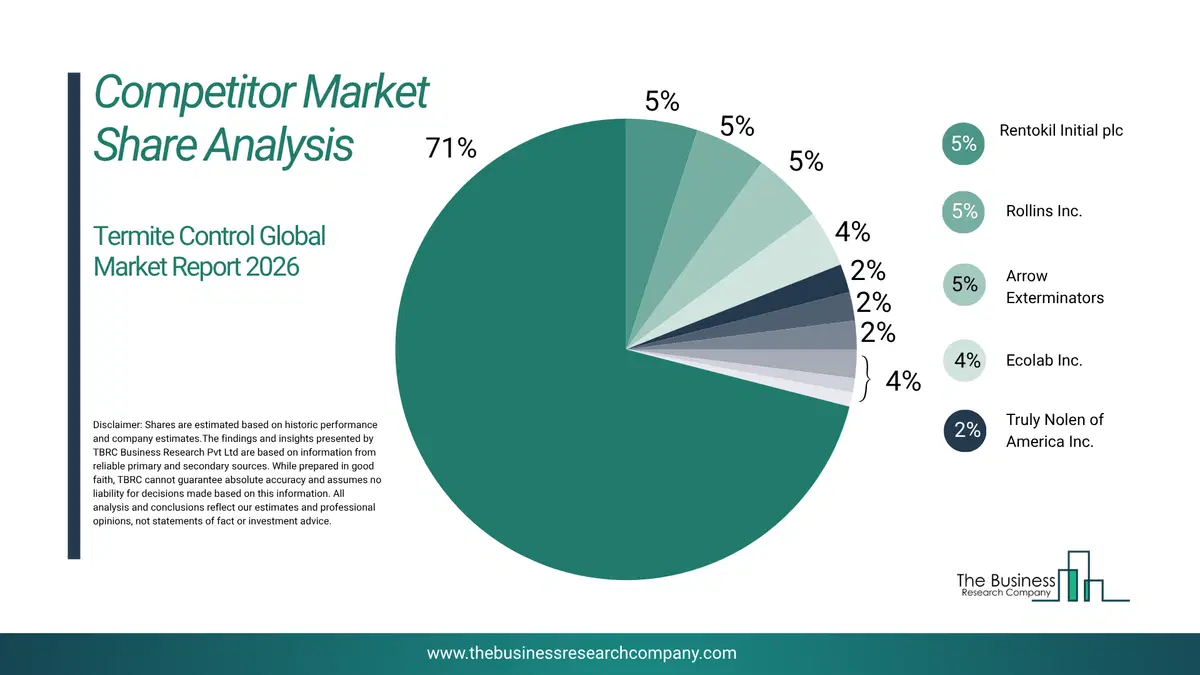
This chart is for illustrative purposes; the full report includes a detailed competitor analysis and comprehensive overview of the top 10 companies in the market.
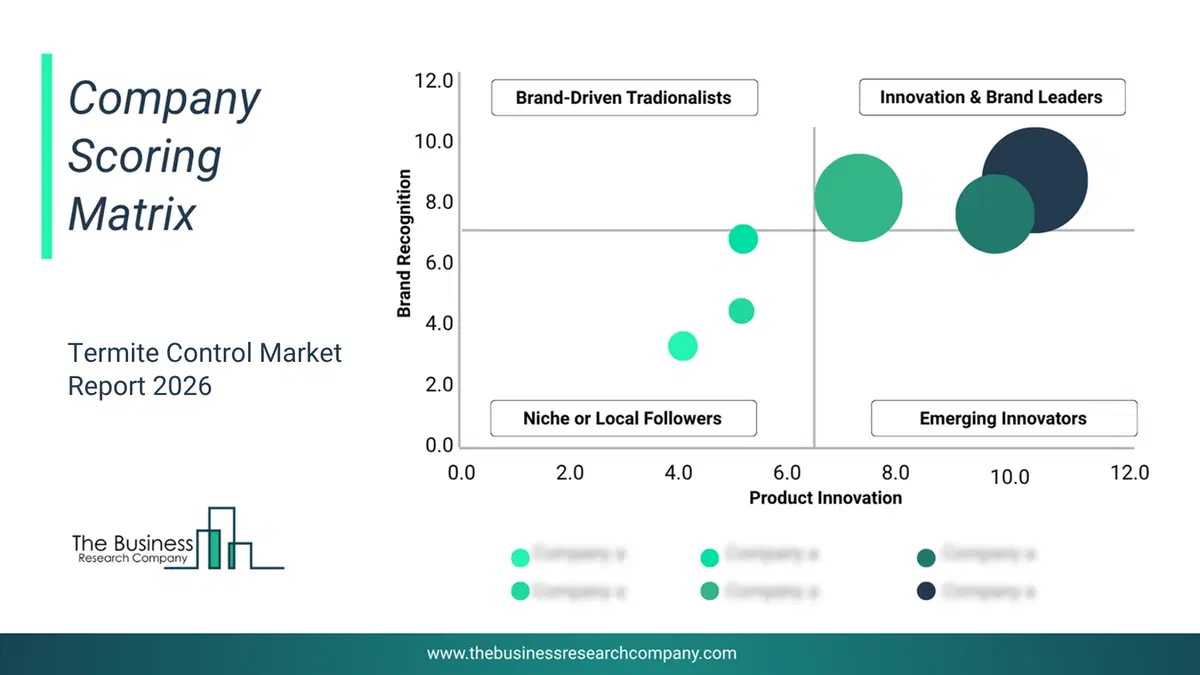
This chart maps companies by product innovation and brand strength, with bubble size indicating relative revenue, helping identify market leaders, challengers, and niche players. This is an illustrative chart; the full report provides a complete and accurate competitive analysis.
Global Termite Control Market Trends and Insights
Major companies operating in the termite control market are adopting a strategic partnership approach aiming to improve sales, marketing, business development, and operational infrastructure to promote long-term growth. Strategic partnerships refer to a process in which companies leverage each other's strengths and resources to achieve mutual benefits and success. For instance, in December 2023, Shore Capital Partners, LLC, a US-based private equity firm, announced a partnership with ACTION Termite & Pest Control. Shore Capital Partners aims to significantly expand ACTION's presence in the fast-paced and constantly changing pest management business by utilizing the company's strong market position and wealth of industry knowledge. By pursuing new alliances and putting organic development methods into practice, ACTION and Shore will jointly investigate growth prospects. They also want to stick to their pledge of funding ACTION's personnel and facilities to guide the business toward sustained success. ACTION Termite & Pest Control is a US-based pest control company.What Are Latest Mergers And Acquisitions In The Termite Control Market?
In May 2024, Termite Watkins Services, a US-based provider of residential and commercial termite and pest control services, acquired Farmers Termite Management for an undisclosed amount. With this acquisition, Termite Watkins expanded its regional footprint and customer base in the Houston area, thereby reinforcing its service capacity and local market leadership in termite control. Farmers Termite Management is a US-based company that specializes in termite inspection, mitigation, and related pest control services for residential clients.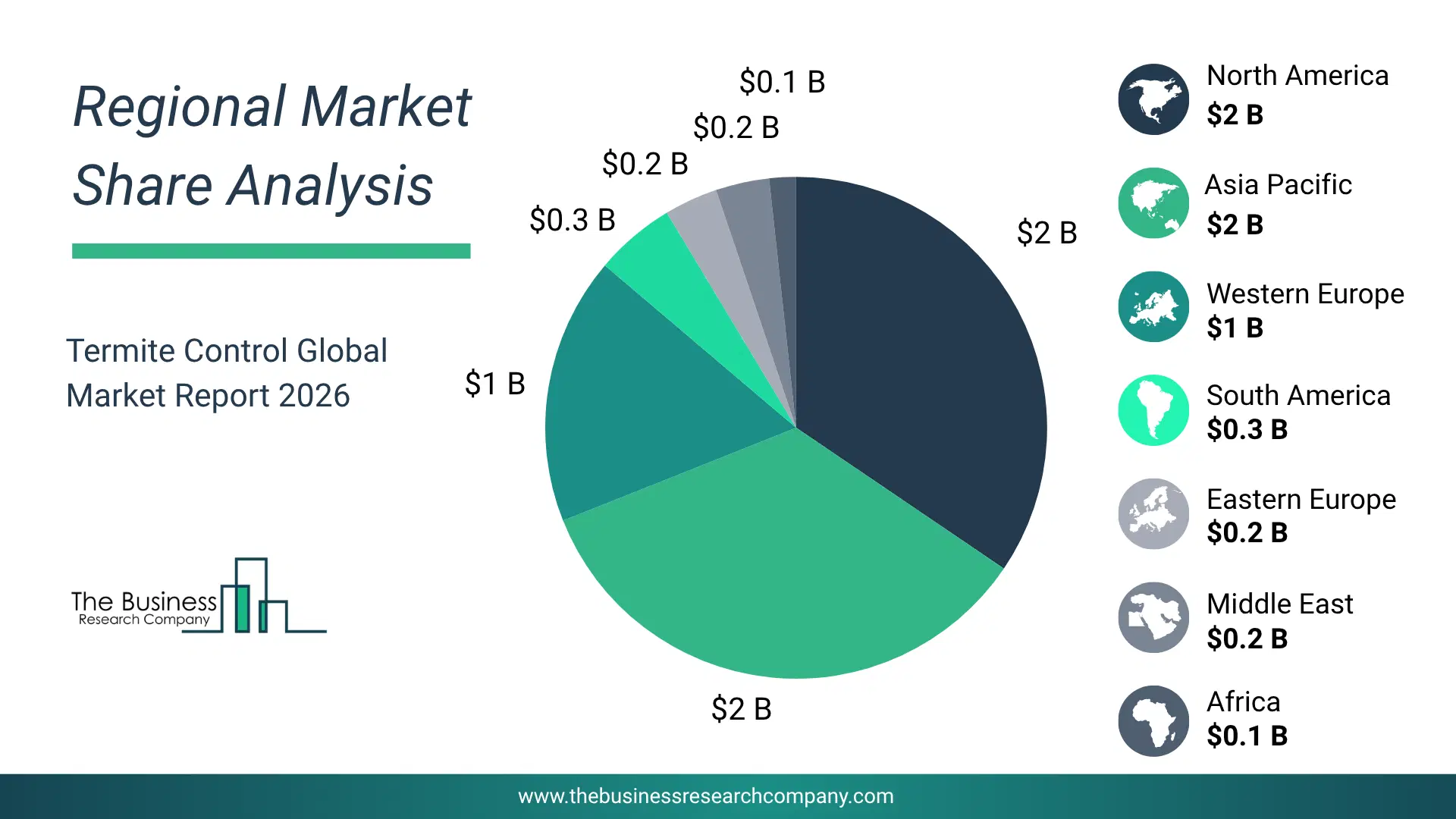
Regional Insights
North America was the largest region in the termite control market in 2025.Asia-Pacific is expected to be the fastest-growing region in the global termite control market report during the forecast period. The regions covered in this market report are Asia-Pacific, South East Asia, Western Europe, Eastern Europe, North America, South America, Middle East, Africa The countries covered in this market report are Australia, Brazil, China, France, Germany, India, Indonesia, Japan, Taiwan, Russia, South Korea, UK, USA, Canada, Italy, SpainWhat Defines the Termite Control Market?
The termite control market includes revenues earned by entities by providing pre-construction termite treatment services and post-construction termite control services. The market value includes the value of related goods sold by the service provider or included within the service offering. The termite control market consists of sales of Diflubenzuron, Hexaflumuron and Hydramethylnon. Values in this market are ‘factory gate’ values, that is the value of goods sold by the manufacturers or creators of the goods, whether to other entities (including downstream manufacturers, wholesalers, distributors and retailers) or directly to end customers. The value of goods in this market includes related services sold by the creators of the goods.How is Market Value Defined and Measured?
The market value is defined as the revenues that enterprises gain from the sale of goods and/or services within the specified market and geography through sales, grants, or donations in terms of the currency (in USD unless otherwise specified). The revenues for a specified geography are consumption values that are revenues generated by organizations in the specified geography within the market, irrespective of where they are produced. It does not include revenues from resales along the supply chain, either further along the supply chain or as part of other products.
This chart presents market attractiveness based on a quantitative evaluation of growth, competition, strategic alignment, and risk, offering a clear view of opportunity areas for decision-making. This chart is for illustrative purposes; the full report contains the complete analysis.

This chart highlights the Total Addressable Market (TAM) by estimating the maximum revenue opportunity using an assumption-driven approach, supporting strategic planning and opportunity sizing across markets. The chart is illustrative; the full report provides a more comprehensive analysis.
What Key Data and Analysis Are Included in the Termite Control Market Report 2026?
The termite control market research report is one of a series of new reports from The Business Research Company that provides market statistics, including industry global market size, regional shares, competitors with the market share, detailed market segments, market trends and opportunities, and any further data you may need to thrive in the termite control industry. The market research report delivers a complete perspective of everything you need, with an in-depth analysis of the current and future state of the industry.Termite Control Market Report Forecast Analysis
| Report Attribute | Details |
|---|---|
| Market Size Value In 2026 | $6.18 billion |
| Revenue Forecast In 2030 | $8.44 billion |
| Growth Rate | CAGR of 7.6% from 2026 to 2030 |
| Base Year For Estimation | 2025 |
| Actual Estimates/Historical Data | 2020-2025 |
| Forecast Period | 2026 - 2030 - 2035 |
| Market Representation | Revenue in USD Billion and CAGR from 2026 to 2030 |
| Segments Covered | Type, Species Type, Application |
| Regional Scope | Asia-Pacific, Western Europe, Eastern Europe, North America, South America, Middle East, Africa |
| Country Scope | The countries covered in the report are Australia, Brazil, China, France, Germany, India, Indonesia, Japan, Taiwan, Russia, South Korea, UK, USA, Canada, Italy, Spain. |
| Key Companies Profiled | BASF SE, Syngenta AG, Bayer AG, FMC Corporation, Corteva Agriscience, Sumitomo Chemical Co., Ltd., MGK, Nisus Corporation, Ensystex, Rentokil Initial plc, Anticimex, Ecolab Inc., Rollins Inc., Arrow Exterminators, UPL Limited, Godrej Consumer Products Ltd., Control Solutions Inc., LANXESS AG, Mitsui Chemicals, KCC Corporation |
| Customization Scope | Request for Customization |
| Pricing And Purchase Options | Explore Purchase Options |