
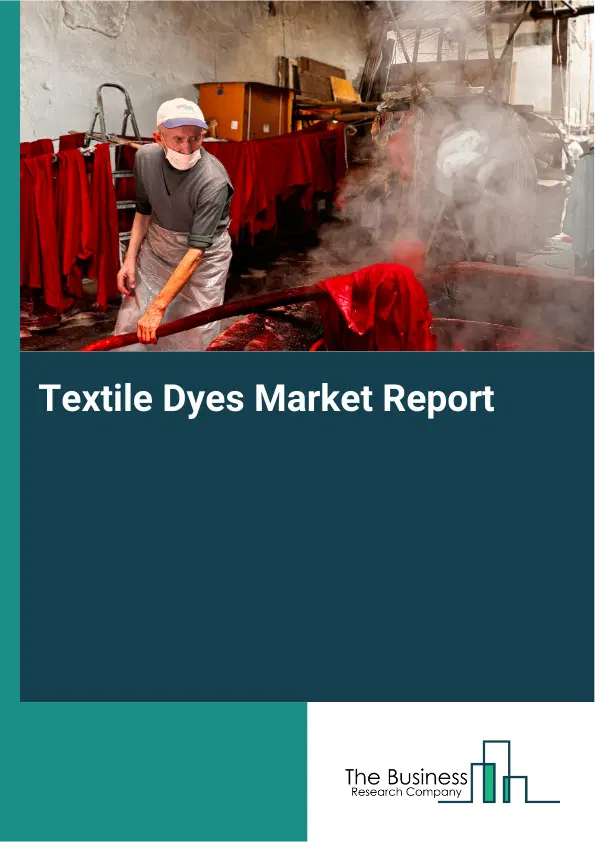
Textile Dyes Market Report 2026
Global Outlook – By Dye Type (Direct, Reactive, VAT, Basic, Acid, Disperse, Other Dye Types), By Fiber Type (Wool, Nylon, Cotton, Viscose, Polyester, Acrylic, Other Fiber Types), By Application (Clothing & Apparels, Home Textiles, Industry Textiles) – Market Size, Trends, Strategies, and Forecast to 2030
Textile Dyes Market Overview
• Textile Dyes market size has reached to $11.31 billion in 2025 • Expected to grow to $17.17 billion in 2030 at a compound annual growth rate (CAGR) of 8.6% • Growth Driver: Rising Demand From The Fashion/Apparel Industry • Market Trend: Advancements In Textile Dyes With Sustainable Solutions By Innovating Digital Platforms • Asia-Pacific was the largest region and fastest growing region.Market Gains By 2030 – Top Opportunities By Segment
Market Gain identifies the most promising market opportunities by highlighting the segments or products expected to generate the highest incremental revenue growth over the next five years.
What Is Covered Under Textile Dyes Market?
The textile dyes refer to color compounds or substances used to color fabric. Textile dyes are colorants that, when added to the material, give it a permanent color that lasts through repeated use. The primary goal of dyeing is to apply uniform color to the substrate (fiber, yarn, or fabric) while maintaining color-fastness requirements for cloth. The main types of textile dyes are direct, reactive, VAT, basic, acid, and disperse. Direct dyes are those that are dissolved in a neutral or alkaline solution and then applied directly to the substrate. For coloring cotton and other cellulosic textiles, direct dye is utilized. Wool, nylon, cotton, viscose, polyester, acrylic, and other fiber types can all be colored with these dyes. Clothing & apparel, home textile, and industrial textiles are the applications of textile dyes.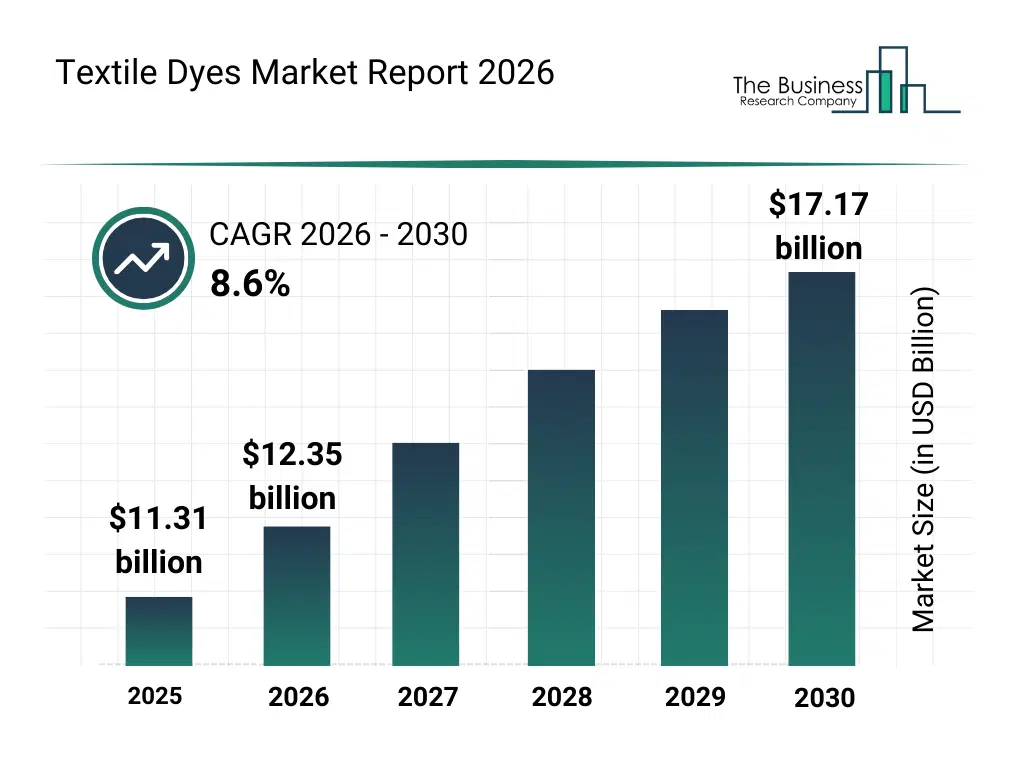
What Is The Textile Dyes Market Size and Share 2026?
The textile dyes market size has grown strongly in recent years. It will grow from $11.31 billion in 2025 to $12.35 billion in 2026 at a compound annual growth rate (CAGR) of 9.2%. The growth in the historic period can be attributed to expansion of global textile production, growth of apparel manufacturing, increasing use of synthetic fibers, rising demand for vibrant coloration, availability of diverse dye chemistries.What Is The Textile Dyes Market Growth Forecast?
The textile dyes market size is expected to see strong growth in the next few years. It will grow to $17.17 billion in 2030 at a compound annual growth rate (CAGR) of 8.6%. The growth in the forecast period can be attributed to increasing environmental regulations on dye effluents, rising demand for sustainable dyes, expansion of digital printing in textiles, growing adoption of low-water dyeing processes, increasing focus on supply chain compliance. Major trends in the forecast period include increasing adoption of eco-friendly textile dyes, rising demand for high colorfastness solutions, growing use of reactive and disperse dyes, expansion of digital textile printing, enhanced focus on water-efficient dyeing.
Global Textile Dyes Market Segmentation
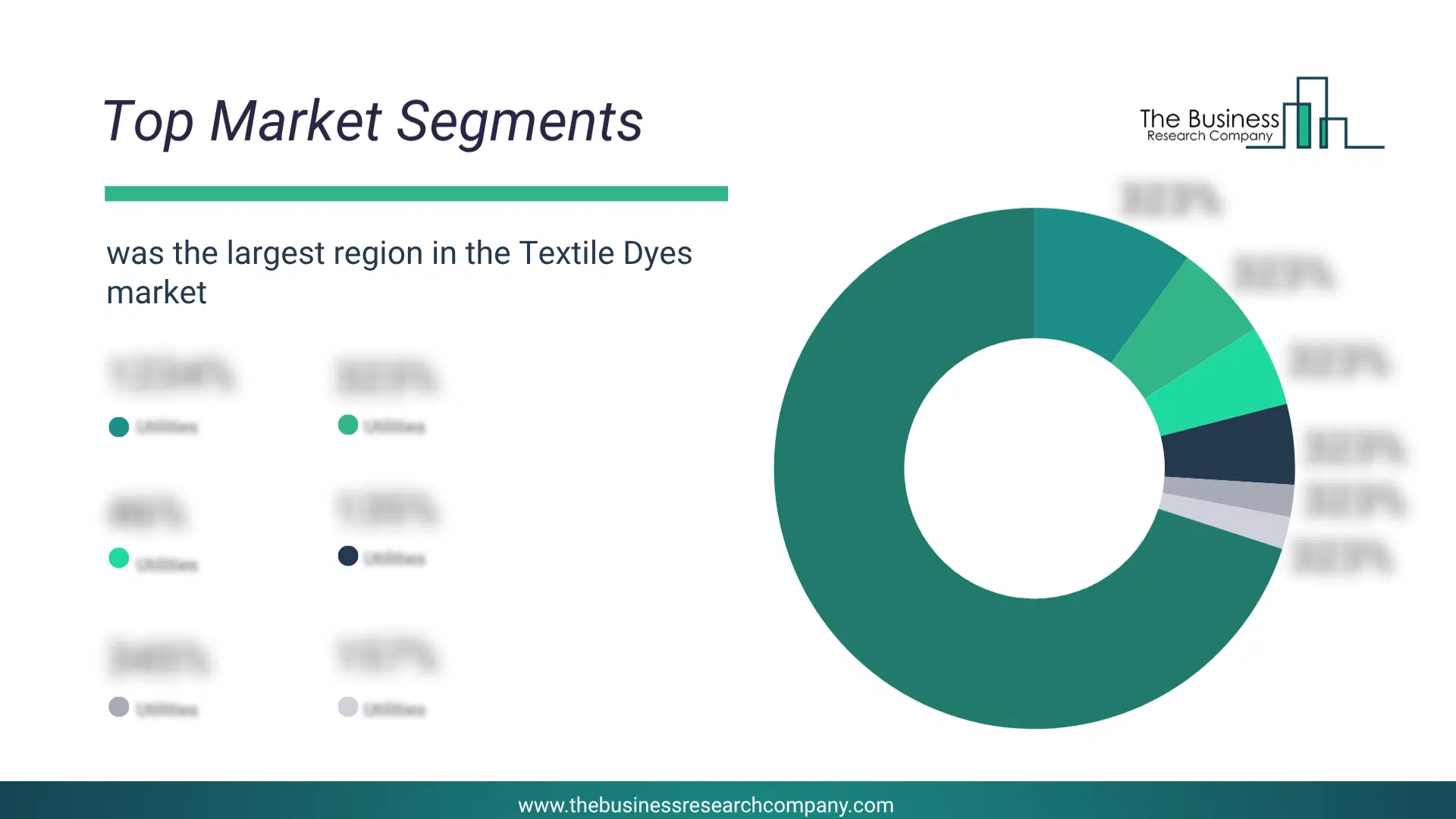
1) By Dye Type: Direct, Reactive, VAT, Basic, Acid, Disperse, Other Dye Types 2) By Fiber Type: Wool, Nylon, Cotton, Viscose, Polyester, Acrylic, Other Fiber Types 3) By Application: Clothing & Apparels, Home Textiles, Industry Textiles Subsegments: 1) By Direct: Direct Cotton Dyes, Direct Wool Dyes, Direct Silk Dyes 2) By Reactive: Cold Reactive Dyes, Hot Reactive Dyes, High Exhaust Reactive Dyes 3) By VAT: Indigo Dyes, Other VAT Dyes 4) By Basic: Basic Dyes For Acrylic Fibers, Basic Dyes For Polyester 5) By Acid: Acid Dyes For Wool, Acid Dyes For Nylon, Acid Dyes For Silk 6) By Disperse: Disperse Dyes For Polyester, Disperse Dyes For Acetate 7) By Other Dye Types: Natural Dyes, Metal Complex Dyes The top segments in the autonomous vehicle market will be: • Driver Assistance will reach $99.58 Billion by 2030. • Partial Automation will reach $77 Billion by 2030. • Conditional Automation will reach $45.34 Billion by 2030. • High Automation will reach $30.22 Billion by 2030. • Full Automation will reach $22.54 Billion by 2030. The top segments in the textile dyes market will be: • Reactive will reach $4.36 Billion by 2030. • Disperse will reach $3.06 Billion by 2030. • Acid will reach $1.62 Billion by 2030. • Other Dye Types will reach $1.62 Billion by 2030. • Direct will reach $1.5 Billion by 2030.What Is The Driver Of The Textile Dyes Market?
The rising demand from the fashion and apparel industry is expected to propel the growth of the textile dyes market going forward. The fashion and apparel industry involves the design, production, marketing, and sale of clothing, and it relies heavily on natural and synthetic fiber dyes to provide color, durability, and aesthetic appeal across garments. The surge in global apparel consumption and increasing variety of dye applications are driving the need for advanced textile dye solutions. For instance, in February 2025, according to the Bureau of Labor Statistics, a US-based federal agency, household expenditure data shows that in 2023, average spending reached $655 on women’s apparel and $406 on men’s apparel, with $87 and $96 allocated to girls’ and boys’ clothing, respectively, while footwear spending averaged $208 for women and $147 for men. Therefore, the rising demand from the fashion and apparel industry is driving the growth of the textile dyes industry.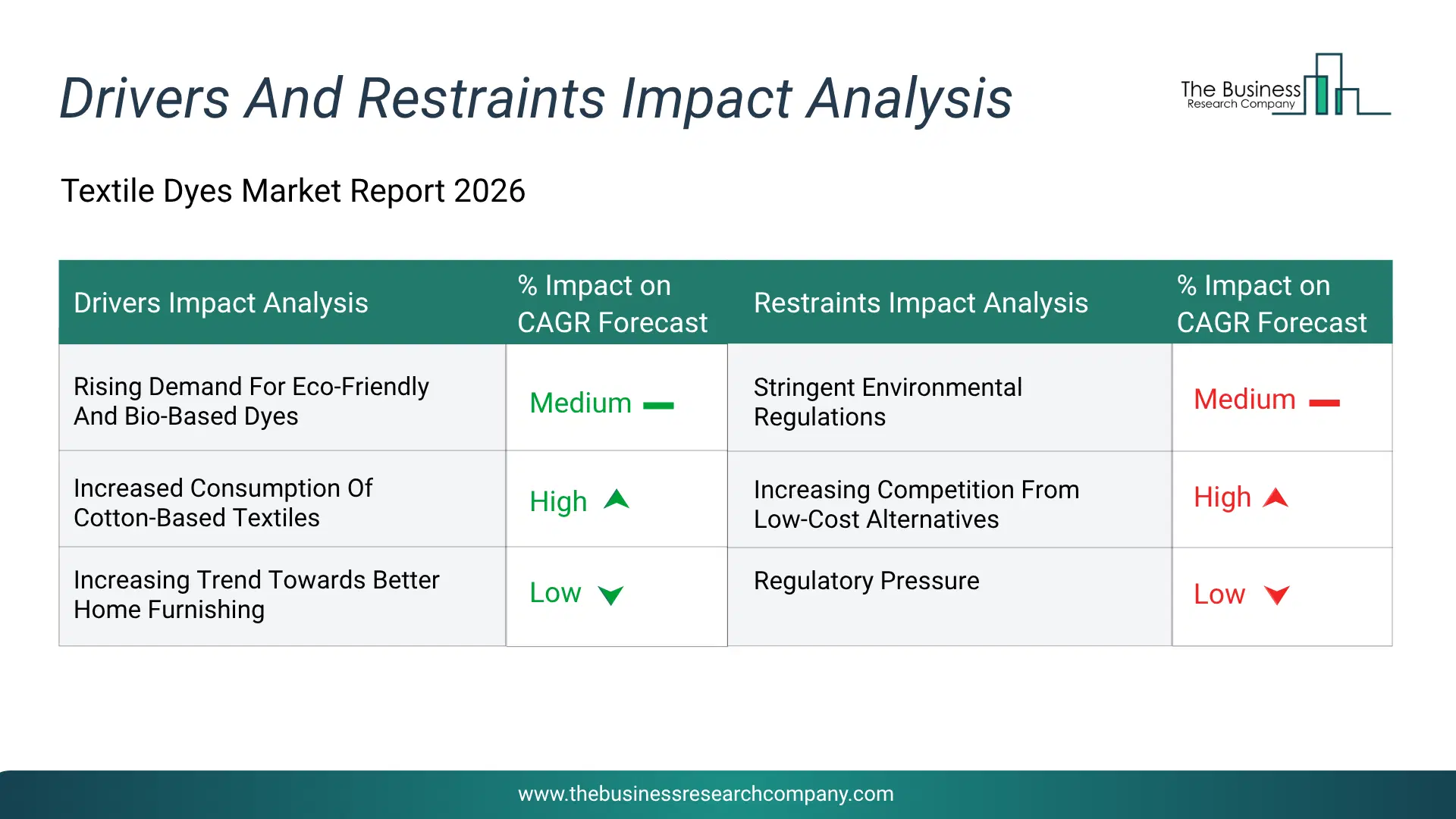
Infographic Chart Showing Key Market Drivers Analysis And Restraints For Textile Dyes Market
The chart presents an impact analysis of key drivers and restraints, quantifying their relative influence on the market's growth rate and helping assess the balance between growth enablers and limiting factors. This chart offers a high-level perspective; the full report contains more detailed insights.
How Will The Drivers Impact Growth In The Global Textile Dyes Market?
• Rising Demand For Eco-Friendly And Bio-Based Dyes (Medium) – During the forecast period, the rising demand for eco-friendly and bio-based dyes is expected to become a key growth driver for the textile dyes market by 2030. Increasing environmental regulations and consumer awareness are pushing manufacturers to replace conventional synthetic dyes with low-impact alternatives. This transition stimulates innovation in natural and bio-based dye formulations, expanding product portfolios and attracting new investments. Brands seeking eco-certifications are adopting such dyes to enhance market positioning and meet compliance standards. • Increased Consumption Of Cotton-Based Textiles (High) – During the forecast period, the increased consumption of cotton-based textiles is expected to emerge as a major factor driving the expansion of the textile dyes market by 2030. Increased consumption of cotton-based textiles boosts demand for dyes specifically suited to cellulosic fibers. Cotton remains one of the most widely used fibers in apparel and home textiles, requiring large volumes of dyes such as reactive and direct dyes. Rising population, urbanization, and fashion consumption contribute to higher cotton textile production globally. This directly increases dye consumption at the manufacturing level, consistent with factory-gate revenue generation. Additionally, cotton's compatibility with vibrant and durable dyeing enhances repeat demand for high-performance dyes. Growth in everyday wear and essential clothing segments further stabilizes this demand. Consequently, the expansion of cotton-based textiles sustains continuous growth in the textile dyes market. • Increasing Trend Towards Better Home Furnishing (Low) – During the forecast period, the increasing trend towards better home furnishing is expected to act as a key growth catalyst for the textile dyes market by 2030. The increasing trend towards better home furnishing expands the application scope of textile dyes beyond apparel into interior textiles. Growing consumer focus on aesthetics, comfort, and lifestyle upgrades is increasing demand for dyed fabrics used in curtains, upholstery, carpets, and bed linens. This trend leads to higher consumption of specialized dyes that offer durability, color consistency, and resistance to light and washing. The rise in residential construction and renovation activities further amplifies demand for home textile products. Manufacturers respond by developing dyes tailored for heavy fabrics and long-lasting finishes.How Will The Restraints Impact Growth In The Global Textile Dyes Market?
• Stringent Environmental Regulations (Medium) – During the forecast period, the stringent Environmental Regulations act as a major restraint on the textile dyes market by increasing compliance costs and limiting the use of certain chemical dyes. Governments and regulatory bodies impose strict norms on wastewater discharge, toxicity levels, and chemical composition, forcing manufacturers to invest heavily in treatment facilities and cleaner technologies. This raises production costs and reduces profit margins, especially for small and medium-scale producers. Additionally, the restriction or banning of specific dye intermediates disrupts existing product lines and supply chains. Companies must continuously adapt formulations to meet evolving standards, which increases R&D expenditure. Compliance complexities can also delay product approvals and market entry. Overall, these regulations slow market growth by creating financial and operational barriers. • Increasing Competition From Low-Cost Alternatives (High) – During the forecast period, the increasing Competition From Low-Cost Alternatives restrains the textile dyes market by exerting pricing pressure and reducing profitability for established manufacturers. Low-cost producers, often operating in regions with relaxed regulations or lower production costs, offer cheaper dye products that attract price-sensitive buyers. This intensifies competition and forces leading companies to reduce prices or compromise margins to retain market share. The presence of substitutes with lower quality but acceptable performance further shifts demand away from premium dyes. It also discourages investment in innovation, as returns become uncertain in a highly price-competitive environment. Market fragmentation increases, making it harder for companies to differentiate their offerings. As a result, overall revenue growth in the market is constrained. • Regulatory Pressure (Low) – During the forecast period, the regulatory Pressure acts as a restraint by creating continuous uncertainty and operational challenges for textile dye manufacturers. Frequent updates in chemical safety standards, import-export restrictions, and environmental policies require companies to constantly monitor and adapt their processes. This leads to increased administrative burden and higher compliance costs across multiple geographies. Manufacturers operating globally face difficulties in standardizing products due to varying regional regulations. Such pressure can disrupt supply chains, especially when certain raw materials or intermediates become restricted. It may also limit innovation speed, as new products must undergo rigorous testing and approval procedures. Consequently, regulatory pressure hinders market expansion by increasing complexity and slowing down business operations.Key Players In The Global Textile Dyes Market
Major companies operating in the textile dyes market are Archroma, Atul Ltd., Colorant Limited, Vipul Organics Ltd, Zhejiang Runtu Co. Ltd., Kiri Industries Ltd, DEV COLOURS, DyStar Singapore Pte Ltd, Huntsman International LLC, Akik Dye Chem, Blendwell SA, Jiangsu World Chemical Co. Ltd., KeyColour, Mahickra Chemicals Limited, Organic Dyes and Pigments, Royce Global S.A., Robama, Colourtex, Jay Chemicals Industries Ltd, Lanxess AG, Yabang Dyestuff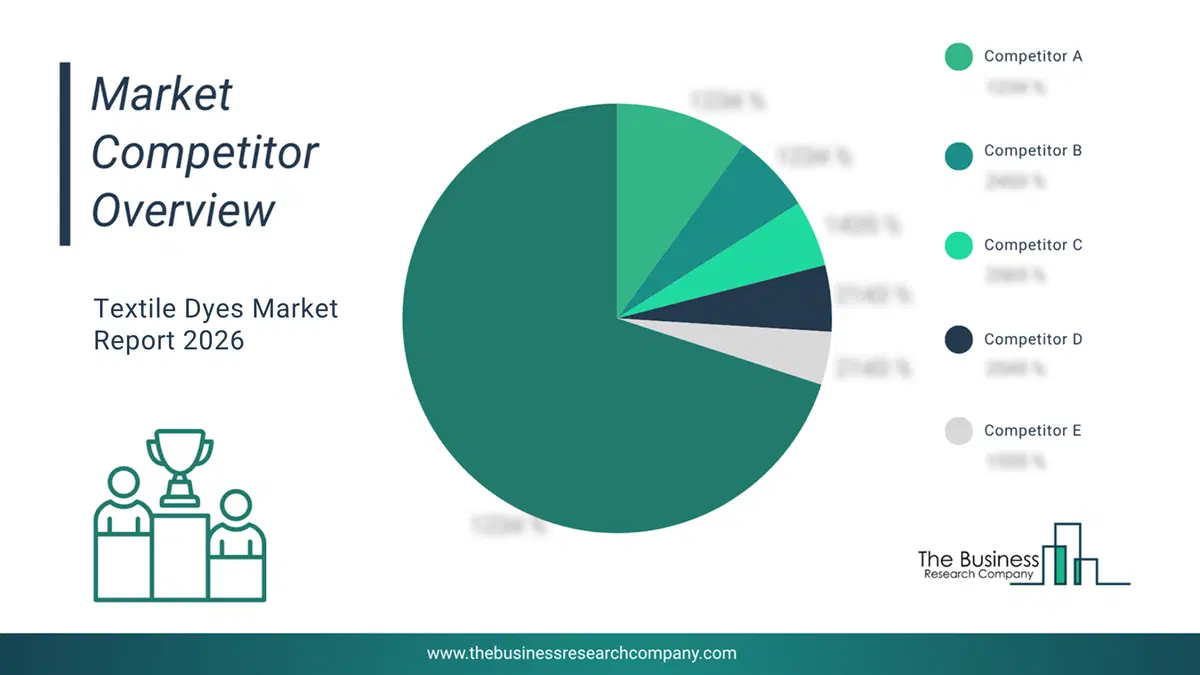
This chart is for illustrative purposes; the full report includes a detailed competitor analysis and comprehensive overview of the top 10 companies in the market.
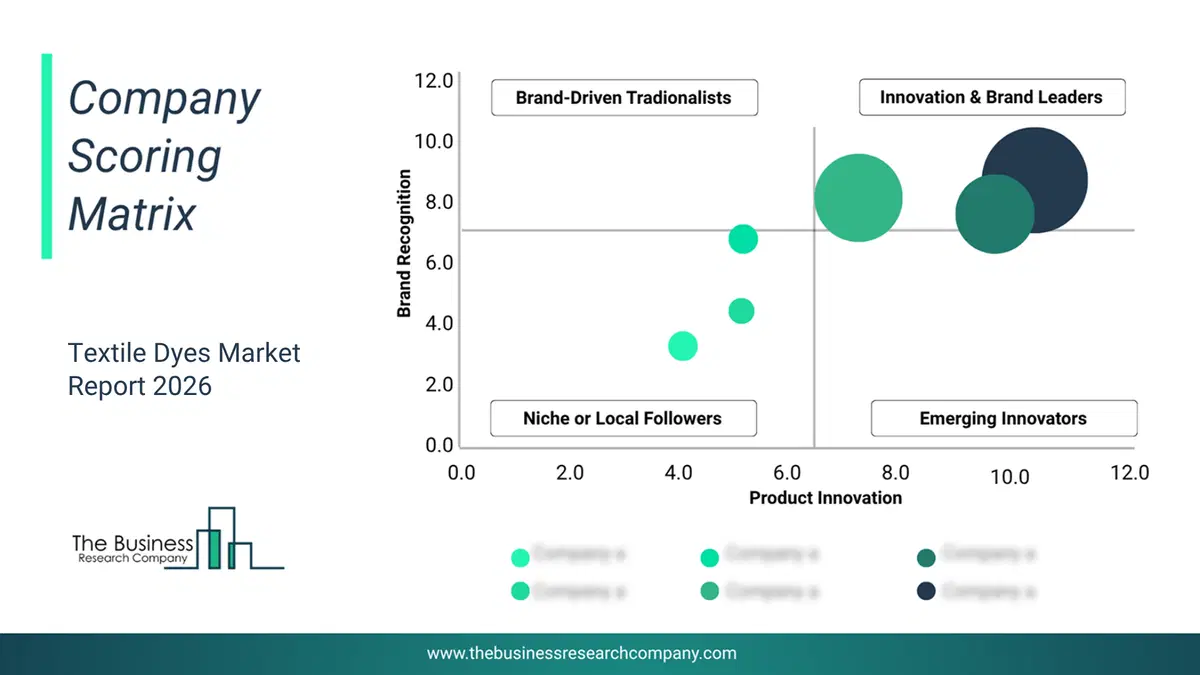
This chart maps companies by product innovation and brand strength, with bubble size indicating relative revenue, helping identify market leaders, challengers, and niche players. This is an illustrative chart; the full report provides a complete and accurate competitive analysis.
Global Textile Dyes Market Trends and Insights
Major companies operating in the textile dyes market are innovating advanced technologies such as digital platforms to streamline production processes, enhance color accuracy, and enable real-time tracking of dye applications, ultimately improving efficiency and reducing waste in the dyeing process. A digital platform is a technology-based infrastructure that facilitates the creation, sharing, and exchange of information, products, or services among users. For instance, in April 2023, Fashion for Good, a Netherland-based business to business service company launched a Sustainable Dyestuff Library. The Dyestuff Library a digital platform designed to help partners select environmentally friendly dyes based on their performance and ecological impact. The library serves as a resource for textile producers to choose sustainable dyestuffs, enhancing visibility and access to innovative solutions.What Are Latest Mergers And Acquisitions In The Textile Dyes Market?
In February 2023, Archroma, a Switzerland-based provider of sustainable specialty chemicals and solutions, acquired Huntsman Textile Effects GmbH for an undisclosed amount. Through this acquisition, combined resources are expected to offer fashion brands and the global textile industry high performance and innovation while respecting natural resources. Huntsman Textile Effects GmbH is a Germany-based provider of high-quality dyes, chemicals, and digital inks to the textile industries.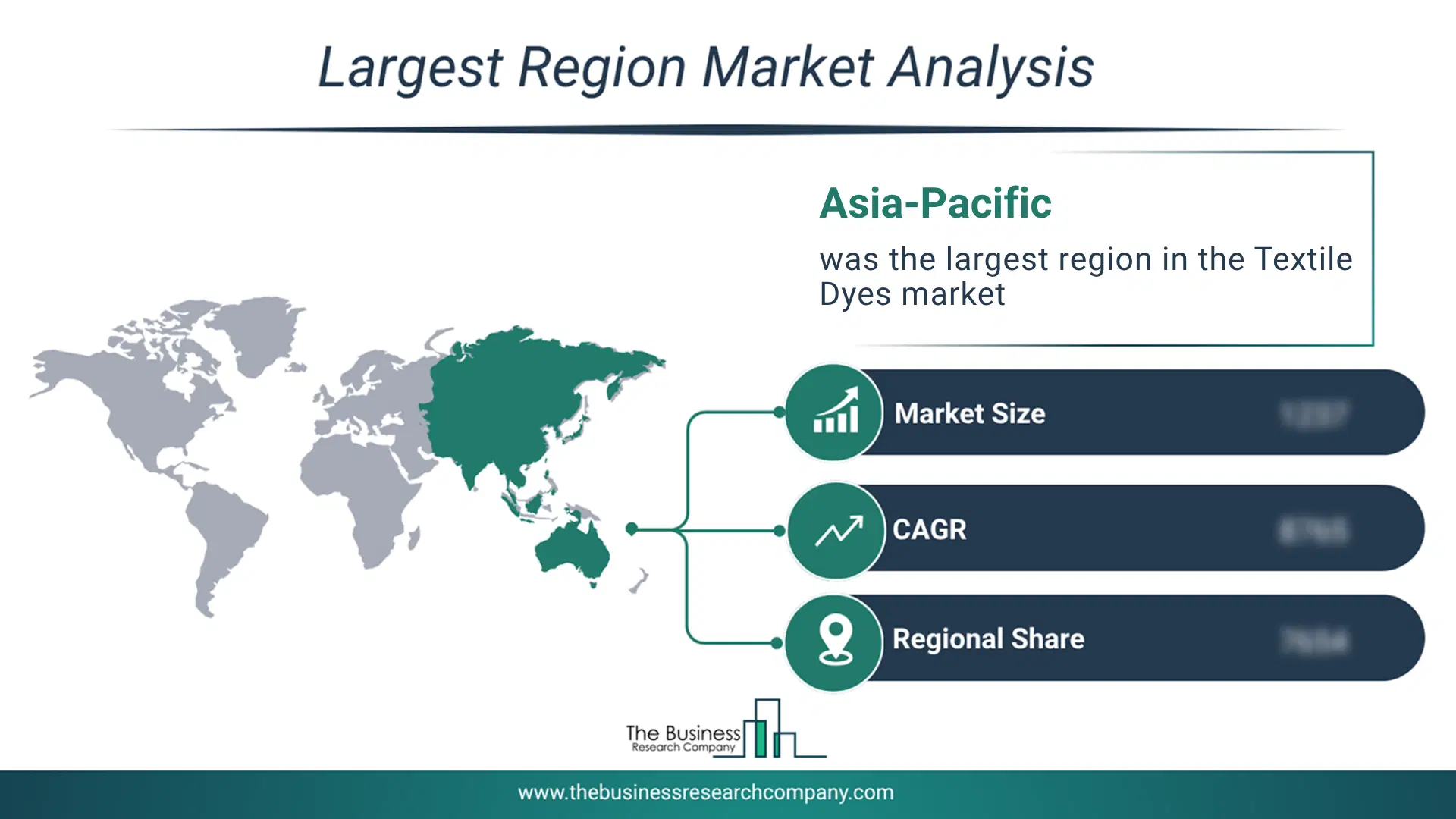
Regional Insights
Asia-Pacific was the largest region in the textile dyes market in 2025. North America is expected to be the fastest-growing region in the forecast period. The regions covered in this market report are Asia-Pacific, South East Asia, Western Europe, Eastern Europe, North America, South America, Middle East, Africa The countries covered in this market report are Australia, Brazil, China, France, Germany, India, Indonesia, Japan, Taiwan, Russia, South Korea, UK, USA, Canada, Italy, SpainWhat Defines the Textile Dyes Market?
The textile dyes market consists of sales of azoic dyes, all-purpose dyes and natural dyes. Values in this market are ‘factory gate’ values, that is the value of goods sold by the manufacturers or creators of the goods, whether to other entities (including downstream manufacturers, wholesalers, distributors, and retailers) or directly to end customers. The value of goods in this market includes related services sold by the creators of the goods.How is Market Value Defined and Measured?
The market value is defined as the revenues that enterprises gain from the sale of goods and/or services within the specified market and geography through sales, grants, or donations in terms of the currency (in USD unless otherwise specified). The revenues for a specified geography are consumption values that are revenues generated by organizations in the specified geography within the market, irrespective of where they are produced. It does not include revenues from resales along the supply chain, either further along the supply chain or as part of other products.
This chart presents market attractiveness based on a quantitative evaluation of growth, competition, strategic alignment, and risk, offering a clear view of opportunity areas for decision-making. This chart is for illustrative purposes; the full report contains the complete analysis.

This chart highlights the Total Addressable Market (TAM) by estimating the maximum revenue opportunity using an assumption-driven approach, supporting strategic planning and opportunity sizing across markets. The chart is illustrative; the full report provides a more comprehensive analysis.
What Key Data and Analysis Are Included in the Textile Dyes Market Report 2026?
The textile dyes market research report is one of a series of new reports from The Business Research Company that provides market statistics, including industry global market size, regional shares, competitors with the market share, detailed market segments, market trends and opportunities, and any further data you may need to thrive in the textile dyes industry. The market research report delivers a complete perspective of everything you need, with an in-depth analysis of the current and future state of the industry.Textile Dyes Market Report Forecast Analysis
| Report Attribute | Details |
|---|---|
| Market Size Value In 2026 | $12.35 billion |
| Revenue Forecast In 2030 | $17.17 billion |
| Growth Rate | CAGR of 9.2% from 2026 to 2030 |
| Base Year For Estimation | 2025 |
| Actual Estimates/Historical Data | 2020-2025 |
| Forecast Period | 2026 - 2030 |
| Market Representation | Revenue in USD Billion and CAGR from 2026 to 2030 |
| Segments Covered | Dye Type, Fiber Type, Application |
| Regional Scope | Asia-Pacific, Western Europe, Eastern Europe, North America, South America, Middle East, Africa |
| Country Scope | The countries covered in the report are Australia, Brazil, China, France, Germany, India, Indonesia, Japan, Taiwan, Russia, South Korea, UK, USA, Canada, Italy, Spain. |
| Key Companies Profiled | Archroma, Atul Ltd., Colorant Limited, Vipul Organics Ltd, Zhejiang Runtu Co. Ltd., Kiri Industries Ltd, DEV COLOURS, DyStar Singapore Pte Ltd, Huntsman International LLC, Akik Dye Chem, Blendwell SA, Jiangsu World Chemical Co. Ltd., KeyColour, Mahickra Chemicals Limited, Organic Dyes and Pigments, Royce Global S.A., Robama, Colourtex, Jay Chemicals Industries Ltd, Lanxess AG, Yabang Dyestuff |
| Customization Scope | Request for Customization |
| Pricing And Purchase Options | Explore Purchase Options |