
Third-Party Logistics (3PL) Market Report 2026
Global Outlook – By Service Type (Dedicated Contract Carriage, Domestic Transportation Management, International Transportation Management, Warehousing and Distribution, Other Service Types), By Mode Of Transport (Railways, Roadways, Waterways, Airways), By End-Use Industry (Manufacturing, Retail, Healthcare, Automotive, Other End-Use Industries) – Market Size, Trends, Strategies, and Forecast to 2030
Third-Party Logistics (3PL) Market Overview
• Third-Party Logistics (3PL) market size has reached to $1321.68 billion in 2025 • Expected to grow to $2141.68 billion in 2030 at a compound annual growth rate (CAGR) of 10% • Growth Driver: E-Commerce Boom Fuels Growth In The Third-Party Logistics Market • Market Trend: End-To-End Supply Chain Integration Enhances Specialized Distribution Capabilities • Asia-Pacific was the largest region in 2025.Market Gains By 2030 – Top Opportunities By Segment
Market Gain identifies the most promising market opportunities by highlighting the segments or products expected to generate the highest incremental revenue growth over the next five years.
What Is Covered Under Third-Party Logistics (3PL) Market?
Third-party logistics (3PL) refers to the outsourcing of e-commerce logistics processes to a third-party business, including inventory management, warehousing, and fulfillment. 3PL providers allow e-commerce merchants to accomplish more, with the tools and infrastructure to automate retail order fulfillment. The main types of third-party logistics are dedicated contract carriage, domestic transportation management, international transportation management, warehousing and distribution, and other service types. Dedicated contract carriage refers to a service where shippers can pay a flat rate per truck and choose the length of time for which they can secure vehicles (one day, one week, a month), depending on their needs. The modes of transport are railways, roadways, waterways, and airways. The various industries involved technology, automotive, retailing, manufacturing, and others.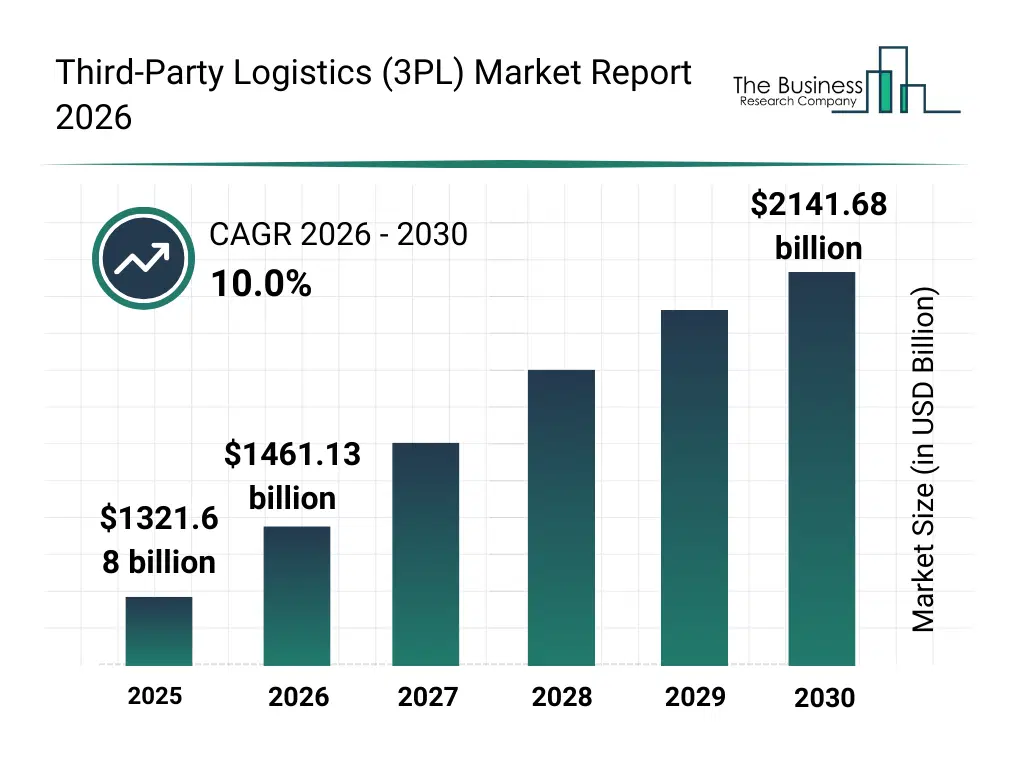
What Is The Third-Party Logistics (3PL) Market Size and Share 2026?
The third-party logistics (3pl) market size has grown rapidly in recent years. It will grow from $1321.68 billion in 2025 to $1461.13 billion in 2026 at a compound annual growth rate (CAGR) of 10.6%. The growth in the historic period can be attributed to growth of ecommerce operations, rising need for efficient inventory management, increasing logistics complexity, expansion of global trade activities, rising outsourcing of logistics functions.What Is The Third-Party Logistics (3PL) Market Growth Forecast?
The third-party logistics (3pl) market size is expected to see rapid growth in the next few years. It will grow to $2141.68 billion in 2030 at a compound annual growth rate (CAGR) of 10.0%. The growth in the forecast period can be attributed to increasing need for fast order fulfillment, rising demand for cost efficient logistics, growing expansion of retail and manufacturing supply chains, increasing reliance on professional logistics partners, expansion of global distribution networks. Major trends in the forecast period include growing outsourcing of logistics and distribution activities, increasing reliance on professional supply chain partners, rising demand for efficient order fulfillment services, increasing need for scalable logistics solutions, growing importance of integrated warehousing and transportation support.
Global Third-Party Logistics (3PL) Market Segmentation
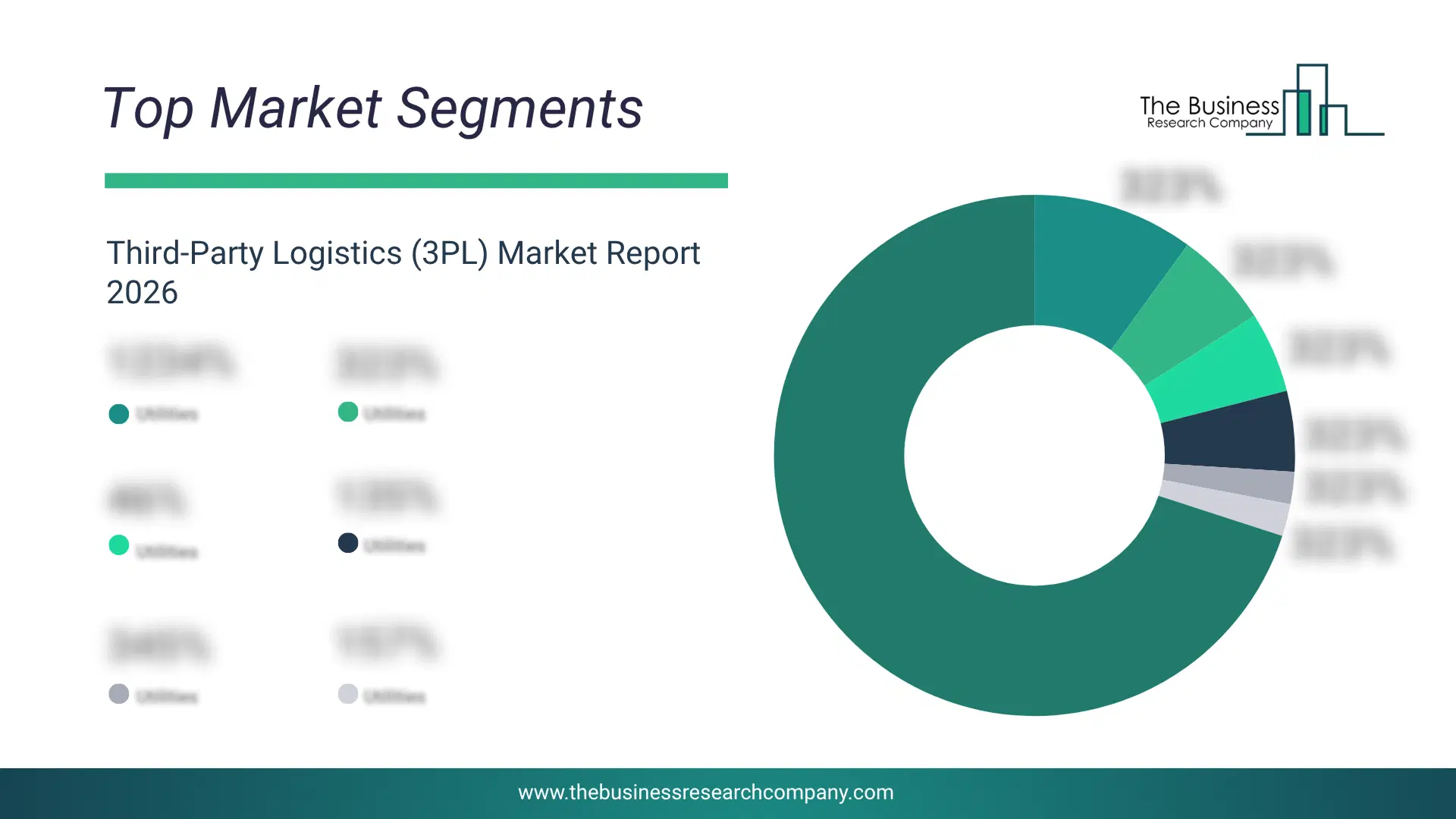
1) By Service Type: Dedicated Contract Carriage, Domestic Transportation Management, International Transportation Management, Warehousing and Distribution, Other Service Types 2) By Mode Of Transport: Railways, Roadways, Waterways, Airways 3) By End-Use Industry: Manufacturing, Retail, Healthcare, Automotive, Other End-Use Industries Subsegments: 1) By Dedicated Contract Carriage (DCC): Fleet Management, Route Optimization, Driver Management 2) By Domestic Transportation Management (DTM): Truckload (TL) Services, Less-than-Truckload (LTL) Services, Intermodal Transportation 3) By International Transportation Management (ITM): Ocean Freight Management, Air Freight Management, Customs Brokerage 4) By Warehousing And Distribution: Inventory Management, Order Fulfillment, Cross-Docking Services 5) By Other Service Types: Reverse Logistics, Freight Forwarding, Supply Chain Consulting The top segments in the third-party logistics (3pl) market will be: • Roadways will reach $536820.41 Million by 2025. • Domestic Transportation Management will reach $503551.82 Million by 2025. • Waterways will reach $417576.53 Million by 2025. • International Transportation Management will reach $398519.87 Million by 2025. • Manufacturing will reach $329537.75 Million by 2025.What Is The Driver Of The Third-Party Logistics (3PL) Market?
The development of the e-commerce industry is expected to propel the growth of the third-party logistics market going forward. Electronic commerce (E-commerce) refers to companies and individuals that buy and sell goods and services over the Internet. Third-party logistics providers (3PL) are utilized by many e-commerce businesses to oversee and manage their supply chain management. For instance, in August 2024, according to data published by the United States Census Bureau, a US-based government agency, e-commerce sales reached $282.3 billion in this period, marking a 5.3% increase compared to the first quarter of 2023. Moreover, e-commerce sales represented 16% of total retail sales for the second quarter of 2024. Therefore, the development of the e-commerce industry is driving the third-party logistics market.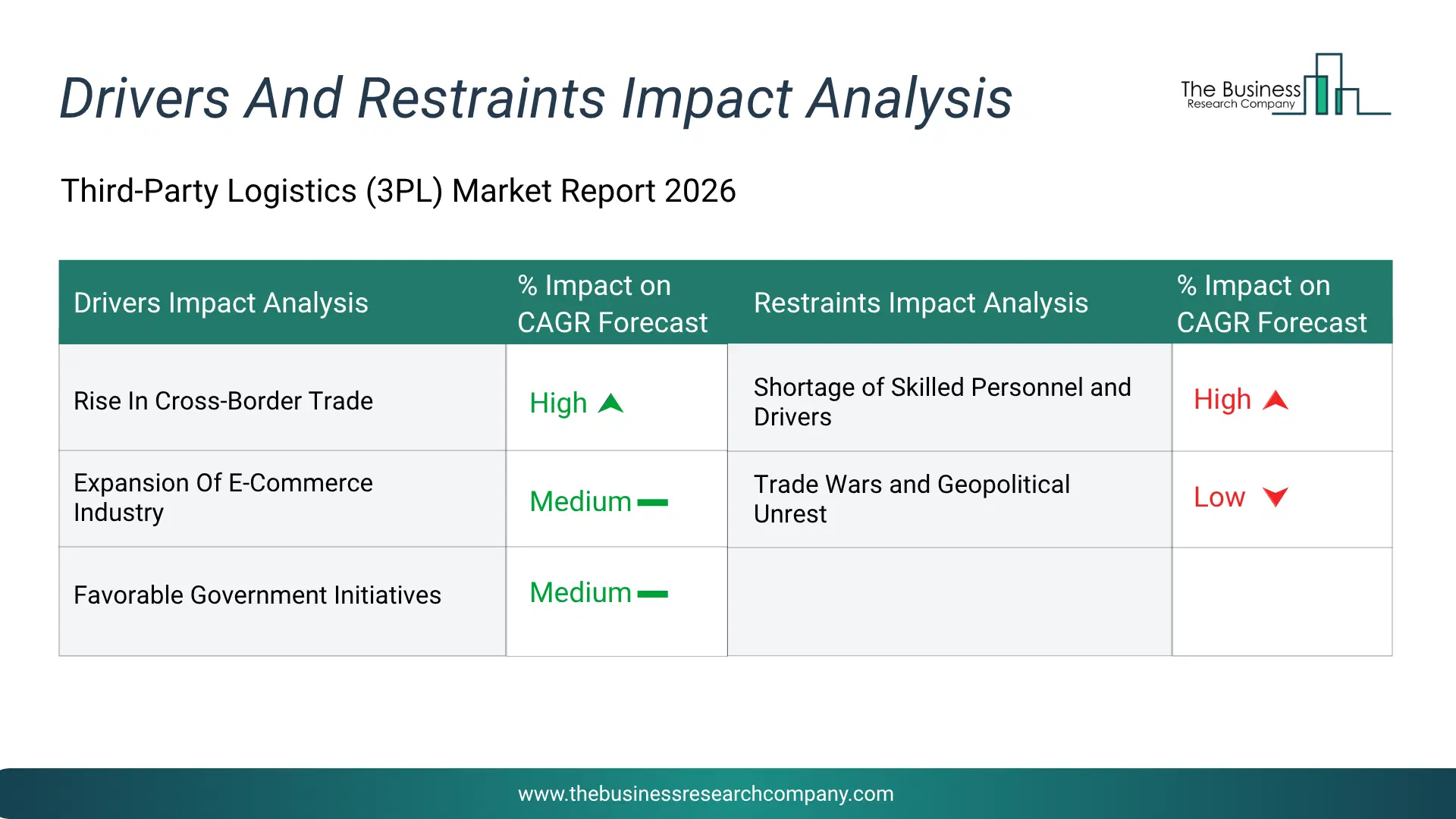
Infographic Chart Showing Key Market Drivers Analysis And Restraints For Third-Party Logistics (3Pl) Market
The chart presents an impact analysis of key drivers and restraints, quantifying their relative influence on the market's growth rate and helping assess the balance between growth enablers and limiting factors. This chart offers a high-level perspective; the full report contains more detailed insights.
How Will The Drivers Impact Growth In The Global Third-Party Logistics (3PL) Market?
• Rise In Cross-Border Trade (High) – The rise in cross-border trade will become a key driver of growth in the third-party logistics (3PL) market by 2030. The increase in cross-border trade is due to globalization and the growing demand for diverse products from global markets. Third-party logistics (3PL) providers play a vital role in cross-border trade by streamlining supply chain operations, ensuring regulatory compliance and optimizing transportation. They manage customs clearance, tariffs and documentation, reducing delays and legal risks. Through multimodal transportation options, 3PL firms enhance shipping efficiency while negotiating better freight rates to lower costs. As a result, the rise in cross-border trade is anticipated to contributing to a 2.0% annual growth in the market. • Expansion Of E-Commerce Industry (Medium) – The expansion of the e-commerce industry will emerge as a major factor driving the expansion of the market by 2030. E-commerce is rising due to increased internet penetration, convenience, a growing preference for online shopping and advancements in digital payment systems. Third-party logistics (3PL) providers help e-commerce companies by offering advanced warehousing, inventory management and real-time tracking systems, ensuring smooth supply chain operations. Additionally, the need for cross-border trade solutions, reverse logistics for returns and omnichannel distribution has further strengthened the role of 3PL in the e-commerce sector. Consequently, the expansion of e-commerce industry is projected to contributing to a 1.5% annual growth in the market. • Favorable Government Initiatives (Medium) – The favorable government initiatives will serve as a key growth catalyst for the market by 2030, Government initiatives are strategic actions or programs launched by governments to address specific issues, promote economic growth, or improve public welfare through policy, funding and regulation. Government initiatives are rising due to the increasing need to address complex global challenges such as economic recovery, environmental sustainability, public health and technological innovation while promoting social well-being and national competitiveness. The government programs supporting green logistics encourage the adoption of sustainable practices like electric vehicles and carbon-neutral supply chains. These initiatives help 3PL providers improve service quality, optimize operations and expand market reach, driving overall industry growth. Therefore, this favorable government initiatives is projected to supporting to a 1.0% annual growth in the market. • The Expansion Of Retail Sector (Low) – The expansion of retail sector will become a significant driver contributing to the growth of the market by 2030. The retail sector is the part of the economy that involves the sale of goods and services directly to consumers for personal or household use. It includes supermarkets, department stores, specialty shops, e-commerce platforms and convenience stores. Third-party logistics (3PL) providers are used in the retail industry for freight transportation, warehousing, inventory management, pick and pack and final mile delivery of different goods. Third-party logistics (3PL) providers play a vital role in retail by managing warehousing, inventory, distribution and last-mile delivery, ensuring efficient and cost-effective operations. They help retailers handle fluctuating demand, optimize inventory and streamline order fulfilment using advanced technology. With the rise of e-commerce, 3PL services enable fast deliveries and efficient reverse logistics, improving customer satisfaction. Consequently, the expansion of retail sector is projected to contributing to a 0.5% annual growth in the market.How Will The Restraints Impact Growth In The Global Third-Party Logistics (3PL) Market?
• Shortage of Skilled Personnel and Drivers (High) – Shortage of Skilled Personnel and Drivers will restrict the growth of the Third-Party Logistics (3PL) market during the forecast period. The logistics industry faces a critical shortage of qualified drivers, warehouse staff, and logistics professionals. This talent gap affects operational capacity, leading to service delays and increased labor costs. Driver shortages particularly impact road transportation services, a key segment of 3PL operations, limiting market growth and affecting service quality and reliability. • Trade Wars and Geopolitical Unrest (Medium) – Trade Wars and Geopolitical Unrest will restrict the growth of the Third-Party Logistics (3PL) market during the forecast period. Geopolitical tensions and trade disputes disrupt international logistics networks and cross-border supply chains. Tariffs, trade restrictions, and border delays increase costs and reduce the efficiency of logistics operations. Uncertainty about trade policies affects long-term investment decisions and logistics network planning, limiting market growth and creating operational challenges for 3PL providers.Key Players In The Global Third-Party Logistics (3PL) Market
Major companies operating in the third-party logistics (3pl) market report are Kuehne+Nagel International AG, DSV A/S, Deutsche Post DHL Group, C.H. Robinson Worldwide Inc., J.B. Hunt Transport Services Inc., Nippon Express Holdings Inc., CEVA Logistics, FedEx Corporation, XPO Logistics Inc., Expeditors International of Washington Inc., Geodis, Bolloré Logistics, Rhenus Group, Gebrüder Weiss, Sinotrans Limited, Allcargo Logistics Ltd., Aegis Logistics Ltd., Mahindra Logistics Ltd., Delhivery Ltd., TVS Supply Chain Solutions Ltd., Safexpress Pvt. Ltd., Burris Logistics, ShipMonk, Weber Logistics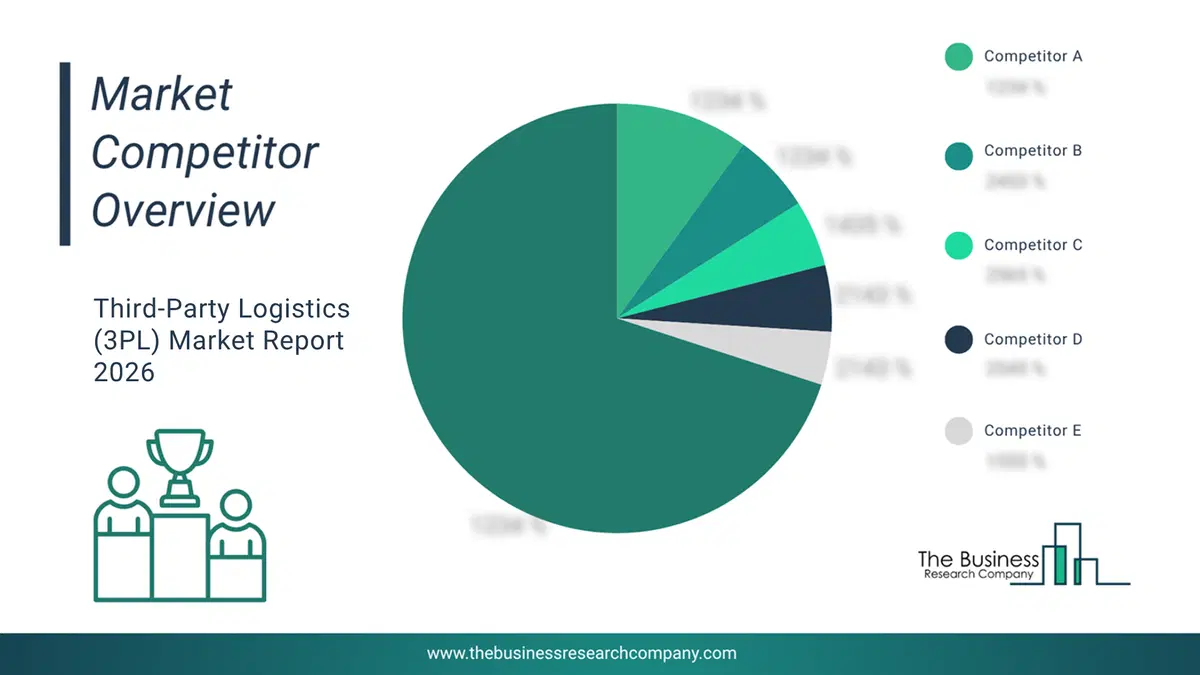
This chart is for illustrative purposes; the full report includes a detailed competitor analysis and comprehensive overview of the top 10 companies in the market.
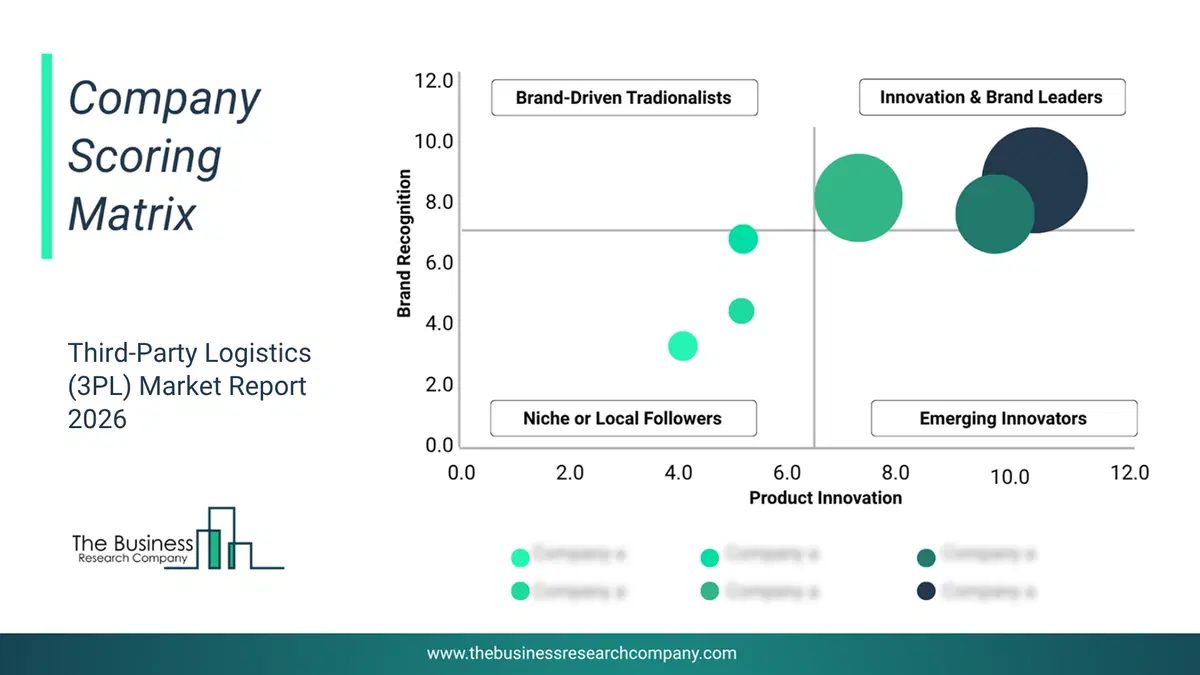
This chart maps companies by product innovation and brand strength, with bubble size indicating relative revenue, helping identify market leaders, challengers, and niche players. This is an illustrative chart; the full report provides a complete and accurate competitive analysis.
Global Third-Party Logistics (3PL) Market Trends and Insights
Major companies in the third-party logistics market are focusing on developing innovative solutions such as integrated supply chain services to streamline operations, improve delivery efficiency, and meet evolving customer demands. Integrated supply chain services are a coordinated approach where all logistics, warehousing, transportation, and inventory management activities are managed together to ensure smooth, end-to-end product flow from manufacturer to customer. For instance, in October 2025, Orsini Pharmaceutical Services, LLC, a US-based pharmacy and healthcare services company, integrated a specialty pharmacy and third-party logistics (3PL) solution at its new Columbus, Ohio, facility. This integrated model enables end-to-end management of drug distribution, including ultra-cold storage and complex therapy handling. The launch strengthens Orsini’s ability to support rare disease, gene, and cell therapy manufacturers with efficient, compliant, and nationwide distribution services.What Are Latest Mergers And Acquisitions In The Third-Party Logistics (3PL) Market?
In November 2025, United Parcel Service, a US-based logistics and parcel-delivery company, acquired Andlauer Healthcare Group for an undisclosed amount. Through this acquisition, UPS aims to expand its end-to-end healthcare logistics capabilities by integrating Andlauer’s temperature-controlled transport, warehousing, and distribution network into its global supply chain operations. Andlauer Healthcare Group Inc. is a Canada-based company that provides customized Third-Party Logistics (3PL) and specialized healthcare supply chain solutions.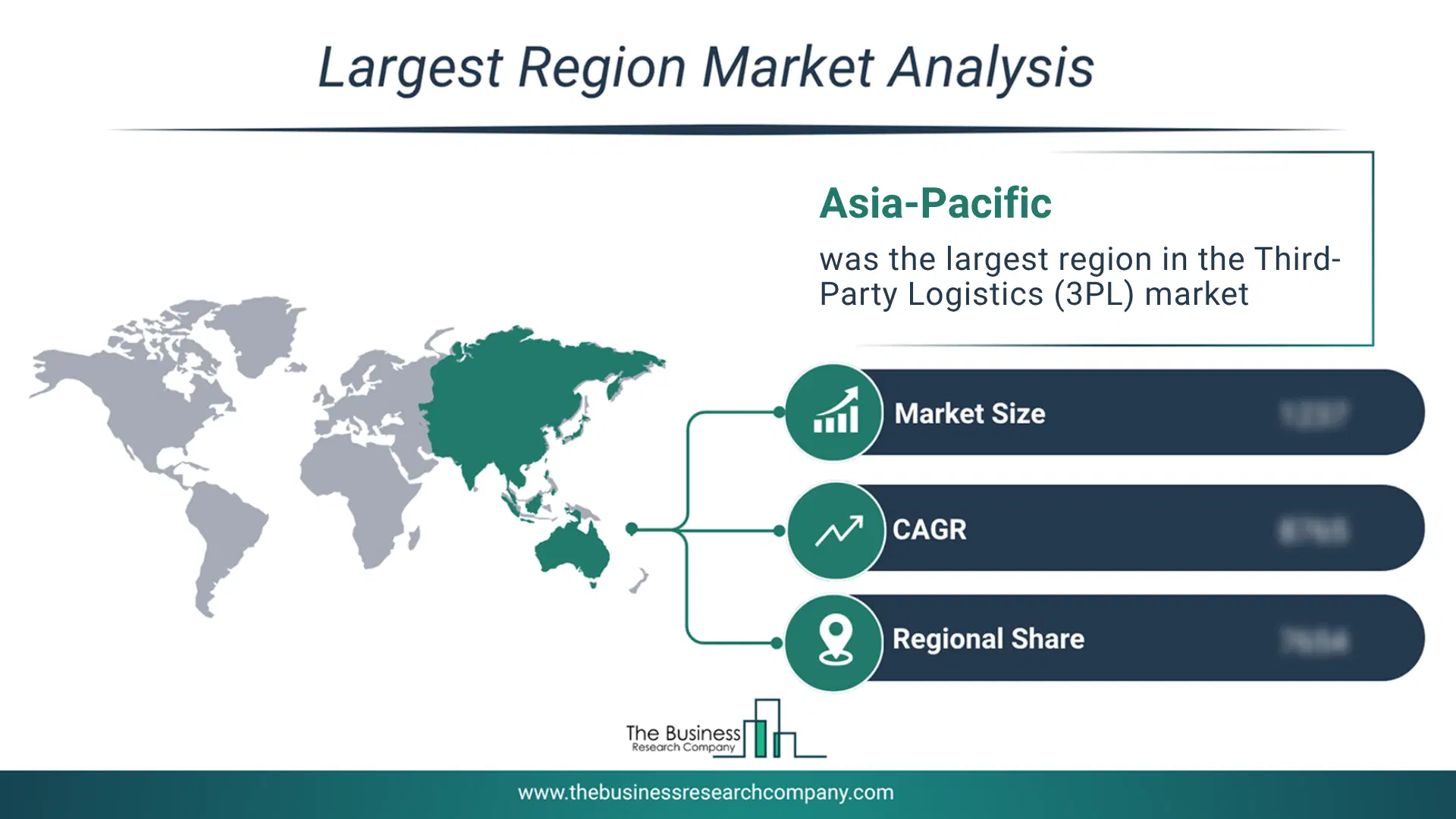
Regional Outlook
Asia-Pacific was the largest region in the third-party logistics market in 2025. The regions covered in this market report are Asia-Pacific, South East Asia, Western Europe, Eastern Europe, North America, South America, Middle East, Africa. The countries covered in this market report are Australia, Brazil, China, France, Germany, India, Indonesia, Japan, Taiwan, Russia, South Korea, UK, USA, Canada, Italy, SpainWhat Defines the Third-Party Logistics (3PL) Market?
The third-party logistics market includes revenues earned by entities by providing services such as warehousing, purchasing supplies, inventory control, customs brokerage, freight audit, payments, and shipment monitoring. The market value includes the value of related goods sold by the service provider or included within the service offering. Only goods and services traded between entities or sold to end consumers are included.How is Market Value Defined and Measured?
The market value is defined as the revenues that enterprises gain from the sale of goods and/or services within the specified market and geography through sales, grants, or donations in terms of the currency (in USD unless otherwise specified). The revenues for a specified geography are consumption values that are revenues generated by organizations in the specified geography within the market, irrespective of where they are produced. It does not include revenues from resales along the supply chain, either further along the supply chain or as part of other products.
This chart presents market attractiveness based on a quantitative evaluation of growth, competition, strategic alignment, and risk, offering a clear view of opportunity areas for decision-making. This chart is for illustrative purposes; the full report contains the complete analysis.

This chart highlights the Total Addressable Market (TAM) by estimating the maximum revenue opportunity using an assumption-driven approach, supporting strategic planning and opportunity sizing across markets. The chart is illustrative; the full report provides a more comprehensive analysis.
What Key Data and Analysis Are Included in the Third-Party Logistics (3PL) Market Report 2026?
The third-party logistics (3pl) market research report is one of a series of new reports from The Business Research Company that provides market statistics, including industry global market size, regional shares, competitors with the market share, detailed market segments, market trends and opportunities, and any further data you may need to thrive in the third-party logistics (3pl) industry. The market research report delivers a complete perspective of everything you need, with an in-depth analysis of the current and future state of the industry.Third-Party Logistics (3PL) Market Report Forecast Analysis
| Report Attribute | Details |
|---|---|
| Market Size Value In 2026 | $1461.13 billion |
| Revenue Forecast In 2030 | $2141.68 billion |
| Growth Rate | CAGR of 10.6% from 2026 to 2030 |
| Base Year For Estimation | 2025 |
| Actual Estimates/Historical Data | 2020-2025 |
| Forecast Period | 2026 - 2030 |
| Market Representation | Revenue in USD Billion and CAGR from 2026 to 2030 |
| Segments Covered | Service Type, Mode Of Transport, End-Use Industry |
| Regional Scope | Asia-Pacific, Western Europe, Eastern Europe, North America, South America, Middle East, Africa |
| Country Scope | The countries covered in the report are Australia, Brazil, China, France, Germany, India, Indonesia, Japan, Taiwan, Russia, South Korea, UK, USA, Canada, Italy, Spain. |
| Key Companies Profiled | Kuehne+Nagel International AG, DSV A/S, Deutsche Post DHL Group, C.H. Robinson Worldwide Inc., J.B. Hunt Transport Services Inc., Nippon Express Holdings Inc., CEVA Logistics, FedEx Corporation, XPO Logistics Inc., Expeditors International of Washington Inc., Geodis, Bolloré Logistics, Rhenus Group, Gebrüder Weiss, Sinotrans Limited, Allcargo Logistics Ltd., Aegis Logistics Ltd., Mahindra Logistics Ltd., Delhivery Ltd., TVS Supply Chain Solutions Ltd., Safexpress Pvt. Ltd., Burris Logistics, ShipMonk, Weber Logistics |
| Customization Scope | Request for Customization |
| Pricing And Purchase Options | Explore Purchase Options |