
Tissue Regeneration Scaffold Market Report 2026
Global Outlook – By Type (Natural, Synthetic, Composite), By Application (Orthopedic, Dental, Wound Care), By End-User (Hospitals And Clinics, Research And Academic Institutes) – Market Size, Trends, Strategies, and Forecast to 2030
Tissue Regeneration Scaffold Market Overview
• Tissue Regeneration Scaffold market size has reached to $2.61 billion in 2025 • Expected to grow to $5.58 billion in 2030 at a compound annual growth rate (CAGR) of 16.3% • Growth Driver: The Growing Number Of Trauma Cases Is Driving The Market Growth Due To Increasing Demand For Advanced Tissue Repair Solutions • Market Trend: Advancements In 3D Bioprinting Driving Development Of Next-Generation Tissue Scaffolds • North America was the largest region in 2025 and Asia-Pacific is the fastest growing region.What Is Covered Under Tissue Regeneration Scaffold Market?
Tissue regeneration scaffolds are three-dimensional frameworks that facilitate the repair and growth of damaged tissues by enabling cells to adhere, multiply, and specialize. They replicate the natural extracellular matrix, directing tissue formation and enhancing healing. Their main goal is to restore tissue function, speed up recovery, and boost the effectiveness of regenerative treatments. The main types of tissue regeneration scaffolds are natural, synthetic, and composite. Natural scaffolds are biocompatible, biodegradable materials derived from nature that closely mimic the body’s extracellular matrix, supporting safe and effective tissue regeneration. They are used in various applications such as orthopedics, dental, and wound care, and are utilized by several end users, including hospitals and clinics, as well as research and academic institutes.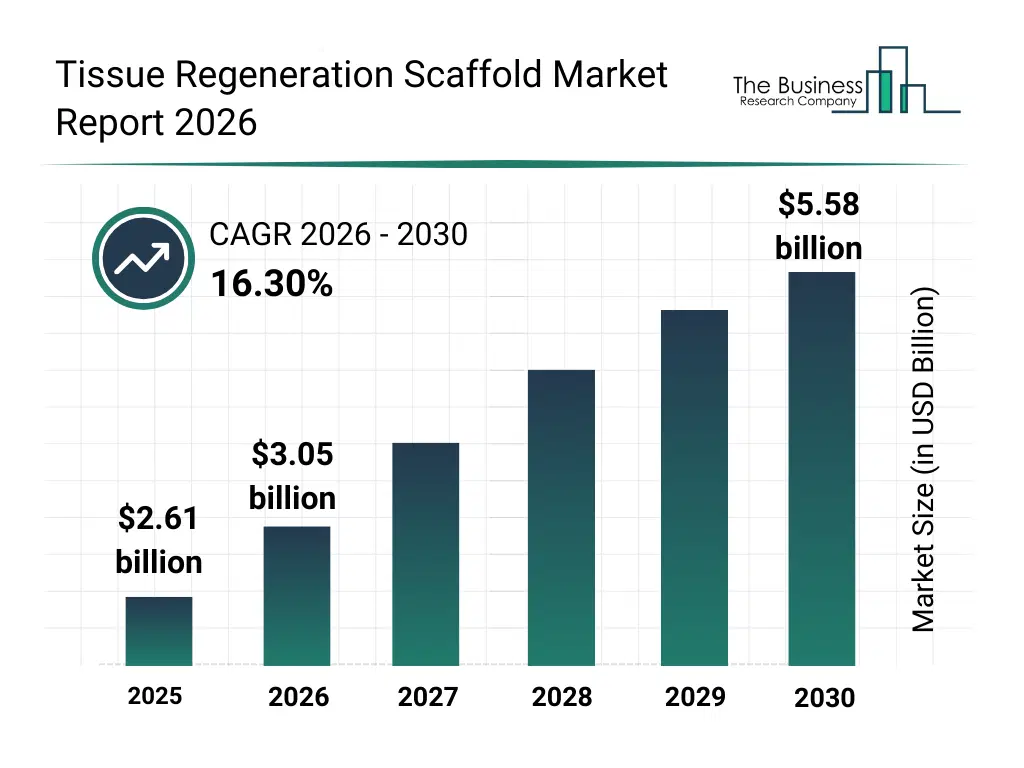
What Is The Tissue Regeneration Scaffold Market Size and Share 2026?
The tissue regeneration scaffold market size has grown rapidly in recent years. It will grow from $2.61 billion in 2025 to $3.05 billion in 2026 at a compound annual growth rate (CAGR) of 16.9%. The growth in the historic period can be attributed to limited availability of advanced scaffolds, reliance on traditional grafts, growing incidence of orthopedic and dental injuries, increasing research in tissue engineering, rising hospital and clinical infrastructure.What Is The Tissue Regeneration Scaffold Market Growth Forecast?
The tissue regeneration scaffold market size is expected to see rapid growth in the next few years. It will grow to $5.58 billion in 2030 at a compound annual growth rate (CAGR) of 16.3%. The growth in the forecast period can be attributed to development of composite and nanocomposite scaffolds, advancements in bioactive and hydroxyapatite-based materials, integration of 3d bioprinting in scaffold production, growing investment in regenerative medicine, rising collaborations between academic institutes and hospitals. Major trends in the forecast period include rising adoption of natural and synthetic tissue scaffolds, growth in orthopedic, dental, and wound care applications, integration of 3d bioprinting and advanced fabrication techniques, increasing focus on biocompatibility and scaffold functionalization, expansion of research and academic institutes in regenerative medicine.
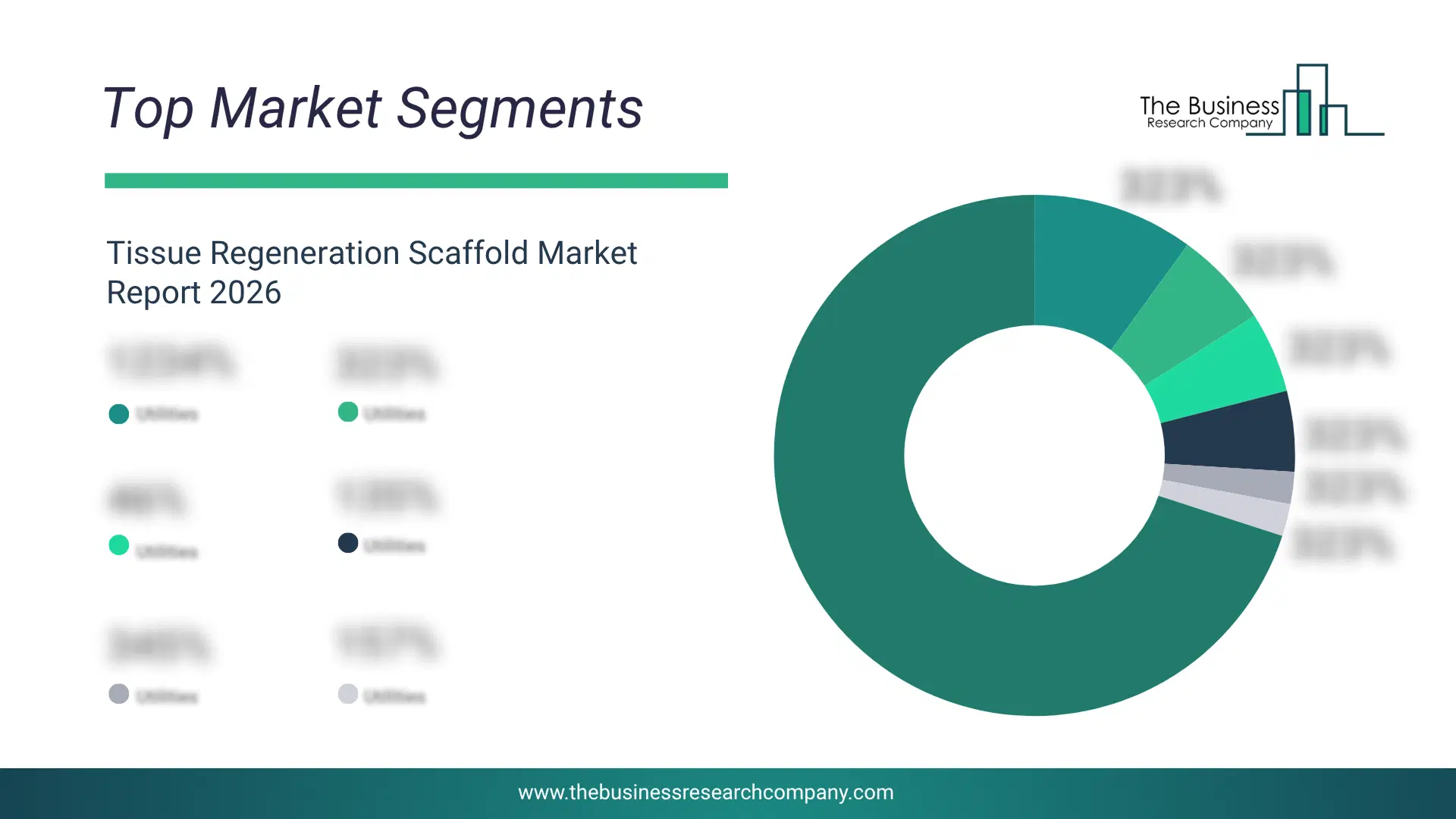
Global Tissue Regeneration Scaffold Market Segmentation
1) By Type: Natural, Synthetic, Composite 2) By Application: Orthopedic, Dental, Wound Care 3) By End-User: Hospitals And Clinics, Research And Academic Institutes Subsegments: 1) By Natural: Collagen Scaffolds, Chitosan Scaffolds, Alginate Scaffolds, Hyaluronic Acid Scaffolds, Gelatin Scaffolds 2) By Synthetic: Polylactic Acid (PLA) Scaffolds, Polyglycolic Acid (PGA) Scaffolds, Polycaprolactone (PCL) Scaffolds, Polyethylene Glycol (PEG) Scaffolds, Polylactic-Co-Glycolic Acid (PLGA) Scaffolds 3) By Composite: Natural-Synthetic Polymer Composites, Ceramic-Polymer Composites, Nanocomposite Scaffolds, Hydroxyapatite-Based Composites, Bioactive Glass CompositesWhat Is The Driver Of The Tissue Regeneration Scaffold Market?
The growing number of trauma cases is expected to propel the growth of the tissue regeneration scaffold market going forward. Trauma cases refer to injuries caused by accidents, falls, or violence that result in damage to tissues requiring medical intervention. The rise in trauma cases is largely due to increasing road traffic accidents, as well as industrial and workplace injuries, which result in a higher need for effective tissue repair and regeneration solutions. Tissue regeneration scaffolds support trauma cases by providing a structured framework that promotes the repair and growth of damaged tissues, accelerating healing, reducing complications such as infections or scarring, and helping restore the affected area’s normal function more effectively. For instance, October 2024, according to the Department of Health Alaska, a US-based government department, in 2023, approximately 3,373 individuals in Alaska experienced traumatic brain injuries (TBI). This total includes both fatal cases and non-fatal injuries that were treated and discharged from hospitals or emergency departments (ED).Therefore, the growing number of trauma cases is driving the growth of the tissue regeneration scaffold industry.Key Players In The Global Tissue Regeneration Scaffold Market
Major companies operating in the tissue regeneration scaffold market are Evonik Industries AG, DSM-Firmenich AG, Ashland Inc., Integra LifeSciences Corporation, Organogenesis Inc., MiMedx Group Inc., LifeNet Health Inc., BioTissue Inc., Aroa Biosurgery Limited, Poly-Med Inc., CollPlant Biotechnologies Ltd.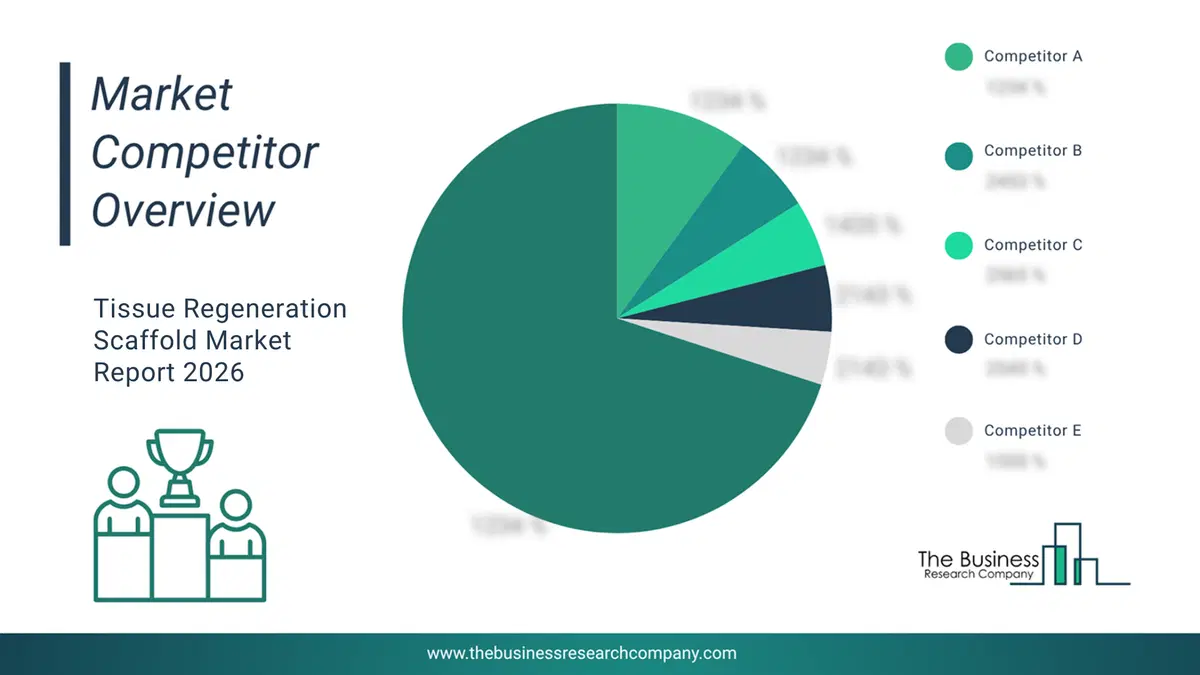
This chart is for illustrative purposes; the full report includes a detailed competitor analysis and comprehensive overview of the top 10 companies in the market.
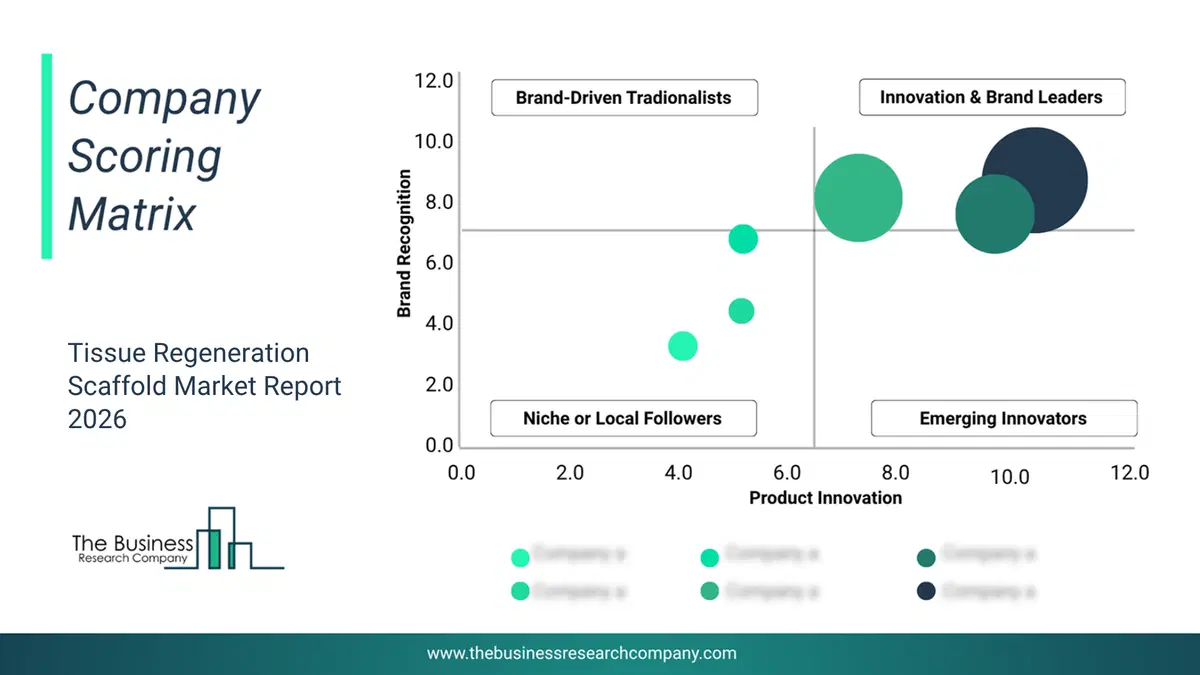
This chart maps companies by product innovation and brand strength, with bubble size indicating relative revenue, helping identify market leaders, challengers, and niche players. This is an illustrative chart; the full report provides a complete and accurate competitive analysis.
Global Tissue Regeneration Scaffold Market Trends and Insights
Major companies operating in the tissue regeneration scaffold market are focusing on developing advanced technologies such as three-dimensional (3D) bioprinting to develop highly customized and physiologically relevant scaffolds. 3D bioprinting uses bioinks made of living cells and biomaterials to fabricate three-dimensional, functional tissue structures for regenerative medicine and research. For instance, in June 2023, 3D BioFibR Inc., a Canada-based company that manufactures biopolymer fiber, launched two collagen fiber products, micro-collafibr and collafibr 3D scaffold, which utilize proprietary dry-spinning technology to produce durable, biologically relevant scaffolds that improve the mechanical strength and functionality of 3D bioprinted tissues and 3D cell cultures. The Collafibr 3D scaffold, made from GMP-grade type 1 collagen fibers, closely replicates the natural extracellular matrix’s structure and biomechanical properties, providing a three-dimensional environment that supports realistic cell growth and interaction and is compatible with standard well plate formats for high-throughput drug screening and advanced microscopy, thus advancing tissue modeling and regenerative medicine research.What Are Latest Mergers And Acquisitions In The Tissue Regeneration Scaffold Market?
In October 2024, Integra LifeSciences Holdings Corporation, a US-based medical-technology company, acquired the Durepair dura regeneration matrix product line from Medtronic plc for an undisclosed amount. With this acquisition, Integra LifeSciences aims to strengthen its neurosurgical and tissue-regeneration portfolio by integrating Durepair into its lineup of dural-repair solutions, while enhancing surgical outcomes, expanding global market reach, and improving patient access to advanced neurosurgical care. Medtronic plc is a US-based medical technology company that develops and commercializes a broad array of interventional, surgical, and monitoring technologies.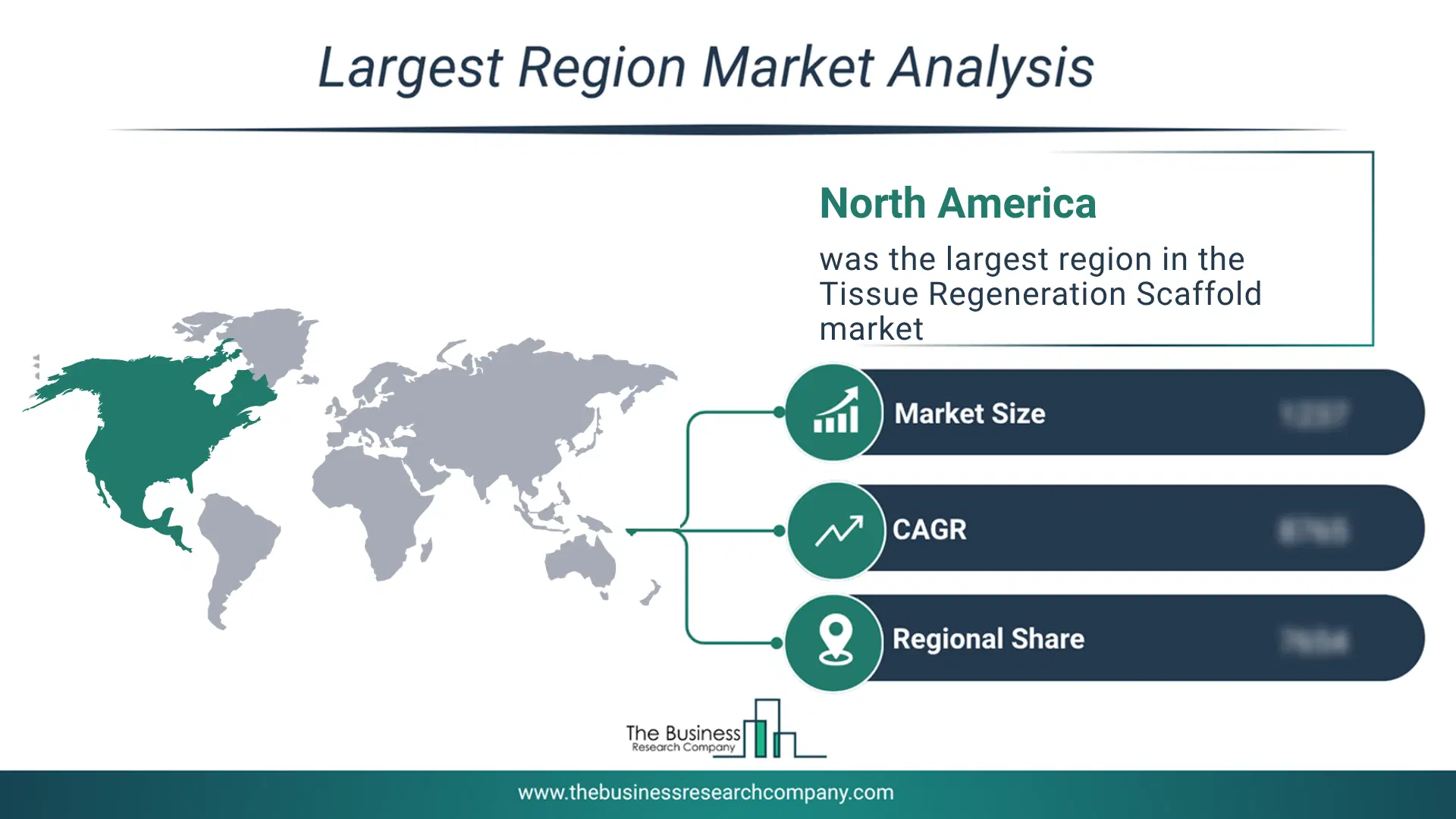
Regional Insights
North America was the largest region in the tissue regeneration scaffold market in 2025. Asia-Pacific is expected to be the fastest-growing region in the forecast period. The regions covered in this market report are Asia-Pacific, South East Asia, Western Europe, Eastern Europe, North America, South America, Middle East, Africa. The countries covered in this market report are Australia, Brazil, China, France, Germany, India, Indonesia, Japan, Taiwan, Russia, South Korea, UK, USA, Canada, Italy, Spain.What Defines the Tissue Regeneration Scaffold Market?
The tissue regeneration scaffolds market consists of sales of hydrogel scaffolds, collagen-based scaffolds, ceramic scaffolds, nanofiber scaffolds, and composite scaffolds. Values in this market are ‘factory gate’ values, that is, the value of goods sold by the manufacturers or creators of the goods, whether to other entities (including downstream manufacturers, wholesalers, distributors, and retailers) or directly to end customers. The value of goods in this market includes related services sold by the creators of the goods.How is Market Value Defined and Measured?
The market value is defined as the revenues that enterprises gain from the sale of goods and/or services within the specified market and geography through sales, grants, or donations in terms of the currency (in USD unless otherwise specified). The revenues for a specified geography are consumption values that are revenues generated by organizations in the specified geography within the market, irrespective of where they are produced. It does not include revenues from resales along the supply chain, either further along the supply chain or as part of other products.
This chart presents market attractiveness based on a quantitative evaluation of growth, competition, strategic alignment, and risk, offering a clear view of opportunity areas for decision-making. This chart is for illustrative purposes; the full report contains the complete analysis.

This chart highlights the Total Addressable Market (TAM) by estimating the maximum revenue opportunity using an assumption-driven approach, supporting strategic planning and opportunity sizing across markets. The chart is illustrative; the full report provides a more comprehensive analysis.
What Key Data and Analysis Are Included in the Tissue Regeneration Scaffold Market Report 2026?
The tissue regeneration scaffold market research report is one of a series of new reports from The Business Research Company that provides market statistics, including industry global market size, regional shares, competitors with the market share, detailed market segments, market trends and opportunities, and any further data you may need to thrive in the tissue regeneration scaffold industry. The market research report delivers a complete perspective of everything you need, with an in-depth analysis of the current and future state of the industry.Tissue Regeneration Scaffold Market Report Forecast Analysis
| Report Attribute | Details |
|---|---|
| Market Size Value In 2026 | $3.05 billion |
| Revenue Forecast In 2030 | $5.58 billion |
| Growth Rate | CAGR of 16.9% from 2026 to 2030 |
| Base Year For Estimation | 2025 |
| Actual Estimates/Historical Data | 2020-2025 |
| Forecast Period | 2026 - 2030 |
| Market Representation | Revenue in USD Billion and CAGR from 2026 to 2030 |
| Segments Covered | Type, Application, End-User |
| Regional Scope | Asia-Pacific, Western Europe, Eastern Europe, North America, South America, Middle East, Africa |
| Country Scope | The countries covered in the report are Australia, Brazil, China, France, Germany, India, Indonesia, Japan, Taiwan, Russia, South Korea, UK, USA, Canada, Italy, Spain. |
| Key Companies Profiled | Evonik Industries AG, DSM-Firmenich AG, Ashland Inc., Integra LifeSciences Corporation, Organogenesis Inc., MiMedx Group Inc., LifeNet Health Inc., BioTissue Inc., Aroa Biosurgery Limited, Poly-Med Inc., CollPlant Biotechnologies Ltd. |
| Customization Scope | Request for Customization |
| Pricing And Purchase Options | Explore Purchase Options |