
Tyrosine Kinase Inhibitors Market Report 2026
Global Outlook – By Type (BCR-ABL Tyrosine Kinase Inhibitor, Epidermal Growth Factor Receptor (EGFR) Tyrosine Kinase Inhibitors, Vascular Endothelial Growth Factor Receptor (VEGFR) Tyrosine Kinase Inhibitors, Other Types), By Distribution Channel (Hospital Pharmacy, Independent Pharmacies, Online Pharmacies), By Application (Chronic Myeloid Leukemia (CML), Lung Cancer, Breast Cancer, Renal Cell Cancer, Other Applications) – Market Size, Trends, Strategies, and Forecast to 2030
Tyrosine Kinase Inhibitors Market Overview
• Tyrosine Kinase Inhibitors market size has reached to $62.66 billion in 2025 • Expected to grow to $95.44 billion in 2030 at a compound annual growth rate (CAGR) of 8.9% • Growth Driver: The Rising Prevalence Of Cancer Boosts The Tyrosine Kinase Inhibitors Market • Market Trend: Innovative Products Drive Momentum In The Tyrosine Kinase Inhibitors Market • North America was the largest region in 2025 and Asia-Pacific is the fastest growing region.What Is Covered Under Tyrosine Kinase Inhibitors Market?
Tyrosine kinase inhibitors (TKI) refer to a class of pharmaceuticals that block several ways protein kinases signal the transduction pathway’s function. It is used in targeted therapy to target and kill cancer cell types while sparing healthy cells. The main tyrosine kinase inhibitors are BCR-ABL tyrosine kinase inhibitors, epidermal growth factor receptor (EGFR) tyrosine kinase inhibitors, vascular endothelial growth factor receptor (VEGFR) tyrosine kinase inhibitors, and others. BCR-ABL tyrosine kinase inhibitors refer to an enzyme that inhibits the BCR-ABL tyrosine kinases that are crucial in the pathogenesis of chronic myelogenous leukemia (CML), and it is used as a first-line therapy for patients with chronic myelogenous leukemia (CML). The various distribution channels are hospital pharmacies, independent pharmacies, and online pharmacies that are applied in chronic myeloid leukemia (CML), lung cancer, breast cancer, renal cell cancer, and others.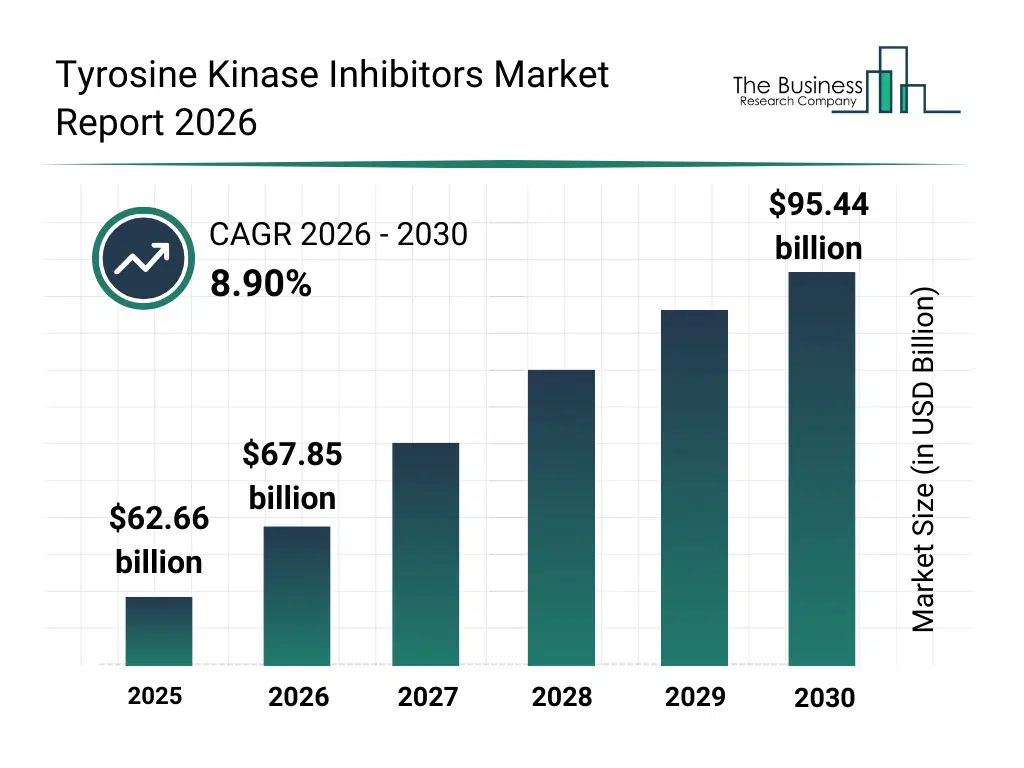
What Is The Tyrosine Kinase Inhibitors Market Size and Share 2026?
The tyrosine kinase inhibitors market size has grown strongly in recent years. It will grow from $62.66 billion in 2025 to $67.85 billion in 2026 at a compound annual growth rate (CAGR) of 8.3%. The growth in the historic period can be attributed to approval of first-generation tkis, growing prevalence of chronic myeloid leukemia, advancements in molecular biology, rise in hospital pharmacy networks, increased r&d in oncology drugs.What Is The Tyrosine Kinase Inhibitors Market Growth Forecast?
The tyrosine kinase inhibitors market size is expected to see strong growth in the next few years. It will grow to $95.44 billion in 2030 at a compound annual growth rate (CAGR) of 8.9%. The growth in the forecast period can be attributed to launch of next-generation tkis, expansion of emerging markets, increasing adoption of precision medicine, growth in online pharmacy distribution, collaborations between biotech and pharma companies. Major trends in the forecast period include personalized cancer therapy, expansion of targeted oncology drugs, rising clinical trials for tkis, development of combination therapies, increased adoption of oral oncology medications.
Global Tyrosine Kinase Inhibitors Market Segmentation
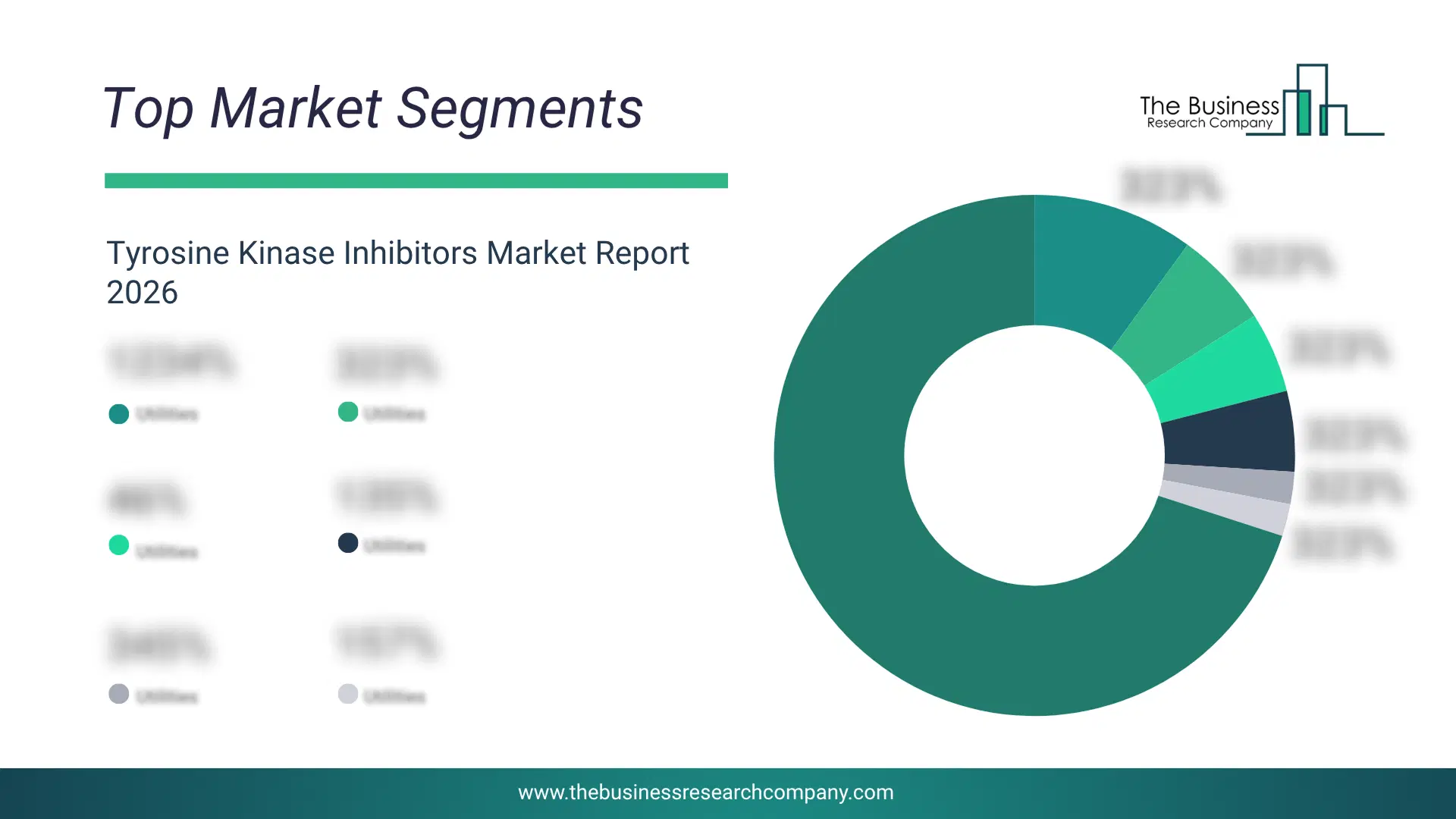
1) By Type: BCR-ABL Tyrosine Kinase Inhibitor, Epidermal Growth Factor Receptor (EGFR) Tyrosine Kinase Inhibitors, Vascular Endothelial Growth Factor Receptor (VEGFR) Tyrosine Kinase Inhibitors, Other Types 2) By Distribution Channel: Hospital Pharmacy, Independent Pharmacies, Online Pharmacies 3) By Application: Chronic Myeloid Leukemia (CML), Lung Cancer, Breast Cancer, Renal Cell Cancer, Other Applications Subsegments: 1) By BCR-ABL Tyrosine Kinase Inhibitor: Imatinib, Dasatinib, Nilotinib, Bosutinib, Ponatinib 2) By Epidermal Growth Factor Receptor (EGFR) Tyrosine Kinase Inhibitors: Gefitinib, Erlotinib, Afatinib, Osimertinib, Dacomitinib 3) By Vascular Endothelial Growth Factor Receptor (VEGFR) Tyrosine Kinase Inhibitors: Sorafenib, Sunitinib, Pazopanib, Axitinib, Regorafenib 4) By Other Types: Platelet-Derived Growth Factor Receptor (PDGFR) Inhibitors, RET Tyrosine Kinase Inhibitors, Fibroblast Growth Factor Receptor (FGFR) Inhibitors, Other Emerging Tyrosine Kinase InhibitorsWhat Is The Driver Of The Tyrosine Kinase Inhibitors Market?
The increasing prevalence of cancer is expected to propel the growth of the tyrosine kinase inhibitors market going forward. Cancer refers to a broad collection of illnesses that begin in any organ or tissue of the body, where abnormal cells grow out of control, cross their usual boundaries to infect nearby body parts, and spread to other organs. The tyrosine kinase inhibitors are used in targeted therapy to target and kill cancer cell types by blocking tyrosine kinases that aid in preventing the growth of cancer cells. For instance, in February 2024, according to the World Health Organization, a Switzerland-based intergovernmental organization, by 2050, over 35 million new cancer cases were projected, representing a 77% increase compared to the estimated 20 million cases in 2022. Therefore, the increasing prevalence of cancer is driving the growth of the tyrosine kinase inhibitors industry.Key Players In The Global Tyrosine Kinase Inhibitors Market
Major companies operating in the tyrosine kinase inhibitors market are Pfizer Inc, Johnson And Johnson, F. Hoffmann-La Roche AG, AbbVie Inc, Bayer AG, Novartis AG, Bristol-Myers Squibb Company, AstraZeneca Plc, Eli Lilly and Company, Amgen Inc, Boehringer Ingelheim International GmbH, Astellas Pharma Inc, Eisai Co. Ltd, Incyte Corporation, Dr. Reddy's Laboratories Ltd, Exelixis Inc, Blueprint Medicines Corporation, Deciphera Pharmaceuticals LLC, Turning Point Therapeutics Inc, Kura Oncology Inc, ArQule Inc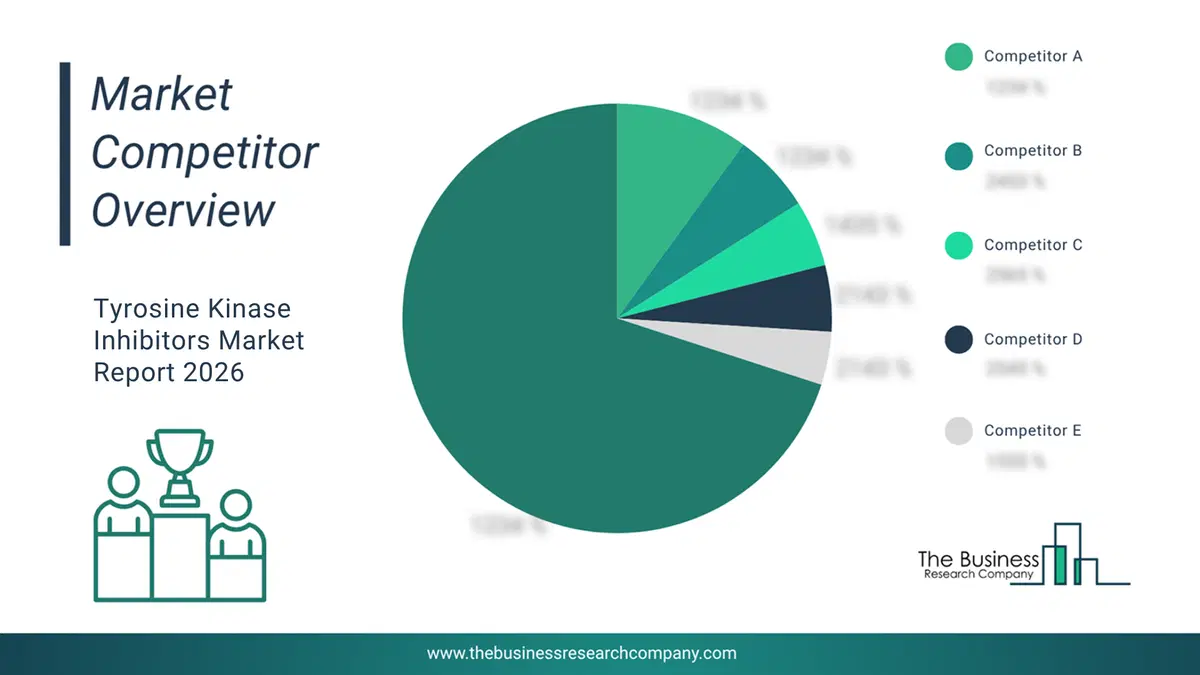
This chart is for illustrative purposes; the full report includes a detailed competitor analysis and comprehensive overview of the top 10 companies in the market.
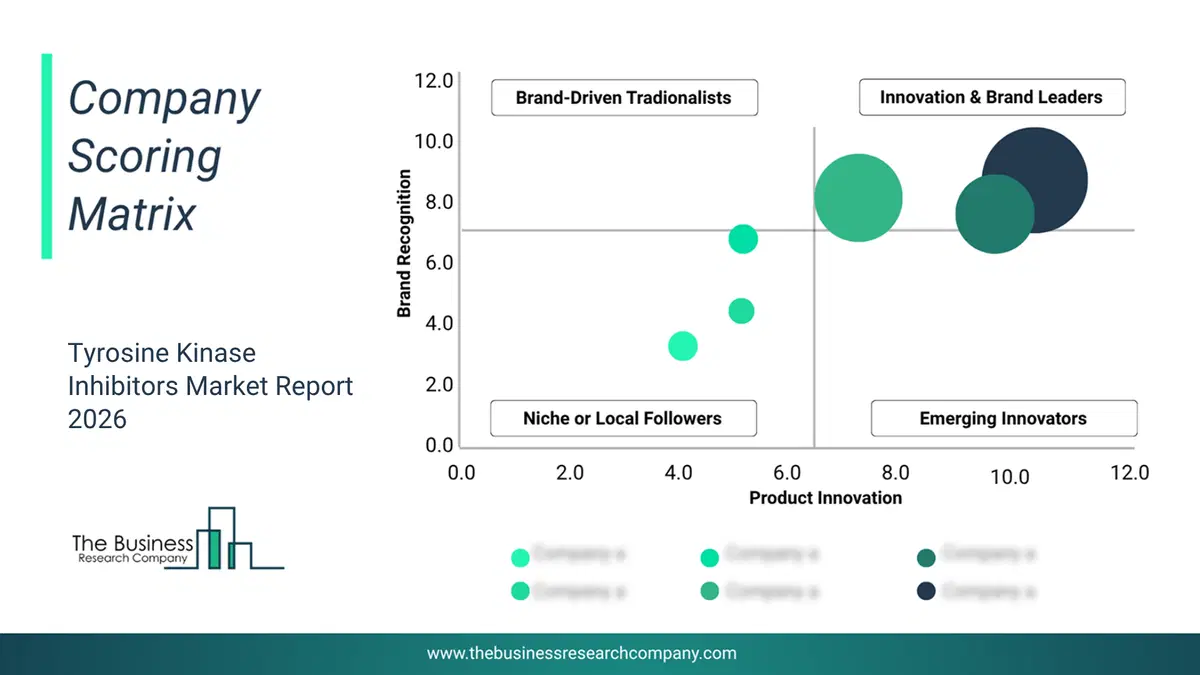
This chart maps companies by product innovation and brand strength, with bubble size indicating relative revenue, helping identify market leaders, challengers, and niche players. This is an illustrative chart; the full report provides a complete and accurate competitive analysis.
Global Tyrosine Kinase Inhibitors Market Trends and Insights
Major companies operating in the tyrosine kinase inhibitor market are focusing on developing advanced therapies, such as targeted leukemia inhibitors, to enhance treatment efficacy and patient outcomes. Targeted leukemia inhibitors are designed to selectively block abnormal tyrosine kinase activity in cancer cells, improving survival rates and reducing adverse effects compared to conventional therapies. For instance, in February 2023, Xspray Pharma AB, a Swedish pharmaceutical company, signed an agreement with EVERSANA, a US-based life sciences service company, to assist with the U.S. launch and commercialization of its first innovative cancer therapy, Dasynoc, designed for treating chronic myeloid leukemia (CML) and acute lymphoblastic leukemia (ALL). Dasynoc offers a new and distinct treatment option for CML and ALL patients within the $3.5 billion U.S. market for Tyrosine Kinase Inhibitors. It represents a significant advancement for CML patients, as retrospective registry data presented at ASH 2022 revealed a 5-year overall survival rate of 79% for those treated with both a tyrosine kinase inhibitor (TKI) and proton pump inhibitor (PPI) (such as omeprazole), compared to 94% for patients on TKI alone.What Are Latest Mergers And Acquisitions In The Tyrosine Kinase Inhibitors Market?
In February 2025, GSK plc, a UK-based biopharmaceutical company, acquired IDRx, Inc., for $1.15 billion. With this acquisition, GSK aimed to strengthen its oncology pipeline by gaining access to a promising precision therapy for gastrointestinal cancers. IDRx, Inc. is a US-based clinical-stage biopharmaceutical company focused on developing a highly selective tyrosine kinase inhibitor targeting KIT mutations in gastrointestinal stromal tumors (GIST.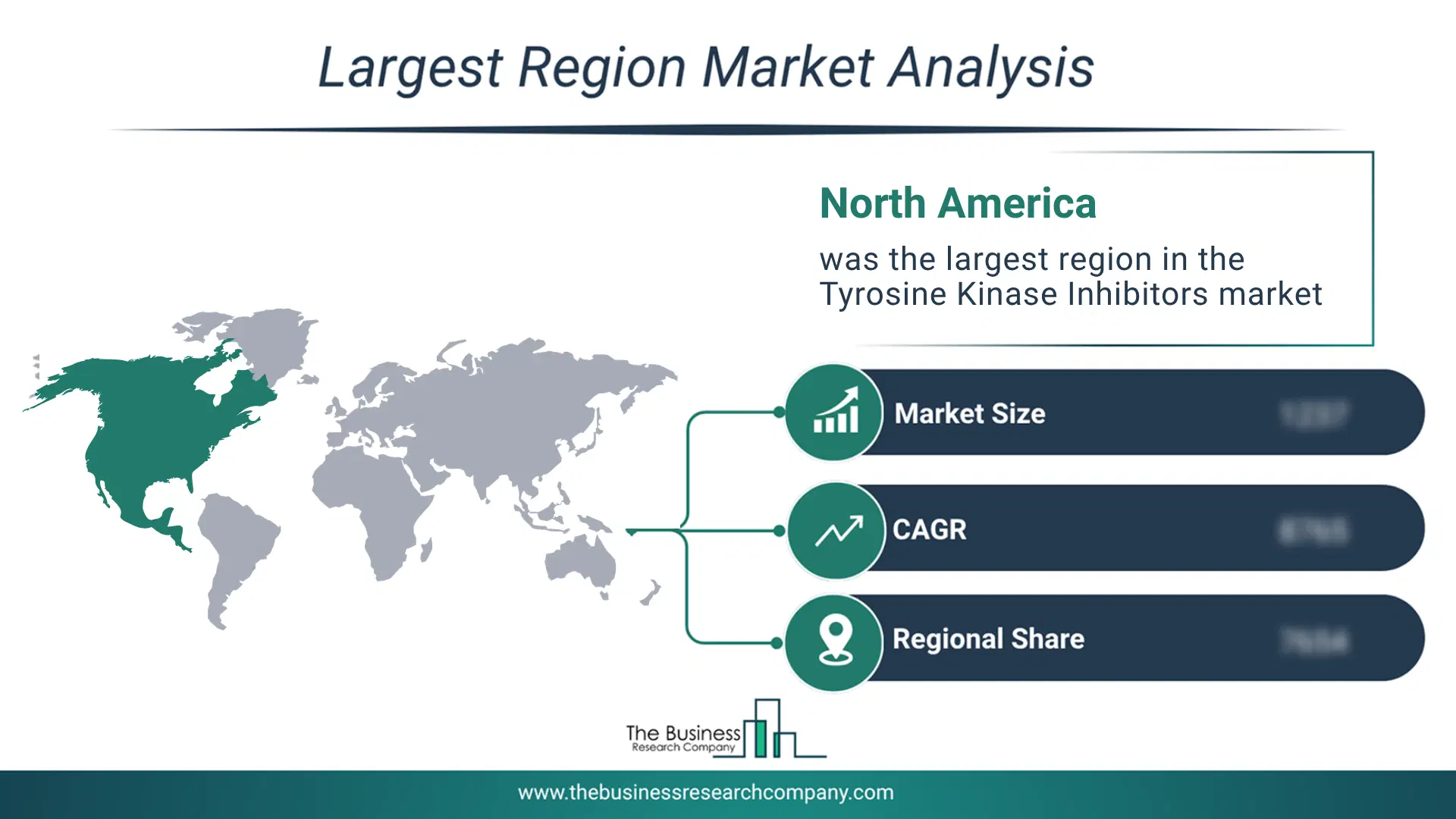
Regional Insights
North America was the largest region in the tyrosine kinase inhibitors market in 2025. Asia-Pacific is expected to be the fastest-growing region in the forecast period. The regions covered in this market report are Asia-Pacific, South East Asia, Western Europe, Eastern Europe, North America, South America, Middle East, Africa. The countries covered in this market report are Australia, Brazil, China, France, Germany, India, Indonesia, Japan, Taiwan, Russia, South Korea, UK, USA, Canada, Italy, Spain.What Defines the Tyrosine Kinase Inhibitors Market?
The tyrosine kinase inhibitors market consists of sales of gleevec, dasatinib (Sprycel), nilotinib (Tasigna), erlotinib (Tarceva), crizotinib (Xalkori), and sunitinib (Sutent). Values in this market are ‘factory gate’ values, that is the value of goods sold by the manufacturers or creators of the goods, whether to other entities (including downstream manufacturers, wholesalers, distributors, and retailers) or directly to end customers. The value of goods in this market includes related services sold by the creators of the goods.How is Market Value Defined and Measured?
The market value is defined as the revenues that enterprises gain from the sale of goods and/or services within the specified market and geography through sales, grants, or donations in terms of the currency (in USD unless otherwise specified). The revenues for a specified geography are consumption values that are revenues generated by organizations in the specified geography within the market, irrespective of where they are produced. It does not include revenues from resales along the supply chain, either further along the supply chain or as part of other products.
This chart presents market attractiveness based on a quantitative evaluation of growth, competition, strategic alignment, and risk, offering a clear view of opportunity areas for decision-making. This chart is for illustrative purposes; the full report contains the complete analysis.

This chart highlights the Total Addressable Market (TAM) by estimating the maximum revenue opportunity using an assumption-driven approach, supporting strategic planning and opportunity sizing across markets. The chart is illustrative; the full report provides a more comprehensive analysis.
What Key Data and Analysis Are Included in the Tyrosine Kinase Inhibitors Market Report 2026?
The tyrosine kinase inhibitors market research report is one of a series of new reports from The Business Research Company that provides market statistics, including industry global market size, regional shares, competitors with the market share, detailed market segments, market trends and opportunities, and any further data you may need to thrive in the tyrosine kinase inhibitors industry. The market research report delivers a complete perspective of everything you need, with an in-depth analysis of the current and future state of the industry.Tyrosine Kinase Inhibitors Market Report Forecast Analysis
| Report Attribute | Details |
|---|---|
| Market Size Value In 2026 | $67.85 billion |
| Revenue Forecast In 2030 | $95.44 billion |
| Growth Rate | CAGR of 8.3% from 2026 to 2030 |
| Base Year For Estimation | 2025 |
| Actual Estimates/Historical Data | 2020-2025 |
| Forecast Period | 2026 - 2030 |
| Market Representation | Revenue in USD Billion and CAGR from 2026 to 2030 |
| Segments Covered | Type, Distribution Channel, Application |
| Regional Scope | Asia-Pacific, Western Europe, Eastern Europe, North America, South America, Middle East, Africa |
| Country Scope | The countries covered in the report are Australia, Brazil, China, France, Germany, India, Indonesia, Japan, Taiwan, Russia, South Korea, UK, USA, Canada, Italy, Spain. |
| Key Companies Profiled | Pfizer Inc, Johnson And Johnson, F. Hoffmann-La Roche AG, AbbVie Inc, Bayer AG, Novartis AG, Bristol-Myers Squibb Company, AstraZeneca Plc, Eli Lilly and Company, Amgen Inc, Boehringer Ingelheim International GmbH, Astellas Pharma Inc, Eisai Co. Ltd, Incyte Corporation, Dr. Reddy's Laboratories Ltd, Exelixis Inc, Blueprint Medicines Corporation, Deciphera Pharmaceuticals LLC, Turning Point Therapeutics Inc, Kura Oncology Inc, ArQule Inc |
| Customization Scope | Request for Customization |
| Pricing And Purchase Options | Explore Purchase Options |