

Vector Control Market Report 2026
Global Outlook – By Method of Control (Chemical, Physical And Mechanical, Biological, Other Method Of Control), By Vector Type (Insects, Rodents), By Application (Residential, Commercial, Industrial) – Market Size, Trends, Strategies, and Forecast to 2030
Vector Control Market Overview
• Vector Control market size has reached to $21.67 billion in 2025 • Expected to grow to $32.53 billion in 2030 at a compound annual growth rate (CAGR) of 8.4% • Growth Driver: Growing Prevalence Of Vector-Borne Diseases Fuels Vector Control Market • Market Trend: The VERV Program's Impact On Mosquito Control Solutions • North America was the largest region in 2025 and Asia-Pacific is the fastest growing region.What Is Covered Under Vector Control Market?
Vector control refers to a method for controlling vector-borne diseases spread through mammals, birds, insects, or other arthropods. The primary objective of vector control is to stop or eliminate the local spread of the virus, reduce disease vulnerability, and prevent secondary infections. These vector control methods can be chemical or non-chemical in nature. The main methods of vector control are chemical, physical and mechanical, biological, and others (radiation and environmental control services). Chemical vector control uses chemicals to control and prevent the spread of diseases. The chemical vector control is intended to impact mosquito densities, longevity and other transmission parameters. The vector control is designed to eliminate insects, rodents, and others (ticks and snails) and they are applied in residential, commercial, and industrial sectors.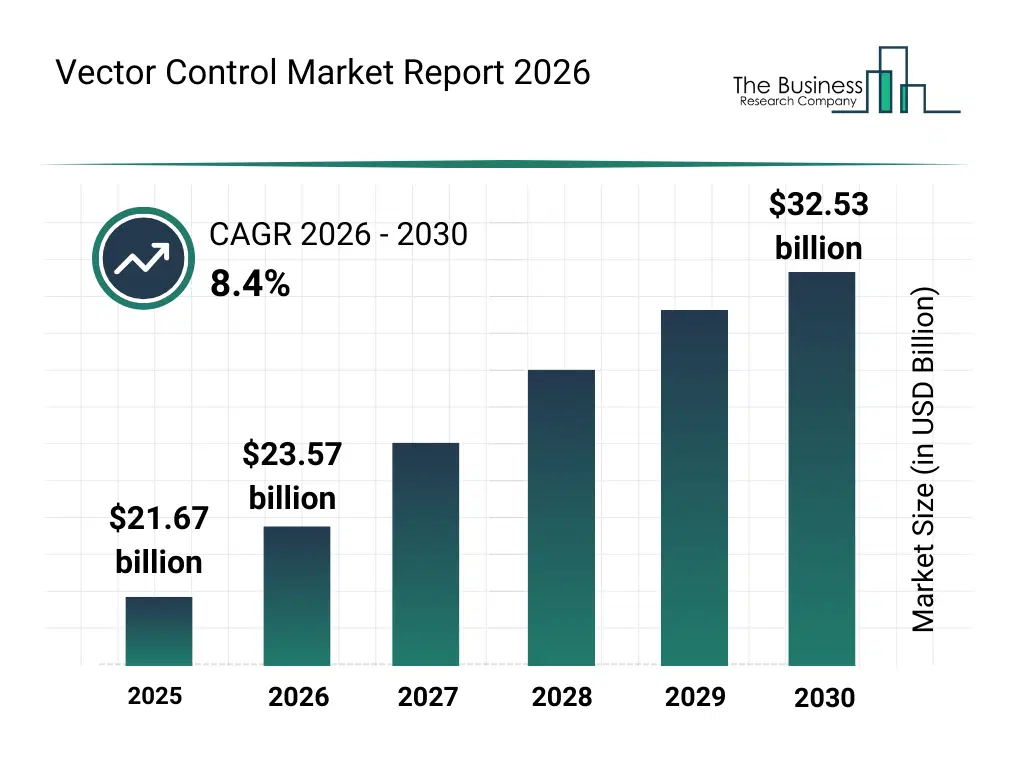
What Is The Vector Control Market Size and Share 2026?
The vector control market size has grown strongly in recent years. It will grow from $21.67 billion in 2025 to $23.57 billion in 2026 at a compound annual growth rate (CAGR) of 8.8%. The growth in the historic period can be attributed to increasing incidence of vector-borne diseases, expansion of urban sanitation initiatives, growth of public health awareness programs, widespread use of chemical control agents, government-led pest control campaigns.What Is The Vector Control Market Growth Forecast?
The vector control market size is expected to see strong growth in the next few years. It will grow to $32.53 billion in 2030 at a compound annual growth rate (CAGR) of 8.4%. The growth in the forecast period can be attributed to increasing climate-driven spread of vectors, rising investments in sustainable control technologies, expansion of smart city health monitoring, growing adoption of non-chemical control solutions, increasing international disease prevention funding. Major trends in the forecast period include increasing adoption of integrated vector management programs, rising use of biological control methods, growing demand for eco-friendly pest control solutions, expansion of smart surveillance and monitoring systems, enhanced focus on disease prevention strategies.
Global Vector Control Market Segmentation
1) By Method of Control: Chemical, Physical And Mechanical, Biological, Other Method Of Control 2) By Vector Type: Insects, Rodents 3) By Application: Residential, Commercial, Industrial Subsegments: 1) By Chemical Control: Insecticides (Adulticides), Larvicides, Rodenticides, Repellents, Insect Growth Regulators (IGRs), Space Sprays and Residual Sprays 2) By Physical and Mechanical Control: Traps (Light Traps, Sticky Traps, Rodent Traps), Bed Nets and Insecticide-Treated Nets (ITNs), Screens and Physical Barriers, Environmental Management (Source Reduction, Drainage), Mechanical Rodent Exclusion Systems 3) By Biological Control: Larvivorous Fish, Microbial Agents (Bacillus thuringiensis, Bacillus sphaericus), Natural Predators and Parasitoids, Sterile Insect Technique (SIT), Wolbachia-Based Mosquito Control 4) By Other Methods of Control: Integrated Vector Management (IVM), Genetic Control Methods, Community-Based Vector Control ProgramsWhat Is The Driver Of The Vector Control Market?
The rising prevalence of vector-based diseases is expected to propel the vector control market. The increasing climate's impact and geographical distribution affect vector-borne disease transmission and spread. Due to such growing prevalence of vector-borne diseases has led to the adoption of vector control methods. These methods of preventing vector-based diseases is done by removing or dumping out water-holding containers and applying vector control methods such as pest control. For instance, in May 2024, according to the World Health Organization, a Switzerland-based intergovernmental organization, in the America region, dengue cases had already surpassed 7 million by April 2024, which is much higher than the 4.6 million cases reported in all of 2023. Therefore, the rising prevalence of vector-based diseases is driving the growth of vector control industry.Key Players In The Global Vector Control Market
Major companies operating in the vector control market are BASF SE, Bayer AG, Syngenta AG, Sumitomo Chemical Co. Ltd., Corteva Inc., FMC Corporation, Rentokil Initial plc, Anticimex International AB, Rollins Inc., Ecolab Inc., Bell Laboratories Inc., SC Johnson Professional, Ensystex Inc., PelGar International Ltd., Russell IPM Ltd., Clarke Mosquito Control Products Inc., Valent BioSciences LLC, Vestergaard Company, Mitsui Chemicals Agro Inc., Godrej Consumer Products Limited
This chart is for illustrative purposes; the full report includes a detailed competitor analysis and comprehensive overview of the top 10 companies in the market.
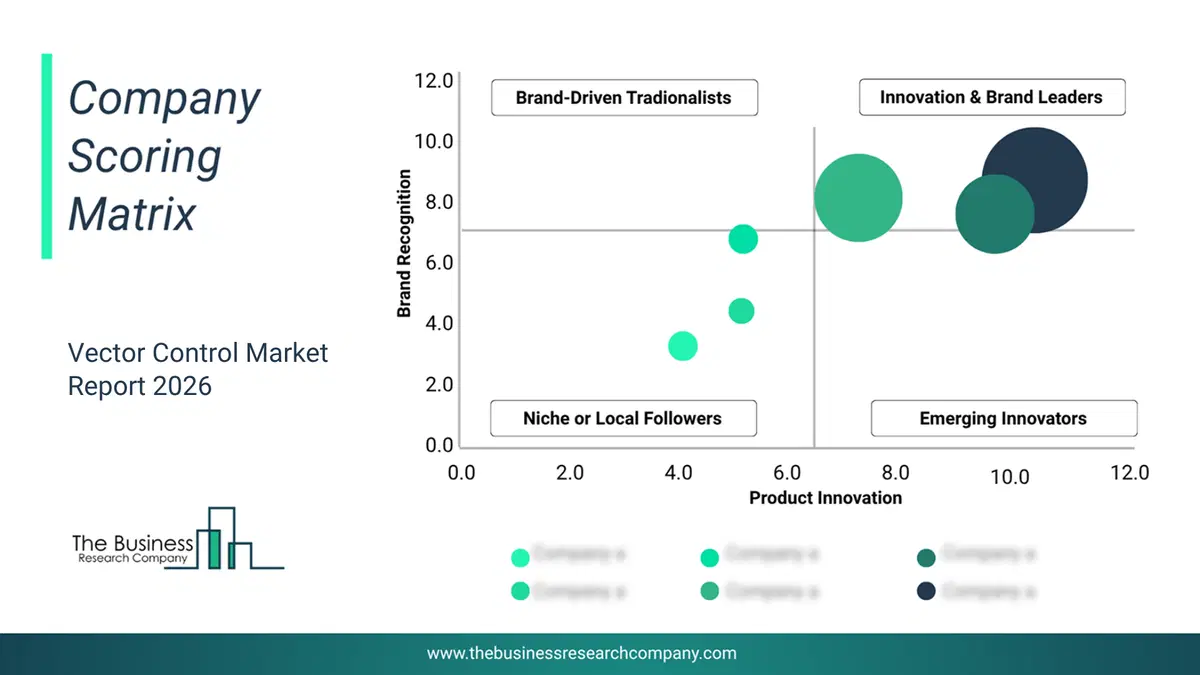
This chart maps companies by product innovation and brand strength, with bubble size indicating relative revenue, helping identify market leaders, challengers, and niche players. This is an illustrative chart; the full report provides a complete and accurate competitive analysis.
Global Vector Control Market Trends and Insights
Major companies operating in the vector control market are focusing on developing advanced solutions, such as innovative insecticides with novel mechanisms of action, to enhance the effectiveness of mosquito management, reduce resistance development, and curb the spread of mosquito-borne diseases. For instance, in December 2023, the U.S. Environmental Protection Agency (EPA), a US-based government organization, introduced the Vector Expedited Review Voucher (VERV) Program under the Pesticide Registration Improvement Act of 2022. The initiative is designed to encourage the development of next-generation mosquito control products, particularly targeting mosquito populations that have developed resistance to existing insecticides, thereby supporting the creation of safer and more effective vector control solutions worldwide.What Are Latest Mergers And Acquisitions In The Vector Control Market?
In February 2024, Envu, a US-based provider of vector control, partnered with Indiana University. The partnership focuses on developing and commercializing innovative biological technologies for effective mosquito control, targeting diseases such as malaria and dengue. The collaboration aims to create environmentally friendly solutions while addressing insecticide resistance to enhance public health and sustainability. Indiana University is a US-based public research university.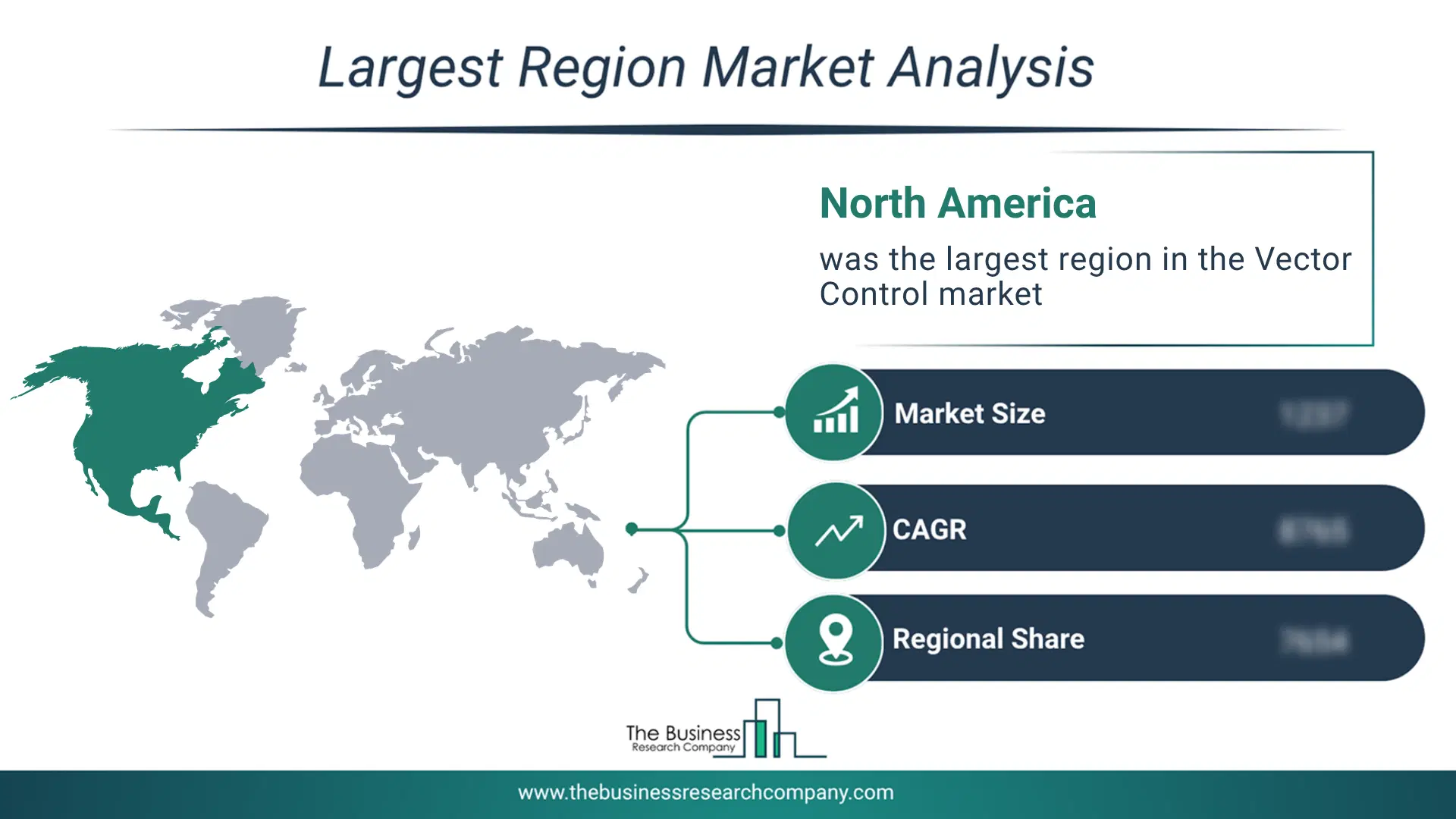
Regional Insights
North America was the largest region in the vector control market share in 2025. Asia-Pacific is expected to be the fastest-growing region in the forecast period. The regions covered in this market report are Asia-Pacific, South East Asia, Western Europe, Eastern Europe, North America, South America, Middle East, Africa The countries covered in this market report are Australia, Brazil, China, France, Germany, India, Indonesia, Japan, Taiwan, Russia, South Korea, UK, USA, Canada, Italy, SpainWhat Defines the Vector Control Market?
The vector control market consists of revenues earned by entities by providing vector control methods such as elimination or control of larval habitats and pesticide use to kill larvae. Values in this market are ‘factory gate’ values, that is the value of goods sold by the manufacturers or creators of the goods, whether to other entities (including downstream manufacturers, wholesalers, distributors, and retailers) or directly to end customers. The value of goods in this market includes related services sold by the creators of the goods.How is Market Value Defined and Measured?
The market value is defined as the revenues that enterprises gain from the sale of goods and/or services within the specified market and geography through sales, grants, or donations in terms of the currency (in USD unless otherwise specified). The revenues for a specified geography are consumption values that are revenues generated by organizations in the specified geography within the market, irrespective of where they are produced. It does not include revenues from resales along the supply chain, either further along the supply chain or as part of other products.
This chart presents market attractiveness based on a quantitative evaluation of growth, competition, strategic alignment, and risk, offering a clear view of opportunity areas for decision-making. This chart is for illustrative purposes; the full report contains the complete analysis.

This chart highlights the Total Addressable Market (TAM) by estimating the maximum revenue opportunity using an assumption-driven approach, supporting strategic planning and opportunity sizing across markets. The chart is illustrative; the full report provides a more comprehensive analysis.
What Key Data and Analysis Are Included in the Vector Control Market Report 2026?
The vector control market research report is one of a series of new reports from The Business Research Company that provides market statistics, including industry global market size, regional shares, competitors with the market share, detailed market segments, market trends and opportunities, and any further data you may need to thrive in the vector control industry. The market research report delivers a complete perspective of everything you need, with an in-depth analysis of the current and future state of the industry.Vector Control Market Report Forecast Analysis
| Report Attribute | Details |
|---|---|
| Market Size Value In 2026 | $23.57 billion |
| Revenue Forecast In 2030 | $32.53 billion |
| Growth Rate | CAGR of 8.8% from 2026 to 2030 |
| Base Year For Estimation | 2025 |
| Actual Estimates/Historical Data | 2020-2025 |
| Forecast Period | 2026 - 2030 |
| Market Representation | Revenue in USD Billion and CAGR from 2026 to 2030 |
| Segments Covered | Method of Control, Vector Type, Application |
| Regional Scope | Asia-Pacific, Western Europe, Eastern Europe, North America, South America, Middle East, Africa |
| Country Scope | The countries covered in this market report are Australia, Brazil, China, France, Germany, India, Indonesia, Japan, Taiwan, Russia, South Korea, UK, USA, Canada, Italy, Spain |
| Key Companies Profiled | BASF SE, Bayer AG, Syngenta AG, Sumitomo Chemical Co. Ltd., Corteva Inc., FMC Corporation, Rentokil Initial plc, Anticimex International AB, Rollins Inc., Ecolab Inc., Bell Laboratories Inc., SC Johnson Professional, Ensystex Inc., PelGar International Ltd., Russell IPM Ltd., Clarke Mosquito Control Products Inc., Valent BioSciences LLC, Vestergaard Company, Mitsui Chemicals Agro Inc., Godrej Consumer Products Limited |
| Customization Scope | Request for Customization |
| Pricing And Purchase Options | Explore Purchase Options |