
Wearable Chemical Exposure Sensor Market Report 2026
Global Outlook – By Product Type ( Personal Wearable Sensors, Patch Sensors, Wristband Sensors, Clip-On Sensors, Other Product Types), By Chemical Type ( Volatile Organic Compounds, Particulate Matter, Gases, Heavy Metals, Other Chemical Types), By Distribution Channel ( Online, Offline), By Application ( Industrial Safety, Environmental Monitoring, Healthcare, Military And Defense, Other Applications) – Market Size, Trends, Strategies, and Forecast to 2030
Wearable Chemical Exposure Sensor Market Overview
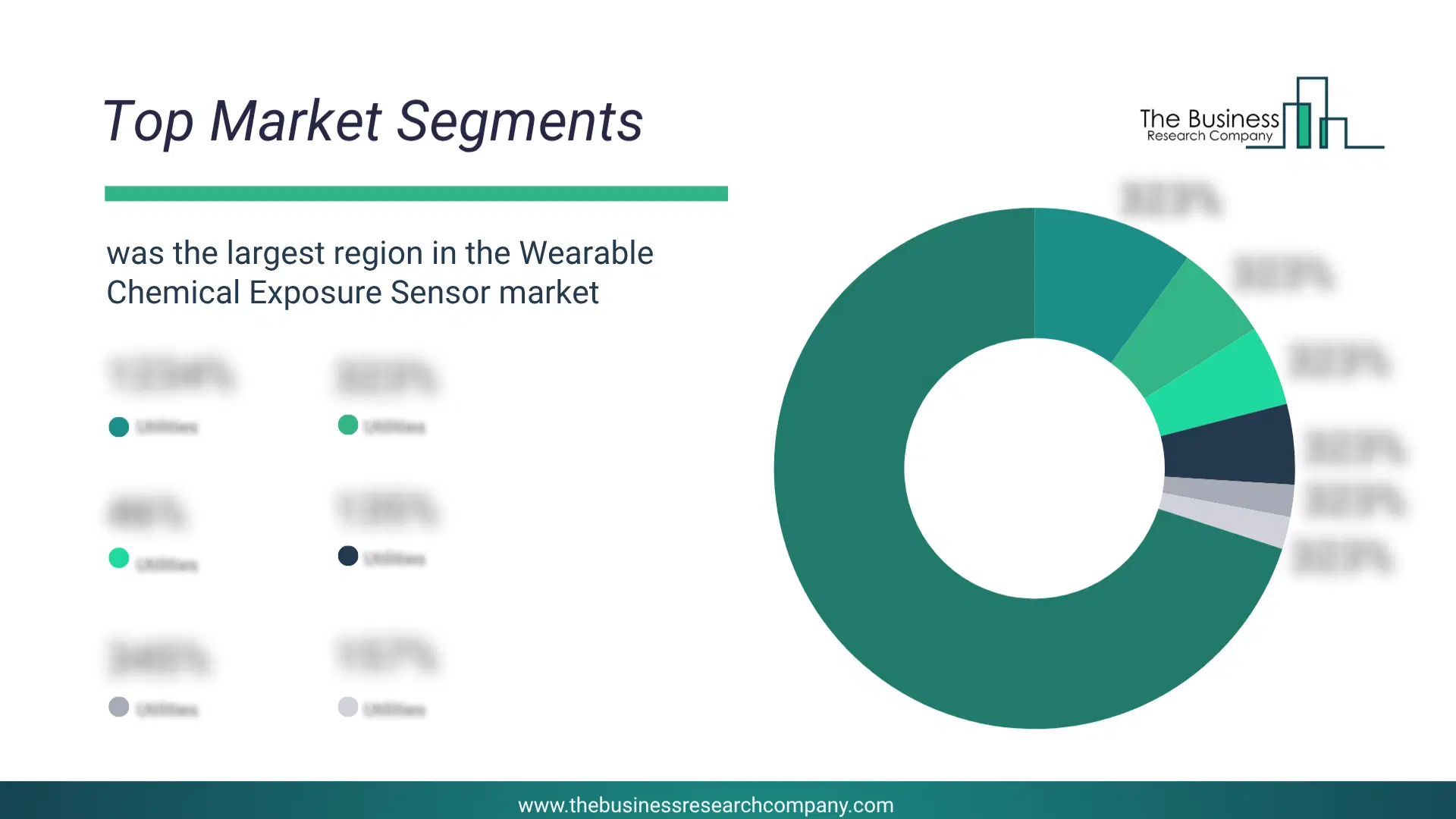
• Wearable Chemical Exposure Sensor market size has reached to $1.22 billion in 2025 • Expected to grow to $2.89 billion in 2030 at a compound annual growth rate (CAGR) of 18.7% • Growth Driver: Surge In Workplace Safety Driving The Growth Of The Market Due To Stricter Regulatory Requirements • Market Trend: Innovative Real-Time Chemical Monitoring Device Enhances Workplace Safety And Employee Protection • North America was the largest region in 2025 and Asia-Pacific is the fastest growing region.What Is Covered Under Wearable Chemical Exposure Sensor Market?
A wearable chemical exposure sensor is a compact device designed to be worn on the body, such as on a wrist, clothing, or as a patch, that continuously monitors the wearer’s environment for harmful chemicals, gases, or toxins. It provides real-time detection and alerts the user if dangerous exposure levels are reached, helping prevent health risks. The main products types of wearable chemical exposure sensors are personal wearable sensors, patch sensors, wristband sensors, clip-on sensors, and others. Personal wearable sensors are small devices designed to be worn directly on the body, such as on the wrist, chest, or clothing, that continuously monitor chemical exposure in a nonintrusive manner. It includes various chemical types, such as volatile organic compounds, particulate matter, gases, heavy metals, and others, and is distributed online and offline. It finds applications in industrial safety, environmental monitoring, healthcare, military and defense, and others.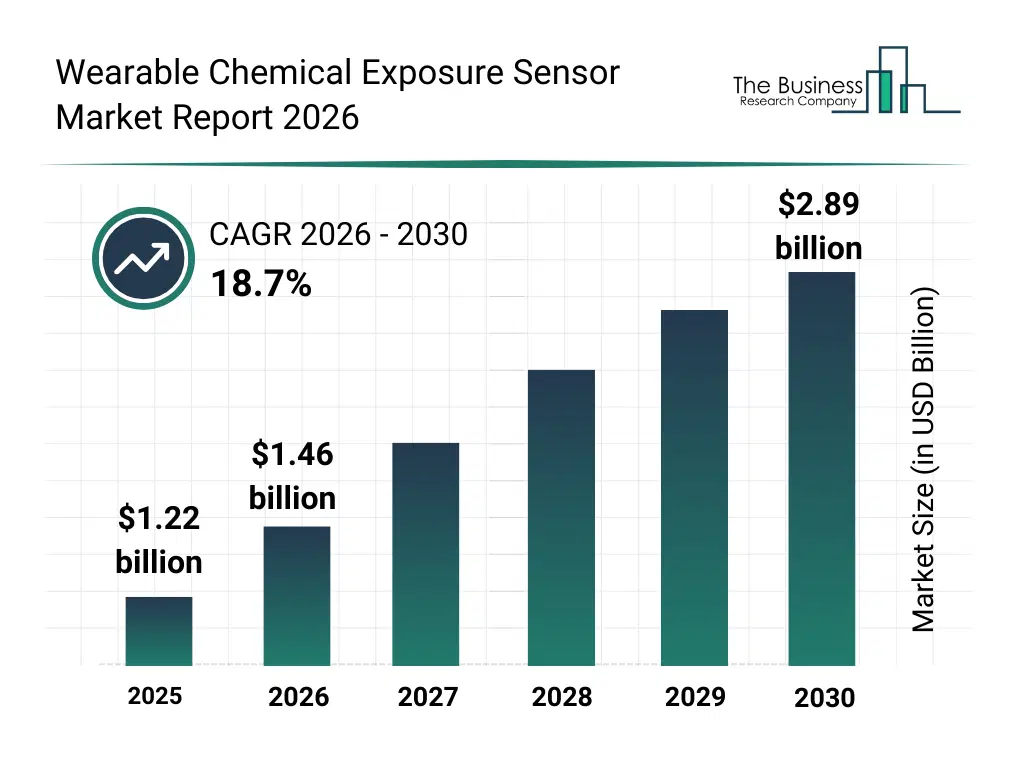
What Is The Wearable Chemical Exposure Sensor Market Size 2026 And Growth Rate?
The wearable chemical exposure sensor market size has grown rapidly in recent years. It will grow from $1.22 billion in 2025 to $1.46 billion in 2026 at a compound annual growth rate (CAGR) of 19.0%. The growth in the historic period can be attributed to rising industrial chemical use, increased workplace safety regulations, growth of environmental monitoring initiatives, early adoption of wearable health devices, technological advancements in sensor fabrication.What Is The Wearable Chemical Exposure Sensor Market Growth Forecast?
The wearable chemical exposure sensor market size is expected to see rapid growth in the next few years. It will grow to $2.89 billion in 2030 at a compound annual growth rate (CAGR) of 18.7%. The growth in the forecast period can be attributed to rising demand for real-time exposure monitoring, integration with AI and iot platforms, expansion in healthcare and military applications, development of low-power and flexible sensors, increasing focus on environmental sustainability. Major trends in the forecast period include miniaturization of wearable sensors, real-time chemical detection, integration with mobile and cloud platforms, advanced sensor material development, personalized exposure analytics.
Global Wearable Chemical Exposure Sensor Market Segmentation
1) By Product Type: Personal Wearable Sensors, Patch Sensors, Wristband Sensors, Clip-On Sensors, Other Product Types 2) By Chemical Type: Volatile Organic Compounds, Particulate Matter, Gases, Heavy Metals, Other Chemical Types 3) By Distribution Channel: Online, Offline 4) By Application: Industrial Safety, Environmental Monitoring, Healthcare, Military And Defense, Other Applications Subsegments: 1) By Personal Wearable Sensors: Gas Detection Sensors, Liquid Detection Sensors, Multi-Parameter Sensors, Radiation Detection Sensors 2) By Patch Sensors: Adhesive Patch Sensors, Microfluidic Patch Sensors, Electrochemical Patch Sensors, Colorimetric Patch Sensors 3) By Wristband Sensors: Gas Detection Wristbands, Liquid Detection Wristbands, Multi-Parameter Wristbands, Toxic Exposure Wristbands 4) By Clip-On Sensors: Portable Gas Sensors, Portable Liquid Sensors, Multi-Parameter Clip-On Sensors 5) By Other Product Types: Neckband Sensors, Clothing Integrated Sensors, Ring Sensors, Headband SensorsWhat Is The Driver Of The Wearable Chemical Exposure Sensor Market?
The increasing awareness about workplace safety is expected to propel the growth of the wearable chemical exposure sensor market going forward. Workplace safety refers to the measures and practices put in place to protect employees from accidents, injuries, and health risks while performing their job duties. Rising awareness about workplace safety is rising due to stricter regulatory requirements, which compel organizations to adopt safer practices and prioritize the well-being of employees. The wearable chemical exposure sensor helps workplace safety by providing real-time monitoring of hazardous substances, enabling early detection and prevention of potential health risks for workers. For instance, in December 2024, according to HCS Safety, a UK-based health & safety training firm, non-fatal employee injuries recorded a modest uptick, increasing by just over 1,000 cases from 60,645 in 2023 to 61,663 in 2024. Therefore, the increasing awareness about workplace safety is driving the growth of the wearable chemical exposure sensor industry.Key Players In The Global Wearable Chemical Exposure Sensor Market
Major companies operating in the wearable chemical exposure sensor market are Bosch Group, General Electric Company, Honeywell International Inc., 3M Company, Smiths Detection Group Ltd., Drägerwerk AG & Co. KGaA, Gentex Corporation, MSA Safety Incorporated, Industrial Scientific Corporation, Sensirion AG, Blackline Safety Corp., TDA Research Inc., Ion Science Ltd., N5 Sensors, Morphix Technologies Inc., ChemDAQ Inc., LifeLens Technologies Inc., Makel Engineering Inc., PercuSense Inc., SPEC Sensors LLC, PercuSense Inc.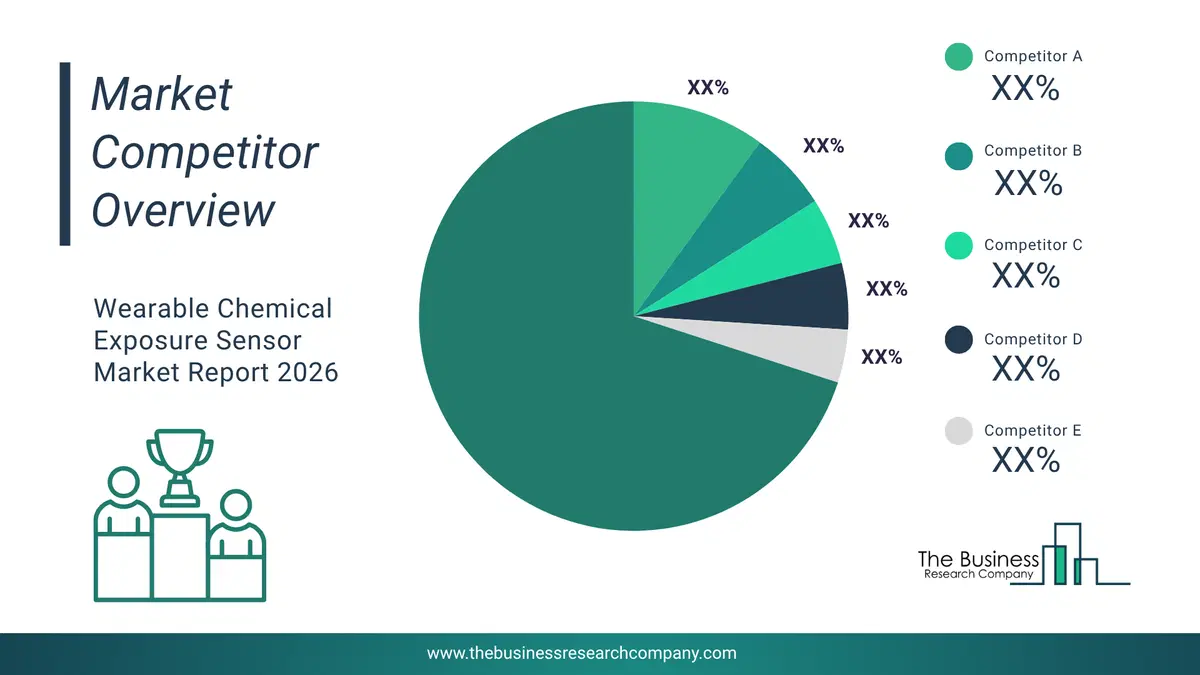
This chart is for illustrative purposes; the full report includes a detailed competitor analysis and comprehensive overview of the top 10 companies in the market.
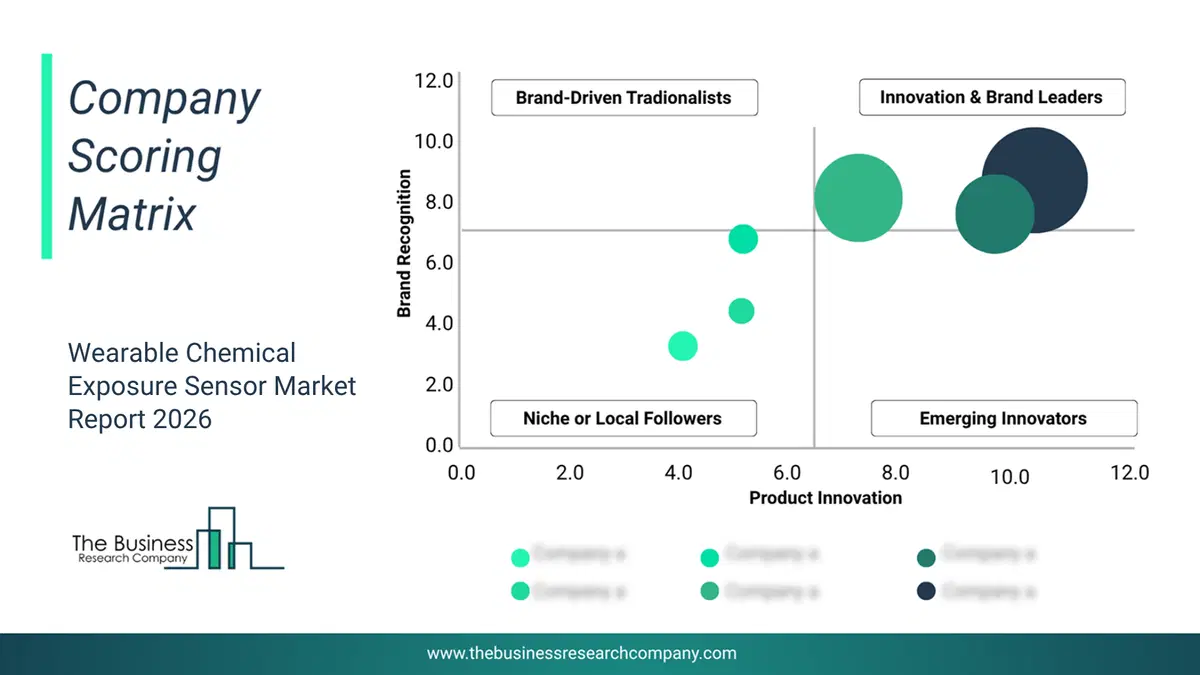
This chart maps companies by product innovation and brand strength, with bubble size indicating relative revenue, helping identify market leaders, challengers, and niche players. This is an illustrative chart; the full report provides a complete and accurate competitive analysis.
Global Wearable Chemical Exposure Sensor Market Trends and Insights
Major companies operating in the wearable chemical exposure sensor market are focusing on developing innovative solutions, such as real-time chemical monitoring devices, to enhance workplace safety and protect employee health. Real-time chemical monitoring devices are wearable or portable sensors that continuously detect and measure the presence of hazardous chemicals, providing instant alerts to prevent exposure and ensure safety. For instance, in December 2023, TDA Research Inc., a US-based research and development company, launched a wearable chemical sensor badge designed for real-time detection and monitoring of hazardous chemical exposure. This lightweight, durable, and cost-effective device can detect multiple toxic industrial chemicals at trace levels, providing clear visual, auditory, and vibratory alerts within 10 to 60 seconds. It features replaceable, low-cost sensor cartridges with a one-week lifespan, can monitor gases such as hydrogen sulfide, ammonia, phosphine, and hydrogen cyanide, and offers an 11-hour battery life, enhancing first responder safety and situational awareness in hazardous environments.What Are Latest Mergers And Acquisitions In The Wearable Chemical Exposure Sensor Market?
In July 2024, ChemDAQ, a US-based provider of chemical sensor technology and gas monitoring solutions, partnered with Zee Company to monitor gas levels and keep workers safe. With this partnership, ChemDAQ aims to significantly expand its market presence across multiple industrial sectors in the U.S., enhancing workplace safety by offering advanced, real-time gas monitoring solutions that detect hazardous chemical vapors. Zee Company is a US-based provider of sanitation and water treatment chemicals, specializing in distributing chemical solutions to industrial and commercial clients, including wearable chemical exposure sensors.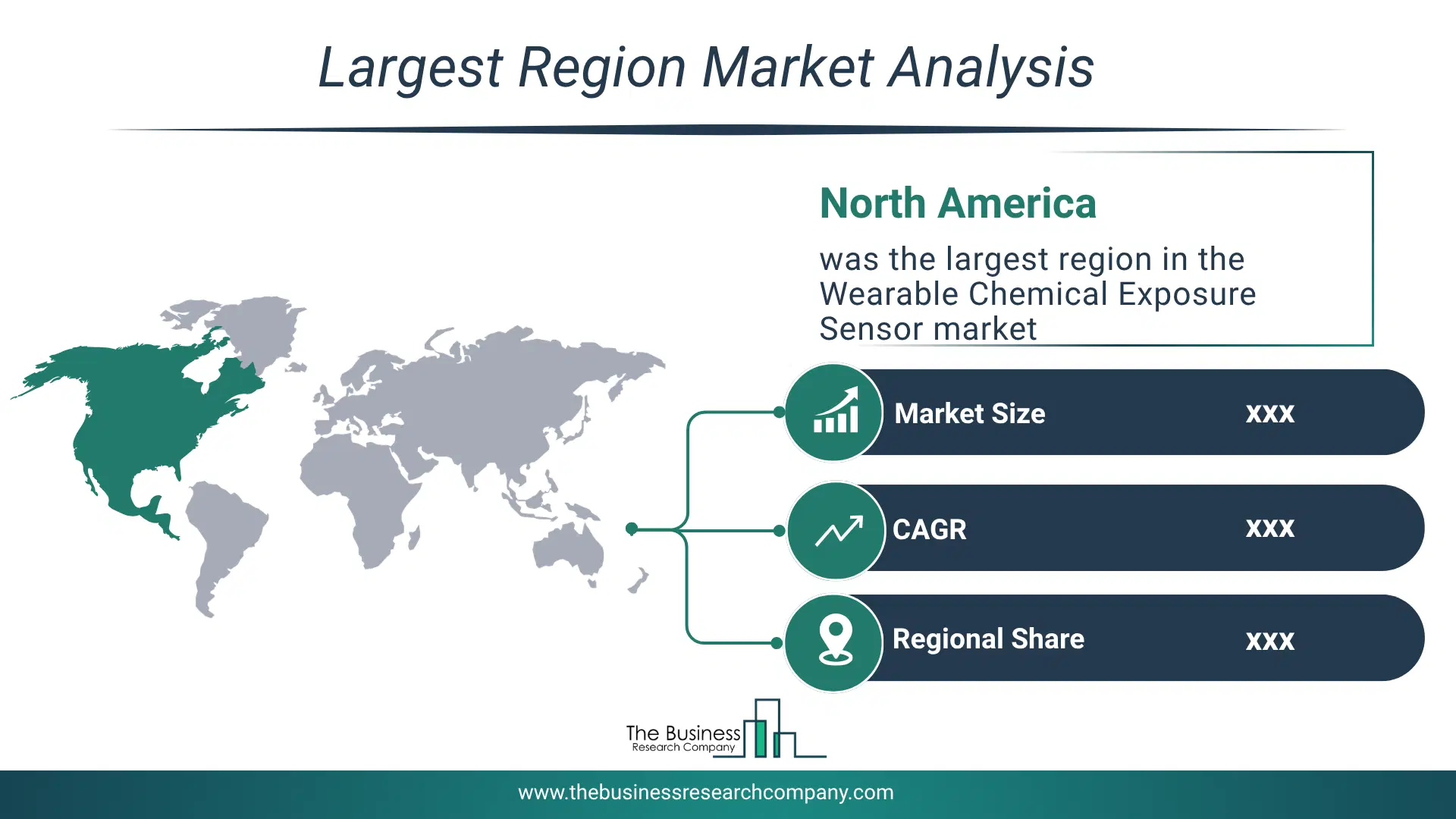
Regional Outlook
North America was the largest region in the wearable chemical exposure sensor market in 2025. Asia-Pacific is expected to be the fastest-growing region in the forecast period. The regions covered in this market report are Asia-Pacific, South East Asia, Western Europe, Eastern Europe, North America, South America, Middle East, Africa. The countries covered in this market report are Australia, Brazil, China, France, Germany, India, Indonesia, Japan, Taiwan, Russia, South Korea, UK, USA, Canada, Italy, Spain.What Defines the Wearable Chemical Exposure Sensor Market?
The wearable chemical exposure sensor market includes sales of colorimetric diffusion badges, silicone wristband samplers, portable ozone dosimeters, personal aldehyde monitors, and hydrogen sulfide exposure badges. Values in this market are ‘factory gate’ values; that is, the value of goods sold by the manufacturers or creators of the goods, whether to other entities (including downstream manufacturers, wholesalers, distributors, and retailers) or directly to end customers. The value of goods in this market includes related services sold by the creators of the goods.How is Market Value Defined and Measured?
The market value is defined as the revenues that enterprises gain from the sale of goods and/or services within the specified market and geography through sales, grants, or donations in terms of the currency (in USD unless otherwise specified). The revenues for a specified geography are consumption values that are revenues generated by organizations in the specified geography within the market, irrespective of where they are produced. It does not include revenues from resales along the supply chain, either further along the supply chain or as part of other products.
This chart presents market attractiveness based on a quantitative evaluation of growth, competition, strategic alignment, and risk, offering a clear view of opportunity areas for decision-making. This chart is for illustrative purposes; the full report contains the complete analysis.

This chart highlights the Total Addressable Market (TAM) by estimating the maximum revenue opportunity using an assumption-driven approach, supporting strategic planning and opportunity sizing across markets. The chart is illustrative; the full report provides a more comprehensive analysis.
What Key Data and Analysis Are Included in the Wearable Chemical Exposure Sensor Market Report 2026?
The wearable chemical exposure sensor market research report is one of a series of new reports from The Business Research Company that provides market statistics, including industry global market size, regional shares, competitors with the market share, detailed market segments, market trends and opportunities, and any further data you may need to thrive in the wearable chemical exposure sensor industry. The market research report delivers a complete perspective of everything you need, with an in-depth analysis of the current and future state of the industry.Wearable Chemical Exposure Sensor Market Report Forecast Analysis
| Report Attribute | Details |
|---|---|
| Market Size Value In 2026 | $1.46 billion |
| Revenue Forecast In 2030 | $2.89 billion |
| Growth Rate | CAGR of 18.7% from 2026 to 2030 |
| Base Year For Estimation | 2025 |
| Actual Estimates/Historical Data | 2020-2025 |
| Forecast Period | 2026 - 2030 |
| Market Representation | Revenue in USD Billion and CAGR from 2026 to 2030 |
| Segments Covered | Product Type, Chemical Type, Distribution Channel, Application |
| Regional Scope | Asia-Pacific, Western Europe, Eastern Europe, North America, South America, Middle East, Africa |
| Country Scope | The countries covered in the report are Australia, Brazil, China, France, Germany, India, Indonesia, Japan, Taiwan, Russia, South Korea, UK, USA, Canada, Italy, Spain. |
| Key Companies Profiled | Bosch Group, General Electric Company, Honeywell International Inc., 3M Company, Smiths Detection Group Ltd., Drägerwerk AG & Co. KGaA, Gentex Corporation, MSA Safety Incorporated, Industrial Scientific Corporation, Sensirion AG, Blackline Safety Corp., TDA Research Inc., Ion Science Ltd., N5 Sensors, Morphix Technologies Inc., ChemDAQ Inc., LifeLens Technologies Inc., Makel Engineering Inc., PercuSense Inc., SPEC Sensors LLC, PercuSense Inc. |
| Customization Scope | Request for Customization |
| Pricing And Purchase Options | Explore Purchase Options |