
Wearable Neurostimulation Devices Market Report 2026
Global Outlook – By Product Type (Electroencephalography (EEG) Devices, Transcranial Magnetic Stimulation (TMS) Devices, Brain Computer Interface (BCI) Devices, Neurostimulation Devices, Cognitive Training Devices), By Application (Stroke, Spinal Cord Injury, Cerebral Palsy, Other Applications), By End-User (Rehabilitation Centers, Hospitals And Clinics, Other End-Users) – Market Size, Trends, Strategies, and Forecast to 2030
Wearable Neurostimulation Devices Market Overview
• Wearable Neurostimulation Devices market size has reached to $0.67 billion in 2025 • Expected to grow to $1.22 billion in 2030 at a compound annual growth rate (CAGR) of 12.8% • Growth Driver: Increasing Prevalence Of Neurological Disorders Fueling The Growth Of The Market Due To Aging Population And Enhanced Management Solutions • Market Trend: Innovative Headband Promotes Faster Sleep And Stress Reduction • North America was the largest region in 2025 and Asia-Pacific is the fastest growing region.What Is Covered Under Wearable Neurostimulation Devices Market?
Wearable neurostimulation devices are portable electronic devices designed to deliver targeted electrical stimulation to the brain or nervous system. They aim to influence brain activity to improve cognitive function, manage pain, or treat neurological conditions such as depression, anxiety, and chronic pain. These devices are typically used for at-home therapy with minimal supervision. The main product types in the wearable neurostimulation devices market are electroencephalography (EEG) devices, transcranial magnetic stimulation (TMS) devices, brain computer interface (BCI) devices, neurostimulation devices and cognitive training devices. Electroencephalography (EEG) devices are medical or research tools that record brain activity by measuring voltage fluctuations from ionic current flows within neurons. These are used in various applications, including stroke, spinal cord injury, and cerebral palsy, among others. The key end-users include rehabilitation centers, hospitals, clinics and other healthcare facilities.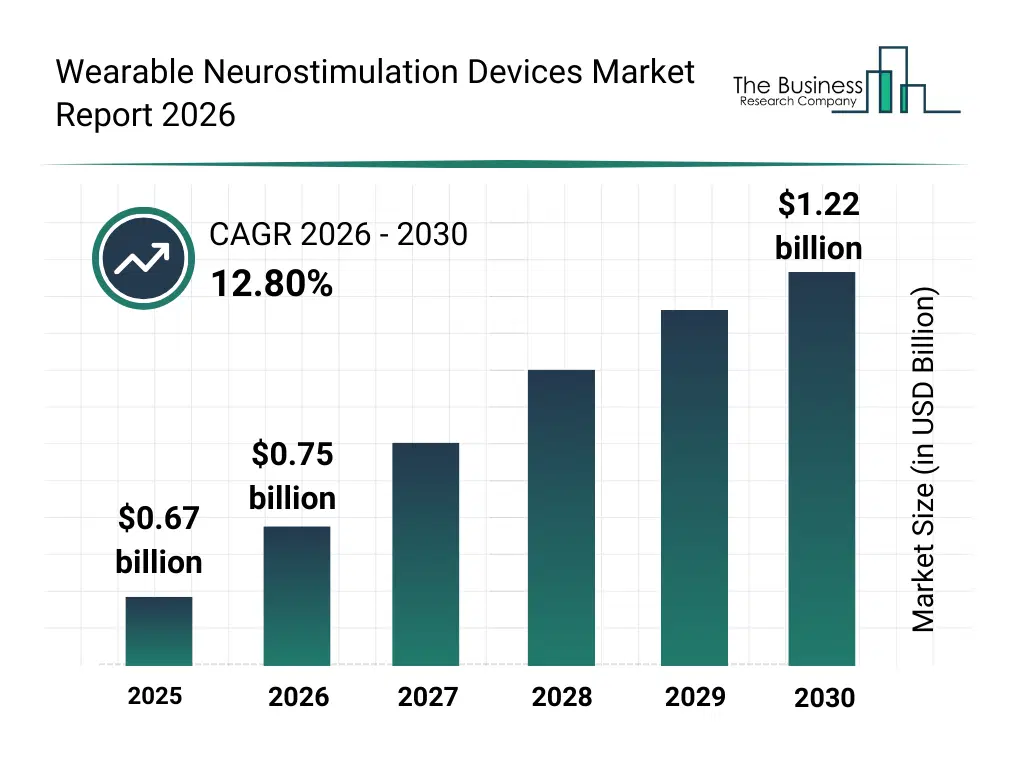
What Is The Wearable Neurostimulation Devices Market Size and Share 2026?
The wearable neurostimulation devices market size has grown rapidly in recent years. It will grow from $0.67 billion in 2025 to $0.75 billion in 2026 at a compound annual growth rate (CAGR) of 13.0%. The growth in the historic period can be attributed to increasing prevalence of neurological disorders, rising awareness of non-invasive therapies, growth in home-based treatment adoption, advancements in wearable electronics, expanding clinical research in neuromodulation.What Is The Wearable Neurostimulation Devices Market Growth Forecast?
The wearable neurostimulation devices market size is expected to see rapid growth in the next few years. It will grow to $1.22 billion in 2030 at a compound annual growth rate (CAGR) of 12.8%. The growth in the forecast period can be attributed to increasing investments in digital therapeutics, rising demand for personalized neurological treatments, expansion of remote patient monitoring adoption, growing integration of neuro devices with mobile health platforms, increasing regulatory approvals for wearable neurostimulation devices. Major trends in the forecast period include increasing adoption of at-home neurostimulation therapies, rising use of wearable brain stimulation devices, growing integration of ai-based signal optimization, expansion of wireless and portable neuro devices, enhanced focus on personalized neuromodulation.
Global Wearable Neurostimulation Devices Market Segmentation
1) By Product Type: Electroencephalography (EEG) Devices, Transcranial Magnetic Stimulation (TMS) Devices, Brain Computer Interface (BCI) Devices, Neurostimulation Devices, Cognitive Training Devices 2) By Application: Stroke, Spinal Cord Injury, Cerebral Palsy, Other Applications 3) By End-User: Rehabilitation Centers, Hospitals And Clinics, Other End-Users Subsegments: 1) By Electroencephalography (EEG) Devices: Portable Electroencephalography (EEG) Devices, Wireless Electroencephalography (EEG) Devices, Mobile Electroencephalography (EEG) Devices, Clinical Electroencephalography (EEG) Devices 2) By Transcranial Magnetic Stimulation (TMS) Devices: Single-Pulse Transcranial Magnetic Stimulation (TMS), Repetitive Transcranial Magnetic Stimulation (rTMS), Deep Transcranial Magnetic Stimulation (TMS), Theta Burst Stimulation (TBS) Transcranial Magnetic Stimulation (TMS) 3) By Brain Computer Interface (BCI) Devices: Non-invasive Brain Computer Interface (BCI) Devices, Partially Invasive Brain Computer Interface (BCI) Devices 4) By Neurostimulation Devices: Transcranial Direct Current Stimulation (tDCS) Devices, Transcranial Alternating Current Stimulation (tACS) Devices, Peripheral Nerve Stimulation (PNS) Devices 5) By Cognitive Training Devices: Memory Training Devices, Attention Training Devices, Neurofeedback Devices, Brain Training GamesWhat Is The Driver Of The Wearable Neurostimulation Devices Market?
The increasing prevalence of neurological disorders is expected to propel the growth of the wearable neurostimulation devices market going forward. Neurological disorders are medical conditions that affect the brain, spinal cord and nerves, leading to a range of symptoms including cognitive, motor, and sensory impairments. The increasing prevalence of neurological disorders is linked to the aging global population, as aging gradually impairs neuronal function, reduces brain plasticity, and elevates oxidative stress, contributing to the development and progression of these conditions. Wearable neurostimulation devices enhance neurological disorder management by offering non-invasive therapy, making them suitable for daily use. They alleviate symptoms by delivering targeted stimulation, improving patient comfort and overall quality of life. For instance, in July 2024, according to the National Health Service, a UK-based government agency, in June 2024, there were 487,432 patients diagnosed with dementia (a brain disorder that causes a decline in memory, thinking and daily functioning), an increase of 3,155 cases compared to May 2024. Therefore, the increasing prevalence of neurological disorders is driving the growth of the wearable neurostimulation devices industry.Key Players In The Global Wearable Neurostimulation Devices Market
Major companies operating in the wearable neurostimulation devices market are FocusCalm, Cala Health Inc., Cognito Therapeutics Inc., Apollo Neuroscience Inc., Curonix LLC, Soterix Medical Inc., Theranica Bioelectronics Ltd., NeuroMetrix Inc., Spark Biomedical Inc., Helius Medical Technologies Inc., Hapbee Technologies Inc., Flow Neuroscience, tVNS Technologies GmbH, Wearable Devices Ltd., MindMaze SA, Emotiv Inc., NextMind (Snap Inc.), Neuroelectrics Barcelona S.L., Brain Scientific Inc., Neurosity Inc.
This chart is for illustrative purposes; the full report includes a detailed competitor analysis and comprehensive overview of the top 10 companies in the market.
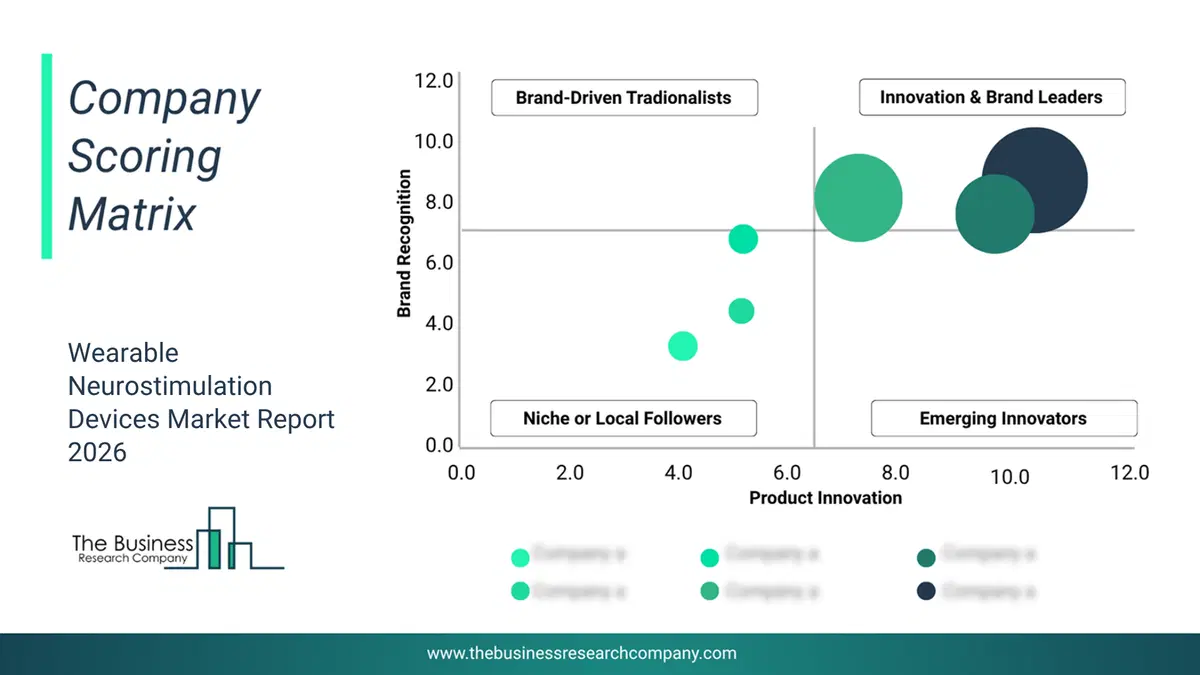
This chart maps companies by product innovation and brand strength, with bubble size indicating relative revenue, helping identify market leaders, challengers, and niche players. This is an illustrative chart; the full report provides a complete and accurate competitive analysis.
Global Wearable Neurostimulation Devices Market Trends and Insights
Major companies operating in the wearable neurostimulation devices market are focusing on developing innovative solutions, such as sleep on-demand headband, to enhance sleep quality and manage sleep disorders. The sleep on-demand headband is a wearable device that uses neurostimulation or soothing audio/vibration to help users fall asleep faster, promote relaxation and enhance sleep-related brainwave patterns for improved sleep quality. For instance, in June 2024, Elemind Technologies Inc., a US-based neurotechnology company, launched a first-of-its-kind neurotechnology headband. The Elemind Headband is a wearable sleep-on-demand neurostimulation device that utilizes transcranial direct current stimulation (tDCS) or similar technologies to influence brain activity, enhancing focus, relaxation, and sleep. It delivers gentle electrical currents through electrodes on the scalp, targeting specific brain regions related to cognitive function or relaxation, helping to optimize brainwave patterns for improved mental clarity, stress reduction, and better sleep quality, based on the selected settings.What Are Latest Mergers And Acquisitions In The Wearable Neurostimulation Devices Market?
In September 2023, Amber Therapeutics, a UK-based provider of neuromodulation therapies, acquired Bioinduction for an undisclosed amount. The acquisition of Bioinduction provides Amber with valuable hardware, expertise, and manufacturing experience. This positions Amber to accelerate the development and commercialization of Amber-UI. Bioinduction is a UK-based manufacturer of wearable neurostimulation devices.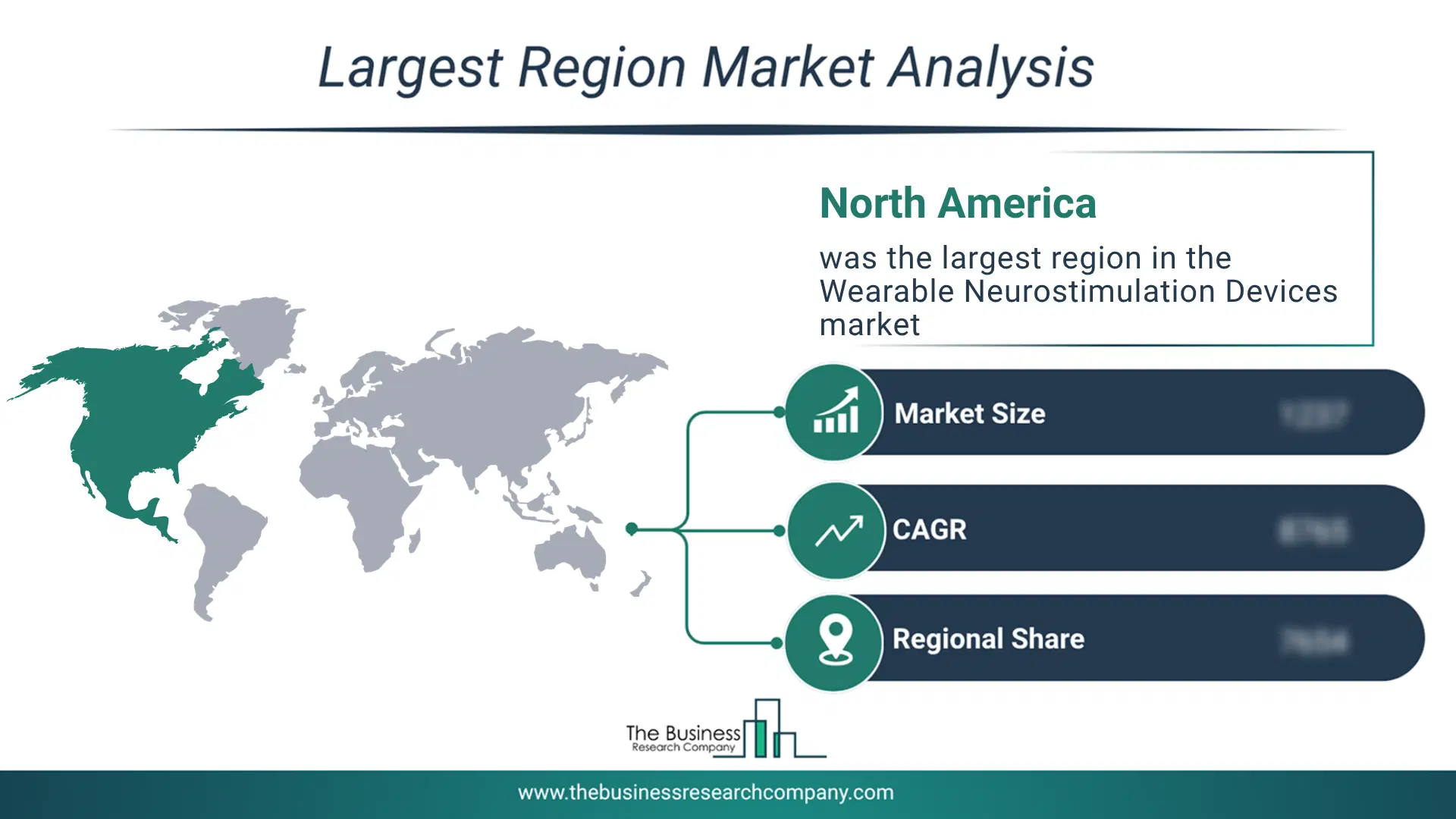
Regional Outlook
North America was the largest region in the wearable neurostimulation devices market in 2025. Asia-Pacific is expected to be the fastest-growing region in the forecast period. The regions covered in this market report are Asia-Pacific, South East Asia, Western Europe, Eastern Europe, North America, South America, Middle East, Africa. The countries covered in this market report are Australia, Brazil, China, France, Germany, India, Indonesia, Japan, Taiwan, Russia, South Korea, UK, USA, Canada, Italy, SpainWhat Defines the Wearable Neurostimulation Devices Market?
The wearable neurostimulation devices market consists of revenues earned by entities by providing services such as device sales, maintenance and support, data analytics, therapy customization, remote monitoring, patient education and subscription-based health management. The market value includes the value of related goods sold by the service provider or included within the service offering. The wearable neurostimulation devices market also includes sales of cranial electrotherapy stimulation (CES) devices, vagus nerve stimulation (VNS) devices, spinal cord stimulation (SCS) devices, functional electrical stimulation (FES) devices, peripheral nerve stimulation (PNS) devices and deep brain stimulation (DBS) devices. Values in this market are ‘factory gate’ values, that is the value of goods sold by the manufacturers or creators of the goods, whether to other entities (including downstream manufacturers, wholesalers, distributors and retailers) or directly to end customers. The value of goods in this market includes related services sold by the creators of the goods.How is Market Value Defined and Measured?
The market value is defined as the revenues that enterprises gain from the sale of goods and/or services within the specified market and geography through sales, grants, or donations in terms of the currency (in USD unless otherwise specified). The revenues for a specified geography are consumption values that are revenues generated by organizations in the specified geography within the market, irrespective of where they are produced. It does not include revenues from resales along the supply chain, either further along the supply chain or as part of other products.
This chart presents market attractiveness based on a quantitative evaluation of growth, competition, strategic alignment, and risk, offering a clear view of opportunity areas for decision-making. This chart is for illustrative purposes; the full report contains the complete analysis.

This chart highlights the Total Addressable Market (TAM) by estimating the maximum revenue opportunity using an assumption-driven approach, supporting strategic planning and opportunity sizing across markets. The chart is illustrative; the full report provides a more comprehensive analysis.
What Key Data and Analysis Are Included in the Wearable Neurostimulation Devices Market Report 2026?
The wearable neurostimulation devices market research report is one of a series of new reports from The Business Research Company that provides market statistics, including industry global market size, regional shares, competitors with the market share, detailed market segments, market trends and opportunities, and any further data you may need to thrive in the wearable neurostimulation devices industry. The market research report delivers a complete perspective of everything you need, with an in-depth analysis of the current and future state of the industry.Wearable Neurostimulation Devices Market Report Forecast Analysis
| Report Attribute | Details |
|---|---|
| Market Size Value In 2026 | $0.75 billion |
| Revenue Forecast In 2030 | $1.22 billion |
| Growth Rate | CAGR of 12.8% from 2026 to 2030 |
| Base Year For Estimation | 2025 |
| Actual Estimates/Historical Data | 2020-2025 |
| Forecast Period | 2026 - 2030 |
| Market Representation | Revenue in USD Billion and CAGR from 2026 to 2030 |
| Segments Covered | Product Type, Application, End-User |
| Regional Scope | Asia-Pacific, Western Europe, Eastern Europe, North America, South America, Middle East, Africa |
| Country Scope | The countries covered in the report are Australia, Brazil, China, France, Germany, India, Indonesia, Japan, Taiwan, Russia, South Korea, UK, USA, Canada, Italy, Spain. |
| Key Companies Profiled | FocusCalm, Cala Health Inc., Cognito Therapeutics Inc., Apollo Neuroscience Inc., Curonix LLC, Soterix Medical Inc., Theranica Bioelectronics Ltd., NeuroMetrix Inc., Spark Biomedical Inc., Helius Medical Technologies Inc., Hapbee Technologies Inc., Flow Neuroscience, tVNS Technologies GmbH, Wearable Devices Ltd., MindMaze SA, Emotiv Inc., NextMind (Snap Inc.), Neuroelectrics Barcelona S.L., Brain Scientific Inc., Neurosity Inc. |
| Customization Scope | Request for Customization |
| Pricing And Purchase Options | Explore Purchase Options |