
Wearable Sensor Hub Market Report 2026
Global Outlook – By Component (Sensor, Microcontroller, Memory, Other Components), By Device Type (Smartwatches, Fitness Bands, Augmented Reality And Virtual Reality Wearables, Smart Clothing, Medical Wearables, Hearables), By Connectivity (Bluetooth-Enabled Sensor Hubs, Wi-Fi Enabled Hubs, Near Field Communication And Radio Frequency Identification-Compatible Hubs, Cellular-Integrated Sensor Hubs), By Application (Healthcare And Medical, Consumer Electronics, Sports And Fitness, Industrial, Other Applications), By End-User (Adults, Children, Elderly) – Market Size, Trends, Strategies, and Forecast to 2030
Wearable Sensor Hub Market Overview
• Wearable Sensor Hub market size has reached to $3.22 billion in 2025 • Expected to grow to $8.11 billion in 2030 at a compound annual growth rate (CAGR) of 20.3% • Growth Driver: Rising Adoption Of Wearable Health And Fitness Devices Driving The Growth Of The Market Due To The Need For Real-Time Health Monitoring And Data Management • Market Trend: Integrated Sensor Systems Enhance Continuous Health Monitoring • North America was the largest region in 2025 and Asia-Pacific is the fastest growing region.What Is Covered Under Wearable Sensor Hub Market?
Wearable sensor hubs are integrated hardware modules designed to collect, process, and manage data from multiple sensors within wearable electronic devices. As advanced semiconductor components, they enable efficient sensor fusion, reduce power consumption, and enhance the functionality of wearables by coordinating inputs such as motion, heart rate, temperature, and environmental data. This supports improved device performance, longer battery life, and enhanced user experience in applications such as fitness tracking, health monitoring, and smart consumer electronics. The main component of wearable sensor hubs includes sensors, microcontrollers, memory, and others. Sensors refer to devices that detect, measure, and transmit physiological, motion, or environmental data from the wearer, enabling real-time monitoring and analytics for various wearable applications. The device types include smartwatches, fitness bands, augmented reality and virtual reality wearables, smart clothing, medical wearables, and hearables. The connectivity options include Bluetooth-enabled sensor hubs, Wi-Fi-enabled hubs, near field communication and radio frequency identification-compatible hubs, and cellular-integrated sensor hubs. The applications include healthcare and medical, consumer electronics, sports and fitness, industrial, and others, and the key end users include adults, children, and elderly individuals.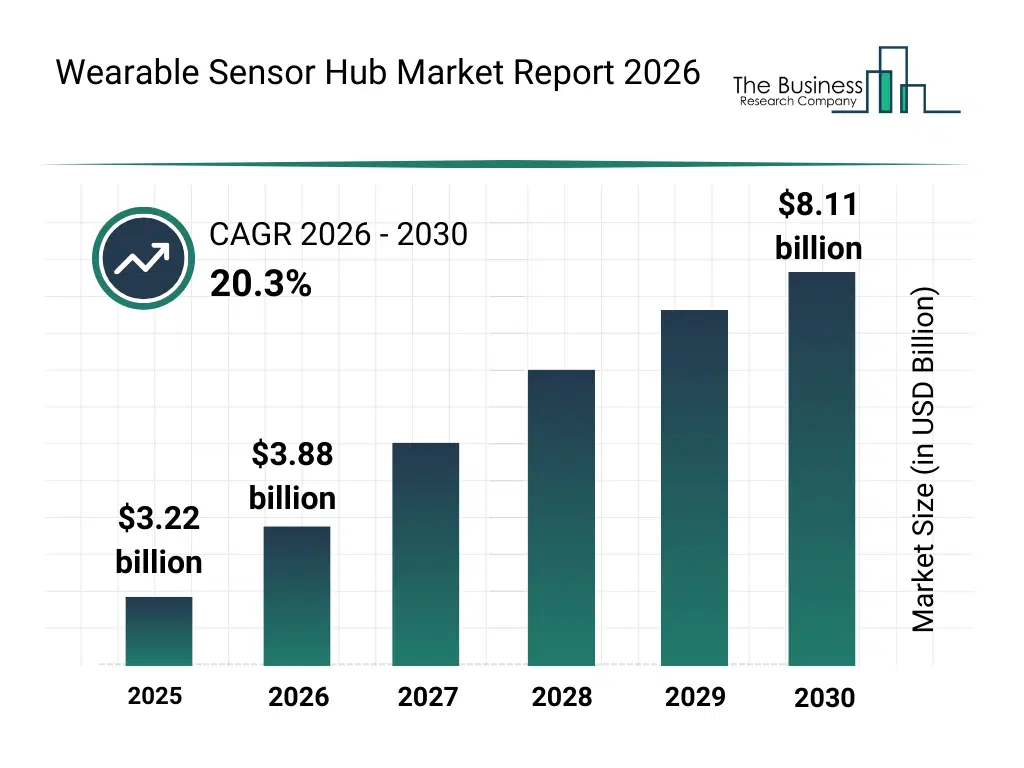
What Is The Wearable Sensor Hub Market Size and Share 2026?
The wearable sensor hub market size has grown exponentially in recent years. It will grow from $3.22 billion in 2025 to $3.88 billion in 2026 at a compound annual growth rate (CAGR) of 20.6%. The growth in the historic period can be attributed to increasing adoption of wearable consumer electronics, growing demand for fitness and health monitoring devices, rising integration of multi-sensor modules in wearables, expanding use of low-power IoT components, increasing shift toward miniaturized semiconductor solutions.What Is The Wearable Sensor Hub Market Growth Forecast?
The wearable sensor hub market size is expected to see exponential growth in the next few years. It will grow to $8.11 billion in 2030 at a compound annual growth rate (CAGR) of 20.3%. he growth in the forecast period can be attributed to growing demand for continuous health tracking, increasing adoption of medical-grade wearables, rising expansion of smart clothing and hearables, increasing integration of AI-enabled sensor fusion, growing need for energy-efficient wearable architectures. Major trends in the forecast period include advancements in ultra-low-power sensor hub design, innovations in multimodal sensor fusion technologies, developments in AI-driven on-device processing, research and development in biosensor integration, and advancements in semiconductor miniaturization for wearables.
Global Wearable Sensor Hub Market Segmentation
1) By Component: Sensor, Microcontroller, Memory, Other Components 2) By Device Type: Smartwatches, Fitness Bands, Augmented Reality And Virtual Reality Wearables, Smart Clothing, Medical Wearables, Hearables 3) By Connectivity: Bluetooth-Enabled Sensor Hubs, Wi-Fi Enabled Hubs, Near Field Communication And Radio Frequency Identification-Compatible Hubs, Cellular-Integrated Sensor Hubs 4) By Application: Healthcare And Medical, Consumer Electronics, Sports And Fitness, Industrial, Other Applications 5) By End-User: Adults, Children, Elderly Subsegments: 1) By Sensor: Accelerometer, Gyroscope, Magnetometer, Heart Rate Sensor, Temperature Sensor 2) By Microcontroller: Low-Power Microcontroller, High-Performance Microcontroller, Ultra-Low Energy Microcontroller, Arm-Based Microcontroller, Embedded Control Microcontroller 3) By Memory: Flash Memory, Static Random Access Memory, Dynamic Random Access Memory, Embedded Memory, Non-Volatile Memory 4) By Other Components: Power Management Unit, Connectivity Module, Interface Controller, Battery Management System, Signal Processing UnitWhat Are The Drivers Of The Wearable Sensor Hub Market?
The rising adoption of wearable health and fitness devices is expected to propel the growth of the wearable sensor hub market going forward. Wearable health and fitness devices refer to smartwatches, fitness bands, and medical wearables that continuously track physiological parameters such as heart rate, blood oxygen levels, and activity patterns. Adoption of wearable health and fitness devices is rising as it allows users to continuously track vital signs and activity levels to proactively manage their well-being. Wearable sensor hubs support the adoption of wearable health and fitness devices by collecting, processing, and managing data from multiple sensors, enabling real-time health insights and improving device functionality. For instance, in July 2025, according to the NHS England, a UK-based government department, as of early 2024, around two-thirds of people reported using an app or device to track at least one aspect of their health, with smartwatches expected to reach 10 million users in 2025. Therefore, the rising adoption of wearable health and fitness devices is driving the growth of the wearable sensor hub industry. The rising adoption of internet of things (IoT) devices is expected to propel the growth of the wearable sensor hub market going forward. The internet of things (IoT) devices refer to a network of interconnected devices, such as smartphones, sensors, wearables, smart home devices, and security cameras, that communicate and exchange data over the internet without human intervention. The need for internet of things (IoT) connected devices is increasing due to the need for real-time data, as they enhance efficiency, enable remote monitoring, and support smarter decision-making across industries. Wearable sensor hubs enhance internet of things (IoT) device adoption by providing continuous health and activity monitoring through compact, energy-efficient sensors. They enable real-time data collection, seamless connectivity, and personalized insights, improving user engagement and driving broader integration of IoT solutions in healthcare, fitness, and lifestyle applications. For instance, in September 2024, according to IoT Analytics, a Germany-based research firm focused on IoT market insights, the number of connected IoT devices reached 16.6 billion in 2023, reflecting a 15% increase from 14.4 billion in 2022. Therefore, the rising adoption of internet of things (IoT) devices is driving the growth of the wearable sensor hub industry.Key Players In The Global Wearable Sensor Hub Market
Major companies operating in the wearable sensor hub market are Texas Instruments Incorporated, NXP Semiconductors N.V., STMicroelectronics N.V., Infineon Technologies AG, TDK Corporation, Analog Devices Inc., Renesas Electronics Corporation, Microchip Technology Incorporated, Realtek Semiconductor Corp., ROHM Co. Ltd., Bestechnic (Shanghai) Co. Ltd., Synaptics Incorporated, Goodix Technology Co. Ltd., Silicon Laboratories Inc., QuickLogic Corporation, Ambiq Micro Inc., Syntiant Corp., Nordic Semiconductor ASA, GreenWaves Technologies SAS, Actions Semiconductor Co. Ltd., Aspinity Inc.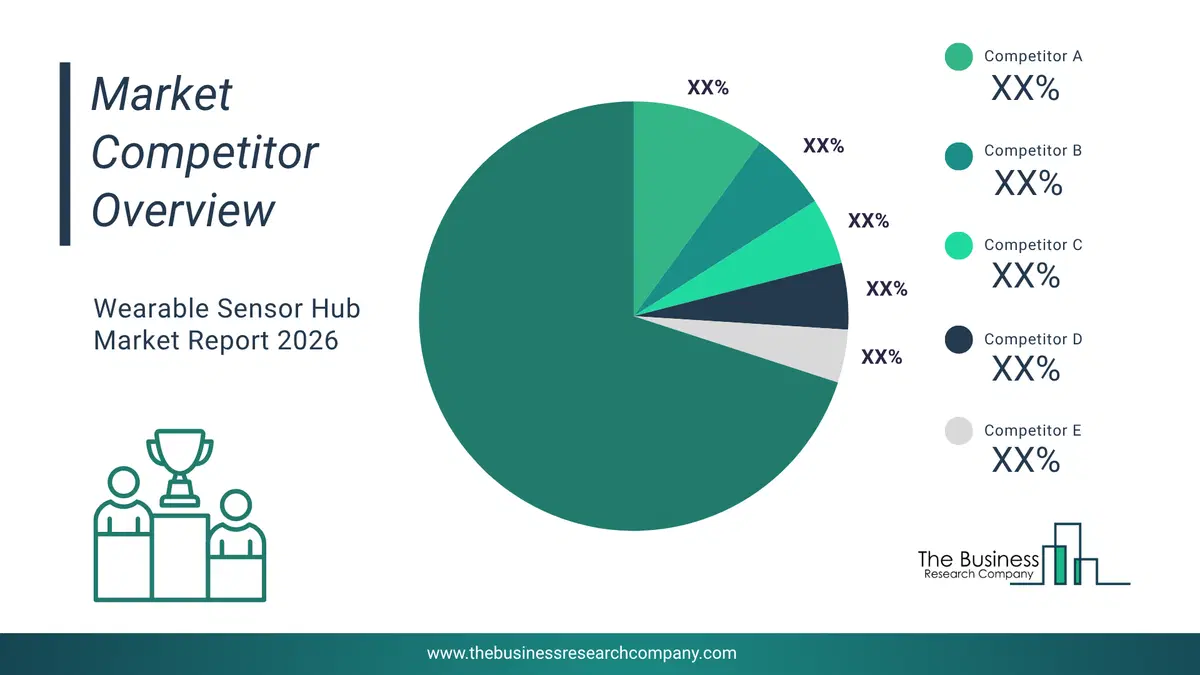
This chart is for illustrative purposes; the full report includes a detailed competitor analysis and comprehensive overview of the top 10 companies in the market.
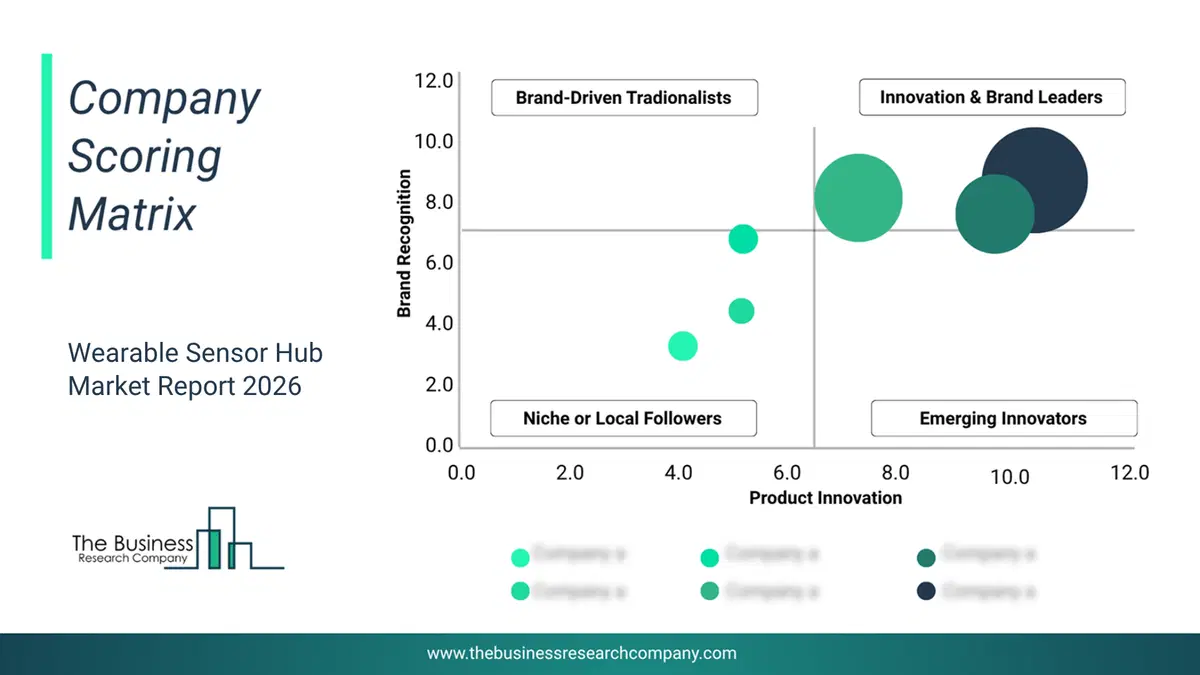
This chart maps companies by product innovation and brand strength, with bubble size indicating relative revenue, helping identify market leaders, challengers, and niche players. This is an illustrative chart; the full report provides a complete and accurate competitive analysis.
Global Wearable Sensor Hub Market Trends and Insights
Major companies operating in the wearable sensor hub market are focusing on developing technologically advanced solutions, such as advanced super-sensing technology, to enable accurate, continuous health monitoring with low power consumption. Advanced super-sensing technology refers to a multi-modal sensing approach that combines different types of sensor inputs and optimized hardware to achieve higher accuracy, speed, and reliability in health measurements. For instance, in August 2024, Huawei Technologies Co. Ltd., a China-based consumer technology company, launched the HUAWEI TruSense System. The system’s features include a new super sensing module for multimodal signal fusion and algorithms optimized for diverse skin tones and wrist sizes, ensuring robust continuous monitoring within wrist-worn wearable devices.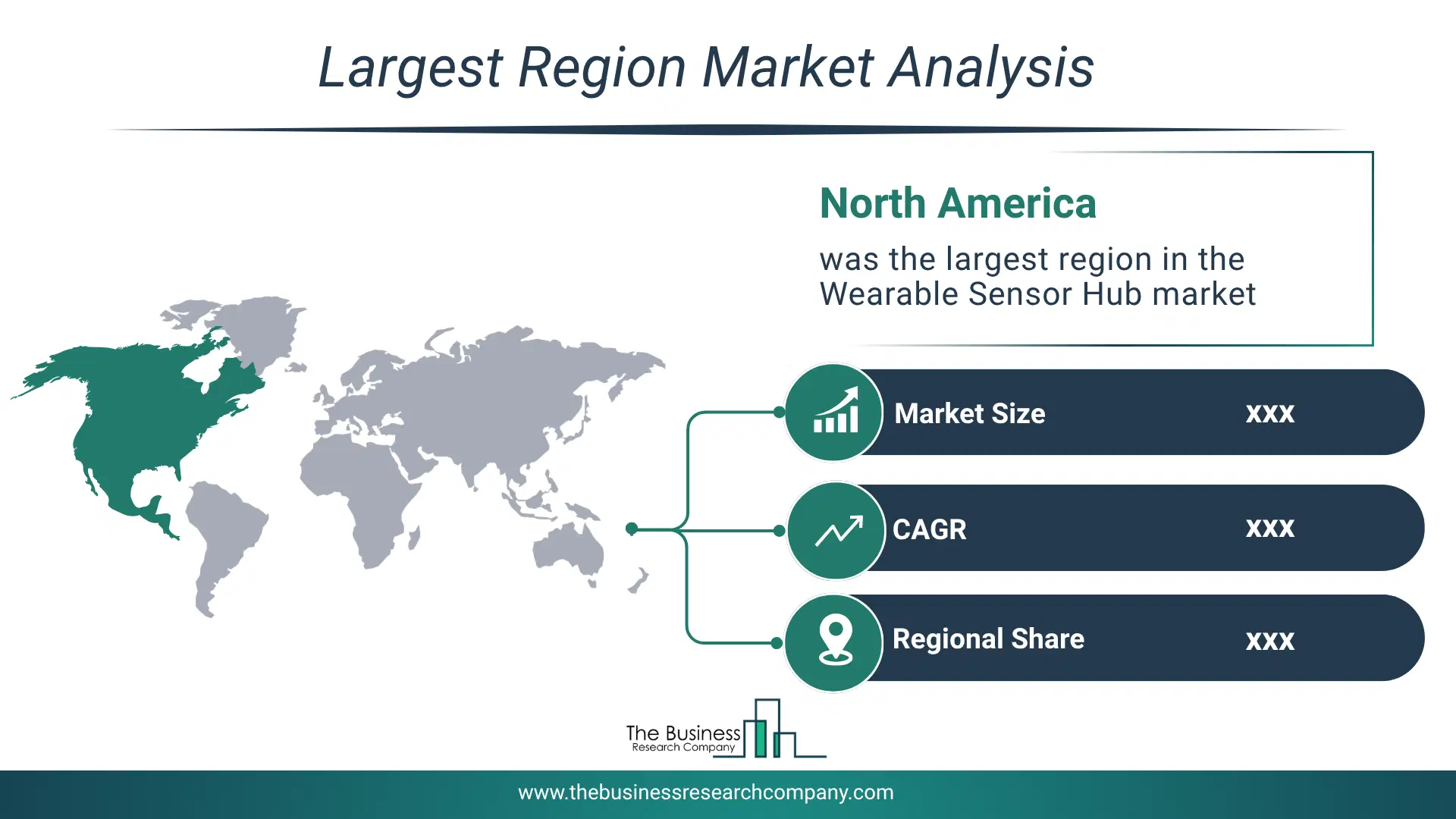
Regional Insights
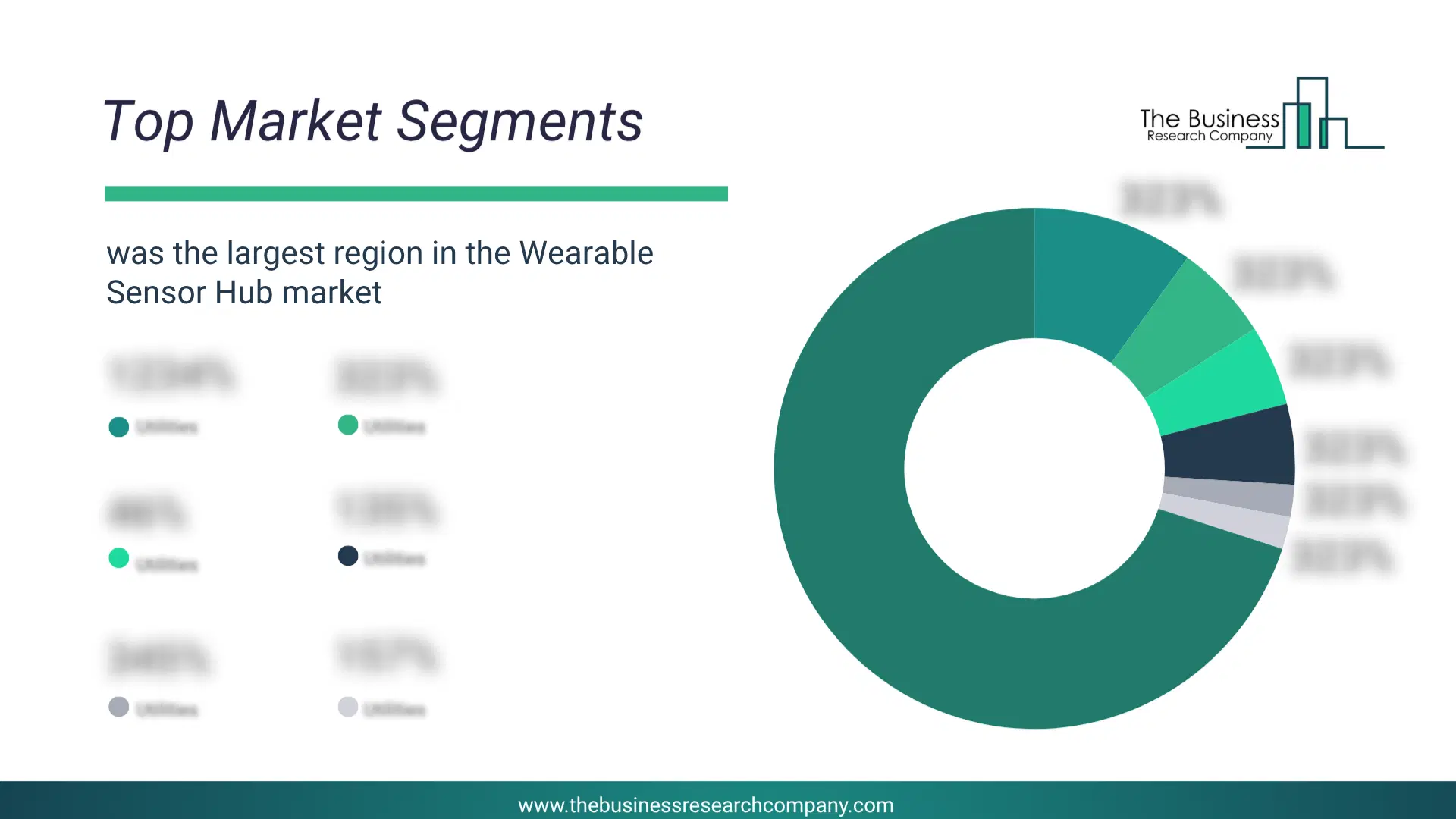
North America was the largest region in the wearable sensor hub market in 2025. Asia-Pacific is expected to be the fastest-growing region in the forecast period. The regions covered in this market report are Asia-Pacific, South East Asia, Western Europe, Eastern Europe, North America, South America, Middle East, Africa. The countries covered in this market report are Australia, Brazil, China, France, Germany, India, Indonesia, Japan, Taiwan, Russia, South Korea, UK, USA, Canada, Italy, Spain.What Defines the Wearable Sensor Hub Market?
The wearable sensor hub market consists of sales of sensor fusion chips, microcontroller-based hubs, low-power sensor management modules, and integrated sensor hub solutions. Values in this market are ‘factory gate’ values, that is, the value of goods sold by the manufacturers or creators of the goods, whether to other entities (including downstream manufacturers, wholesalers, distributors, and retailers) or directly to end customers. The value of goods in this market includes related services sold by the creators of the goods.How is Market Value Defined and Measured?
The market value is defined as the revenues that enterprises gain from the sale of goods and/or services within the specified market and geography through sales, grants, or donations in terms of the currency (in USD unless otherwise specified). The revenues for a specified geography are consumption values that are revenues generated by organizations in the specified geography within the market, irrespective of where they are produced. It does not include revenues from resales along the supply chain, either further along the supply chain or as part of other products.
This chart presents market attractiveness based on a quantitative evaluation of growth, competition, strategic alignment, and risk, offering a clear view of opportunity areas for decision-making. This chart is for illustrative purposes; the full report contains the complete analysis.

This chart highlights the Total Addressable Market (TAM) by estimating the maximum revenue opportunity using an assumption-driven approach, supporting strategic planning and opportunity sizing across markets. The chart is illustrative; the full report provides a more comprehensive analysis.
What Key Data and Analysis Are Included in the Wearable Sensor Hub Market Report 2026?
The wearable sensor hub market research report is one of a series of new reports from The Business Research Company that provides market statistics, including industry global market size, regional shares, competitors with the market share, detailed market segments, market trends and opportunities, and any further data you may need to thrive in the wearable sensor hub industry. The market research report delivers a complete perspective of everything you need, with an in-depth analysis of the current and future state of the industry.Wearable Sensor Hub Market Report Forecast Analysis
| Report Attribute | Details |
|---|---|
| Market Size Value In 2026 | $3.88 billion |
| Revenue Forecast In 2030 | $8.11 billion |
| Growth Rate | CAGR of 20.6% from 2026 to 2030 |
| Base Year For Estimation | 2025 |
| Actual Estimates/Historical Data | 2020-2025 |
| Forecast Period | 2026 - 2030 |
| Market Representation | Revenue in USD Billion and CAGR from 2026 to 2030 |
| Segments Covered | Component, Device Type, Connectivity, Application, End-User |
| Regional Scope | Asia-Pacific, Western Europe, Eastern Europe, North America, South America, Middle East, Africa |
| Country Scope | The countries covered in the report are Australia, Brazil, China, France, Germany, India, Indonesia, Japan, Taiwan, Russia, South Korea, UK, USA, Canada, Italy, Spain. |
| Key Companies Profiled | Texas Instruments Incorporated, NXP Semiconductors N.V., STMicroelectronics N.V., Infineon Technologies AG, TDK Corporation, Analog Devices Inc., Renesas Electronics Corporation, Microchip Technology Incorporated, Realtek Semiconductor Corp., ROHM Co. Ltd., Bestechnic (Shanghai) Co. Ltd., Synaptics Incorporated, Goodix Technology Co. Ltd., Silicon Laboratories Inc., QuickLogic Corporation, Ambiq Micro Inc., Syntiant Corp., Nordic Semiconductor ASA, GreenWaves Technologies SAS, Actions Semiconductor Co. Ltd., Aspinity Inc. |
| Customization Scope | Request for Customization |
| Pricing And Purchase Options | Explore Purchase Options |