
Women’s Health Devices Market Report 2026
Global Outlook – By Product (Surgical, Diagnostics, Contraceptives, Labor And Delivery), By Application (Cancer, Osteoporosis, Uterine Fibroids, Post-menopausal Syndrome, Pregnancy, Female Sterilization, Other Applications), By End-user (Hospitals, Obstetrics And Gynecology Clinics, Diagnostic Laboratories, Ambulatory Surgical Centers, Other End Users) – Market Size, Trends, Strategies, and Forecast to 2030
Women’s Health Devices Market Overview
• Women’s Health Devices market size has reached to $44.2 billion in 2025 • Expected to grow to $77.08 billion in 2030 at a compound annual growth rate (CAGR) of 11.7% • Growth Driver: Increasing Incidence Of Chronic Diseases Is Anticipated To Fuel The Women’S Health Devices Market • Market Trend: Smart Ring Revolutionizing Women's Health Insights • North America was the largest region in 2025 and Asia-Pacific is the fastest growing region.What Is Covered Under Women’s Health Devices Market?
Women’s health devices refer to devices that enable them to take control of their health and health-related data with at-home tests and other features. The women’s health devices are used to enhance women's healthcare, including maternal and menstrual health, pelvic and sexual health, fertility, menopause, and contraception, as well as many general health disorders that affect women disproportionately or differently, such as osteoporosis or cardiovascular disease. The main product types of women’s health devices are surgical, diagnostics, contraceptives, labor and delivery, and critical care. A surgical device refers to a specialized device used by surgeon to relieve a medical condition. The applications of women’s health devices include cancer, osteoporosis, infectious disease, uterine fibroids, post-menopausal syndrome, pregnancy, female sterilization, and other applications. The various end-users of women’s health devices include hospitals, obstetrics and gynecology clinics, diagnostic laboratories, ambulatory surgical centers, and other end users.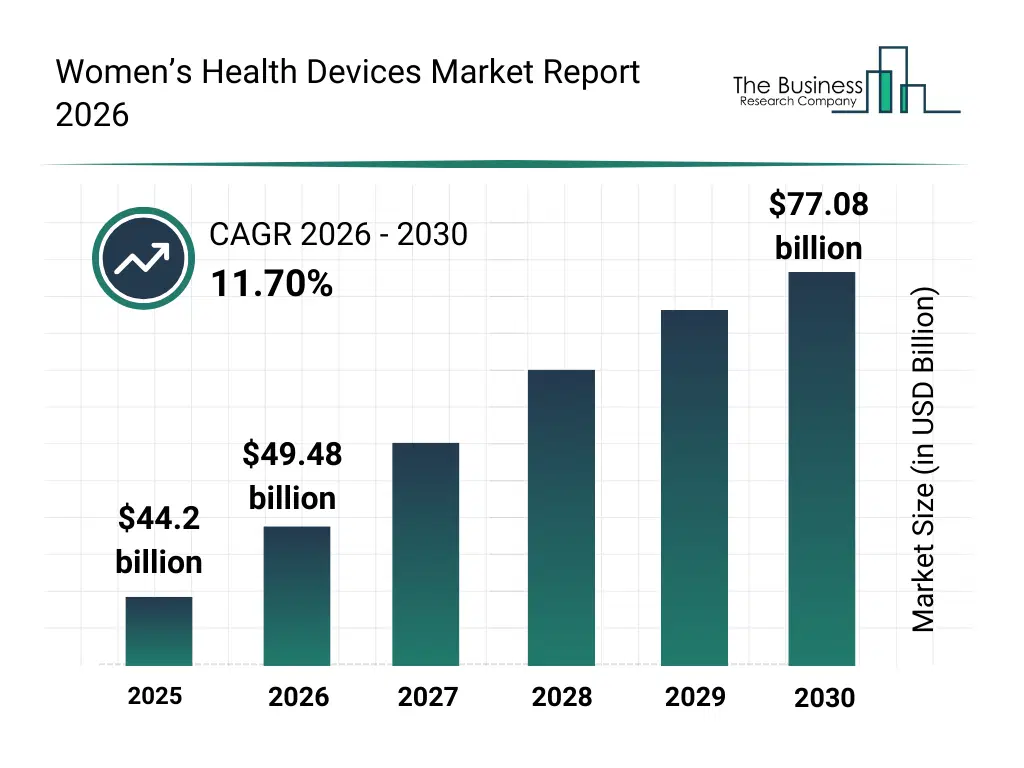
What Is The Women’s Health Devices Market Size and Share 2026?
The women’s health devices market size has grown rapidly in recent years. It will grow from $44.2 billion in 2025 to $49.48 billion in 2026 at a compound annual growth rate (CAGR) of 11.9%. The growth in the historic period can be attributed to growing awareness of women’s health conditions, expansion of preventive healthcare programs, increasing availability of diagnostic devices, rising focus on maternal health management, adoption of digital health tools.What Is The Women’s Health Devices Market Growth Forecast?
The women’s health devices market size is expected to see rapid growth in the next few years. It will grow to $77.08 billion in 2030 at a compound annual growth rate (CAGR) of 11.7%. The growth in the forecast period can be attributed to increasing investments in femtech innovation, rising demand for personalized healthcare solutions, expansion of telehealth services, growing adoption of wearable health devices, increasing focus on data-driven women’s health insights. Major trends in the forecast period include increasing adoption of connected women’s health devices, rising use of at-home diagnostic kits, growing integration of digital health platforms, expansion of fertility and menstrual tracking solutions, enhanced focus on personalized women’s care.
Global Women’s Health Devices Market Segmentation
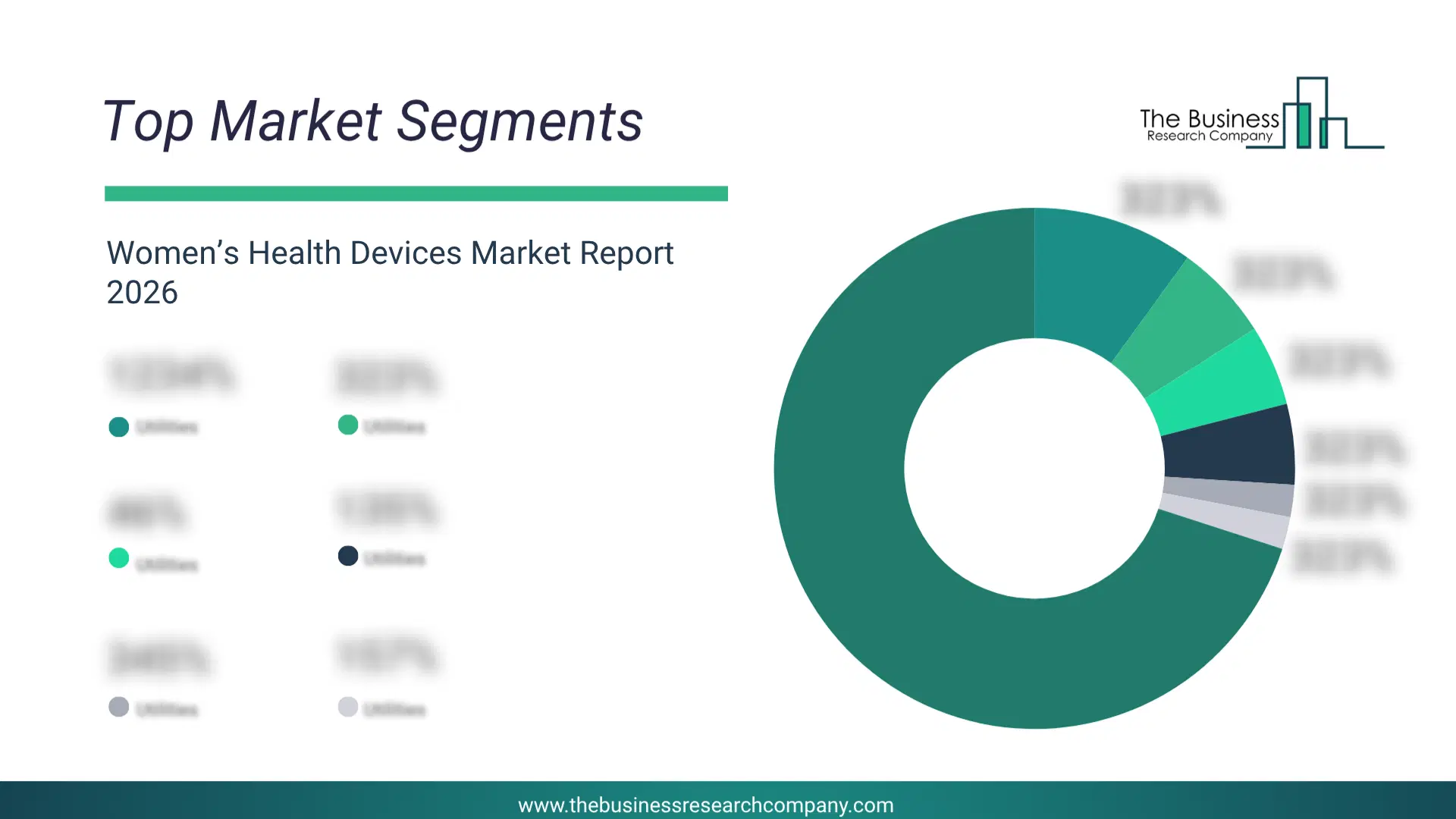
1) By Product: Surgical, Diagnostics, Contraceptives, Labor And Delivery 2) By Application: Cancer, Osteoporosis, Uterine Fibroids, Post-menopausal Syndrome, Pregnancy, Female Sterilization, Other Applications 3) By End-user: Hospitals, Obstetrics And Gynecology Clinics, Diagnostic Laboratories, Ambulatory Surgical Centers, Other End Users Subsegments: 1) By Surgical: Hysteroscopes, Endometrial Ablation Devices 2) By Diagnostics: Pap Smear Devices, Hormone Testing Kits 3) By Contraceptives: Intrauterine Devices (IUDs), Implantable Contraceptives 4) By Labor and Delivery: Fetal Monitors, Obstetric Ultrasound Machines, Labor Induction DevicesWhat Is The Driver Of The Women’s Health Devices Market?
The increasing incidence of chronic diseases is expected to drive the growth in the women’s health devices market going forward. Chronic diseases refer to long-lasting health conditions that persist for months or years, often progress slowly over time, affect a person’s quality of life, and require ongoing medical management while typically being controllable through treatment and lifestyle changes. The increasing incidence of chronic diseases is rising due to sedentary lifestyles, which lead to obesity, poor metabolic health, and higher susceptibility to long-term conditions. Women’s health devices help chronic diseases by enabling early detection, continuous monitoring, and personalized management of conditions such as diabetes, cardiovascular issues, and hormonal disorders, improving overall health outcomes and quality of life. For instance, in June 2024, according to the National Health Service, a UK-based government department, 3,615,330 individuals registered with a general practitioner (GP) were diagnosed with non-diabetic hyperglycemia or pre-diabetes (a condition with elevated blood sugar levels, not high enough to be classified as diabetes) in 2023, marking an 18% increase from 3,065,825 cases in 2022. Therefore, the increasing incidence of chronic diseases is driving the women’s health devices industry.Key Players In The Global Women’s Health Devices Market
Major companies operating in the women’s health devices market are Abbott Laboratories, Koninklijke Philips N V, CooperSurgical Inc, Hologic Inc, Caldera Medical Inc, GE HealthCare Technologies Inc, Siemens Healthineers AG, Boston Scientific Corporation, Medtronic plc, Becton Dickinson And Company, Olympus Corporation, Fujifilm Holdings Corporation, Johnson And Johnson, Stryker Corporation, Smith And Nephew plc, Intuitive Surgical Inc, Karl Storz GmbH And Co KG, Cook Medical Incorporated, Conmed Corporation, Natus Medical Incorporated, Laborie Medical Technologies Corporation, Neoventa Medical AB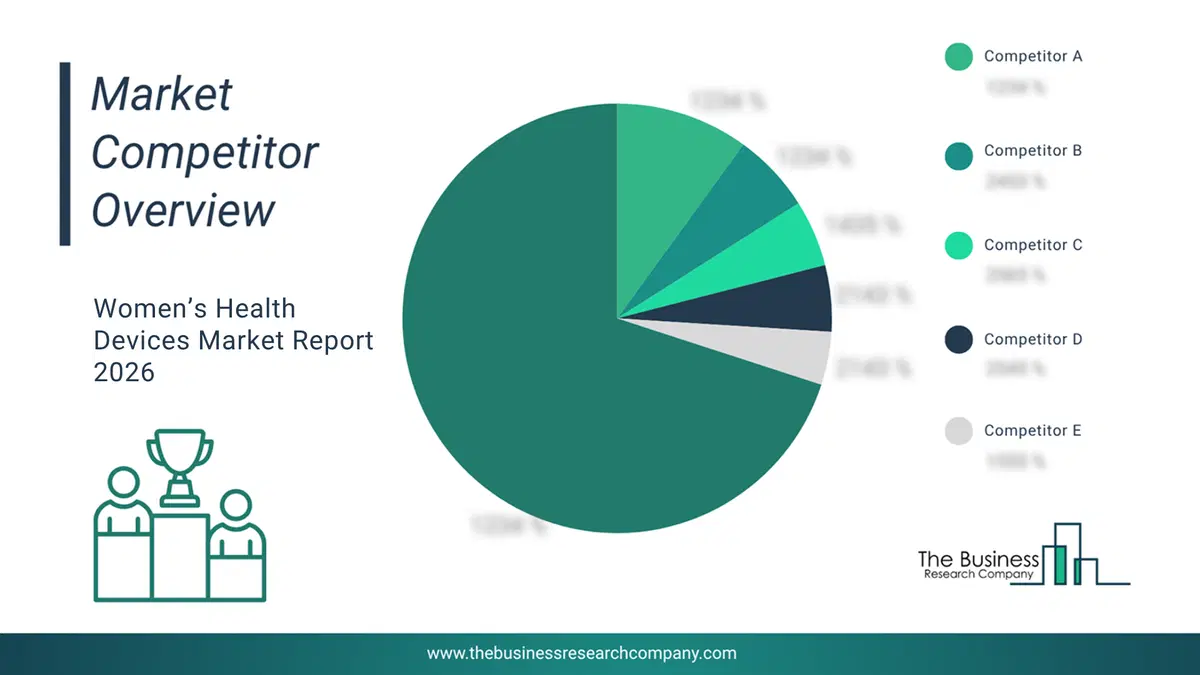
This chart is for illustrative purposes; the full report includes a detailed competitor analysis and comprehensive overview of the top 10 companies in the market.
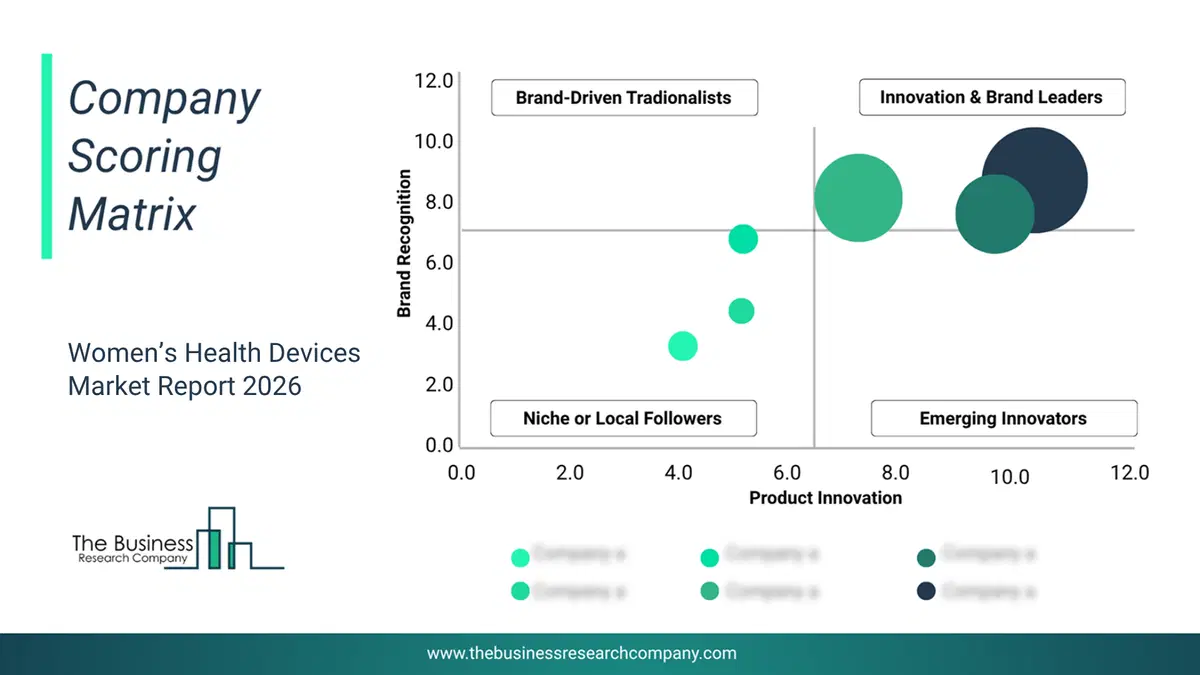
This chart maps companies by product innovation and brand strength, with bubble size indicating relative revenue, helping identify market leaders, challengers, and niche players. This is an illustrative chart; the full report provides a complete and accurate competitive analysis.
Global Women’s Health Devices Market Trends and Insights
Major companies operating in the women’s health devices market are launching smart rings to provide women with medical-grade health data that can be translated into personalized insights. Smart ring is designed specifically for women that offer users medical-grade health data, which is delivered through a mobile app. For instance, in January 2023, Movano Health, a US-based medical device company, launched a women-specific smart ring, Evie, that offers users medical-grade health insights via an app. Evie is designed to FDA regulatory standards and manufactured in an ISO13485 and cGMP-compliant facility. The ring captures various health metrics, such as heart rate, SpO2, menstrual tracking, sleep data, and more, presenting them in an easily digestible format on the app.What Are Latest Mergers And Acquisitions In The Women’s Health Devices Market?
In October 2024, Hologic Inc., a U.S.-based healthcare technology company specializing in women’s health devices, acquired Gynesonics Inc. for approximately $350 million. With this acquisition, Hologic aimed to bolster its minimally invasive gynecological treatment portfolio by integrating a novel transcervical fibroid‑treatment system. Gynesonics Inc. is a US-based medical device company, specializes in providing the Sonata System, which combines real‑time intrauterine ultrasound imaging with targeted radiofrequency ablation to treat symptomatic uterine fibroids without incisions.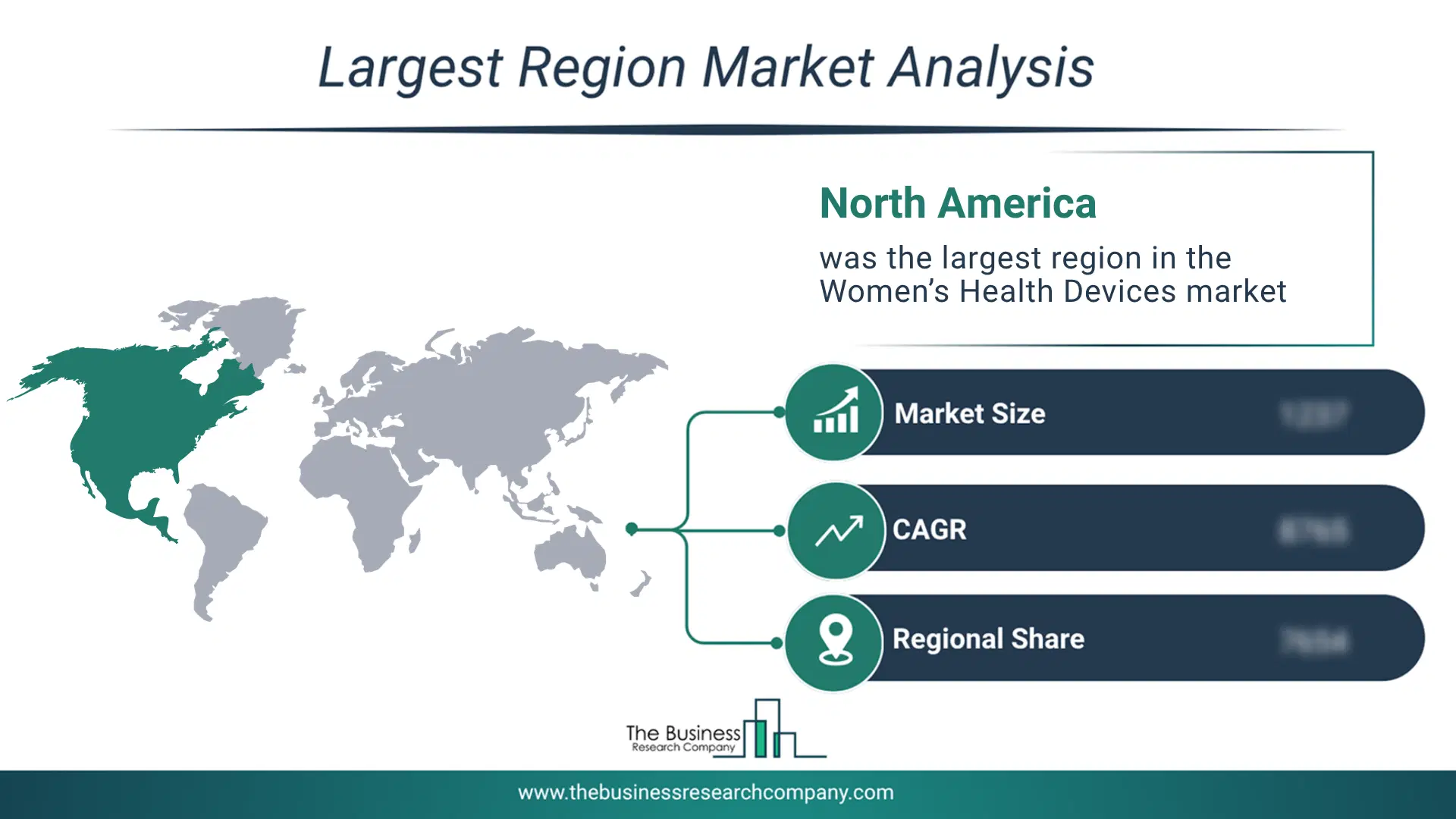
Regional Outlook
North America was the largest region in the women’s health devices market in 2025. Asia-Pacific is expected to be the fastest-growing region in the women’s health devices market report during the forecast period. The regions covered in the women’s health devices market report are Asia-Pacific, South East Asia, Western Europe, Eastern Europe, North America, South America, Middle East, Africa. The countries covered in the women’s health devices market report are Australia, Brazil, China, France, Germany, India, Indonesia, Japan, Taiwan, Russia, South Korea, UK, USA, Canada, Italy, SpainWhat Defines the Women’s Health Devices Market?
The women’s health devices market consists of sales of contraceptive devices and pharmaceuticals, densitometry, breast implants, obstetrics/gynecology biopsy and imaging. Values in this market are ‘factory gate’ values, that is the value of goods sold by the manufacturers or creators of the goods, whether to other entities (including downstream manufacturers, wholesalers, distributors and retailers) or directly to end customers. The value of goods in this market includes related services sold by the creators of the goods.How is Market Value Defined and Measured?
The market value is defined as the revenues that enterprises gain from the sale of goods and/or services within the specified market and geography through sales, grants, or donations in terms of the currency (in USD unless otherwise specified). The revenues for a specified geography are consumption values that are revenues generated by organizations in the specified geography within the market, irrespective of where they are produced. It does not include revenues from resales along the supply chain, either further along the supply chain or as part of other products.
This chart presents market attractiveness based on a quantitative evaluation of growth, competition, strategic alignment, and risk, offering a clear view of opportunity areas for decision-making. This chart is for illustrative purposes; the full report contains the complete analysis.

This chart highlights the Total Addressable Market (TAM) by estimating the maximum revenue opportunity using an assumption-driven approach, supporting strategic planning and opportunity sizing across markets. The chart is illustrative; the full report provides a more comprehensive analysis.
What Key Data and Analysis Are Included in the Women’s Health Devices Market Report 2026?
The women’s health devices market research report is one of a series of new reports from The Business Research Company that provides market statistics, including industry global market size, regional shares, competitors with the market share, detailed market segments, market trends and opportunities, and any further data you may need to thrive in the women’s health devices industry. The market research report delivers a complete perspective of everything you need, with an in-depth analysis of the current and future state of the industry.Women’s Health Devices Market Report Forecast Analysis
| Report Attribute | Details |
|---|---|
| Market Size Value In 2026 | $49.48 billion |
| Revenue Forecast In 2030 | $77.08 billion |
| Growth Rate | CAGR of 11.7% from 2026 to 2030 |
| Base Year For Estimation | 2025 |
| Actual Estimates/Historical Data | 2020-2025 |
| Forecast Period | 2026 - 2030 |
| Market Representation | Revenue in USD Billion and CAGR from 2026 to 2030 |
| Segments Covered | Product, Application, End-user |
| Regional Scope | Asia-Pacific, Western Europe, Eastern Europe, North America, South America, Middle East, Africa |
| Country Scope | The countries covered in the report are Australia, Brazil, China, France, Germany, India, Indonesia, Japan, Taiwan, Russia, South Korea, UK, USA, Canada, Italy, Spain. |
| Key Companies Profiled | Abbott Laboratories, Koninklijke Philips N V, CooperSurgical Inc, Hologic Inc, Caldera Medical Inc, GE HealthCare Technologies Inc, Siemens Healthineers AG, Boston Scientific Corporation, Medtronic plc, Becton Dickinson And Company, Olympus Corporation, Fujifilm Holdings Corporation, Johnson And Johnson, Stryker Corporation, Smith And Nephew plc, Intuitive Surgical Inc, Karl Storz GmbH And Co KG, Cook Medical Incorporated, Conmed Corporation, Natus Medical Incorporated, Laborie Medical Technologies Corporation, Neoventa Medical AB |
| Customization Scope | Request for Customization |
| Pricing And Purchase Options | Explore Purchase Options |