

Wood Coating Resins Market Report 2026
Global Outlook – By Resin Type (Epoxy Resin, Amino Resin, Alkyd Resin, Polyurethane Resin, Acrylic Resin, Vinyl Resin), By Technology (Solvent-Borne Coatings, Waterborne Coatings, High Solids Coatings, Radiation Curable Coatings, Other Technologies), By Application (Architectural Coatings, Wood Coatings, Other Applications) – Market Size, Trends, Strategies, and Forecast to 2030
Wood Coating Resins Market Overview
• Wood Coating Resins market size has reached to $4.59 billion in 2025 • Expected to grow to $6.06 billion in 2030 at a compound annual growth rate (CAGR) of 5.7% • Growth Driver: The Impact Of Expanding Hotels And Restaurants On The Wood Coating Resin Market • Market Trend: Eco-Friendly Exterior Coating Resin For Enhanced Outdoor Performance • Asia-Pacific was the largest region and fastest growing region.Market Gains By 2030 – Top Opportunities By Segment
Market Gain identifies the most promising market opportunities by highlighting the segments or products expected to generate the highest incremental revenue growth over the next five years.
What Is Covered Under Wood Coating Resins Market?
The wood coating resins refer to the production of adhesives, coatings, paints, plastics, primers and sealers, floors, and other building products. Epoxies are thermoset polymers created by the interaction of two or more industrial chemical components. The wood coating resins are used as powerful glue on any wooden surface. The main types of resins of wood coating resins are epoxy resin, amino resin, alkyd resin, polyurethane resin, unsaturated polyester resin, saturated polyester resin, acrylic resin, vinyl resin, and other resins. Epoxy resin refers to a flexible, thermosetting resin made by copolymerization of an epoxide with another compound having two hydroxyl groups and used chiefly in coatings and adhesives. The technologies include solvent-borne coatings, powder coatings, waterborne coatings, high solids coatings, radiation-curable coatings, and other technologies. The various applications include automotive coatings, marine, and protective coatings, architectural coatings, general industrial coatings, packaging coatings, wood coatings, and other applications.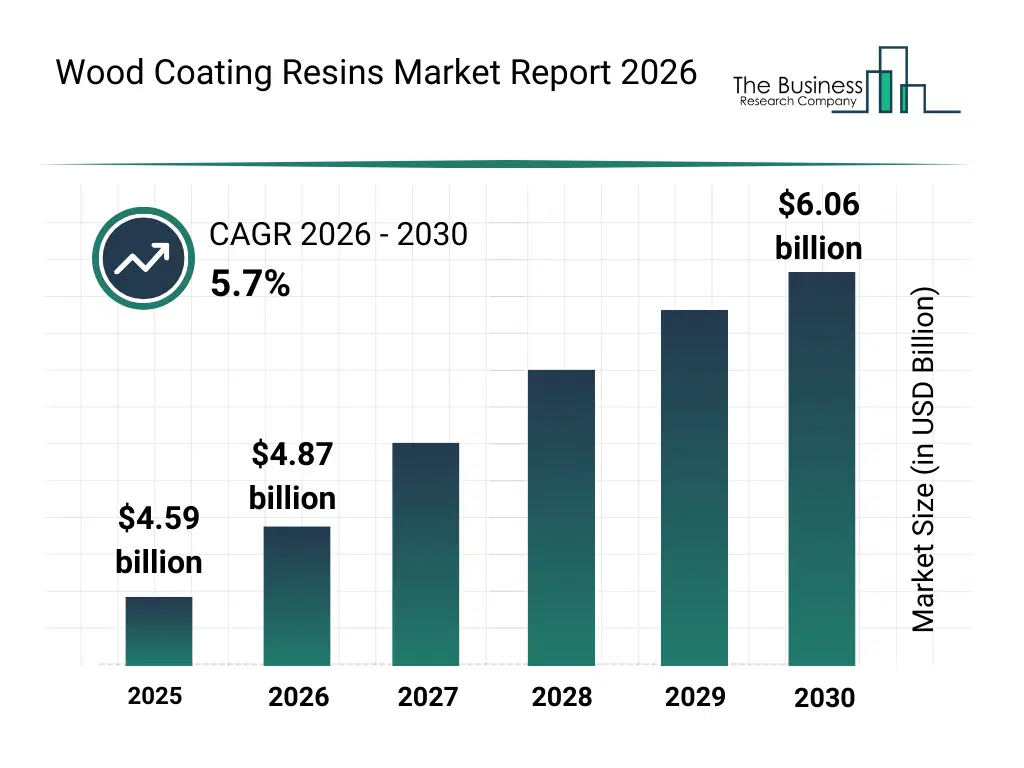
What Is The Wood Coating Resins Market Size and Share 2026?
The wood coating resins market size has grown strongly in recent years. It will grow from $4.59 billion in 2025 to $4.87 billion in 2026 at a compound annual growth rate (CAGR) of 6.1%. The growth in the historic period can be attributed to expansion of furniture manufacturing industry, rising residential construction activities, increasing use of decorative wood coatings, growth of flooring applications, availability of advanced resin technologies.What Is The Wood Coating Resins Market Growth Forecast?
The wood coating resins market size is expected to see strong growth in the next few years. It will grow to $6.06 billion in 2030 at a compound annual growth rate (CAGR) of 5.7%. The growth in the forecast period can be attributed to rising demand for eco-friendly wood finishes, expansion of modular furniture production, increasing focus on high-performance coatings, growing investments in sustainable resin development, rising adoption in interior design applications. Major trends in the forecast period include increasing adoption of waterborne wood coatings, rising demand for durable furniture finishes, growing use of polyurethane and acrylic resins, expansion of low-emission wood protection systems, enhanced focus on surface aesthetics and protection.
Global Wood Coating Resins Market Segmentation
1) By Resin Type: Epoxy Resin, Amino Resin, Alkyd Resin, Polyurethane Resin, Acrylic Resin, Vinyl Resin 2) By Technology: Solvent-Borne Coatings, Waterborne Coatings, High Solids Coatings, Radiation Curable Coatings, Other Technologies 3) By Application: Architectural Coatings, Wood Coatings, Other Applications Subsegments: 1) By Epoxy Resin: Solvent-Based Epoxy, Waterborne Epoxy, High-Solid Epoxy 2) By Amino Resin: Urea-Formaldehyde Resin, Melamine-Formaldehyde Resin 3) By Alkyd Resin: Waterborne Alkyd, Solvent-Based Alkyd, High-Solid Alkyd 4) By Polyurethane Resin: One-Component Polyurethane, Two-Component Polyurethane, Moisture-Cure Polyurethane 5) By Acrylic Resin: Thermosetting Acrylics, Thermoplastic Acrylics, Waterborne Acrylics 6) By Vinyl Resin: Polyvinyl Acetate (PVA), Polyvinyl Chloride (PVC) The top segments in the wood coating resins market will be: • Acrylic Resin will reach $2 Billion by 2030. • Polyurethane Resin will reach $1 Billion by 2030. • Alkyd Resin will reach $1 Billion by 2030. • Epoxy Resin will reach $0.74 Billion by 2030. • Amino Resin will reach $0.58 Billion by 2030.What Is The Driver Of The Wood Coating Resins Market?
The growing number of hotels and restaurants is expected to propel the growth of the wood coating resin market going forward. Hotels are establishments that provide lodging and often additional services like dining and recreation to travelers, while restaurants are businesses that primarily serve food and beverages to customers for on-site consumption. The number of hotels and restaurants is rising due to increased global tourism, urbanization, and changing consumer preferences for dining out and travel experiences. Wood coating resin is required in hotels and restaurants to protect wooden surfaces from wear, moisture, and stains, while enhancing durability and maintaining aesthetic appeal in high-traffic areas. For instance, in September 2023, according to the Amadeus IT Group SA, a Spain-based travel technology company, platform brands posted that in 2023 global hotel occupancy levels are trending 10% ahead of 2022, with Q4 on-the-books reservations up 11% over last year. Therefore, the growing number of hotels and restaurants is driving the growth of the wood coating resin industry.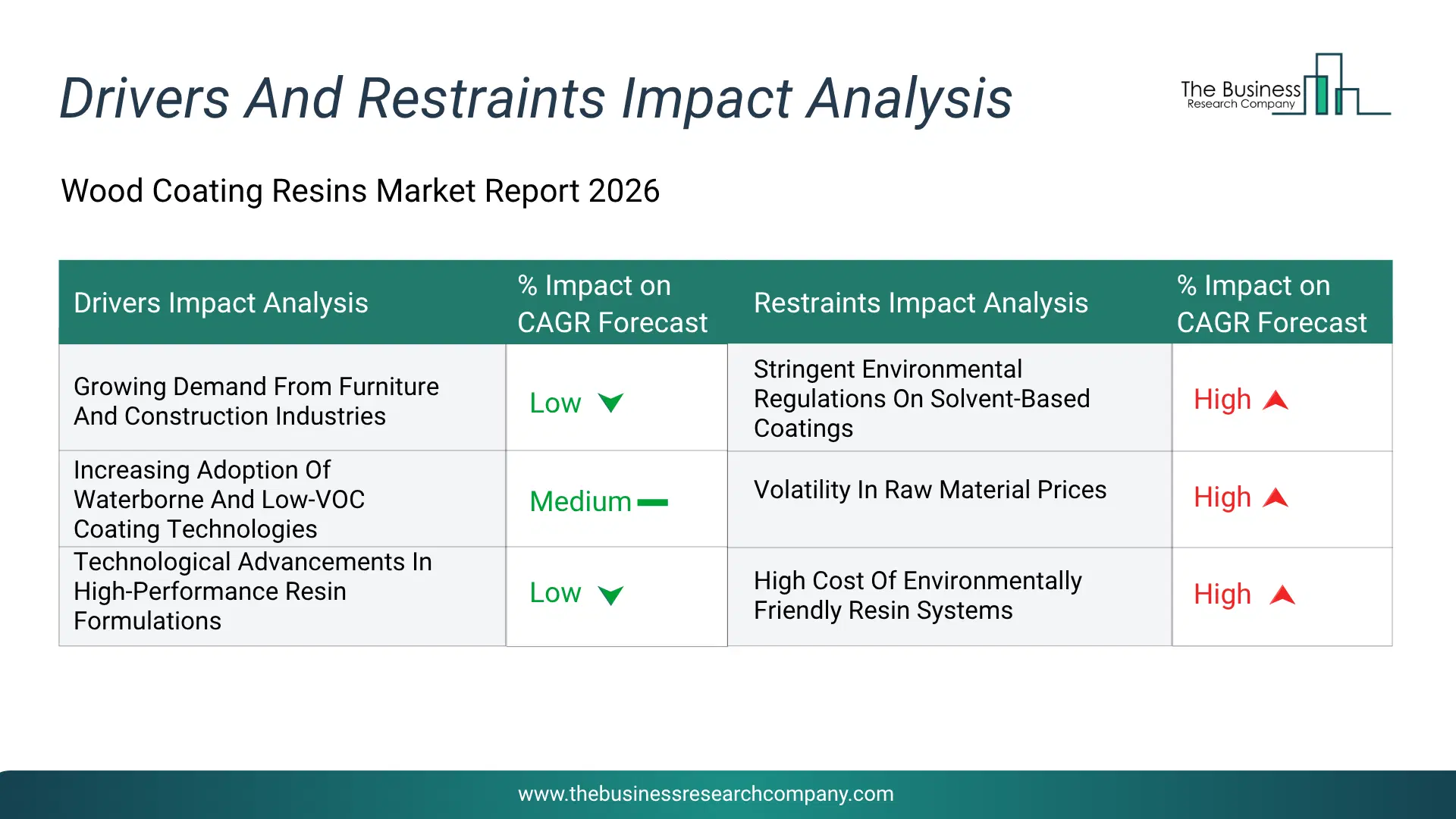
Infographic Chart Showing Key Market Drivers Analysis And Restraints For Wood Coating Resins Market
The chart presents an impact analysis of key drivers and restraints, quantifying their relative influence on the market's growth rate and helping assess the balance between growth enablers and limiting factors. This chart offers a high-level perspective; the full report contains more detailed insights.
How Will The Drivers Impact Growth In The Global Wood Coating Resins Market?
• Growing Demand From Furniture And Construction Industries (Low) – During the forecast period, the growing demand from furniture and construction industries is expected to emerge as a major factor driving the expansion of the wood coating resins market by 2030. rising residential and commercial construction activities, coupled with increasing production of furniture, flooring, cabinets, doors, and decorative wooden products, are generating strong demand for durable protective coatings. wood coating resins enhance surface aesthetics while improving resistance to moisture, scratches, chemicals, and wear, extending the lifespan of finished wood products. • Increasing Adoption Of Waterborne And Low-VOC Coating Technologies (Medium) – During the forecast period, the increasing adoption of waterborne and low-VOC coating technologies is expected to emerge as a major factor driving the expansion of the wood coating resins market by 2030. tightening environmental regulations and growing sustainability initiatives are encouraging manufacturers to replace conventional solvent-based coatings with eco-friendly alternatives that reduce emissions without compromising coating performance. this transition is increasing demand for advanced resin systems that deliver excellent adhesion, weatherability, and long-term durability while supporting green manufacturing practices. • Technological Advancements In High-Performance Resin Formulations (Low) – During the forecast period, the technological advancements in high-performance resin formulations are expected to act as a key growth catalyst for the wood coating resins market by 2030. continuous innovation in acrylic, polyurethane, epoxy, and hybrid resin technologies is improving curing speed, abrasion resistance, UV stability, chemical protection, and finish quality for demanding wood applications. the development of bio-based resin formulations and enhanced production efficiency is further expanding application potential while supporting compliance with evolving environmental standards.How Will The Restraints Impact Growth In The Global Wood Coating Resins Market?
• Stringent Environmental Regulations On Solvent-Based Coatings (Low) – During the forecast period, stringent Environmental Regulations On Solvent-Based Coatings continue to restrain market growth by increasing compliance requirements for manufacturers producing traditional solvent-borne resin systems. Regulatory authorities across North America, Europe, and parts of Asia-Pacific have established strict limits on VOC emissions and hazardous chemical content to improve air quality and environmental sustainability. As a result, resin manufacturers must invest in product reformulation, advanced manufacturing technologies, environmental testing, and regulatory certifications to comply with evolving standards. These additional compliance costs can significantly increase operational expenses, particularly for small and medium-sized manufacturers with limited financial resources. The transition away from conventional solvent-based coatings may also require customers to modify production processes, delaying adoption and creating temporary market challenges. • Volatility In Raw Material Prices (Medium) – During the forecast period, volatility In Raw Material Prices remains one of the most significant challenges affecting the wood coating resins industry because the majority of resin raw materials, including petrochemical derivatives such as epoxy precursors, acrylic monomers, polyurethane intermediates, and alkyd components, are closely linked to fluctuations in global crude oil prices. Supply chain disruptions, geopolitical conflicts, transportation costs, inflationary pressures, and changes in global petrochemical production frequently lead to unpredictable raw material pricing. These fluctuations increase manufacturing costs, compress profit margins, and make long-term pricing agreements difficult for coating manufacturers. Smaller companies are particularly vulnerable, as they often lack the purchasing power to absorb rising input costs, ultimately affecting market competitiveness and investment in product innovation. • High Cost Of Environmentally Friendly Resin Systems (Low) – During the forecast period, high Cost Of Environmentally Friendly Resin Systems acts as a notable restraint despite the growing demand for sustainable coating technologies. Waterborne, UV-curable, and bio-based resin formulations generally require premium raw materials, sophisticated production processes, specialized application equipment, and substantial investments in research and development. These factors increase manufacturing costs compared to conventional solvent-based resin systems, leading to higher product prices for end users. Small-scale furniture manufacturers and businesses operating in price-sensitive markets may delay the transition to advanced coating technologies because of the higher upfront investment required. Consequently, although sustainable resin systems are expected to experience long-term growth, their relatively high costs continue to limit rapid market penetration, particularly in developing regions where affordability remains a major purchasing consideration.Key Players In The Global Wood Coating Resins Market
Major companies operating in the wood coating resins market are BASF SE, Dow Inc., Arkema SA, Covestro AG, Allnex Group, Evonik Industries AG, DIC Corporation, Mitsui Chemicals Inc., Eastman Chemical Company, Lanxess AG, Huntsman Corporation, Wacker Chemie AG, Akzo Nobel N.V., PPG Industries Inc., Synthomer plc, Trinseo plc, Hexion Inc., SABIC, Ashland Global Holdings, Polynt-Reichhold Group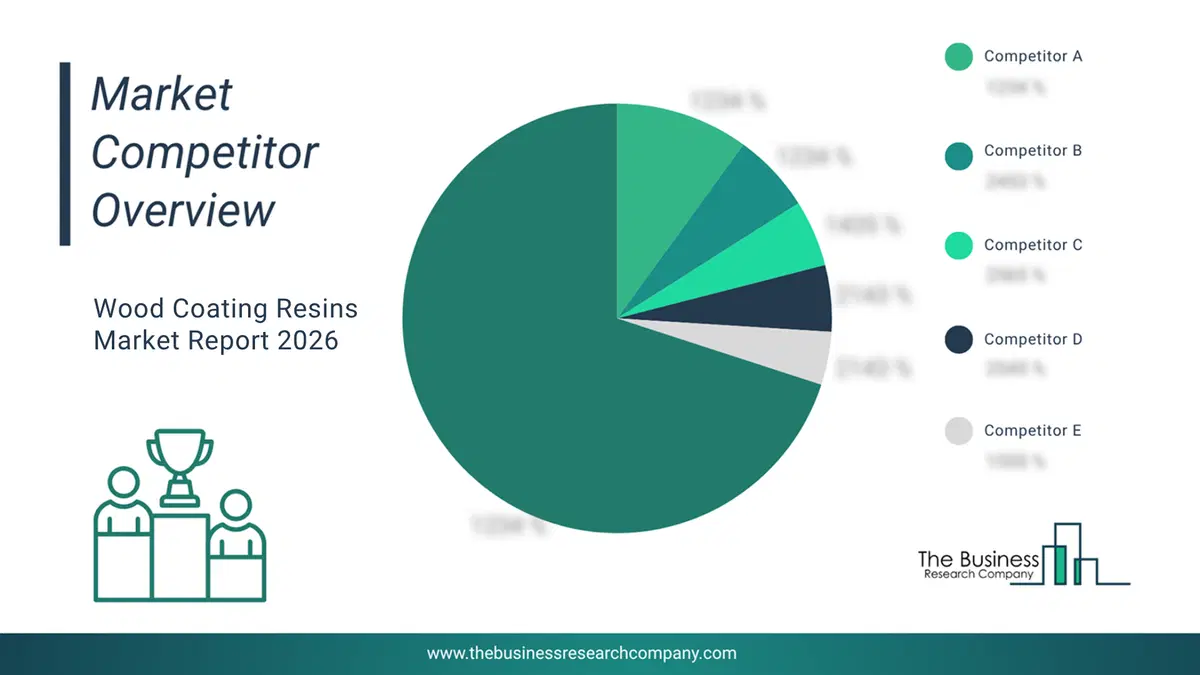
This chart is for illustrative purposes; the full report includes a detailed competitor analysis and comprehensive overview of the top 10 companies in the market.
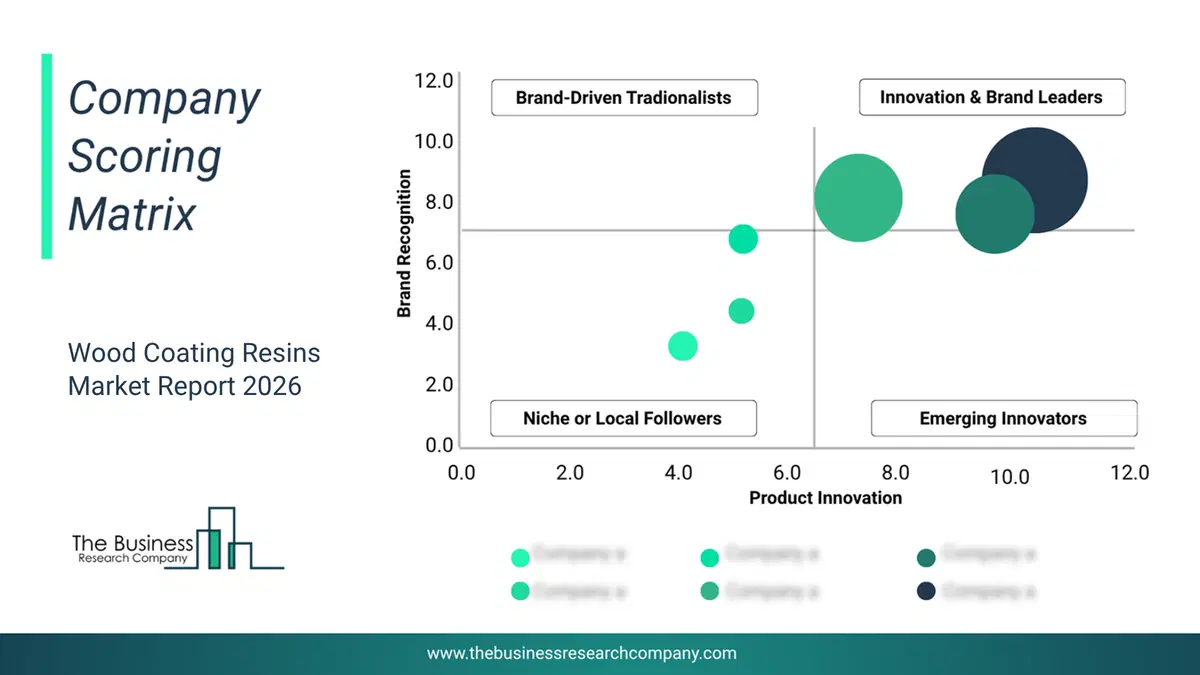
This chart maps companies by product innovation and brand strength, with bubble size indicating relative revenue, helping identify market leaders, challengers, and niche players. This is an illustrative chart; the full report provides a complete and accurate competitive analysis.
Global Wood Coating Resins Market Trends and Insights
Major companies operating in the wood coating resin market are focusing on developing eco-friendly exterior coating products such as waterborne coating solutions to strengthen their market position and support sustainability goals. Eco-friendly waterborne coating solutions are resin-based exterior coatings that use water as a primary solvent, helping reduce environmental impact by significantly lowering volatile organic compound (VOC) emissions while maintaining durability and performance. For instance, in February 2024, Covestro, a Germany-based company that manufactures high-tech materials and solutions for a variety of industries, launched its Waterborne Coating Solutions. The waterborne resins provide a more sustainable alternative to traditional solvent-based coatings, significantly reducing volatile organic compounds (VOCs) by up to three times while maintaining performance characteristics. These coatings facilitate faster production processes, with improvements in line speed by 50-60%, allowing manufacturers to increase throughput without major capital investments.What Are Latest Mergers And Acquisitions In The Wood Coating Resins Market?
In February 2024, KANSAI HELIOS, an Austria-based European coatings manufacturer and part of the Kansai Paint Group, acquired WEILBURGER Coatings for an undisclosed amount. Through this acquisition, KANSAI HELIOS aims to strengthen its presence in high-performance industrial coatings, broaden its technological capabilities, and expand its portfolio across specialized segments, including non-stick, high-temperature, and railway coatings. WEILBURGER Coatings GmbH is a Germany-based company recognized for its expertise in innovative coating systems serving industrial, transportation, and specialty end-use applications.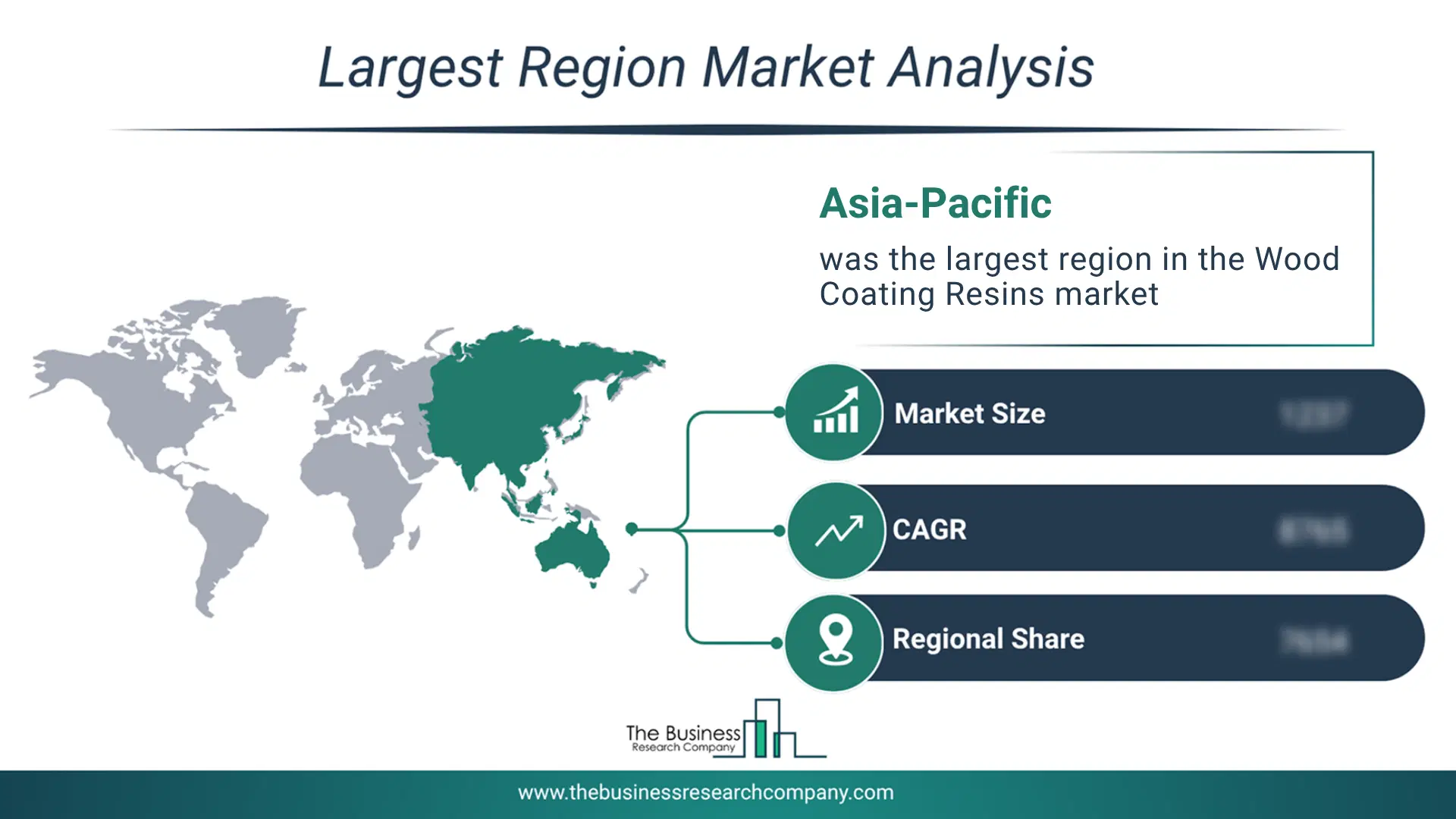
Regional Insights
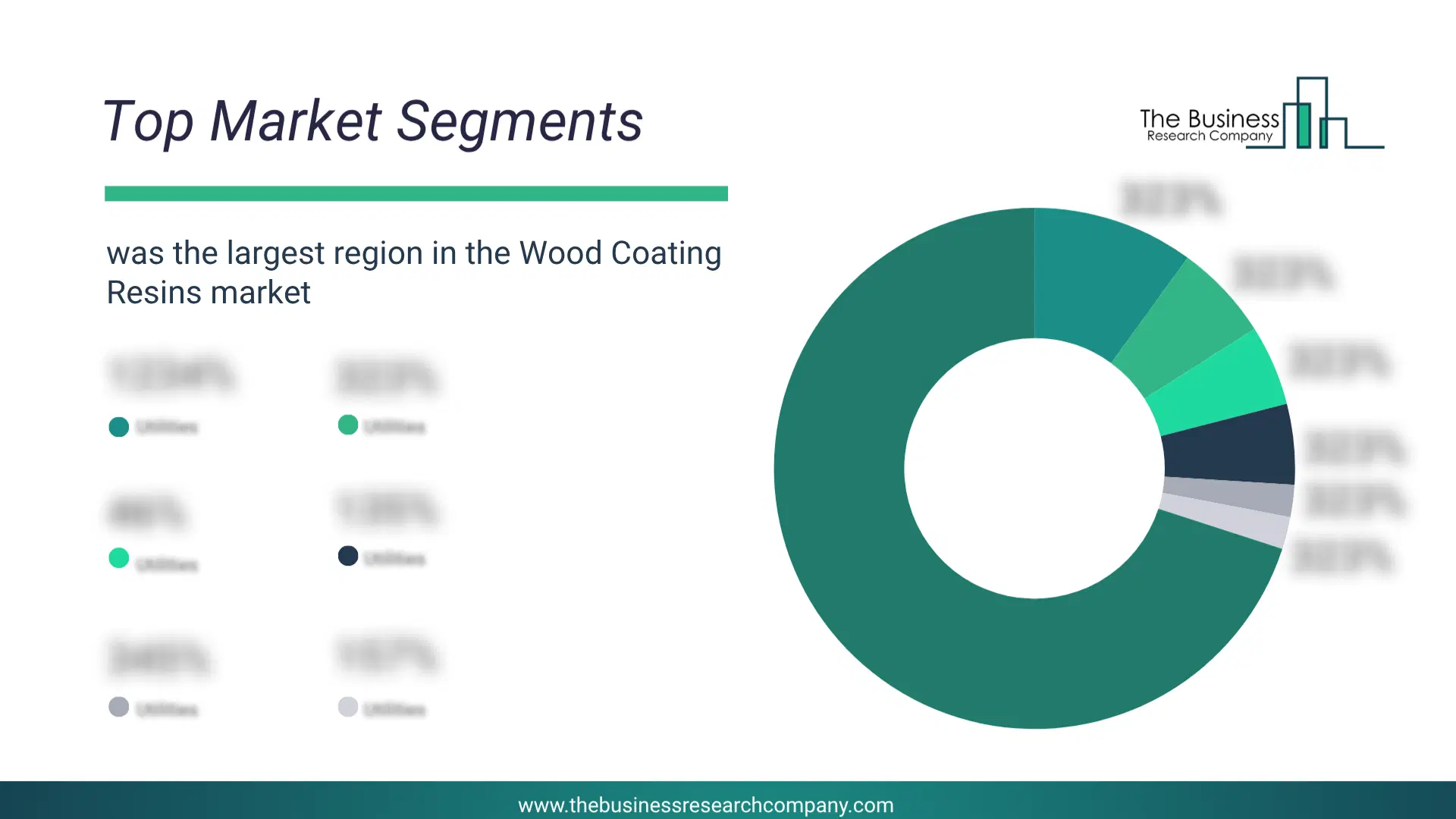
Asia-Pacific was the largest region in the wood coating resins market in 2025. The regions covered in this market report are Asia-Pacific, South East Asia, Western Europe, Eastern Europe, North America, South America, Middle East, Africa The countries covered in this market report are Australia, Brazil, China, France, Germany, India, Indonesia, Japan, Taiwan, Russia, South Korea, UK, USA, Canada, Italy, SpainWhat Defines the Wood Coating Resins Market?
The wood coating resign market consists of sales of solvent borne, high-solids, radiation cure and water borne resins. Values in this market are ‘factory gate’ values, that is the value of goods sold by the manufacturers or creators of the goods, whether to other entities (including downstream manufacturers, wholesalers, distributors, and retailers) or directly to end customers. The value of goods in this market includes related services sold by the creators of the goods.How is Market Value Defined and Measured?
The market value is defined as the revenues that enterprises gain from the sale of goods and/or services within the specified market and geography through sales, grants, or donations in terms of the currency (in USD unless otherwise specified). The revenues for a specified geography are consumption values that are revenues generated by organizations in the specified geography within the market, irrespective of where they are produced. It does not include revenues from resales along the supply chain, either further along the supply chain or as part of other products.
This chart presents market attractiveness based on a quantitative evaluation of growth, competition, strategic alignment, and risk, offering a clear view of opportunity areas for decision-making. This chart is for illustrative purposes; the full report contains the complete analysis.

This chart highlights the Total Addressable Market (TAM) by estimating the maximum revenue opportunity using an assumption-driven approach, supporting strategic planning and opportunity sizing across markets. The chart is illustrative; the full report provides a more comprehensive analysis.
What Key Data and Analysis Are Included in the Wood Coating Resins Market Report 2026?
The wood coating resins market research report is one of a series of new reports from The Business Research Company that provides market statistics, including industry global market size, regional shares, competitors with the market share, detailed market segments, market trends and opportunities, and any further data you may need to thrive in the wood coating resins industry. The market research report delivers a complete perspective of everything you need, with an in-depth analysis of the current and future state of the industry.Wood Coating Resins Market Report Forecast Analysis
| Report Attribute | Details |
|---|---|
| Market Size Value In 2026 | $4.87 billion |
| Revenue Forecast In 2030 | $6.06 billion |
| Growth Rate | CAGR of 5.7% from 2026 to 2030 |
| Base Year For Estimation | 2025 |
| Actual Estimates/Historical Data | 2020-2025 |
| Forecast Period | 2026 - 2030 |
| Market Representation | Revenue in USD Billion and CAGR from 2026 to 2030 |
| Segments Covered | Resin Type, Technology, Application |
| Regional Scope | Asia-Pacific, Western Europe, Eastern Europe, North America, South America, Middle East, Africa |
| Country Scope | The countries covered in the report are Australia, Brazil, China, France, Germany, India, Indonesia, Japan, Taiwan, Russia, South Korea, UK, USA, Canada, Italy, Spain. |
| Key Companies Profiled | BASF SE, Dow Inc., Arkema SA, Covestro AG, Allnex Group, Evonik Industries AG, DIC Corporation, Mitsui Chemicals Inc., Eastman Chemical Company, Lanxess AG, Huntsman Corporation, Wacker Chemie AG, Akzo Nobel N.V., PPG Industries Inc., Synthomer plc, Trinseo plc, Hexion Inc., SABIC, Ashland Global Holdings, Polynt-Reichhold Group |
| Customization Scope | Request for Customization |
| Pricing And Purchase Options | Explore Purchase Options |