

Youth Sports Market Report 2026
Global Outlook – By Service Type (Coaching And Training, Facility Rental And Management, Tournament And Event Organization, Equipment And Apparel Retail), By Sport Type (Team Sports, Individual Sports, Indoor Sports, Outdoor Or Recreational Sports), By Revenue Source (Subscription Or Training Fees, Event Registration Fees, Sponsorships And Advertising, Government Grants And Funding, Equipment Rental And Sales Add-Ons, Membership Fees), By End User (Individual Participants, Schools And Educational Institutions, Sports Academies And Training Centers, Community Sports Organizations, Professional Youth Clubs) – Market Size, Trends, Strategies, and Forecast to 2030
Youth Sports Market Overview
• Youth Sports market size has reached to $36.29 billion in 2025 • Expected to grow to $59.52 billion in 2030 at a compound annual growth rate (CAGR) of 10.4% • Growth Driver: Rising Health And Fitness Awareness Driving The Market Growth Due To Increasing Adoption Of Active Lifestyles And Preventive Healthcare Practices • Market Trend: Advancement Of AI-Enabled Sports Technology Solutions Transforming Training, Competition, And Recruitment Processes • North America was the largest region in 2025 and Asia-Pacific is the fastest growing region.Market Gains By 2030 – Top Opportunities By Segment
Market Gain identifies the most promising market opportunities by highlighting the segments or products expected to generate the highest incremental revenue growth over the next five years.
What Is Covered Under Youth Sports Market?
Youth sports are organized physical activities and competitive games designed for children and teenagers to develop fitness, skills, and teamwork. They are typically run by schools, clubs, or community organizations and include sports such as football, basketball, cricket, and athletics. The main service types of youth sports include coaching and training, facility rental and management, tournament and event organization, and equipment and apparel retail. Coaching and training refers to structured skill development programs designed to improve physical fitness, teamwork, and sport-specific performance among young athletes. The different sport types include team sports, individual sports, indoor sports, and outdoor or recreational sports. The various revenue sources include subscription or training fees, event registration fees, sponsorships and advertising, government grants and funding, equipment rental and sales add-ons, and membership fees, serving end users involved are individual participants, schools and educational institutions, sports academies and training centers, community sports organizations, and professional youth clubs.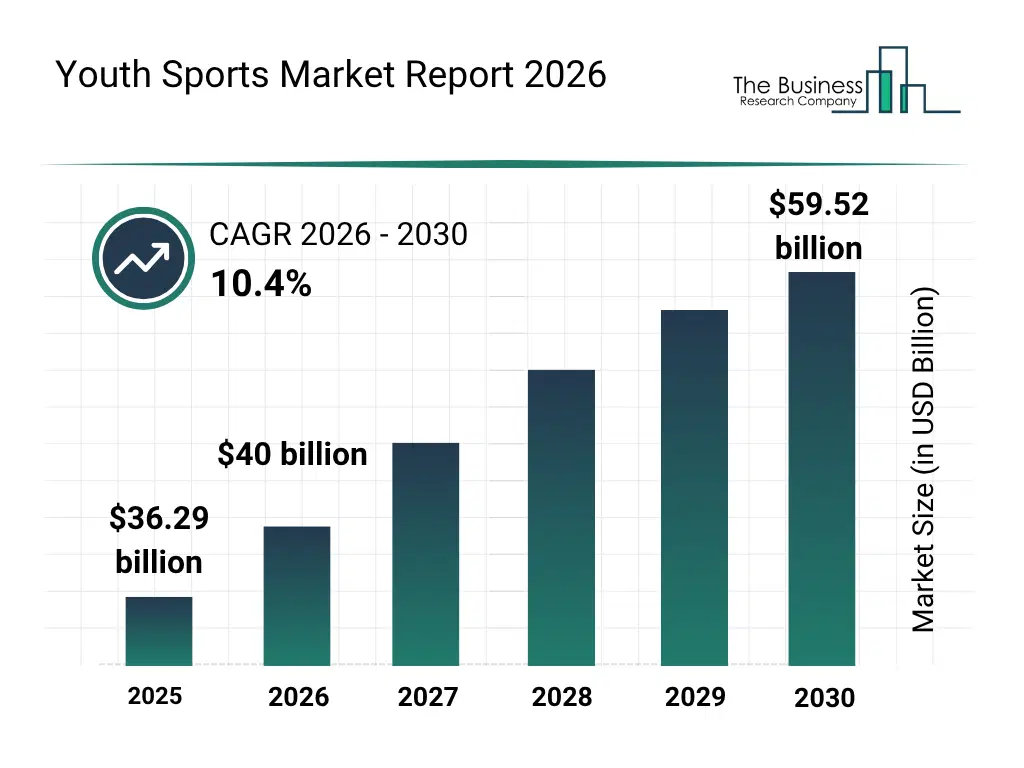
What Is The Youth Sports Market Size and Share 2026?
The youth sports market size has grown rapidly in recent years.It will grow from $36.29 billion in 2025 to $40 billion in 2026 at a compound annual growth rate (CAGR) of 10.2%. The growth in the historic period can be attributed to increasing participation of children and teenagers in organized sports programs, rising awareness of physical fitness and healthy lifestyles among youth, expansion of school and community-based sports infrastructure, growing popularity of global sports leagues influencing youth engagement, increasing government initiatives promoting youth physical activity.What Is The Youth Sports Market Growth Forecast?
The youth sports market size is expected to see rapid growth in the next few years.It will grow to $59.52 billion by 2030 at a compound annual growth rate (CAGR) of 10.4%. The growth in the forecast period can be attributed to rising adoption of digital coaching platforms and virtual sports training, increasing use of wearable performance monitoring devices in youth sports, expansion of smart sports infrastructure and connected training facilities, growing investment in youth talent development academies, increasing integration of ai-driven injury prevention and performance optimization tools.Major trends in the forecast period include rising adoption of ai-based performance analytics for youth athlete development, increasing use of wearable fitness tracking devices in youth sports training programs, expansion of virtual coaching and hybrid training models in youth sports, growing integration of smart sports facilities with connected monitoring systems, rising adoption of data-driven talent identification and scouting platforms in youth sports.
Global Youth Sports Market Segmentation
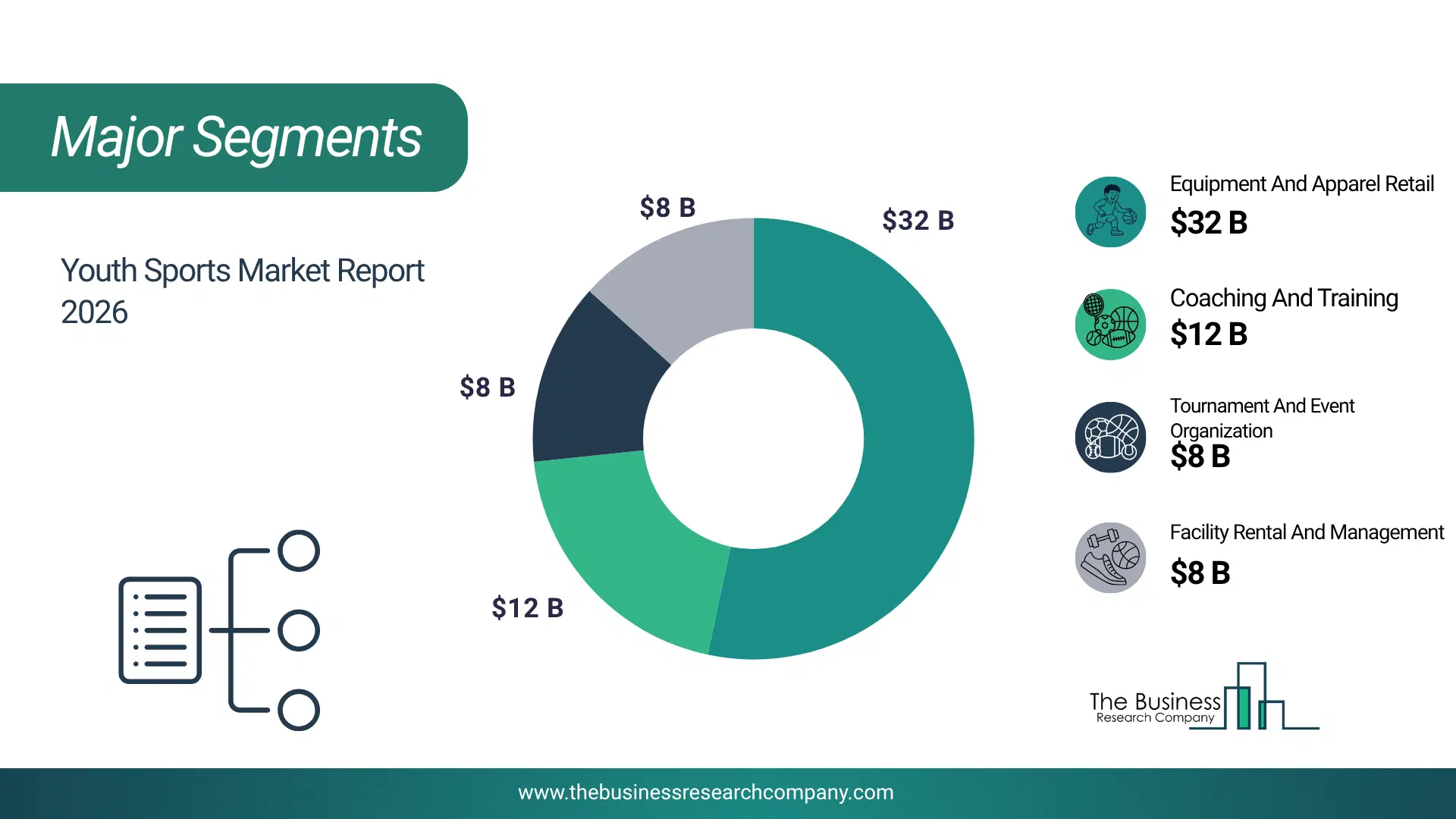
1) By Service Type: Coaching And Training, Facility Rental And Management, Tournament And Event Organization, Equipment And Apparel Retail 2) By Sport Type: Team Sports, Individual Sports, Indoor Sports, Outdoor Or Recreational Sports 3) By Revenue Source: Subscription Or Training Fees, Event Registration Fees, Sponsorships And Advertising, Government Grants And Funding, Equipment Rental And Sales Add-Ons, Membership Fees 4) By End User: Individual Participants, Schools And Educational Institutions, Sports Academies And Training Centers, Community Sports Organizations, Professional Youth Clubs Subsegments: 1) By Coaching And Training: Individual Coaching, Group Training Programs, Skill Development Clinics, Performance Training, Online Or Virtual Coaching, Specialized Position Training 2) By Facility Rental And Management: Indoor Sports Facilities, Outdoor Sports Grounds, Multi-Sport Complexes, School Or Institutional Facilities, Private Club Facilities, Community Recreation Centers 3) By Tournament And Event Organization: Local Tournaments, Regional Competitions, National Championships, International Youth Events, League-Based Competitions, Seasonal Camps And Showcases 4) By Equipment And Apparel Retail: Sport-Specific Equipment, Training Gear And Accessories, Team Uniforms, Footwear, Protective Gear, Customized Or Personalized Apparel The top segments in the youth sports market will be: • Equipment And Apparel Retail will reach $32.13 Billion by 2030. • Coaching And Training will reach $12.06 Billion by 2030. • Tournament And Event Organization will reach $7.73 Billion by 2030. • Facility Rental And Management will reach $7.6 Billion by 2030.What Is The Driver Of The Youth Sports Market?
The increasing focus on health and fitness is expected to propel the growth of the youth sports industry going forward.Health and fitness refers to maintaining a healthy body and mind through regular exercise, balanced diet, and proper lifestyle practices.Health and fitness are increasing mainly due to rising awareness of lifestyle-related diseases, as more people adopt regular exercise and healthier diets to prevent conditions such as obesity, diabetes, and heart disease.Youth sports improve health and fitness by encouraging regular physical activity that builds strength, endurance, coordination, and overall cardiovascular health while also promoting discipline and healthy lifestyle habits from an early age.For instance, in 2023, according to the International Food Information Council, a US-based non-profit organization, in the past year, 52% of Americans followed a specific eating pattern or diet, with higher adoption among Gen Z (66%) and Millennials (63%) than Gen X (50%) and Boomers (41%), while Boomer participation rose sharply from 29% in 2022 to 41% in 2023.Therefore, the increasing focus on health and fitness is driving the growth of the youth sports industry.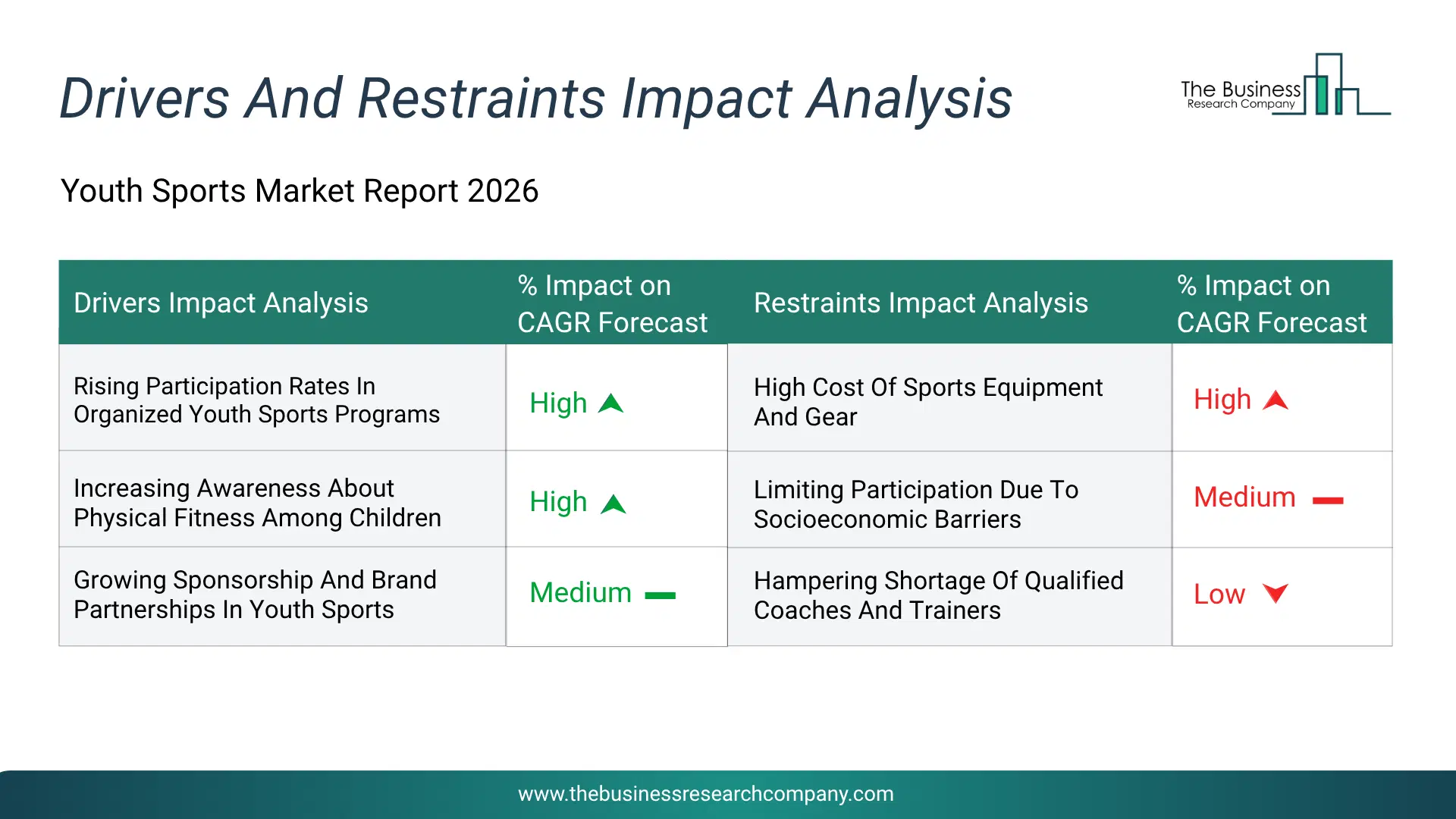
Infographic Chart Showing Key Market Drivers Analysis And Restraints For Youth Sports Market
The chart presents an impact analysis of key drivers and restraints, quantifying their relative influence on the market's growth rate and helping assess the balance between growth enablers and limiting factors. This chart offers a high-level perspective; the full report contains more detailed insights.
How Will The Drivers Impact Growth In The Global Youth Sports Market?
• Rising Participation Rates In Organized Youth Sports Programs (High) – During the forecast period, the rise in participation rates in organized youth sports programs is expected to become a key growth driver for the youth sports market by 2030. Increasing enrolment of children and teenagers in structured sports activities is boosting demand for professional coaching, training facilities, and organized leagues. As schools, academies, and community organizations expand their sports programs, there is a growing need for structured training environments that promote skill development and competitive engagement. This trend is further supported by parental emphasis on holistic development, including teamwork, discipline, and leadership skills. Additionally, the expansion of grassroots initiatives is strengthening early-stage athlete development pathways. • Increasing Awareness About Physical Fitness Among Children (High) – During the forecast period, the increasing awareness about physical fitness among children is expected to emerge as a major factor driving the expansion of the youth sports market by 2030. Growing concerns around sedentary lifestyles and childhood health issues are encouraging greater involvement in sports and physical activities. Parents, educators, and health organizations are actively promoting regular exercise as a critical component of overall well-being. This shift is driving higher demand for structured training programs, sports facilities, and fitness-oriented youth initiatives. Furthermore, schools and institutions are integrating sports into their curricula to support physical and mental health development. As awareness continues to rise, participation levels are expected to increase steadily across various sports disciplines. • Growing Sponsorship And Brand Partnerships In Youth Sports (Medium) – During the forecast period, the growing sponsorship and brand partnerships in youth sports are expected to act as a key growth catalyst for the youth sports market by 2030. Increased involvement of corporate sponsors and sports brands is enhancing the financial ecosystem of youth sports by supporting events, leagues, and training programs. These partnerships enable better access to resources, improved infrastructure, and enhanced visibility for youth sports initiatives. Additionally, brands are leveraging youth sports as a platform for long-term consumer engagement and brand loyalty development. The influx of sponsorship funding is also facilitating the organization of large-scale tournaments and competitive events. Consequently, the expansion of sponsorship and brand collaborations is strengthening market growth by improving accessibility and commercialization opportunities.How Will The Restraints Impact Growth In The Global Youth Sports Market?
• High Cost Of Sports Equipment And Gear (High) – During the forecast period, high cost of sports equipment and gear limits participation by increasing the financial burden on families, especially in middle- and low-income groups. Many youth sports require specialized equipment, uniforms, and protective gear, which raises the overall cost of enrollment beyond program fees. This discourages consistent participation and reduces repeat enrollment in sports camps and leagues. Service providers may experience slower adoption in price-sensitive regions. As a result, revenue growth is constrained due to reduced accessibility and narrower consumer reach. • Limiting Participation Due To Socioeconomic Barriers (High) – During the forecast period, socioeconomic barriers significantly restrict youth sports participation by preventing equal access to organized programs and facilities. Families with limited financial resources often struggle with registration fees, travel costs, and ongoing training expenses. This limits participation levels across underserved communities, reducing overall demand for youth sports services. Uneven participation also affects talent pipelines and program scalability. Consequently, market growth remains uneven and concentrated in higher-income regions. • Hampering Shortage Of Qualified Coaches And Trainers (Medium) – During the forecast period, the shortage of qualified coaches and trainers hampers the quality and consistency of youth sports programs. Limited access to trained professionals affects skill development, safety standards, and overall participant experience. This can lead to dissatisfaction among parents and higher dropout rates among young athletes. Program providers may struggle to expand operations or introduce advanced training modules. As a result, service quality constraints slow enrollment growth and reduce long-term revenue potential.Key Players In The Global Youth Sports Market
Major companies operating in the youth sports market are Nike Inc., Adidas AG, Puma SE, Anta Sports Products Ltd., Hudl, Sports Engine Inc., 3STEP Sports LLC, Stack Sports, TeamSnap Inc., IMG Academy, Little League Baseball, Catapult Group International Ltd., i9 Sports Corporation, LeagueApps Inc., PlaySight Interactive Ltd., Perfect Game USA, Amateur Athletic Union (AAU), SportBall Ltd., USA Sports Group, CoachUp Inc., Pop Warner Little Scholars, Ballogy Inc.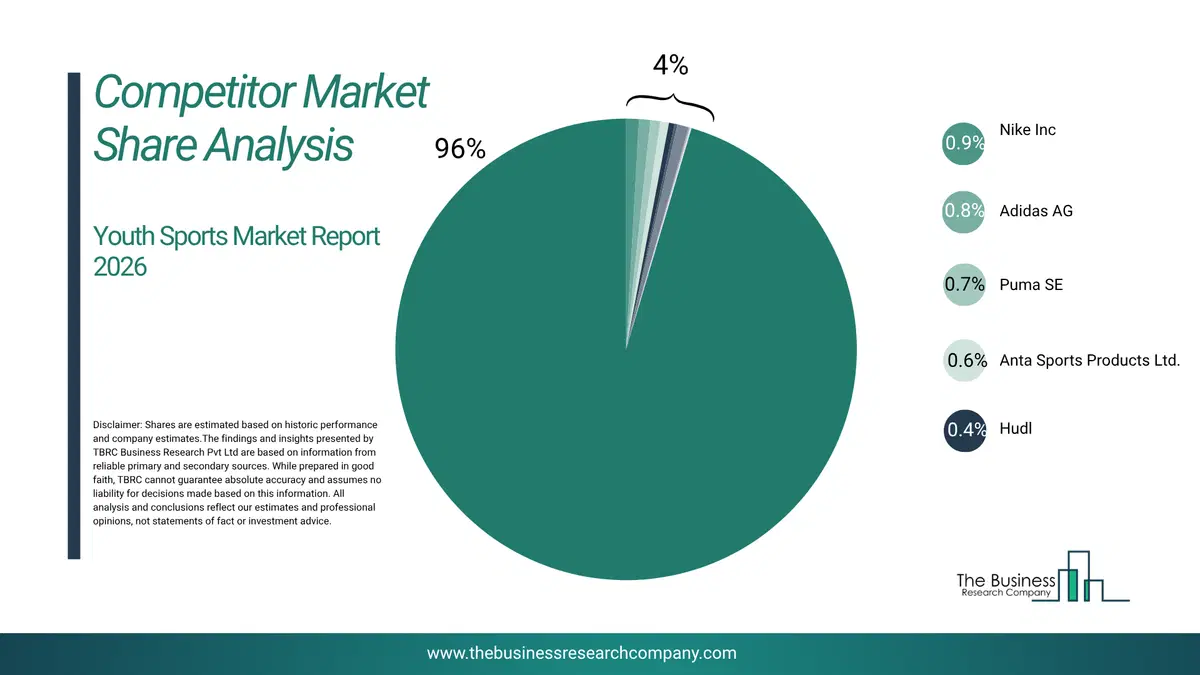
This chart is for illustrative purposes; the full report includes a detailed competitor analysis and comprehensive overview of the top 10 companies in the market.
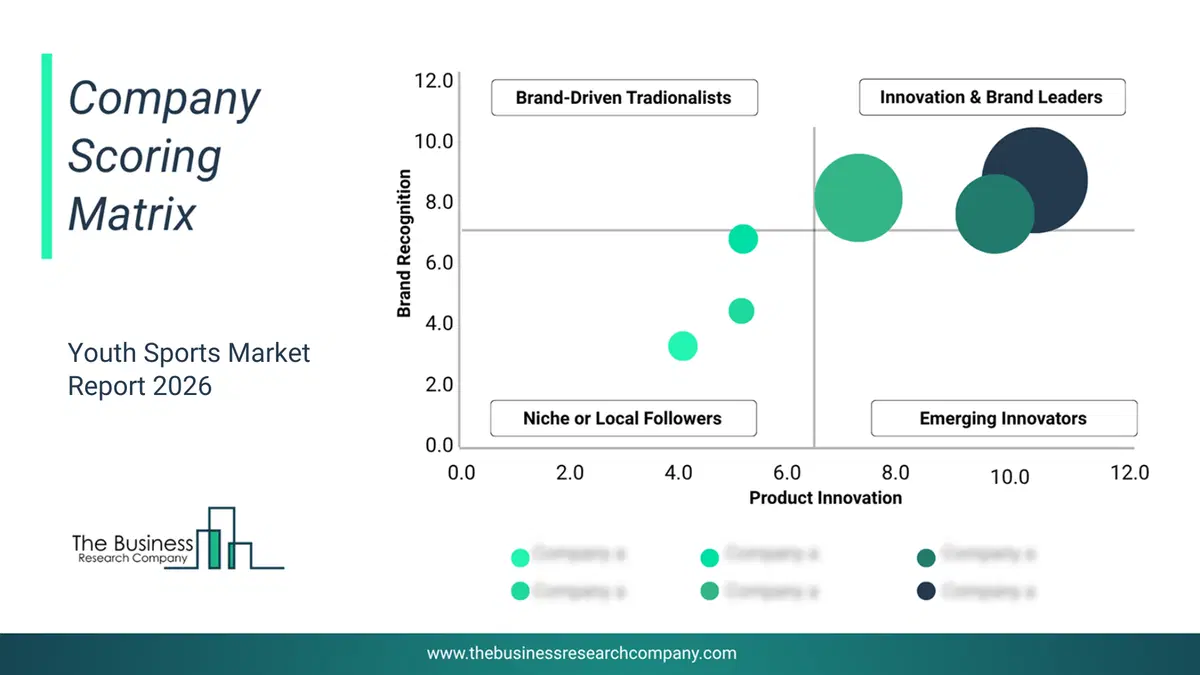
This chart maps companies by product innovation and brand strength, with bubble size indicating relative revenue, helping identify market leaders, challengers, and niche players. This is an illustrative chart; the full report provides a complete and accurate competitive analysis.
Global Youth Sports Market Trends and Insights
Major companies operating in the youth sports market are focusing on developing innovative solutions, such as AI-powered performance analytics platforms to enable seamless integration of game capture, player analytics, and recruitment tools to enhance athlete development, engagement, and visibility across the sports ecosystem. AI-powered performance analytics platforms are software tools that use artificial intelligence to analyze performance data and generate actionable insights to improve efficiency and decision-making. For instance, in January 2026, AIM Sports Group, a US-based, privately held youth sports enterprise, launched AIM+, a fully integrated AI-powered platform designed to transform youth volleyball through a comprehensive digital ecosystem. The platform offers automated live streaming, AI-driven video capture, highlight generation, and verified performance statistics, along with recruiter-ready profiles and advanced ranking systems for players and teams.What Are Latest Mergers And Acquisitions In The Youth Sports Market?
In March 2026, Ascent Sports Group, a US-based youth and amateur sports technology company, acquired LiveBarn Inc. for an undisclosed amount. With this acquisition, Ascent Sports Group aims to build a connected digital ecosystem in youth and amateur sports by enhancing livestreaming, analytics, and fan engagement capabilities while expanding into additional sports beyond hockey. LiveBarn Inc. is a Canada-based youth sports streaming platform.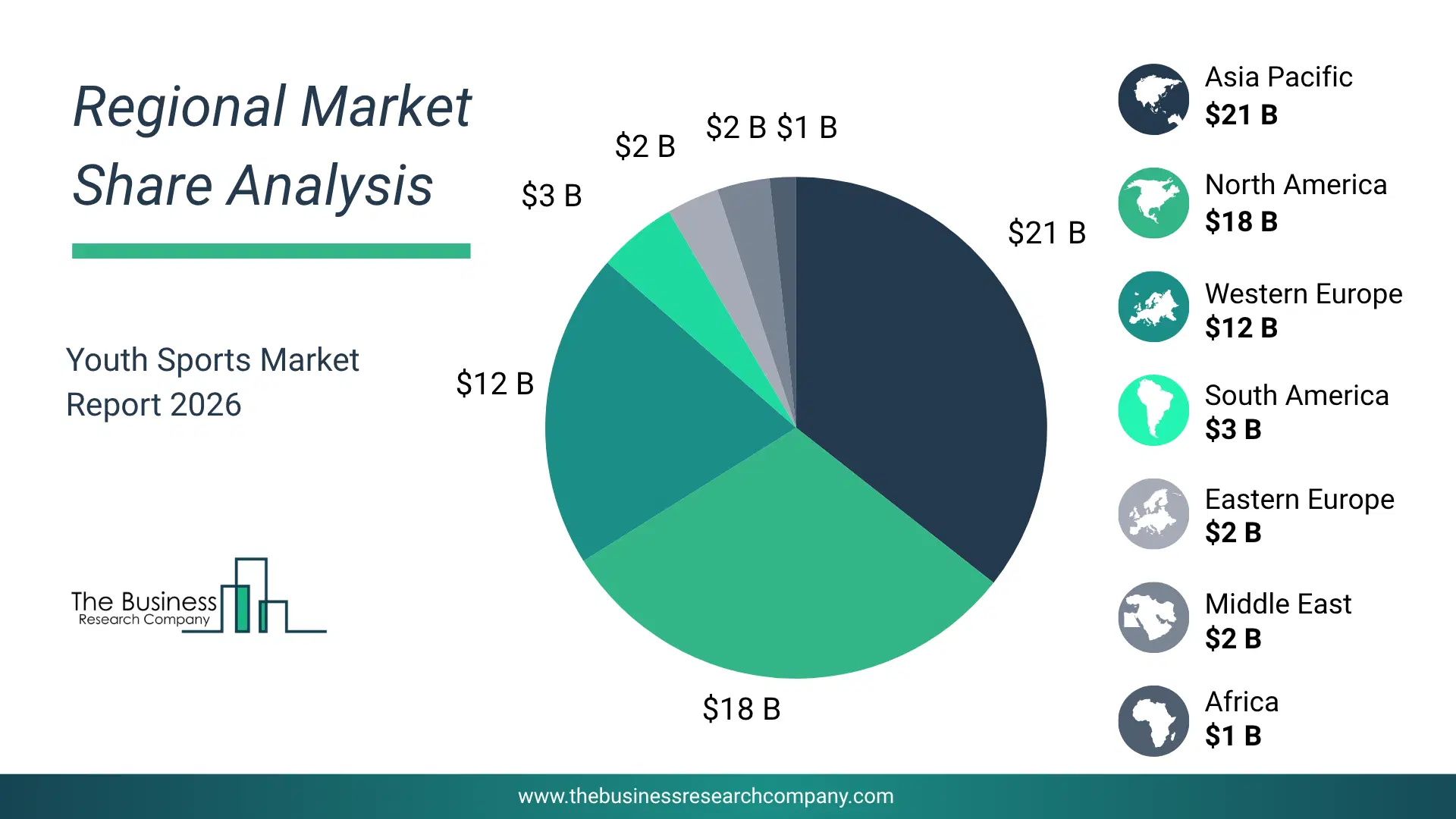
Regional Insights
North America was the largest region in the youth sports market in 2025. Asia-Pacific is expected to be the fastest-growing region in the forecast period. The regions covered in this market report are Asia-Pacific, South East Asia, Western Europe, Eastern Europe, North America, South America, Middle East and Africa. The countries covered in this market report are Australia, Brazil, China, France, Germany, India, Indonesia, Japan, Taiwan, Russia, South Korea, UK, USA, Canada, Italy, Spain.What Defines the Youth Sports Market?
The youth sports market includes revenues earned by entities through sports equipment rental and supply services, sports physiotherapy and injury rehabilitation services, and talent identification and scouting services. The market value includes the value of related goods sold by the service provider or included within the service offering. Only goods and services traded between entities or sold to end consumers are included.What is the Market Assessment and Strategic Outlook for the Youth Sports Industry?
The youth sports market research report is one of a series of new reports from The Business Research Company that provides market statistics, including industry global market size, regional shares, competitors with the market share, detailed market segments, market trends and opportunities, and any further data you may need to thrive in the youth sports industry. The market research report delivers a complete perspective of everything you need, with an in-depth analysis of the current and future state of the industry.
This chart presents market attractiveness based on a quantitative evaluation of growth, competition, strategic alignment, and risk, offering a clear view of opportunity areas for decision-making. This chart is for illustrative purposes; the full report contains the complete analysis.

This chart highlights the Total Addressable Market (TAM) by estimating the maximum revenue opportunity using an assumption-driven approach, supporting strategic planning and opportunity sizing across markets. The chart is illustrative; the full report provides a more comprehensive analysis.
What is the Market Assessment and Strategic Outlook for the Youth Sports Market Report 2026?
The youth sports market research report is one of a series of new reports from The Business Research Company that provides youth sports market statistics, including youth sports industry global market size, regional shares, competitors with a youth sports market share, detailed youth sports market segments, market trends and opportunities, and any further data you may need to thrive in the youth sports industry. This youth sports market research report delivers a complete perspective of everything you need, with an in-depth analysis of the current and future scenario of the industry.Youth Sports Market Report Forecast Analysis
| Report Attribute | Details |
|---|---|
| Market Size Value In 2026 | $40 billion |
| Revenue Forecast In 2030 | $59.52 billion |
| Growth Rate | CAGR of 10.4% from 2026 to 2030 |
| Base Year For Estimation | 2025 |
| Actual Estimates/Historical Data | 2020-2025 |
| Forecast Period | 2026 - 2030 |
| Market Representation | Revenue in USD Billion and CAGR from 2026 to 2030 |
| Segments Covered | Service Type, Sport Type, Revenue Source, End User |
| Regional Scope | Asia-Pacific, Western Europe, Eastern Europe, North America, South America, Middle East, Africa |
| Country Scope | The countries covered in the report are Australia, Brazil, China, France, Germany, India, Indonesia, Japan, Taiwan, Russia, South Korea, UK, USA, Canada, Italy, Spain. |
| Key Companies Profiled | Nike Inc., Adidas AG, Puma SE, Anta Sports Products Ltd., Hudl, Sports Engine Inc., 3STEP Sports LLC, Stack Sports, TeamSnap Inc., IMG Academy, Little League Baseball, Catapult Group International Ltd., i9 Sports Corporation, LeagueApps Inc., PlaySight Interactive Ltd., Perfect Game USA, Amateur Athletic Union (AAU), SportBall Ltd., USA Sports Group, CoachUp Inc., Pop Warner Little Scholars, Ballogy Inc. |
| Customization Scope | Request for Customization |
| Pricing And Purchase Options | Explore Purchase Options |