

Accounts Receivable Automation Market Report 2026
Global Outlook – By Component (Solution, Services), By Deployment Mode (Cloud, On-premises), By Organization Size (Large Enterprises, Small And Medium Sized Enterprises), By Vertical (BFSI, Retail And Consumer Goods., Healthcare, IT And Telecom., Manufacturing, Energy And Utilities, Other Verticals) – Market Size, Trends, Strategies, and Forecast to 2030
Accounts Receivable Automation Market Overview
• Accounts Receivable Automation market size has reached to $4.01 billion in 2025 • Expected to grow to $8.33 billion in 2030 at a compound annual growth rate (CAGR) of 15.8% • Growth Driver: The Increasing Internet Penetration Drives The Growth Of The Market Due To Enhanced Digital Connectivity • Market Trend: Celonis Launches Sailfin AR App Suite • North America was the largest region in 2025 and Asia-Pacific is the fastest growing region.What Is Covered Under Accounts Receivable Automation Market?
Accounts receivable automation refers to a method of automating time-consuming and repetitive accounts receivable tasks. This assists businesses in streamlining client invoicing and payment procedures. The main components of accounts receivable automation are solutions and services. The solutions for accounts receivable automation refer to the automation of critical financial procedures. It enables the completion of accounting procedures such as account reconciliation, financial data updating, and financial statement preparation without the need for human intervention. A solution is a grouping of software modules that work together to create a cross-functional system for a company. The deployment modes of accounts receivable automation include cloud and on-premises, which are adopted by large and small and medium-sized enterprises. The end-users of accounts receivable automation include BFSI, retail and consumer goods, healthcare, IT and telecom, manufacturing, energy and utilities, and other verticals.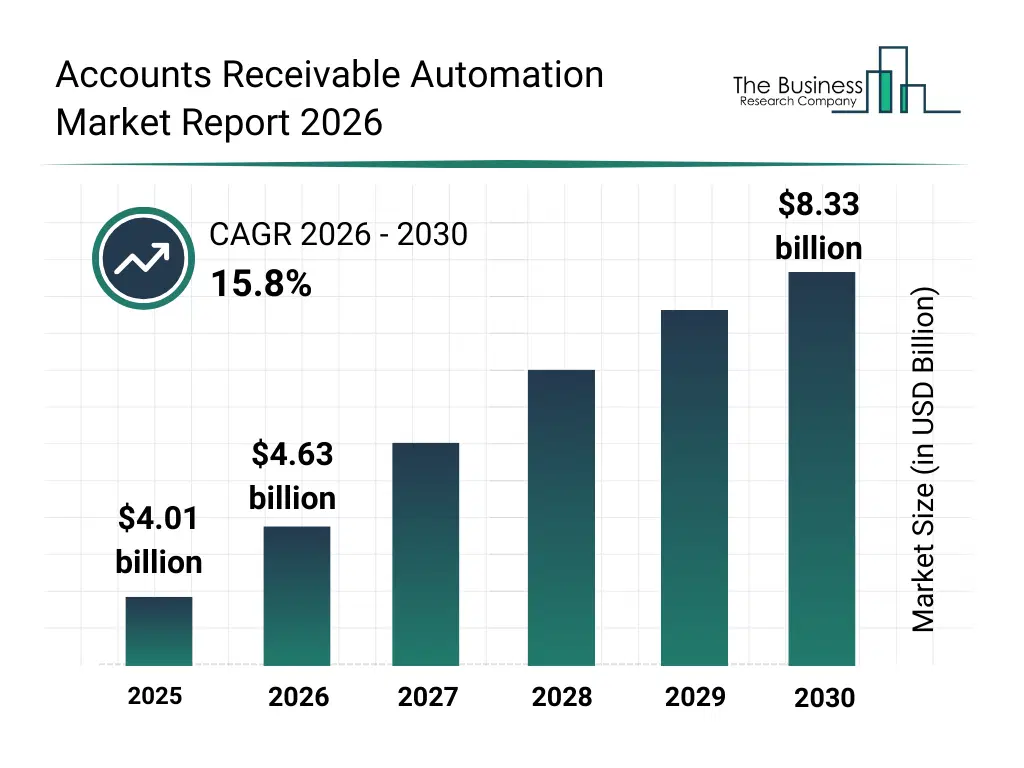
What Is The Accounts Receivable Automation Market Size and Share 2026?
The accounts receivable automation market size has grown rapidly in recent years. It will grow from $4.01 billion in 2025 to $4.63 billion in 2026 at a compound annual growth rate (CAGR) of 15.6%. The growth in the historic period can be attributed to increasing transaction volumes across enterprises, rising complexity of billing processes, adoption of digital payment methods, expansion of shared service centers, availability of cloud-based finance software.What Is The Accounts Receivable Automation Market Growth Forecast?
The accounts receivable automation market size is expected to see rapid growth in the next few years. It will grow to $8.33 billion in 2030 at a compound annual growth rate (CAGR) of 15.8%. The growth in the forecast period can be attributed to growing demand for predictive cash flow analytics, increasing focus on working capital optimization, rising adoption among small and medium enterprises, expansion of end-to-end finance automation, growing integration with digital payment ecosystems. Major trends in the forecast period include increasing adoption of automated invoicing solutions, rising use of ai-based payment matching tools, growing integration with erp and accounting platforms, expansion of cloud-based receivables platforms, enhanced focus on real-time cash flow visibility.
Global Accounts Receivable Automation Market Segmentation
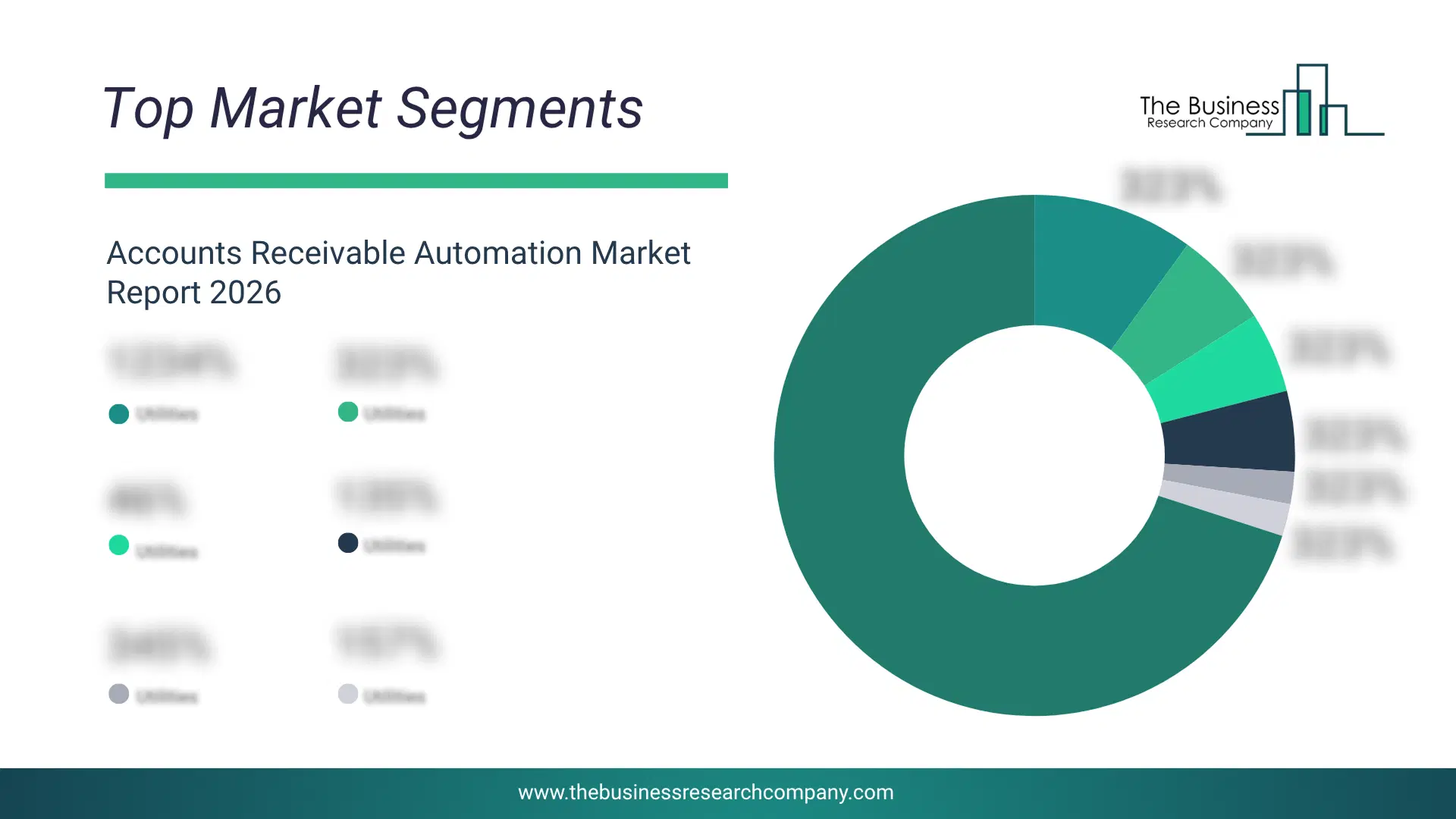
1) By Component: Solution, Services 2) By Deployment Mode: Cloud, On-premises 3) By Organization Size: Large Enterprises, Small And Medium Sized Enterprises 4) By Vertical: BFSI, Retail And Consumer Goods., Healthcare, IT And Telecom., Manufacturing, Energy And Utilities, Other Verticals Subsegments: 1) By Solution: Invoice Processing Software, Payment Processing Solutions, Collections Management Software, Reporting And Analytics Tools 2) By Services: Consulting Services, Implementation Services, Managed Services, Support And Maintenance ServicesWhat Is The Driver Of The Accounts Receivable Automation Market?
The increasing internet penetration is expected to propel the growth of the accounts receivable automation market going forward. Internet penetration refers to the percentage of a population that has access to and uses the internet within a specific area or country. Increasing internet penetration is due to the widespread availability of affordable smartphones, which make it easier for people to access the internet anytime and anywhere. Internet penetration supports accounts receivable automation by enabling seamless digital connectivity, allowing businesses to efficiently process invoices, payments, and customer data through cloud-based platforms. For instance, in January 2024, according to Eurostat, a Luxembourg-based government agency, in 2023, 30% of EU internet users aged 16 to 74 reported engaging in an online course or using online learning materials within the past three months. This marks a 2-percentage-point increase from 2022, when the figure was 28%. Overall, participation in online education saw an increase in 2023 compared to 2022. Therefore, the increasing internet penetration is driving the growth of the accounts receivable automation industry during the forecast period.Key Players In The Global Accounts Receivable Automation Market
Major companies operating in the accounts receivable automation market are BlackLine Inc.; Bottomline Technologies Inc.; Comarch SA; Esker SA; HighRadius Corporation; SAP SE; Oracle Corporation; Kofax Inc.; YayPay Inc.; SK Global Software LLC; FinancialForce Inc.; The Sage Group PLC; VersaPay Corporation; Bill.com Holdings Inc.; Corcentric LLC; MHC Software Inc.; Qvalia AB; Anytime Collect; Neopost SA; Workday Inc.; Coupa Software Inc.; Fidelity National Information Services Inc.; Zoho Corporation; Fiserv Inc.; Invoiced Inc.; MineralTree Inc.; Nvoicepay Inc.; Rimilia Holdings Ltd.; Serrala Group; Tesorio Inc.; Tradeshift Inc.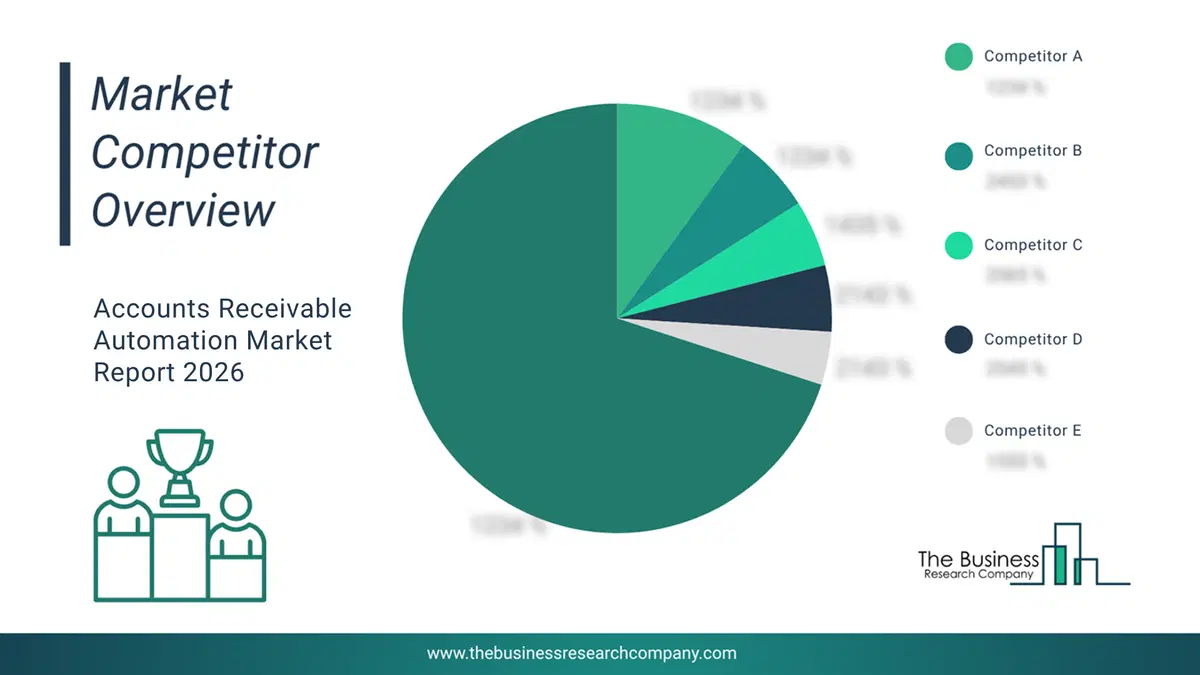
This chart is for illustrative purposes; the full report includes a detailed competitor analysis and comprehensive overview of the top 10 companies in the market.
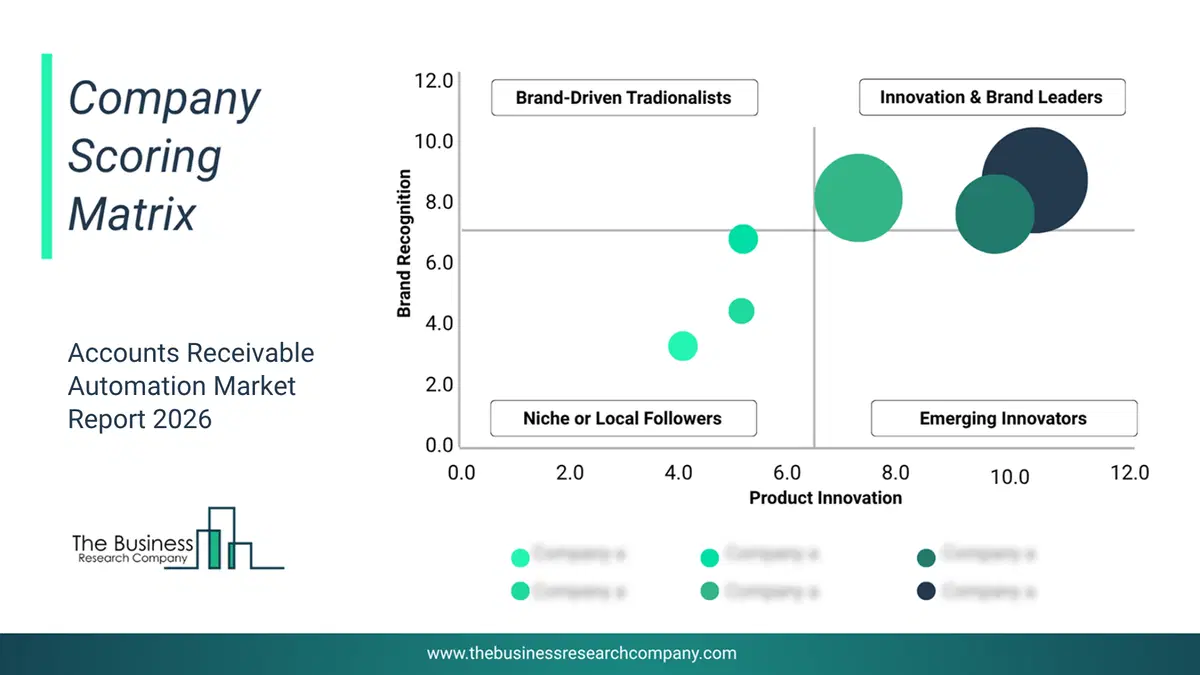
This chart maps companies by product innovation and brand strength, with bubble size indicating relative revenue, helping identify market leaders, challengers, and niche players. This is an illustrative chart; the full report provides a complete and accurate competitive analysis.
Global Accounts Receivable Automation Market Trends and Insights
Major companies operating in the accounts receivable automation market are focusing on advancements in technologies such as collections management apps to enhance efficiency, improve cash flow, and streamline the invoicing process, ultimately enabling businesses to reduce outstanding debts and optimize their financial operations. Collections management apps are software solutions designed to streamline and automate the accounts receivable process, helping businesses manage outstanding debts and improve cash flow. For instance, in March 2024, Celonis SE is a US-based Software as a service company launched Sailfin Accounts Receivable App Suite This app centralizes collections efforts, providing tools for team management, KPI tracking, and intelligent prioritization of customer accounts. It allows finance executives to monitor performance against targets in real time.What Are Latest Mergers And Acquisitions In The Accounts Receivable Automation Market?
In July 2024, Serrala Group GmbH, a Germany-based financial technology company, acquired Payference for an undisclosed amount. With this acquisition, Serrala aims to enhance its finance automation cloud suite by expanding its technological capabilities and streamlining payment and receivables processes for its global clientele. Payference Inc. is a US-based technology company that specializes in providing accounts receivable automation solutions and payment workflow optimization for businesses.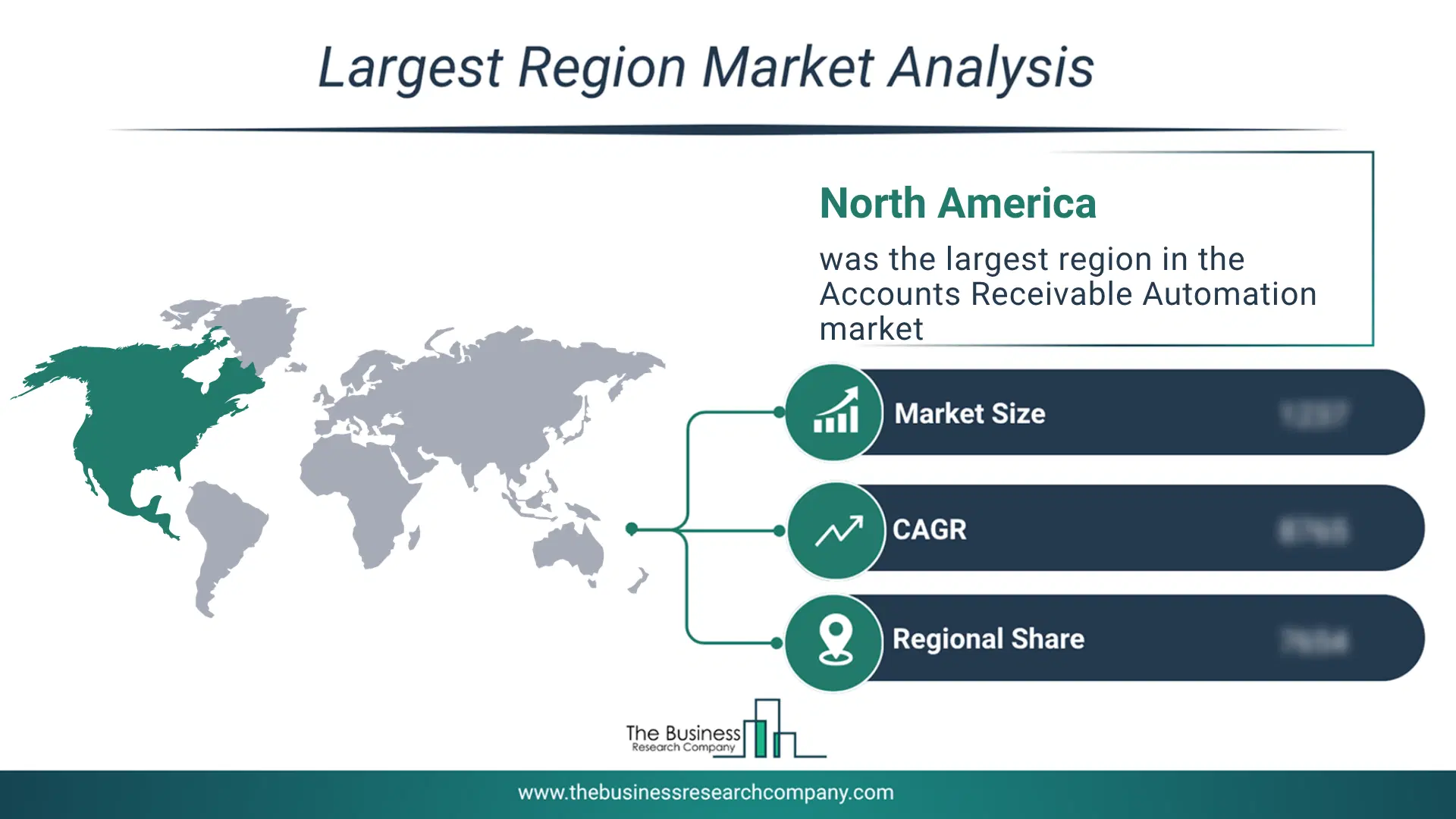
Regional Insights
North America was the largest region in the accounts receivable automation market in 2025. Asia-Pacific is expected to be the fastest-growing region in the forecast period. The regions covered in this market report are Asia-Pacific, South East Asia, Western Europe, Eastern Europe, North America, South America, Middle East, Africa. The countries covered in this market report are Australia, Brazil, China, France, Germany, India, Indonesia, Japan, Taiwan, Russia, South Korea, UK, USA, Canada, Italy, SpainWhat Defines the Accounts Receivable Automation Market?
The accounts receivable automation market consists of revenues earned by entities by providing invoice processing, tracking customer payments, and ensuring the collection of payments. The market value includes the value of related goods sold by the service provider or included within the service offering. The accounts receivable automation market also includes sales of solutions such as cash automation applications and business credit management. Values in this market are ‘factory gate’ values, that is, the value of goods sold by the manufacturers or creators of the goods, whether to other entities (including downstream manufacturers, wholesalers, distributors, and retailers) or directly to end customers. The value of goods in this market includes related services sold by the creators of the goods.How is Market Value Defined and Measured?
The market value is defined as the revenues that enterprises gain from the sale of goods and/or services within the specified market and geography through sales, grants, or donations in terms of the currency (in USD unless otherwise specified). The revenues for a specified geography are consumption values that are revenues generated by organizations in the specified geography within the market, irrespective of where they are produced. It does not include revenues from resales along the supply chain, either further along the supply chain or as part of other products.
This chart presents market attractiveness based on a quantitative evaluation of growth, competition, strategic alignment, and risk, offering a clear view of opportunity areas for decision-making. This chart is for illustrative purposes; the full report contains the complete analysis.

This chart highlights the Total Addressable Market (TAM) by estimating the maximum revenue opportunity using an assumption-driven approach, supporting strategic planning and opportunity sizing across markets. The chart is illustrative; the full report provides a more comprehensive analysis.
What Key Data and Analysis Are Included in the Accounts Receivable Automation Market Report 2026?
The accounts receivable automation market research report is one of a series of new reports from The Business Research Company that provides market statistics, including industry global market size, regional shares, competitors with the market share, detailed market segments, market trends and opportunities, and any further data you may need to thrive in the accounts receivable automation industry. The market research report delivers a complete perspective of everything you need, with an in-depth analysis of the current and future state of the industry.Accounts Receivable Automation Market Report Forecast Analysis
| Report Attribute | Details |
|---|---|
| Market Size Value In 2026 | $4.63 billion |
| Revenue Forecast In 2030 | $8.33 billion |
| Growth Rate | CAGR of 15.8% from 2026 to 2030 |
| Base Year For Estimation | 2025 |
| Actual Estimates/Historical Data | 2020-2025 |
| Forecast Period | 2026 - 2030 |
| Market Representation | Revenue in USD Billion and CAGR from 2026 to 2030 |
| Segments Covered | Component, Deployment Mode, Organization Size, Vertical |
| Regional Scope | Asia-Pacific, Western Europe, Eastern Europe, North America, South America, Middle East, Africa |
| Country Scope | The Countries Covered In This Market Report Are Australia, Brazil, China, France, Germany, India, Indonesia, Japan, Taiwan, Russia, South Korea, Uk, Usa, Canada, Italy, Spain. |
| Key Companies Profiled | BlackLine Inc., Bottomline Technologies Inc., Comarch SA, Esker SA, HighRadius Corporation, SAP SE, Oracle Corporation, Kofax Inc., YayPay Inc., SK Global Software LLC, FinancialForce Inc., The Sage Group PLC, VersaPay Corporation, Bill.com Holdings Inc., Corcentric LLC, MHC Software Inc., Qvalia AB, Anytime Collect, Neopost SA, Workday Inc., Coupa Software Inc., Fidelity National Information Services Inc., Zoho Corporation, Fiserv Inc., Invoiced Inc., MineralTree Inc., Nvoicepay Inc., Rimilia Holdings Ltd., Serrala Group, Tesorio Inc., Tradeshift Inc. |
| Customization Scope | Request for Customization |
| Pricing And Purchase Options | Explore Purchase Options |