
Aerospace & Defense Ducting Market Report 2026
Global Outlook – By Duct Type (Rigid, Semi-Rigid, Flexible), By Material (Titanium Ducts, Stainless Steel Ducts, Nickel Alloy Ducts, Composite Ducts), By Pressure (High Pressure, Low Pressure), By Application (Commercial Aircraft, Regional Aircraft, General Aviation, Helicopter, Military Aircraft) – Market Size, Trends, Strategies, and Forecast to 2030
Aerospace & Defense Ducting Market Overview
• Aerospace & Defense Ducting market size has reached to $5.81 billion in 2025 • Expected to grow to $7.38 billion in 2030 at a compound annual growth rate (CAGR) of 4.9% • Growth Driver: Defense Expenditure Surge Drives Aerospace And Defense Ducting Market Growth • Market Trend: Development Of High-Performance Thermoplastic Composites For Advanced Aerospace Applications • North America was the largest region in 2025 and Asia-Pacific is the fastest growing region.Market Gains By 2030 – Top Opportunities By Segment
Market Gain identifies the most promising market opportunities by highlighting the segments or products expected to generate the highest incremental revenue growth over the next five years.
What Is Covered Under Aerospace & Defense Ducting Market?
Aerospace and defense ducting is a specialized tubing or channel used for transferring air, gases, and liquids from one point to another point within an aircraft, spacecraft, or military vehicle. They play a crucial part in an aircraft's performance by dispersing air to guarantee adequate temperature regulation, ventilation, humidity control, and noise reduction. The main types of ducts used in aerospace and defense ducting include rigid, semi-rigid and flexible. A rigid duct refers to a duct having a fixed shape and is made up of materials like aluminum, stainless steel, or composite materials. They are produced using different material types such as titanium ducts, stainless steel ducts, nickel alloy ducts and composite ducts that are applied at high and low pressures for applications in commercial aircraft, regional aircraft, general aviation, helicopter and military aircraft.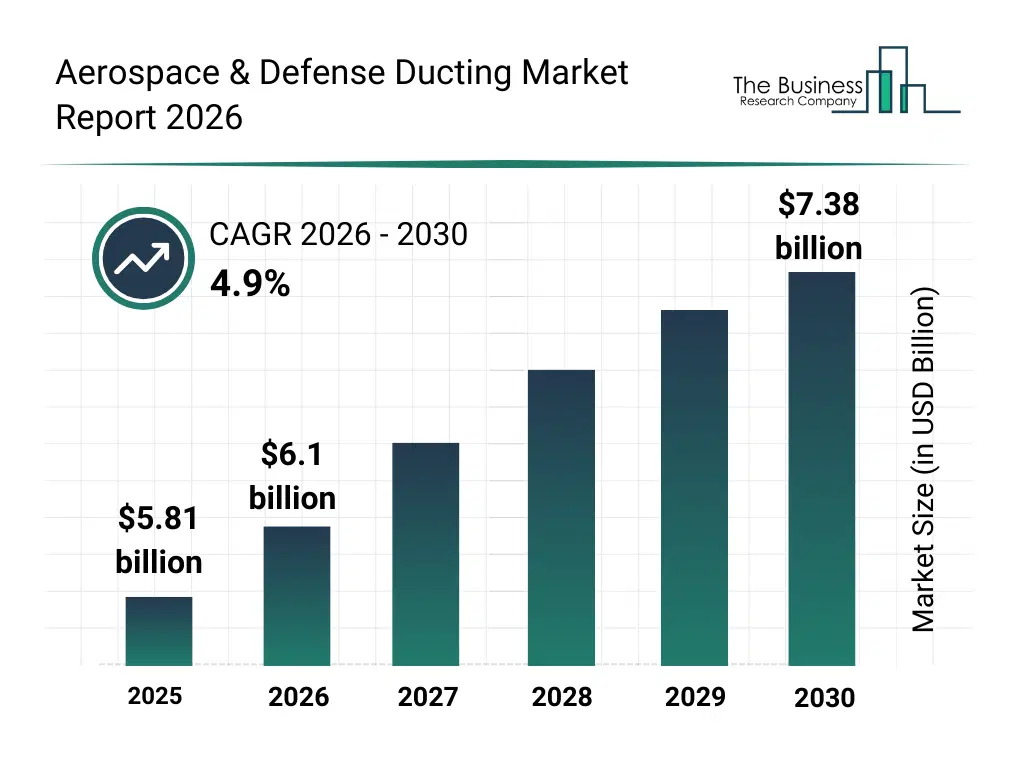
What Is The Aerospace & Defense Ducting Market Size and Share 2026?
The aerospace & defense ducting market size has grown strongly in recent years. It will grow from $5.81 billion in 2025 to $6.1 billion in 2026 at a compound annual growth rate (CAGR) of 5.1%. The growth in the historic period can be attributed to increased use of stainless-steel and titanium ducts to meet high-temperature and high-pressure performance requirements, rising demand for ventilation and environmental control system enhancements in commercial and defense aircraft, adoption of composite ducting to reduce overall aircraft weight and improve fuel efficiency, growth in military vehicle and aircraft production driving demand for durable alloy and nickel ducts, expansion of MRO activities supporting replacement of worn or corroded ducting components.What Is The Aerospace & Defense Ducting Market Growth Forecast?
The aerospace & defense ducting market size is expected to see steady growth in the next few years. It will grow to $7.38 billion in 2030 at a compound annual growth rate (CAGR) of 4.9%. The growth in the forecast period can be attributed to growing adoption of advanced composite materials for lightweight and corrosion-resistant ducting solutions, rising aircraft production rates driven by commercial fleet expansion and backlog fulfillment, increasing integration of next-generation ECSS requiring higher-performance ducting designs, expanding defense modernization programs boosting demand for specialized ducting in unmanned and hypersonic platforms, higher focus on ducting systems that support noise reduction and improved cabin environmental efficiency. Major trends in the forecast period include increased adoption of lightweight composite ducting for fuel efficiency, rising demand for high-temperature resistant duct materials in advanced aircraft, growth in custom-engineered ducting for next-generation propulsion systems, expansion of noise-reduction and thermal-management duct designs, increased use of corrosion-resistant alloy ducts in military platforms.
Global Aerospace & Defense Ducting Market Segmentation
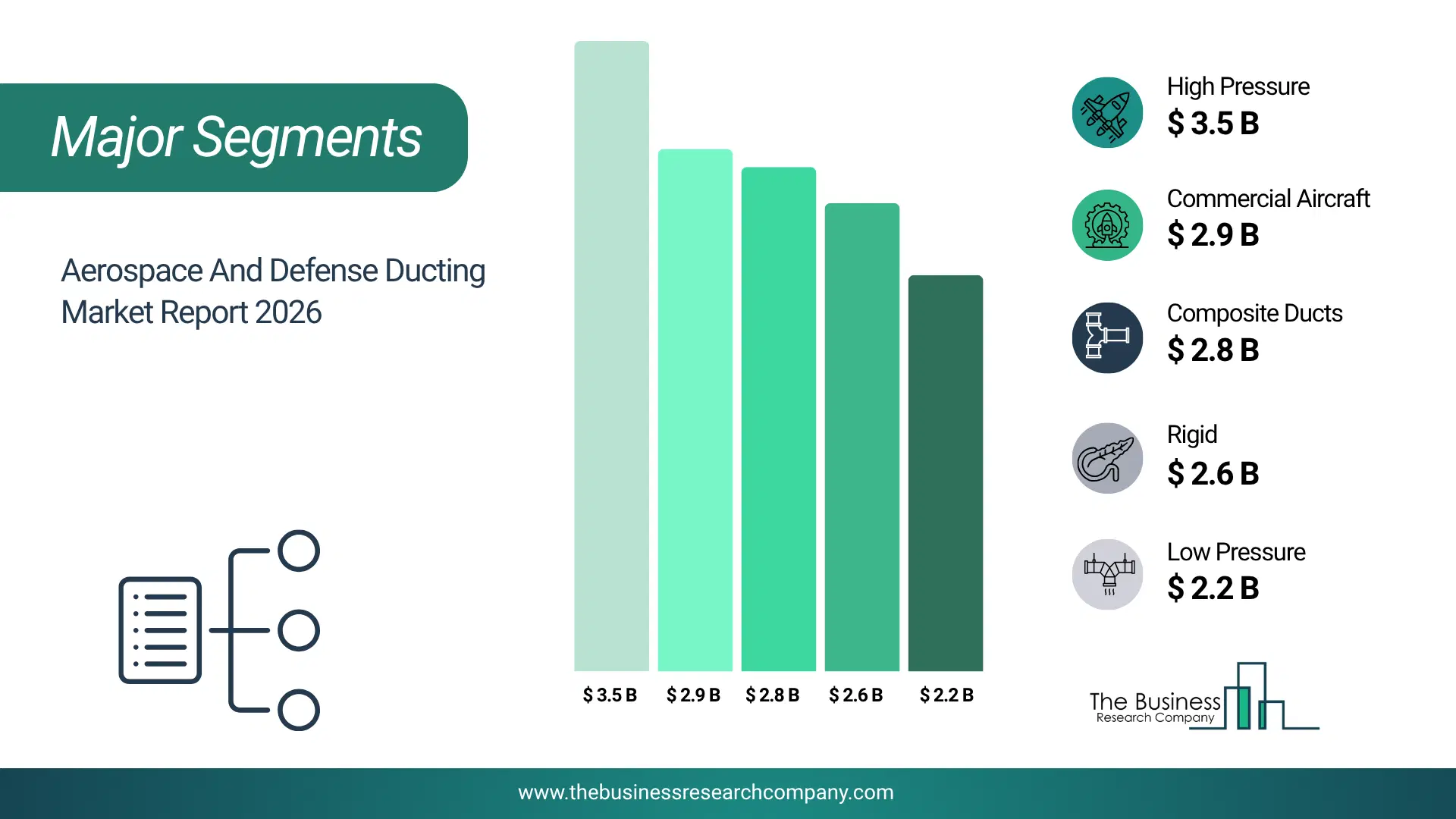
1) By Duct Type: Rigid, Semi-Rigid, Flexible 2) By Material: Titanium Ducts, Stainless Steel Ducts, Nickel Alloy Ducts, Composite Ducts 3) By Pressure: High Pressure, Low Pressure 4) By Application: Commercial Aircraft, Regional Aircraft, General Aviation, Helicopter, Military Aircraft Subsegments: 1) By Rigid: Metal Ducts, Composite Ducts, Hard Plastic Ducts 2) By Semi-Rigid: Reinforced Plastic Ducts, Flexible Metal Ducts, Hybrid Ducts 3) By Flexible: Fabric Ducts, Rubberized Ducts, Spiral Wound Ducts The top segments in the aerospace and defense ducting market will be: • High Pressure will reach $3518.93 Million by 2025. • Commercial Aircraft will reach $2981.22 Million by 2025. • Composite Ducts will reach $2855.88 Million by 2025. • Rigid will reach $2679.43 Million by 2025. • Low Pressure will reach $2291.1 Million by 2025.What Is Driver Of The Aerospace & Defense Ducting Market?
The rise in defense expenditure is expected to propel the growth of the aerospace and defense ducting market going forward. Defense expenditure refers to the amount of money allocated by governments for military purposes, such as maintaining and modernizing armed forces, developing new weapons and technologies, and covering operational costs. The increasing focus on enhancing aircraft performance, reducing emissions, and improving fuel efficiency is driving the adoption of advanced ducting materials and designs. This demand is directly influenced by defense expenditure and the need for high-performance aircraft systems. For instance, in April 2024, according to a report published by the Stockholm International Peace Research Institute (SIPRI), a Sweden-based international research institute, global military spending reached $2.443 trillion in 2023, marking a 6.8% increase in real terms compared to 2022. Therefore, the rise in defense expenditure is driving the growth of the aerospace and defense ducting market.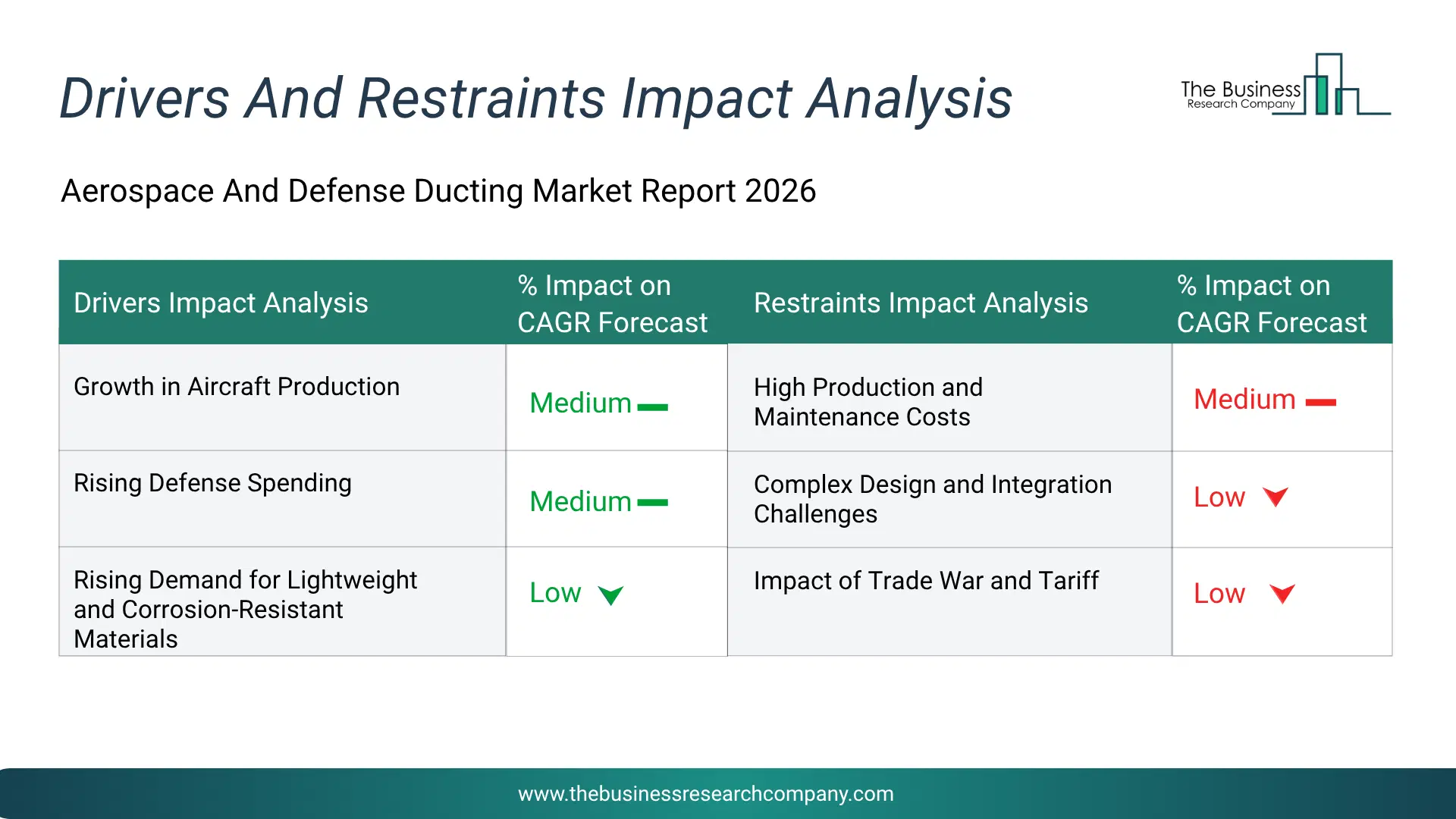
Infographic Chart Showing Key Market Drivers Analysis And Restraints For Aerospace & Defense Ducting Market
The chart presents an impact analysis of key drivers and restraints, quantifying their relative influence on the market's growth rate and helping assess the balance between growth enablers and limiting factors. This chart offers a high-level perspective; the full report contains more detailed insights.
How Will The Drivers Impact Growth In The Global Aerospace And Defense Ducting Market?
• Growth in Aircraft Production (Medium) – The growth in aircraft production will become a key driver of growth in the aerospace and defense ducting market by 2030. Modern aircraft demand complex ducting systems for environmental control, fuel delivery, hydraulics, and pneumatics. Rising global air travel, airline fleet expansions, and increasing aircraft orders—especially from emerging markets—are contributing to higher production volumes of both narrow-body and wide-body aircraft. This surge in output directly boosts demand for lightweight, heat-resistant, and high-efficiency ducting components that support improved fuel economy and system reliability. Furthermore, next-generation aircraft designs, which prioritize aerodynamics and sustainability, require custom ducting solutions that integrate advanced materials and fit within compact, streamlined airframes. As major manufacturers ramp up production and streamline supply chains to fulfill global demand, the aerospace and defense ducting market is set to grow in tandem with these expanding operations. As a result, the growth in aircraft production is anticipated to contributing to a 1.5% annual growth in the market. • Rising Defense Spending (Medium) – The rising defense spending will emerge as a major factor driving the expansion of the market by 2030. Increased military budgets support the acquisition of new aircraft, helicopters, and unmanned aerial systems, all of which rely on advanced ducting systems for functions such as cooling, ventilation, and hydraulics. Additionally, higher defense allocations fuel extensive maintenance, repair, and overhaul (MRO) operations, where ducting components often require replacement or upgrading due to wear, corrosion, or the need for improved performance. The focus on enhancing mission readiness, system durability, and operational efficiency further accelerates the adoption of high-performance ducting solutions made from advanced materials like composites and alloys. As global defense programs expand, manufacturers of aerospace ducting systems are poised to benefit from sustained demand for precision-engineered ducts capable of withstanding the extreme conditions typical of military applications. Consequently, the rising defense spending is projected to contributing to a 1.2% annual growth in the market. • Rising Demand for Lightweight and Corrosion-Resistant Materials (Low) – The rising demand for lightweight and corrosion-resistant materials will serve as a key growth catalyst for the market by 2030. Advanced composites, titanium, and nickel alloys are increasingly favored for ducting systems due to their excellent strength-to-weight ratios, durability in extreme environments, and extended service life compared to conventional materials. The shift toward lighter materials supports aircraft weight reduction, enhances fuel efficiency, and helps lower emissions—key objectives in the industry's push for greater sustainability. As aerospace OEMs and MRO providers increasingly prioritize materials that combine mechanical strength with resistance to environmental degradation, the need for high-performance ducting solutions is accelerating, underscoring their essential role in both current and next-generation aircraft platforms. Therefore, this rising demand for lightweight and corrosion-resistant materials is projected to supporting to a 0.8% annual growth in the market. • Rising Investments in Urban Air Mobility (UAM) and eVTOL Aircraft (Low) – The rising investments in urban air mobility (UAM) and eVTOL aircraft will become a significant driver contributing to the growth of the market by 2030 As governments and private companies push for sustainable, electric-powered aerial transportation solutions for urban environments, the demand for compact, lightweight, and thermally efficient ducting systems is rising. eVTOL and UAM aircraft require advanced ducting to manage temperature, distribute air, and reduce noise within tightly packed cabin and propulsion systems. This emerging sector calls for innovative ducting materials and designs capable of operating efficiently within electric propulsion architectures and constrained airframe spaces. Additionally, increased funding and rapid prototype development are pushing ducting manufacturers to evolve their technologies to meet high electrical safety standards, enable modular integration, and achieve significant weight reductions—key factors driving demand as UAM and eVTOL platforms edge closer to commercial deployment. Consequently, the rising investments in urban air mobility (UAM) and eVTOL aircraft is projected to contributing to a 0.5% annual growth in the market.How Will The Restraints Impact Growth In The Global Aerospace And Defense Ducting Market?
• High Production and Maintenance Costs (Medium) – High Production and Maintenance Costs will restrict the growth of the Aerospace And Defense Ducting market during the forecast period. Aerospace ducting components require specialized materials, precision manufacturing, and rigorous testing to meet aviation standards. The high costs of production, certification, and maintenance limit the addressable market and affect the affordability of ducting systems. Cost constraints can lead to reduced orders or delayed replacement cycles, impacting market growth. • Complex Design and Integration Challenges (Low) – Complex Design and Integration Challenges will restrict the growth of the Aerospace And Defense Ducting market during the forecast period. Aerospace ducting systems must be designed to meet specific aircraft requirements, creating complex integration challenges with existing airframe structures and systems. The customization required for different aircraft models increases engineering effort and production costs. Integration challenges can lead to project delays, cost overruns, and reduced adoption of new ducting technologies. • Impact of Trade War and Tariff (Low) – Impact of Trade War and Tariff will restrict the growth of the Aerospace And Defense Ducting market during the forecast period. Aerospace ducting relies on specialized materials and components sourced from global suppliers. Trade tariffs and restrictions can increase material costs and disrupt supply chains. Trade barriers may also affect defense procurement and international collaboration on aerospace programs, limiting market growth.Key Players In The Global Aerospace & Defense Ducting Market
Major companies operating in the aerospace & defense ducting market are Arrowhead Products, AIM Aerospace Inc., Eaton Corporation Plc., EnCore Aerospace, Senior plc, Exotic Metals Forming LLC, Meggitt PLC, Unison Industries LLC, GKN plc, Stelia Aerospace, ITT Aerospace, PFW Aerospace AG, Triumph Group, Zodiac Aerospace, Saint-Gobain Performance Plastics, Titeflex Aerospace, Flexfab Horizons International, Parker Hannifin, Hutchinson Aerospace, Safran, Collins Aerospace, Honeywell Aerospace, GE Aviation, Rolls-Royce, Pratt & Whitney, BAE Systems, Lockheed Martin, Boeing, Airbus, Northrop Grumman, General Dynamics, Raytheon Technologies, L3Harris Technologies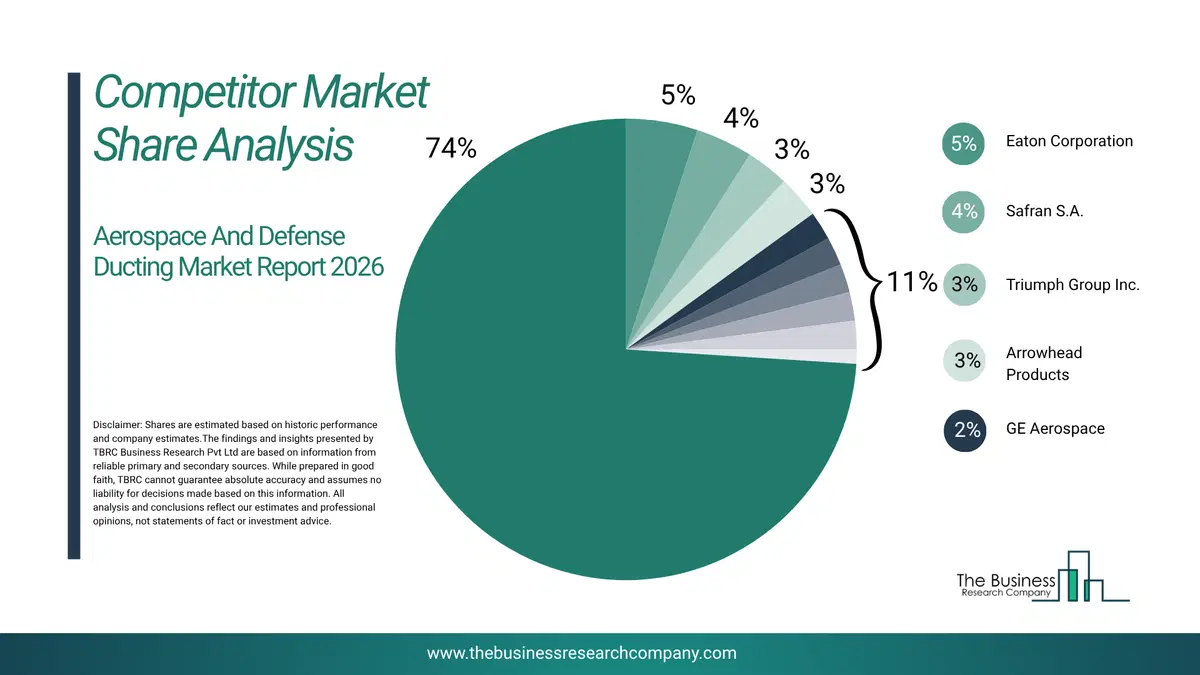
This chart is for illustrative purposes; the full report includes a detailed competitor analysis and comprehensive overview of the top 10 companies in the market.
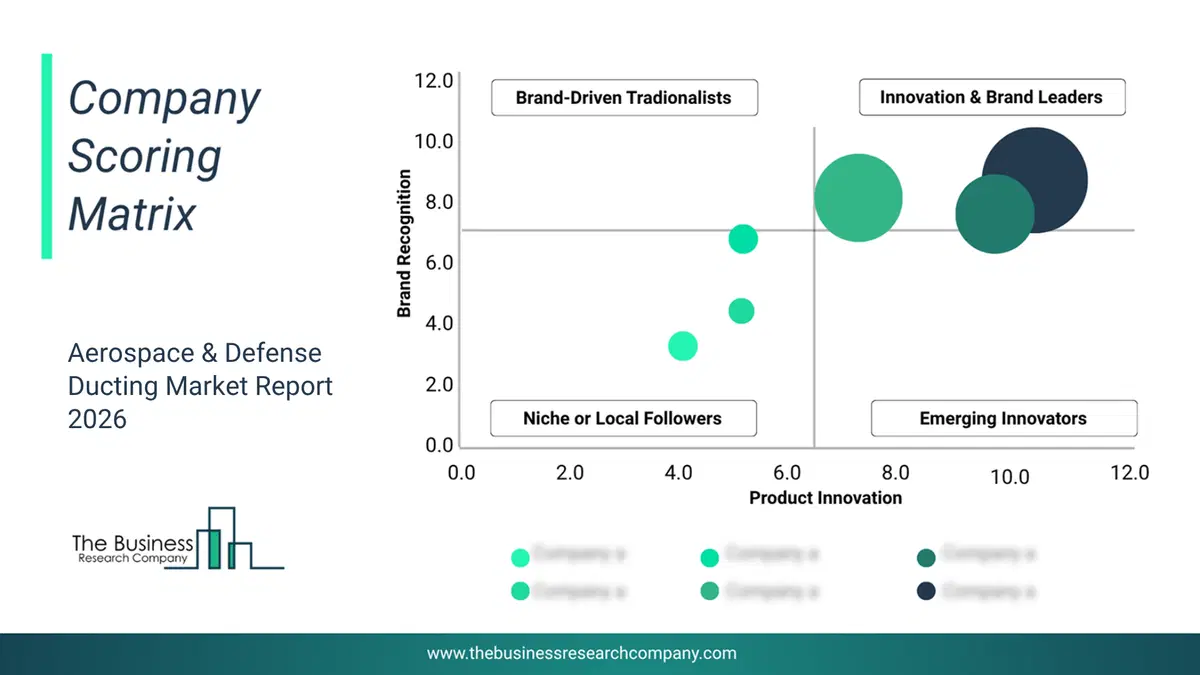
This chart maps companies by product innovation and brand strength, with bubble size indicating relative revenue, helping identify market leaders, challengers, and niche players. This is an illustrative chart; the full report provides a complete and accurate competitive analysis.
Global Aerospace & Defense Ducting Market Trends and Insights
Major companies operating in the aerospace and defense ducting market are focusing on developing innovative products, such as high-performance thermoplastic composite materials, to meet the growing demand for advanced airflow and fluid management solutions in modern aircraft and defense systems. A high-performance thermoplastic composite material combines thermoplastic polymers with reinforcing fibers to provide exceptional strength, thermal resistance, and chemical stability while remaining lightweight and durable, enabling advanced aerospace components with improved performance and reduced weight. For instance, in September 2024, Toray Advanced Composites, a Netherlands-based provider of advanced material technology, announced the launch of Toray Cetex TC1130 PESU thermoplastic composite material. It is a high-performance material specifically designed for aircraft interior applications. This material offers significant advantages in lightweight construction, sustainability, and full recyclability, along with excellent fire, smoke, and toxicity performance, impact resistance, and toughness for demanding aerospace uses.What Are Latest Mergers And Acquisitions In The Aerospace & Defense Ducting Market? Rangsons Aerospace Partnered With Boeing To Strengthen Global Aerospace Supply Chains And Enhance Aircraft Fluid Conveyance Manufacturing
In January 2024, Rangsons Aerospace, an India-based company involved in manufacturing aerospace ducting or tubes and related fluid-conveyance systems, partnered with Boeing to strengthen global aerospace supply chains. The partnership aims to enhance the reliability of Boeing’s aviation supply chain by leveraging Rangsons Aerospace’s advanced manufacturing capabilities for aircraft fluid conveyance assemblies, fostering innovation, and expanding India’s role in global aerospace production. Boeing is a US-based aircraft maker.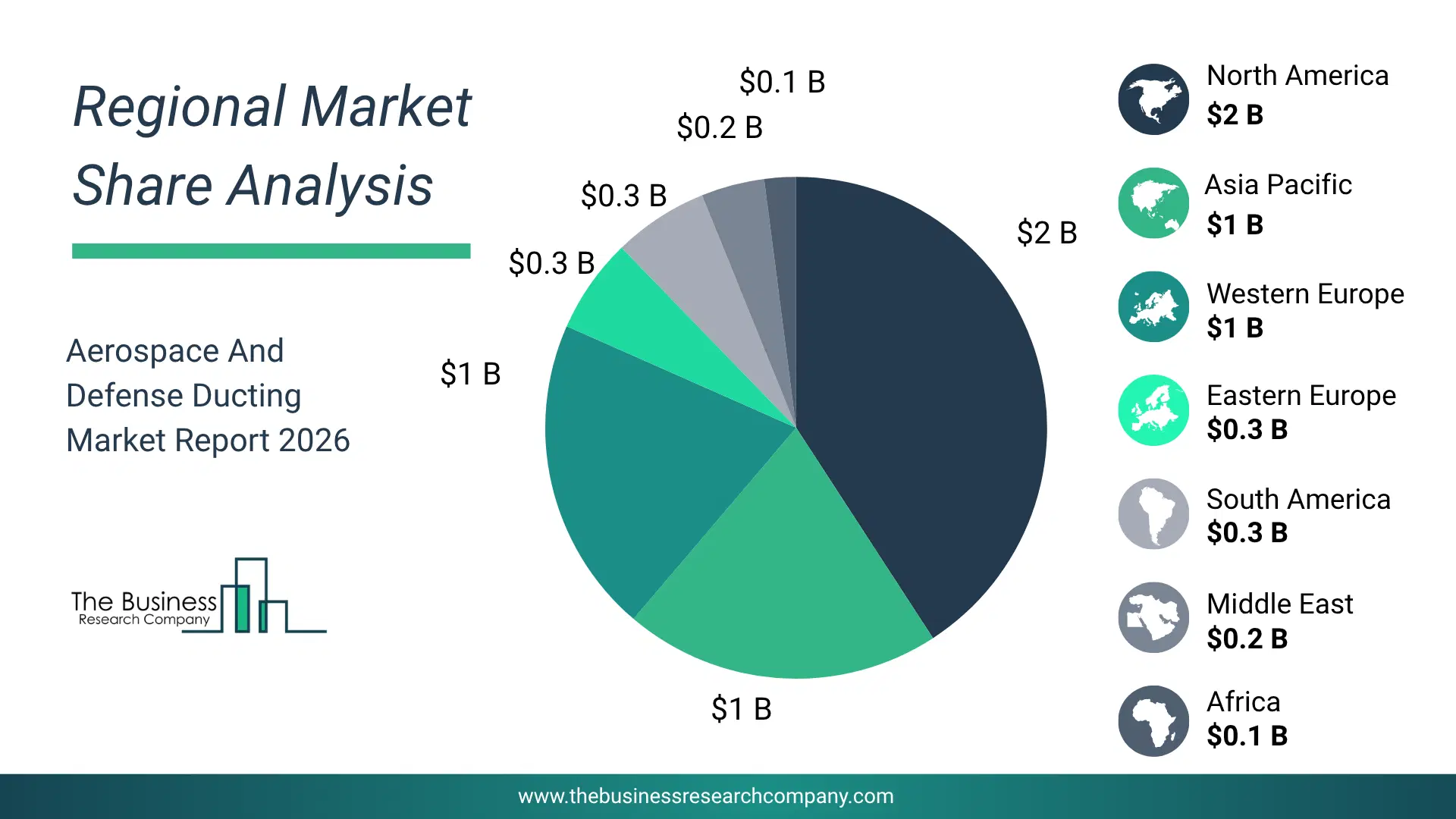
Regional Insights
North America was the largest region in the aerospace and defense ducting market in 2025. Asia-Pacific is expected to be the fastest-growing region in the aerospace and defense ducting market report during the forecast period. The regions covered in the aerospace & defense ducting market report are Asia-Pacific, South East Asia, Western Europe, Eastern Europe, North America, South America, Middle East, Africa. The countries covered in the aerospace & defense ducting market report are Australia, Brazil, China, France, Germany, India, Indonesia, Japan, Taiwan, Russia, South Korea, UK, USA, Canada, Italy, SpainWhat Defines the Aerospace & Defense Ducting Market?
The aerospace and defense ducting market consists of the sale of stainless-steel ducts, titanium ducts, alloy ducts, nickel ducts, and composite ducts. Values in this market are ‘factory gate’ values, that is the value of goods sold by the manufacturers or creators of the goods, whether to other entities (including downstream manufacturers, wholesalers, distributors, and retailers) or directly to end customers. The value of goods in this market includes related services sold by the creators of the goods.How is Market Value Defined and Measured?
The market value is defined as the revenues that enterprises gain from the sale of goods and/or services within the specified market and geography through sales, grants, or donations in terms of the currency (in USD unless otherwise specified). The revenues for a specified geography are consumption values that are revenues generated by organizations in the specified geography within the market, irrespective of where they are produced. It does not include revenues from resales along the supply chain, either further along the supply chain or as part of other products.
This chart presents market attractiveness based on a quantitative evaluation of growth, competition, strategic alignment, and risk, offering a clear view of opportunity areas for decision-making. This chart is for illustrative purposes; the full report contains the complete analysis.

This chart highlights the Total Addressable Market (TAM) by estimating the maximum revenue opportunity using an assumption-driven approach, supporting strategic planning and opportunity sizing across markets. The chart is illustrative; the full report provides a more comprehensive analysis.
What Key Data and Analysis Are Included in the Aerospace & Defense Ducting Market Report 2026?
The aerospace & defense ducting market research report is one of a series of new reports from The Business Research Company that provides market statistics, including industry global market size, regional shares, competitors with the market share, detailed market segments, market trends and opportunities, and any further data you may need to thrive in the aerospace & defense ducting industry. The market research report delivers a complete perspective of everything you need, with an in-depth analysis of the current and future state of the industry.Aerospace & Defense Ducting Market Report Forecast Analysis
| Report Attribute | Details |
|---|---|
| Market Size Value In 2026 | $6.1 billion |
| Revenue Forecast In 2030 | $7.38 billion |
| Growth Rate | CAGR of 5.1% from 2026 to 2030 |
| Base Year For Estimation | 2025 |
| Actual Estimates/Historical Data | 2020-2025 |
| Forecast Period | 2026 - 2030 |
| Market Representation | Revenue in USD Billion and CAGR from 2026 to 2030 |
| Segments Covered | Duct Type, Material, Pressure, Application |
| Regional Scope | Asia-Pacific, Western Europe, Eastern Europe, North America, South America, Middle East, Africa |
| Country Scope | The countries covered in the report are Australia, Brazil, China, France, Germany, India, Indonesia, Japan, Taiwan, Russia, South Korea, UK, USA, Canada, Italy, Spain. |
| Key Companies Profiled | Arrowhead Products, AIM Aerospace Inc., Eaton Corporation Plc., EnCore Aerospace, Senior plc, Exotic Metals Forming LLC, Meggitt PLC, Unison Industries LLC, GKN plc, Stelia Aerospace, ITT Aerospace, PFW Aerospace AG, Triumph Group, Zodiac Aerospace, Saint-Gobain Performance Plastics, Titeflex Aerospace, Flexfab Horizons International, Parker Hannifin, Hutchinson Aerospace, Safran, Collins Aerospace, Honeywell Aerospace, GE Aviation, Rolls-Royce, Pratt & Whitney, BAE Systems, Lockheed Martin, Boeing, Airbus, Northrop Grumman, General Dynamics, Raytheon Technologies, L3Harris Technologies |
| Customization Scope | Request for Customization |
| Pricing And Purchase Options | Explore Purchase Options |