
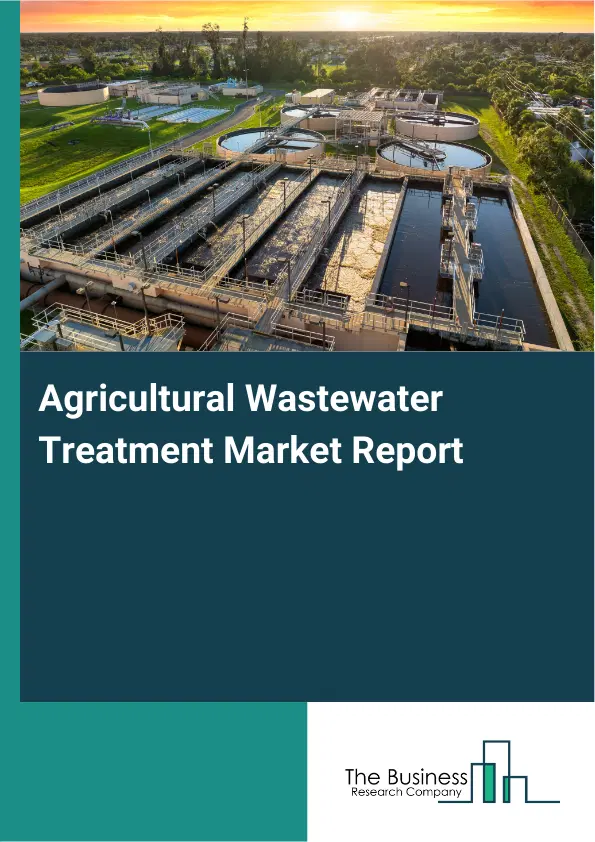
Agricultural Wastewater Treatment Market Report 2026
Global Outlook – By Technology (Physical Solutions, Chemical Solutions, Biological Solutions), By Pollutant Source (Point Source, Non-Point Source), By Application (Farming, Soil Resources, Groundwater Resources, Dairy, Other Applications) – Market Size, Trends, Strategies, and Forecast to 2030
Agricultural Wastewater Treatment Market Overview
• Agricultural Wastewater Treatment market size has reached to $2.99 billion in 2025 • Expected to grow to $4.59 billion in 2030 at a compound annual growth rate (CAGR) of 9% • Growth Driver: Rising Agricultural Water Demand Drives Agricultural Wastewater Treatment Market Growth • Market Trend: Innovative Solutions Driving Sustainable Water Reuse In Agriculture • Asia-Pacific was the largest region in 2025.What Is Covered Under Agricultural Wastewater Treatment Market?
Agricultural wastewater treatment refers to a farm management process that helps to reduce the pollution from animal operations and surface runoff that gets contaminated by pesticides, animal slurry, crop residues, irrigation water, or fertilizers. Agricultural wastewater treatment controls land pollution. The main technologies in agricultural wastewater treatment are physical solutions, chemical solutions, and biological solutions. The physical solutions refer to a process that uses flotation, sedimentation, and adsorption methods for wastewater treatment. The sources of pollutants are point sources and non-point sources. The various applications involved are farming, soil resources, groundwater resources, dairy, and other applications.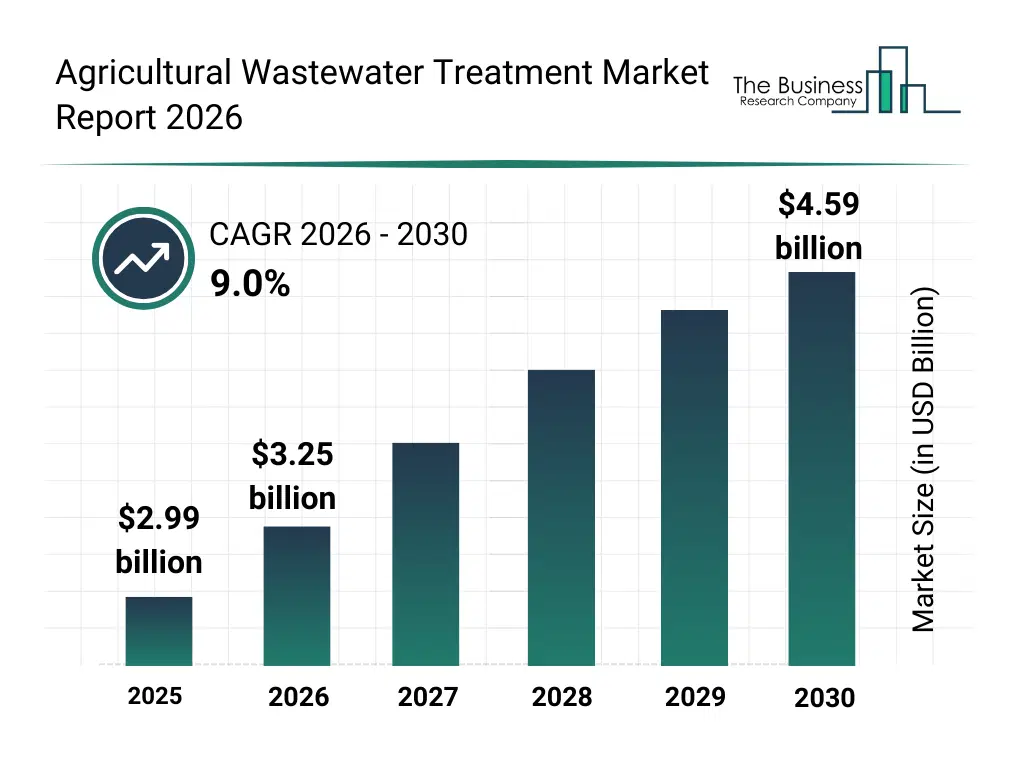
What Is The Agricultural Wastewater Treatment Market Size and Share 2026?
The agricultural wastewater treatment market size has grown strongly in recent years. It will grow from $2.99 billion in 2025 to $3.25 billion in 2026 at a compound annual growth rate (CAGR) of 8.8%. The growth in the historic period can be attributed to rising agricultural intensification, growing water contamination incidents, expansion of livestock farming, early regulatory awareness, increasing surface runoff pollution.What Is The Agricultural Wastewater Treatment Market Growth Forecast?
The agricultural wastewater treatment market size is expected to see strong growth in the next few years. It will grow to $4.59 billion in 2030 at a compound annual growth rate (CAGR) of 9.0%. The growth in the forecast period can be attributed to stricter environmental regulations, rising focus on sustainable farming, increasing groundwater protection initiatives, growing demand for safe irrigation water, expansion of wastewater treatment infrastructure. Major trends in the forecast period include increasing adoption of biological wastewater treatment solutions, rising focus on groundwater and soil protection initiatives, growing need for efficient wastewater reuse in farming, expansion of large-scale livestock and dairy waste management practices, strengthening regulatory enforcement on agricultural pollution control.
Global Agricultural Wastewater Treatment Market Segmentation
1) By Technology: Physical Solutions, Chemical Solutions, Biological Solutions 2) By Pollutant Source: Point Source, Non-Point Source 3) By Application: Farming, Soil Resources, Groundwater Resources, Dairy, Other Applications Subsegments: 1) By Physical Solutions: Sedimentation, Filtration, Membrane Separation, Adsorption 2) By Chemical Solutions: Coagulation And Flocculation, Disinfection, Neutralization, Chemical Precipitation 3) By Biological Solutions: Activated Sludge Process, Biofiltration, Anaerobic Digestion, Constructed WetlandsWhat Is The Driver Of The Agricultural Wastewater Treatment Market?
The rising agricultural water demand is expected to propel the growth of the agricultural wastewater treatment market going forward. Agricultural water refers to water that is used to produce fresh produce and sustain livestock. Treated wastewater can be used by farmers directly through irrigation or indirectly through replenishing aquifers at a time when we need to produce more food to feed a growing population. For instance, in October 2024, according to the United States Department of Agriculture (USDA), a US-based federal agency, groundwater pumped from on-farm wells supplied 54% of the irrigation water used on open-field acres, and in 2023 the average well depth was 241 feet. Therefore, rising agricultural water demand is driving the growth of the agricultural wastewater treatment industry.Key Players In The Global Agricultural Wastewater Treatment Market
Major companies operating in the agricultural wastewater treatment market report are Evoqua Water Technologies LLC, IDE Technologies Ltd., DuPont de Nemours Inc., Jacobs Engineering Group Inc., BASF SE, Architecture Engineering Consulting Operations and Maintenance, WSP Global Inc., Grundfos Holding A/S, Dover Corporation, Ingersoll Rand Inc., United Utilities Group plc, Nouryon Holding B. V., Organo Corporation, OriginClear Inc., Suez SA, Veolia Environnement S. A., Ecolab Inc., Kemira Oyj, Kurita Water Industries Ltd., Thermax Limited, Dow Inc., LEWA GmbH, ProMinent GmbH, Watson-Marlow Fluid Technology Group, Aquatech International LLC, Fluence Corporation Limited, Pentair plc, Samco Technologies Inc., Dryden Aqua Ltd., DAS Environmental Expert GmbH, Xylem Inc.
This chart is for illustrative purposes; the full report includes a detailed competitor analysis and comprehensive overview of the top 10 companies in the market.
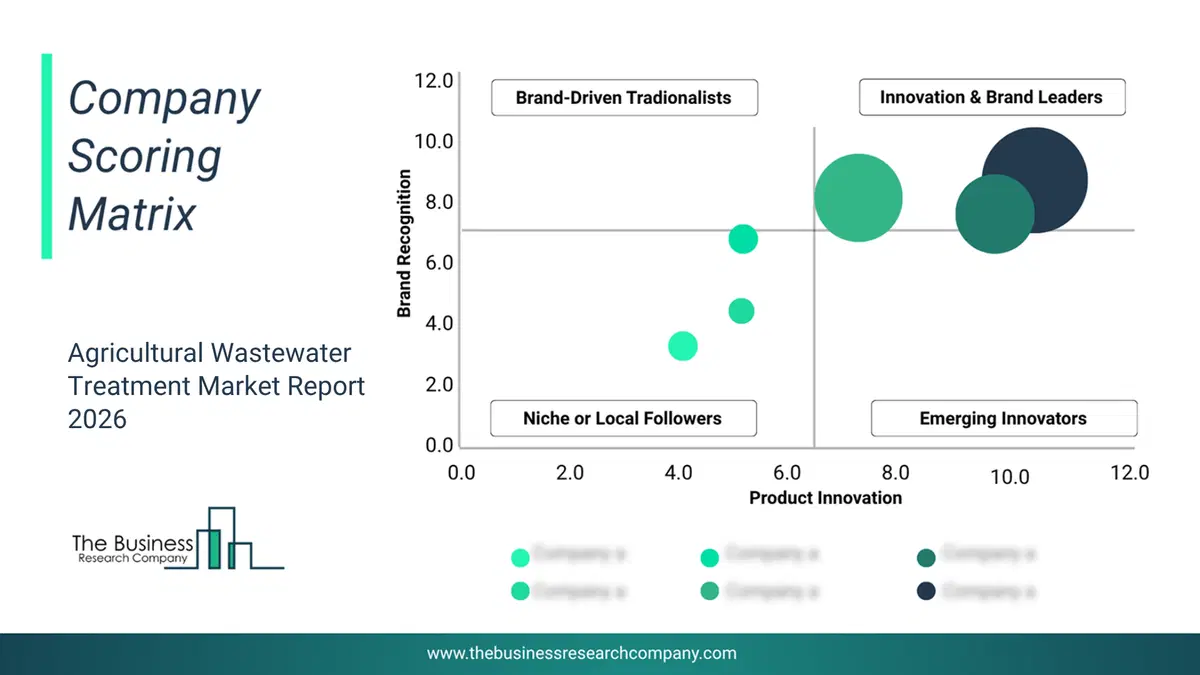
This chart maps companies by product innovation and brand strength, with bubble size indicating relative revenue, helping identify market leaders, challengers, and niche players. This is an illustrative chart; the full report provides a complete and accurate competitive analysis.
Global Agricultural Wastewater Treatment Market Trends and Insights
Major companies operating in the agricultural wastewater treatment market are focusing on developing innovative solutions, such as decentralized wastewater treatment plants for agricultural reuse, to meet the rising demand for sustainable water management, climate adaptation, and optimized irrigation resources in water-scarce farming regions. Decentralized wastewater treatment plants are modular treatment systems designed to process and treat wastewater close to where it is generated rather than at large central facilities, key features include smaller footprint installations, simpler infrastructure needs, and the ability to convert wastewater into safe irrigation-quality water, offering a resilient alternative to traditional centralized sewage systems that often require extensive piping and higher energy inputs. For instance, in November 2025, the United Nations Development Programme (UNDP), a US-based organization, inaugurated the Zibdeen Wastewater Treatment Plant in Eastern Ghouta, Rural Damascus, a model wastewater treatment facility capable of treating over 4, 000 cubic meters of wastewater daily and transforming it into safe irrigation water for about 50, 000 people, supporting sustainable agriculture and environmental protection. The plant integrates rehabilitated sewage networks and irrigation canals, enhances sludge processing for reuse, and contributes to resilient water resource management and livelihoods in agricultural communities. This strategic project not only addresses immediate water scarcity challenges but also sets a precedent for scaling similar climate-resilient water solutions across agricultural regions facing climatic stressors.What Are Latest Mergers And Acquisitions In The Agricultural Wastewater Treatment Market?
In May 2023, Xylem Inc., a US-based water technology company, acquired Evoqua Water Technologies Corp. for approximately $7.5 billion. With this acquisition, Xylem aimed to create a more comprehensive and advanced platform of water and wastewater solutions to expand its market leadership, accelerate growth opportunities, and better address critical global water challenges across utilities, industrial and commercial end markets. Evoqua Water Technologies Corp. is a US-based water treatment solutions and services company that specializes in providing advanced water and wastewater treatment products, services, and digitally enabled mission-critical systems for industrial, municipal, and commercial customers.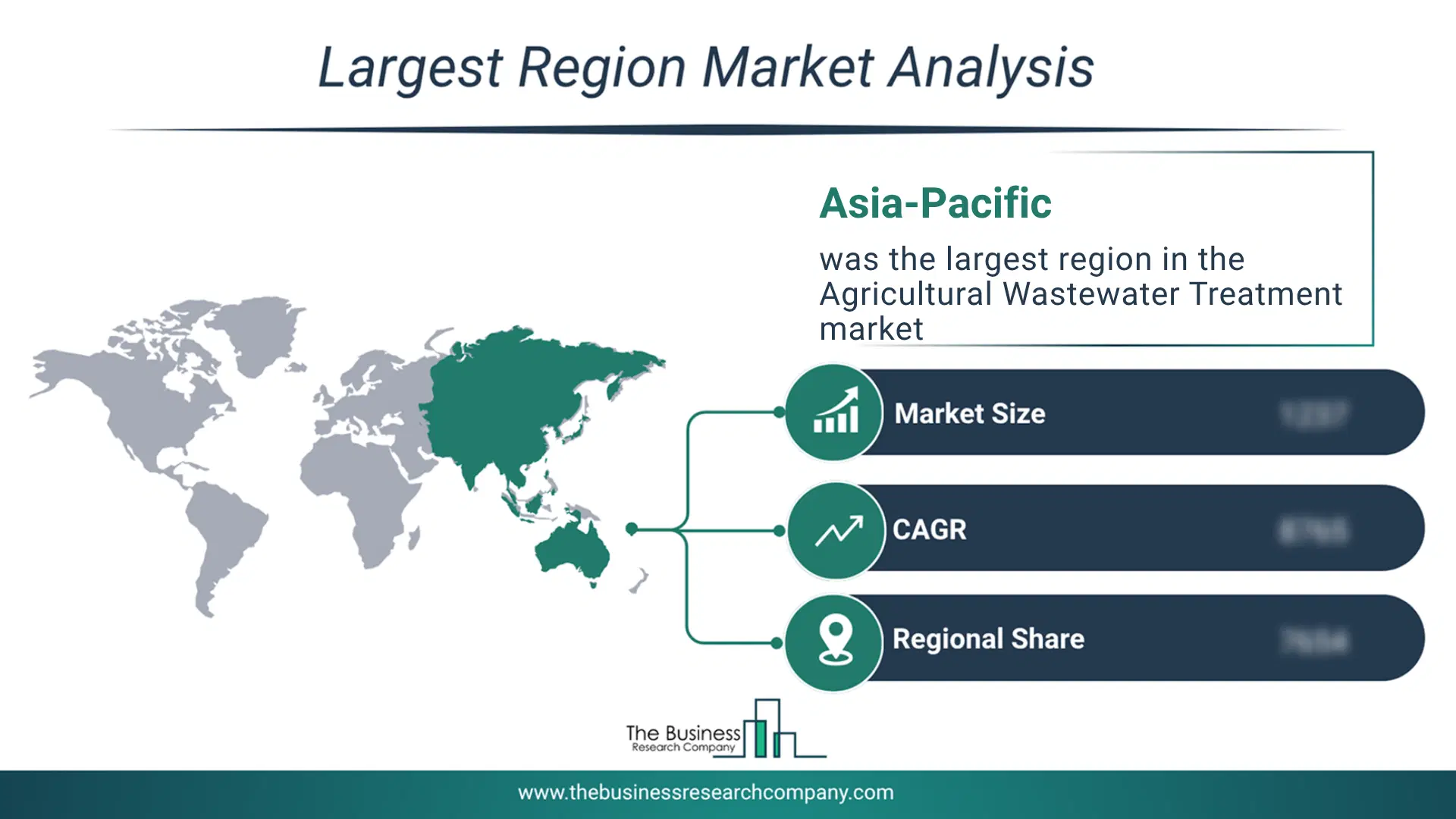
Regional Outlook
Asia-Pacific was the largest region in the agricultural wastewater treatment market in 2025. The regions covered in this market report are Asia-Pacific, South East Asia, Western Europe, Eastern Europe, North America, South America, Middle East, Africa. The countries covered in this market report are Australia, Brazil, China, France, Germany, India, Indonesia, Japan, Taiwan, Russia, South Korea, UK, USA, Canada, Italy, SpainWhat Defines the Agricultural Wastewater Treatment Market?
The agricultural wastewater treatment market includes revenues earned by entities by providing services such as aerated wastewater treatment systems (AWTS) biological filter systems. The market value includes the value of related goods sold by the service provider or included within the service offering. Only goods and services traded between entities or sold to end consumers are included.How is Market Value Defined and Measured?
The market value is defined as the revenues that enterprises gain from the sale of goods and/or services within the specified market and geography through sales, grants, or donations in terms of the currency (in USD unless otherwise specified). The revenues for a specified geography are consumption values that are revenues generated by organizations in the specified geography within the market, irrespective of where they are produced. It does not include revenues from resales along the supply chain, either further along the supply chain or as part of other products.
This chart presents market attractiveness based on a quantitative evaluation of growth, competition, strategic alignment, and risk, offering a clear view of opportunity areas for decision-making. This chart is for illustrative purposes; the full report contains the complete analysis.

This chart highlights the Total Addressable Market (TAM) by estimating the maximum revenue opportunity using an assumption-driven approach, supporting strategic planning and opportunity sizing across markets. The chart is illustrative; the full report provides a more comprehensive analysis.
What Key Data and Analysis Are Included in the Agricultural Wastewater Treatment Market Report 2026?
The agricultural wastewater treatment market research report is one of a series of new reports from The Business Research Company that provides market statistics, including industry global market size, regional shares, competitors with the market share, detailed market segments, market trends and opportunities, and any further data you may need to thrive in the agricultural wastewater treatment industry. The market research report delivers a complete perspective of everything you need, with an in-depth analysis of the current and future state of the industry.Agricultural Wastewater Treatment Market Report Forecast Analysis
| Report Attribute | Details |
|---|---|
| Market Size Value In 2026 | $3.25 billion |
| Revenue Forecast In 2030 | $4.59 billion |
| Growth Rate | CAGR of 8.8% from 2026 to 2030 |
| Base Year For Estimation | 2025 |
| Actual Estimates/Historical Data | 2020-2025 |
| Forecast Period | 2026 - 2030 - 2030 |
| Market Representation | Revenue in USD Billion and CAGR from 2026 to 2030 |
| Segments Covered | Technology, Pollutant Source, Application |
| Regional Scope | Asia-Pacific, Western Europe, Eastern Europe, North America, South America, Middle East, Africa |
| Country Scope | The countries covered in the report are Australia, Brazil, China, France, Germany, India, Indonesia, Japan, Taiwan, Russia, South Korea, UK, USA, Canada, Italy, Spain. |
| Key Companies Profiled | Evoqua Water Technologies LLC, IDE Technologies Ltd., DuPont de Nemours Inc., Jacobs Engineering Group Inc., BASF SE, Architecture Engineering Consulting Operations and Maintenance, WSP Global Inc., Grundfos Holding A/S, Dover Corporation, Ingersoll Rand Inc., United Utilities Group plc, Nouryon Holding B. V., Organo Corporation, OriginClear Inc., Suez SA, Veolia Environnement S. A., Ecolab Inc., Kemira Oyj, Kurita Water Industries Ltd., Thermax Limited, Dow Inc., LEWA GmbH, ProMinent GmbH, Watson-Marlow Fluid Technology Group, Aquatech International LLC, Fluence Corporation Limited, Pentair plc, Samco Technologies Inc., Dryden Aqua Ltd., DAS Environmental Expert GmbH, Xylem Inc. |
| Customization Scope | Request for Customization |
| Pricing And Purchase Options | Explore Purchase Options |