

Airborne Optronics Market Report 2026
Global Outlook – By Aircraft Type (Fixed Wing, Rotary Wing, Urban Air Mobility, Unmanned Aerial Vehicles ), By Technology (Multispectral, Hyperspectral), By System (Reconnaissance System, Targeting System, Search and Track System, Surveillance System, Warning and Detection System, Countermeasure System, Navigation and Guidance System, Special Mission System), By Application (Commercial, Military, Space), By End User (Original Equipment Manufacturer (OEM), Aftermarket) – Market Size, Trends, Strategies, and Forecast to 2030
Airborne Optronics Market Overview
• Airborne Optronics market size has reached to $2.39 billion in 2025 • Expected to grow to $4.75 billion in 2030 at a compound annual growth rate (CAGR) of 14.4% • Growth Driver: Rising Defense Expenditures Fueling The Growth Of The Market Due To Increasing Investment In Advanced Surveillance • Market Trend: Technological Advancements In Airborne Optronics • North America was the largest region and fastest growing region.What Is Covered Under Airborne Optronics Market?
Airborne optronics refers to hardware devices that interact with light to perform different functions, such as converting electric energy to light energy, converting optical signals into electrical currents for sensing functions, and others. These devices are integrated with aircraft and other aerial platforms to ensure safety and increase the precision of the aircraft. The airborne optronics are devices used to perform functions such as surveillance, identification, intelligence collection, and targeting in an aerial platform. The main aircraft types of airborne optronics markets are fixed wing, rotary wing, urban air mobility, and unmanned aerial vehicles. Fixed wing is an airplane with fixed wings that don't have wings that oscillate or move up and down. The fixed-wing aircraft uses airborne optronics in fixed-wing aircraft for capturing images, detecting threats, and countermeasure strikes. The different technologies include multispectral, and hyperspectral and involve various systems such as a reconnaissance system, a targeting system, a search and track system, a surveillance system, a warning and detection system, a countermeasure system, a navigation and guidance system, and a special mission system. The several applications include commercial, military, and space. The end users are original equipment manufacturer (OEM) and aftermarket.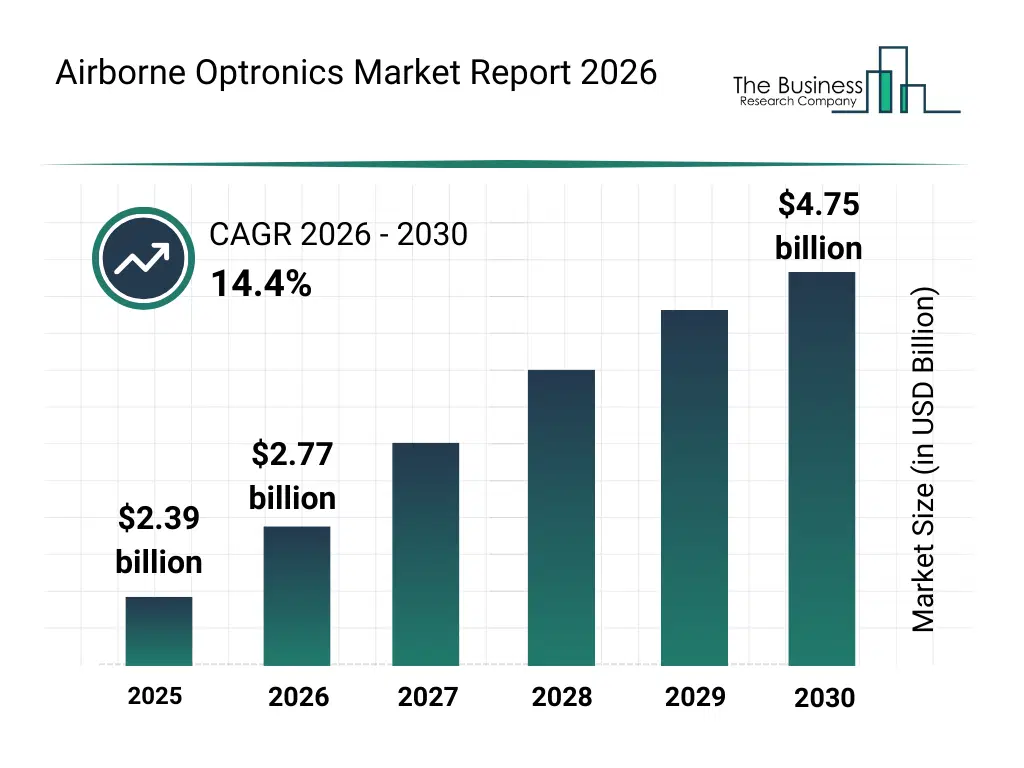
What Is The Airborne Optronics Market Size and Share 2026?
The airborne optronics market size has grown rapidly in recent years. It will grow from $2.39 billion in 2025 to $2.77 billion in 2026 at a compound annual growth rate (CAGR) of 15.6%. The growth in the historic period can be attributed to increasing deployment of airborne surveillance and targeting systems requiring advanced optronics, rising need for laser warning and countermeasure systems to enhance aircraft survivability, growth in intelligence and reconnaissance missions driving adoption of high-precision optical sensors, advancement in laser range finding and sighting technologies improving mission accuracy, expansion of military modernization programs incorporating next-generation airborne optronics.What Is The Airborne Optronics Market Growth Forecast?
The airborne optronics market size is expected to see rapid growth in the next few years. It will grow to $4.75 billion in 2030 at a compound annual growth rate (CAGR) of 14.4%. The growth in the forecast period can be attributed to anticipated rise in demand for multi-sensor optronic suites for integrated aerial mission support, increasing adoption of ai-enabled image processing to enhance airborne identification capabilities, growing use of unmanned aerial platforms equipped with advanced optronics, continuous development of lightweight and high-resolution optical systems improving performance, expanding investment in countermeasure technologies to address evolving airborne threats. Major trends in the forecast period include rising adoption of advanced surveillance and targeting payloads, increasing shift toward multispectral and hyperspectral sensing systems, growing integration of miniaturized optronics for lightweight aerial platforms, rising demand for countermeasure and threat-detection technologies, expanding use of optronics for intelligence, reconnaissance, and specialized missions.
Global Airborne Optronics Market Segmentation
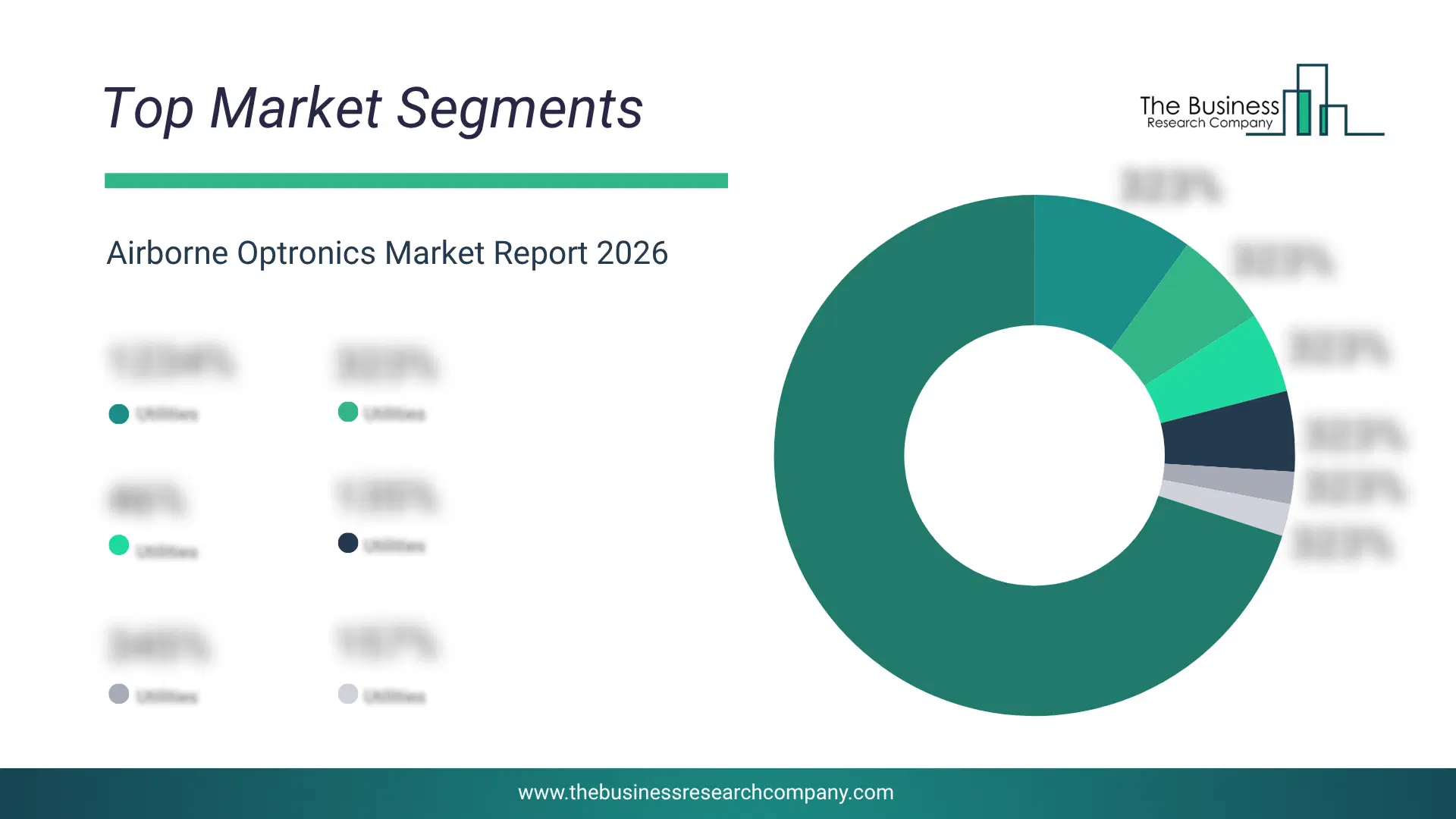
1) By Aircraft Type: Fixed Wing, Rotary Wing, Urban Air Mobility, Unmanned Aerial Vehicles 2) By Technology: Multispectral, Hyperspectral 3) By System: Reconnaissance System, Targeting System, Search and Track System, Surveillance System, Warning and Detection System, Countermeasure System, Navigation and Guidance System, Special Mission System 4) By Application: Commercial, Military, Space 5) By End User: Original Equipment Manufacturer (OEM), Aftermarket Subsegments: 1) By Fixed Wing: Military Fixed Wing Aircraft, Commercial Fixed Wing Aircraft, Regional and Business Jets 2) By Rotary Wing: Military Helicopters, Civilian Helicopters, Unmanned Rotary Wing Systems 3) By Urban Air Mobility: Electric Vertical Takeoff and Landing (eVTOL) Aircraft, Air Taxis and Drones for Urban Transport 4) By Unmanned Aerial Vehicles (UAVs): Tactical UAVs, Strategic UAVs, Micro and Mini UAVs, Commercial Drones 5) By Other Types: Hybrid Aircraft, Aerostats and BalloonsWhat Is Driver Of The Airborne Optronics Market?
The rising defense expenditures are expected to propel the growth of the airborne optronics market going forward. Defense expenditures represent the allocated government or military budgets for maintaining, upgrading, and expanding military capabilities including equipment, technology, and infrastructure. Defense expenditures are increasing due to the growing need for military modernization and advanced defense technologies. Defense expenditure supports airborne optronics by funding the development and deployment of advanced optical and sensor systems for enhanced surveillance, targeting, and reconnaissance capabilities. For instance, in April 2025, according to the Stockholm International Peace Research Institute (SIPRI), a Sweden-based independent research organization, global military expenditures reached $2.72 trillion in 2024, which was a 9.4 percent increase from 2023. Therefore, the rising defense expenditures are driving the growth of the airborne optronics industry.Key Players In The Global Airborne Optronics Market
Major companies operating in the airborne optronics market are Leonardo S.p.A, Thales Group, Teledyne Technologies Incorporated, Safran S.A, Elbit Systems Ltd., Lockheed Martin Corporation, Stark Aerospace Inc., L3Harris Technologies Inc., Hensoldt AG, Collins Aerospace, Israel Aerospace Industries, Rafael Advanced Defense Systems Ltd., Kappa Optronics GmbH, Bae Systems plc, Resonon Inc., Excelitas Technologies Corporation, Osi Optoelectronics Inc., Leidos Holdings Inc., Aselsan A.S, Intevac Inc., Ximea GmbH, Headwall Photonics Inc., Cubert GmbH., Maxar Technologies Inc., Northrop Grumman Corporation, RTX Corporation, General Dynamics Corporation, Honeywell Aerospace, Pratt & Whitney, Rolls-Royce Holdings plc, General Electric Aviation, Spirit AeroSystems Inc., GKN Aerospace Services Limited, Triumph Group Inc.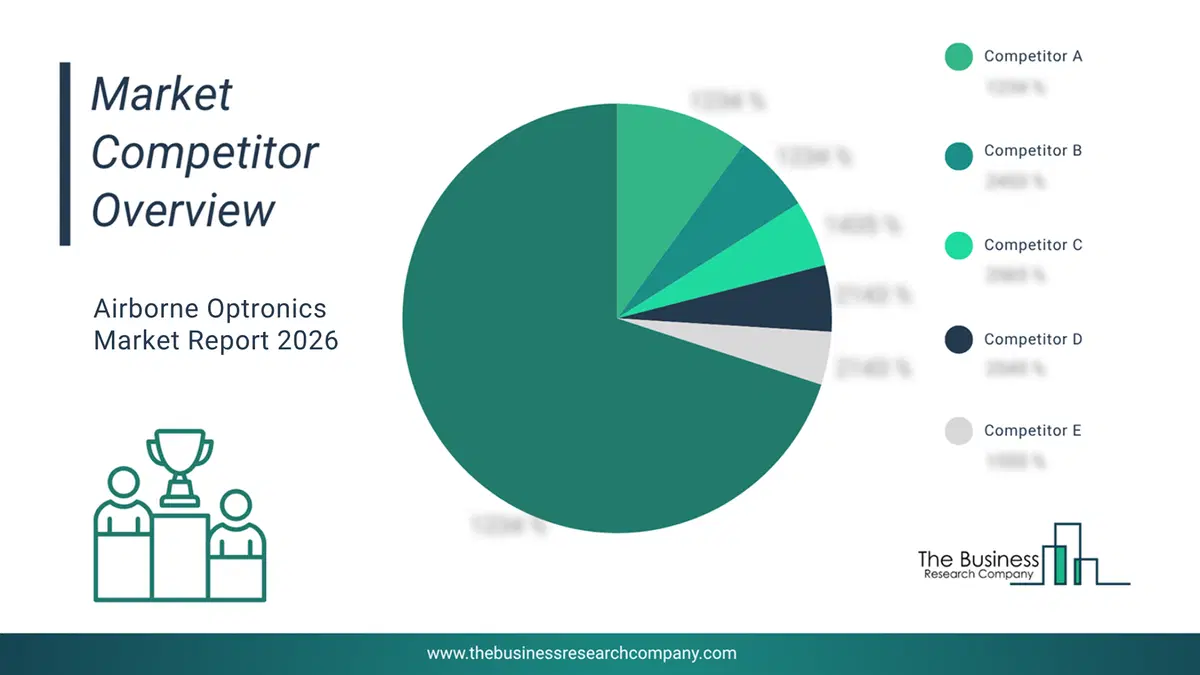
This chart is for illustrative purposes; the full report includes a detailed competitor analysis and comprehensive overview of the top 10 companies in the market.
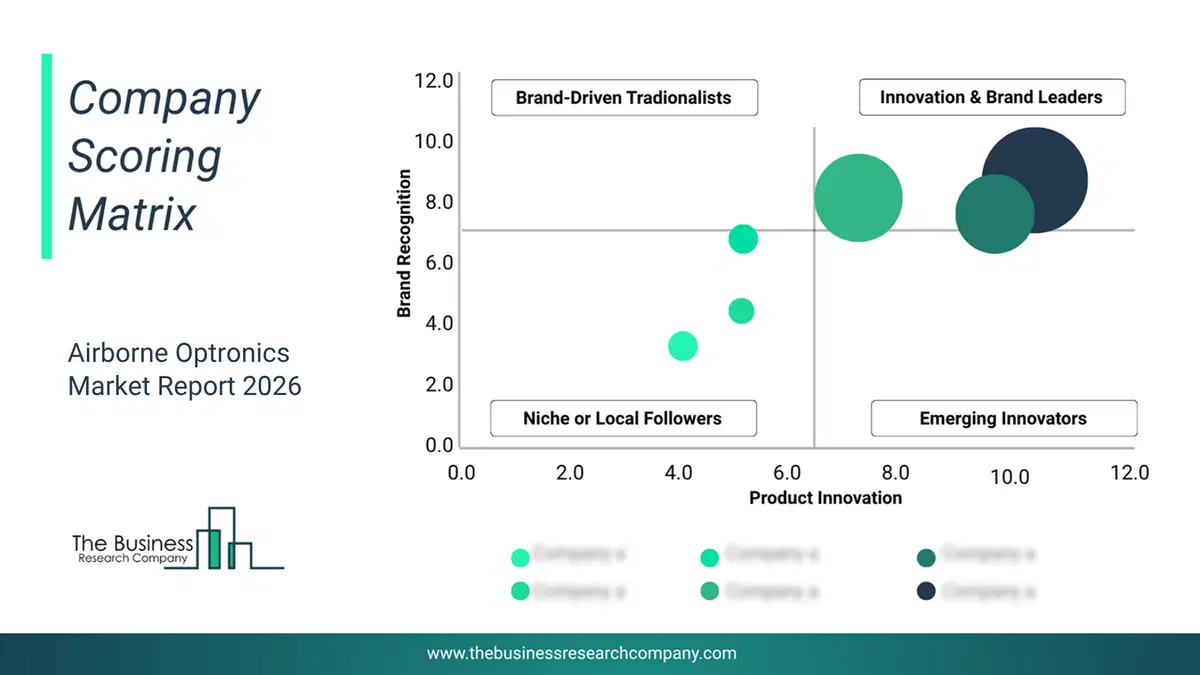
This chart maps companies by product innovation and brand strength, with bubble size indicating relative revenue, helping identify market leaders, challengers, and niche players. This is an illustrative chart; the full report provides a complete and accurate competitive analysis.
Global Airborne Optronics Market Trends and Insights
Major companies operating in the airborne optronics market are focusing on developing innovative solutions such as advanced airborne imaging gimbals to enhance real-time surveillance and intelligence-gathering capabilities. Advanced airborne imaging gimbals are stabilized sensor platforms that capture high-resolution images and videos from aircraft or drones, helping improve surveillance, target tracking, and situational awareness in various operational conditions. For instance, in September 2024, HENSOLDT AG, a Germany-based defense technology company, launched the ARGOS-15, an advanced airborne imaging system. The ARGOS-15 features a 15-inch modular gimbal capable of medium-to-high altitude missions, four-axis stabilization for sub-5 µrad image clarity, AI-driven object classification and tracking, and a common aperture architecture optimizing multispectral sensor performance. Unlike traditional airborne sensors, which often rely on single-spectrum imaging or limited stabilization, the ARGOS-15 integrates thermal, daylight, and short-wave infrared (SWIR) sensors, enabling precise target identification in challenging environments, including low-light or adverse weather conditions. Its applications span military, paramilitary, law enforcement, and search-and-rescue operations, providing high-definition imagery while minimizing in-flight calibration needs and improving operational efficiency. The system also supports real-time data transmission to ground stations, allowing for faster decision-making and enhanced situational awareness.What Are Latest Mergers And Acquisitions In The Airborne Optronics Market? THEON International Plc Acquires Kappa Optronics Gmbh To Strengthen Electro-Optics Capabilities And European Presence
In August 2025, THEON International plc, a Cyprus-based manufacturer of advanced optronics, acquired Kappa Optronics GmbH for an undisclosed amount. With this acquisition, THEON International Plc aims to expand its electro-optics capabilities and European presence, driving strong top-line growth, enhancing its innovation pipeline, and aligning EBIT margins with its financial targets. Kappa Optronics GmbH is a Germany-based company that manufactures airborne optronics.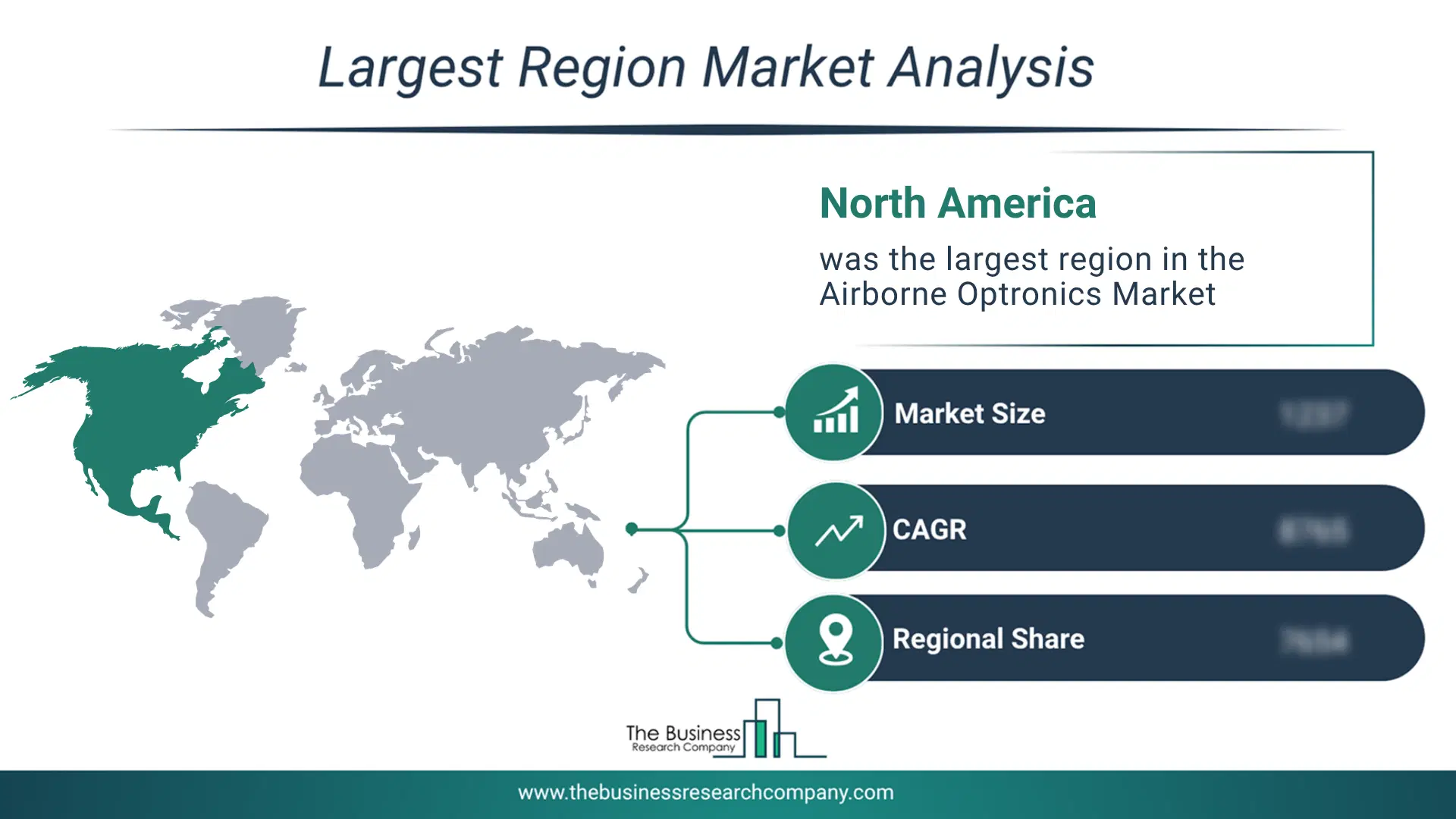
Regional Insights
North America was the largest region in the airborne optronics market in 2025. North America is expected to be the fastest growing region in the forecast period. The regions covered in the airborne optronics market report are Asia-Pacific, South East Asia, Western Europe, Eastern Europe, North America, South America, Middle East, Africa. The countries covered in the airborne optronics market report are Australia, Brazil, China, France, Germany, India, Indonesia, Japan, Taiwan, Russia, South Korea, UK, USA, Canada, Italy, SpainWhat Defines the Airborne Optronics Market?
The airborne optronics market consists of sales of laser warning receivers, laser countermeasures, laser range finders, sighting systems, AFV fire control and navigation systems. Values in this market are ‘factory gate’ values, that is the value of goods sold by the manufacturers or creators of the goods, whether to other entities (including downstream manufacturers, wholesalers, distributors and retailers) or directly to end customers. The value of goods in this market includes related services sold by the creators of the goods.How is Market Value Defined and Measured?
The market value is defined as the revenues that enterprises gain from the sale of goods and/or services within the specified market and geography through sales, grants, or donations in terms of the currency (in USD unless otherwise specified). The revenues for a specified geography are consumption values that are revenues generated by organizations in the specified geography within the market, irrespective of where they are produced. It does not include revenues from resales along the supply chain, either further along the supply chain or as part of other products.
This chart presents market attractiveness based on a quantitative evaluation of growth, competition, strategic alignment, and risk, offering a clear view of opportunity areas for decision-making. This chart is for illustrative purposes; the full report contains the complete analysis.

This chart highlights the Total Addressable Market (TAM) by estimating the maximum revenue opportunity using an assumption-driven approach, supporting strategic planning and opportunity sizing across markets. The chart is illustrative; the full report provides a more comprehensive analysis.
What Key Data and Analysis Are Included in the Airborne Optronics Market Report 2026?
The airborne optronics market research report is one of a series of new reports from The Business Research Company that provides market statistics, including industry global market size, regional shares, competitors with the market share, detailed market segments, market trends and opportunities, and any further data you may need to thrive in the airborne optronics industry. The market research report delivers a complete perspective of everything you need, with an in-depth analysis of the current and future state of the industry.Airborne Optronics Market Report Forecast Analysis
| Report Attribute | Details |
|---|---|
| Market Size Value In 2026 | $2.77 billion |
| Revenue Forecast In 2030 | $4.75 billion |
| Growth Rate | CAGR of 14.4% from 2026 to 2030 |
| Base Year For Estimation | 2025 |
| Actual Estimates/Historical Data | 2020-2025 |
| Forecast Period | 2026 - 2030 |
| Market Representation | Revenue in USD Billion and CAGR from 2026 to 2030 |
| Segments Covered | Aircraft Type, Technology, System, Application, End User |
| Regional Scope | Asia-Pacific, Western Europe, Eastern Europe, North America, South America, Middle East, Africa |
| Country Scope | The countries covered in the airborne optronics market report are Australia, Brazil, China, France, Germany, India, Indonesia, Japan, Taiwan, Russia, South Korea, UK, USA, Canada, Italy, Spain |
| Key Companies Profiled | Leonardo S.p.A, Thales Group, Teledyne Technologies Incorporated, Safran S.A, Elbit Systems Ltd., Lockheed Martin Corporation, Stark Aerospace Inc., L3Harris Technologies Inc., Hensoldt AG, Collins Aerospace, Israel Aerospace Industries, Rafael Advanced Defense Systems Ltd., Kappa Optronics GmbH, Bae Systems plc, Resonon Inc., Excelitas Technologies Corporation, Osi Optoelectronics Inc., Leidos Holdings Inc., Aselsan A.Ş, Intevac Inc., Ximea GmbH, Headwall Photonics Inc., Cubert GmbH., Maxar Technologies Inc., Northrop Grumman Corporation, RTX Corporation, General Dynamics Corporation, Honeywell Aerospace, Pratt & Whitney, Rolls-Royce Holdings plc, General Electric Aviation, Spirit AeroSystems Inc., GKN Aerospace Services Limited, Triumph Group Inc. |
| Customization Scope | Request for Customization |
| Pricing And Purchase Options | Explore Purchase Options |