

Automotive Aftermarket Market Report 2026
Global Outlook – By Types (Tire, Battery, Brake Parts, Filters, Body Parts, Lighting And Electronic Components, Wheels, Exhaust Components, Turbochargers), By Vehicle Type (Passenger Cars, Commercial Vehicles ), By Certification Outlook (Genuine Parts, Certified Parts, Uncertified Parts ), By Distribution Channels (Offline Distribution Channel, Online Distribution Channel) – Market Size, Trends, Strategies, and Forecast to 2030
Automotive Aftermarket Market Overview
• Automotive Aftermarket market size has reached to $498.35 billion in 2025 • Expected to grow to $722.43 billion in 2030 at a compound annual growth rate (CAGR) of 7.8% • Growth Driver: Spare Parts Demand Set To Drive Automotive Aftermarket Expansion • Market Trend: Automotive Aftermarket Players Elevate Performance With Advanced Brake Pads • Asia-Pacific was the largest region and fastest growing region.Market Gains By 2030 – Top Opportunities By Segment
Market Gain identifies the most promising market opportunities by highlighting the segments or products expected to generate the highest incremental revenue growth over the next five years.
What Is Covered Under Automotive Aftermarket Market?
The automotive aftermarket is the secondary market of the automotive industry, concerned with the manufacturing, supply, retail, and installation of all vehicle parts, tools, machines, and accessories for light and heavy vehicles, after the sale of the automobile by the OEM (original equipment manufacturer). Aftermarket parts, also called generic parts or non-OEM parts, are made by a manufacturer other than the vehicle's original manufacturer. These parts perform the same function as the original part and can be utilized as a replacement for original parts during repair and maintenance. The main product types in the automotive afterMarket are tires, batteries, brake parts, filters, body parts, lighting and electronic components, wheels, exhaust components, and turbochargers. These products are used in the maintenance and repair process of automobiles. By certification outlook, the main types of automotive aftermarket products are genuine parts, certified parts, and uncertified parts. Automotive aftermarket products are mainly used in passenger cars and commercial vehicles. These products are mainly sold through offline and online distribution channels.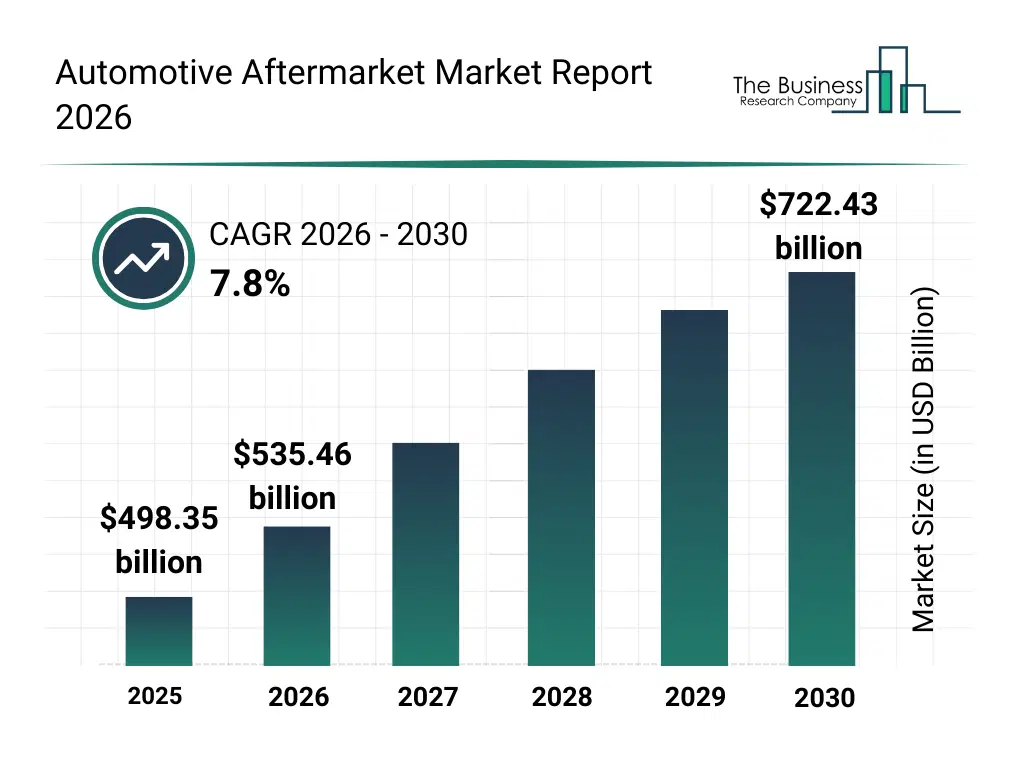
What Is The Automotive Aftermarket Market Size and Share 2026?
The automotive aftermarket market size has grown strongly in recent years. It will grow from $498.35 billion in 2025 to $535.46 billion in 2026 at a compound annual growth rate (CAGR) of 7.4%. The growth in the historic period can be attributed to vehicle parc expansion, demand for affordable replacements, growth of independent repair shops, longer vehicle lifecycles, offline parts distribution.What Is The Automotive Aftermarket Market Growth Forecast?
The automotive aftermarket market size is expected to see strong growth in the next few years. It will grow to $722.43 billion in 2030 at a compound annual growth rate (CAGR) of 7.8%. The growth in the forecast period can be attributed to e-commerce penetration, ev fleet growth, digital inventory management, connected vehicle diagnostics, sustainability-driven remanufacturing. Major trends in the forecast period include expansion of online aftermarket platforms, growth of ev-specific replacement parts, adoption of predictive maintenance tools, rising demand for certified parts, integration of digital supply chains.
Global Automotive Aftermarket Market Segmentation
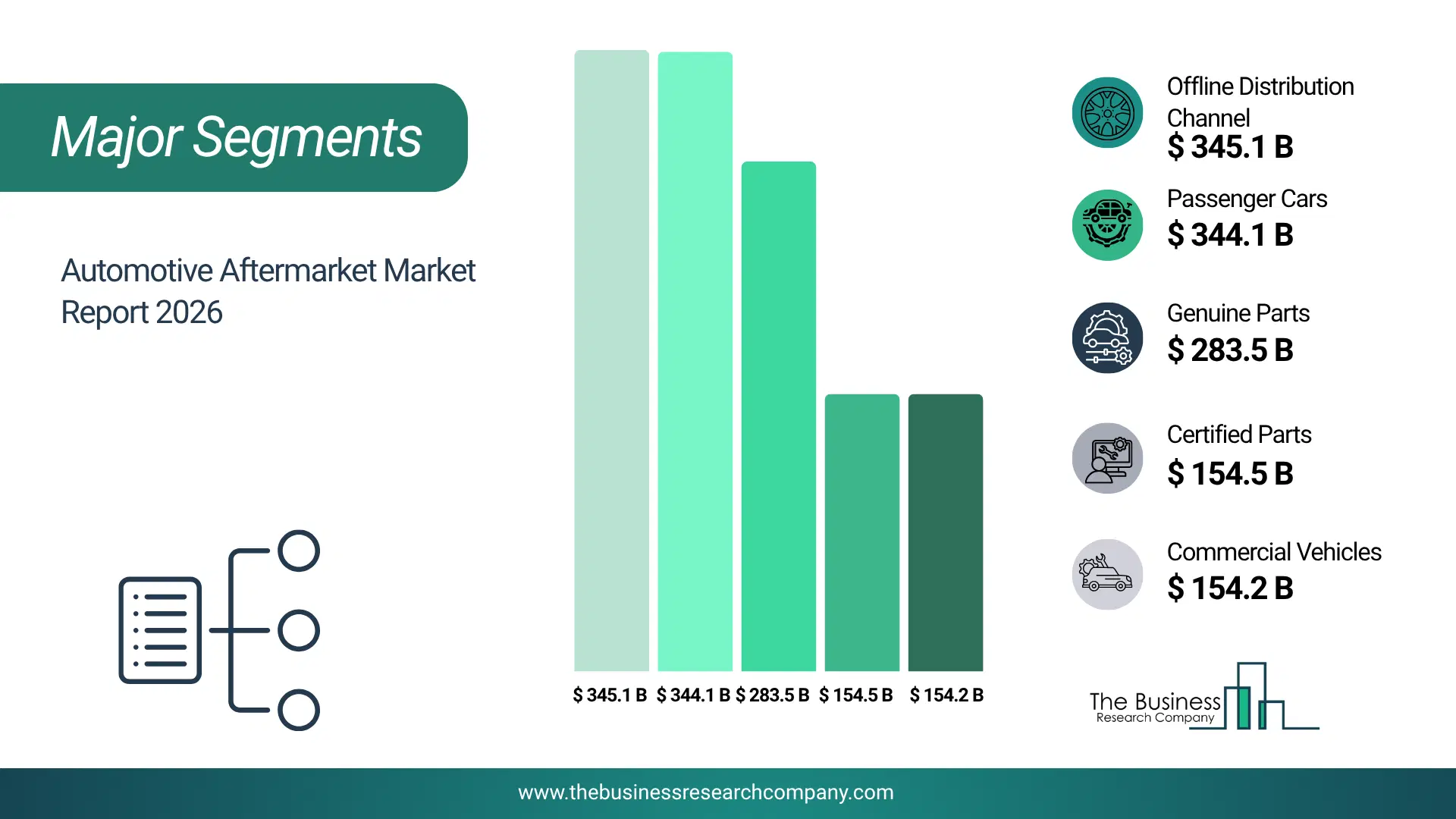
1) By Types: Tire, Battery, Brake Parts, Filters, Body Parts, Lighting And Electronic Components, Wheels, Exhaust Components, Turbochargers 2) By Vehicle Type: Passenger Cars, Commercial Vehicles 3) By Certification Outlook: Genuine Parts, Certified Parts, Uncertified Parts 4) By Distribution Channels: Offline Distribution Channel, Online Distribution Channel Subsegments: 1) By Tire: All-Season Tires, Performance Tires, Winter Tires, Off-Road Tires 2) By Battery: Lead-Acid Batteries, Lithium-Ion Batteries, AGM (Absorbent Glass Mat) Batteries, Deep Cycle Batteries 3) By Brake Parts: Brake Pads, Brake Rotors, Brake Calipers, Brake Hoses 4) By Filters: Engine Air Filters, Cabin Air Filters, Oil Filters, Fuel Filters 5) By Body Parts: Bumpers, Fenders, Hoods, Doors, Mirrors 6) By Lighting And Electronic Components: Headlights, Taillights, Turn Signal Lights 7) By Wheels: Alloy Wheels, Steel Wheels, Wheel Covers, Wheel Spacers 8) By Exhaust Components: Exhaust Pipes, Mufflers, Catalytic Converters, Exhaust Manifolds 9) By Turbochargers: Performance Turbochargers, Turbo Kits The top segments in the automotive aftermarket market will be: • Offline Distribution Channel will reach $345147.65 Million by 2025. • Passenger Cars will reach $344103.1 Million by 2025. • Genuine Parts will reach $283525.85 Million by 2025. • Certified Parts will reach $154543.12 Million by 2025. • Commercial Vehicles will reach $154245.03 Million by 2025.What Is The Driver Of The Automotive Aftermarket Market?
Increasing demand for spare parts is expected to drive the automotive aftermarket going forward. Spare parts are components or items that are used to replace or repair damaged, worn-out, or malfunctioning parts of a product or machinery. In the automotive aftermarket, spare parts are used for supporting maintenance, repair, and customization activities for vehicles. For instance, in July 2024, according to the Bureau of Labor Statistics, a US-based federal agency, in 2023, U.S. motor vehicle parts manufacturing exports reached $60.6 billion, a 16.3% increase from 2022. The top six exporting states contributed 62.5% of this total. Michigan led with $11.0 billion (18.1%), followed by Texas at $8.9 billion (14.6%), and Indiana with $5.3 billion (8.7%). Therefore, increasing demand for spare parts will drive the growth of the automotive aftermarket.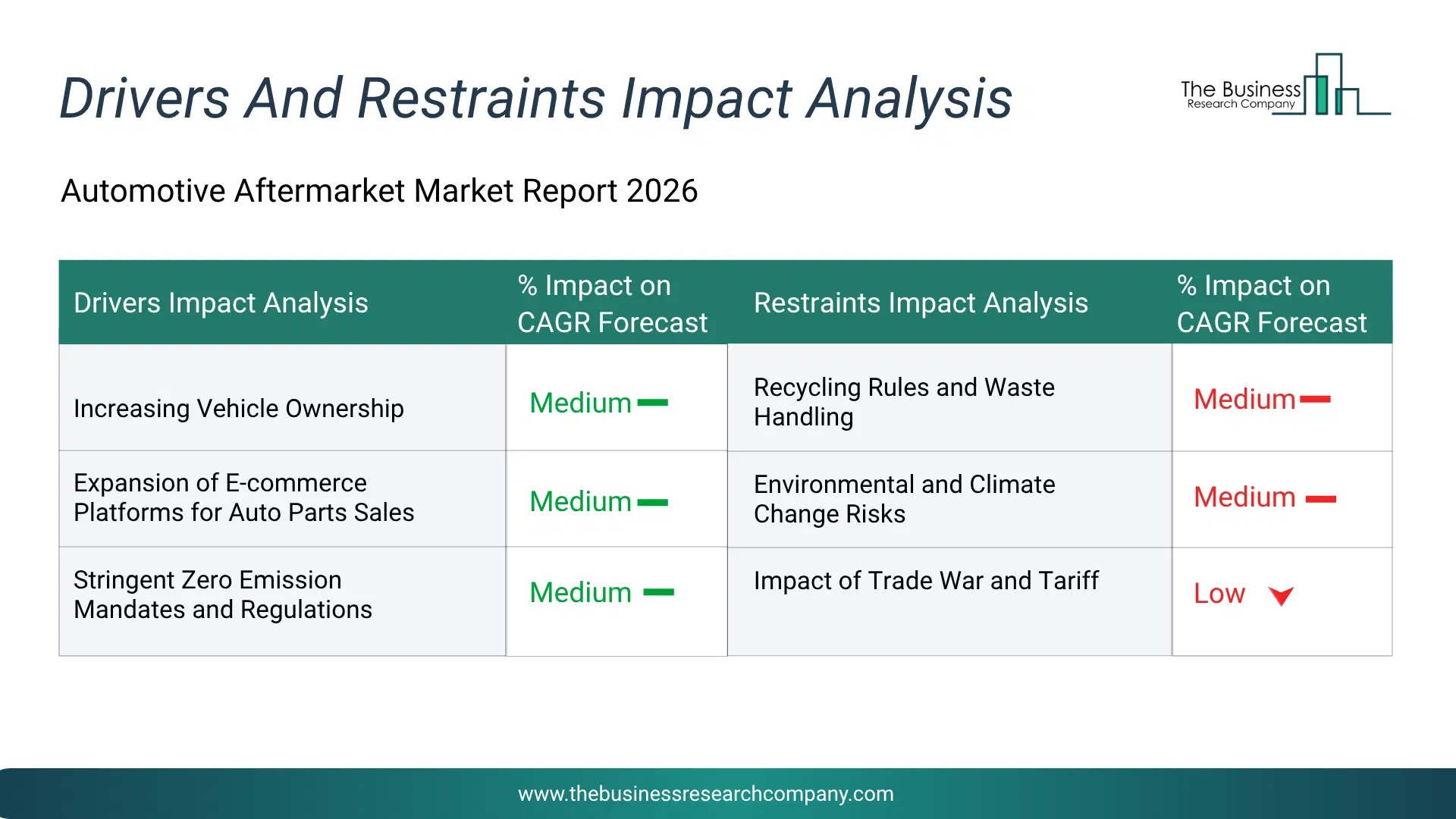
Infographic Chart Showing Key Market Drivers Analysis And Restraints For Automotive Aftermarket Market
The chart presents an impact analysis of key drivers and restraints, quantifying their relative influence on the market's growth rate and helping assess the balance between growth enablers and limiting factors. This chart offers a high-level perspective; the full report contains more detailed insights.
How Will The Drivers Impact Growth In The Global Automotive Aftermarket Market?
• Increasing Vehicle Ownership (Medium) – The increasing vehicle ownership will become a key driver of growth in the automotive aftermarket market by 2030. As rising incomes, urbanization and improved infrastructure enable more individuals to afford private mobility, the number of vehicles on roads is expected to grow substantially, fuelling demand for servicing, spare parts and related aftermarket services. More vehicles in use means more wear and tear, more regular maintenance, more component replacements and higher utilization of repair networks. Moreover, as ownership penetrates into smaller towns and rural districts, demand for spare parts and authorized service centers will spread beyond major cities, compelling aftermarket suppliers to expand reach and capacity. Rising vehicle ownership per capita will be driven not only by greater affordability but also by changing mobility preferences, ensuring a sustained increase in demand for maintenance and aftermarket solutions. As a result, the increasing vehicle ownership is anticipated to contributing to a 1.5% annual growth in the market. • Expansion of E-commerce Platforms for Auto Parts Sales (Medium) – The expansion of e-commerce platforms for auto parts sales will emerge as a major factor driving the expansion of the market by 2030. As more dealers, service centers and individual consumers shift their purchasing behaviour online, demand for digital channels that offer convenience, variety and transparent pricing will rise sharply. E-commerce platforms allow aftermarket suppliers to reach customers beyond their traditional geographic limitations, provide extensive catalogs including niche or hard-to-find parts and support features like easy comparison, vehicle-fit tools and streamlined delivery, factors that enhance buyer confidence and accelerate sales. E-commerce tools like marketplace models and direct-to-consumer storefronts are being adopted more widely across the sector. Consequently, the expansion of e-commerce platforms for auto parts sales is projected to contributing to a 1.2% annual growth in the market. • Stringent Zero Emission Mandates and Regulations (Medium) – The stringent zero emission mandates and regulations will serve as a key growth catalyst for the market by 2030. As governments strengthen policies requiring a growing share of new vehicle sales to be zero-emission (battery, fuel cell, or plug-in hybrid vehicles), the composition of vehicle fleets will shift. This transition will stimulate demand for new types of aftermarket services, parts and maintenance tailored to electric and hybrid drivetrains, such as battery diagnostics, electric motor repairs, inverter replacements and high voltage wiring servicing. Additionally, the move toward ZEVs will reduce the need for traditional components like exhaust systems, internal combustion engine parts and related consumables, forcing aftermarket players to adapt product portfolios, skills and supply chains. Regulatory frameworks like Canada’s Electric Vehicle Availability Standard require automakers and importers to meet increasing zero-emission vehicle sales targets, from a modest share initially up to full compliance in later years. As such regulations become more widespread globally, the aftermarket industry must pivot to support new vehicle architectures and comply with evolving safety and technical standards. Therefore, this stringent zero-emission mandates and regulations is projected to supporting to a 1.0% annual growth in the market. • Rising Adoption of Automation in Fleet Management (Low) – The rising adoption of automation in fleet management will become a significant driver contributing to the growth of the market by 2030. As fleets increasingly implement automated systems, such as predictive maintenance, route optimization, real-time diagnostics and telematics platforms the demand for parts, servicing and aftermarket support tailored to automated workflows will rise. Automation reduces downtime, alerts maintenance needs before failures and improves parts lifecycle management, which means spare parts must meet higher technical standards and be more reliably available. Additionally, shops and service networks will need to adapt by stocking components compatible with sensors, ADAS (Advanced Driver Assistance Systems), electronic control units and other sophisticated hardware, while technicians will require new skills to service automated systems. More operators are using unified digital platforms to monitor vehicle health, driver behaviour and usage data, enabling automated scheduling of repairs and parts replenishment. These shifts are encouraging aftermarket suppliers to invest in faster distribution, better component quality assurance and tech-oriented service offerings. Consequently, the rising adoption of automation in fleet management is projected to contributing to a 0.7% annual growth in the market.How Will The Restraints Impact Growth In The Global Automotive Aftermarket Market?
• Recycling Rules and Waste Handling (Medium) – Recycling Rules and Waste Handling will restrict the growth of the Automotive Aftermarket market during the forecast period. Automotive aftermarket parts and components are subject to regulations on waste disposal and recycling. Compliance with environmental regulations increases costs for parts manufacturers and distributors. Waste handling requirements can affect the availability and pricing of aftermarket parts, limiting market growth. • Environmental and Climate Change Risks (Medium) – Environmental and Climate Change Risks will restrict the growth of the Automotive Aftermarket market during the forecast period. Climate change and environmental regulations affect the automotive aftermarket through parts availability and material sourcing. Supply chain disruptions from extreme weather events can affect parts availability and pricing. Environmental concerns may also drive changes in vehicle technology and maintenance requirements, affecting aftermarket demand. • Impact of Trade War and Tariff (Low) – Impact of Trade War and Tariff will restrict the growth of the Automotive Aftermarket market during the forecast period. Trade tariffs on automotive parts affect aftermarket pricing and availability. Supply chain disruptions from trade tensions can lead to parts shortages and increased costs. Trade barriers may also impact the competitiveness of aftermarket parts manufacturers in different regions.Key Players In The Global Automotive Aftermarket Market
Major companies operating in the automotive aftermarket market report include Robert Bosch GmbH, ZF Friedrichshafen AG, Denso Corporation, Continental AG, Magna International Inc., Faurecia SE, Valeo SA, Goodyear Tire & Rubber Company, Cooper Tire & Rubber Company, Schaeffler AG, BorgWarner Inc., Dana Incorporated, Magneti Marelli S.p.A., Mahle GmbH, DRiV Incorporated, Hella GmbH & Co. KGaA, Delphi Technologies PLC, Garrett Motion Inc., Exide Technologies Inc., Federal-Mogul LLC, Knorr-Bremse AG, Osram Licht AG, AISIN SEIKI CO. LTD., Lear Corporation, Adient plc, Autoliv Inc., Visteon Corporation, Meritor Inc., Gentex Corporation, WABCO Holdings Inc., Veoneer Inc.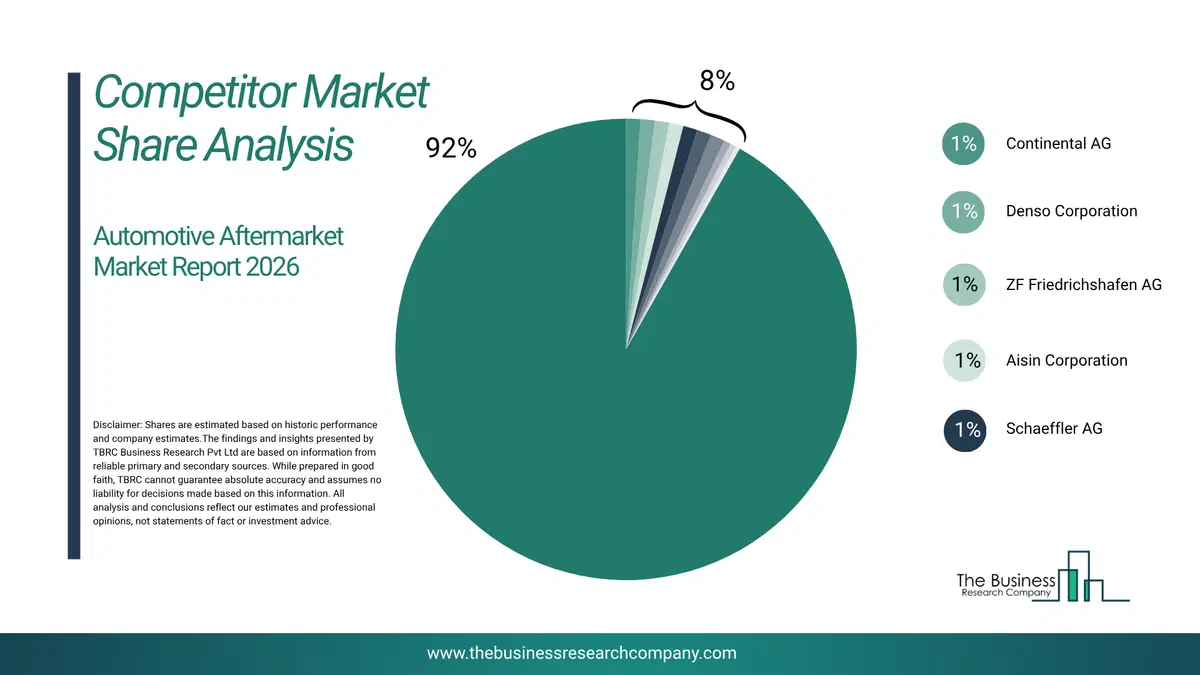
This chart is for illustrative purposes; the full report includes a detailed competitor analysis and comprehensive overview of the top 10 companies in the market.
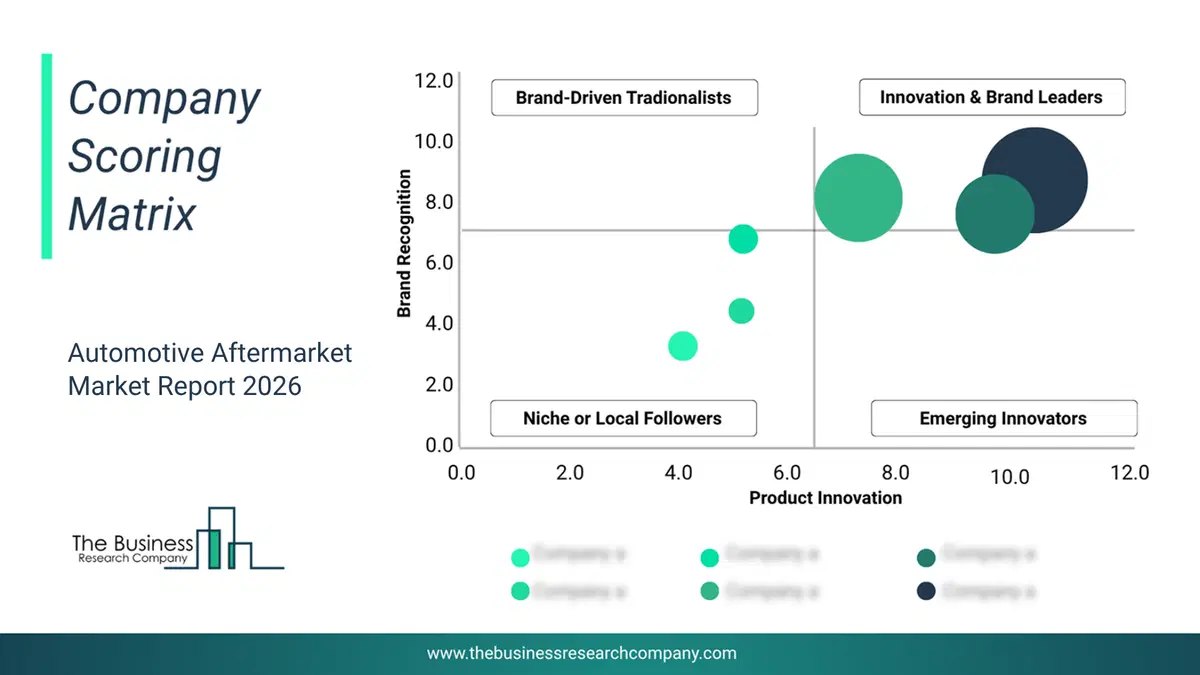
This chart maps companies by product innovation and brand strength, with bubble size indicating relative revenue, helping identify market leaders, challengers, and niche players. This is an illustrative chart; the full report provides a complete and accurate competitive analysis.
Global Automotive Aftermarket Market Trends and Insights
Major companies operating in the automotive aftermarket are focused on developing innovative solutions such as the latest aftermarket brake pads. Aftermarket brake pads refer to replacement brake pads that are produced by third-party manufacturers and are not the original equipment manufacturer (OEM) parts supplied by the vehicle's maker. For instance, in October 2023, Brembo S.p.A., an Italy-based automotive braking systems manufacturer announced the launch of the ‘Copper Free XTRA’ brake pad line. It is integrated with Low Met and Ceramic NAO formulations that help to bridge the gap between the Brembo's aftermarket and performance lines. The XTRA Low Met line delivers top-tier performance, braking capabilities, and an exceptional driving experience tailored for car enthusiasts. The XTRA Ceramic line provides outstanding performance and comfort, with minimal dust to guarantee cleaner wheels.What Are Latest Mergers And Acquisitions In The Automotive Aftermarket Market?
In May 2024, MEKO, a Sweden-based manufacturer of precision components, acquired Elit Polska for an undisclosed amount. The acquisition significantly increases MEKO's market share in Poland from approximately 5% to around 8%, positioning it as the third-largest player in the Polish automotive aftermarket. This expansion allows MEKO to strengthen its presence in one of Europe's largest markets for automotive parts and services, enhancing its competitive standing. Elit Polska is a Poland-based manufacturer of automotive accessories and spare parts.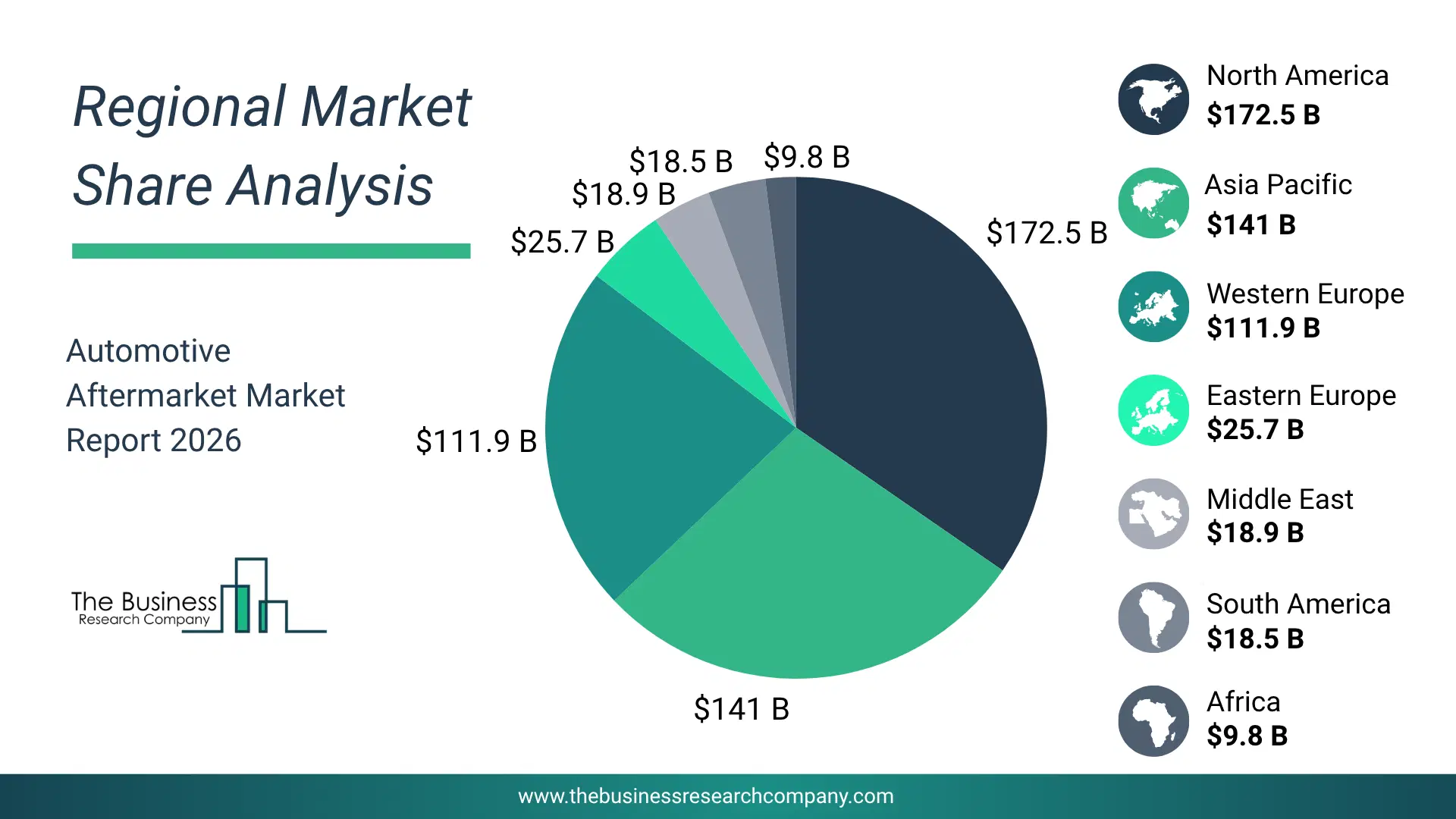
Regional Outlook
Asia-Pacific was the largest region in the automotive afterMarket in 2025. Asia-Pacific is expected to be the fastest-growing region in the forecast period. The regions covered in this market report include Asia-Pacific, South East Asia, Western Europe, Eastern Europe, North America, South America, Middle East, Africa. The countries covered in this market report include Australia, Brazil, China, France, Germany, India, Indonesia, Japan, Taiwan, Russia, South Korea, UK, USA, Canada, Italy, SpainWhat Defines the Automotive Aftermarket Market?
The automotive aftermarket includes revenue earned by entities by vehicle parts, equipment, replacement tires, service repair, collision repair and accessories. The market value includes the value of related goods sold by the service provider or included within the service offering. Only goods and services traded between entities or sold to end consumers are included.How is Market Value Defined and Measured?
The market value is defined as the revenues that enterprises gain from the sale of goods and/or services within the specified market and geography through sales, grants, or donations in terms of the currency (in USD unless otherwise specified). The revenues for a specified geography are consumption values that are revenues generated by organizations in the specified geography within the market, irrespective of where they are produced. It does not include revenues from resales along the supply chain, either further along the supply chain or as part of other products.
This chart presents market attractiveness based on a quantitative evaluation of growth, competition, strategic alignment, and risk, offering a clear view of opportunity areas for decision-making. This chart is for illustrative purposes; the full report contains the complete analysis.

This chart highlights the Total Addressable Market (TAM) by estimating the maximum revenue opportunity using an assumption-driven approach, supporting strategic planning and opportunity sizing across markets. The chart is illustrative; the full report provides a more comprehensive analysis.
What Key Data and Analysis Are Included in the Automotive Aftermarket Market Report 2026?
The automotive aftermarket market research report is one of a series of new reports from The Business Research Company that provides market statistics, including industry global market size, regional shares, competitors with the market share, detailed market segments, market trends and opportunities, and any further data you may need to thrive in the automotive aftermarket industry. The market research report delivers a complete perspective of everything you need, with an in-depth analysis of the current and future state of the industry.Automotive Aftermarket Market Report Forecast Analysis
| Report Attribute | Details |
|---|---|
| Market Size Value In 2026 | $535.46 billion |
| Revenue Forecast In 2030 | $722.43 billion |
| Growth Rate | CAGR of 7.4% from 2026 to 2030 |
| Base Year For Estimation | 2025 |
| Actual Estimates/Historical Data | 2020-2025 |
| Forecast Period | 2026 - 2030 |
| Market Representation | Revenue in USD Billion and CAGR from 2026 to 2030 |
| Segments Covered | Types, Vehicle Type, Certification Outlook, Distribution Channels |
| Regional Scope | Asia-Pacific, Western Europe, Eastern Europe, North America, South America, Middle East, Africa |
| Country Scope | The countries covered in the report are Australia, Brazil, China, France, Germany, India, Indonesia, Japan, Taiwan, Russia, South Korea, UK, USA, Canada, Italy, Spain. |
| Key Companies Profiled | Robert Bosch GmbH, ZF Friedrichshafen AG, Denso Corporation, Continental AG, Magna International Inc., Faurecia SE, Valeo SA, Goodyear Tire & Rubber Company, Cooper Tire & Rubber Company, Schaeffler AG, BorgWarner Inc., Dana Incorporated, Magneti Marelli S.p.A., Mahle GmbH, DRiV Incorporated, Hella GmbH & Co. KGaA, Delphi Technologies PLC, Garrett Motion Inc., Exide Technologies Inc., Federal-Mogul LLC, Knorr-Bremse AG, Osram Licht AG, AISIN SEIKI CO. LTD., Lear Corporation, Adient plc, Autoliv Inc., Visteon Corporation, Meritor Inc., Gentex Corporation, WABCO Holdings Inc., Veoneer Inc. |
| Customization Scope | Request for Customization |
| Pricing And Purchase Options | Explore Purchase Options |