
Automotive Foam Market Report 2026
Global Outlook – By Type (Polyurethane (PU) Foam, Polyolefin (PO) Foam), By Application (Seating, Door Panels and Watershields, Instrument Panels, Bumper System, Other Applications ), By End-User Industry (Passenger Cars, Heavy Commercial Vehicles (HCVs), Light Commercial Vehicles (LCVs)) – Market Size, Trends, Strategies, and Forecast to 2030
Automotive Foam Market Overview
• Automotive Foam market size has reached to $48.95 billion in 2025 • Expected to grow to $82.12 billion in 2030 at a compound annual growth rate (CAGR) of 10.9% • Growth Driver: Growing Demand For Electric Vehicles Propels Automotive Foam Market Growth • Asia-Pacific was the largest region in 2025.What Is Covered Under Automotive Foam Market?
The automotive foam refers to materials produced by combining polyols and diisocyanates, which are frequently derived from crude oil and other bio-based biomass. The foams are used in automobile seats, armrests, and headrests, where their cushioning properties help to reduce fatigue and stress. The main types of automotive foams are polyurethane (PU) foam, polyolefin (PO) foam, and other foams. Polyurethane (PU) foam refers to foam made up of polyurethane (PU). Polyurethane is a type of polymer offered in both solid and foam forms. In particular, the polyurethane foam has an open cell structure to achieve this shape and may be rigid or flexible. The automotive foams are applied in seats, door panels and watershields, instrument panels, bumper systems, and other applications that are suitable for passenger cars, heavy commercial vehicles (HCVs), and light commercial vehicles (LCVs).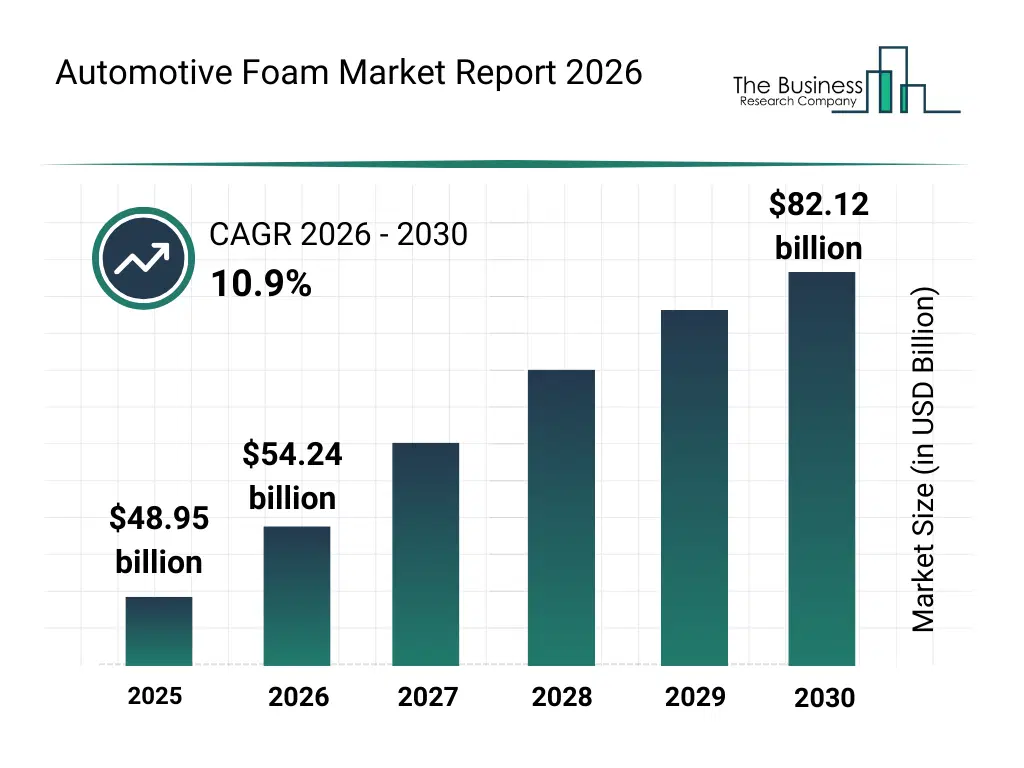
What Is The Automotive Foam Market Size and Share 2026?
The automotive foam market size has grown rapidly in recent years. It will grow from $48.95 billion in 2025 to $54.24 billion in 2026 at a compound annual growth rate (CAGR) of 10.8%. The growth in the historic period can be attributed to passenger vehicle production growth, demand for comfort features, polyurethane foam adoption, automotive interior evolution, crude oil-based raw material availability.What Is The Automotive Foam Market Growth Forecast?
The automotive foam market size is expected to see rapid growth in the next few years. It will grow to $82.12 billion in 2030 at a compound annual growth rate (CAGR) of 10.9%. The growth in the forecast period can be attributed to electric vehicle interior redesigns, lightweighting regulations, sustainable material demand, autonomous vehicle comfort focus, premium vehicle growth. Major trends in the forecast period include shift toward lightweight foam materials, adoption of bio-based foams, demand for enhanced seating comfort, growth of noise and vibration reduction solutions, expansion of interior customization.
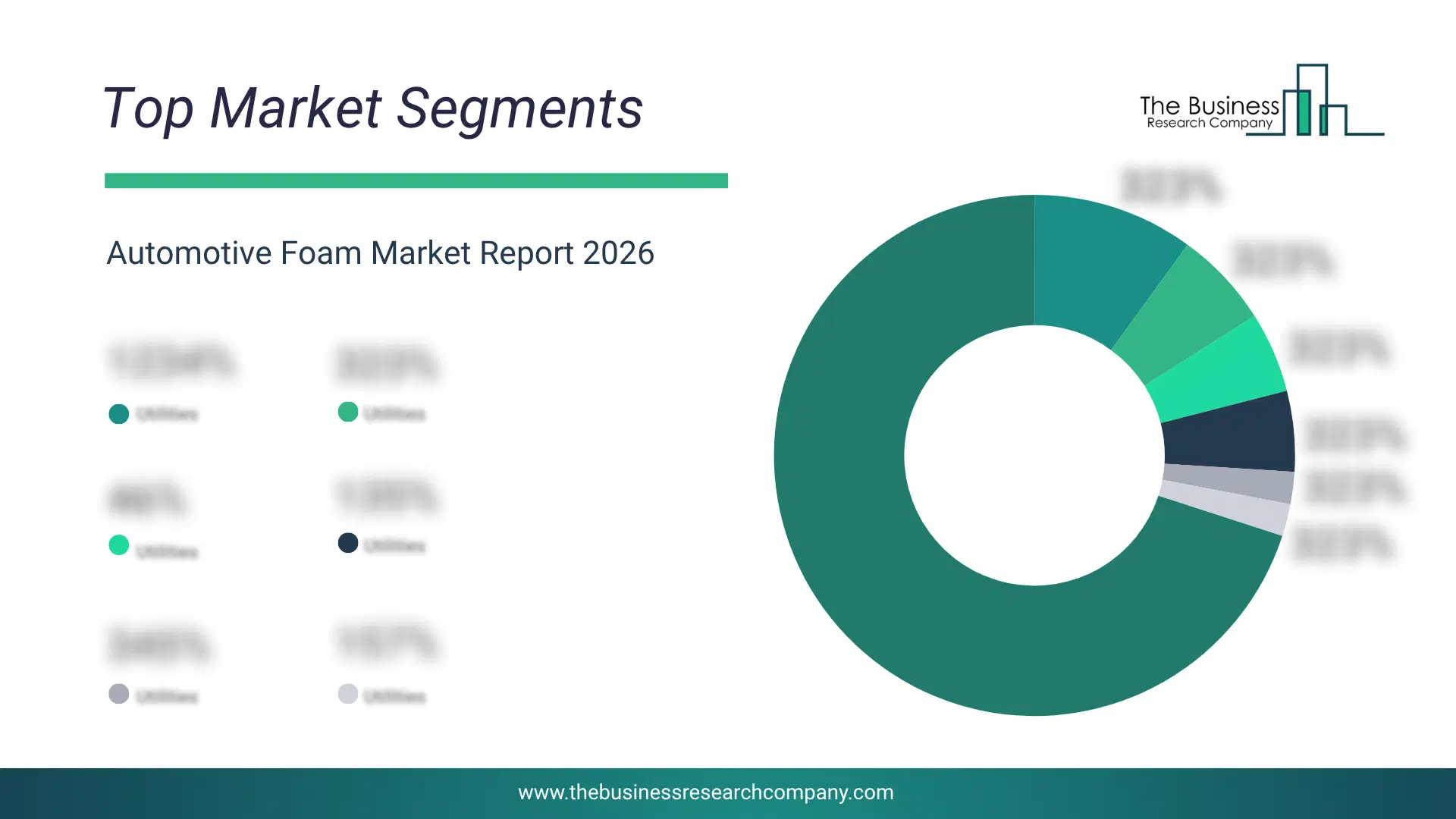
Global Automotive Foam Market Segmentation
1) By Type: Polyurethane (PU) Foam, Polyolefin (PO) Foam 2) By Application: Seating, Door Panels and Watershields, Instrument Panels, Bumper System, Other Applications 3) By End-User Industry: Passenger Cars, Heavy Commercial Vehicles (HCVs), Light Commercial Vehicles (LCVs) Subsegments: 1) By Polyurethane (PU) Foam: Flexible PU Foam, Rigid PU Foam, High-Density PU Foam, Low-Density PU Foam 2) By Polyolefin (PO) Foam: Ethylene Vinyl Acetate (EVA) Foam, Polyethylene (PE) Foam, Polypropylene (PP) FoamWhat Are The Drivers Of The Automotive Foam Market?
The increase in demand for electric vehicles is expected to propel the growth of the automotive foam market going forward. While the economic effect of COVID-19 has dampened demand for petrol and diesel cars, demand for electric and hybrid vehicles has increased. Climate warming and aspirations to achieve net-zero emissions are driving the global shift to emissions-free motoring. These EV vehicle shifts help the economy by reducing fuel costs and changing consumption from petroleum products to more locally produced power vehicles. These factors increased the demand for automobile foam, offering passengers maximum comfort, safety, and security during the drive. In March 2024, according to the International Energy Agency, a France-based intergovernmental organisation, around 14 million electric cars were registered globally in 2023, marking a 35% increase over the 10.5 million registered in 2022. Electric vehicles (EVs) made up 18% of total car sales in 2023, up from 14% in 2022. This growth demonstrates strong momentum in the EV market, with weekly registrations in 2023 exceeding 250,000. Battery electric vehicles accounted for 70% of the total electric car stock in 2023. Therefore, rising demand for electric and hybrid vehicles will drive the automative foam market. The rising use of shockless materials has emerged as a key trend gaining popularity in the automotive foam market. Shockless materials are specialized substances designed to absorb and dissipate impact energy, minimizing damage and protecting sensitive components, such as those found in electric vehicle batteries, during collisions or thermal events. Major companies operating in the automotive foam market are focused on providing technologically advanced shockless foam materials to strengthen their market position. For instance, in April 2024, Huntsman, a US-based chemical company, launched the Shokless polyurethane foam systems. The new range is designed for potting and securing cells installed in electric vehicle (EV) batteries. It also features products that serve as moldable encapsulants for battery modules or packs. The Shokless foam systems provide a versatile solution to protect the structural integrity of EV batteries during impacts or thermal events. This product family consists of low to high-density foams that can be applied using standard polyurethane dispensing methods, offering a broad processing window for enhanced handling flexibility.Key Players In The Global Automotive Foam Market
Major companies operating in the automotive foam market report include BASF SE, Covestro AG, Huntsman International LLC, Dow Chemical Company, Recticel Group, Woodbridge Foam Corporation, Johnson Controls International plc, Adient plc, Lear Corporation, Sheela Foam Ltd., FoamPartner Group, Zotefoams plc, Sekisui Chemical Co. Ltd., Armacell International Holding GmbH, Compagnie de Saint-Gobain SA, Rogers Corporation, UFP Technologies Inc., Foam Supplies Inc., Future Foam Inc., Foamcraft Inc., Foamex Innovations Holdings LLC, General Plastics Manufacturing Company, Grand Rapids Foam Technologies LLC, Vitafoam Products Canada Limited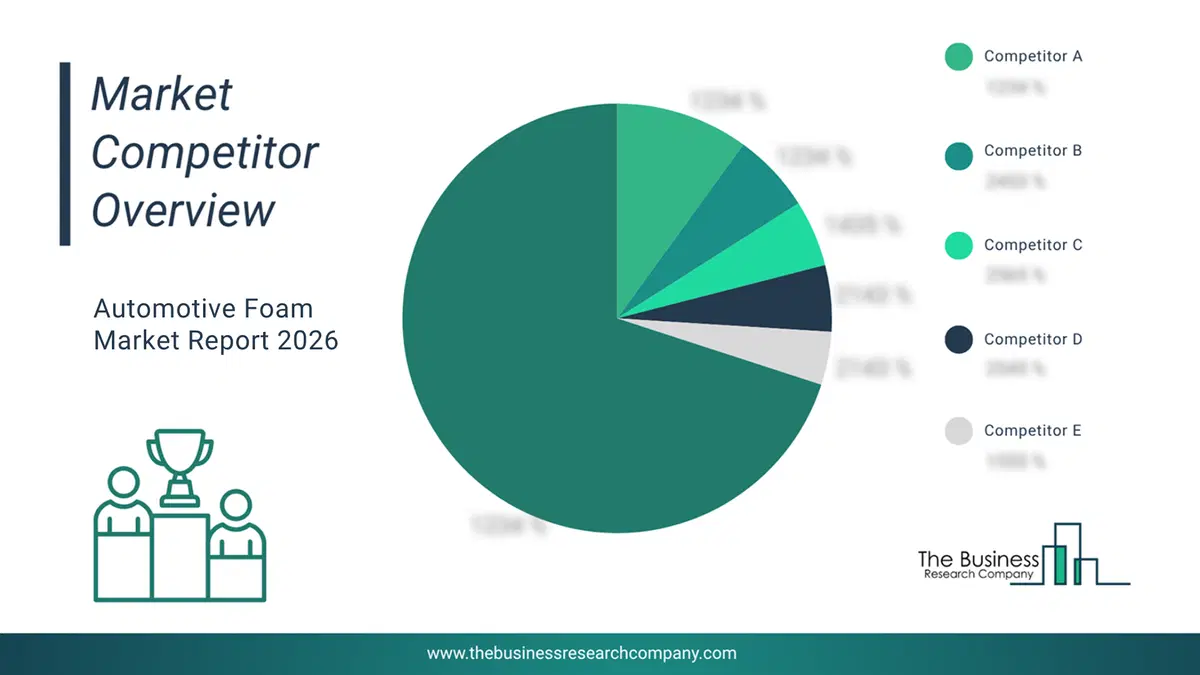
This chart is for illustrative purposes; the full report includes a detailed competitor analysis and comprehensive overview of the top 10 companies in the market.
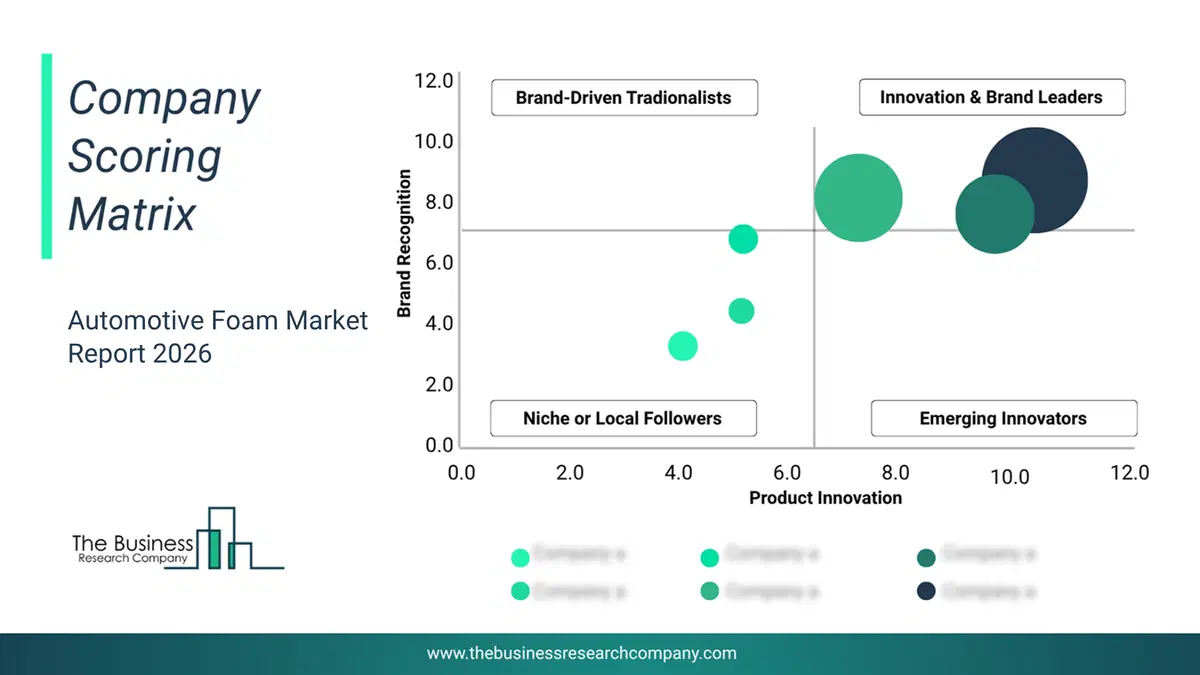
This chart maps companies by product innovation and brand strength, with bubble size indicating relative revenue, helping identify market leaders, challengers, and niche players. This is an illustrative chart; the full report provides a complete and accurate competitive analysis.
What Are Latest Mergers And Acquisitions In The Automotive Foam Market?
In December 2024, Adient, a US-based manufacturer of automotive seating foam, partnered with Jaguar Land Rover and Dow to advance sustainability in automotive foam through circular economy practices. The partnership aims to develop closed-loop polyurethane foam seats by converting end-of-life vehicle foam into recycled polyol for new seat cushions. Jaguar Land Rover is a UK-based luxury vehicle manufacturer focused on high-quality seating integration and circular design, while Dow is a US-based materials science company specializing in polyurethanes, polyolefins, silicones, and other advanced materials.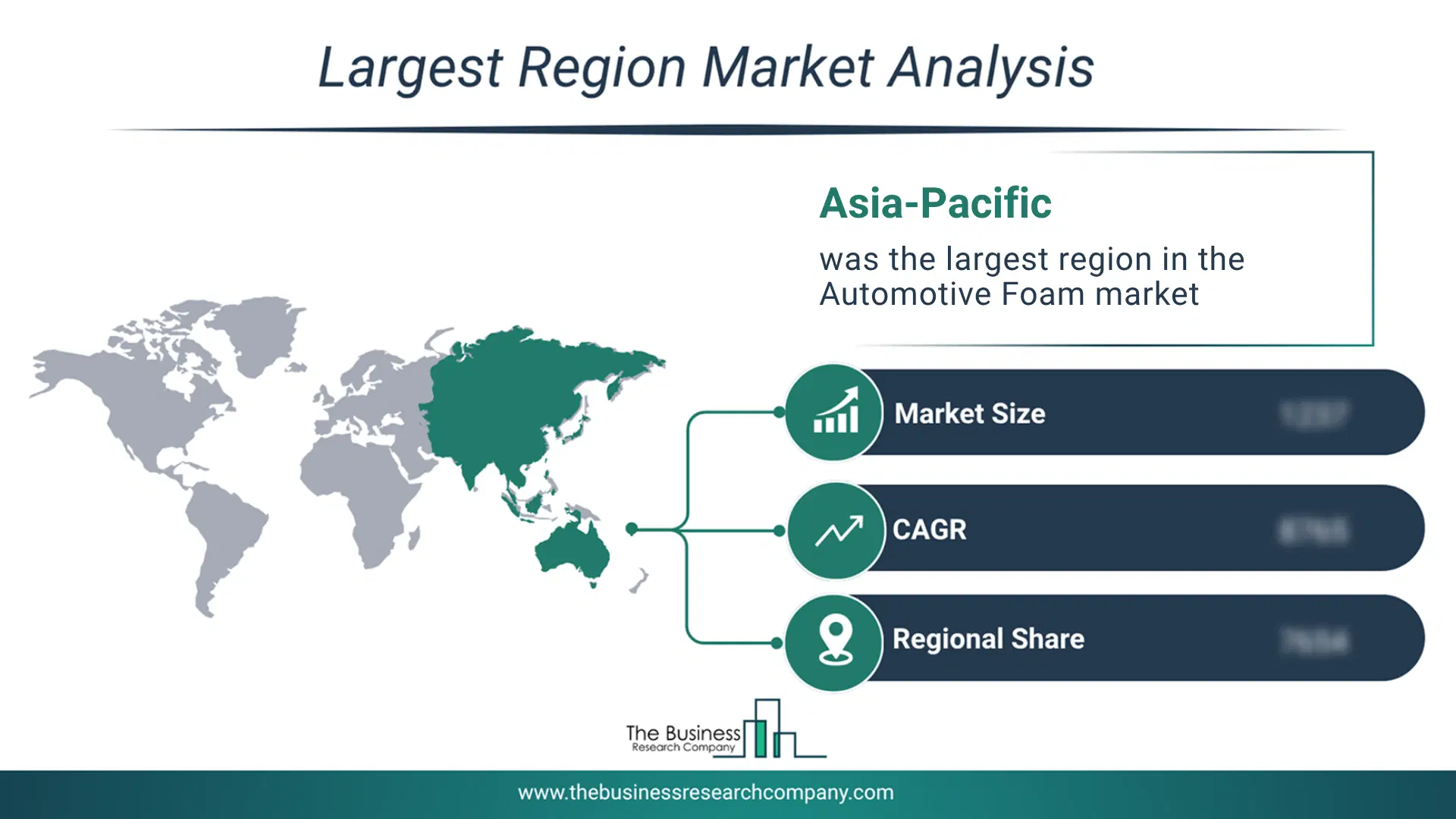
Regional Outlook
Asia-Pacific was the largest region in the automotive foam market in 2025. The regions covered in this market report include Asia-Pacific, South East Asia, Western Europe, Eastern Europe, North America, South America, Middle East, Africa. The countries covered in this market report include Australia, Brazil, China, France, Germany, India, Indonesia, Japan, Taiwan, Russia, South Korea, UK, USA, Canada, Italy, SpainWhat Defines the Automotive Foam Market?
The automotive foam market consists of sales of open cell foam, closed cell foams, melamine foam, and natural fibers foams. Values in this market are ‘factory gate’ values, that is the value of goods sold by the manufacturers or creators of the goods, whether to other entities (including downstream manufacturers, wholesalers, distributors and retailers) or directly to end customers. The value of goods in this market includes related services sold by the creators of the goods.How is Market Value Defined and Measured?
The market value is defined as the revenues that enterprises gain from the sale of goods and/or services within the specified market and geography through sales, grants, or donations in terms of the currency (in USD unless otherwise specified). The revenues for a specified geography are consumption values that are revenues generated by organizations in the specified geography within the market, irrespective of where they are produced. It does not include revenues from resales along the supply chain, either further along the supply chain or as part of other products.
This chart presents market attractiveness based on a quantitative evaluation of growth, competition, strategic alignment, and risk, offering a clear view of opportunity areas for decision-making. This chart is for illustrative purposes; the full report contains the complete analysis.

This chart highlights the Total Addressable Market (TAM) by estimating the maximum revenue opportunity using an assumption-driven approach, supporting strategic planning and opportunity sizing across markets. The chart is illustrative; the full report provides a more comprehensive analysis.
What Key Data and Analysis Are Included in the Automotive Foam Market Report 2026?
The automotive foam market research report is one of a series of new reports from The Business Research Company that provides market statistics, including industry global market size, regional shares, competitors with the market share, detailed market segments, market trends and opportunities, and any further data you may need to thrive in the automotive foam industry. The market research report delivers a complete perspective of everything you need, with an in-depth analysis of the current and future state of the industry.Automotive Foam Market Report Forecast Analysis
| Report Attribute | Details |
|---|---|
| Market Size Value In 2026 | $54.24 billion |
| Revenue Forecast In 2030 | $82.12 billion |
| Growth Rate | CAGR of 10.8% from 2026 to 2030 |
| Base Year For Estimation | 2025 |
| Actual Estimates/Historical Data | 2020-2025 |
| Forecast Period | 2026 - 2030 - 2030 |
| Market Representation | Revenue in USD Billion and CAGR from 2026 to 2030 |
| Segments Covered | Type, Application, End-User Industry |
| Regional Scope | Asia-Pacific, Western Europe, Eastern Europe, North America, South America, Middle East, Africa |
| Country Scope | The countries covered in the report are Australia, Brazil, China, France, Germany, India, Indonesia, Japan, Taiwan, Russia, South Korea, UK, USA, Canada, Italy, Spain. |
| Key Companies Profiled | BASF SE, Covestro AG, Huntsman International LLC, Dow Chemical Company, Recticel Group, Woodbridge Foam Corporation, Johnson Controls International plc, Adient plc, Lear Corporation, Sheela Foam Ltd., FoamPartner Group, Zotefoams plc, Sekisui Chemical Co. Ltd., Armacell International Holding GmbH, Compagnie de Saint-Gobain SA, Rogers Corporation, UFP Technologies Inc., Foam Supplies Inc., Future Foam Inc., Foamcraft Inc., Foamex Innovations Holdings LLC, General Plastics Manufacturing Company, Grand Rapids Foam Technologies LLC, Vitafoam Products Canada Limited |
| Customization Scope | Request for Customization |
| Pricing And Purchase Options | Explore Purchase Options |