

Biosurfactants Market Report 2026
Global Outlook – By Product Type (Glycolipid, Phospholipids, Surfactin, Lichenysin, Polymeric Bio-surfactants, Other Product Types), By Application (Detergents, Personal Care, Food Processing, Agricultural Chemicals, Other Applications), By Production Method (Submerged Fermentation, Solid-State Fermentation) – Market Size, Trends, Strategies, and Forecast to 2030
Biosurfactants Market Overview
• Biosurfactants market size has reached to $5.17 billion in 2025 • Expected to grow to $7.95 billion in 2030 at a compound annual growth rate (CAGR) of 8.8% • Growth Driver: Biosurfactants Market A Growing Demand In Personal Care Industries • Market Trend: Innovative Eco-Friendly Surfactants Boost Sustainability And Performance In Coatings And Inks • Western Europe was the largest region in 2025 and Asia-Pacific is the fastest growing region.Market Gains By 2030 – Top Opportunities By Segment
Market Gain identifies the most promising market opportunities by highlighting the segments or products expected to generate the highest incremental revenue growth over the next five years.
What Is Covered Under Biosurfactants Market?
The term ‘biosurfactant’ refers to a diverse group of molecules, which consist of a polar head (hydrophilic) and a non-polar tail (hydrophobic). They are produced by various microorganisms, which include Acinetobacter sp., Bacillus sp., Candida antartica, and Pseudomonas aeruginosa. They can be used to replace synthetic surfactants in a variety of industrial processes, including lubrication, wetting, softening, fixing dyes, making emulsions, stabilizing dispersions, foaming, and preventing foaming, as well as in the food, biomedical, and pharmaceutical industries, and organic bioremediation. The main types of biosurfactants are glycolipids, phospholipids, surfactin, lichenysin, polymeric biosurfactants, and other product types. The glycolipid surfactants segment consists of sales of glycolipid biosurfactants by entities (organizations, sole traders, and partnerships) that refer to biosurfactants with a structural composition of hydrophilic moieties due to the presence of glucose, mannose, galactose, trehalose, rhamnose, sophorose, and hydrophobic moieties due to the presence of long fatty acid chains. These biosurfactants are synthesized from hydrocarbons, industrial wastes, and frying and olive oil wastes. The biosurfactants are used in detergents, food processing, personal care, agricultural chemicals, and other applications.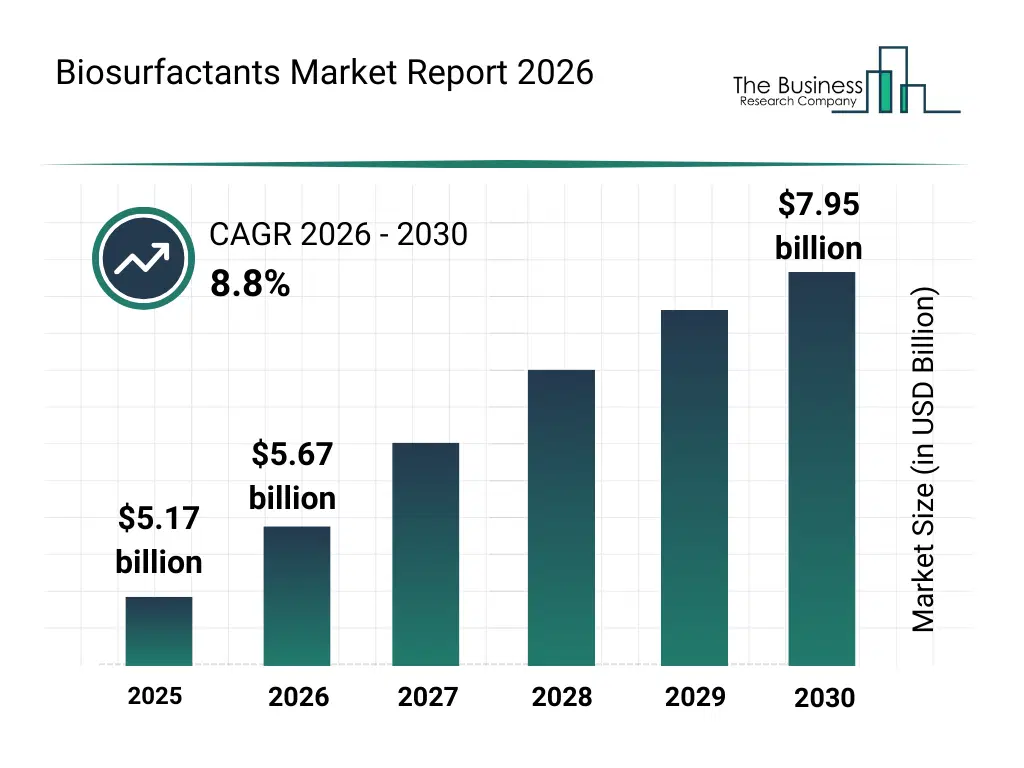
What Is The Biosurfactants Market Size and Share 2026?
The biosurfactants market size has grown strongly in recent years. It will grow from $5.17 billion in 2025 to $5.67 billion in 2026 at a compound annual growth rate (CAGR) of 9.7%. The growth in the historic period can be attributed to increasing environmental concerns over synthetic surfactants, growth of bio-based chemical production, rising adoption in food and personal care industries, expansion of fermentation technologies, availability of microbial production platforms.What Is The Biosurfactants Market Growth Forecast?
The biosurfactants market size is expected to see strong growth in the next few years. It will grow to $7.95 billion in 2030 at a compound annual growth rate (CAGR) of 8.8%. The growth in the forecast period can be attributed to increasing regulations on chemical surfactants, rising demand for sustainable formulations, expansion of bioremediation applications, growing investments in industrial biotechnology, increasing adoption in pharmaceutical manufacturing. Major trends in the forecast period include increasing adoption of microbial-derived surfactants, rising use in green cleaning products, growing demand for bio-based emulsifiers, expansion of biosurfactants in agricultural formulations, enhanced focus on low-toxicity surface agents.
Global Biosurfactants Market Segmentation
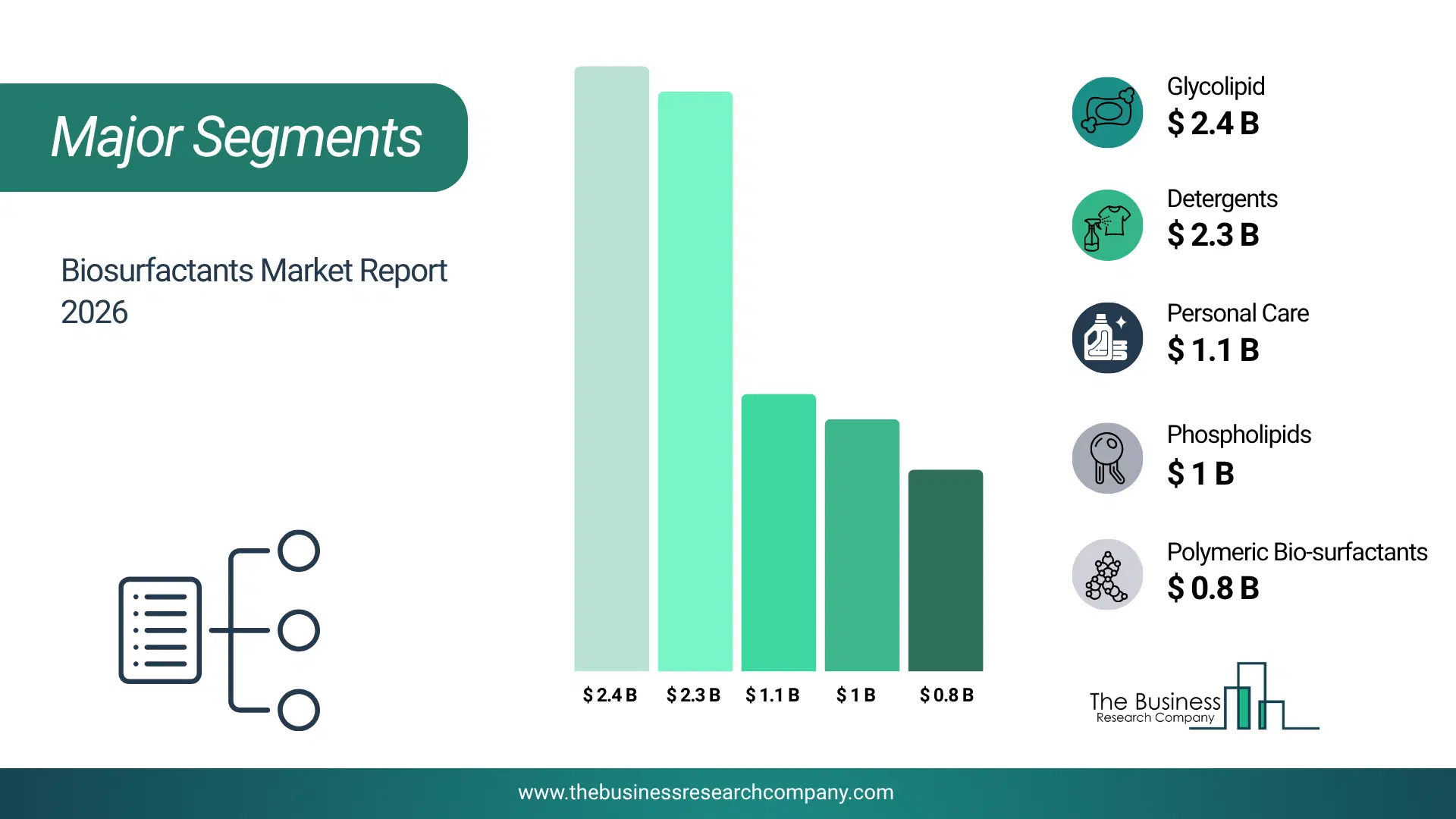
1) By Product Type: Glycolipid, Phospholipids, Surfactin, Lichenysin, Polymeric Bio-surfactants, Other Product Types 2) By Application: Detergents, Personal Care, Food Processing, Agricultural Chemicals, Other Applications 3) By Production Method: Submerged Fermentation, Solid-State Fermentation Subsegments: 1) By Glycolipid: Sophorolipids, Rhamnolipids, Trehalolipids 2) By Phospholipids: Lecithin, Phosphatidylcholine, Phosphatidylethanolamine 3) By Surfactin: Lipopeptide Surfactants, Bacillus subtilis-Derived Surfactin 4) By Lichenysin: Lichenysin A, Lichenysin B 5) By Polymeric Bio-surfactants: Xanthan Gum, Scleroglucan, Pullulan 6) By Other Product Types: Microbial Bio-surfactants, Plant-Derived Bio-surfactants, Other Synthetic Biosurfactants The top segments in the biosurfactants market will be: • Glycolipid will reach $2415.42 Million by 2025. • Detergents will reach $2376.25 Million by 2025. • Personal Care will reach $1134.23 Million by 2025. • Phospholipids will reach $1050.33 Million by 2025. • Polymeric Bio-surfactants will reach $805.13 Million by 2025.What Is The Driver Of The Biosurfactants Market?
The increase in demand for personal care products is expected to propel the growth of the biosurfactant market going forward. Personal care products refer to items used for maintaining personal hygiene, grooming, and enhancing appearance, such as skincare, haircare, oral care, and cosmetic products. The rising demand for personal care products is mainly driven by consumers becoming more conscious of health and hygiene. Biosurfactants enhance personal care formulations by improving performance, supporting gentle cleansing, and maintaining product stability. For instance, in September 2024, according to the Bureau of Labor Statistics, a US-based government agency, spending on personal care products and services increased by 9.7% from 2022 to 2023, while their share of total annual expenditures remained steady at 1.2% in both years. Therefore, increase in demand for personal care products is driver of the biosurfactant industry.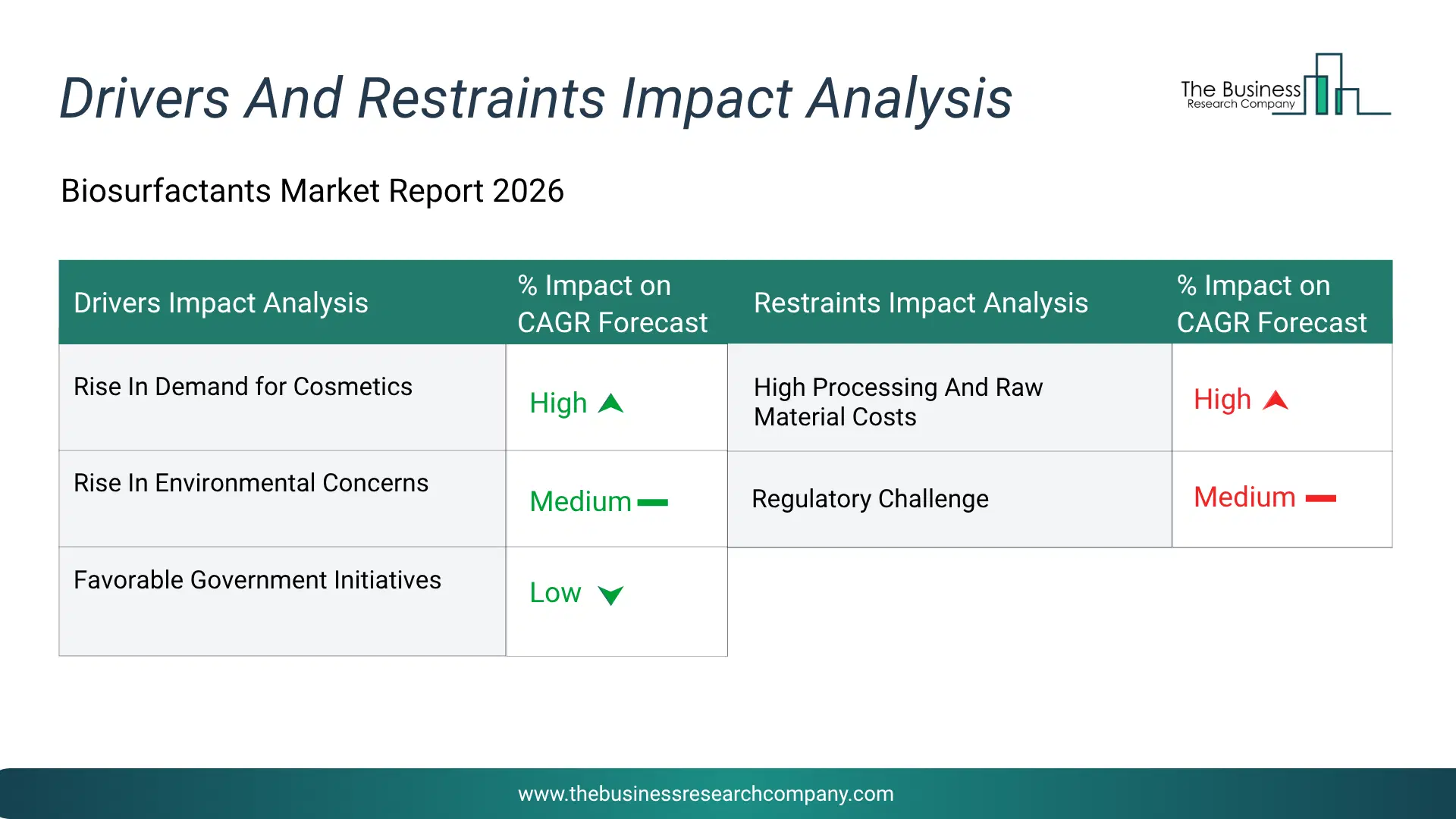
Infographic Chart Showing Key Market Drivers Analysis And Restraints For Biosurfactants Market
The chart presents an impact analysis of key drivers and restraints, quantifying their relative influence on the market's growth rate and helping assess the balance between growth enablers and limiting factors. This chart offers a high-level perspective; the full report contains more detailed insights.
How Will The Drivers Impact Growth In The Global Biosurfactants Market?
• Rise In Demand for Cosmetics (High) – The rise in demand for cosmetics will become a key driver of growth in the biosurfactants market by 2030. As mild, biodegradable and non-toxic nature makes biosurfactants well-suited for applications in skincare, haircare and personal hygiene products. As a result, the rise in demand for cosmetics to contributing to a 2.4% annual growth in the market. • Rise In Environmental Concerns (Medium) – The rise in environmental concerns will emerge as a major factor driving the expansion of the biosurfactants market by 2030. boosting demand for biosurfactants as they are biodegradable, non-toxic and derived from renewable resources, reducing pollution and ecological harm. They also enhance bioremediation by breaking down hydrocarbons and heavy metals in contaminated soils and water. Consequently, the Rise in Environmental Concerns is projected to contributing to a 2.0% annual growth in the market. • Favorable Government Initiatives (Low) – The favourable government initiatives will serve as a key growth catalyst for the biosurfactants market by 2030. As they are biodegradable, non-toxic and derived from renewable resources, reducing pollution and ecological harm. They also enhance bioremediation by breaking down hydrocarbons and heavy metals in contaminated soils and water. Therefore, favourable government initiatives operations is projected to supporting to a 1.0% annual growth in the market. • Increased Demand for Eco-Friendly Surfactants (Low) – The increased demand for eco-friendly surfactants will become a significant driver contributing to the growth of the biosurfactants market by 2030. Eco-friendly surfactants propel the growth of the biosurfactants by providing sustainable, biodegradable alternatives that enhance microbial activity and biosurfactant production. Consequently, increased demand for eco-friendly surfactants is projected to contributing to a 1.0% annual growth in the market.How Will The Restraints Impact Growth In The Global Biosurfactants Market?
• High Processing And Raw Material Costs (High) – High Processing And Raw Material Costs will restrict the growth of the Biosurfactants market during the forecast period. Biosurfactant production involves costly fermentation processes, purification steps, and downstream processing. The use of expensive substrates and complex production methods results in higher manufacturing costs compared to synthetic surfactants. These high processing and raw material costs make biosurfactants significantly more expensive than conventional alternatives, limiting their adoption in cost-sensitive applications. • Regulatory Challenge (Medium) – Regulatory Challenge will restrict the growth of the Biosurfactants market during the forecast period. Biosurfactants must comply with varying regulatory requirements across different regions, including safety assessments, labeling requirements, and environmental impact evaluations. The regulatory framework for new biosurfactant compounds can be complex and time-consuming to navigate. Regulatory delays and uncertainties can slow product commercialization and market entry, limiting industry growth.Key Players In The Global Biosurfactants Market
Major companies operating in the biosurfactants market are AGAE Technologies, Biotensidon GmbH, Croda International plc, Dispersa Inc., Evonik Industries AG, GlycoSurf Inc., Holiferm Ltd., Jeneil Biotech Inc., Kemin Industries Inc., Lion Corporation, Saraya Mystair Hygiene Pvt. Ltd., Stepan Company, TensioGreen Corp., Victex plc, AlgaEnergy, Diversey Holdings Ltd., Ecover Group, GEA Group, Global Green Chemicals Public Company Limited, Glyconova, Innospec Inc., Lipofoods, Locus Fermentation Solutions, Metgen Oy, MG Intobio Co. Ltd., Procter & Gamble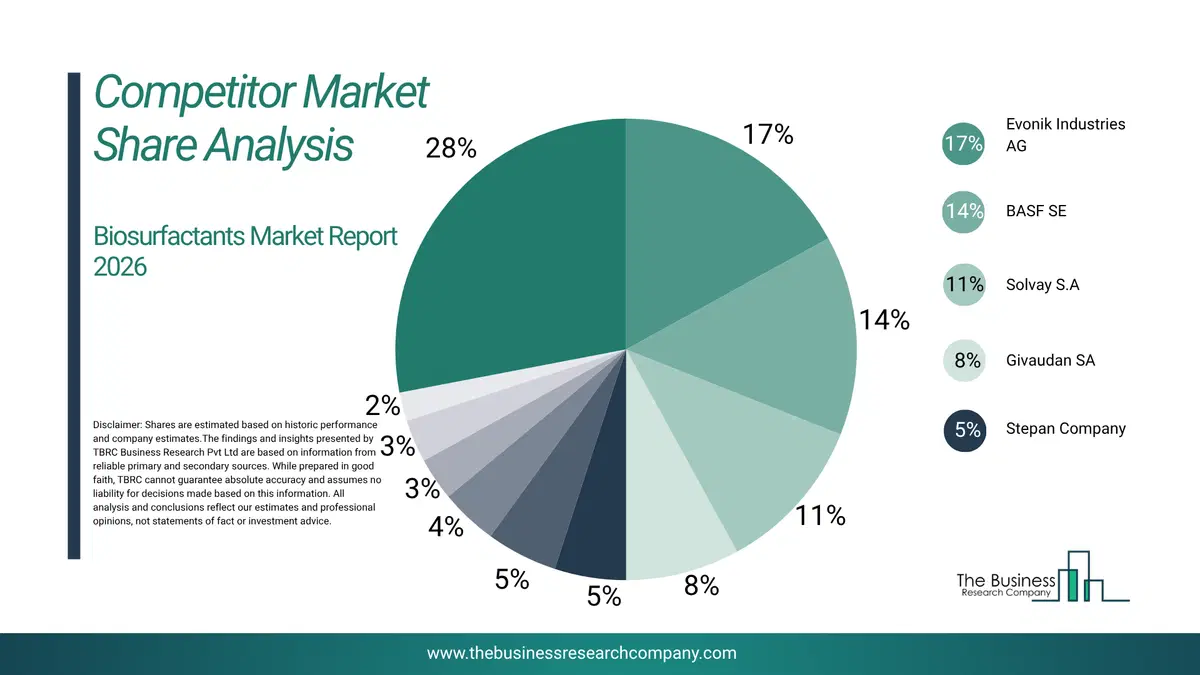
This chart is for illustrative purposes; the full report includes a detailed competitor analysis and comprehensive overview of the top 10 companies in the market.
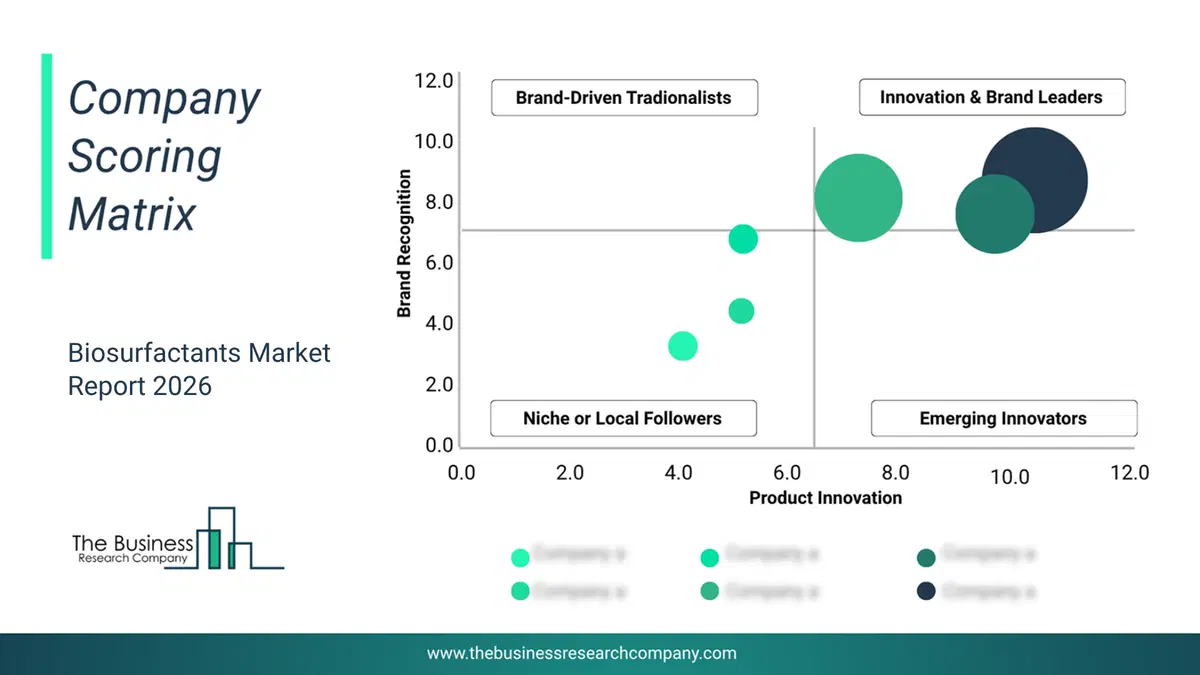
This chart maps companies by product innovation and brand strength, with bubble size indicating relative revenue, helping identify market leaders, challengers, and niche players. This is an illustrative chart; the full report provides a complete and accurate competitive analysis.
Global Biosurfactants Market Trends and Insights
Major companies operating in the biosurfactants market are focusing on developing innovative products such as eco-friendly glycolipid and amino-acid-based surfactants to enhance sustainability, performance, and biodegradability in coatings, personal care, and industrial applications. Eco-friendly glycolipid and amino-acid-based surfactants are biodegradable, naturally derived surface-active agents made from sugars or amino acids, used to reduce environmental impact while improving wetting, foaming, and emulsifying properties. For instance, in September 2024, Evonik Industries AG a Germany-based specialty chemicals company, launched TEGO Wet 570 Terra and TEGO Wet 580 Terra, biosurfactants designed for waterborne coatings and printing inks. It is plant-based, biodegradable surfactants produced via a fermentation process, offering excellent wetting of pigments, fillers, and substrates, improved pigment dispersion, reduced grinding time, low VOC content, and high formulation stability making them ideal for decorative paints, industrial and transportation coatings, and inks while supporting sustainable and environmentally friendly applications.What Are Latest Mergers And Acquisitions In The Biosurfactants Market?
In July 2023, Holiferm, an UK-based biotechnology company, partnered with Fibenol for an undisclosed amount. The aim of the partnership is to create sustainable biosurfactants from wood residues, promoting defossilization and offering environmentally friendly alternatives to conventional surfactants. Fibenol is a Finland-based biotechnology company that specializes in fractionation technology to transform wood residues into valuable materials.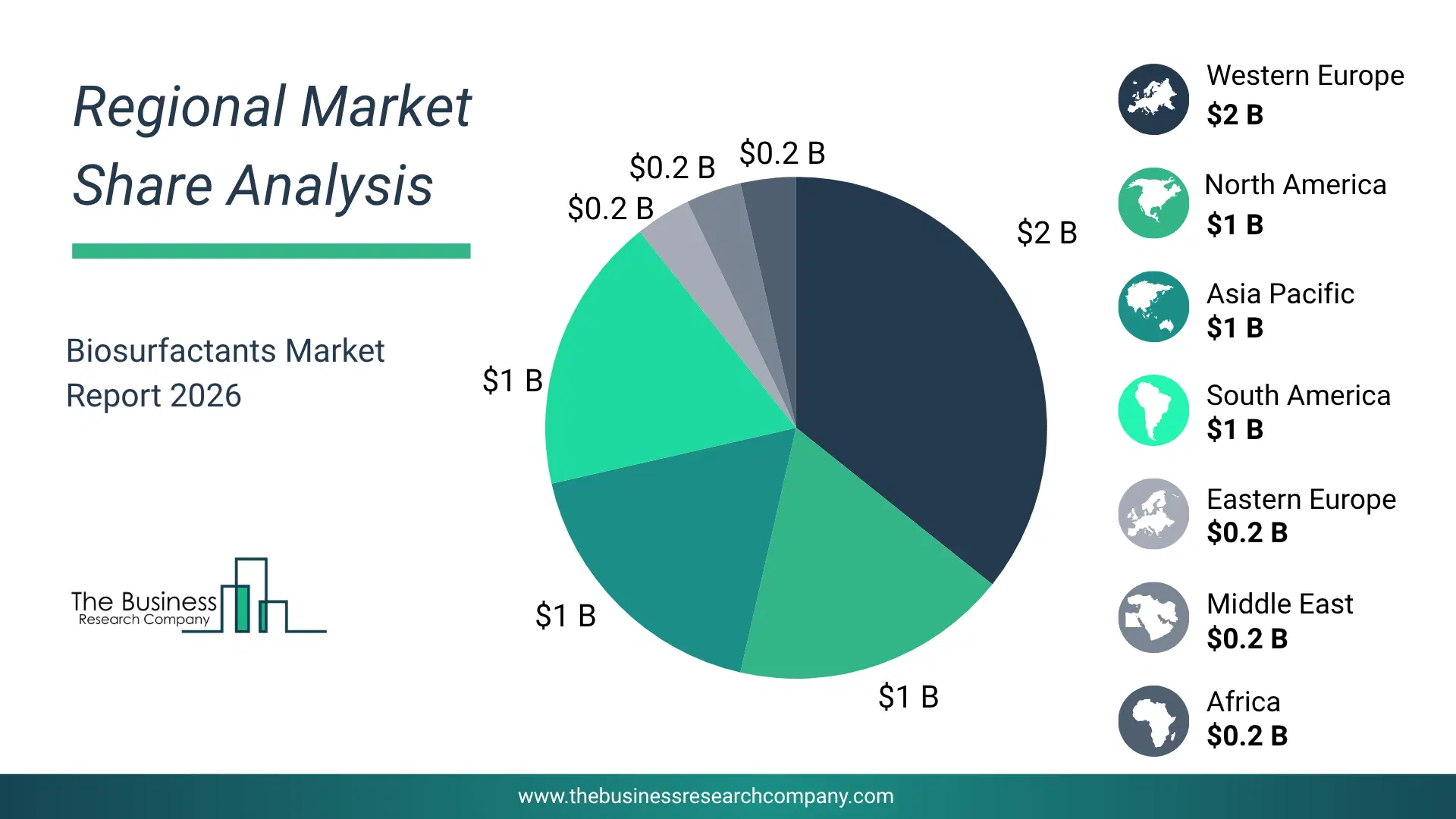
Regional Insights
Western Europe was the largest region in the biosurfactants market in 2025. Asia-Pacific is expected to be the fastest-growing region in the forecast period. The regions covered in this market report are Asia-Pacific, South East Asia, Western Europe, Eastern Europe, North America, South America, Middle East, Africa The countries covered in this market report are Australia, Brazil, China, France, Germany, India, Indonesia, Japan, Taiwan, Russia, South Korea, UK, USA, Canada, Italy, SpainWhat Defines the Biosurfactants Market?
The biosurfactant market consists of sales of lipopeptides and fatty acids for use as biosurfactants. Values in this market are ‘factory gate’ values, that is, the value of goods sold by the manufacturers or creators of the goods, whether to other entities (including downstream manufacturers, wholesalers, distributors, and retailers) or directly to end customers. The value of goods in this market includes related services sold by the creators of the goods.How is Market Value Defined and Measured?
The market value is defined as the revenues that enterprises gain from the sale of goods and/or services within the specified market and geography through sales, grants, or donations in terms of the currency (in USD unless otherwise specified). The revenues for a specified geography are consumption values that are revenues generated by organizations in the specified geography within the market, irrespective of where they are produced. It does not include revenues from resales along the supply chain, either further along the supply chain or as part of other products.
This chart presents market attractiveness based on a quantitative evaluation of growth, competition, strategic alignment, and risk, offering a clear view of opportunity areas for decision-making. This chart is for illustrative purposes; the full report contains the complete analysis.

This chart highlights the Total Addressable Market (TAM) by estimating the maximum revenue opportunity using an assumption-driven approach, supporting strategic planning and opportunity sizing across markets. The chart is illustrative; the full report provides a more comprehensive analysis.
What Key Data and Analysis Are Included in the Biosurfactants Market Report 2026?
The biosurfactants market research report is one of a series of new reports from The Business Research Company that provides market statistics, including industry global market size, regional shares, competitors with the market share, detailed market segments, market trends and opportunities, and any further data you may need to thrive in the biosurfactants industry. The market research report delivers a complete perspective of everything you need, with an in-depth analysis of the current and future state of the industry.Biosurfactants Market Report Forecast Analysis
| Report Attribute | Details |
|---|---|
| Market Size Value In 2026 | $5.67 billion |
| Revenue Forecast In 2030 | $7.95 billion |
| Growth Rate | CAGR of 9.7% from 2026 to 2030 |
| Base Year For Estimation | 2025 |
| Actual Estimates/Historical Data | 2020-2025 |
| Forecast Period | 2026 - 2030 |
| Market Representation | Revenue in USD Billion and CAGR from 2026 to 2030 |
| Segments Covered | Product Type, Application, Production Method |
| Regional Scope | Asia-Pacific, Western Europe, Eastern Europe, North America, South America, Middle East, Africa |
| Country Scope | The countries covered in the report are Australia, Brazil, China, France, Germany, India, Indonesia, Japan, Taiwan, Russia, South Korea, UK, USA, Canada, Italy, Spain. |
| Key Companies Profiled | AGAE Technologies, Biotensidon GmbH, Croda International plc, Dispersa Inc., Evonik Industries AG, GlycoSurf Inc., Holiferm Ltd., Jeneil Biotech Inc., Kemin Industries Inc., Lion Corporation, Saraya Mystair Hygiene Pvt. Ltd., Stepan Company, TensioGreen Corp., Victex plc, AlgaEnergy, Diversey Holdings Ltd., Ecover Group, GEA Group, Global Green Chemicals Public Company Limited, Glyconova, Innospec Inc., Lipofoods, Locus Fermentation Solutions, Metgen Oy, MG Intobio Co. Ltd., Procter & Gamble |
| Customization Scope | Request for Customization |
| Pricing And Purchase Options | Explore Purchase Options |