
Blood Meal Market Report 2026
Global Outlook – By Source (Porcine Blood, Poultry Blood, Ruminant Blood), By Process (Solar Drying, Drum Drying, Ring and Flash Drying, Spray Drying), By Application (Animal Feed, Agriculture) – Market Size, Trends, Strategies, and Forecast to 2030
Blood Meal Market Overview
• Blood Meal market size has reached to $2.12 billion in 2025 • Expected to grow to $2.6 billion in 2030 at a compound annual growth rate (CAGR) of 4.3% • Growth Driver: Surging Demand For Animal Meat To Drive Market Growth • Market Trend: Agricultural Applications In The Blood Meal Market • North America was the largest region in 2025 and Asia-Pacific is the fastest growing region.What Is Covered Under Blood Meal Market?
Blood meal refers to the ground-dried blood of animals which is a non-synthetic source of nitrogen used for feeding livestock as a nitrogenous fertilizer. It is used as a high-nitrogen organic fertilizer and a high-protein animal feed. The main sources of blood meal are porcine blood, poultry blood, and ruminant blood. Porcine blood refers to blood from pigs. It is manufactured through various processes such as solar drying, drum drying, ring and flash drying, and spray drying for animal feed, agriculture, and others.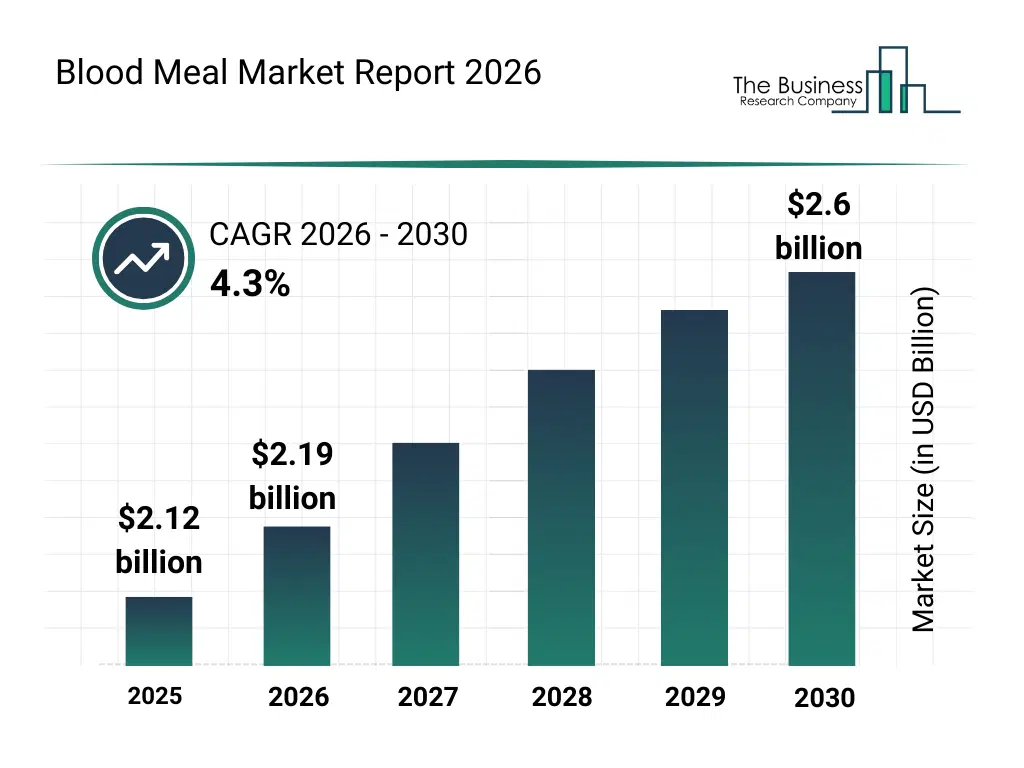
What Is The Blood Meal Market Size and Share 2026?
The blood meal market size has grown steadily in recent years. It will grow from $2.12 billion in 2025 to $2.19 billion in 2026 at a compound annual growth rate (CAGR) of 3.4%. The growth in the historic period can be attributed to expansion of livestock farming activities, utilization of slaughterhouse by-products, rising demand for organic fertilizers, development of animal feed processing, increasing protein supplementation in feeds.What Is The Blood Meal Market Growth Forecast?
The blood meal market size is expected to see steady growth in the next few years. It will grow to $2.6 billion in 2030 at a compound annual growth rate (CAGR) of 4.3%. The growth in the forecast period can be attributed to increasing adoption of organic farming practices, rising demand for sustainable feed ingredients, expansion of high-efficiency drying methods, growing regulatory focus on waste utilization, increasing use in specialty fertilizers. Major trends in the forecast period include increasing use of organic nitrogen fertilizers, rising demand for high-protein animal feed, growing adoption of sustainable by-product utilization, expansion of advanced drying technologies, enhanced focus on feed safety standards.
Global Blood Meal Market Segmentation
1) By Source: Porcine Blood, Poultry Blood, Ruminant Blood 2) By Process: Solar Drying, Drum Drying, Ring and Flash Drying, Spray Drying 3) By Application: Animal Feed, Agriculture Subsegments: 1) By Porcine Blood: Dried Porcine Blood Meal, Liquid Porcine Blood 2) By Poultry Blood: Dried Poultry Blood Meal, Liquid Poultry Blood 3) By Ruminant Blood: Dried Ruminant Blood Meal, Liquid Ruminant BloodWhat Are The Drivers Of The Blood Meal Market?
The growing demand for animal meat is expected to boost the growth of the blood meal market going forward. Animal meat refers to the flesh or other edible parts of domesticated or edible animals, such as cattle, swine, sheep, fish, and birds, which are used for food. A blood meal is a by-product of animal slaughter that is used as a dietary supplement for livestock such as cattle, fish, and poultry, which is high in protein and contains low levels of phosphorus and potassium, used as a feed additive for animals. For instance, in July 2024, according to Carlisle Technology, a US-based company providing software and hardware solutions for the food industry, chicken consumption, currently at 98.90 pounds per person, is projected to increase to 107.50 pounds by 2033, driven by its affordability and health benefits. In 2022, Americans consumed 98.90 pounds of broiler chicken per capita, with this figure set to rise significantly by 2033. Furthermore, poultry meat consumption is expected to rise to 154 metric tons globally throughout the forecast period, accounting for roughly half of the increased meat consumed. Therefore, the growing demand for animal meat is driving the growth of the blood meal industry. The increase in livestock population is expected to propel the growth of the blood meal market going forward. Livestock refers to domesticated animals that are raised on farms or in various agricultural settings for various purposes, such as food production, labor, and other products. Common types of livestock include cattle (such as cows and bulls), sheep, goats, pigs, chickens, and horses, among others. Blood meals are known for their high protein content and essential nutrients, making them a valuable ingredient in formulating nutritionally balanced feeds for a growing and diverse livestock population. Additionally, the efficient utilization of blood meal in optimizing feed formulations supports the health, growth, and overall productivity of livestock and aquaculture species. For instance, in August 2024, according to the Department for Environment, Food & Rural Affairs, a UK-based government department, the pig population in England grew by 1.3%, reaching 3.7 million, largely due to a 1.5% increase in the number of fattening pigs. Therefore, the increase in livestock population is driving the growth of the feed pigment market.Key Players In The Global Blood Meal Market
Major companies operating in the blood meal market are Boyer Valley Company LLC, Terramar Chile SpA, Darling Ingredients Inc., West Coast Reduction Ltd., Valley Proteins Inc., Sanimax APC Inc., Ridley Corporation Limited, FASA Group, Bar-Magen Ltd., APC Company Inc., Frigorifico Allana Private Limited, Agridient Inc., Archer Daniels Midland Company, Ag Processing Inc., Cargill Incorporated, Coppens International B.V., Duynie Group B.V., ForFarmers N.V., InVivo NSA, Land O'Lakes Inc., Nutreco Co. B.V., OJ Ingredients Ltd., Olmix Group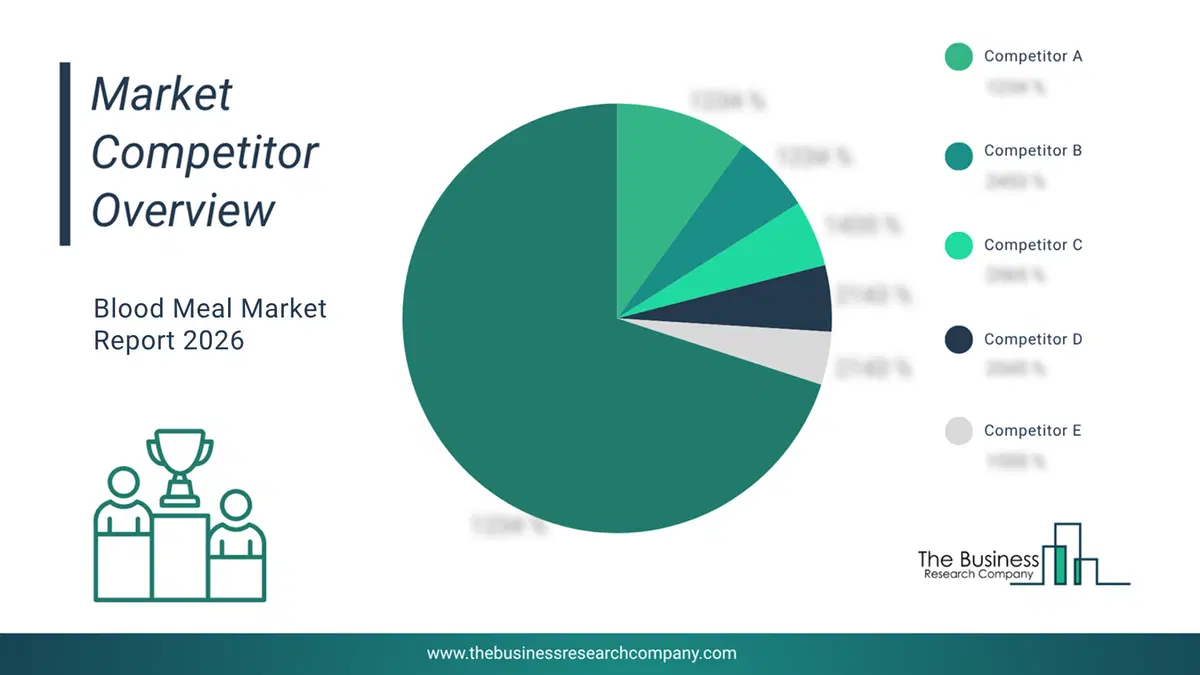
This chart is for illustrative purposes; the full report includes a detailed competitor analysis and comprehensive overview of the top 10 companies in the market.
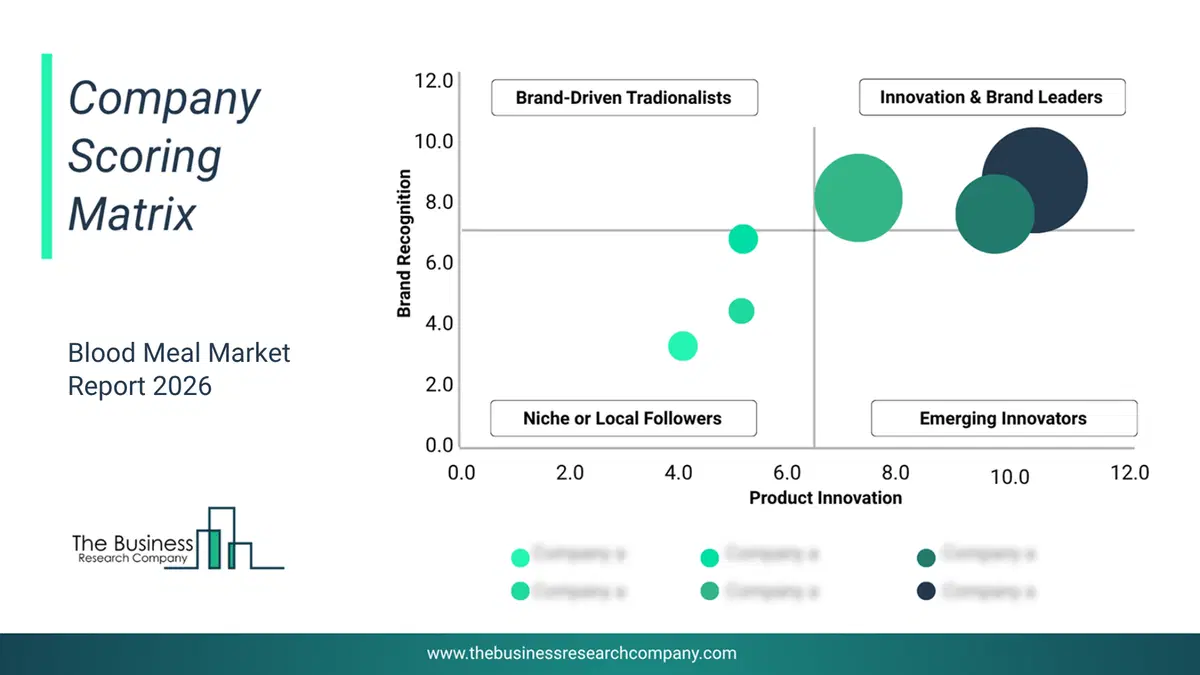
This chart maps companies by product innovation and brand strength, with bubble size indicating relative revenue, helping identify market leaders, challengers, and niche players. This is an illustrative chart; the full report provides a complete and accurate competitive analysis.
What Are Latest Mergers And Acquisitions In The Blood Meal Market?
Regional Outlook
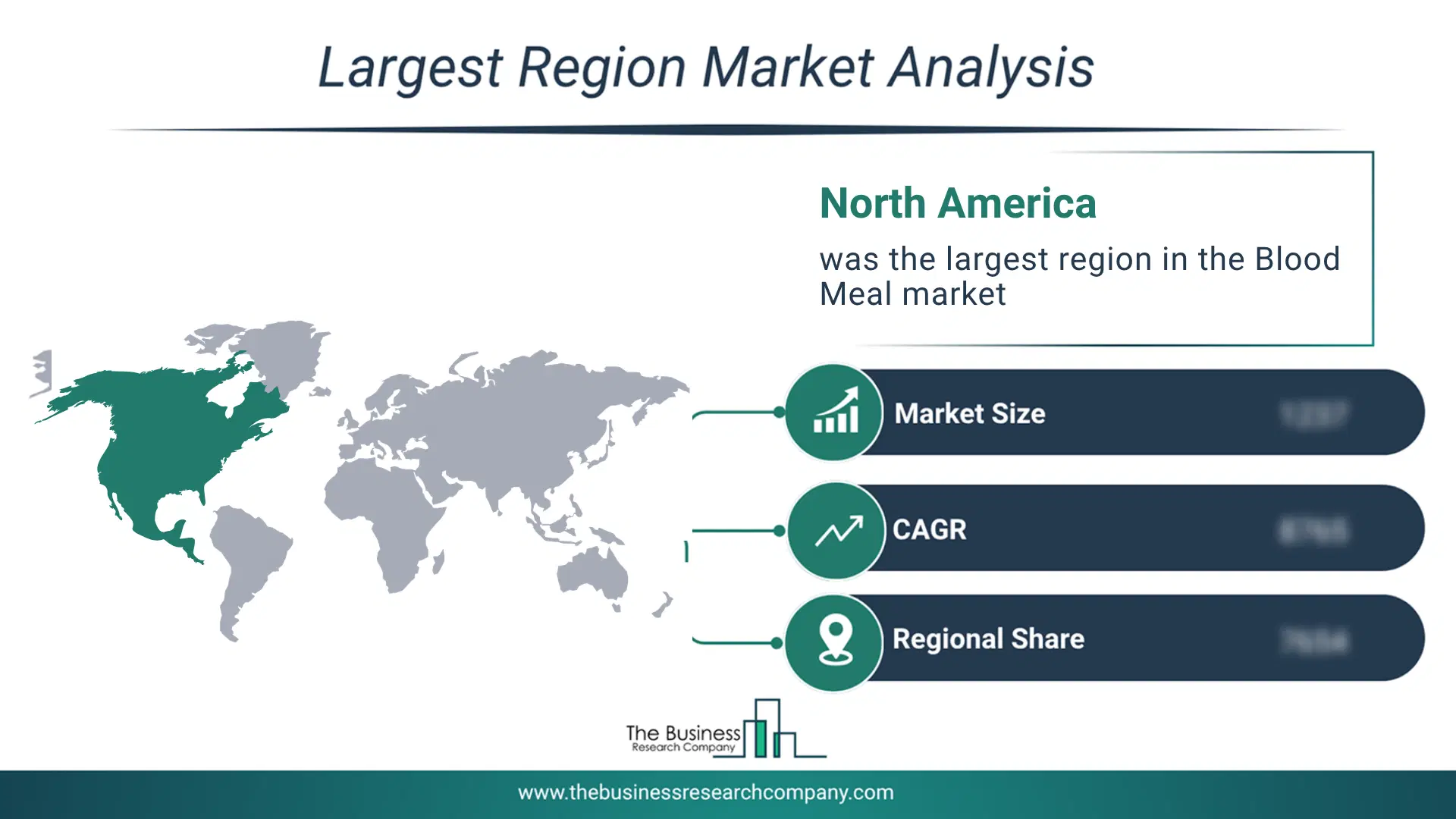
North America was the largest region in the blood meal market in 2025. Asia-Pacific is expected to be the fastest-growing region in the global blood meal market during the forecast period. The regions covered in this market report are Asia-Pacific, South East Asia, Western Europe, Eastern Europe, North America, South America, Middle East and Africa. The countries covered in this market report are Australia, Brazil, China, France, Germany, India, Indonesia, Japan, Taiwan, Russia, South Korea, UK, USA, Italy, Spain, CanadaWhat Defines the Blood Meal Market?
The blood meal market consists of sales of ruminant feed, poultry feed, and porcine feed. Values in this market are ‘factory gate’ values, that is the value of goods sold by the manufacturers or creators of the goods, whether to other entities (including downstream manufacturers, wholesalers, distributors, and retailers) or directly to end customers. The value of goods in this market includes related services sold by the creators of the goods.How is Market Value Defined and Measured?
The market value is defined as the revenues that enterprises gain from the sale of goods and/or services within the specified market and geography through sales, grants, or donations in terms of the currency (in USD unless otherwise specified). The revenues for a specified geography are consumption values that are revenues generated by organizations in the specified geography within the market, irrespective of where they are produced. It does not include revenues from resales along the supply chain, either further along the supply chain or as part of other products.
This chart presents market attractiveness based on a quantitative evaluation of growth, competition, strategic alignment, and risk, offering a clear view of opportunity areas for decision-making. This chart is for illustrative purposes; the full report contains the complete analysis.

This chart highlights the Total Addressable Market (TAM) by estimating the maximum revenue opportunity using an assumption-driven approach, supporting strategic planning and opportunity sizing across markets. The chart is illustrative; the full report provides a more comprehensive analysis.
What Key Data and Analysis Are Included in the Blood Meal Market Report 2026?
The blood meal market research report is one of a series of new reports from The Business Research Company that provides market statistics, including industry global market size, regional shares, competitors with the market share, detailed market segments, market trends and opportunities, and any further data you may need to thrive in the blood meal industry. The market research report delivers a complete perspective of everything you need, with an in-depth analysis of the current and future state of the industry.Blood Meal Market Report Forecast Analysis
| Report Attribute | Details |
|---|---|
| Market Size Value In 2026 | $2.19 billion |
| Revenue Forecast In 2030 | $2.6 billion |
| Growth Rate | CAGR of 3.4% from 2026 to 2030 |
| Base Year For Estimation | 2025 |
| Actual Estimates/Historical Data | 2020-2025 |
| Forecast Period | 2026 - 2030 |
| Market Representation | Revenue in USD Billion and CAGR from 2026 to 2030 |
| Segments Covered | Source, Process, Application |
| Regional Scope | Asia-Pacific, Western Europe, Eastern Europe, North America, South America, Middle East, Africa |
| Country Scope | The countries covered in the report are Australia, Brazil, China, France, Germany, India, Indonesia, Japan, Taiwan, Russia, South Korea, UK, USA, Canada, Italy, Spain. |
| Key Companies Profiled | Boyer Valley Company LLC, Terramar Chile SpA, Darling Ingredients Inc., West Coast Reduction Ltd., Valley Proteins Inc., Sanimax APC Inc., Ridley Corporation Limited, FASA Group, Bar-Magen Ltd., APC Company Inc., Frigorifico Allana Private Limited, Agridient Inc., Archer Daniels Midland Company, Ag Processing Inc., Cargill Incorporated, Coppens International B.V., Duynie Group B.V., ForFarmers N.V., InVivo NSA, Land O'Lakes Inc., Nutreco Co. B.V., OJ Ingredients Ltd., Olmix Group |
| Customization Scope | Request for Customization |
| Pricing And Purchase Options | Explore Purchase Options |