

Carbide Cutting Tool Market Report 2026
Global Outlook – By Type (Turning Tools, Milling Tools, Drilling Tools, Holemaking Tools, Threading Tools, Other Types), By Material Type (Tungsten Carbide, Micro-Grain Carbide, Ultra-Fine Grain Carbide, Cermet-Based Carbide, Mixed Carbide Grades), By Coating Type (Coated, Non-Coated), By End-User (Automotive, Aerospace, Construction, Oil And Gas, Heavy Machinery, Medical, Electronics, Other End-Users) – Market Size, Trends, Strategies, and Forecast to 2030
Carbide Cutting Tool Market Overview
• Carbide Cutting Tool market size has reached to $12.28 billion in 2025 • Expected to grow to $16.41 billion in 2030 at a compound annual growth rate (CAGR) of 5.9% • Growth Driver: Rapid Expansion Of The Automotive Sector Fueling The Growth Of The Market Due To Rising Demand For Precision Machining In Vehicle Manufacturing • Market Trend: Technological Innovations In Coated-Carbide Grades Fuels The Market Growth Due To Enhanced Cutting Efficiency And Tool Longevity • North America was the largest region in 2025 and Asia-Pacific is the fastest growing region.What Is Covered Under Carbide Cutting Tool Market?
A carbide cutting tool refers to a cutting tool made from tungsten carbide or a composite material that contains carbide particles bonded with a metallic binder, usually cobalt. These tools are used in machining operations due to their extreme hardness, wear resistance, and ability to maintain a sharp cutting edge at high temperatures. The primary types involved in carbide cutting tools include turning tools, milling tools, drilling tools, hole making tools, threading tools, and others. Turning tools are cutting tools used to shape cylindrical or round parts by removing material from a rotating workpiece on machines like lathes. The different material types used include tantalum carbide, titanium carbide, and tungsten carbide, with coating types categorized as coated and non-coated. The various configurations consist of hand-based and machine-based tools utilized by a range of end-users such as automotive, aerospace, construction, oil and gas, heavy machinery, medical, electronics, and others.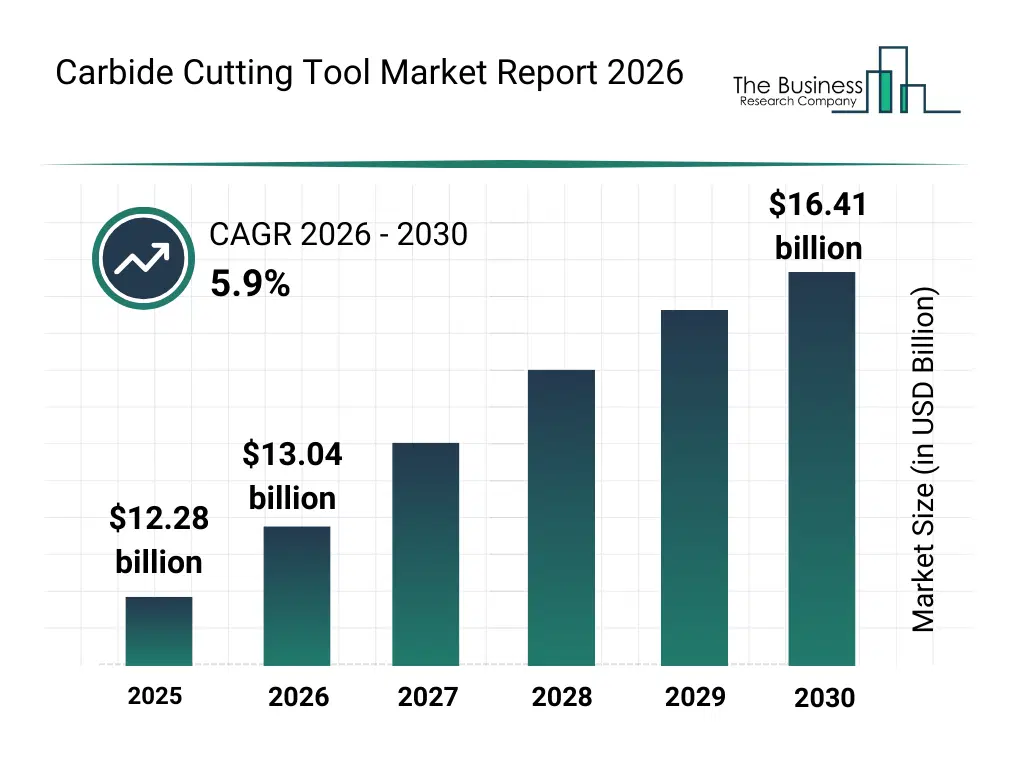
What Is The Carbide Cutting Tool Market Size and Share 2026?
The carbide cutting tool market size has grown strongly in recent years. It will grow from $12.28 billion in 2025 to $13.04 billion in 2026 at a compound annual growth rate (CAGR) of 6.2%. The growth in the historic period can be attributed to growth in automotive manufacturing, expansion of metal machining industries, aerospace component production, industrial automation adoption, demand for precision tools.What Is The Carbide Cutting Tool Market Growth Forecast?
The carbide cutting tool market size is expected to see strong growth in the next few years. It will grow to $16.41 billion in 2030 at a compound annual growth rate (CAGR) of 5.9%. The growth in the forecast period can be attributed to electric vehicle production growth, advanced machining requirements, expansion of aerospace manufacturing, adoption of smart factories, demand for high performance tooling. Major trends in the forecast period include rising adoption of coated carbide tools, growing demand for high speed machining, expansion of cnc machining applications, increasing use in electric vehicle manufacturing, focus on tool life and wear resistance.Tariff Impact On Carbide Cutting Tool Market
Tariffs have affected the carbide cutting tool market by increasing prices of tungsten carbide, cobalt binders, and precision grinding equipment. Machine based and coated tools are most impacted, particularly in Asia Pacific and Europe. Higher raw material costs have pressured tool pricing. At the same time, tariffs have encouraged recycling of carbide materials and regional tool manufacturing.
Global Carbide Cutting Tool Market Segmentation
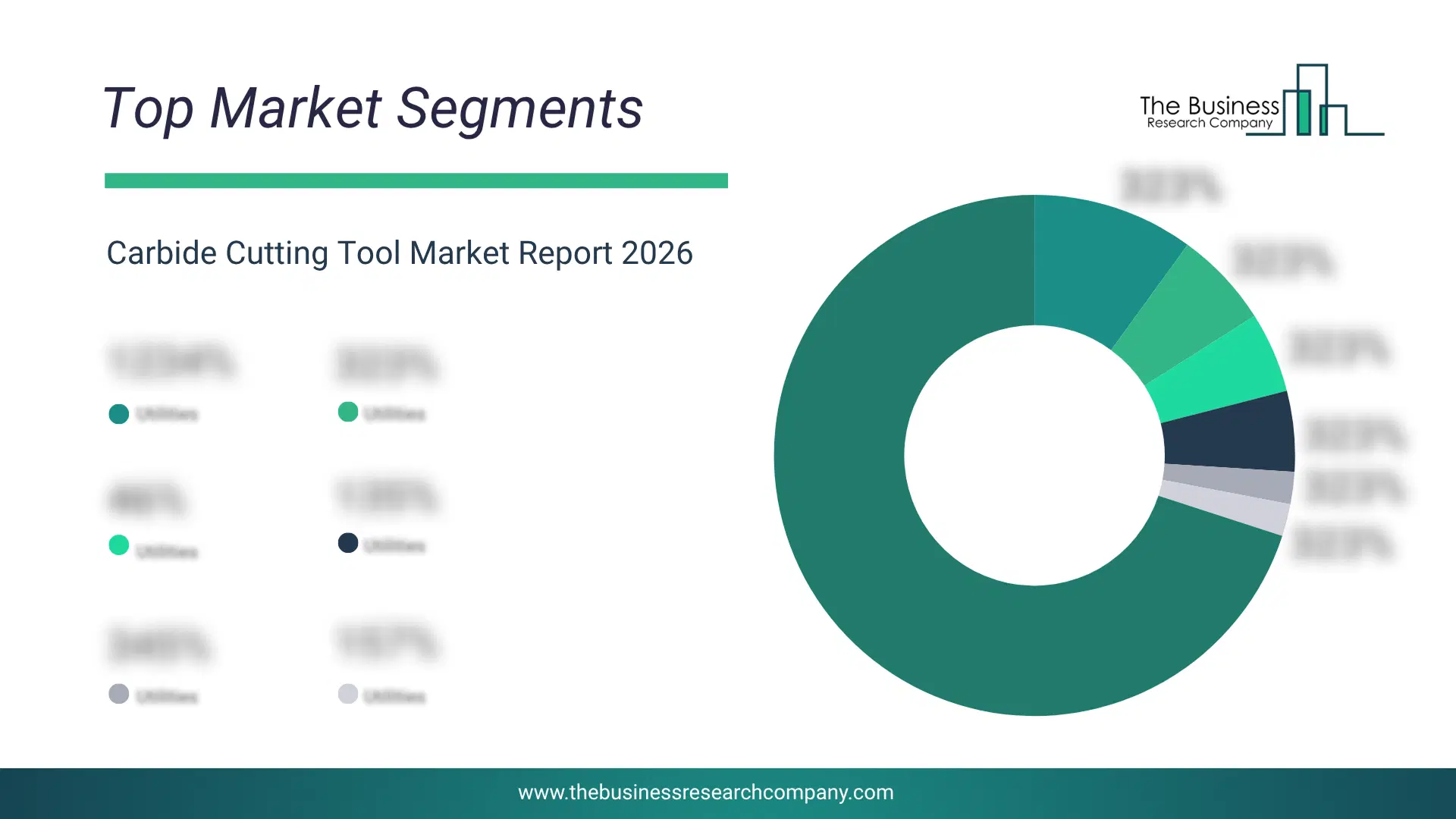
1) By Type: Turning Tools, Milling Tools, Drilling Tools, Holemaking Tools, Threading Tools, Other Types 2) By Material Type: Tungsten Carbide, Micro-Grain Carbide, Ultra-Fine Grain Carbide, Cermet-Based Carbide, Mixed Carbide Grades 3) By Coating Type: Coated, Non-Coated 4) By End-User: Automotive, Aerospace, Construction, Oil And Gas, Heavy Machinery, Medical, Electronics, Other End-Users Subsegments: 1) By Turning Tools: External Turning Tools, Internal Turning Tools, Grooving Tools, Parting Tools 2) By Milling Tools: Face Mills, End Mills, Chamfer Mills, Slot Mills 3) By Drilling Tools: Twist Drills, Step Drills, Center Drills, Gun Drills 4) By Holemaking Tools: Boring Tools, Reamers, Countersinks, Counterbores 5) By Threading Tools: Thread Mills, Taps, Dies, Thread Turning Inserts 6) By Other Types: Broaching Tools, Cut-off Tools, Engraving Tools, Deburring ToolsWhat Is The Driver Of The Carbide Cutting Tool Market?
The rapid expansion of the automotive sector is expected to propel the growth of the carbide-cutting tools market going forward. The automotive sector refers to the comprehensive industry ecosystem that encompasses the production, sale, and service of motor vehicles and their components. The expansion of the automotive sector is due to rising consumer demand and urbanization, which drive increased vehicle production and innovation to meet mobility needs. Carbide-cutting tools are widely used in the automotive sector for high-precision machining of hard materials such as steel and aluminum, enabling the efficient manufacturing of critical components such as engine blocks, transmission parts, brake systems, and suspension components. For instance, in 2024, according to the Department for Transport (DfT), a UK-based government department responsible for transport infrastructure and vehicle regulation, around 83,000 zero-emission cars were registered, an 8% rise compared to 2023. Therefore, the rapid expansion of the automotive sector is driving the carbide-cutting tools market.Key Players In The Global Carbide Cutting Tool Market
Major companies operating in the carbide cutting tool market are Sandvik Coromant AB, Kennametal Inc., CERATIZIT Group (CERATIZIT S.A.), Walter AG, Dormer Pramet S.r.o., TaeguTec Ltd., Tungaloy Corporation, Sumitomo Electric Industries, Ltd. (Hardmetal Division), OSG Corporation, Ingersoll Cutting Tool Company, Mitsubishi Materials Corporation (MMC Hardmetal Division), ISCAR Ltd., Fullerton Tool Company, Inc., Kyocera Corporation, Seco Tools AB, Gühring KG, MAPAL Dr. Kress KG, Hoffmann SE (GARANT Manufacturing Division), Birla Precision Technologies Limited, Hittco Tools Limited, Knight Carbide, Inc., Schwanog Siegfried Güntert GmbH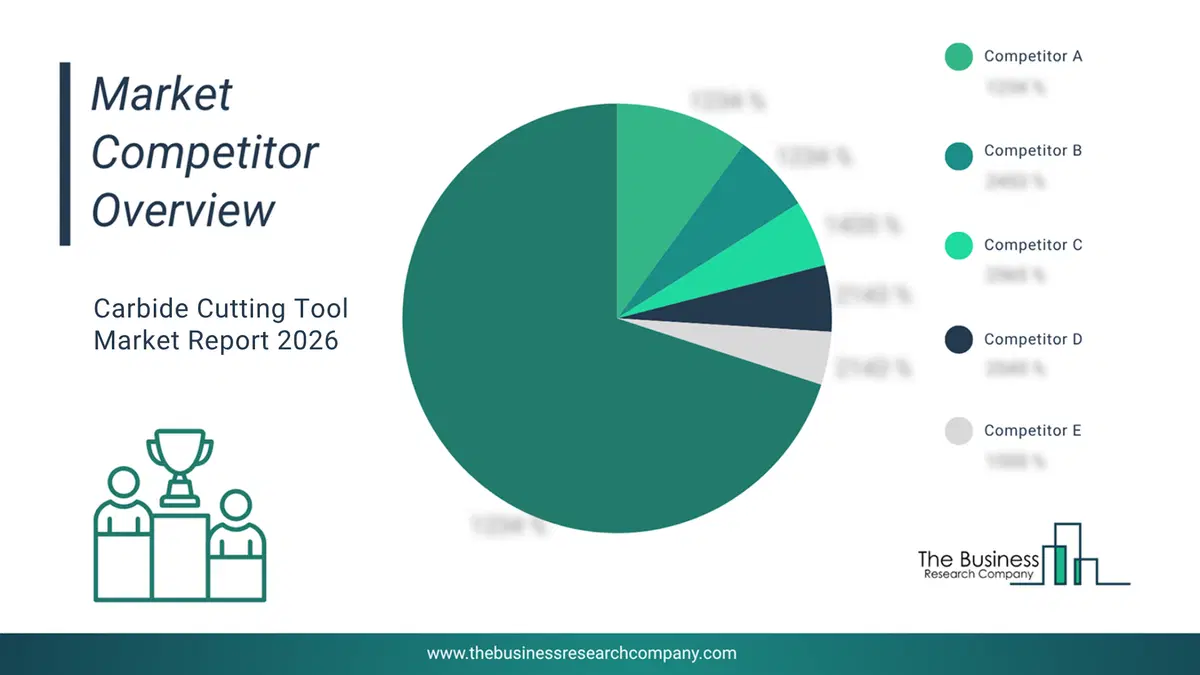
This chart is for illustrative purposes; the full report includes a detailed competitor analysis and comprehensive overview of the top 10 companies in the market.
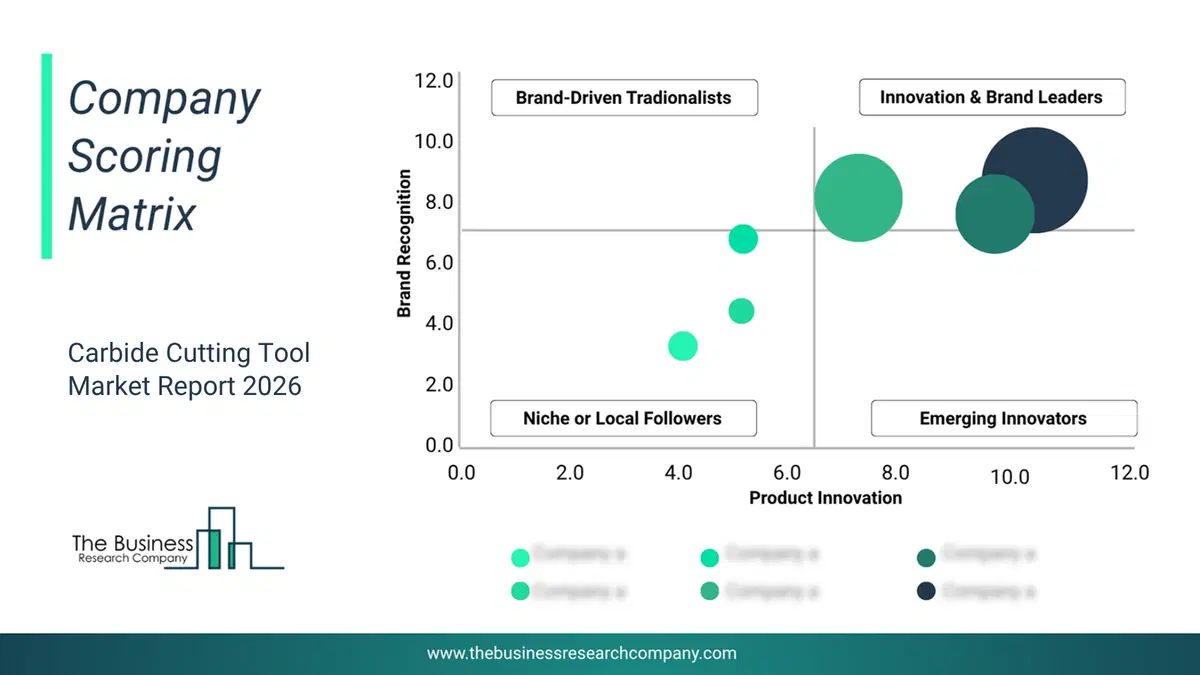
This chart maps companies by product innovation and brand strength, with bubble size indicating relative revenue, helping identify market leaders, challengers, and niche players. This is an illustrative chart; the full report provides a complete and accurate competitive analysis.
Global Carbide Cutting Tool Market Trends and Insights
Major companies operating in the carbide-cutting tool market are focusing on developing innovative products, such as coated-carbide grades, to enhance cutting performance, extend tool life, and improve efficiency in high-speed machining applications. Coated-carbide grades refer to carbide cutting tools enhanced with wear-resistant coatings, such as physical vapor deposition or chemical vapor deposition layers, to improve hardness, thermal stability, and tool longevity during high-speed or heavy-duty machining operations. For instance, in January 2025, Sumitomo Electric Industries Ltd., a Japan-based manufacturing company, launched coated carbide grade ACS1000, designed explicitly for high-speed stainless steel milling and exotic alloys. It features an ultra-fine physical vapor deposition Absotech coating on a wear-resistant carbide substrate, delivering exceptional strength, toughness, and significantly extended tool life. ACS1000 is offered in 46 catalog variants across popular milling systems, enhancing productivity and lowering machining costs in semiconductors, energy, and aerospace.What Are Latest Mergers And Acquisitions In The Carbide Cutting Tool Market?
In February 2023, Arch Cutting Tools Corporation, a US-based manufacturing company, acquired Custom Carbide Cutter Inc for an undisclosed amount. With this acquisition, Arch Cutting Tools aimed to expand its custom tooling capabilities and strengthen its presence in the precision cutting tool market by leveraging Custom Carbide Cutter’s expertise in specialized carbide tooling solutions. Custom Carbide Cutter Inc. is a US-based manufacturing company that manufactures custom carbide cutting tools for various industries.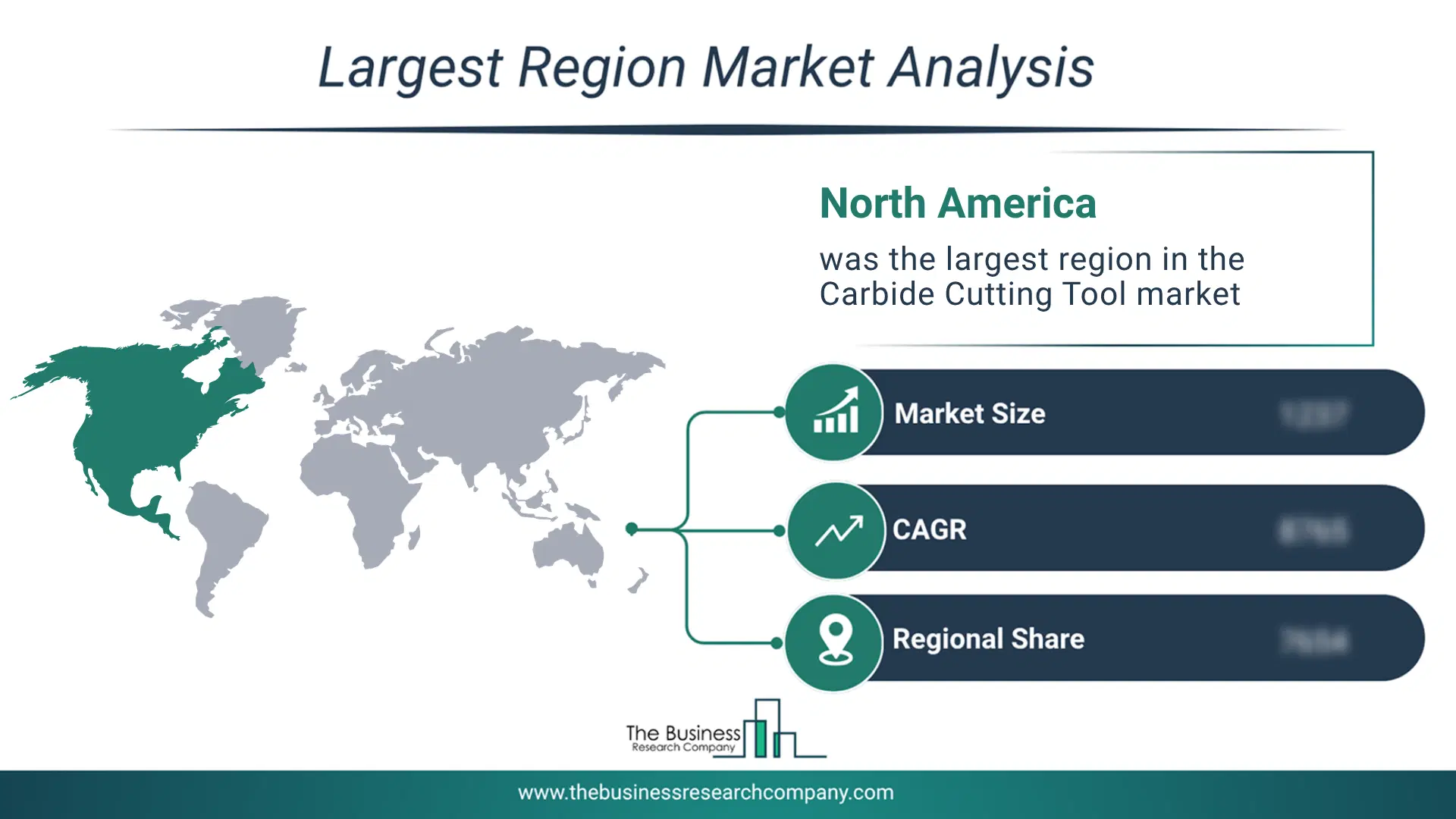
Regional Outlook
North America was the largest region in the carbide cutting tool market in 2025. Asia-Pacific is expected to be the fastest-growing region in the forecast period. The regions covered in this market report are Asia-Pacific, South East Asia, Western Europe, Eastern Europe, North America, South America, Middle East, Africa The countries covered in this market report are Australia, Brazil, China, France, Germany, India, Indonesia, Japan, Taiwan, Russia, South Korea, UK, USA, Canada, Italy, Spain.What Defines the Carbide Cutting Tool Market?
The carbide cutting tool market consists of sales of tungsten carbide powder, titanium carbide, niobium carbide, tool holders, and shanks. Values in this market are ‘factory gate’ values, that is, the value of goods sold by the manufacturers or creators of the goods, whether to other entities (including downstream manufacturers, wholesalers, distributors, and retailers) or directly to end customers. The value of goods in this market includes related services sold by the creators of the goods.How is Market Value Defined and Measured?
The market value is defined as the revenues that enterprises gain from the sale of goods and/or services within the specified market and geography through sales, grants, or donations in terms of the currency (in USD unless otherwise specified). The revenues for a specified geography are consumption values that are revenues generated by organizations in the specified geography within the market, irrespective of where they are produced. It does not include revenues from resales along the supply chain, either further along the supply chain or as part of other products.
This chart presents market attractiveness based on a quantitative evaluation of growth, competition, strategic alignment, and risk, offering a clear view of opportunity areas for decision-making. This chart is for illustrative purposes; the full report contains the complete analysis.

This chart highlights the Total Addressable Market (TAM) by estimating the maximum revenue opportunity using an assumption-driven approach, supporting strategic planning and opportunity sizing across markets. The chart is illustrative; the full report provides a more comprehensive analysis.
What Key Data and Analysis Are Included in the Carbide Cutting Tool Market Report 2026?
The carbide cutting tool market research report is one of a series of new reports from The Business Research Company that provides market statistics, including industry global market size, regional shares, competitors with the market share, detailed market segments, market trends and opportunities, and any further data you may need to thrive in the carbide cutting tool industry. The market research report delivers a complete perspective of everything you need, with an in-depth analysis of the current and future state of the industry.Carbide Cutting Tool Market Report Forecast Analysis
| Report Attribute | Details |
|---|---|
| Market Size Value In 2026 | $13.04 billion |
| Revenue Forecast In 2030 | $16.41 billion |
| Growth Rate | CAGR of 5.9% from 2026 to 2030 |
| Base Year For Estimation | 2025 |
| Actual Estimates/Historical Data | 2020-2025 |
| Forecast Period | 2026 - 2030 |
| Market Representation | Revenue in USD Billion and CAGR from 2026 to 2030 |
| Segments Covered | Type, Material Type, Coating Type, End-User |
| Regional Scope | Asia-Pacific, Western Europe, Eastern Europe, North America, South America, Middle East, Africa |
| Key Companies Profiled | Sandvik Coromant AB, Kennametal Inc., CERATIZIT Group (CERATIZIT S.A.), Walter AG, Dormer Pramet S.r.o., TaeguTec Ltd., Tungaloy Corporation, Sumitomo Electric Industries, Ltd. (Hardmetal Division), OSG Corporation, Ingersoll Cutting Tool Company, Mitsubishi Materials Corporation (MMC Hardmetal Division), ISCAR Ltd., Fullerton Tool Company, Inc., Kyocera Corporation, Seco Tools AB, Gühring KG, MAPAL Dr. Kress KG, Hoffmann SE (GARANT Manufacturing Division), Birla Precision Technologies Limited, Hittco Tools Limited, Knight Carbide, Inc., Schwanog Siegfried Güntert GmbH |
| Customization Scope | Request for Customization |
| Pricing And Purchase Options | Explore Purchase Options |