
Cell-based Biological Reagents Market Report 2026
Global Outlook – By Product Type (Assay Kits, Cell Lines, Reagents, Other Product Types), By Technology (Two Dimensional Cell Culture, Three Dimensional Cell Culture, High Throughput Screening Platforms, Stem Cell Technologies, Gene Edited Cell Platforms), By Application (Drug Discovery And Development, Toxicology And Safety Assessment, Disease Modeling, Regenerative Medicine, Basic Research), By End User (Pharmaceutical And Biotechnology Companies, Academic And Research Institutes, Contract Research Organizations, Clinical And Diagnostic Laboratories, Government And Public Health Agencies) – Market Size, Trends, Strategies, and Forecast to 2030
Cell-based Biological Reagents Market Overview
• Cell-based Biological Reagents market size has reached to $13.78 billion in 2025 • Expected to grow to $20.74 billion in 2030 at a compound annual growth rate (CAGR) of 8.6% • Growth Driver: The Rising Focus On Cell And Gene Therapies Is Driving The Growth Of The Market Due To Increasing Adoption Of Advanced Therapeutic Technologies • Market Trend: Innovation In Human iPSC Research Tools Accelerating Disease Modeling And Personalized Medicine • North America was the largest region in 2025 and Asia-Pacific is the fastest growing region.What Is Covered Under Cell-based Biological Reagents Market?
The cell-based biological reagents refers to living cells or biologically active materials derived from cells that are used in laboratory research, diagnostics, and drug development to investigate cellular functions, disease mechanisms, and complex biological pathways under controlled experimental conditions. They enable precise assessment of drug efficacy, toxicity, signaling activity, metabolism, and gene expression, supporting reliable biological testing, therapeutic screening, and biomedical innovation. The main product types of cell-based biological reagents include assay kits, cell lines, reagents, and other product types. Assay kits refer to ready-to-use kits that allow researchers to measure cellular responses, analyze molecular interactions, or test biological activities in a controlled environment. These products use technologies such as two-dimensional Cell Culture, three-dimensional cell culture, high-throughput screening platforms, stem cell technologies, and gene-edited cell platforms. They are applied across areas including drug discovery and development, toxicology and safety assessment, disease modeling, regenerative medicine, and basic research, and are used by end users including pharmaceutical and biotechnology companies, academic and research institutes, contract research organizations, clinical and diagnostic laboratories, and government and public health agencies.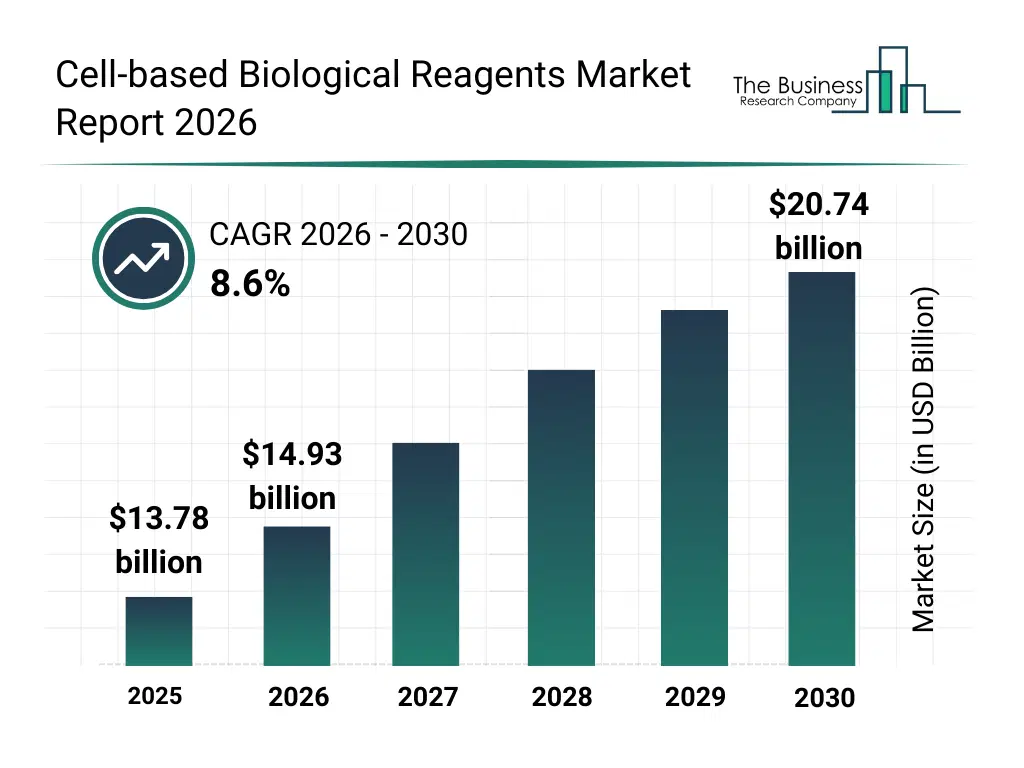
What Is The Cell-based Biological Reagents Market Size and Share 2026?
The cell-based biological reagents market size has grown strongly in recent years. It will grow from $13.78 billion in 2025 to $14.93 billion in 2026 at a compound annual growth rate (CAGR) of 8.3%. The growth in the historic period can be attributed to expansion of drug discovery research activities, growth in pharmaceutical R&D spending, increasing use of cell-based assays in toxicity testing, advancements in cell culture technologies, rising adoption of standardized biological reagents.What Is The Cell-based Biological Reagents Market Growth Forecast?
The cell-based biological reagents market size is expected to see strong growth in the next few years. It will grow to $20.74 billion in 2030 at a compound annual growth rate (CAGR) of 8.6%. The growth in the forecast period can be attributed to increasing demand for predictive in vitro models, expansion of personalized medicine research, growing use of AI-driven drug screening, rising investments in regenerative medicine studies, increasing focus on complex disease modeling. Major trends in the forecast period include increasing adoption of 3D Cell Culture and assay platforms, rising use of gene-edited and reporter cell lines, growing demand for high-throughput cell-based screening, expansion of stem cell and primary cell applications, enhanced focus on physiologically relevant models.
Global Cell-based Biological Reagents Market Segmentation
1) By Product Type: Assay Kits; Cell Lines; Reagents; Other Product Types 2) By Technology: Two Dimensional Cell Culture; Three Dimensional Cell Culture; High Throughput Screening Platforms; Stem Cell Technologies; Gene Edited Cell Platforms 3) By Application: Drug Discovery And Development; Toxicology And Safety Assessment; Disease Modeling; Regenerative Medicine; Basic Research 4) By End User: Pharmaceutical And Biotechnology Companies; Academic And Research Institutes; Contract Research Organizations; Clinical And Diagnostic Laboratories; Government And Public Health Agencies Subsegments: 1) By Assay Kits: Cell Viability Assay Kits; Cytotoxicity Assay Kits; Proliferation Assay Kits; Apoptosis Assay Kits; Signal Transduction Assay Kits 2) By Cell Lines: Primary Cell Lines; Immortalized Cell Lines; Stem Cell Lines; Cancer Cell Lines; Transfected Cell Lines 3) By Reagents: Culture Media Reagents; Growth Factor Reagents; Enzyme Reagents; Supplement Reagents; Antibody Reagents 4) By Other Product Types: Cryopreservation Reagents; Labware Consumables; Transfection Reagents; Cell Sorting Reagents; Custom ReagentsWhat Is The Driver Of The Cell-based Biological Reagents Market?
The rising focus on cell and gene therapies is expected to propel the growth of the cell-based biological reagents market going forward. Cell and gene therapies are treatments that use living cells or genetic material to repair, replace, or modify damaged cells or genes to treat or cure diseases. The use of cell and gene therapies is increasing due to the rising prevalence of rare and genetic diseases, as these therapies can target the underlying causes at a cellular or genetic level, offering potential cures where conventional treatments only manage symptoms. Cell-based biological reagents support cell and gene therapies by supplying the tools and materials needed to grow, modify, and deliver therapeutic cells or genetic material effectively. For instance, in March 2024, according to IQVIA Holdings Inc., a US-based healthcare company focused on clinical research services and analytics, global spending on cell and gene therapies surged to $5.9 billion in 2023, an increase of 38% from 2022. Therefore, the rising focus on cell and gene therapies is driving the growth of the cell-based biological reagents industry.Key Players In The Global Cell-based Biological Reagents Market
Major companies operating in the cell-based biological reagents market are Thermo Fisher Scientific Inc., Merck KGaA, FUJIFILM Corp., Danaher Corporation, GE Healthcare, Becton, Dickinson And Company, Corning Incorporated, Lonza Group Ltd., Agilent Technologies Inc., Sartorius AG, Revvity Inc., Bio-Rad Laboratories Inc., STEMCELL Technologies Inc., Miltenyi Biotec, Abcam plc, Promega Corporation, Takara Bio Inc., R&D Systems Inc., MP Biomedicals, Sino Biological, Cell Signaling Technology Inc., InvivoGen, Tocris Bioscience, and OPM Biosciences.
This chart is for illustrative purposes; the full report includes a detailed competitor analysis and comprehensive overview of the top 10 companies in the market.
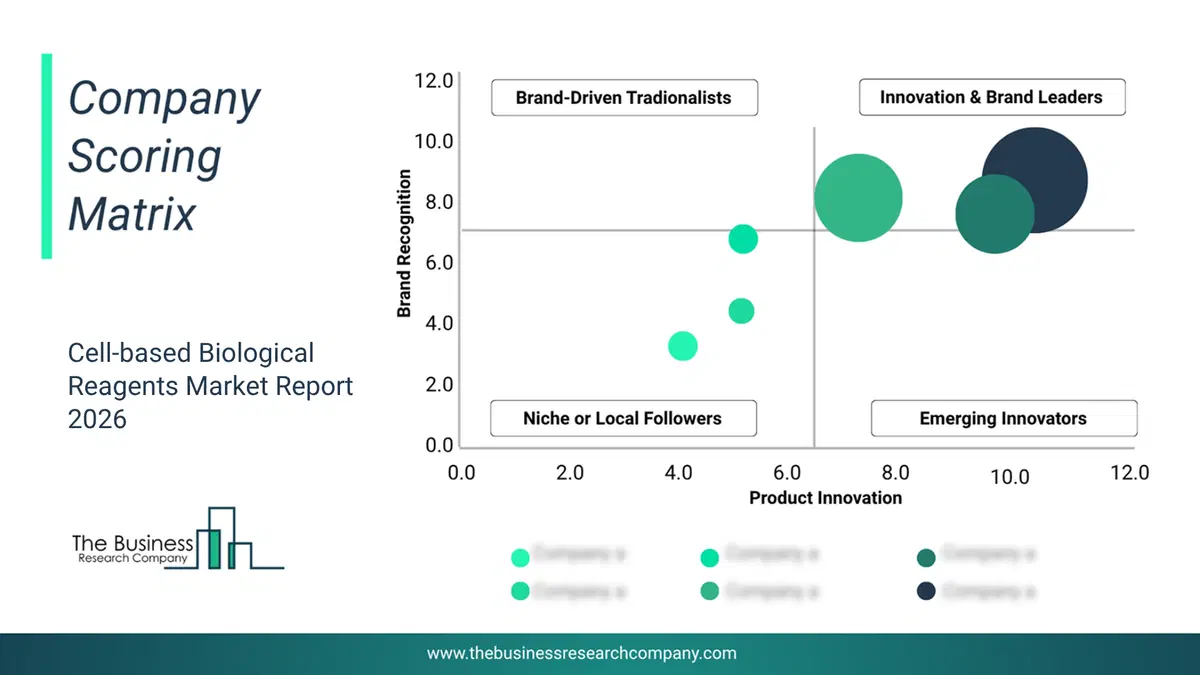
This chart maps companies by product innovation and brand strength, with bubble size indicating relative revenue, helping identify market leaders, challengers, and niche players. This is an illustrative chart; the full report provides a complete and accurate competitive analysis.
Global Cell-based Biological Reagents Market Trends and Insights
Major companies operating in the cell-based biological reagents market are focusing on developing human-induced pluripotent stem cell (iPSC) research products to advance drug discovery, disease modeling, and regenerative medicine applications. Human-induced pluripotent stem cell (iPSC) research products refer to integrated tools and workflows that enable the generation, maintenance, differentiation, and analysis of iPSCs for applications in biomedical research, including drug testing, disease modeling, and cell therapy development. For instance, in July 2024, BioServe Biotechnologies (India) Private Limited, an India-based biotechnology company, launched an advanced stem cell product line to advance regenerative medicine and drug development research. It advances biotech research through reliable iPSC generation, 3D organoid cultures, and targeted differentiation tools, minimizing variability in experiments. They streamline drug discovery by offering human-specific models that cut animal testing and speed up toxicity assessments for faster therapy development. Ultimately, they empower personalized medicine, enabling tissue regeneration for diseases such as diabetes or heart failure while slashing costs and rejection risks.What Are Latest Mergers And Acquisitions In The Cell-based Biological Reagents Market?
In April 2023, AnaBios Corporation, a US-based biotechnology company, acquired Cell Systems Inc. for an undisclosed amount. With this acquisition, AnaBios aims to expand its human tissue and cell-based reagent offerings to accelerate drug discovery and enhance biologically relevant research tools for pharmaceutical, biotech, and academic customers. Cell Systems Inc. is a US-based human primary cell and cell culture media company that offers cell-based biological reagents.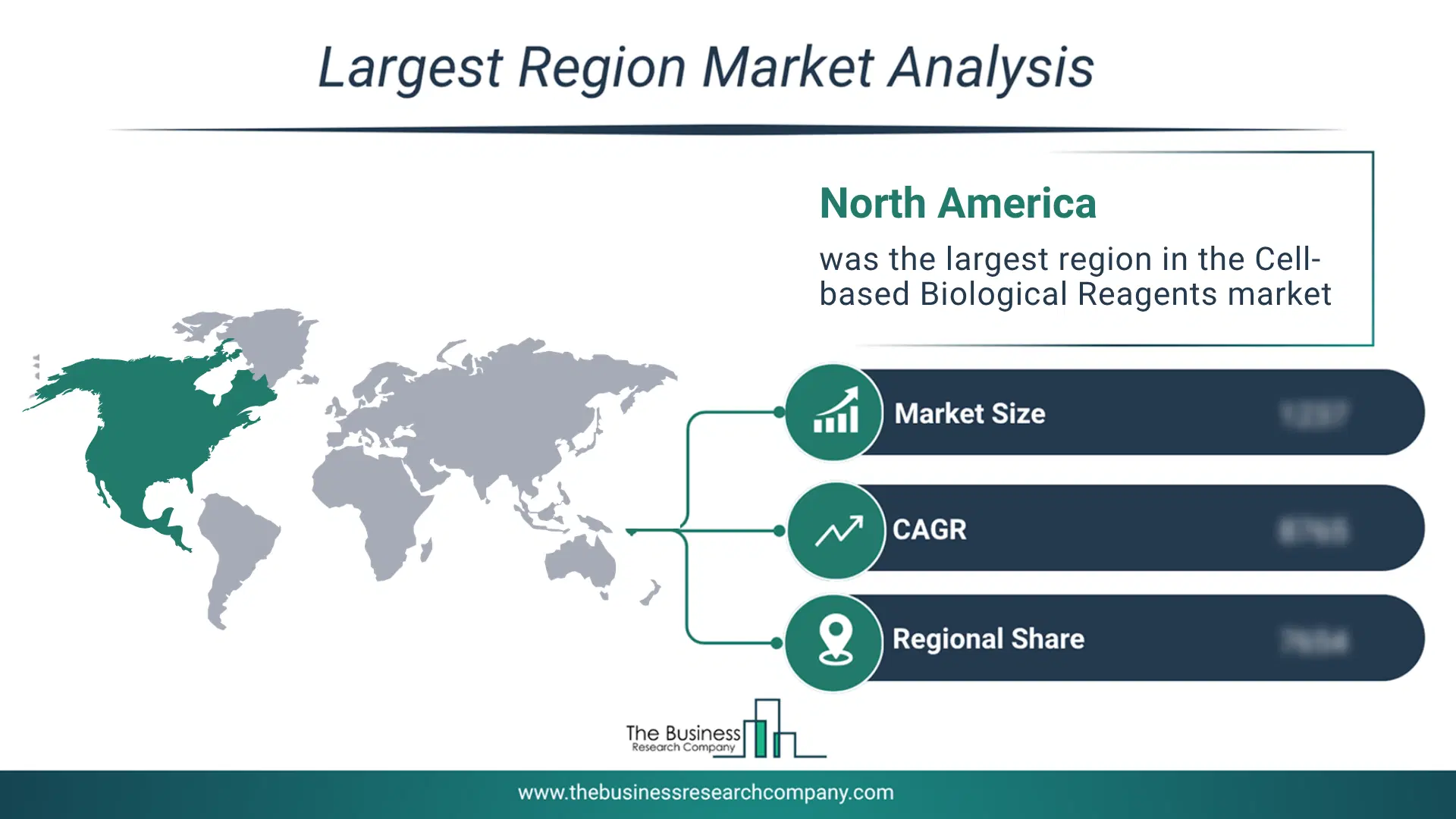
Regional Insights
North America was the largest region in the cell-based biological reagents market in 2025. Asia-Pacific is expected to be the fastest-growing region in the forecast period. The regions covered in this market report are Asia-Pacific, South East Asia, Western Europe, Eastern Europe, North America, South America, Middle East, Africa. The countries covered in this market report are Australia, Brazil, China, France, Germany, India, Indonesia, Japan, Taiwan, Russia, South Korea, UK, USA, Canada, Italy, Spain.What Defines the Cell-based Biological Reagents Market?
The cell-based biological reagents market consists of sales of cell lines, primary cells, stem cells, genetically engineered cell lines, reporter cell lines, cell-based assay kits, live cell reagents, frozen cell reagents, cell lysates, and cell culture ready cells. Values in this market are ‘factory gate’ values, that is, the value of goods sold by the manufacturers or creators of the goods, whether to other entities (including downstream manufacturers, wholesalers, distributors, and retailers) or directly to end customers. The value of goods in this market includes related services sold by the creators of the goods.How is Market Value Defined and Measured?
The market value is defined as the revenues that enterprises gain from the sale of goods and/or services within the specified market and geography through sales, grants, or donations in terms of the currency (in USD unless otherwise specified). The revenues for a specified geography are consumption values that are revenues generated by organizations in the specified geography within the market, irrespective of where they are produced. It does not include revenues from resales along the supply chain, either further along the supply chain or as part of other products.
This chart presents market attractiveness based on a quantitative evaluation of growth, competition, strategic alignment, and risk, offering a clear view of opportunity areas for decision-making. This chart is for illustrative purposes; the full report contains the complete analysis.

This chart highlights the Total Addressable Market (TAM) by estimating the maximum revenue opportunity using an assumption-driven approach, supporting strategic planning and opportunity sizing across markets. The chart is illustrative; the full report provides a more comprehensive analysis.
What Key Data and Analysis Are Included in the Cell-based Biological Reagents Market Report 2026?
The cell-based biological reagents market research report is one of a series of new reports from The Business Research Company that provides market statistics, including industry global market size, regional shares, competitors with the market share, detailed market segments, market trends and opportunities, and any further data you may need to thrive in the cell-based biological reagents industry. The market research report delivers a complete perspective of everything you need, with an in-depth analysis of the current and future state of the industry.Cell-based Biological Reagents Market Report Forecast Analysis
| Report Attribute | Details |
|---|---|
| Market Size Value In 2026 | $14.93 billion |
| Revenue Forecast In 2030 | $20.74 billion |
| Growth Rate | CAGR of 8.3% from 2026 to 2030 |
| Base Year For Estimation | 2025 |
| Actual Estimates/Historical Data | 2020-2025 |
| Forecast Period | 2026 - 2030 |
| Market Representation | Revenue in USD Billion and CAGR from 2026 to 2030 |
| Segments Covered | Product Type, Technology, Application, End User |
| Regional Scope | Asia-Pacific, Western Europe, Eastern Europe, North America, South America, Middle East, Africa |
| Country Scope | The countries covered in the report are Australia, Brazil, China, France, Germany, India, Indonesia, Japan, Taiwan, Russia, South Korea, UK, USA, Canada, Italy, Spain. |
| Key Companies Profiled | Thermo Fisher Scientific Inc., Merck KGaA, FUJIFILM Corp., Danaher Corporation, GE Healthcare, Becton, Dickinson And Company, Corning Incorporated, Lonza Group Ltd., Agilent Technologies Inc., Sartorius AG, Revvity Inc., Bio-Rad Laboratories Inc., STEMCELL Technologies Inc., Miltenyi Biotec, Abcam plc, Promega Corporation, Takara Bio Inc., R&D Systems Inc., MP Biomedicals, Sino Biological, Cell Signaling Technology Inc., InvivoGen, Tocris Bioscience, and OPM Biosciences. |
| Customization Scope | Request for Customization |
| Pricing And Purchase Options | Explore Purchase Options |