
Construction Equipment Aftermarket Market Report 2026
Global Outlook – By Equipment Type (Earthmoving And Road Building Equipment, Material Handling And Cranes, Concrete Equipment), By Application (Infrastructure, Residential, Commercial), By Sales Channel (Online, Offline) – Market Size, Trends, Strategies, and Forecast to 2030
Construction Equipment Aftermarket Market Overview
• Construction Equipment Aftermarket market size has reached to $28.53 billion in 2025 • Expected to grow to $40.39 billion in 2030 at a compound annual growth rate (CAGR) of 7.3% • Growth Driver: Rising Construction Activities Drives The Construction Equipment AfterMarket Growth • Market Trend: Concrete Strength Sensing Systems Transform Construction Aftermarket Strategies • Asia-Pacific was the largest region and fastest growing region.Market Gains By 2030 – Top Opportunities By Segment
Market Gain identifies the most promising market opportunities by highlighting the segments or products expected to generate the highest incremental revenue growth over the next five years.
What Is Covered Under Construction Equipment Aftermarket Market?
Construction equipment aftermarket refers to the parts, accessories, and services of construction equipment sold after the initial sale. They help equipment owners and operators maximize the value of their investments and the productivity of their construction operations. The main types of construction equipment aftermarket equipment are earthmoving and road building equipment, material handling and cranes, and concrete equipment. Earthmoving and road-building equipment refers to types of construction equipment specifically designed for tasks related to moving earth and constructing roads, highways, and other transportation infrastructure. The various applications are infrastructure, residential, and commercial and the sales channels are online, and offline.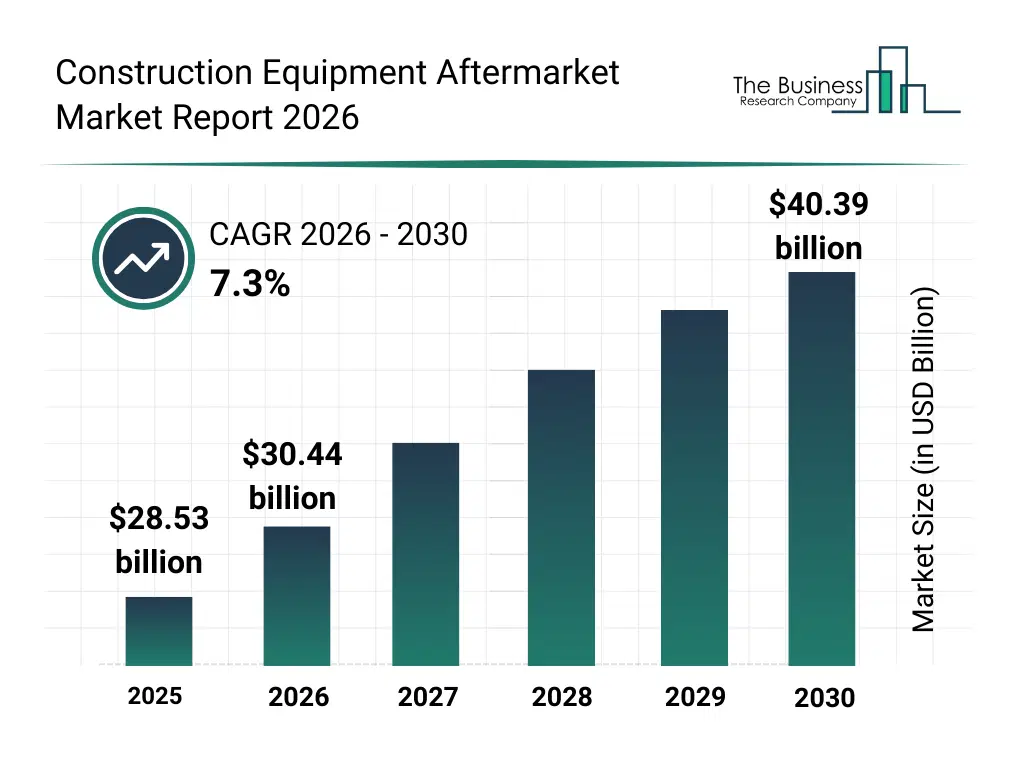
What Is The Construction Equipment Aftermarket Market Size and Share 2026?
The construction equipment aftermarket market size has grown strongly in recent years. It will grow from $28.53 billion in 2025 to $30.44 billion in 2026 at a compound annual growth rate (CAGR) of 6.7%. The growth in the historic period can be attributed to increasing adoption of heavy construction equipment, reliance on traditional aftermarket distribution channels, rising demand for basic replacement engine parts, expansion of infrastructure and road construction activity, growth in routine maintenance requirements for aging fleets.What Is The Construction Equipment Aftermarket Market Growth Forecast?
The construction equipment aftermarket market size is expected to see strong growth in the next few years. It will grow to $40.39 billion in 2030 at a compound annual growth rate (CAGR) of 7.3%. The growth in the forecast period can be attributed to growing shift toward predictive maintenance solutions, rising adoption of digital aftermarket platforms, increasing need for high-performance hydraulic and electrical components, expansion of online aftermarket procurement, development of durable and sustainable replacement parts technologies. Major trends in the forecast period include growing demand for high-durability engine and hydraulic replacement parts, rising requirement for maintenance services due to aging construction equipment fleets, expansion of aftermarket support for earthmoving and road building equipment, increasing use of third-party and oem-compatible spare parts, growth in online sales channels for aftermarket components and accessories.
Global Construction Equipment Aftermarket Market Segmentation
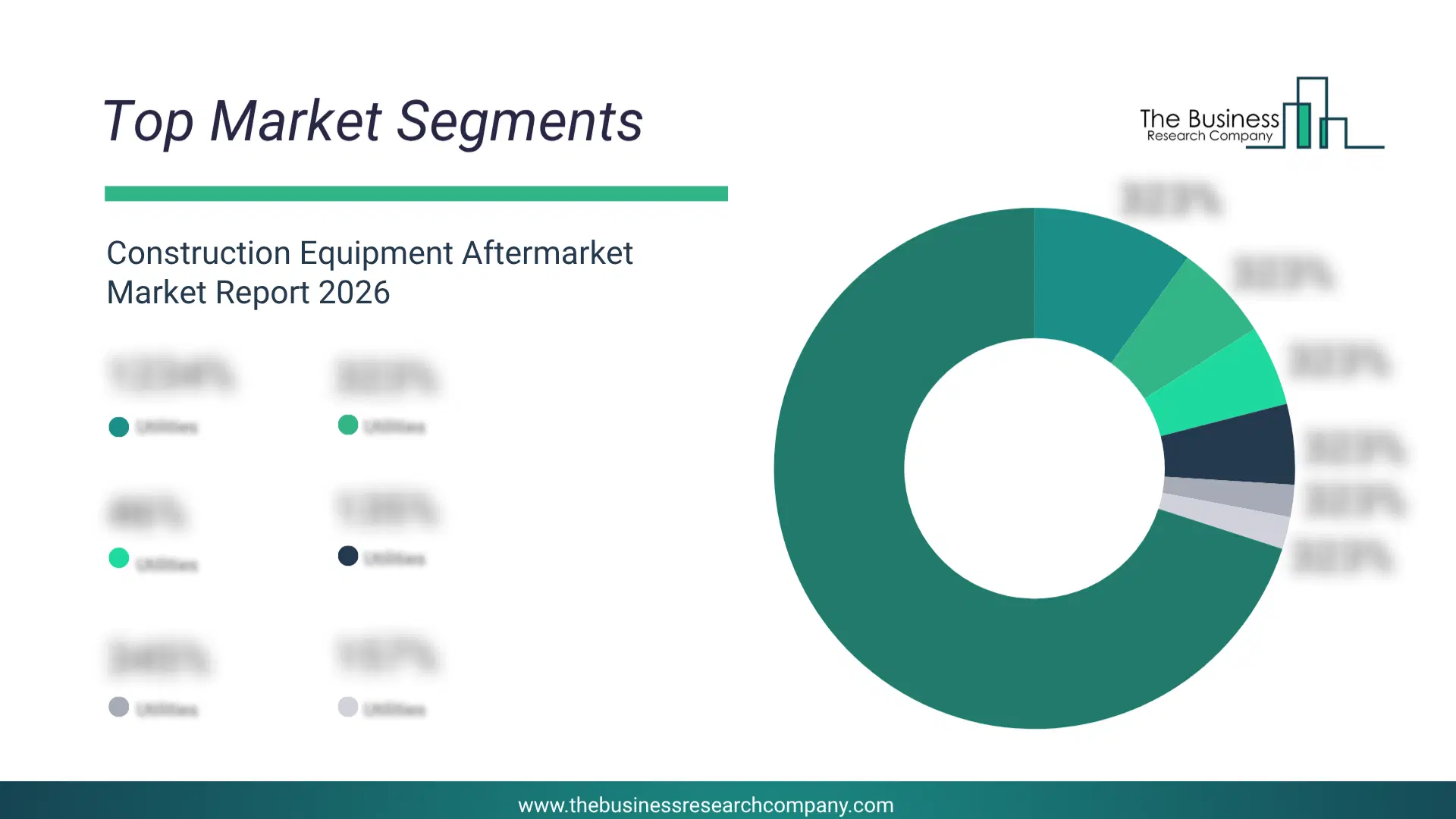
1) By Equipment Type: Earthmoving And Road Building Equipment, Material Handling And Cranes, Concrete Equipment 2) By Application: Infrastructure, Residential, Commercial 3) By Sales Channel: Online, Offline Subsegments: 1) By Earthmoving And Road Building Equipment: Excavators, Bulldozers, Backhoe Loaders, Graders, Skid Steer Loaders 2) By Material Handling And Cranes: Forklifts, Telehandlers, Tower Cranes, Mobile Cranes, Reach Stackers 3) By Concrete Equipment: Concrete Mixers, Concrete Pumps, Concrete Batching Plants, Concrete Finishing Equipment The top segments in the construction equipment aftermarket market will be: • Earthmoving And Road Building Equipment will reach $21.62 Billion by 2030. • Material Handling And Cranes will reach $12.87 Billion by 2030. • Concrete Equipment will reach $5.8 Billion by 2030.What Is The Driver Of The Construction Equipment Aftermarket Market?
The growing construction activities are expected to propel the growth of the construction equipment aftermarket going forward. Construction activities refer to the various tasks and operations involved in constructing, renovating, or building structures, such as buildings, infrastructure, and facilities. The growing construction activities provide demand for construction equipment aftermarket products like machinery parts and equipment maintenance and repairs for excavators and bulldozers. For instance, in February 2025, according to the Office for National Statistics (ONS), a UK-based government department, construction output is estimated to have risen by 0.5% in the fourth quarter (October to December) of 2024 compared with the third quarter (July to September) of 2024, driven entirely by a 1.2% increase in new work. Therefore, the growing construction activities are driving the growth of the construction equipment aftermarket.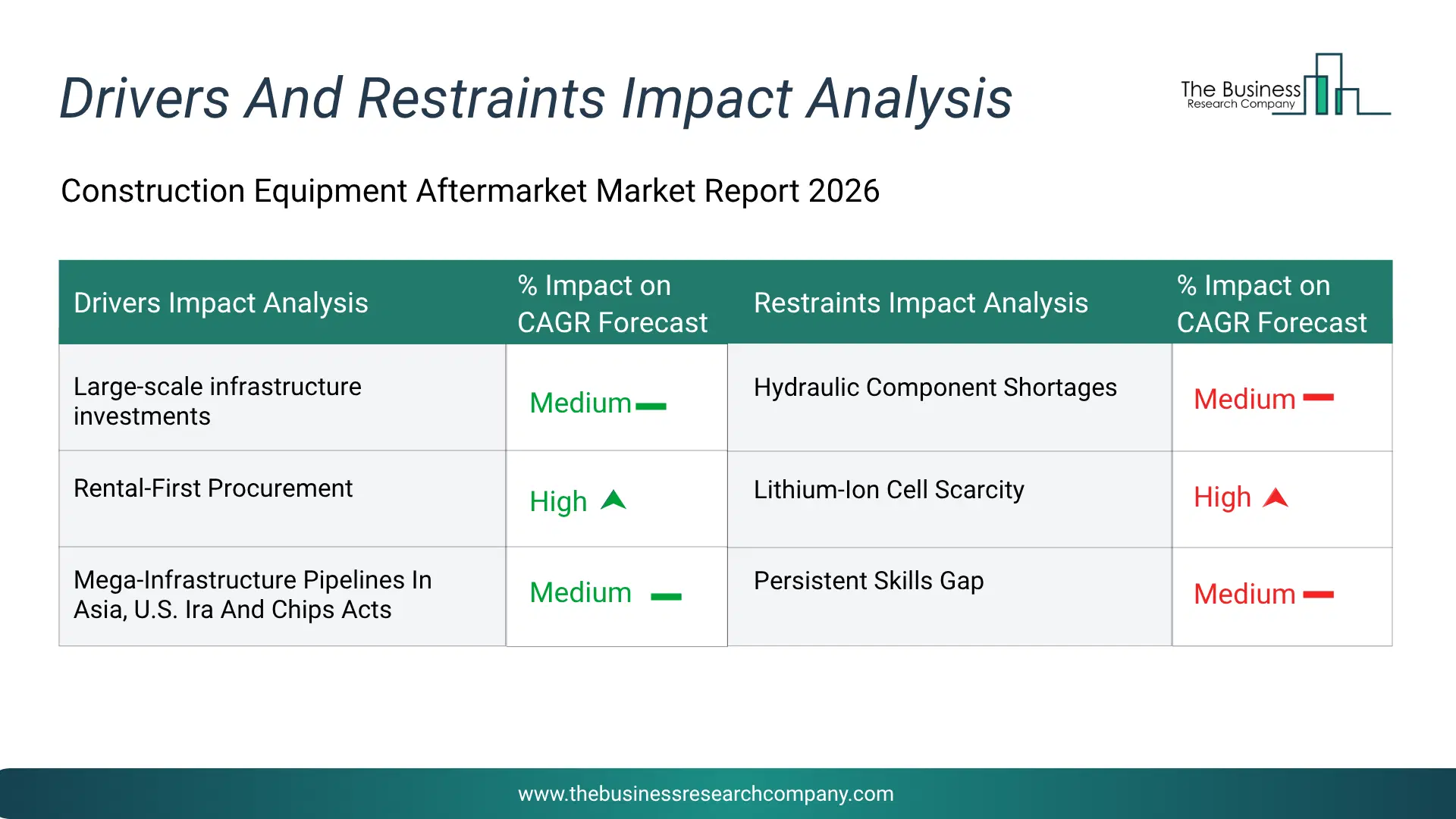
Infographic Chart Showing Key Market Drivers Analysis And Restraints For Construction Equipment Aftermarket Market
The chart presents an impact analysis of key drivers and restraints, quantifying their relative influence on the market's growth rate and helping assess the balance between growth enablers and limiting factors. This chart offers a high-level perspective; the full report contains more detailed insights.
How Will The Drivers Impact Growth In The Global Construction Equipment Aftermarket Market?
• Large-scale infrastructure investments (Medium) – During the forecast period, the large-scale infrastructure investments is expected to become a key growth driver for the construction equipment aftermarket market by 2030. Large-scale infrastructure investments across Asia and supportive policy frameworks such as the U.S. IRA and CHIPS Acts are significantly accelerating demand in the market. These initiatives promote industrial expansion, manufacturing localization, and energy transition projects, all of which require advanced equipment and services. As governments allocate substantial funding toward infrastructure modernization, the need for scalable and efficient solutions rises. This creates long-term demand visibility and encourages private sector participation. Additionally, incentives and subsidies under these acts reduce capital burden for enterprises, further driving adoption. The combined effect strengthens market growth by ensuring sustained project pipelines and increased spending. • Rental-First Procurement (High) – During the forecast period, the rental-first procurement is expected to emerge as a major factor driving the expansion of the construction equipment aftermarket market by 2030. The growing preference for rental-first procurement models is transforming how businesses access equipment and services. Instead of large upfront capital investments, companies are opting for flexible rental solutions that reduce financial risk and improve cash flow management. This shift is particularly beneficial for small and medium enterprises that may lack the resources for outright purchases. Rental models also enable access to the latest technologies without long-term commitment. Furthermore, they support scalability, allowing businesses to adjust usage based on project requirements. This trend enhances market accessibility and drives consistent demand across various end-user segments. • Mega-Infrastructure Pipelines In Asia, U.S. Ira And Chips Acts (Medium) – During the forecast period, the mega-infrastructure pipelines in Asia, U.S. Ira and chips acts is expected to act as a key growth catalyst for the construction equipment aftermarket market by 2030. The expansion of mega-infrastructure pipelines, supported by government initiatives like the U.S. IRA and CHIPS Acts, plays a critical role in stimulating market demand. These programs prioritize domestic production, clean energy, and technological advancement, creating a favorable environment for industry growth. Increased funding for construction, semiconductor manufacturing, and renewable projects directly translates into higher equipment utilization. Moreover, such initiatives foster innovation and attract global investments. The resulting ecosystem strengthens supply chains and boosts market confidence. This sustained momentum positions the market for long-term expansion and resilience.How Will The Restraints Impact Growth In The Global Construction Equipment Aftermarket Market?
• Hydraulic Component Shortages (Medium) – During the forecast period, the hydraulic component shortages present a significant challenge to market growth by disrupting the availability of essential machinery parts. These components are critical for the functioning of various equipment used across industries, and any supply disruption can delay production timelines. Manufacturers often face increased lead times and higher procurement costs, which directly impact project execution. Additionally, inconsistent supply can lead to operational inefficiencies and reduced productivity. Companies may also need to source from alternative suppliers, sometimes compromising on quality. This creates uncertainty in project planning and increases dependency on limited suppliers. Over time, such constraints can slow down market expansion and reduce overall efficiency. The lack of stable supply chains further amplifies these challenges, making it difficult for businesses to maintain consistent output. • Lithium-Ion Cell Scarcity (High) – During the forecast period, the scarcity of lithium-ion cells acts as a major restraint by limiting the production and deployment of battery-powered solutions. As demand for electrification and energy storage increases, the supply of lithium-ion cells struggles to keep pace. This imbalance leads to rising costs and delays in product availability. Manufacturers are forced to either absorb higher costs or pass them on to customers, affecting market competitiveness. Additionally, dependence on a limited number of suppliers and regions increases vulnerability to geopolitical risks. The shortage also hampers innovation and slows down the transition toward sustainable technologies. Companies may delay or scale down projects due to uncertainty in supply. Overall, this scarcity restricts growth potential and creates bottlenecks in market development. • Persistent Skills Gap (Medium) – During the forecast period, the persistent skills gap poses a critical restraint by limiting the availability of trained professionals required to operate and maintain advanced systems. As technologies become more sophisticated, the demand for specialized skills continues to rise. However, the workforce often lacks the necessary training and expertise to meet these requirements. This results in inefficiencies, increased operational errors, and longer project timelines. Companies may need to invest heavily in training and development, adding to overall costs. The shortage of skilled labor also affects the adoption of new technologies, as organizations hesitate to implement systems they cannot effectively manage. Furthermore, competition for skilled workers drives up labor costs, impacting profitability. This ongoing gap slows innovation and restricts the market’s ability to scale efficiently.Key Players In The Global Construction Equipment Aftermarket Market
Major companies operating in the construction equipment aftermarket market are Caterpillar Inc., Komatsu Ltd., CNH Industrial N.V., Atlas Copco Group, Liebherr Group, XCMG Group, John Deere Construction & Forestry, Volvo Construction Equipment Corp., Yanmar Co. Ltd., Hitachi Construction Machinery Co Ltd., JLG Industries Inc., Zoomlion Heavy Industry Science and Technology Co Ltd., Sany Heavy Industry Co Ltd., SANY Group Co. Ltd., Terex Corporation, Guangxi Liugong Machinery Co. Ltd., Xuzhou Construction Machinery Group Co Ltd, Manitou Group, Palfinger AG, The Manitowoc Company Inc., Takeuchi Mfg. Co. Ltd., Tadano Ltd., Ammann Group, Bell Equipment Ltd., Hidromek Inc., Kobelco Construction Machinery Co Ltd., Doosan Infracore Co. Ltd., XGMA Machinery Co. Ltd., BOMAG GmbH, Hyundai Construction Equipment Co. Ltd., LiuGong Machinery Corp.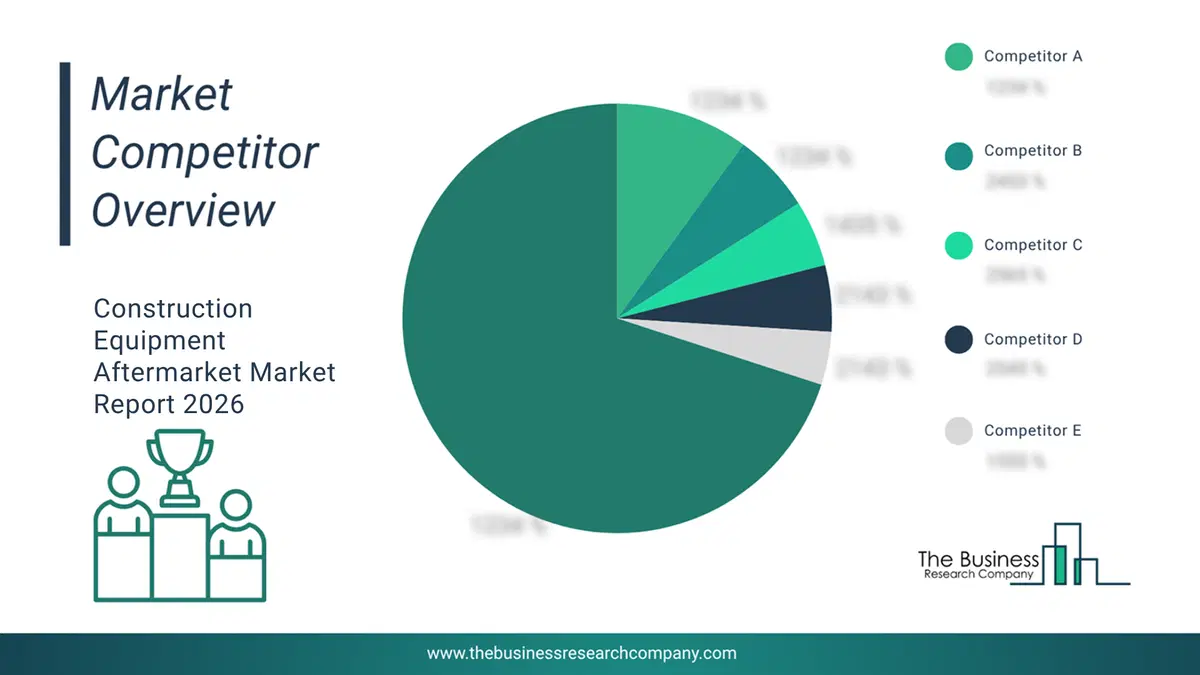
This chart is for illustrative purposes; the full report includes a detailed competitor analysis and comprehensive overview of the top 10 companies in the market.
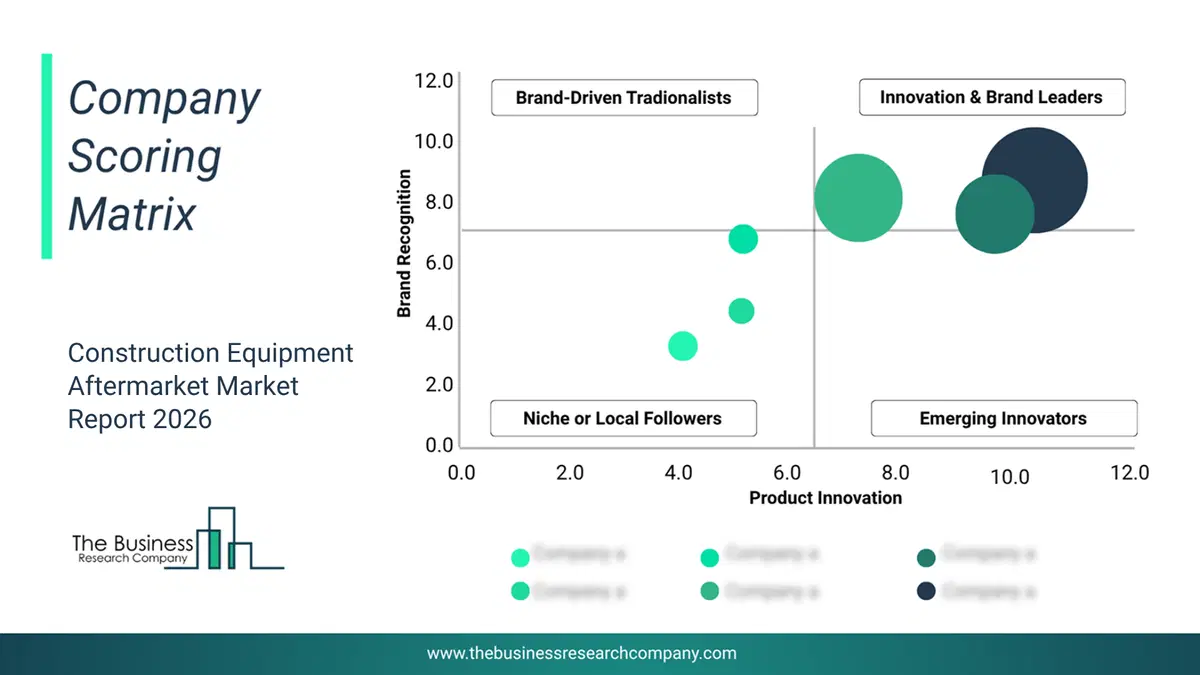
This chart maps companies by product innovation and brand strength, with bubble size indicating relative revenue, helping identify market leaders, challengers, and niche players. This is an illustrative chart; the full report provides a complete and accurate competitive analysis.
Global Construction Equipment Aftermarket Market Trends and Insights
Major companies operating in the construction equipment aftermarket are focused on developing concrete strength sensing systems. A Concrete Strength Sensing System is a technology designed to measure and monitor the strength of concrete in real time during the curing and setting process. For instance, in December 2023, Wavelogix Inc., a US-based connected devices and software providing company, launched the ‘REBEL Concrete Strength Sensing System. It relies on piezoelectric technology and an AI-guided signal processing algorithm, offering a state-of-the-art solution to a century-old problem. The REBEL sensors ascertain the mechanical properties of concrete by analyzing acoustic signals received from the specific concrete structure under consideration.What Are Latest Mergers And Acquisitions In The Construction Equipment Aftermarket Market?
In October 2023, Metso Corporation, a Finland-based crusher equipment manufacturing company, acquired Tedd Engineering Ltd for an undisclosed amount. The acquisition significantly enhances Mesto's ability to leverage digitalization and automation within our mobile equipment business, particularly in the aftermarket segment. Tedd Engineering Ltd is a UK-based manufacturing company specialized in electronic control systems for heavy machinery.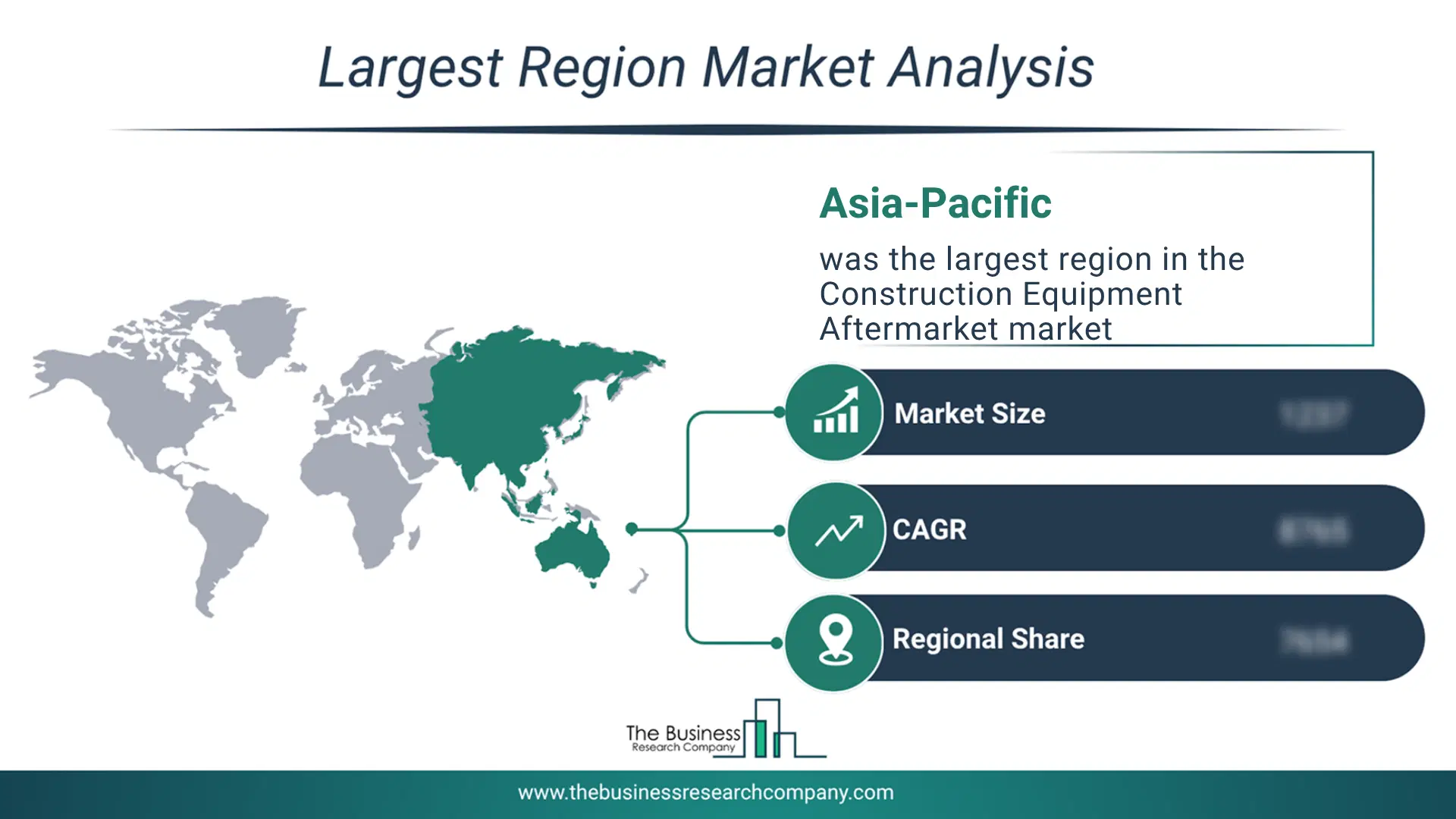
Regional Insights
Asia-Pacific was the largest region in the construction equipment aftermarket in 2025. Asia-Pacific is expected to be the fastest-growing region in the forecast period. The regions covered in this market report are Asia-Pacific, South East Asia, Western Europe, Eastern Europe, North America, South America, Middle East, Africa. The countries covered in this market report are Australia, Brazil, China, France, Germany, India, Indonesia, Japan, Taiwan, Russia, South Korea, UK, USA, Canada, Italy, Spain.What Defines the Construction Equipment Aftermarket Market?
The construction equipment aftermarket consists of sales of engine parts, hydraulic and electrical components, and tires. Values in this market are ‘factory gate’ values, that is the value of goods sold by the manufacturers or creators of the goods, whether to other entities (including downstream manufacturers, wholesalers, distributors and retailers) or directly to end customers. The value of goods in this market includes related services sold by the creators of the goods.How is Market Value Defined and Measured?
The market value is defined as the revenues that enterprises gain from the sale of goods and/or services within the specified market and geography through sales, grants, or donations in terms of the currency (in USD unless otherwise specified). The revenues for a specified geography are consumption values that are revenues generated by organizations in the specified geography within the market, irrespective of where they are produced. It does not include revenues from resales along the supply chain, either further along the supply chain or as part of other products.
This chart presents market attractiveness based on a quantitative evaluation of growth, competition, strategic alignment, and risk, offering a clear view of opportunity areas for decision-making. This chart is for illustrative purposes; the full report contains the complete analysis.

This chart highlights the Total Addressable Market (TAM) by estimating the maximum revenue opportunity using an assumption-driven approach, supporting strategic planning and opportunity sizing across markets. The chart is illustrative; the full report provides a more comprehensive analysis.
What Key Data and Analysis Are Included in theConstruction Equipment Aftermarket Market Report 2026?
The construction equipment aftermarket market research report is one of a series of new reports from The Business Research Company that provides market statistics, including industry global market size, regional shares, competitors with the market share, detailed market segments, market trends and opportunities, and any further data you may need to thrive in the construction equipment aftermarket industry. The market research report delivers a complete perspective of everything you need, with an in-depth analysis of the current and future state of the industry.Construction Equipment Aftermarket Market Report Forecast Analysis
| Report Attribute | Details |
|---|---|
| Market Size Value In 2026 | $30.44 billion |
| Revenue Forecast In 2030 | $40.39 billion |
| Growth Rate | CAGR of 6.7% from 2026 to 2030 |
| Base Year For Estimation | 2025 |
| Actual Estimates/Historical Data | 2020-2025 |
| Forecast Period | 2026 - 2030 |
| Market Representation | Revenue in USD Billion and CAGR from 2026 to 2030 |
| Segments Covered | Equipment Type, Application, Sales Channel |
| Regional Scope | Asia-Pacific, Western Europe, Eastern Europe, North America, South America, Middle East, Africa |
| Country Scope | The countries covered in the report are Australia, Brazil, China, France, Germany, India, Indonesia, Japan, Taiwan, Russia, South Korea, UK, USA, Canada, Italy, Spain. |
| Key Companies Profiled | Caterpillar Inc., Komatsu Ltd., CNH Industrial N.V., Atlas Copco Group, Liebherr Group, XCMG Group, John Deere Construction & Forestry, Volvo Construction Equipment Corp., Yanmar Co. Ltd., Hitachi Construction Machinery Co Ltd., JLG Industries Inc., Zoomlion Heavy Industry Science and Technology Co Ltd., Sany Heavy Industry Co Ltd., SANY Group Co. Ltd., Terex Corporation, Guangxi Liugong Machinery Co. Ltd., Xuzhou Construction Machinery Group Co Ltd, Manitou Group, Palfinger AG, The Manitowoc Company Inc., Takeuchi Mfg. Co. Ltd., Tadano Ltd., Ammann Group, Bell Equipment Ltd., Hidromek Inc., Kobelco Construction Machinery Co Ltd., Doosan Infracore Co. Ltd., XGMA Machinery Co. Ltd., BOMAG GmbH, Hyundai Construction Equipment Co. Ltd., LiuGong Machinery Corp. |
| Customization Scope | Request for Customization |
| Pricing And Purchase Options | Explore Purchase Options |