
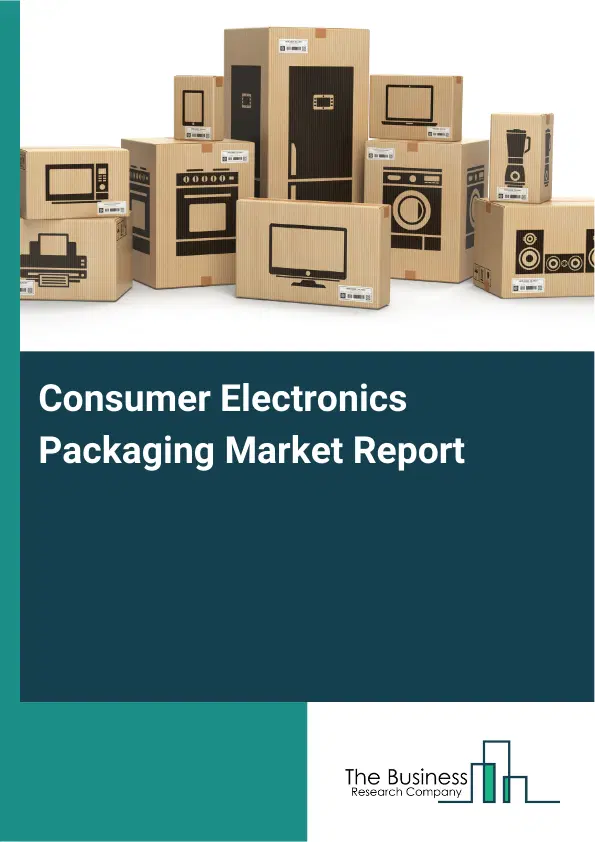
Consumer Electronics Packaging Market Report 2026
Global Outlook – By Product Type ( Corrugated Boxes, Paperboard Boxes, Thermoformed Trays, Bags and Pouches, Blister Packs and Clamshells, Protective Packaging, Other Product Types), By Technology ( Active Packaging, Intelligent Packaging, Modified Atmospheric Packaging, Anti-Microbial Packaging, Aseptic Packaging, Other Technologies ), By Material Type ( Plastic, Paper and Paperboard, Other Material Types ), By Application ( Mobile Phones, Computers, TVs, DTH and Set-Top boxes, Music Systems, Printers, Scanners and Photocopy Machines, Game Consoles and Toys, Camcorders and Cameras, Other Applications ) – Market Size, Trends, Strategies, and Forecast to 2030
Consumer Electronics Packaging Market Overview
• Consumer Electronics Packaging market size has reached to $29.01 billion in 2025 • Expected to grow to $53.31 billion in 2030 at a compound annual growth rate (CAGR) of 12.8% • Growth Driver: Rising Demand For Eco-Friendly Paper And Paperboard Packaging Drives Consumer Electronics Packaging Market Growth • Market Trend: Cruzfoam Unveils Patented Solutions For Delicate And Heat-Sensitive Products • Asia-Pacific was the largest region and fastest growing region.Market Gains By 2030 – Top Opportunities By Segment
Market Gain identifies the most promising market opportunities by highlighting the segments or products expected to generate the highest incremental revenue growth over the next five years.
What Is Covered Under Consumer Electronics Packaging Market?
Consumer electronics packaging is a protective covering for the products to ensure safe and secure shipping. Packaging is crucial, as electronic products have very tiny components that are delicate and prone to damage, it is used to protect the electronics from mechanical damage, electrostatic charge, natural disasters, and mishandling damage. Any electronic device intended for end users' or consumers' daily and non-commercial or professional use is known as consumer electronics (CE). The main types of products in consumer electronics packaging includes corrugated boxes, paperboard boxes, thermoformed trays, bags and pouches, blister packs and clamshells, protective packaging, and others. The corrugated boxes are used as packaging materials for a variety of goods such as food, stationery, electronics, medicine, etc. Corrugated boxes refer to cartons that are made up of a few layers of material instead of just a single sheet-like cardboard. Usually, three layers are present in corrugated boxes, which are stuck together to form a single sheet. The different technologies include active packaging, intelligent packaging, modified atmospheric packaging, anti-microbial packaging, aseptic packaging, and others. The various material types include plastic, paper, paperboard, and others that are used in mobile phones, computers, TVs, DTH and set-top boxes, music systems, printers, scanners, and photocopy machines, game consoles and toys, camcorders and cameras, and others.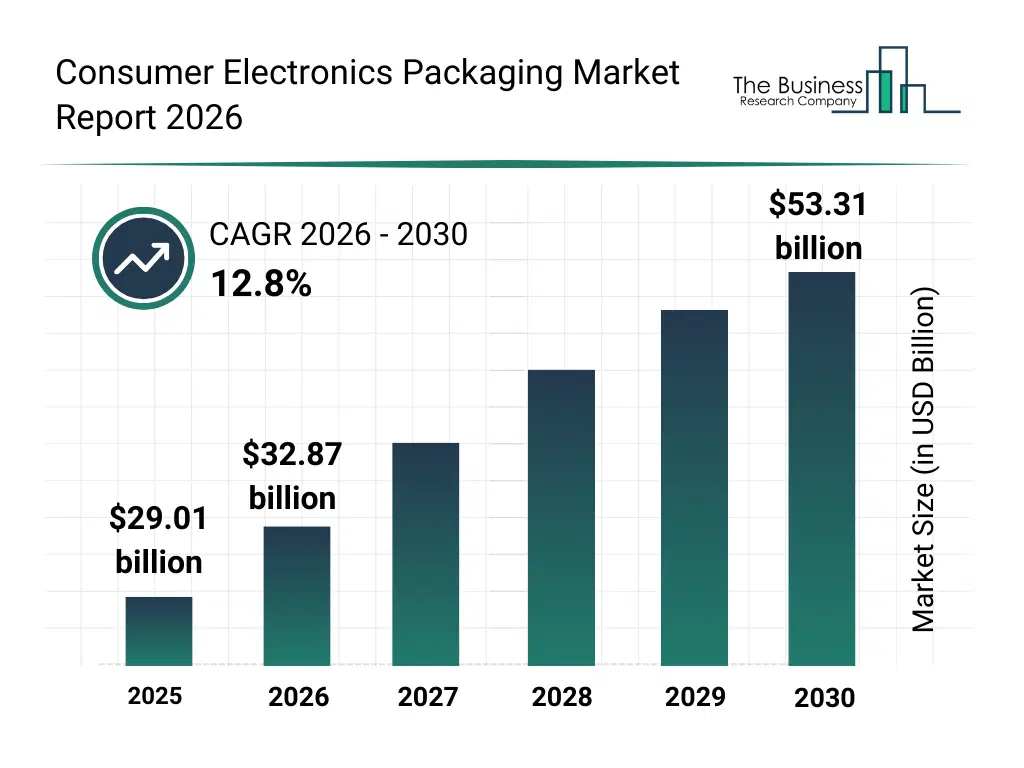
What Is The Consumer Electronics Packaging Market Size 2026 And Growth Rate?
The consumer electronics packaging market size has grown rapidly in recent years. It will grow from $29.01 billion in 2025 to $32.87 billion in 2026 at a compound annual growth rate (CAGR) of 13.3%. The growth in the historic period can be attributed to rise in consumer electronics sales, increasing need for protective packaging, expansion in mobile phones and TV packaging, growth in e-commerce and online retail, adoption of custom and eco-friendly packaging.What Is The Consumer Electronics Packaging Market Growth Forecast?
The consumer electronics packaging market size is expected to see rapid growth in the next few years. It will grow to $53.31 billion in 2030 at a compound annual growth rate (CAGR) of 12.8%. The growth in the forecast period can be attributed to increase in AI-driven packaging design, rising use of intelligent and active packaging, growth in automated packaging lines, expansion in sustainable materials and solutions, increasing adoption of modified atmosphere and anti-microbial packaging. Major trends in the forecast period include AI-driven packaging optimization, IoT-enabled supply chain monitoring, smart protective packaging, cloud-based packaging design, automated quality control and inspection.
Global Consumer Electronics Packaging Market Segmentation
1) By Product Type: Corrugated Boxes, Paperboard Boxes, Thermoformed Trays, Bags and Pouches, Blister Packs and Clamshells, Protective Packaging, Other Product Types 2) By Technology: Active Packaging, Intelligent Packaging, Modified Atmospheric Packaging, Anti-Microbial Packaging, Aseptic Packaging, Other Technologies 3) By Material Type: Plastic, Paper and Paperboard, Other Material Types 4) By Application: Mobile Phones, Computers, TVs, DTH and Set-Top boxes, Music Systems, Printers, Scanners and Photocopy Machines, Game Consoles and Toys, Camcorders and Cameras, Other Applications Subsegments: 1) By Corrugated Boxes: Regular Slotted Containers (RSC), Die-Cut Boxes, Multi-Depth Boxes 2) By Paperboard Boxes: Folding Cartons, Rigid Boxes, Paperboard Trays 3) By Thermoformed Trays: Clear Thermoformed Trays, Colored Thermoformed Trays, Custom-Shaped Thermoformed Trays 4) By Bags and Pouches: Stand-Up Pouches, Flat Bags, Gusseted Bags 5) By Blister Packs and Clamshells: Standard Blister Packs, Custom Blister Packs, Clamshell Packaging 6) By Protective Packaging: Foam Inserts, Air Cushioning, Bubble Wrap 7) By Other Product Types: Eco-Friendly Packaging Solutions, Custom Packaging Solutions, Specialty Packaging The top segments in the consumer electronics packaging market will be: • Corrugated Boxes will reach $20.01 Billion by 2030. • Paperboard Boxes will reach $12.75 Billion by 2030. • Thermoformed Trays will reach $6.12 Billion by 2030. • Bags and Pouches will reach $4.35 Billion by 2030. • Blister Packs and Clamshells will reach $3.77 Billion by 2030.What Is The Driver Of The Consumer Electronics Packaging Market?
The increasing demand for paper and paperboard in packaging is driving the growth of the consumer electronics packaging market. Paper and paperboard are usually used in packaging due to their biodegradable and environmentally friendly nature. This can help to lower the cost of shipping used electronics. For instance, in May 2023, a survey conducted by Two Sides North America revealed updated insights into consumer attitudes toward paper and paper-based packaging, approximately 57% of respondents now believe that paper-based packaging is better for the environment compared to other types, showing a growing preference for sustainability. Furthermore, 56% of consumers prefer their online orders to be delivered in paper-based packaging, reflecting a significant increase in demand for environmentally friendly packaging solutions. Therefore, the increasing demand for paper and paperboard packaging is propelling the consumer electronics packaging industry growth.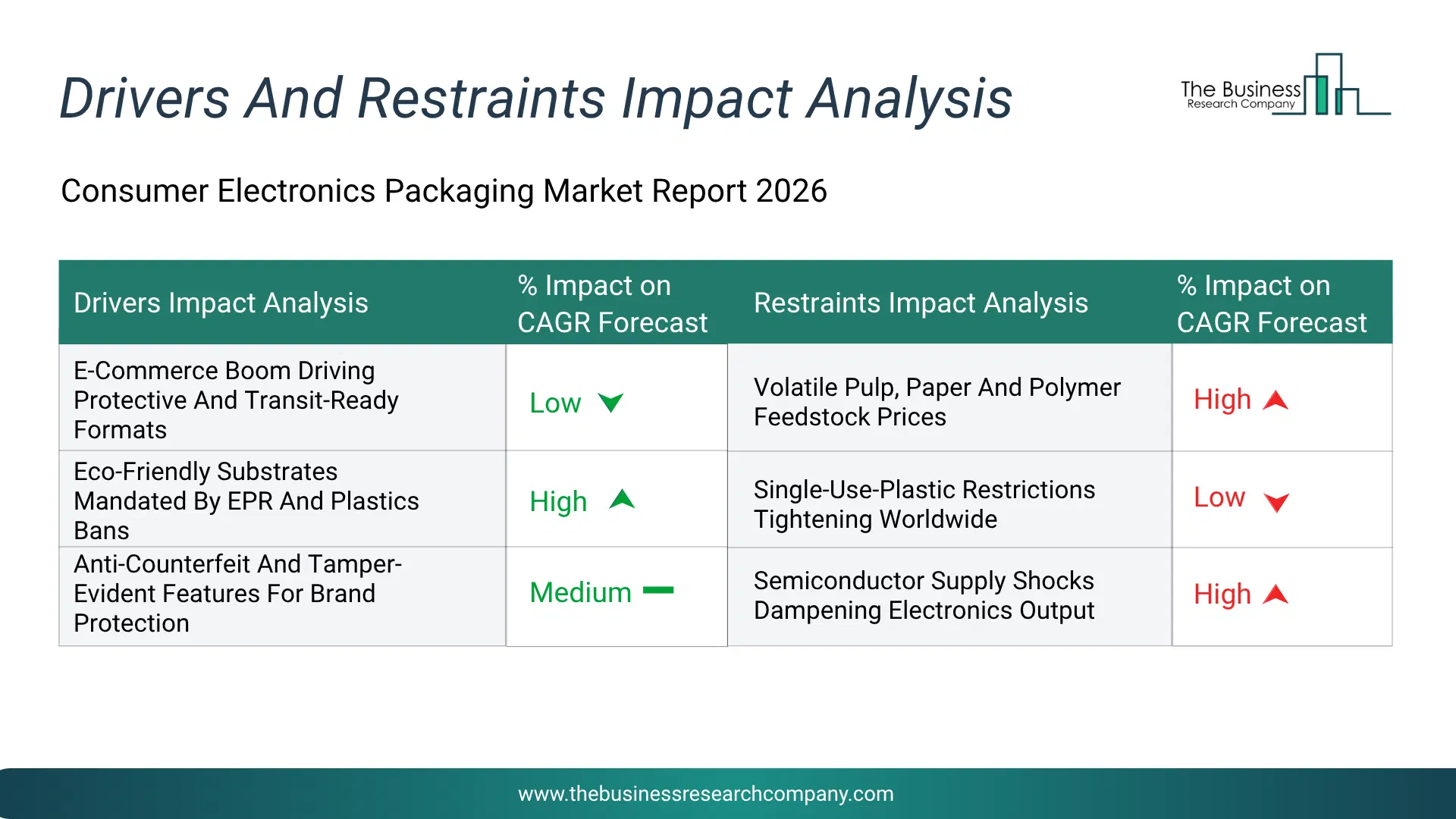
Infographic Chart Showing Key Market Drivers Analysis And Restraints For Consumer Electronics Packaging Market
The chart presents an impact analysis of key drivers and restraints, quantifying their relative influence on the market's growth rate and helping assess the balance between growth enablers and limiting factors. This chart offers a high-level perspective; the full report contains more detailed insights.
How Will The Drivers Impact Growth In The Global Consumer Electronics Packaging Market?
• E-Commerce Boom Driving Protective And Transit-Ready Formats (Low) – During the forecast period, the e-commerce boom driving protective and transit-ready formats is expected to become a key growth driver for the consumer electronics packaging market by 2030. The rapid expansion of e-commerce platforms and online consumer electronics sales is significantly driving demand for protective and transit-ready packaging formats in the consumer electronics packaging market. Electronic products such as smartphones, tablets, gaming consoles, laptops, and wearable devices are highly delicate and vulnerable to shock, vibration, electrostatic discharge, and mishandling during shipping. As online retail channels continue to expand globally, manufacturers and retailers are increasingly adopting durable corrugated boxes, protective foams, thermoformed trays, and anti-static materials to ensure product safety throughout logistics operations. Additionally, increasing cross-border shipments and same-day delivery services are creating demand for lightweight yet high-strength packaging solutions that can withstand multiple handling stages. E-commerce companies are also emphasizing premium unboxing experiences and reduced return rates, which further encourages investment in advanced packaging designs. The growing volume of direct-to-consumer electronics shipments across North America and Asia-Pacific is therefore expected to strongly support packaging consumption during the forecast period. • Eco-Friendly Substrates Mandated By EPR And Plastics Bans (High) – During the forecast period, the eco-friendly substrates mandated by EPR and plastics bans is expected to emerge as a major factor driving the expansion of the consumer electronics packaging market by 2030. Growing environmental concerns and stricter packaging waste regulations are accelerating the adoption of eco-friendly substrates in the consumer electronics packaging market. Governments across Europe and North America are implementing Extended Producer Responsibility (EPR) policies and plastic reduction mandates that require manufacturers to reduce packaging waste and increase recyclability. As a result, electronics companies are increasingly shifting toward sustainable materials such as recyclable paperboard, molded fiber, biodegradable polymers, and corrugated packaging formats. Consumer preference for environmentally responsible packaging is also influencing brands to redesign packaging structures with reduced plastic usage and lightweight materials. In addition, retailers and e-commerce platforms are pressuring suppliers to comply with sustainability targets and circular economy initiatives. These regulations are encouraging innovation in recyclable cushioning materials and compostable protective packaging solutions. The transition toward sustainable substrates not only supports environmental compliance but also improves corporate brand positioning and long-term operational efficiency in the electronics packaging ecosystem. • Anti-Counterfeit And Tamper-Evident Features For Brand Protection (Medium) – During the forecast period, the anti-counterfeit and tamper-evident features for brand protection is expected to act as a key growth catalyst for the consumer electronics packaging market by 2030. Increasing concerns regarding counterfeit electronics products and supply chain security are driving demand for anti-counterfeit and tamper-evident packaging solutions in the consumer electronics packaging market. High-value electronic products are frequently exposed to risks such as product duplication, unauthorized replacements, and tampering during transportation and retail distribution. To address these challenges, manufacturers are increasingly integrating QR codes, holographic labels, RFID tags, serialized tracking systems, tamper-proof seals, and authentication technologies into packaging formats. These advanced packaging solutions help brands ensure product authenticity, improve supply chain visibility, and strengthen customer trust. In emerging markets and high-growth Asia-Pacific economies, rising counterfeit activity is encouraging electronics manufacturers to invest heavily in secure packaging technologies. Furthermore, governments and regulatory authorities are strengthening compliance requirements for traceability and product verification across global supply chains. The growing need for brand protection and secure logistics operations is therefore contributing significantly to innovation and expansion within the consumer electronics packaging market.How Will The Restraints Impact Growth In The Global Consumer Electronics Packaging Market?
• Volatile Pulp, Paper And Polymer Feedstock Prices (Low) – During the forecast period, the volatile prices of pulp, paper, polymers, and other packaging raw materials are creating major challenges for the consumer electronics packaging market. Packaging manufacturers heavily rely on paperboard, corrugated materials, plastic resins, specialty foams, and polymer-based protective components to produce durable electronics packaging solutions. However, fluctuations in crude oil prices, energy costs, transportation expenses, and global supply-demand imbalances frequently increase raw material costs and reduce profitability for manufacturers. Cost-sensitive markets are particularly affected because packaging suppliers often operate under tight pricing agreements with electronics manufacturers and retailers. Sudden increases in feedstock prices also create difficulties in long-term procurement planning and inventory management. Additionally, rising costs may limit investments in sustainable packaging innovation and advanced protective technologies. Small and medium-sized packaging companies face stronger financial pressure because they possess lower purchasing power compared to large multinational firms. These pricing instabilities therefore create operational uncertainty and restrict stable growth opportunities across the global consumer electronics packaging sector. • Single-Use-Plastic Restrictions Tightening Worldwide (High) – During the forecast period, the increasing global restrictions on single-use plastics are restraining growth within the consumer electronics packaging market because the sector traditionally depends on plastic-based protective packaging materials. Electronics packaging frequently uses bubble wraps, foam inserts, plastic films, thermoformed trays, and clamshell packaging to provide cushioning, moisture resistance, and shock absorption for delicate electronic devices. However, governments worldwide are introducing stricter regulations aimed at reducing plastic waste and promoting recyclable packaging alternatives. Compliance with these regulations requires manufacturers to redesign packaging structures, shift toward sustainable materials, and invest in research and development activities. Alternative eco-friendly materials may also involve higher production costs and may not always provide equivalent protective performance compared to traditional plastics. Additionally, regulatory requirements vary across regions, creating compliance complexities for global packaging suppliers and electronics manufacturers. The transition toward recyclable and biodegradable materials may also disrupt existing supply chains and manufacturing processes. These regulatory pressures therefore increase operational costs and slow packaging standardization efforts across the industry. • Semiconductor Supply Shocks Dampening Electronics Output (Medium) – During the forecast period, the semiconductor supply disruptions are significantly restraining the consumer electronics packaging market because packaging demand is directly linked to electronics manufacturing output. Consumer electronic products such as smartphones, laptops, gaming devices, smart appliances, and wearables require semiconductors and microchips for production. However, global semiconductor shortages caused by geopolitical tensions, factory shutdowns, logistics disruptions, and supply-demand imbalances have reduced electronics manufacturing volumes in major production hubs across Asia-Pacific. Lower production of electronic devices directly reduces demand for corrugated boxes, anti-static packaging, thermoformed trays, and protective packaging materials. In addition, delayed product launches and reduced inventory availability create uncertainty across packaging procurement cycles. Electronics manufacturers are also becoming more cautious with inventory management and capital expenditure decisions during supply chain disruptions. Packaging companies serving semiconductor-dependent electronics brands therefore experience fluctuations in order volumes and operational planning. These supply shocks continue to create instability across the broader consumer electronics packaging value chain.Key Players In The Global Consumer Electronics Packaging Market
Major companies operating in the consumer electronics packaging market are DS Smith plc, Mondi plc, International Paper Company, Sonoco Products Company, Shenzhen Hoichow Packing Manufacturing Ltd., Dordan Manufacturing Company, Hangzhou Xunda Packaging Co. Ltd., Dunapack Packaging Group, Universal Protective Packaging Inc., Parksons Packaging Ltd., Plastic Ingenuity, JJX Packaging Group, UFP Technologies Inc., JohnsByrne Company, Smurfit Kappa Group plc, Billerud AB, Stora Enso Oyj, WestRock Company, Pregis Corporation LLC., Tekni-Plex Inc., Huhtamaki Oyj, Graphic Packaging International LLC, Guangzhou Huaisheng Packaging Co. Ltd., Amcor Limited, Sealed Air Corporation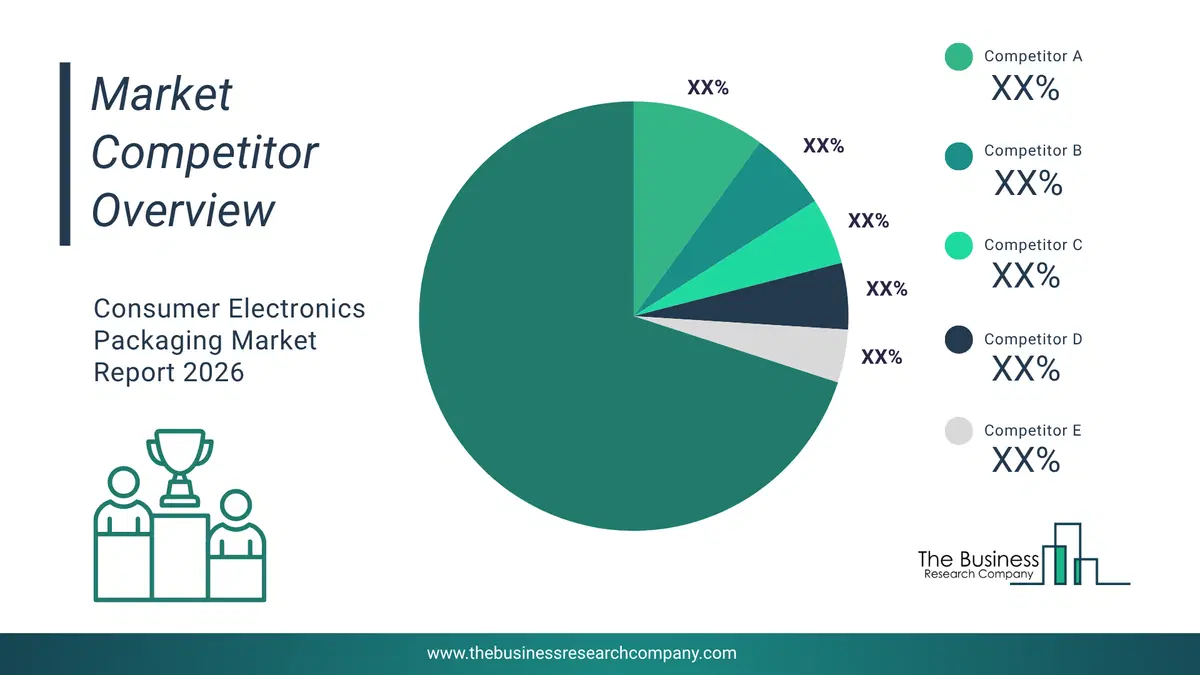
This chart is for illustrative purposes; the full report includes a detailed competitor analysis and comprehensive overview of the top 10 companies in the market.
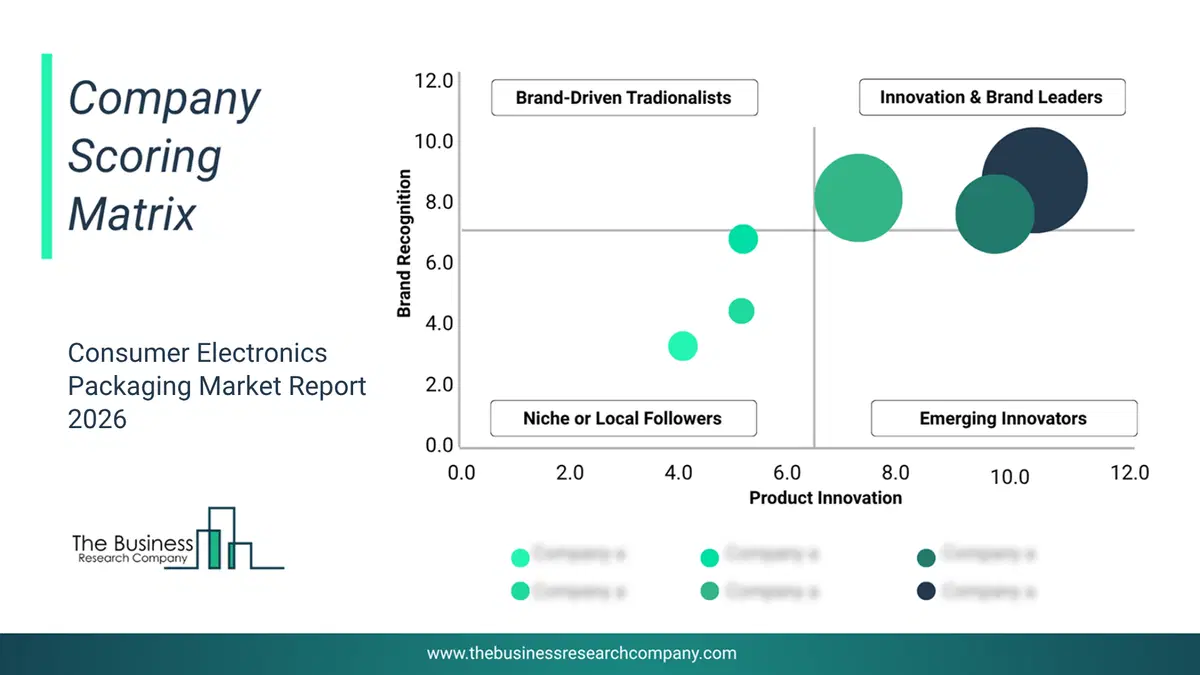
This chart maps companies by product innovation and brand strength, with bubble size indicating relative revenue, helping identify market leaders, challengers, and niche players. This is an illustrative chart; the full report provides a complete and accurate competitive analysis.
Global Consumer Electronics Packaging Market Trends and Insights
Major companies operating in the electronics packaging market are focusing on product innovations such as compostable packaging material to meet the growing demand for electronic packaging. It is an innovative sustainable packaging material for transporting delicate and heat-sensitive products. For instance, in February 2023 CruzFoam, a US-based packaging company announce the launch of new patented compostable foam. The product range comprises CruzWrap, a foam product with paper lining for wrapping items; CruzPack, a foam mailer; CruzCool, a cold-chain container with foam walls; and CruzCush, a high-performance solution engineered for shipping electronics, appliances, automotive and aerospace products, as well as fragile items.What Are Latest Mergers And Acquisitions In The Consumer Electronics Packaging Market?
In July 2024, Smurfit Kappa, an Ireland based provider of paper based packaging, containerboard and corrugated solutions, acquired WestRock, for an undisclosed amount. With this acquisition, Smurfit Kappa aimed to accelerate its global market expansion, combine complementary operations in Europe and the Americas, and strengthen its position as a leading sustainable packaging platform. WestRock is a U.S. based provider of integrated fiber based packaging, corrugated solutions and consumer packaging services.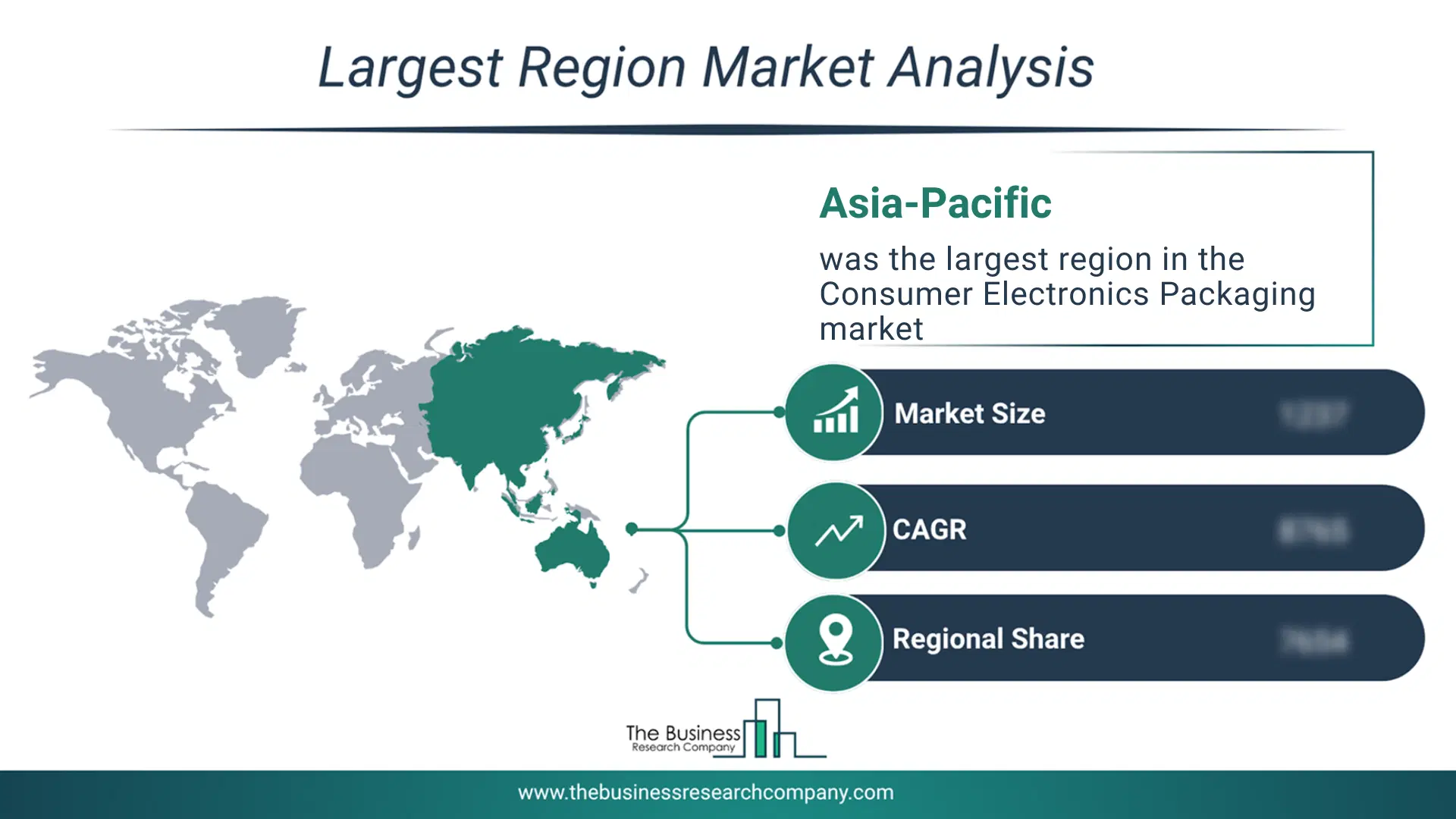
Regional Outlook
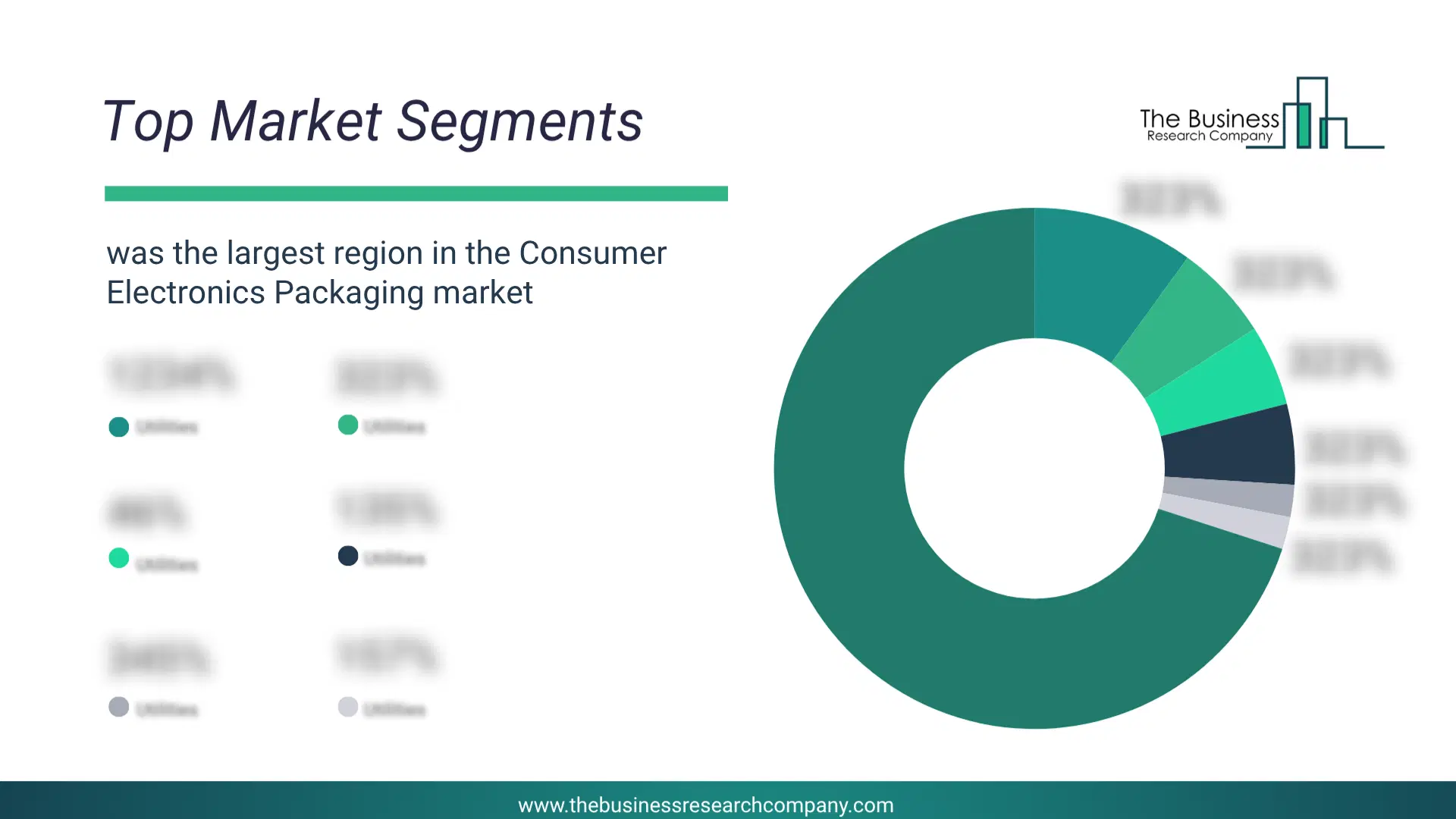
Asia-Pacific was the largest region in the consumer electronic packaging market in 2025. Asia-Pacific is expected to be the fastest-growing region in the forecast period. The regions covered in this market report are Asia-Pacific, South East Asia, Western Europe, Eastern Europe, North America, South America, Middle East, Africa. The countries covered in this market report are Australia, Brazil, China, France, Germany, India, Indonesia, Japan, Taiwan, Russia, South Korea, UK, USA, Canada, Italy, Spain.What Defines the Consumer Electronics Packaging Market?
The consumer electronic packaging market consists of revenues earned by entities by providing consumer electronic packaging services such as designing, manufacturing, and logistics of electronic packaging. The market value includes the value of related goods sold by the service provider or included within the service offering. The consumer electronic packaging market also includes sales of metallic materials, ceramics and semiconductors, electronic glasses, polymers, multi-material laminates, printed circuit board (PCB) materials, thermal interconnection materials, low thermal conductivity materials, and advanced thermally conductive materials. Values in this market are ‘factory gate’ values, that is the value of goods sold by the manufacturers or creators of the goods, whether to other entities (including downstream manufacturers, wholesalers, distributors, and retailers) or directly to end customers. The value of goods in this market includes related services sold by the creators of the goods.How is Market Value Defined and Measured?
The market value is defined as the revenues that enterprises gain from the sale of goods and/or services within the specified market and geography through sales, grants, or donations in terms of the currency (in USD unless otherwise specified). The revenues for a specified geography are consumption values that are revenues generated by organizations in the specified geography within the market, irrespective of where they are produced. It does not include revenues from resales along the supply chain, either further along the supply chain or as part of other products.
This chart presents market attractiveness based on a quantitative evaluation of growth, competition, strategic alignment, and risk, offering a clear view of opportunity areas for decision-making. This chart is for illustrative purposes; the full report contains the complete analysis.

This chart highlights the Total Addressable Market (TAM) by estimating the maximum revenue opportunity using an assumption-driven approach, supporting strategic planning and opportunity sizing across markets. The chart is illustrative; the full report provides a more comprehensive analysis.
What Key Data and Analysis Are Included in the Consumer Electronics Packaging Market Report 2026?
The consumer electronics packaging market research report is one of a series of new reports from The Business Research Company that provides market statistics, including industry global market size, regional shares, competitors with the market share, detailed market segments, market trends and opportunities, and any further data you may need to thrive in the consumer electronics packaging industry. The market research report delivers a complete perspective of everything you need, with an in-depth analysis of the current and future state of the industry.Consumer Electronics Packaging Market Report Forecast Analysis Market Report Forecast Analysis
| Report Attribute | Details |
|---|---|
| Market Size Value In 2026 | $32.87 billion |
| Revenue Forecast In 2030 | $53.31 billion |
| Growth Rate | CAGR of 13.3% from 2026 to 2030 |
| Base Year For Estimation | 2025 |
| Actual Estimates/Historical Data | 2020-2025 |
| Forecast Period | 2026 - 2030 |
| Market Representation | Revenue in USD Billion and CAGR from 2026 to 2030 |
| Segments Covered | Product Type, Technology, Material Type, Application |
| Regional Scope | Asia-Pacific, Western Europe, Eastern Europe, North America, South America, Middle East, Africa |
| Country Scope | The countries covered in the report are Australia, Brazil, China, France, Germany, India, Indonesia, Japan, Taiwan, Russia, South Korea, UK, USA, Canada, Italy, Spain. |
| Key Companies Profiled | DS Smith plc, Mondi plc, International Paper Company, Sonoco Products Company, Shenzhen Hoichow Packing Manufacturing Ltd., Dordan Manufacturing Company, Hangzhou Xunda Packaging Co. Ltd., Dunapack Packaging Group, Universal Protective Packaging Inc., Parksons Packaging Ltd., Plastic Ingenuity, JJX Packaging Group, UFP Technologies Inc., JohnsByrne Company, Smurfit Kappa Group plc, Billerud AB, Stora Enso Oyj, WestRock Company, Pregis Corporation LLC., Tekni-Plex Inc., Huhtamaki Oyj, Graphic Packaging International LLC, Guangzhou Huaisheng Packaging Co. Ltd., Amcor Limited, Sealed Air Corporation |
| Customization Scope | Request for Customization |
| Pricing And Purchase Options | Explore Purchase Options |