
Cortical Grid Electrodes Market Report 2026
Global Outlook – By Product (Epidural Cortical Grid Electrodes, High-Density Cortical Grid Electrodes, Flexible Cortical Grid Electrodes, Penetrating Cortical Grid Electrodes, Multi-Contact Cortical Grid Electrodes, Customized Cortical Grid Electrodes, Reusable Cortical Grid Electrodes), By Material Type (Silicone, Polyimide, Metal, Conductive Polymer), By Electrode Configuration (Strip Electrode, Grid Electrode, Cylindrical Electrode, Custom Designs), By Application (Neuroprosthetics, Brain Mapping, Seizure Monitoring, Research), By End User (Hospitals, Research Institutions, Neurology Clinics, Educational Institutions) – Market Size, Trends, Strategies, and Forecast to 2030
Cortical Grid Electrodes Market Overview
• Cortical Grid Electrodes market size has reached to $1.14 billion in 2025 • Expected to grow to $1.77 billion in 2030 at a compound annual growth rate (CAGR) of 9.2% • Growth Driver: Rising Prevalence Of Neurological Disorders Fueling The Growth Of The Market Due To Increasing Need For Targeted Brain Monitoring And Therapy • Market Trend: Technological Innovation In High-Density Thin-Film Electrode Arrays For Minimally Invasive Brain Mapping • North America was the largest region in 2025 and Asia-Pacific is the fastest growing region.What Is Covered Under Cortical Grid Electrodes Market?
Cortical grid electrodes are medical devices designed to be placed directly on the surface of the brain to record or stimulate neural activity. They consist of an array of small electrodes embedded in a flexible grid that conforms to the brain’s contours. These electrodes are primarily used for monitoring brain signals and assisting in neurological research and clinical interventions. The main products of cortical grid electrodes are including epidural cortical grid electrodes, high-density cortical grid electrodes, flexible cortical grid electrodes, penetrating cortical grid electrodes, multi-contact cortical grid electrodes, customized cortical grid electrodes, and reusable cortical grid electrodes. Epidural cortical grid electrodes refer to implantable devices placed on the surface of the brain beneath the dura mater to record or stimulate neural activity with high spatial resolution while minimizing tissue damage. The materials such as silicone, polyimide, metal, and conductive polymers. The electrode configuration including strip, grid, cylindrical, and custom designs. The applications such as neuroprosthetics, brain mapping, seizure monitoring, and research, and the end users such as hospitals, research institutions, neurology clinics, and educational institutions.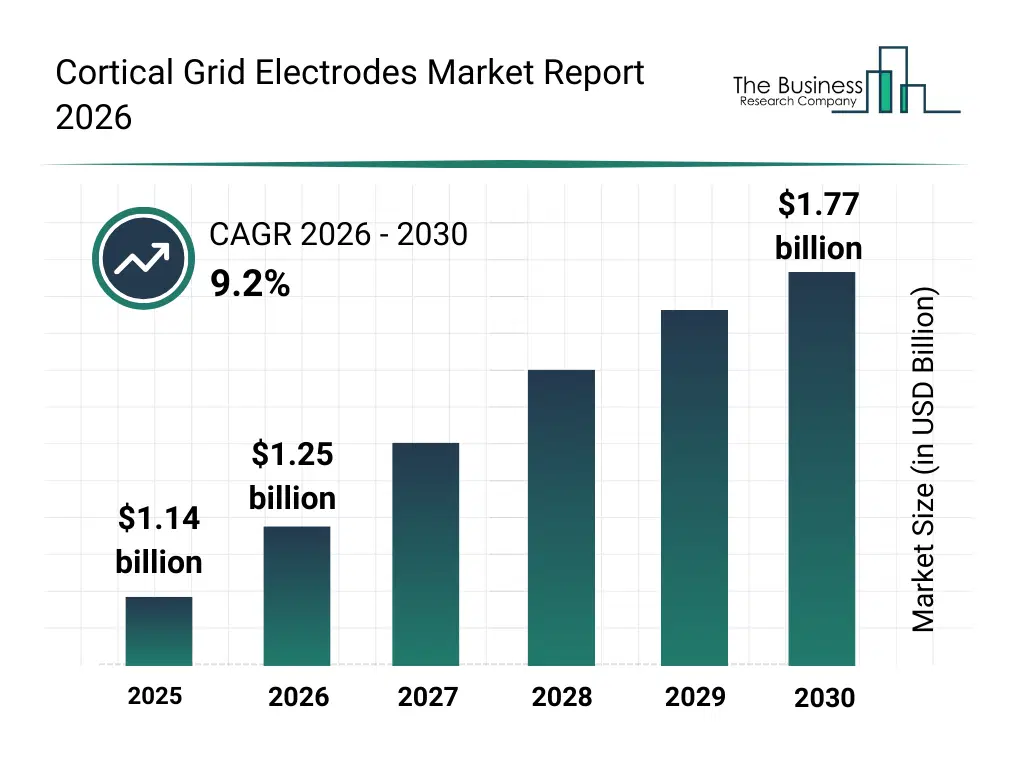
What Is The Cortical Grid Electrodes Market Size and Share 2026?
The cortical grid electrodes market size has grown strongly in recent years. It will grow from $1.14 billion in 2025 to $1.25 billion in 2026 at a compound annual growth rate (CAGR) of 9.4%. The growth in the historic period can be attributed to increasing demand for neuroprosthetics, growing funding for neurological research, rising prevalence of neurological disorders, expanding applications in brain-computer interfaces, technological advancements in electrodes.What Is The Cortical Grid Electrodes Market Growth Forecast?
The cortical grid electrodes market size is expected to see strong growth in the next few years. It will grow to $1.77 billion in 2030 at a compound annual growth rate (CAGR) of 9.2%. The growth in the forecast period can be attributed to rising demand for neurological treatments, growing applications in brain research, increasing investments in research and development, expansion of clinical adoption, rising focus on personalized neuromodulation therapies. Major trends in the forecast period include technology advancements in miniaturization of electrodes, innovations in conductive polymer materials, developments in high-density electrode systems, research and developments in AI-based brain mapping, advancements in integration with neurosurgical platforms.
Global Cortical Grid Electrodes Market Segmentation
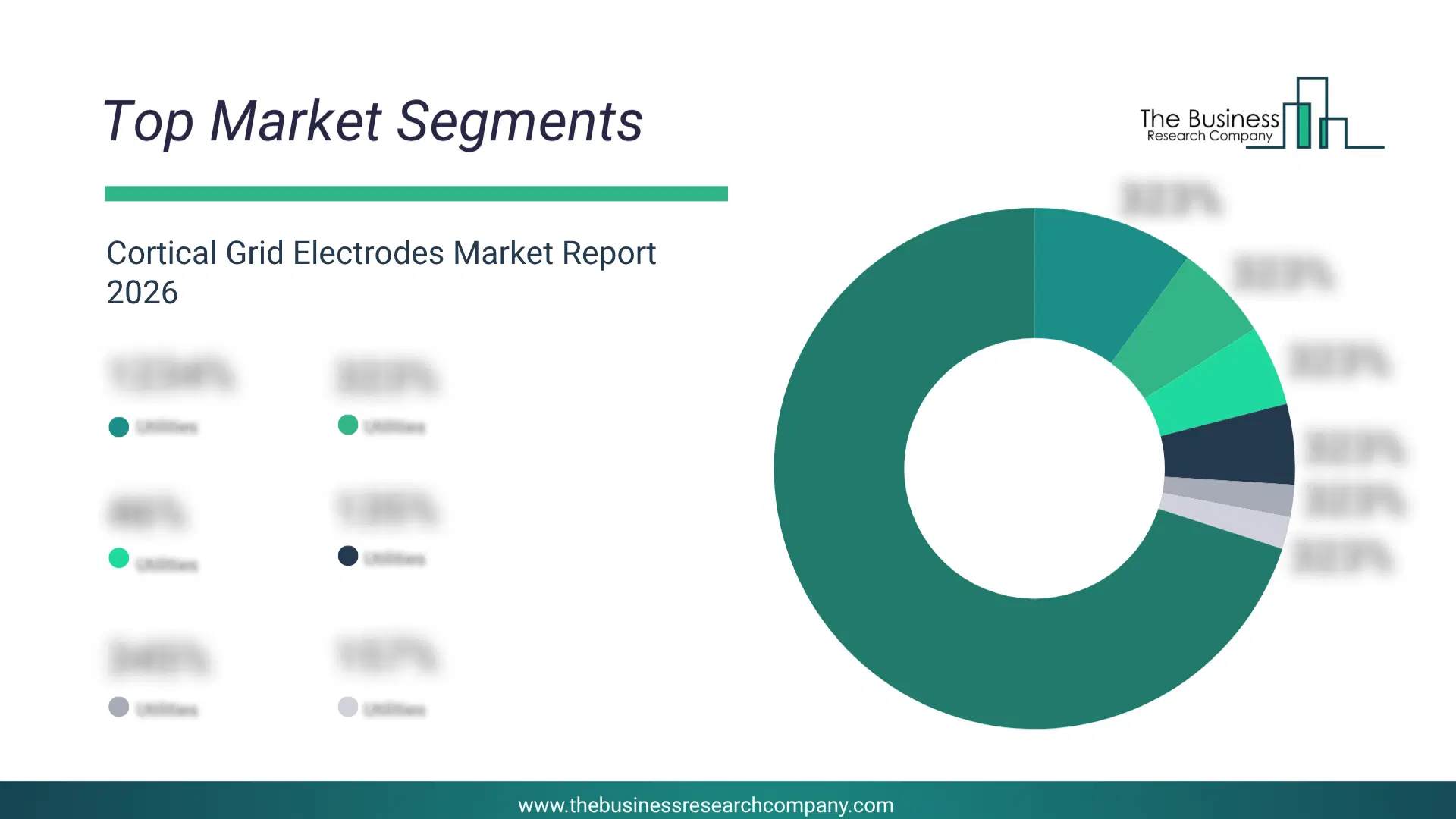
1) By Product: Epidural Cortical Grid Electrodes, High-Density Cortical Grid Electrodes, Flexible Cortical Grid Electrodes, Penetrating Cortical Grid Electrodes, Multi-Contact Cortical Grid Electrodes, Customized Cortical Grid Electrodes, Reusable Cortical Grid Electrodes 2) By Material Type: Silicone, Polyimide, Metal, Conductive Polymer 3) By Electrode Configuration: Strip Electrode, Grid Electrode, Cylindrical Electrode, Custom Designs 4) By Application: Neuroprosthetics, Brain Mapping, Seizure Monitoring, Research 5) By End User: Hospitals, Research Institutions, Neurology Clinics, Educational Institutions Subsegments: 1) By Epidural Cortical Grid Electrodes: Single Contact Epidural Electrode, Multi Contact Epidural Electrode, Strip Epidural Electrode, Square Grid Epidural Electrode, Rectangular Grid Epidural Electrode 2) By High Density Cortical Grid Electrodes: Ultra High Density Electrode, Dense Array Electrode, Small Contact Spacing Electrode, High Resolution Electrode, Compact High Density Electrode 3) By Flexible Cortical Grid Electrodes: Silicone Based Flexible Electrode, Polyimide Flexible Electrode, Stretchable Flexible Electrode, Conformable Flexible Electrode, Thin Film Flexible Electrode 4) By Penetrating Cortical Grid Electrodes: Microwire Penetrating Electrode, Depth Penetrating Electrode, Multi Shank Penetrating Electrode, Linear Array Penetrating Electrode, Three Dimensional Penetrating Electrode 5) By Multi Contact Cortical Grid Electrodes: Double Contact Electrode, Triple Contact Electrode, Quadruple Contact Electrode, Multiple Contact Strip Electrode, High Contact Count Electrode 6) By Customized Cortical Grid Electrodes: Patient Specific Electrode, Tailor Made Electrode, Bespoke Size Electrode, Custom Shape Electrode, Special Design Electrode 7) By Reusable Cortical Grid Electrodes: Sterilizable Reusable Electrode, Durable Reusable Electrode, Long Life Reusable Electrode, Multiple Use Reusable Electrode, Washable Reusable ElectrodeWhat Is The Driver Of The Cortical Grid Electrodes Market?
The rising prevalence of neurological disorders is expected to propel the growth of the cortical grid electrodes market going forward. Neurological disorders are medical conditions that affect the brain, spinal cord, and nerves, leading to a range of symptoms including cognitive, motor, and sensory impairments. The increasing prevalence of neurological disorders is linked to the aging population, as aging gradually impairs neuronal function, reduces brain plasticity, and elevates oxidative stress, contributing to the development and progression of these conditions. Cortical grid electrodes aid in neurological disorder treatment by enabling precise monitoring and stimulation of brain activity to restore or modulate neural function. They improve patient outcomes by supporting targeted therapies for conditions such as epilepsy, movement disorders, and chronic pain. For instance, in July 2024, according to the National Health Service, a UK-based government agency, there were 487,432 patients diagnosed with dementia (a progressive brain disorder affecting memory, thinking, and daily activities) by June 30, 2024, an increase of 3,155 cases compared to May 31, 2024. Therefore, the rising prevalence of neurological disorders is driving the growth of the cortical grid electrodes industry.Key Players In The Global Cortical Grid Electrodes Market
Major companies operating in the cortical grid electrodes market are Abbott Laboratories, Medtronic plc, Integra Life Sciences Corporation, Nihon Kohden Corporation, Natus Medical Incorporated, NeuroPace Inc., Blackrock Neurotech LLC, Cadwell Industries Inc., Precision Neuroscience Corporation, AD-tech Medical Instrument, Inomed Medizintechnik Gmbh, PMT Corporation, Ripple Neuro LLC, Neuroone Medical Technology corporation, Plexon Inc., Cortec Gmbh, Microprobes for Lifesciences Inc, Dixi Medical SAS, Cortera Neurotechnologies Inc., Neurosoft Bioelectronics Ltd., Alpha Omega Engineering Ltd.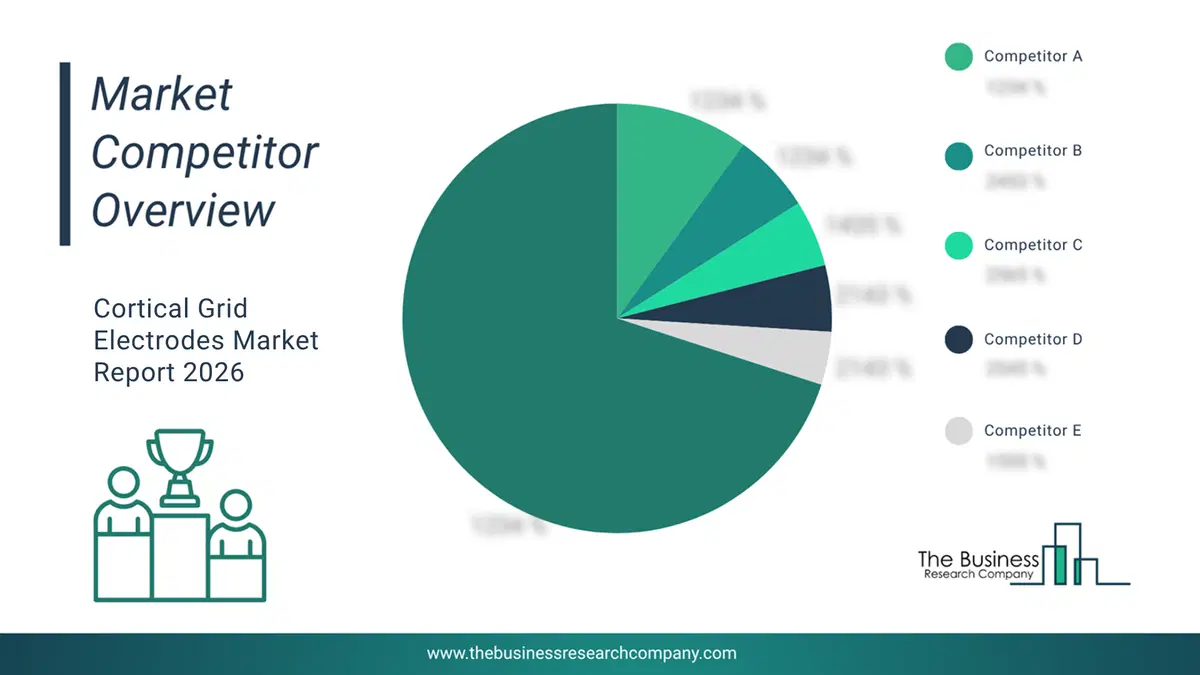
This chart is for illustrative purposes; the full report includes a detailed competitor analysis and comprehensive overview of the top 10 companies in the market.
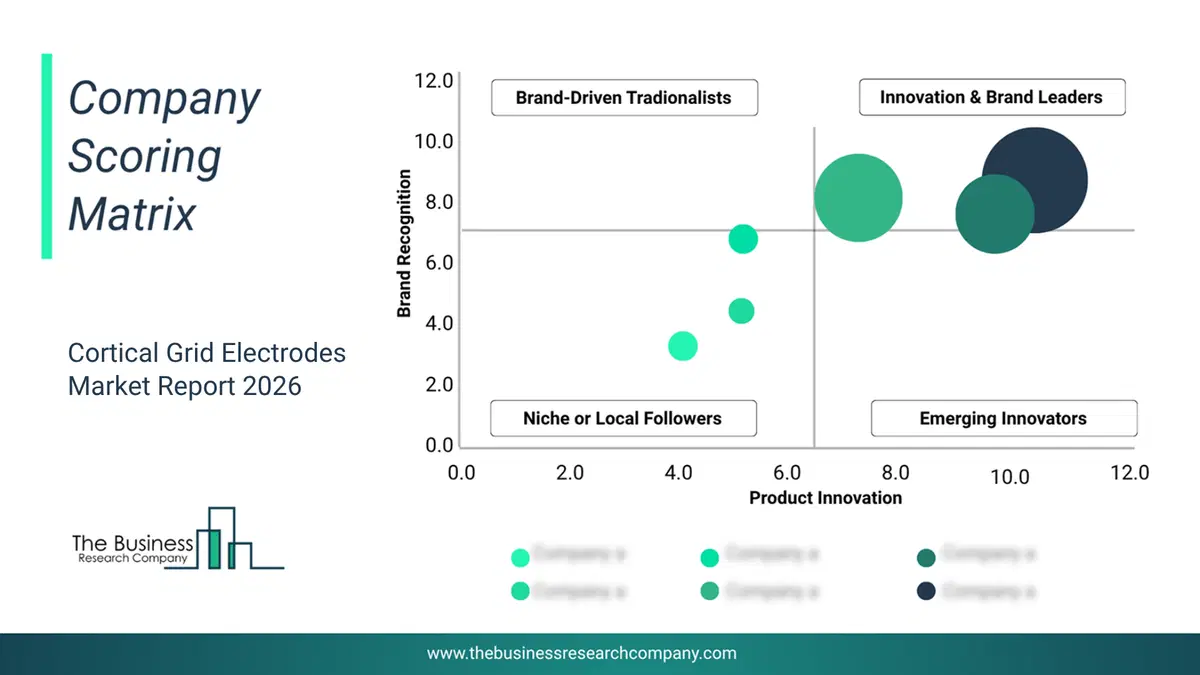
This chart maps companies by product innovation and brand strength, with bubble size indicating relative revenue, helping identify market leaders, challengers, and niche players. This is an illustrative chart; the full report provides a complete and accurate competitive analysis.
Global Cortical Grid Electrodes Market Trends and Insights
Major companies operating in the cortical grid electrodes market are focusing on developing advanced products, such as high-density thin-film electrode arrays, to enhance the resolution and safety of neural recording. High-density thin-film electrode arrays utilize flexible, biocompatible substrates such as polyimide to create micro-electrode arrays that conform closely to the brain's surface, enabling the recording of thousands of channels of neural data with minimal tissue displacement and reversibility, thereby overcoming the limitations of traditional, rigid subdural grids. For instance, in March 2025, Precision Neuroscience Corporation, a US-based brain-computer interface company, received Food and Drug Administration (FDA) 510(k) clearance for its Layer 7-T (Layer 7 Cortical Interface). The device is a high-density thin-film 1024-channel cortical electrode array designed for temporary use (less than 30 days) to record, monitor, and stimulate electrical signals on the brain's surface. The system allows surgeons to map brain activity with unprecedented resolution using a minimally invasive micro-slit technique, facilitating the preservation of eloquent tissue during neurosurgical procedures.What Are Latest Mergers And Acquisitions In The Cortical Grid Electrodes Market?
In November 2024, Nihon Kohden Corporation, a Japan-based manufacturer of medical electronic equipment, acquired a 71.4% stake in NeuroAdvanced Corp., the parent company of Ad-Tech Medical Instrument Corporation (AdTech) for an undisclosed amount. Through this acquisition, Nihon Kohden aims to integrate Ad-Tech's specialized intracranial electrodes, used for epilepsy treatment and neurodiagnostic procedures, with its own established electroencephalogram (EEG) systems. Ad-Tech Medical Instrument Corporation is a US-based provider of long-term monitoring cortical electrodes and neurosurgical accessories.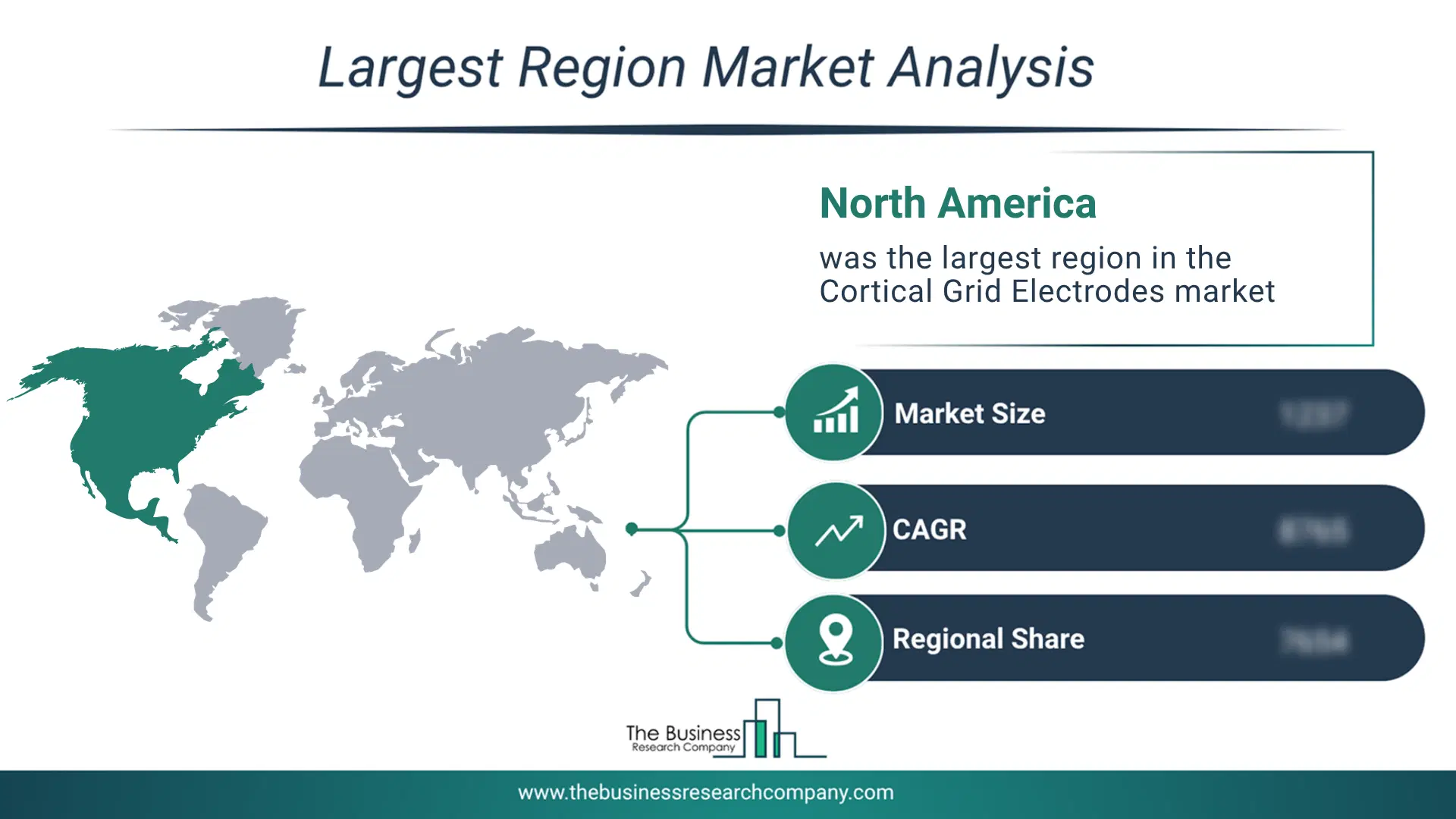
Regional Insights
North America was the largest region in the cortical grid electrodes market in 2025. Asia-Pacific is expected to be the fastest-growing region in the forecast period. The regions covered in this market report are Asia-Pacific, South East Asia, Western Europe, Eastern Europe, North America, South America, Middle East, Africa. The countries covered in this market report are Australia, Brazil, China, France, Germany, India, Indonesia, Japan, Taiwan, Russia, South Korea, UK, USA, Canada, Italy, Spain.What Defines the Cortical Grid Electrodes Market?
The cortical grid electrodes market consists of sales of epidural cortical grid electrodes, high-density cortical grid electrodes, flexible cortical grid electrodes, penetrating cortical grid electrodes, multi-contact cortical grid electrodes, customized cortical grid electrodes, and reusable cortical grid electrodes. Values in this market are ‘factory gate’ values, that is, the value of goods sold by the manufacturers or creators of the goods, whether to other entities (including downstream manufacturers, wholesalers, distributors, and retailers) or directly to end customers. The value of goods in this market includes related services sold by the creators of the goods.How is Market Value Defined and Measured?
The market value is defined as the revenues that enterprises gain from the sale of goods and/or services within the specified market and geography through sales, grants, or donations in terms of the currency (in USD unless otherwise specified). The revenues for a specified geography are consumption values that are revenues generated by organizations in the specified geography within the market, irrespective of where they are produced. It does not include revenues from resales along the supply chain, either further along the supply chain or as part of other products.
This chart presents market attractiveness based on a quantitative evaluation of growth, competition, strategic alignment, and risk, offering a clear view of opportunity areas for decision-making. This chart is for illustrative purposes; the full report contains the complete analysis.

This chart highlights the Total Addressable Market (TAM) by estimating the maximum revenue opportunity using an assumption-driven approach, supporting strategic planning and opportunity sizing across markets. The chart is illustrative; the full report provides a more comprehensive analysis.
What Key Data and Analysis Are Included in the Cortical Grid Electrodes Market Report 2026?
The cortical grid electrodes market research report is one of a series of new reports from The Business Research Company that provides market statistics, including industry global market size, regional shares, competitors with the market share, detailed market segments, market trends and opportunities, and any further data you may need to thrive in the cortical grid electrodes industry. The market research report delivers a complete perspective of everything you need, with an in-depth analysis of the current and future state of the industry.Cortical Grid Electrodes Market Report Forecast Analysis
| Report Attribute | Details |
|---|---|
| Market Size Value In 2026 | $1.25 billion |
| Revenue Forecast In 2030 | $1.77 billion |
| Growth Rate | CAGR of 9.2% from 2026 to 2030 |
| Base Year For Estimation | 2025 |
| Actual Estimates/Historical Data | 2020-2025 |
| Forecast Period | 2026 - 2030 |
| Market Representation | Revenue in USD Billion and CAGR from 2026 to 2030 |
| Segments Covered | Product, Material Type, Electrode Configuration, Application, End User |
| Regional Scope | Asia-Pacific, Western Europe, Eastern Europe, North America, South America, Middle East, Africa |
| Country Scope | The countries covered in the report are Australia, Brazil, China, France, Germany, India, Indonesia, Japan, Taiwan, Russia, South Korea, UK, USA, Canada, Italy, Spain. |
| Key Companies Profiled | Abbott Laboratories, Medtronic plc, Integra Life Sciences Corporation, Nihon Kohden Corporation, Natus Medical Incorporated, NeuroPace Inc., Blackrock Neurotech LLC, Cadwell Industries Inc., Precision Neuroscience Corporation, AD-tech Medical Instrument, Inomed Medizintechnik Gmbh, PMT Corporation, Ripple Neuro LLC, Neuroone Medical Technology corporation, Plexon Inc., Cortec Gmbh, Microprobes for Lifesciences Inc, Dixi Medical SAS, Cortera Neurotechnologies Inc., Neurosoft Bioelectronics Ltd., Alpha Omega Engineering Ltd. |
| Customization Scope | Request for Customization |
| Pricing And Purchase Options | Explore Purchase Options |