
Defense Electronics Market Report 2026
Global Outlook – By Component (Hardware, Software, Services), By Equipment Type (C4ISR Systems, Weapon Systems, Electro-Optical And Infrared (EO Or IR) Systems, Military Simulators, Radar Systems, Sonar Systems, Avionics, Electronic Warfare, Other Equipment Type), By Platform (Airborne, Marine, Land, Space) – Market Size, Trends, Strategies, and Forecast to 2030
Defense Electronics Market Overview
• Defense Electronics market size has reached to $244.38 billion in 2025 • Expected to grow to $317.67 billion in 2030 at a compound annual growth rate (CAGR) of 5.4% • Growth Driver: Rising Defense Expenditures Fueling Growth In The Defense Electronics Market • Market Trend: Innovative Helmet Technologies Revolutionize Military Operations • North America was the largest region in 2025.Market Gains By 2030 – Top Opportunities By Segment
Market Gain identifies the most promising market opportunities by highlighting the segments or products expected to generate the highest incremental revenue growth over the next five years.
What Is Covered Under Defense Electronics Market?
Defense electronics refers to electronic systems and parts created for technological dominance in national defense. Defense Electronics are designed with the highest level of technical sophistication to supply the most recent technologies for the country's protection. These advanced systems have many military applications and can be utilized in various environments, including space, land, and the sea. The main components of defense electronics are hardware, software, and services. Hardware refers to the physical components or machinery of a computer or electronic device such as integrated circuits (ICs) are used in defense electronics for the functioning of microprocessors and memory units in defense devices. The various equipment types of defense electronics are C4ISR systems, weapon systems, electro-optical and infrared (EO or IR) systems, military simulators, radar systems, sonar systems, avionics, electronic warfare, and others that are used in platforms such as airborne, marine, land, and space.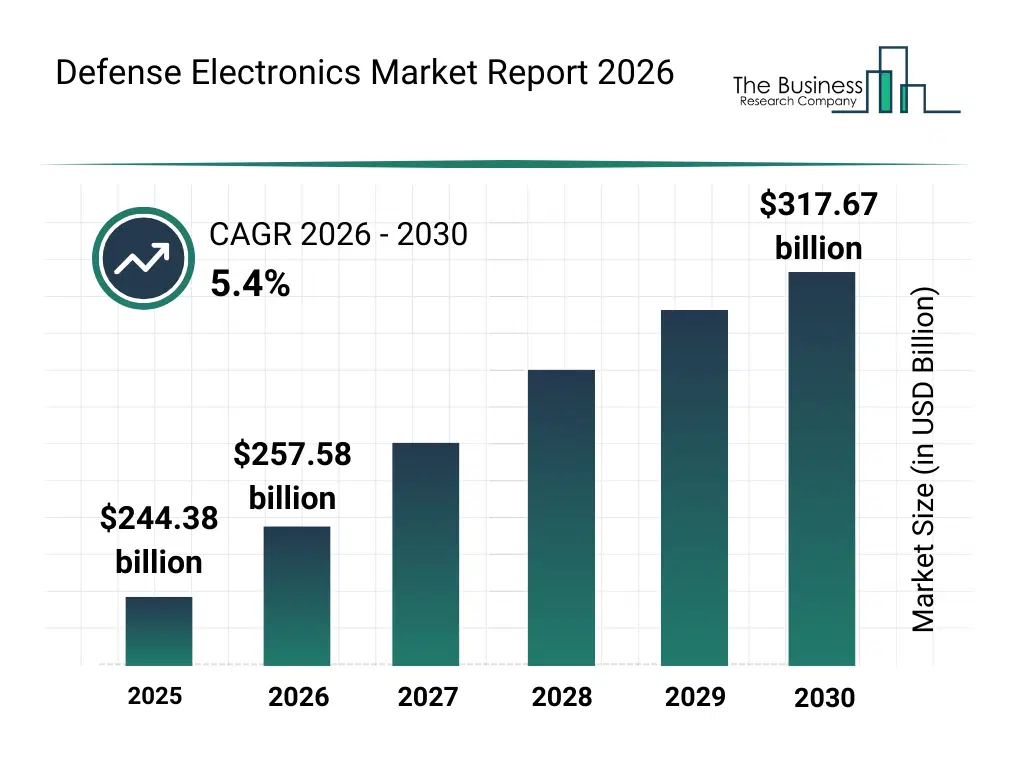
What Is The Defense Electronics Market Size and Share 2026?
The defense electronics market size has grown strongly in recent years. It will grow from $244.38 billion in 2025 to $257.58 billion in 2026 at a compound annual growth rate (CAGR) of 5.4%. The growth in the historic period can be attributed to growing adoption of GPS-enabled guidance and geolocation systems strengthening precision mission capabilities, rising deployment of infrared and radio frequency remote controls across defense platforms, increased demand for radiation-hardened electronics to support space and high-radiation missions, expansion of system integration services enabling complex defense electronics architectures, sustained defense modernization programs driving procurement of advanced electronic components.What Is The Defense Electronics Market Growth Forecast?
The defense electronics market size is expected to see strong growth in the next few years. It will grow to $317.67 billion in 2030 at a compound annual growth rate (CAGR) of 5.4%. The growth in the forecast period can be attributed to advancements in AI-enabled defense electronics enhancing autonomous and decision-support functions, rising investment in space-based electronic systems expanding demand for radhard components, increasing focus on resilient and cyber-secure electronics strengthening next-generation defense platforms, growth in multi-domain operations driving integration of interoperable electronic systems, expanding global defense budgets supporting long-term procurement of advanced electronics and associated services. Major trends in the forecast period include expansion of radar and electro-optical systems, growth in simulation and training software adoption, increased integration of gps and geolocation devices, rising demand for maintenance and repair services, advancement in system integration capabilities.
Global Defense Electronics Market Segmentation
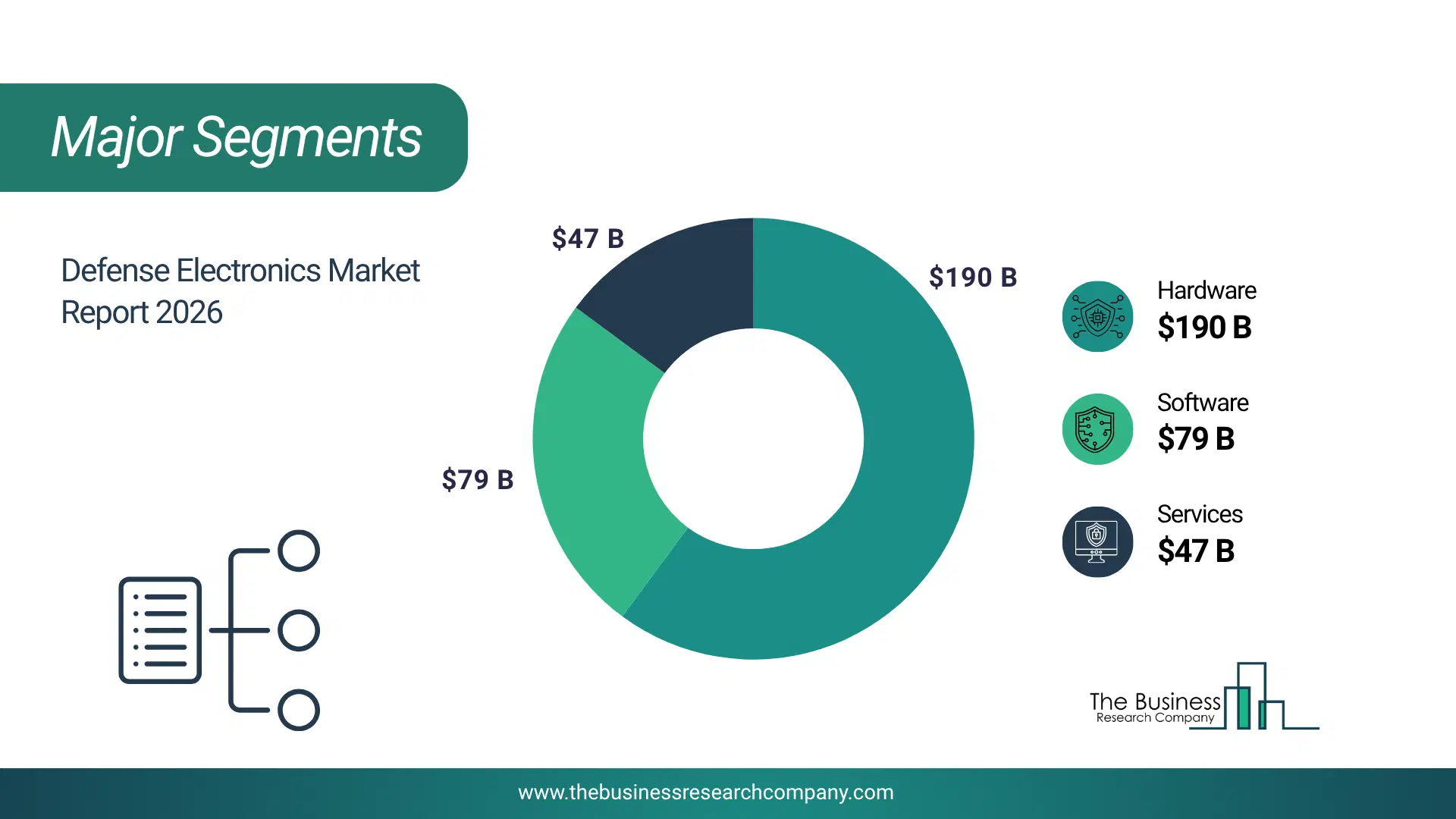
1) By Component: Hardware, Software, Services 2) By Equipment Type: C4ISR Systems, Weapon Systems, Electro-Optical And Infrared (EO Or IR) Systems, Military Simulators, Radar Systems, Sonar Systems, Avionics, Electronic Warfare, Other Equipment Type 3) By Platform: Airborne, Marine, Land, Space Subsegments: 1) By Hardware: Avionics Systems, Radar Systems, Communication Equipment, Electronic Warfare Systems, Sensors And Imaging Systems 2) By Software: Simulation Software, Command And Control Software, Cybersecurity Software, Maintenance And Support Software, Data Analysis And Processing Software 3) By Services: System Integration Services, Maintenance And Repair Services, Training And Support Services, Consulting Services, Managed Services The top segments in the defense electronics market will be: • Hardware will reach $189.54 Billion by 2030. • Software will reach $78.5 Billion by 2030. • Services will reach $46.82 Billion by 2030.What Is Driver Of The Defense Electronics Market?
The increasing defense expenditure is expected to propel the growth of the defense electronics market going forward. Defense expenditure, military spending, or defense budget refers to the financial resources a government or nation allocates toward defense and military-related activities. In defense expenditures, a portion of the budget is typically dedicated to defense electronics, like electronic equipment such as air defense radars and communication systems. For instance, in October 2025, according to the UK Parliament's House of Commons Library, a UK-based government administration, defence spending, as set out in the 2025 Spending Review, is projected to reach USD 83.3 billion (£62.2 billion) in 2025/26 and rise to USD 98.2 billion (£73.5 billion) by 2028/29, reflecting an average annual real-terms growth rate of 3.8% over this period. Therefore, increasing defense expenditures are driving the growth of the defense electronics industry.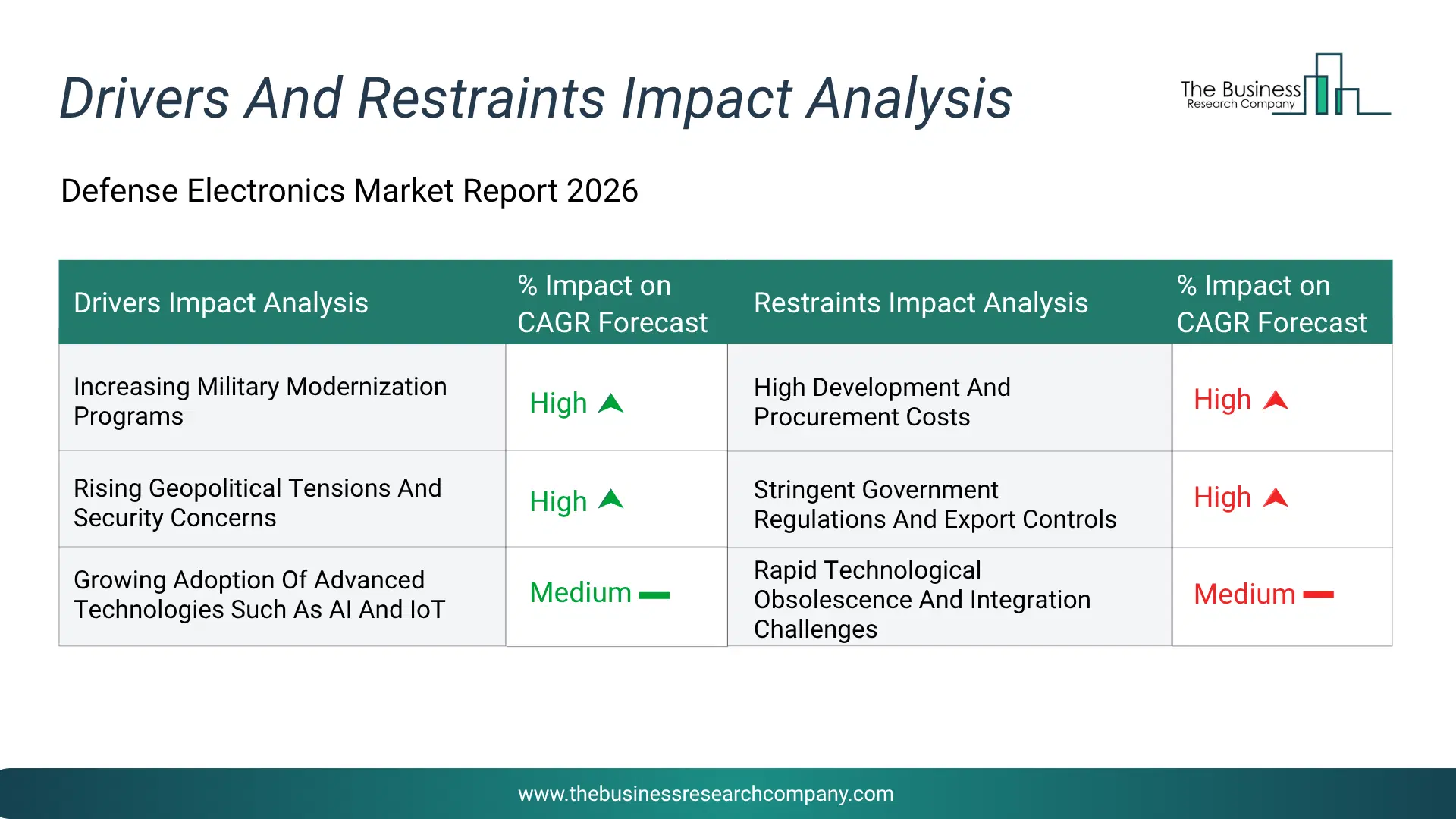
Infographic Chart Showing Key Market Drivers Analysis And Restraints For Defense Electronics Market
The chart presents an impact analysis of key drivers and restraints, quantifying their relative influence on the market's growth rate and helping assess the balance between growth enablers and limiting factors. This chart offers a high-level perspective; the full report contains more detailed insights.
How Will The Drivers Impact Growth In The Global Defense Electronics Market?
• Increasing Military Modernization Programs (High) – During the forecast period, the increasing military modernization programs is expected to become a key growth driver for the defense electronics market by 2030. Increasing Military Modernization Programs acts as a major driver for the defense electronics market because governments worldwide are heavily investing in upgrading legacy defense systems with advanced electronic capabilities. These programs focus on integrating modern radar, communication, surveillance, and electronic warfare systems to enhance operational efficiency and combat readiness. As threats evolve, armed forces require technologically superior solutions across land, air, and naval platforms. This continuous upgrade cycle fuels demand for sophisticated defense electronics components and systems. • Rising Geopolitical Tensions And Security Concerns (High) – During the forecast period, the rising geopolitical tensions and security concerns is expected to emerge as a major factor driving the expansion of the defense electronics market by 2030. Rising Geopolitical Tensions And Security Concerns acts as a major driver for the defense electronics market because increasing cross-border conflicts and regional instabilities push nations to strengthen their defense capabilities. Countries are prioritizing investments in surveillance systems, intelligence gathering, and advanced communication technologies to ensure national security. The need for real-time situational awareness and rapid response mechanisms significantly boosts the adoption of defense electronics. This environment compels governments to allocate higher defense budgets toward electronic systems. • Growing Adoption Of Advanced Technologies Such As AI And IoT (Medium) – During the forecast period, the growing adoption of advanced technologies such as AI and IoT is expected to act as a key growth catalyst for the defense electronics market by 2030. Growing Adoption Of Advanced Technologies Such As AI And IoT acts as a major driver for the defense electronics market because modern defense systems increasingly rely on intelligent, connected, and autonomous technologies. Integration of artificial intelligence, Internet of Things, and data analytics enhances decision-making, threat detection, and mission efficiency. These technologies enable automation, predictive maintenance, and improved battlefield communication systems. Defense organizations are rapidly adopting such innovations to gain technological superiority over adversaries.How Will The Restraints Impact Growth In The Global Defense Electronics Market?
• High Development And Procurement Costs (High) – During the forecast period, the high development and procurement costs act as a major restraint for the defense electronics market by significantly limiting adoption, especially for developing nations with constrained defense budgets. Advanced systems such as radar, electronic warfare suites, and surveillance technologies require substantial R&D investments, specialized components, and rigorous testing, which drive up overall costs. Additionally, long product development cycles and frequent upgrades further increase lifecycle expenses for governments. These high financial barriers often delay procurement decisions and reduce the scale of deployments. As a result, market growth is restricted despite strong demand for technologically advanced defense systems. • Stringent Government Regulations And Export Controls (High) – During the forecast period, the stringent government regulations and export controls act as a key restraint by limiting the international trade and deployment of defense electronics systems. Defense technologies are highly sensitive, leading governments to impose strict compliance requirements, licensing procedures, and cross-border restrictions. These regulatory complexities slow down project approvals and create delays in supply chains and collaborations between countries. Companies also face challenges in entering new markets due to varying defense policies and geopolitical considerations. Consequently, such restrictions hinder global market expansion and reduce revenue opportunities for manufacturers. • Rapid Technological Obsolescence And Integration Challenges (Medium) – During the forecast period, the rapid technological obsolescence and integration challenges act as a restraint by making it difficult for defense organizations to keep systems updated and interoperable. Continuous advancements in electronics, cybersecurity, and communication technologies require frequent upgrades, increasing maintenance and replacement costs. Integrating new systems with legacy infrastructure is complex and time-consuming, often leading to operational inefficiencies. Additionally, the risk of systems becoming outdated quickly discourages long-term investments in certain technologies. This constant need for modernization slows adoption rates and creates uncertainty in procurement planning.Key Players In The Global Defense Electronics Market
Major companies operating in the defense electronics market are Raytheon Technologies Corporation, The Boeing Company, Lockheed Martin Corporation, General Dynamics Corporation, Mitsubishi Electric Corporation, Honeywell International Inc., Northrop Grumman Corporation, BAE Systems plc, Safran S.A., Thales Group, L3Harris Technologies Inc., Leonardo S.p.A., Textron Inc., Rheinmetall Electronics GmbH, Elbit Systems Ltd., Serco Group plc, Indra Sistemas S.A., Saab AB, Airbus Defence & Space GmbH, Rafael Advanced Defense Systems Ltd., Bharat Electronics Limited, Hensoldt AG, LIG Nex1 Co. Ltd., Ultra Electronics Holdings plc, Kratos Defense & Security Solutions Inc., Terma A/S, Tata Advanced Systems, Samsung Techwin Co. Ltd., Data Patterns Ltd., Rockwell Collins Inc.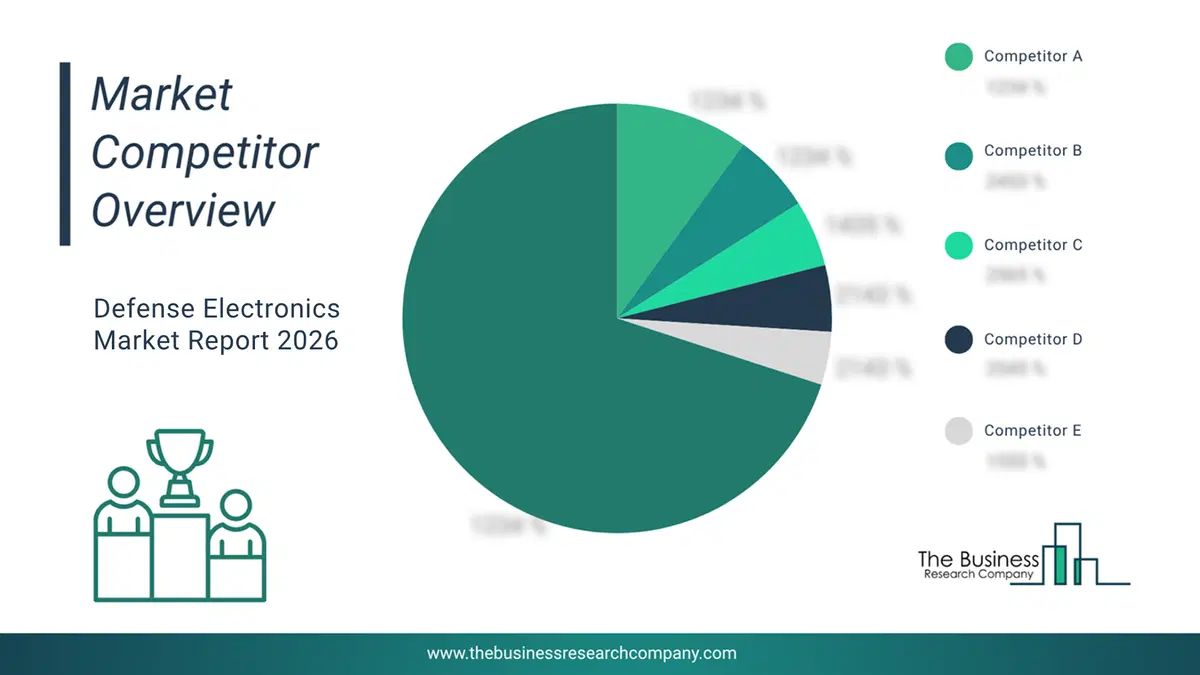
This chart is for illustrative purposes; the full report includes a detailed competitor analysis and comprehensive overview of the top 10 companies in the market.
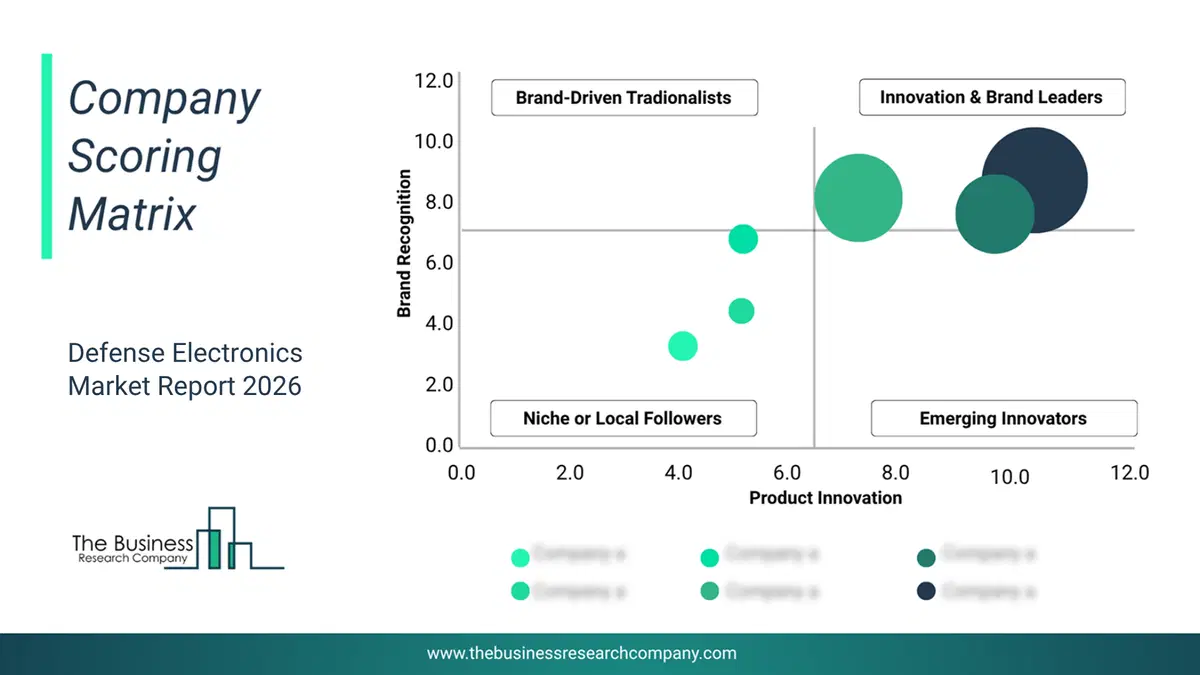
This chart maps companies by product innovation and brand strength, with bubble size indicating relative revenue, helping identify market leaders, challengers, and niche players. This is an illustrative chart; the full report provides a complete and accurate competitive analysis.
Global Defense Electronics Market Trends and Insights
Major companies operating in the defense electronics market are focusing on developing innovative products such as helmet-integrated artificial intelligence (AI) command systems to enhance battlefield situational awareness and streamline real-time decision-making. Helmet-integrated artificial intelligence (AI) command systems are advanced headgear that embed AI-powered sensors, displays, and communication tools directly into a soldier’s helmet, helping by providing situational awareness, prioritizing threats, reducing equipment load, and enabling faster, more informed battlefield decisions. For instance, in October 2025, Anduril Industries, Inc., a U.S.-based defense technology company, launched EagleEye, a suite of AI-powered vision products for soldiers, including helmets, visors, and glasses, that overlay critical battlefield information, such as teammate locations, onto real-world surroundings to enhance situational awareness. The system is powered by Anduril’s AI platform, Lattice, and integrates augmented reality components developed in collaboration with Meta Platforms, Qualcomm, OSI, and Gentex, marking a significant advance in military electronics and tactical augmented reality capabilities. The initiative represents a culmination of founder Palmer Luckey’s experience in virtual and augmented reality, drawing on technology he helped develop at Oculus, now repurposed for defense applications.What Are Latest Mergers And Acquisitions In The Defense Electronics Market? Lockheed Martin and Northrop Grumman Partner to Advance Next-Generation Electronic Warfare Systems and Radar Technologies
In February 2023, Lockheed Martin, a US based defense and aerospace manufacturer, partnered with Northrop Grumman. Through this partnership Lockheed Martin aims to enhance its next-generation electronic warfare systems and strengthen its capabilities in radar and sensor technologies. The collaboration focuses on developing integrated solutions to improve the defense systems of fighter jets, advancing the U.S. military’s electronic warfare and communications infrastructure. Northrop Grumman is a US-based multinational aerospace and defense company manufacturers largest weapons and military technology providers.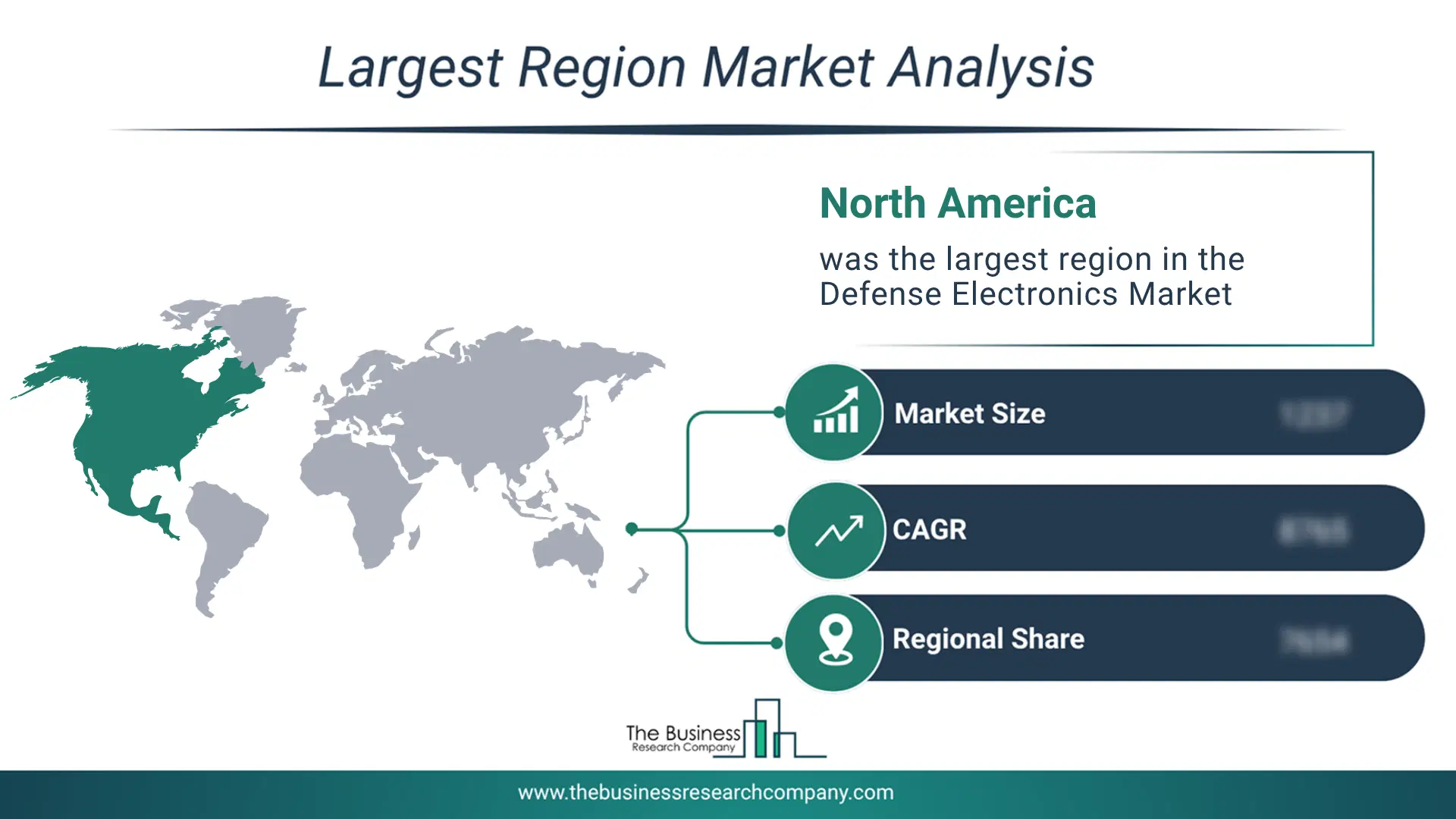
Regional Insights
North America was the largest region in the defense electronics market in 2025. The regions covered in this market report are Asia-Pacific, South East Asia, Western Europe, Eastern Europe, North America, South America, Middle East, Africa. The countries covered in this market report are Australia, Brazil, China, France, Germany, India, Indonesia, Japan, Taiwan, Russia, South Korea, UK, USA, Canada, Italy, SpainWhat Defines the Defense Electronics Market?
The defense electronics market includes revenues earned by entities by providing system integration, supply chain management, and maintenance and repair services. The market value includes the value of related goods sold by the service provider or included within the service offering. The defense electronics market also consists of sales of infrared (IR) and radio frequency (RF) remote controls, radiation-hardened (RADHARD) electronics, and GPS-enabled guidance, mapping, & geolocation devices. Values in this market are ‘factory gate’ values, that is, the value of goods sold by the manufacturers or creators of the goods, whether to other entities (including downstream manufacturers, wholesalers, distributors, and retailers) or directly to end customers. The value of goods in this market includes related services sold by the creators of the goods.How is Market Value Defined and Measured?
The market value is defined as the revenues that enterprises gain from the sale of goods and/or services within the specified market and geography through sales, grants, or donations in terms of the currency (in USD unless otherwise specified). The revenues for a specified geography are consumption values that are revenues generated by organizations in the specified geography within the market, irrespective of where they are produced. It does not include revenues from resales along the supply chain, either further along the supply chain or as part of other products.
This chart presents market attractiveness based on a quantitative evaluation of growth, competition, strategic alignment, and risk, offering a clear view of opportunity areas for decision-making. This chart is for illustrative purposes; the full report contains the complete analysis.

This chart highlights the Total Addressable Market (TAM) by estimating the maximum revenue opportunity using an assumption-driven approach, supporting strategic planning and opportunity sizing across markets. The chart is illustrative; the full report provides a more comprehensive analysis.
What Key Data and Analysis Are Included in the Defense Electronics Market Report 2026?
The defense electronics market research report is one of a series of new reports from The Business Research Company that provides market statistics, including industry global market size, regional shares, competitors with the market share, detailed market segments, market trends and opportunities, and any further data you may need to thrive in the defense electronics industry. The market research report delivers a complete perspective of everything you need, with an in-depth analysis of the current and future state of the industry.Defense Electronics Market Report Forecast Analysis
| Report Attribute | Details |
|---|---|
| Market Size Value In 2026 | $257.58 billion |
| Revenue Forecast In 2030 | $317.67 billion |
| Growth Rate | CAGR of 5.4% from 2026 to 2030 |
| Base Year For Estimation | 2025 |
| Actual Estimates/Historical Data | 2020-2025 |
| Forecast Period | 2026 - 2030 |
| Market Representation | Revenue in USD Billion and CAGR from 2026 to 2030 |
| Segments Covered | Component, Equipment Type, Platform |
| Regional Scope | Asia-Pacific, Western Europe, Eastern Europe, North America, South America, Middle East, Africa |
| Country Scope | The countries covered in the report are Australia, Brazil, China, France, Germany, India, Indonesia, Japan, Taiwan, Russia, South Korea, UK, USA, Canada, Italy, Spain. |
| Key Companies Profiled | Raytheon Technologies Corporation, The Boeing Company, Lockheed Martin Corporation, General Dynamics Corporation, Mitsubishi Electric Corporation, Honeywell International Inc., Northrop Grumman Corporation, BAE Systems plc, Safran S.A., Thales Group, L3Harris Technologies Inc., Leonardo S.p.A., Textron Inc., Rheinmetall Electronics GmbH, Elbit Systems Ltd., Serco Group plc, Indra Sistemas S.A., Saab AB, Airbus Defence & Space GmbH, Rafael Advanced Defense Systems Ltd., Bharat Electronics Limited, Hensoldt AG, LIG Nex1 Co. Ltd., Ultra Electronics Holdings plc, Kratos Defense & Security Solutions Inc., Terma A/S, Tata Advanced Systems, Samsung Techwin Co. Ltd., Data Patterns Ltd., Rockwell Collins Inc. |
| Customization Scope | Request for Customization |
| Pricing And Purchase Options | Explore Purchase Options |