
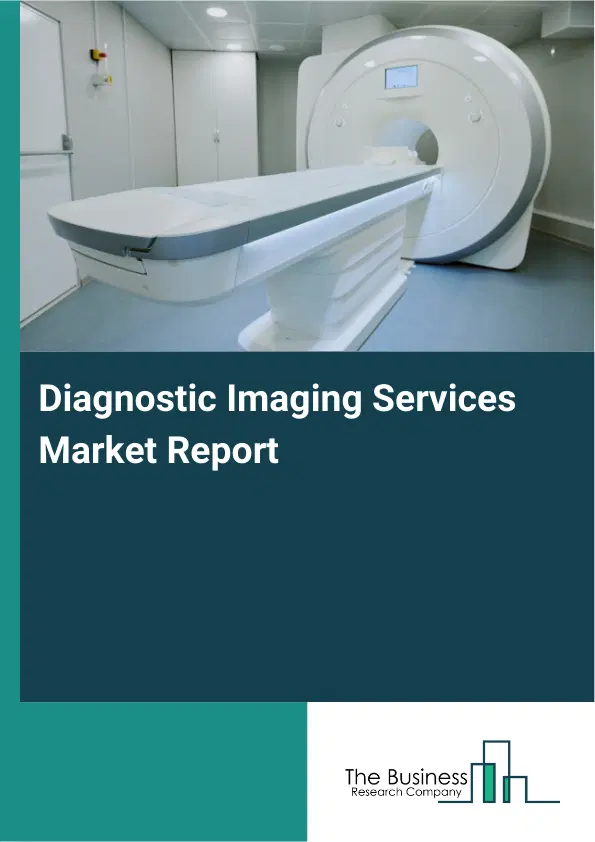
Diagnostic Imaging Services Market Report 2026
Global Outlook – By Type (X-Ray Imaging, Ultrasound, Magnetic Resource Imaging, Computed Tomography, Nuclear Imaging, Mammography), By Application (Cardiology, Gynecology Or OBS, Orthopedics And Musculoskeletal, Oncology, Neurology And Spine, General Imaging), By End User (Hospitals, Diagnostic Imaging Centers, Ambulatory Imaging Centers, Other End Users) – Market Size, Trends, Strategies, and Forecast to 2030
Diagnostic Imaging Services Market Overview
• Diagnostic Imaging Services market size has reached to $566.86 billion in 2025 • Expected to grow to $749.09 billion in 2030 at a compound annual growth rate (CAGR) of 5.7% • Growth Driver: Rising Healthcare Expenditure Fuels Growth In Diagnostic Imaging Services Market • Market Trend: AI Adoption Revolutionizes Diagnostic Imaging Services Market • North America was the largest region in 2025 and Asia-Pacific is the fastest growing region.Market Gains By 2030 – Top Opportunities By Segment
Market Gain identifies the most promising market opportunities by highlighting the segments or products expected to generate the highest incremental revenue growth over the next five years.
What Is Covered Under Diagnostic Imaging Services Market?
Diagnostic imaging services are used to peer into the body to help identify the underlying causes of an illness or damage and to validate a diagnosis. Diagnostic imaging services include the provision of easy, noninvasive, and painless diagnostic techniques that can create pictures of the structures and activities inside your body. The main type of diagnostic imaging services includes X-ray imaging, ultrasound, magnetic resource imaging, computed tomography, nuclear imaging and mammography. The X-ray diagnostic imaging services is used for X-ray imaging and diagnosis. X-ray imaging use electromagnetic waves to create pictures of body parts inside the body. X-rays are the oldest and most commonly used medical imaging test. The diagnostics are applied in cardiology, gynecology/OBS, orthopedics & musculoskeletal, oncology, neurology, and spine, as well as general imaging. Diagnostic imaging services are used in hospitals, diagnostic imaging centers, ambulatory imaging centers and others.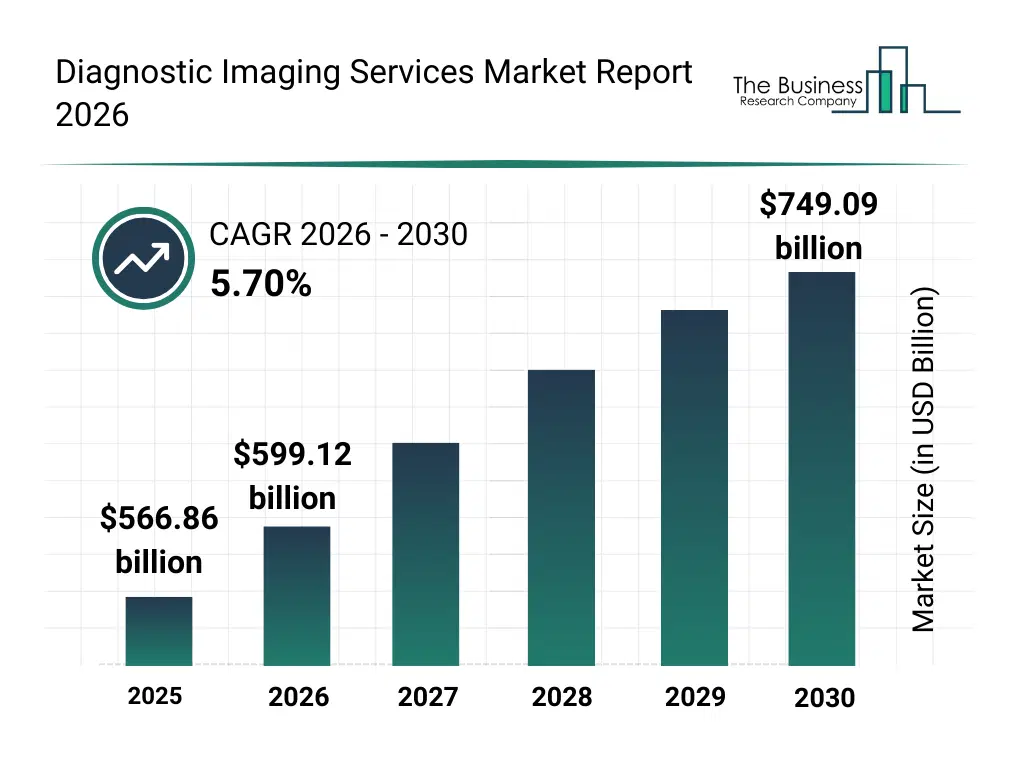
What Is The Diagnostic Imaging Services Market Size and Share 2026?
The diagnostic imaging services market size has grown strongly in recent years. It will grow from $566.86 billion in 2025 to $599.12 billion in 2026 at a compound annual growth rate (CAGR) of 5.7%. The growth in the historic period can be attributed to expansion of hospital-based imaging services, increasing prevalence of chronic diseases, growth in diagnostic imaging centers, improved accessibility to imaging technologies, rising demand for non-invasive diagnostics.What Is The Diagnostic Imaging Services Market Growth Forecast?
The diagnostic imaging services market size is expected to see strong growth in the next few years. It will grow to $749.09 billion in 2030 at a compound annual growth rate (CAGR) of 5.7%. The growth in the forecast period can be attributed to increasing investments in AI-driven imaging analytics, growing demand for personalized diagnostic services, expansion of ambulatory imaging facilities, rising adoption of advanced MRI and CT technologies, increasing focus on workflow automation. Major trends in the forecast period include increasing adoption of ai-assisted imaging interpretation, rising use of advanced multimodal imaging modalities, growing expansion of outpatient diagnostic centers, integration of cloud-based imaging platforms, enhanced focus on early disease detection.
Global Diagnostic Imaging Services Market Segmentation
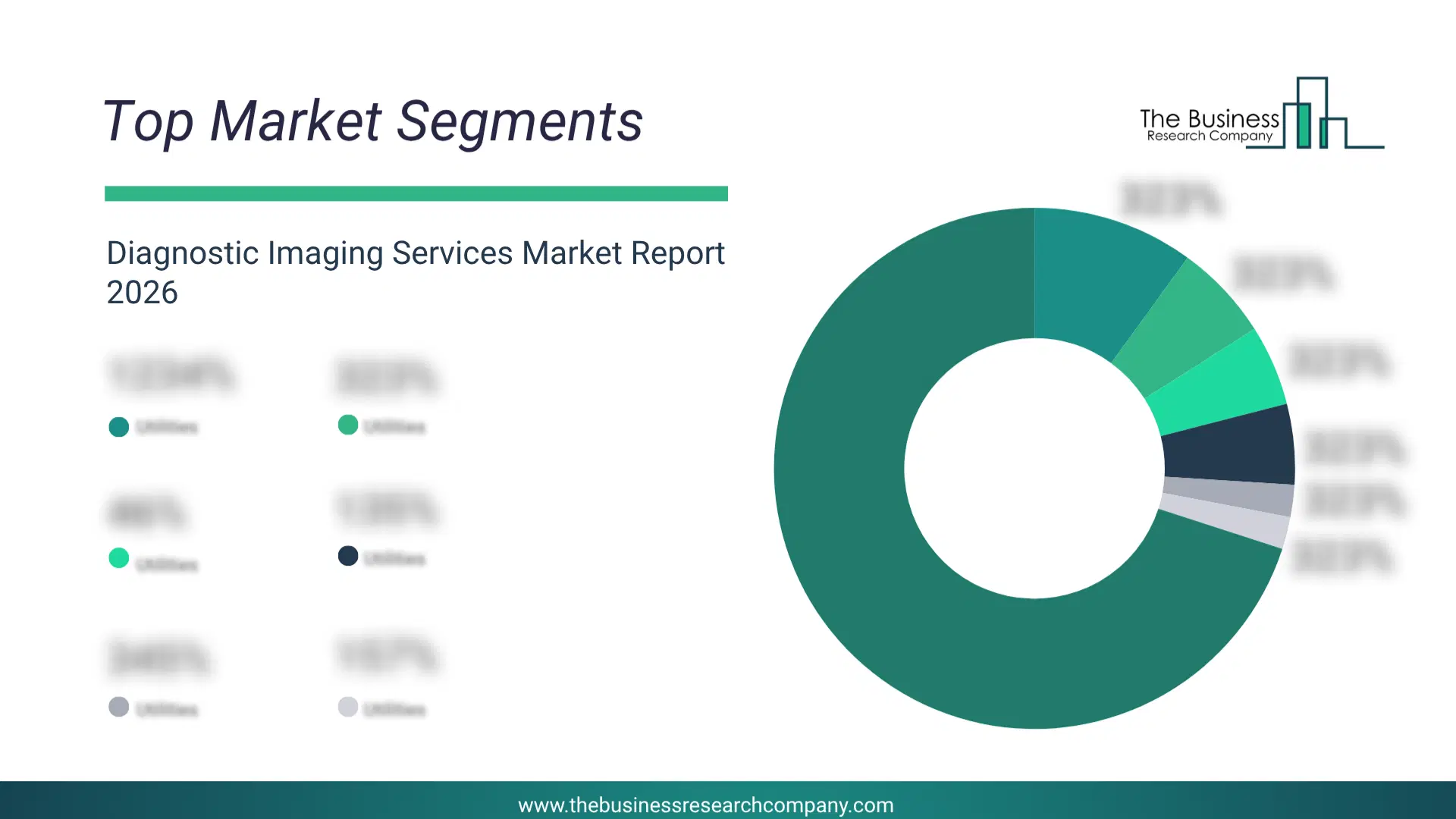
1) By Type: X-Ray Imaging, Ultrasound, Magnetic Resource Imaging, Computed Tomography, Nuclear Imaging, Mammography 2) By Application: Cardiology, Gynecology Or OBS, Orthopedics And Musculoskeletal, Oncology, Neurology And Spine, General Imaging 3) By End User: Hospitals, Diagnostic Imaging Centers, Ambulatory Imaging Centers, Other End Users Subsegments: 1) By X-Ray Imaging: Conventional X-Ray, Digital X-Ray, Fluoroscopy 2) By Ultrasound: Diagnostic Ultrasound, 3D Or 4D Ultrasound, Doppler Ultrasound 3) By Magnetic Resonance Imaging (MRI): Closed MRI, Open MRI, Functional MRI (fMRI) 4) By Computed Tomography (CT): Single-Slice CT, Multi-Slice CT, Cone Beam CT 5) By Nuclear Imaging: Positron Emission Tomography (PET), Single Photon Emission Computed Tomography (SPECT), Bone Scintigraphy 6) By Mammography: Screen-Film Mammography, Digital Mammography, 3D Mammography The top segments in the diagnostic imaging services market will be: • X-Ray Imaging will reach $216.87 Billion by 2030. • Ultrasound will reach $143.21 Billion by 2030. • Computed Tomography will reach $142.31 Billion by 2030. • Magnetic Resource Imaging will reach $106.05 Billion by 2030. • Mammography will reach $70.03 Billion by 2030.What Is The Driver Of The Diagnostic Imaging Services Market?
The rising healthcare expenditure is expected to contribute to the growth of the diagnostic imaging services market going forward. Healthcare expenditure refers to the total amount of money spent on healthcare goods and services within a specific time, usually measured at a national or regional level. Healthcare expenditure on diagnostic imaging services is a significant and growing portion of overall healthcare costs. The development of new and more sophisticated imaging technologies, such as MRI, CT scans, and PET scans, has made it possible to diagnose a wider range of conditions with greater accuracy. However, these advanced technologies also come with a higher price tag. For instance, in June 2024, according to Health Affairs, a US-based academic journal, the national healthcare expenditure in the U.S. is expected to rise from $4,799.3 billion in 2023 to $5,048.8 billion in 2024, indicating an increase of about $249.5 billion. Therefore, the rise in healthcare expenditures is driving the growth of the systemic diagnostic Imaging Services industry.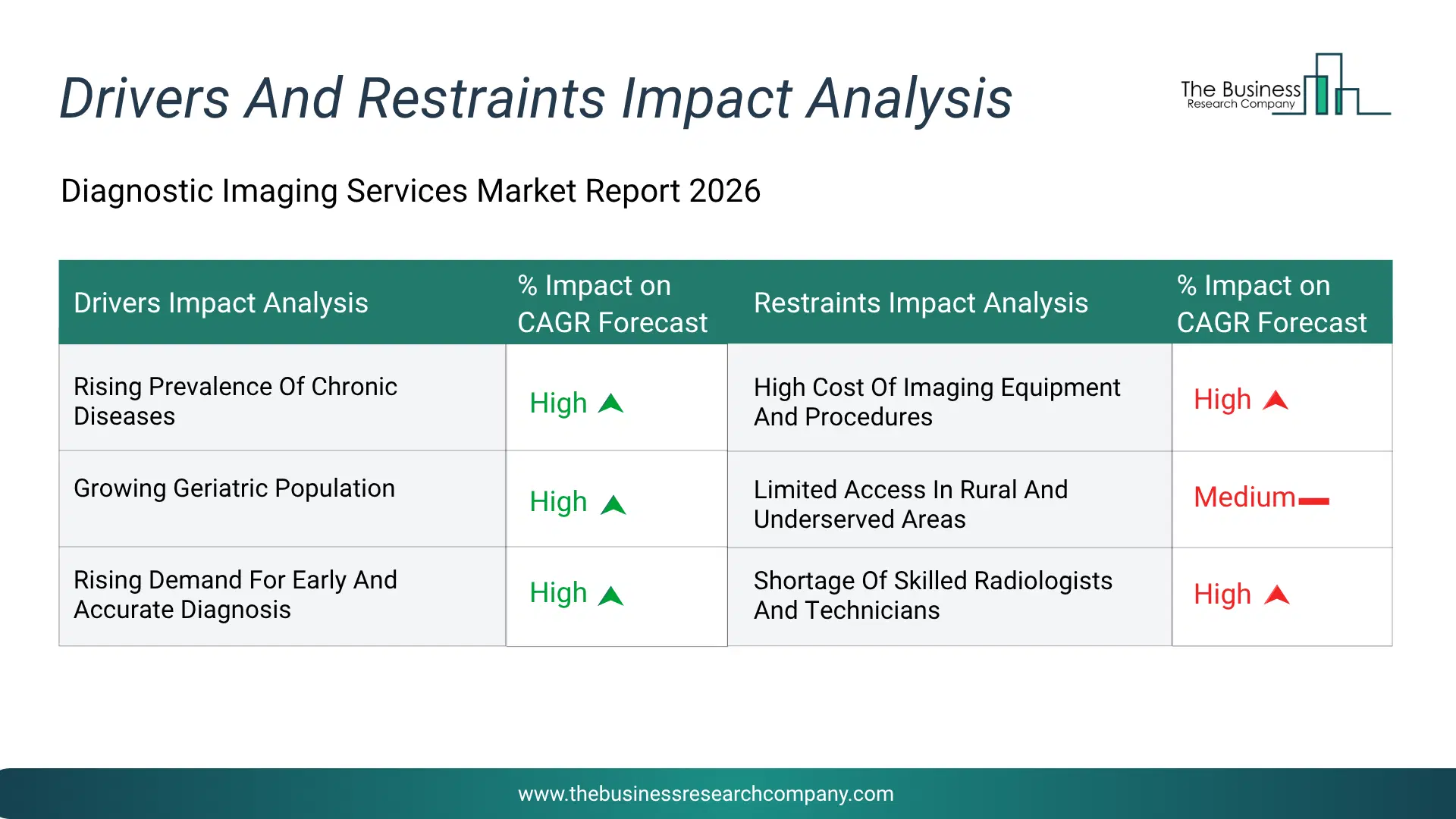
Infographic Chart Showing Key Market Drivers Analysis And Restraints For Diagnostic Imaging Services Market
The chart presents an impact analysis of key drivers and restraints, quantifying their relative influence on the market's growth rate and helping assess the balance between growth enablers and limiting factors. This chart offers a high-level perspective; the full report contains more detailed insights.
How Will The Drivers Impact Growth In The Global Diagnostic Imaging Services Market?
• Rising Prevalence Of Chronic Diseases (High) – During the forecast period, the rising prevalence of chronic diseases is expected to become a key growth driver for the diagnostic imaging services market by 2030. Conditions such as cardiovascular disorders, cancer, diabetes, and respiratory diseases require frequent imaging examinations for diagnosis, treatment planning, and long-term monitoring. Healthcare providers are increasingly utilizing imaging modalities to assess disease progression and improve clinical decision-making. The growing burden of chronic illnesses is creating sustained demand for imaging procedures across hospitals and diagnostic centers. • Growing Geriatric Population (High) – During the forecast period, the growing geriatric population is expected to emerge as a major factor driving the expansion of the diagnostic imaging services market by 2030. Older adults are more susceptible to age-related conditions including osteoporosis, neurological disorders, cardiovascular diseases, and degenerative musculoskeletal conditions that require regular diagnostic evaluation. The increasing life expectancy across both developed and emerging economies is expanding the patient pool requiring imaging services. Healthcare systems are therefore enhancing diagnostic capabilities to address the needs of an aging population. • Rising Demand For Early And Accurate Diagnosis (High) – During the forecast period, the rising demand for early and accurate diagnosis is expected to act as a key growth catalyst for the diagnostic imaging services market by 2030. Patients and healthcare providers are increasingly prioritizing early detection of diseases to improve treatment outcomes and reduce healthcare costs. Advanced imaging technologies provide detailed visualization of anatomical structures and pathological conditions, enabling timely clinical intervention. Growing awareness regarding preventive healthcare and routine health screening programs is further increasing imaging utilization rates.How Will The Restraints Impact Growth In The Global Diagnostic Imaging Services Market?
• High Cost Of Imaging Equipment And Procedures (High) – During the forecast period, the diagnostic imaging services market is significantly constrained by the high cost of advanced imaging equipment such as MRI, CT scanners, and PET systems. These machines require substantial capital investment, ongoing maintenance, and periodic upgrades, which increase the financial burden on healthcare providers. Smaller hospitals and diagnostic centers often struggle to afford such technologies, limiting their ability to offer comprehensive imaging services. Additionally, the cost of imaging procedures for patients can be high, particularly in regions with limited insurance coverage or reimbursement support. This reduces patient willingness to undergo recommended diagnostic tests, leading to lower utilization rates. High operational costs, including energy consumption and specialized staffing, further add to the expense. As a result, service providers may pass these costs on to patients, reducing affordability and access. The financial barrier also slows the adoption of newer, more efficient imaging technologies. Overall, high costs restrict market expansion, especially in developing economies where healthcare budgets are limited. • Limited Access In Rural And Underserved Areas (High) – During the forecast period, the limited access to diagnostic imaging services in rural and underserved regions acts as a major restraint on market growth. Many such areas lack the necessary healthcare infrastructure, including well-equipped diagnostic centers and reliable electricity or connectivity. Patients often need to travel long distances to urban facilities for imaging procedures, which discourages timely diagnosis and treatment. This geographic disparity reduces the overall demand for imaging services in these regions. Additionally, healthcare providers may be reluctant to invest in expensive imaging equipment in low-population areas due to lower patient volumes and uncertain returns on investment. Government support and funding may also be insufficient to bridge this gap. As a result, a significant portion of the population remains underserved, limiting the market’s reach. Delayed diagnoses due to poor access can also reduce repeat usage of imaging services. Consequently, uneven distribution of services hampers the overall growth potential of the market. • Shortage Of Skilled Radiologists And Technicians (High) – During the forecast period, the shortage of skilled radiologists and trained imaging technicians is another critical restraint affecting the diagnostic imaging services market. Operating advanced imaging equipment and accurately interpreting results require specialized training and expertise. However, there is a global imbalance between the demand for skilled professionals and their availability, particularly in developing regions. This shortage leads to increased workload on existing staff, resulting in longer waiting times for patients and potential delays in diagnosis. It can also affect the quality and accuracy of imaging interpretations, raising concerns about patient outcomes. Healthcare facilities may face difficulties in expanding their imaging services due to a lack of qualified personnel to manage operations. Training new professionals requires time and investment, further slowing workforce development. Additionally, skilled professionals tend to concentrate in urban areas, worsening the gap in rural regions. Overall, workforce limitations reduce service efficiency and capacity, thereby restraining market growth.Key Players In The Global Diagnostic Imaging Services Market
Major companies operating in the diagnostic imaging services market are RadNet Inc., Sonic Healthcare Ltd., HCA Healthcare Inc., Tenet Healthcare Corporation, Ramsay Health Care Limited, IHH Healthcare Berhad, Fresenius Medical Care AG & Co. KGaA, Spire Healthcare Group plc, Fortis Healthcare Limited, Apollo Hospitals Enterprise Limited, Narayana Hrudayalaya Limited, QIAGEN N.V., Eurofins Scientific SE, Unilabs AB, Affidea Group, InHealth Group Limited, Capitol Health Limited, NMC Health plc, RAYUS Radiology, Akumin Inc., Envision Healthcare Corporation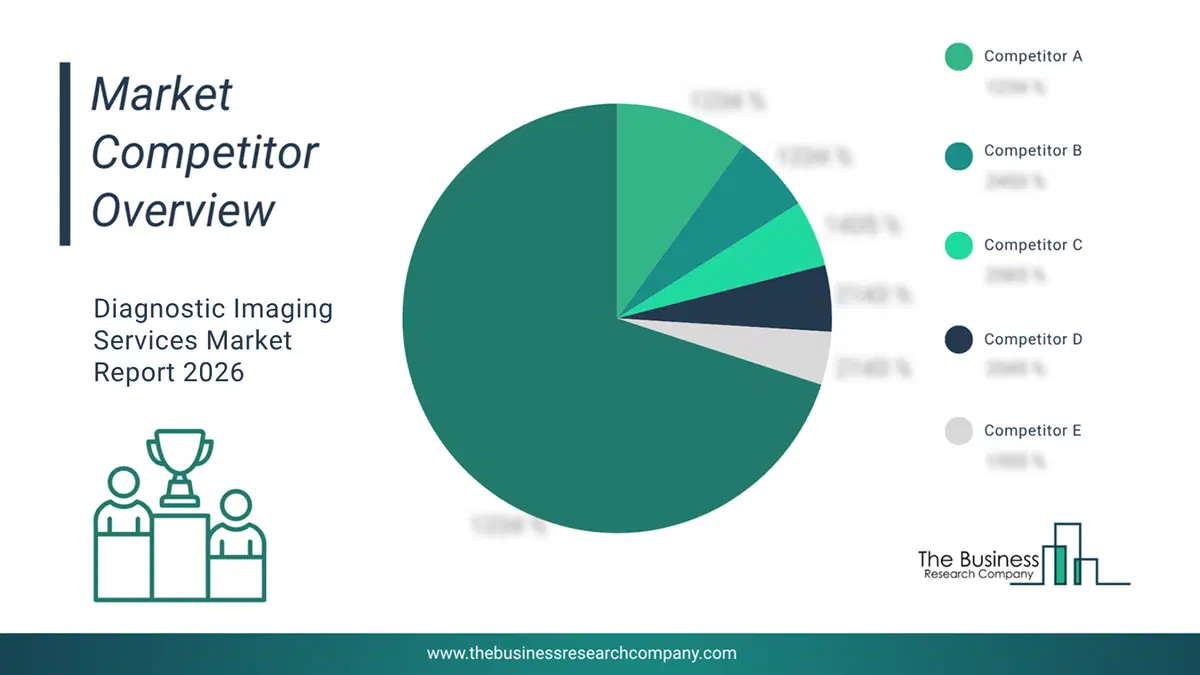
This chart is for illustrative purposes; the full report includes a detailed competitor analysis and comprehensive overview of the top 10 companies in the market.
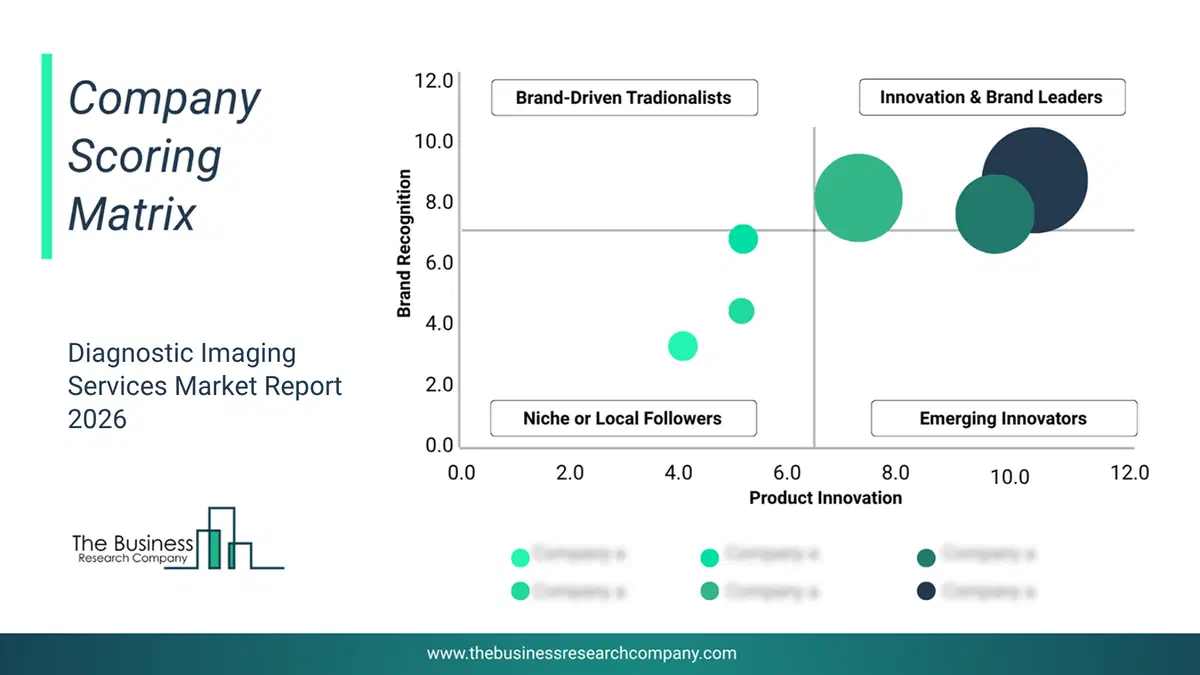
This chart maps companies by product innovation and brand strength, with bubble size indicating relative revenue, helping identify market leaders, challengers, and niche players. This is an illustrative chart; the full report provides a complete and accurate competitive analysis.
Global Diagnostic Imaging Services Market Trends and Insights
Major companies operating in the diagnostic imaging services market are focusing on the adoption of artificial intelligence and the use of blockchain technology to revolutionize diagnostic imaging. Artificial intelligence, or AI, is the emulation of human intelligence by machines to perform tasks that call for humans specifically. For instance, in February 2023, RadNet, a US-based healthcare company, launched an enhanced breast cancer detection (EBCD) service aimed at improving breast cancer screening accuracy for women. This service also features an additional AI-driven review called Accord for certain suspicious exams, ensuring thorough evaluations. Furthermore, EBCD provides an in-depth lifetime risk assessment for breast cancer, helping patients understand their individual risk factors and informing customized screening protocols.What Are Latest Mergers And Acquisitions In The Diagnostic Imaging Services Market?
In April 2024, Shimadzu Medical Systems, a US-based healthcare technology company, acquired California X-ray Imaging Services for undisclosed amounts. With this acquisition, Shimadzu aims to strengthen its healthcare market presence by leveraging established relationships and expertise to enhance service support and drive growth in Northern California and Nevada. California X-ray Imaging Services is a US-based healthcare company focused on providing diagnostic imaging services, including X-rays and other imaging modalities.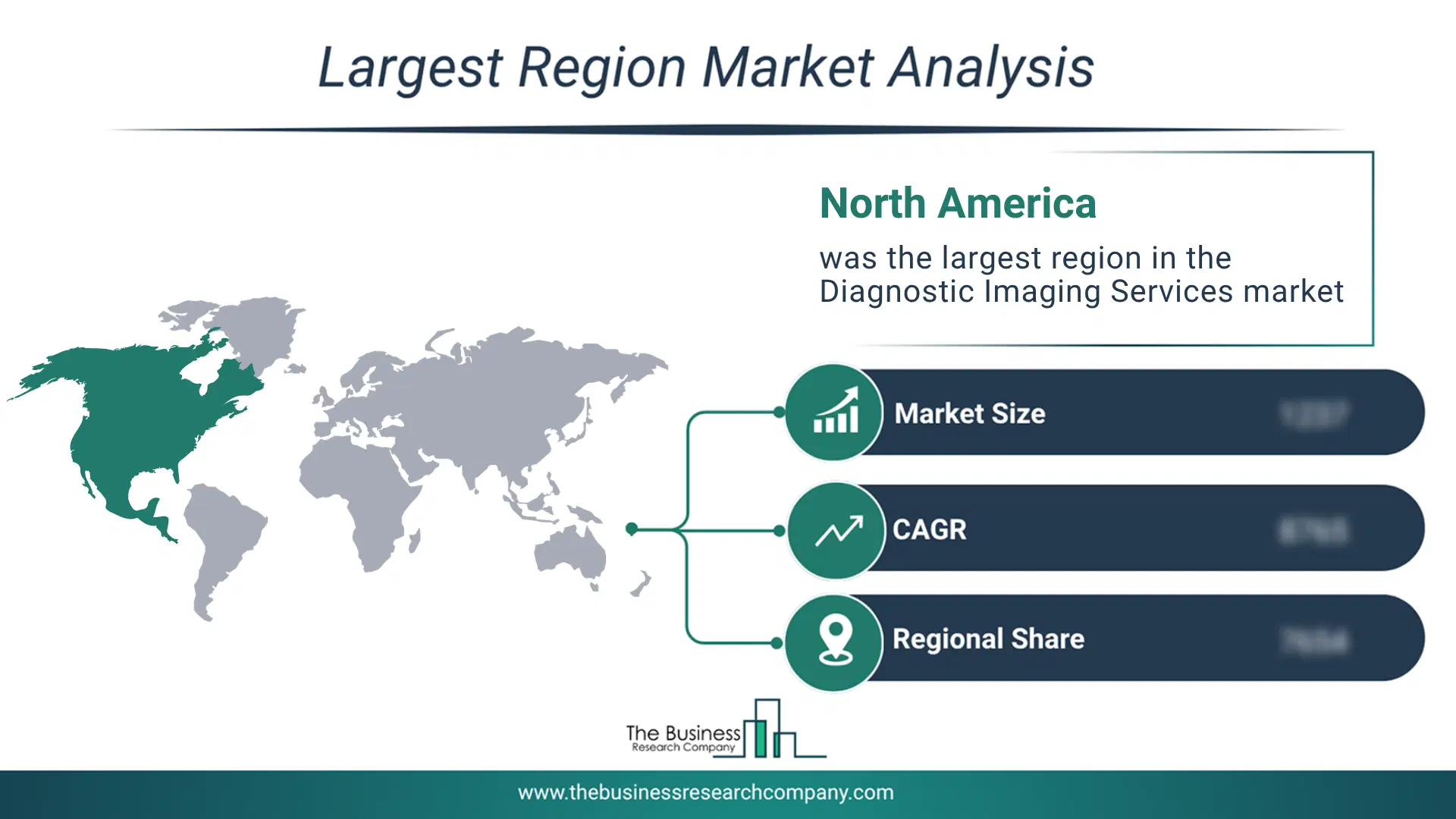
Regional Outlook
North America was the largest region in the diagnostic imaging services market in 2025. Asia-Pacific is expected to be the fastest-growing region in the forecast period. The regions covered in this market report are Asia-Pacific, South East Asia, Western Europe, Eastern Europe, North America, South America, Middle East, Africa. The countries covered in this market report are Australia, Brazil, China, France, Germany, India, Indonesia, Japan, Taiwan, Russia, South Korea, UK, USA, Canada, Italy, SpainWhat Defines the Diagnostic Imaging Services Market?
The diagnostic imaging services market includes revenues earned by entities by diagnostic radiology, fluoroscopy and PET scans. The market value includes the value of related goods sold by the service provider or included within the service offering. Only goods and services traded between entities or sold to end consumers are included.How is Market Value Defined and Measured?
The market value is defined as the revenues that enterprises gain from the sale of goods and/or services within the specified market and geography through sales, grants, or donations in terms of the currency (in USD unless otherwise specified). The revenues for a specified geography are consumption values that are revenues generated by organizations in the specified geography within the market, irrespective of where they are produced. It does not include revenues from resales along the supply chain, either further along the supply chain or as part of other products.
This chart presents market attractiveness based on a quantitative evaluation of growth, competition, strategic alignment, and risk, offering a clear view of opportunity areas for decision-making. This chart is for illustrative purposes; the full report contains the complete analysis.

This chart highlights the Total Addressable Market (TAM) by estimating the maximum revenue opportunity using an assumption-driven approach, supporting strategic planning and opportunity sizing across markets. The chart is illustrative; the full report provides a more comprehensive analysis.
What Key Data and Analysis Are Included in the Diagnostic Imaging Services Market Report 2026?
The diagnostic imaging services market research report is one of a series of new reports from The Business Research Company that provides market statistics, including industry global market size, regional shares, competitors with the market share, detailed market segments, market trends and opportunities, and any further data you may need to thrive in the diagnostic imaging services industry. The market research report delivers a complete perspective of everything you need, with an in-depth analysis of the current and future state of the industry.Diagnostic Imaging Services Market Report Forecast Analysis
| Report Attribute | Details |
|---|---|
| Market Size Value In 2026 | $599.12 billion |
| Revenue Forecast In 2030 | $749.09 billion |
| Growth Rate | CAGR of 5.7% from 2026 to 2030 |
| Base Year For Estimation | 2025 |
| Actual Estimates/Historical Data | 2020-2025 |
| Forecast Period | 2026 - 2030 |
| Market Representation | Revenue in USD Billion and CAGR from 2026 to 2030 |
| Segments Covered | Type, Application, End User |
| Regional Scope | Asia-Pacific, Western Europe, Eastern Europe, North America, South America, Middle East, Africa |
| Country Scope | The countries covered in the report are Australia, Brazil, China, France, Germany, India, Indonesia, Japan, Taiwan, Russia, South Korea, UK, USA, Canada, Italy, Spain. |
| Key Companies Profiled | RadNet Inc., Sonic Healthcare Ltd., HCA Healthcare Inc., Tenet Healthcare Corporation, Ramsay Health Care Limited, IHH Healthcare Berhad, Fresenius Medical Care AG & Co. KGaA, Spire Healthcare Group plc, Fortis Healthcare Limited, Apollo Hospitals Enterprise Limited, Narayana Hrudayalaya Limited, QIAGEN N.V., Eurofins Scientific SE, Unilabs AB, Affidea Group, InHealth Group Limited, Capitol Health Limited, NMC Health plc, RAYUS Radiology, Akumin Inc., Envision Healthcare Corporation |
| Customization Scope | Request for Customization |
| Pricing And Purchase Options | Explore Purchase Options |