
Digital Freight Matching Market Report 2026
Global Outlook – By Platform Type (Open Marketplace Platforms, Private/Enterprise Platforms, Brokerage-Owned Platforms), By Deployment Model (Cloud-Based, On-Premises), By Service (Freight Matching Services, Value Added Services), By Transportation Mode (Full Truckload (FTL), Less-than-truckload (LTL), Intermodal, Other Transportation Modes), By Industry (Food And Beverages, Retail And E-commerce, Manufacturing, Oil And Gas, Automotive, Healthcare, Other Industries) – Market Size, Trends, Strategies, and Forecast to 2030
Digital Freight Matching Market Overview
• Digital Freight Matching market size has reached to $40.71 billion in 2025 • Expected to grow to $114.83 billion in 2030 at a compound annual growth rate (CAGR) of 22.2% • Growth Driver: E-commerce Activities Fueling The Digital Freight Matching Market • Market Trend: Advanced Technology Platforms In Digital Freight Matching • North America was the largest region in 2025 and Asia-Pacific is the fastest growing region.What Is Covered Under Digital Freight Matching Market?
Digital freight matching refers to the use of web and mobile-based technological platforms to connect shippers with the right carrier based on their specific requirements such as the available freight load and the carrier's available capacity. These platforms use automation to streamline booking, matching, and monitoring processes, leading to improved customer service and operational planning. The main types of platforms in digital freight matching are open marketplace platforms, private/enterprise platforms, and brokerage-owned platforms. Open marketplace platforms are digital platforms that facilitate transactions between multiple buyers and sellers. It included deployment models that are cloud-based and on-premises and provide various services such as freight matching services and value-added services. It is used in different transportation modes such as full truckload (FTL), less-than-truckload (LTL), intermodal, and others, which are employed in industries such as food and beverages, retail and e-commerce, manufacturing, oil and gas, automotive, healthcare, and others.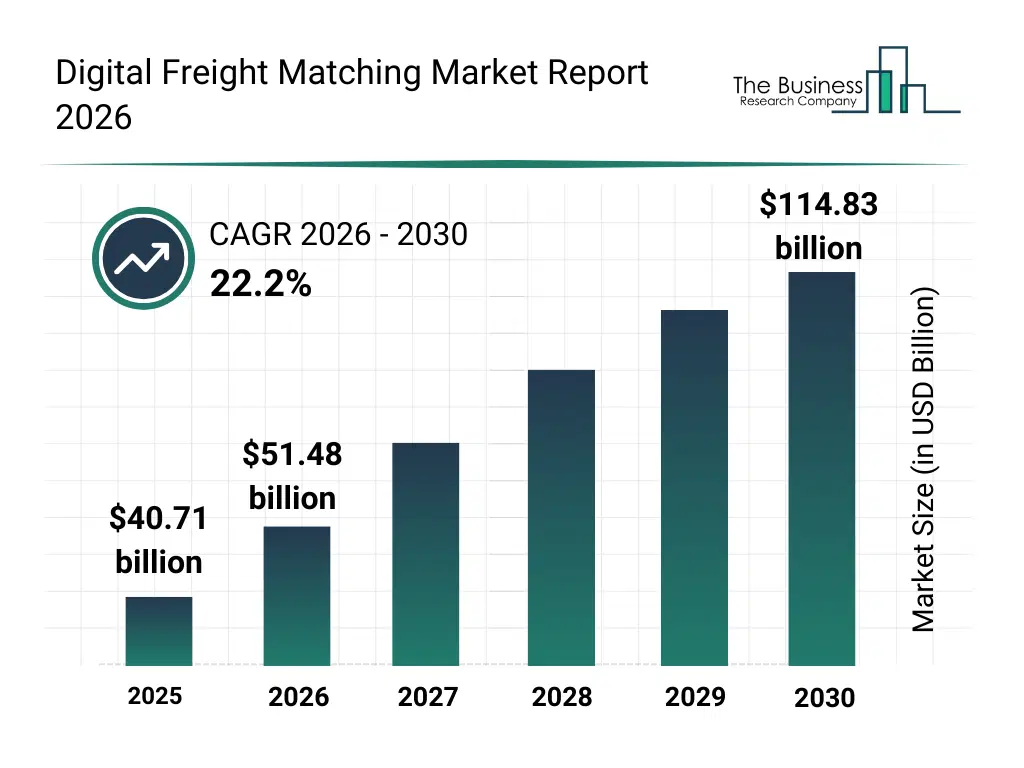
What Is The Digital Freight Matching Market Size and Share 2026?
The digital freight matching market size has grown exponentially in recent years. It will grow from $40.71 billion in 2025 to $51.48 billion in 2026 at a compound annual growth rate (CAGR) of 26.5%. The growth in the historic period can be attributed to e-commerce growth, fragmentation of trucking industry, manual freight brokerage inefficiencies, smartphone penetration, need for faster bookings.What Is The Digital Freight Matching Market Growth Forecast?
The digital freight matching market size is expected to see exponential growth in the next few years. It will grow to $114.83 billion in 2030 at a compound annual growth rate (CAGR) of 22.2%. The growth in the forecast period can be attributed to AI-driven logistics optimization, digital supply chain adoption, sustainability-focused route optimization, growth in on-demand logistics, cloud-based freight platforms. Major trends in the forecast period include growth of real-time freight platforms, adoption of algorithmic load matching, expansion of asset-light logistics models, integration with telematics systems, rising demand for spot freight pricing.
Global Digital Freight Matching Market Segmentation
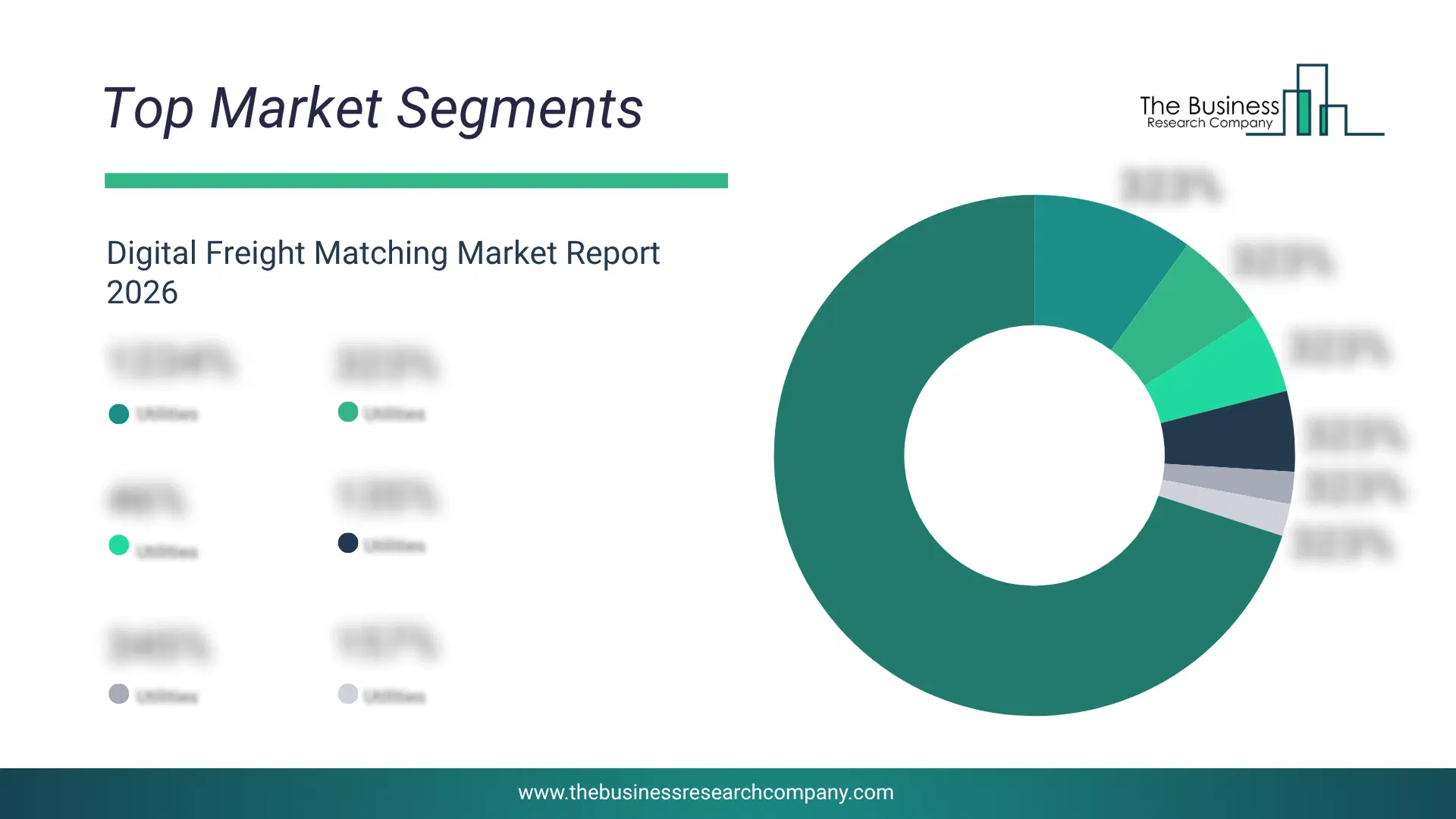
1) By Platform Type: Open Marketplace Platforms, Private/Enterprise Platforms, Brokerage-Owned Platforms 2) By Deployment Model: Cloud-Based, On-Premises 3) By Service: Freight Matching Services, Value Added Services 4) By Transportation Mode: Full Truckload (FTL), Less-than-truckload (LTL), Intermodal, Other Transportation Modes 5) By Industry: Food And Beverages, Retail And E-commerce, Manufacturing, Oil And Gas, Automotive, Healthcare, Other Industries Subsegments: 1) By Open Marketplace Platforms: B2B Marketplaces, Freight Exchange Platforms 2) By Private Or Enterprise Platforms: Custom Freight Matching Solutions, Proprietary Logistics Platforms, Private Logistics Networks 3) By Freight Broker Platforms: Freight Broker Platforms, Third-Party Logistics (3PL) Platforms, Broker-Led Freight Matching SolutionsWhat Is The Driver Of The Digital Freight Matching Market?
The increasing e-commerce activities are expected to propel the growth of the digital freight matching market going forward. E-commerce activities refer to any commercial transactions conducted electronically over the internet. The e-commerce activity arises because of convenience, wide variety, competitive pricing, and personalization. Digital freight matching (DFM) is employed to enhance e-commerce activities by providing efficient, cost-effective, and transparent transportation solutions tailored to the specific needs of online businesses. For instance, in February 2024, according to the United States Census Bureau, a US-based government agency, total e-commerce sales were estimated at $1,118.7 billion by 2023, which increased by 7.6% (±1.2%) from 2022, and e-commerce total sales increased by 15.4% in 2023 from 14.7% in 2022. Therefore, increasing e-commerce activities are driving the digital freight matching industry.Key Players In The Global Digital Freight Matching Market
Major companies operating in the digital freight matching market report include C.H. Robinson Worldwide Inc., J.B. Hunt Transport Services Inc., XPO Inc., Uber Freight LLC, Schneider National Inc., Roper Technologies Inc., Flexport Inc., Echo Global Logistics Inc., TOTAL QUALITY LOGISTICS LLC, Redwood Logistics, Convoy Inc., JiangSu ManYun Software Technology Co. Ltd, Delhivery, Coyote Logistics, Transfix Inc., Roadie Inc., Cargomatic Inc., NEXT Trucking Inc., Freight Tiger, uShip Inc., DAT Solutions LLC, Freight Technologies Inc., Loadsmart, Getloaded, VeriTread LLC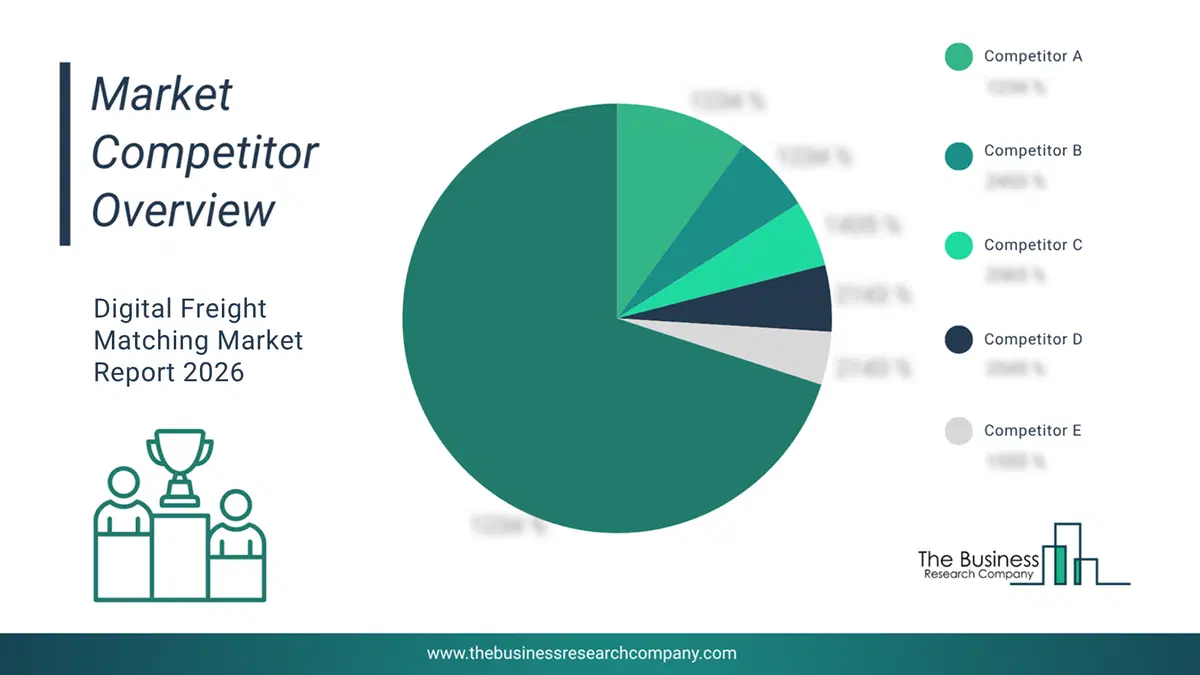
This chart is for illustrative purposes; the full report includes a detailed competitor analysis and comprehensive overview of the top 10 companies in the market.
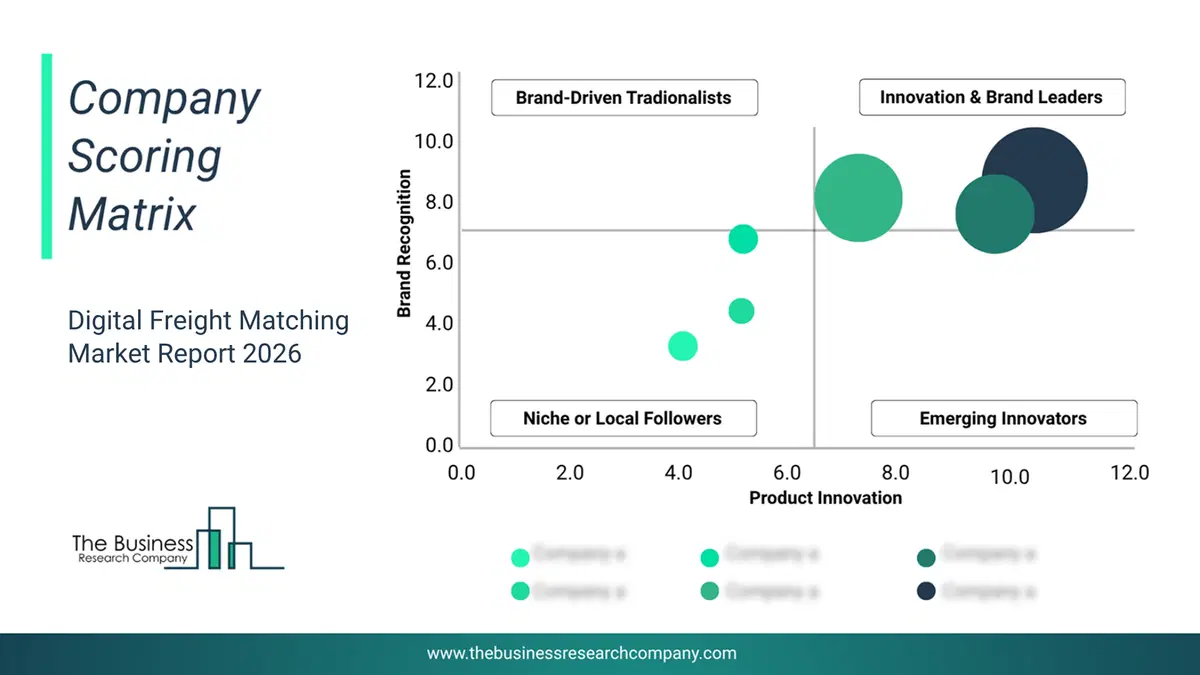
This chart maps companies by product innovation and brand strength, with bubble size indicating relative revenue, helping identify market leaders, challengers, and niche players. This is an illustrative chart; the full report provides a complete and accurate competitive analysis.
Global Digital Freight Matching Market Trends and Insights
Major companies operating in the digital freight matching market are focused on developing advanced technological solutions such as Fr8Now, to enhance the efficiency and reliability of freight operations. Fr8Now is an online marketplace or software solution that connects shippers with carriers in a streamlined and efficient manner. The platform leverages technology such as algorithms and data analytics, to match available freight capacity with shipping requirements in real-time. For instance, in March 2023, Freight Technologies, Inc., a US-based transportation logistics technology company, launched Fr8Now, a digital freight-matching platform that offers less-than-truckload (LTL) services in Mexico. Fr8Now is designed to revolutionize the LTL segment in Mexico by digitizing shipments and providing real-time shipping services to businesses across the region, using technology in a manner that other market participants are unable to offer. Additionally, this platform uses machine-learning algorithms to match shippers with the best carriers, making the shipping process faster, more efficient, and more cost-effective.What Are Latest Mergers And Acquisitions In The Digital Freight Matching Market?
In September 2024, Denmark-based transport and logistics company acquired DB Schenker for $15.8 billion. This acquisition expands DSV's reach, enhances service opportunities for customers, and strengthens its platform for growth. It also advances DSV's commitment to a more sustainable and digitized transport and logistics industry. DB Schenker, a Germany-based logistics provider, offers digital freight matching services.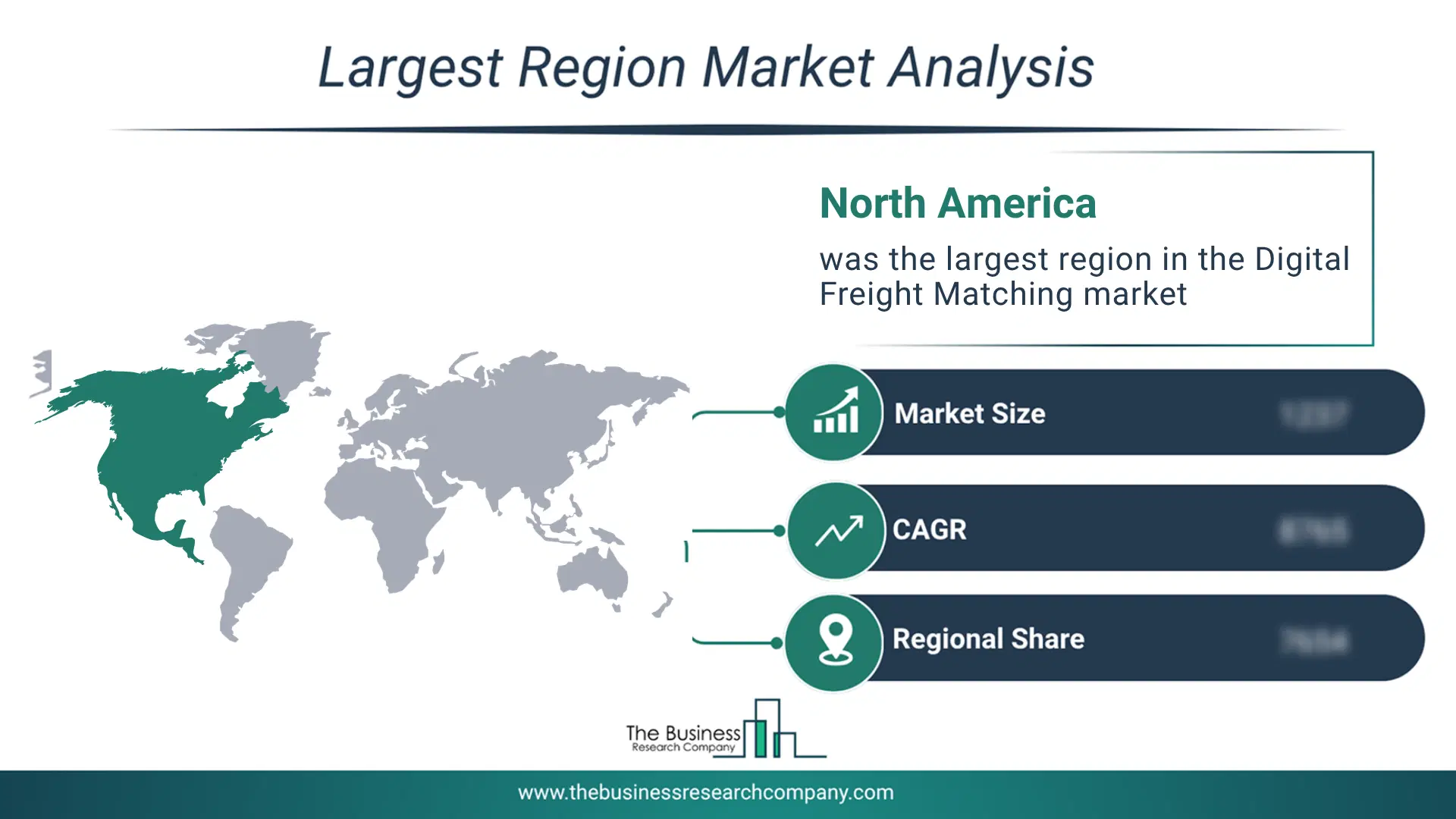
Regional Outlook
North America was the largest region in the digital freight matching market in 2025. Asia-Pacific is expected to be the fastest-growing region in the forecast period. The regions covered in this market report include Asia-Pacific, South East Asia, Western Europe, Eastern Europe, North America, South America, Middle East, Africa. The countries covered in this market report include Australia, Brazil, China, France, Germany, India, Indonesia, Japan, Taiwan, Russia, South Korea, UK, USA, Canada, Italy, SpainWhat Defines the Digital Freight Matching Market?
The digital freight matching market consists of revenues earned by entities by providing services such as load matching, real-time visibility, automated booking and documentation, rate transparency and negotiation, capacity management, and predictive analytics and insights. The market value includes the value of related goods sold by the service provider or included within the service offering. The digital freight matching market also includes sales of real-time tracking tools, laptops, rating systems, GPS trackers, electronic logging devices, telematics devices, radio frequency identification (RFID) and barcode scanners, and load boards. Values in this market are ‘factory gate’ values, that is, the value of goods sold by the manufacturers or creators of the goods, whether to other entities (including downstream manufacturers, wholesalers, distributors, and retailers) or directly to end customers. The value of goods in this market includes related services sold by the creators of the goods.How is Market Value Defined and Measured?
The market value is defined as the revenues that enterprises gain from the sale of goods and/or services within the specified market and geography through sales, grants, or donations in terms of the currency (in USD unless otherwise specified). The revenues for a specified geography are consumption values that are revenues generated by organizations in the specified geography within the market, irrespective of where they are produced. It does not include revenues from resales along the supply chain, either further along the supply chain or as part of other products.
This chart presents market attractiveness based on a quantitative evaluation of growth, competition, strategic alignment, and risk, offering a clear view of opportunity areas for decision-making. This chart is for illustrative purposes; the full report contains the complete analysis.

This chart highlights the Total Addressable Market (TAM) by estimating the maximum revenue opportunity using an assumption-driven approach, supporting strategic planning and opportunity sizing across markets. The chart is illustrative; the full report provides a more comprehensive analysis.
What Key Data and Analysis Are Included in the Digital Freight Matching Market Report 2026?
The digital freight matching market research report is one of a series of new reports from The Business Research Company that provides market statistics, including industry global market size, regional shares, competitors with the market share, detailed market segments, market trends and opportunities, and any further data you may need to thrive in the digital freight matching industry. The market research report delivers a complete perspective of everything you need, with an in-depth analysis of the current and future state of the industry.Digital Freight Matching Market Report Forecast Analysis
| Report Attribute | Details |
|---|---|
| Market Size Value In 2026 | $51.48 billion |
| Revenue Forecast In 2030 | $114.83 billion |
| Growth Rate | CAGR of 26.5% from 2026 to 2030 |
| Base Year For Estimation | 2025 |
| Actual Estimates/Historical Data | 2020-2025 |
| Forecast Period | 2026 - 2030 - 2030 |
| Market Representation | Revenue in USD Billion and CAGR from 2026 to 2030 |
| Segments Covered | Platform Type, Deployment Model, Service, Transportation Mode, Industry |
| Regional Scope | Asia-Pacific, Western Europe, Eastern Europe, North America, South America, Middle East, Africa |
| Country Scope | The countries covered in the report are Australia, Brazil, China, France, Germany, India, Indonesia, Japan, Taiwan, Russia, South Korea, UK, USA, Canada, Italy, Spain. |
| Key Companies Profiled | C.H. Robinson Worldwide Inc., J.B. Hunt Transport Services Inc., XPO Inc., Uber Freight LLC, Schneider National Inc., Roper Technologies Inc., Flexport Inc., Echo Global Logistics Inc., TOTAL QUALITY LOGISTICS LLC, Redwood Logistics, Convoy Inc., JiangSu ManYun Software Technology Co. Ltd, Delhivery, Coyote Logistics, Transfix Inc., Roadie Inc., Cargomatic Inc., NEXT Trucking Inc., Freight Tiger, uShip Inc., DAT Solutions LLC, Freight Technologies Inc., Loadsmart, Getloaded, VeriTread LLC |
| Customization Scope | Request for Customization |
| Pricing And Purchase Options | Explore Purchase Options |