

Digital Karyotyping Market Report 2026
Global Outlook – By Product Type (Instruments, Software, Consumables), By Application (Cancer Diagnostics, Genetic Disease Research, Prenatal Screening), By End-User (Hospitals And Clinics, Diagnostic Laboratories, Research Institutes) – Market Size, Trends, Strategies, and Forecast to 2030
Digital Karyotyping Market Overview
• Digital Karyotyping market size has reached to $1.29 billion in 2025 • Expected to grow to $2.09 billion in 2030 at a compound annual growth rate (CAGR) of 10.1% • Growth Driver: Rising Prevalence Of Genetic Disorders Fueling The Growth Of The Market Due To Increasing Demand For Accurate Detection And Clinical Management • Market Trend: Advancements In Third-Generation Chromosomal Karyotyping Systems Enhancing Precision And Efficiency • North America was the largest region in 2025 and Asia-Pacific is the fastest growing region.What Is Covered Under Digital Karyotyping Market?
Digital karyotyping is a high-resolution genomic technique that identifies DNA copy number changes and chromosomal alterations by counting short DNA sequence tags distributed across the genome. It provides a sequence-based digital map that can detect amplifications, deletions, and rearrangements at much finer scales. This method enables precise quantification of genomic regions, making it especially useful for studying cancer genomes and other genetic disorders. The main product types of digital karyotyping are instruments, software, and consumables. Karyotyping instruments are specialized laboratory systems designed to automate the process of creating a karyotype, an organized visual profile of an individual's complete set of chromosomes, used to detect genetic abnormalities. The various applications involved are cancer diagnostics, genetic disease research, and prenatal screening used in hospitals and clinics, diagnostic laboratories, and research.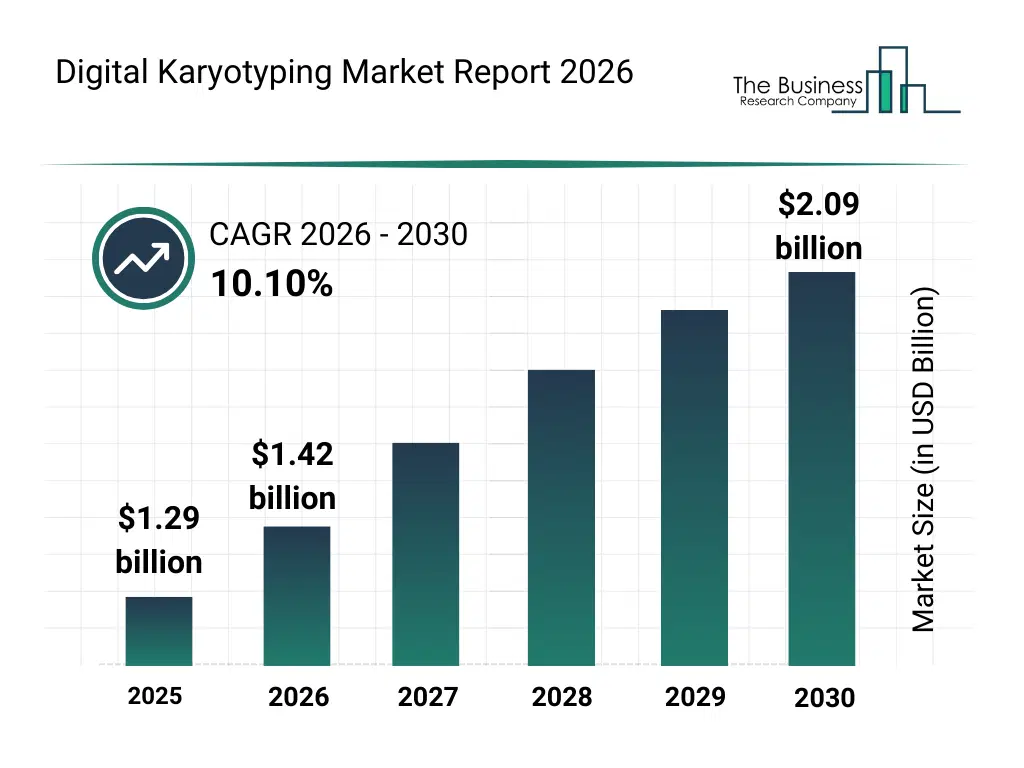
What Is The Digital Karyotyping Market Size and Share 2026?
The digital karyotyping market size has grown rapidly in recent years. It will grow from $1.29 billion in 2025 to $1.42 billion in 2026 at a compound annual growth rate (CAGR) of 10.3%. The growth in the historic period can be attributed to rising use of genomic techniques in cancer research, advancements in dna sequencing technologies, increased funding for genetic disorder research, adoption of digital genomic analysis tools, expansion of molecular diagnostics laboratories.What Is The Digital Karyotyping Market Growth Forecast?
The digital karyotyping market size is expected to see rapid growth in the next few years. It will grow to $2.09 billion in 2030 at a compound annual growth rate (CAGR) of 10.1%. The growth in the forecast period can be attributed to growing demand for precision oncology, integration of ai-based genomic interpretation, increasing application in prenatal and rare disease screening, expansion of clinical genomics services, development of high-throughput digital karyotyping platforms. Major trends in the forecast period include high-resolution copy number analysis, sequence-based chromosomal mapping, improved detection of genomic alterations, integration with advanced bioinformatics tools, application expansion in cancer genomics.
Global Digital Karyotyping Market Segmentation
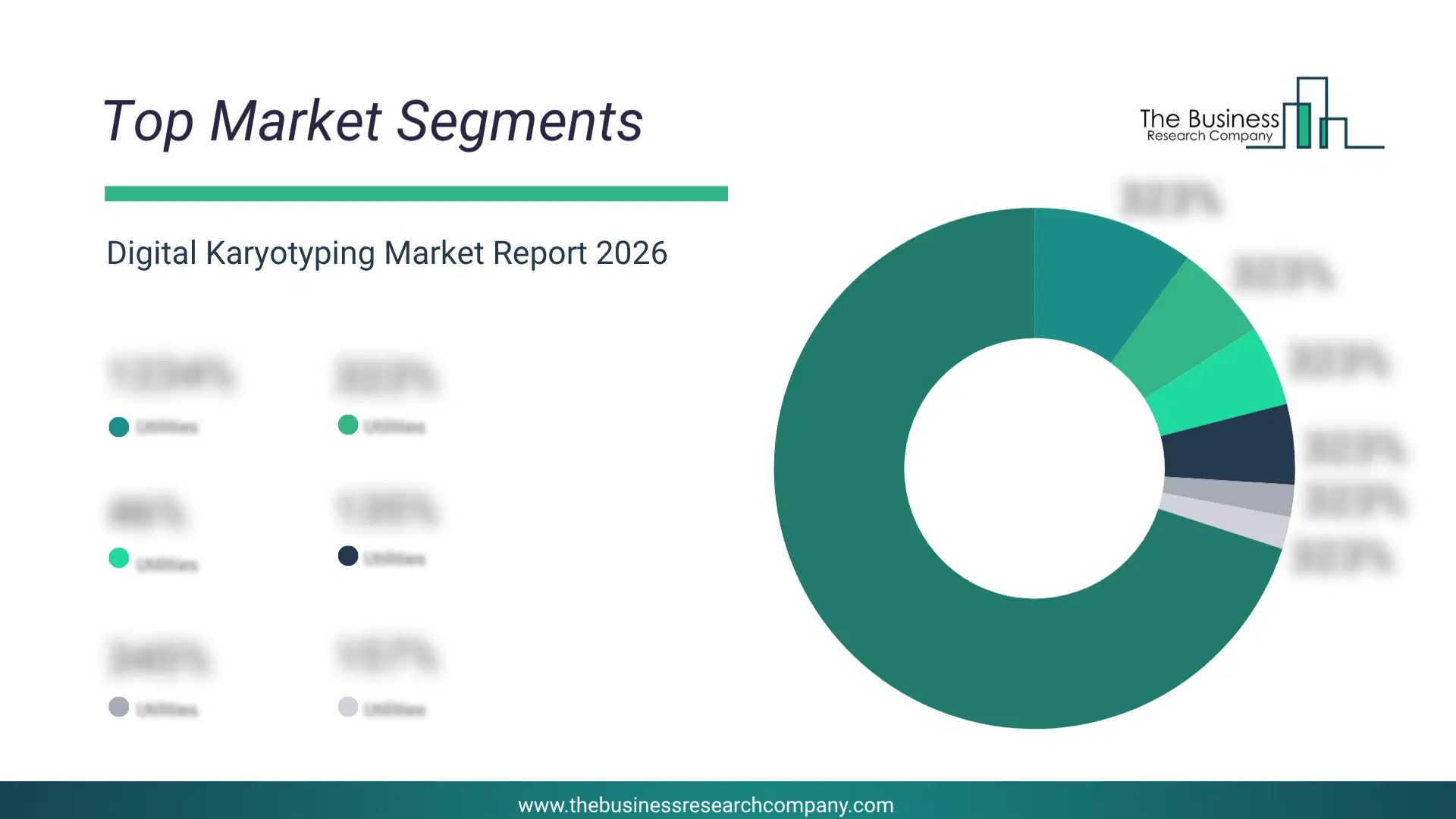
1) By Product Type: Instruments, Software, Consumables 2) By Application: Cancer Diagnostics, Genetic Disease Research, Prenatal Screening 3) By End-User: Hospitals And Clinics, Diagnostic Laboratories, Research Institutes Subsegments: 1) By Instruments: Automated Karyotyping Systems, Microscopes And Imaging Platforms, Scanners And Analyzers, Hybridization And Sequencing Equipment 2) By Software: Image Analysis Software, Chromosome Classification And Detection Tools, Data Management And Integration Platforms, AI Or Ml-Based Interpretation Software 3) By Consumables: Reagents And Kits, Probes And Stains, Slides And Coverslips, Sample Preparation MaterialsWhat Is The Driver Of The Digital Karyotyping Market?
The increasing prevalence of genetic disorders is expected to propel the growth of the digital karyotyping market going forward. Genetic disorders are conditions caused by changes or abnormalities in a person’s genes or chromosomes. The prevalence of genetic disorders is due to increasing incidences of inherited and chromosomal abnormalities, which raise the likelihood of passing genetic variations across generations. Digital karyotyping supports the rising need for genetic disorder management by enabling precise detection of chromosomal abnormalities, improving diagnostic accuracy, and guiding targeted treatment decisions without relying solely on traditional cytogenetic methods. For instance, in May 2024, according to the National Health Service, a UK-based government department, there are 17,000 people living with sickle cell disease, an inherited genetic blood disorder, with around 250 new cases diagnosed each year. Therefore, an increasing prevalence of genetic disorders is expected to drive the growth of the digital karyotyping industry.Key Players In The Global Digital Karyotyping Market
Major companies operating in the digital karyotyping market are Thermo Fisher Scientific, Corewell Health Laboratory, Eurofins Scientific, Agilent Technologies, Bio-Rad Laboratories Inc., Natera Inc., BGI Genomics Co. Ltd., PerkinElmer Inc., Oxford Nanopore Technologies, Genasis, Personal Genome Diagnostics Inc., DSS Imagetech, MetaSystems, Applied Spectral Imaging (ASI), Bioview, ArgusSoft, Ibex Medical Analytics, KaryoLogic Inc., Cyto Vision, Beijing Abaco Biotechnology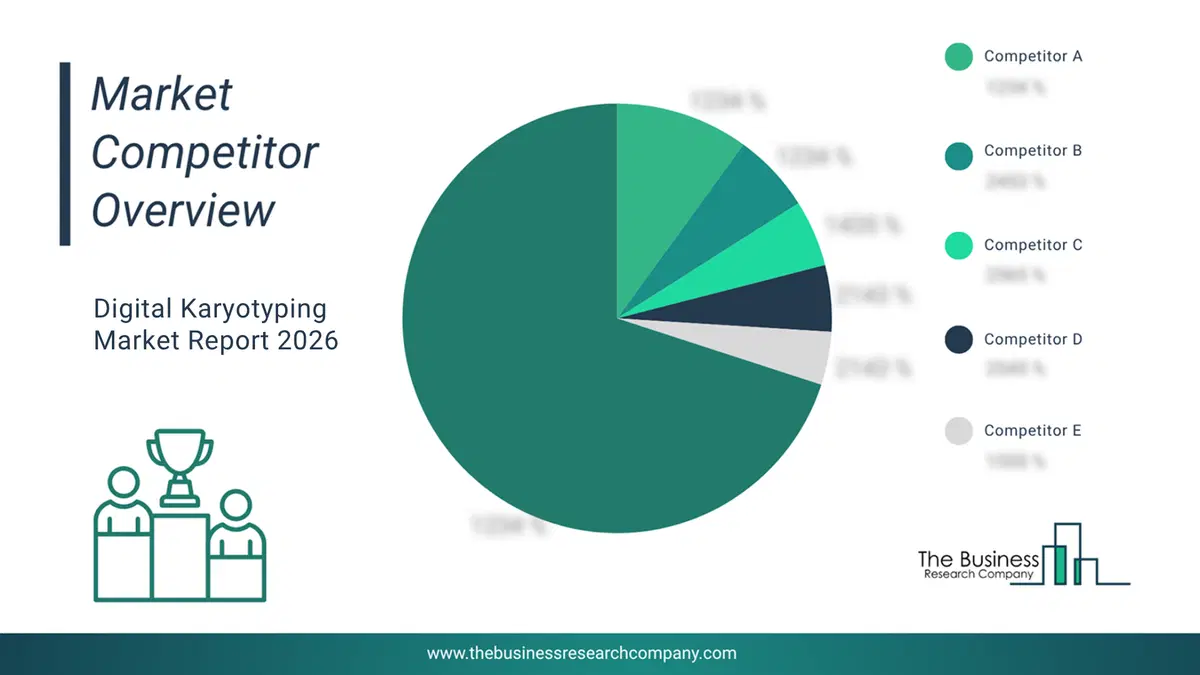
This chart is for illustrative purposes; the full report includes a detailed competitor analysis and comprehensive overview of the top 10 companies in the market.
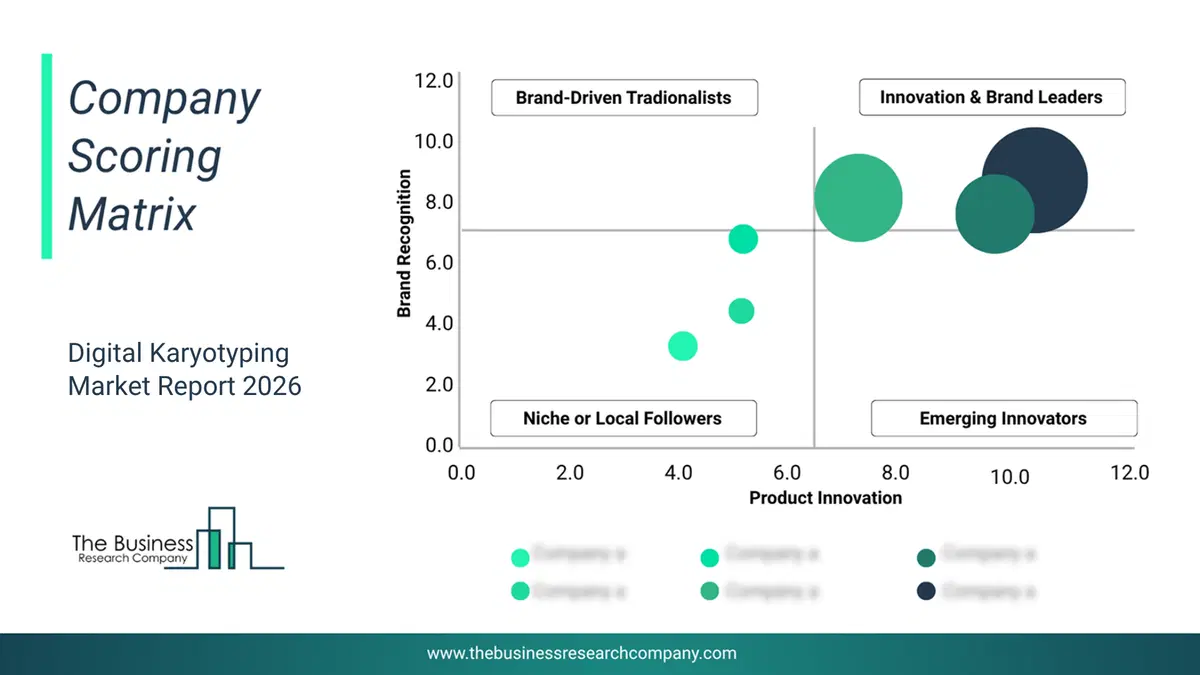
This chart maps companies by product innovation and brand strength, with bubble size indicating relative revenue, helping identify market leaders, challengers, and niche players. This is an illustrative chart; the full report provides a complete and accurate competitive analysis.
Global Digital Karyotyping Market Trends and Insights
Major companies operating in the digital karyotyping market are prioritizing technological innovation, with a particular focus on third-generation chromosomal karyotyping systems to strengthen their competitive edge. These advanced platforms leverage high-resolution imaging, automated scanning, and digital analysis to detect and classify chromosomal abnormalities with greater accuracy, speed, and reduced manual intervention, thereby enhancing diagnostic reliability and throughput in genetic testing. For example, in April 2023, Hangzhou Diagens, a China-based biotechnology company, introduced the MetaSight G200, a system capable of capturing intelligent metaphase images and scanning a slide in just four minutes. It is equipped with the world’s first chromosome defect recognition module that automatically labels abnormalities, alongside a contactless magnetic levitation motor and zigzag electric scanning platform to ensure stability.What Are Latest Mergers And Acquisitions In The Digital Karyotyping Market?
In April 2025, Clean Cells, a France-based pharmaceutical company, acquired Karyologic for an undisclosed amount. With this acquisition, Clean Cells strategically expanded to expand its presence in the us while enhancing its portfolio of advanced cytogenetic and digital karyotyping services for research and cell therapy development. Karyologic is a US-based company specializes in digital karyotyping and cytogenetic quality-control testing, supporting clients across research and therapeutic applications.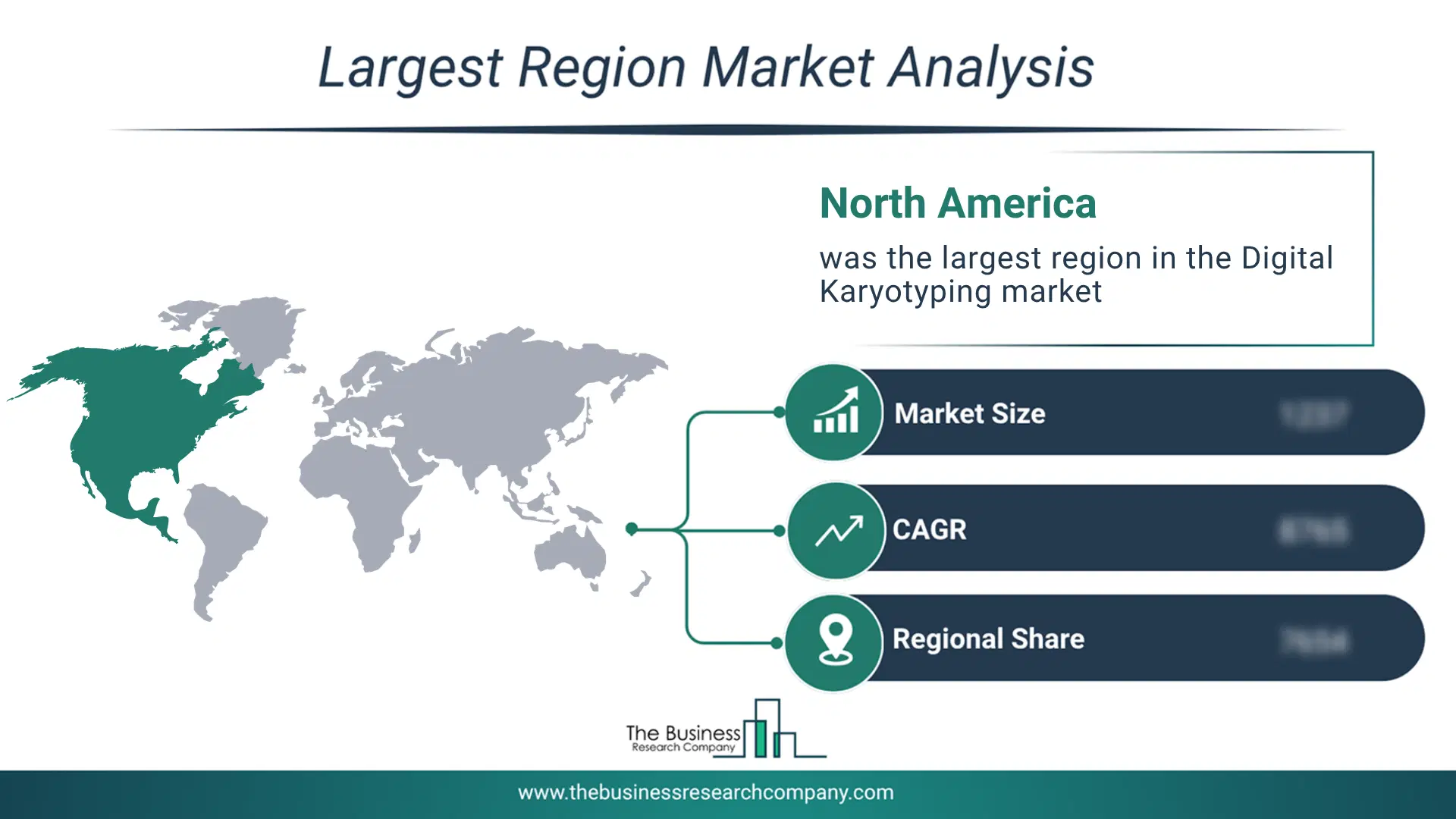
Regional Outlook
North America was the largest region in the digital karyotyping market in 2025. Asia-Pacific is expected to be the fastest-growing region in the forecast period. The regions covered in this market report are Asia-Pacific, South East Asia, Western Europe, Eastern Europe, North America, South America, Middle East, Africa. The countries covered in this market report are Australia, Brazil, China, France, Germany, India, Indonesia, Japan, Taiwan, Russia, South Korea, UK, USA, Canada, Italy, SpainWhat Defines the Digital Karyotyping Market?
The digital karyotyping market comprises revenues generated from services such as detailed chromosomal analysis, detection of copy number variations, genome mapping, and identification of genetic anomalies. Values in this market are ‘factory gate’ values, that is, the value of goods sold by the manufacturers or creators of the goods, whether to other entities (including downstream manufacturers, wholesalers, distributors, and retailers) or directly to end customers. The value of goods in this market includes related services sold by the creators of the goods.How is Market Value Defined and Measured?
The market value is defined as the revenues that enterprises gain from the sale of goods and/or services within the specified market and geography through sales, grants, or donations in terms of the currency (in USD unless otherwise specified). The revenues for a specified geography are consumption values that are revenues generated by organizations in the specified geography within the market, irrespective of where they are produced. It does not include revenues from resales along the supply chain, either further along the supply chain or as part of other products.
This chart presents market attractiveness based on a quantitative evaluation of growth, competition, strategic alignment, and risk, offering a clear view of opportunity areas for decision-making. This chart is for illustrative purposes; the full report contains the complete analysis.

This chart highlights the Total Addressable Market (TAM) by estimating the maximum revenue opportunity using an assumption-driven approach, supporting strategic planning and opportunity sizing across markets. The chart is illustrative; the full report provides a more comprehensive analysis.
What Key Data and Analysis Are Included in the Digital Karyotyping Market Report 2026?
The digital karyotyping market research report is one of a series of new reports from The Business Research Company that provides market statistics, including industry global market size, regional shares, competitors with the market share, detailed market segments, market trends and opportunities, and any further data you may need to thrive in the digital karyotyping industry. The market research report delivers a complete perspective of everything you need, with an in-depth analysis of the current and future state of the industry.Digital Karyotyping Market Report Forecast Analysis
| Report Attribute | Details |
|---|---|
| Market Size Value In 2026 | $1.42 billion |
| Revenue Forecast In 2030 | $2.09 billion |
| Growth Rate | CAGR of 10.1% from 2026 to 2030 |
| Base Year For Estimation | 2025 |
| Actual Estimates/Historical Data | 2020-2025 |
| Forecast Period | 2026 - 2030 |
| Market Representation | Revenue in USD Billion and CAGR from 2026 to 2030 |
| Segments Covered | Product Type, Application, End-User |
| Regional Scope | Asia-Pacific, Western Europe, Eastern Europe, North America, South America, Middle East, Africa |
| Country Scope | The countries covered in the report are Australia, Brazil, China, France, Germany, India, Indonesia, Japan, Taiwan, Russia, South Korea, UK, USA, Canada, Italy, Spain. |
| Key Companies Profiled | Thermo Fisher Scientific, Corewell Health Laboratory, Eurofins Scientific, Agilent Technologies, Bio-Rad Laboratories Inc., Natera Inc., BGI Genomics Co. Ltd., PerkinElmer Inc., Oxford Nanopore Technologies, Genasis, Personal Genome Diagnostics Inc., DSS Imagetech, MetaSystems, Applied Spectral Imaging (ASI), Bioview, ArgusSoft, Ibex Medical Analytics, KaryoLogic Inc., Cyto Vision, Beijing Abaco Biotechnology |
| Customization Scope | Request for Customization |
| Pricing And Purchase Options | Explore Purchase Options |