
Electrolyzers Market Report 2026
Global Outlook – By Product (Alkaline Electrolyzer, PEM Electrolyzer, Solid Oxide Electrolyzers), By Capacity (Less than 500 kW, 500 kW to 2 MW, Above 2 MW), By Application (Power Plants, Steel Plants, Electronics And Photovoltaics, Industrial Gases, Energy Storage or Fueling for FCEV's, Power to Gas, Other Applications) – Market Size, Trends, Strategies, and Forecast to 2030
Electrolyzers Market Overview
• Electrolyzers market size has reached to $0.85 billion in 2025 • Expected to grow to $2.2 billion in 2030 at a compound annual growth rate (CAGR) of 20.6% • Growth Driver: Electrolyzer Market Surges As Green Electricity Production Soars Paving The Way To A Sustainable Energy Future • Market Trend: Pioneering The Hydrogen Revolution Bloom Energy's Solid Oxide Electrolyzer Sets New Industry Standards • Western Europe was the largest region in 2025 and Asia-Pacific is the fastest growing region.What Is Covered Under Electrolyzers Market?
Electrolyzes refer to a device that uses electricity to separate the hydrogen and oxygen molecules that make up water to generate hydrogen through a chemical reaction known as electrolysis. It is used for process that helps to separates water into hydrogen and oxygen. The main products in electrolyzers are alkaline electrolyzer, PEM electrolyzer, and solid oxide electrolyzer. Alkaline electrolyzers perform at a mean temperature of 80–160 °C. The capacities of electrolyzers include less than 500 KW, 500 KW to 2 MW, and above 2 MW and the various applications include power plants, steel plants, electronics and photovoltaics, industrial gases, energy storage, or fueling for FCEV, power to gas, and others.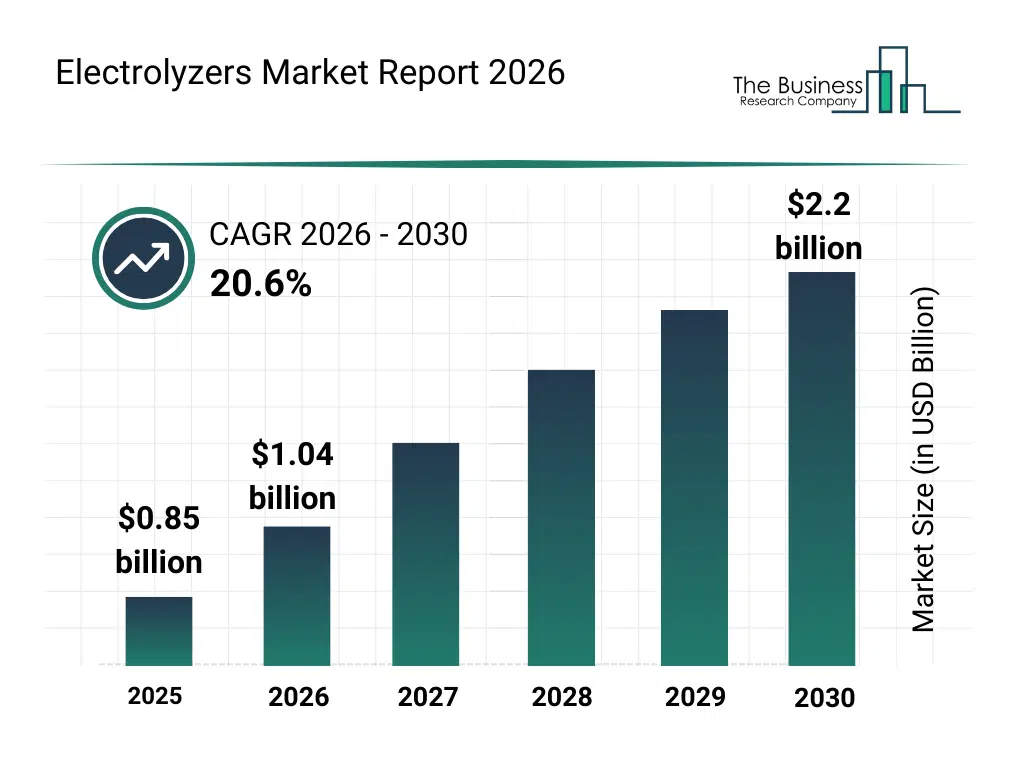
What Is The Electrolyzers Market Size and Share 2026?
The electrolyzers market size has grown exponentially in recent years. It will grow from $0.85 billion in 2025 to $1.04 billion in 2026 at a compound annual growth rate (CAGR) of 21.5%. The growth in the historic period can be attributed to government support for hydrogen initiatives, early deployment in industrial gas production, increasing pilot green hydrogen projects, growth in renewable power generation, advancements in electrolysis technologies.What Is The Electrolyzers Market Growth Forecast?
The electrolyzers market size is expected to see exponential growth in the next few years. It will grow to $2.2 billion in 2030 at a compound annual growth rate (CAGR) of 20.6%. The growth in the forecast period can be attributed to acceleration of hydrogen economy development, increasing investments in green steel and chemicals, expansion of hydrogen fueling infrastructure, declining renewable energy costs, continued innovation in high-efficiency electrolyzers. Major trends in the forecast period include scaling of green hydrogen production capacity, rising adoption of pem and solid oxide electrolyzers, integration of renewable energy with electrolysis systems, expansion of large-scale industrial hydrogen projects, enhanced focus on electrolyzer efficiency.Tariff Impact On Electrolyzers Market
Tariffs are impacting the electrolyzers market by increasing costs of imported membranes, catalysts, power electronics, compressors, and balance-of-plant components essential for electrolysis systems. Regions such as Europe, North America, and parts of Asia-Pacific are most affected due to dependence on specialized imported materials, particularly precious metals and advanced membranes, which has raised project capital costs. These tariffs have slowed deployment of large-scale hydrogen projects in cost-sensitive markets. However, tariffs are supporting domestic electrolyzer manufacturing, local catalyst development, and long-term supply chain resilience for green hydrogen technologies.
Global Electrolyzers Market Segmentation
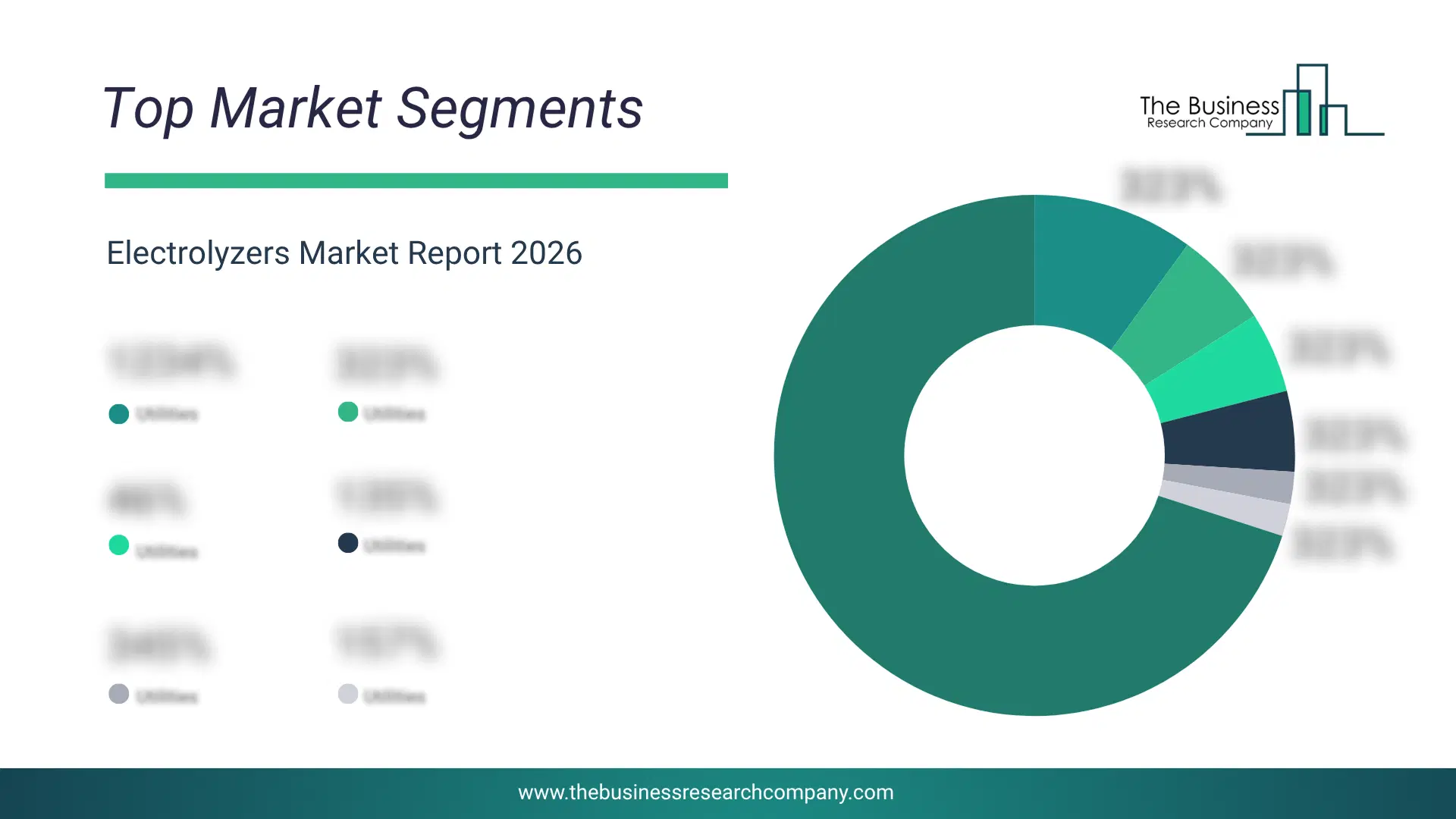
1) By Product: Alkaline Electrolyzer, PEM Electrolyzer, Solid Oxide Electrolyzers 2) By Capacity: Less than 500 kW, 500 kW to 2 MW, Above 2 MW 3) By Application: Power Plants, Steel Plants, Electronics And Photovoltaics, Industrial Gases, Energy Storage or Fueling for FCEV's, Power to Gas, Other Applications Subsegments: 1) By Alkaline Electrolyzer: Pressurized Alkaline Electrolyzers, Atmospheric Alkaline Electrolyzers 2) By PEM (Proton Exchange Membrane) Electrolyzer: Standard PEM Electrolyzers, High-Temperature PEM Electrolyzers 3) By Solid Oxide Electrolyzers: Planar Solid Oxide Electrolyzers, Tubular Solid Oxide ElectrolyzersWhat Is The Driver Of The Electrolyzers Market?
The increase in the production of green electricity is expected to propel the growth of the electrolyzer market in the coming years. Green electricity, often known as 'green energy' or 'clean electricity,' is energy produced from renewable and ecologically favorable sources. These sources are deemed 'green' because they cause a lower environmental impact and emit fewer greenhouse gases than typical fossil fuel-based power generation. Green power is environmentally friendly and helps to lower the overall carbon impact. Electrolyzers are an important part of the shift to a more environmentally friendly and renewable energy future because they allow for effective storage and exploitation of extra electricity generated by renewable sources while additionally supporting the generation of energy sources with less impact on the environment. For instance, in January 2024, according to the U.S. Energy Information Administration, a US-based agency of federal statistical system, U.S. solar power generation is forecast to jump 75%, expanding from 163 billion kWh in 2023 to 286 billion kWh by 2025. During this timeframe, wind power generation is anticipated to increase by 11%, rising from 430 billion kWh in 2023 to 476 billion kWh in 2025. Therefore, the increase in the production of green electricity is driving the electrolyzer industry.Key Players In The Global Electrolyzers Market
Major companies operating in the electrolyzers market are Nel ASA, Asahi Kasei Corporation, Hydrogenics, Siemens AG, McPhy Energy S.A., ITM Power PLC, Erredue SpA, Enapter, Next Hydrogen Solutions Inc., Tianjin Continental Hydrogen Equipment Co. Ltd., Plug Power Inc., H-TEC SYSTEMS GmbH, Hysata Pty. Ltd., SunGreenH2, Hydrogen Pro, Iberlyzer, Bloom Energy, Cummins Inc., Green Hydrogen Systems A/S, Topsoe A/S, John Cockerill, LONGi Green Energy Technology Co. Ltd., Ohmium International Inc., Sunfire GmbH, Sungrow Power Supply Co. Ltd., thyssenkrupp nucera AG & Co KGaA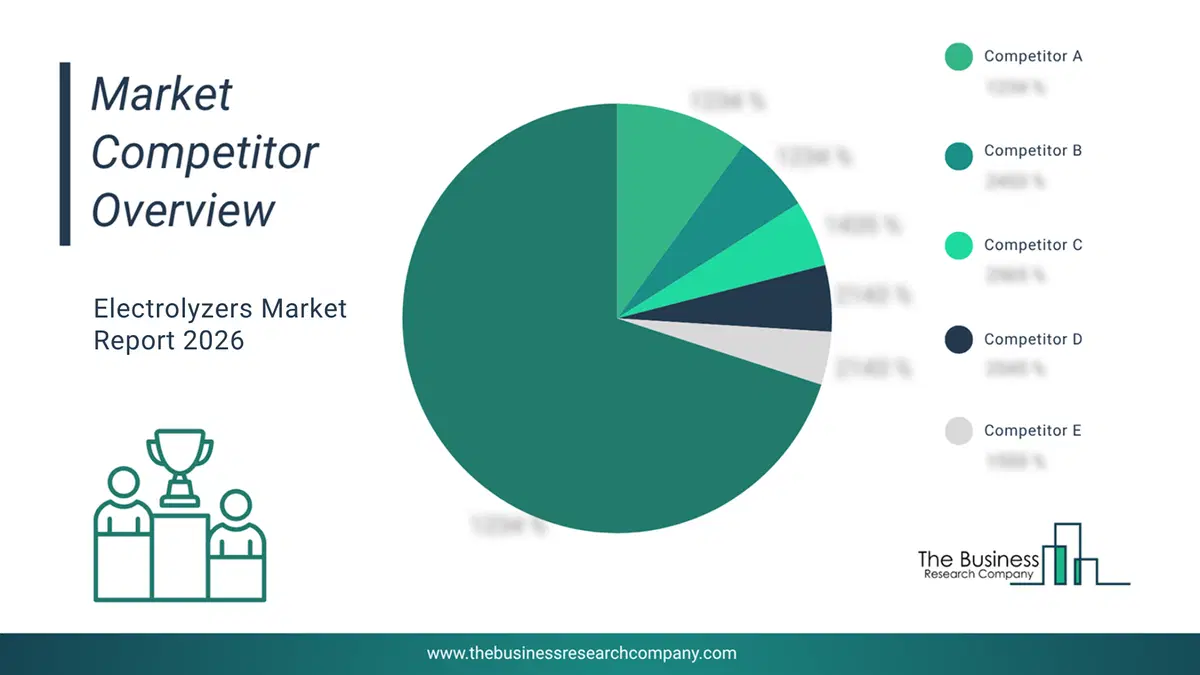
This chart is for illustrative purposes; the full report includes a detailed competitor analysis and comprehensive overview of the top 10 companies in the market.
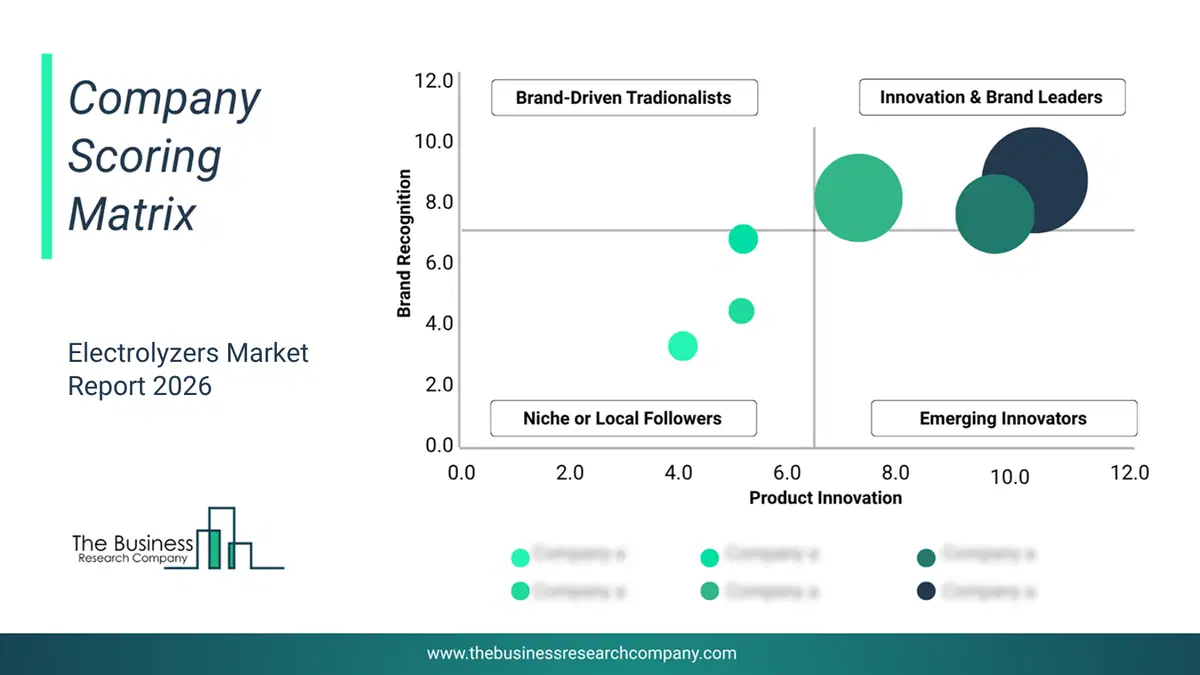
This chart maps companies by product innovation and brand strength, with bubble size indicating relative revenue, helping identify market leaders, challengers, and niche players. This is an illustrative chart; the full report provides a complete and accurate competitive analysis.
Global Electrolyzers Market Trends and Insights
Major companies operating in the electrolyzer market are focusing on technological innovations such as green hydrogen to enhance efficiency, reduce carbon emissions, and support the transition to a sustainable energy ecosystem. Green hydrogen refers to hydrogen gas produced through the electrolysis of water using renewable energy sources, such as solar or wind power, resulting in minimal or zero carbon emissions. For instance, in September 2024, Hygreen Energy, a US-based clean energy company, introduced its first anion exchange membrane (AEM) electrolyzer system. The launch aims to provide scalable, cost-effective hydrogen production solutions while advancing the adoption of clean energy technologies globally. The AEM electrolyzer system features modular design and high durability, enabling flexible deployment for both industrial and renewable energy applicationsWhat Are Latest Mergers And Acquisitions In The Electrolyzers Market?
In July 2025, Battolyser Systems, a Netherlands-based clean energy technology company, merged with VDL Hydrogen Systems to develop the first fully flexible industrial electrolyser. The collaboration aims to accelerate the production of green hydrogen, enhance the scalability and efficiency of electrolyser technology for industrial applications, and support the transition to sustainable energy solutions. VDL Hydrogen Systems is a Netherlands-based electrolyzers company specializes in designing and manufacturing advanced hydrogen production and storage systems.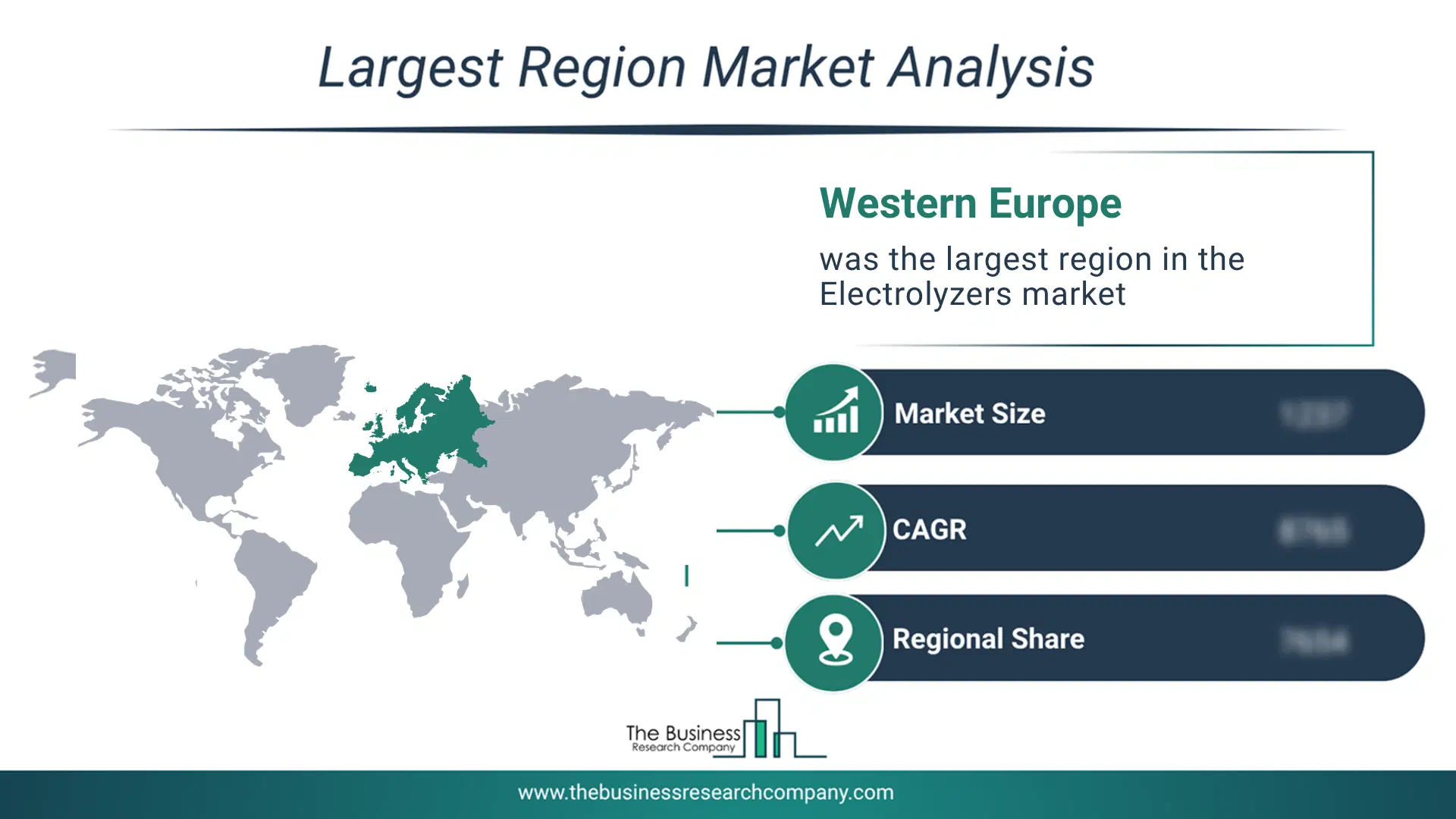
Regional Outlook
Western Europe was the largest region in the electrolyzers market in 2025. Asia-Pacific is expected to be the fastest-growing region in the electrolyzers market during the forecast period. The regions covered in this market report are Asia-Pacific, South East Asia, Western Europe, Eastern Europe, North America, South America, Middle East, Africa The countries covered in this market report are Australia, Brazil, China, France, Germany, India, Indonesia, Japan, Taiwan, Russia, South Korea, UK, USA, Canada, Italy, Spain.What Defines the Electrolyzers Market?
The electrolyzes market consists of sales of direct methanol fuel cell, solid oxide fuel cells (SOFC). Values in this market are ‘factory gate’ values, that is the value of goods sold by the manufacturers or creators of the goods, whether to other entities (including downstream manufacturers, wholesalers, distributors and retailers) or directly to end customers. The value of goods in this market includes related services sold by the creators of the goods.How is Market Value Defined and Measured?
The market value is defined as the revenues that enterprises gain from the sale of goods and/or services within the specified market and geography through sales, grants, or donations in terms of the currency (in USD unless otherwise specified). The revenues for a specified geography are consumption values that are revenues generated by organizations in the specified geography within the market, irrespective of where they are produced. It does not include revenues from resales along the supply chain, either further along the supply chain or as part of other products.
This chart presents market attractiveness based on a quantitative evaluation of growth, competition, strategic alignment, and risk, offering a clear view of opportunity areas for decision-making. This chart is for illustrative purposes; the full report contains the complete analysis.

This chart highlights the Total Addressable Market (TAM) by estimating the maximum revenue opportunity using an assumption-driven approach, supporting strategic planning and opportunity sizing across markets. The chart is illustrative; the full report provides a more comprehensive analysis.
What Key Data and Analysis Are Included in the Electrolyzers Market Report 2026?
The electrolyzers market research report is one of a series of new reports from The Business Research Company that provides market statistics, including industry global market size, regional shares, competitors with the market share, detailed market segments, market trends and opportunities, and any further data you may need to thrive in the electrolyzers industry. The market research report delivers a complete perspective of everything you need, with an in-depth analysis of the current and future state of the industry.Electrolyzers Market Report Forecast Analysis
| Report Attribute | Details |
|---|---|
| Market Size Value In 2026 | $1.04 billion |
| Revenue Forecast In 2030 | $2.2 billion |
| Growth Rate | CAGR of 20.6% from 2026 to 2030 |
| Base Year For Estimation | 2025 |
| Actual Estimates/Historical Data | 2020-2025 |
| Forecast Period | 2026 - 2030 |
| Market Representation | Revenue in USD Billion and CAGR from 2026 to 2030 |
| Segments Covered | Product, Capacity, Application |
| Regional Scope | Asia-Pacific, Western Europe, Eastern Europe, North America, South America, Middle East, Africa |
| Key Companies Profiled | Nel ASA, Asahi Kasei Corporation, Hydrogenics, Siemens AG, McPhy Energy S.A., ITM Power PLC, Erredue SpA, Enapter, Next Hydrogen Solutions Inc., Tianjin Continental Hydrogen Equipment Co. Ltd., Plug Power Inc., H-TEC SYSTEMS GmbH, Hysata Pty. Ltd., SunGreenH2, Hydrogen Pro, Iberlyzer, Bloom Energy, Cummins Inc., Green Hydrogen Systems A/S, Topsoe A/S, John Cockerill, LONGi Green Energy Technology Co. Ltd., Ohmium International Inc., Sunfire GmbH, Sungrow Power Supply Co. Ltd., thyssenkrupp nucera AG & Co KGaA |
| Customization Scope | Request for Customization |
| Pricing And Purchase Options | Explore Purchase Options |