
Energy Logistics Market Report 2026
Global Outlook – By Mode Of Transport (Railways, Airways, Roadways, Waterways), By Application (Oil And Gas, Renewable Energy, Power Generation, Energy Mining), By End-User (Government Sector, Private Sector) – Market Size, Trends, Strategies, and Forecast to 2030
Energy Logistics Market Overview
• Energy Logistics market size has reached to $538.24 billion in 2025 • Expected to grow to $1004.71 billion in 2030 at a compound annual growth rate (CAGR) of 13.2% • Growth Driver: Emerging Markets Fueling Growth in Energy Logistics Market • Market Trend: Blockchain-Powered Energy Logistics Solution Revolutionizes Industry • Asia-Pacific was the largest region in 2025.What Is Covered Under Energy Logistics Market?
Energy logistics refers to the management, transportation, and distribution of energy resources, including oil, natural gas, and electricity. It encompasses the planning, coordination, and execution of processes to ensure the efficient movement of energy products from production facilities to end-users or storage facilities. The main types of transport in energy logistics are railways, airways, roadways, and waterways. Railway transportation refers to the movement of passengers and goods via trains on a network of railway tracks. It is used in various applications such as oil and gas, renewable energy, power generation, and energy mining, and its end-users are the government sector and the private sector.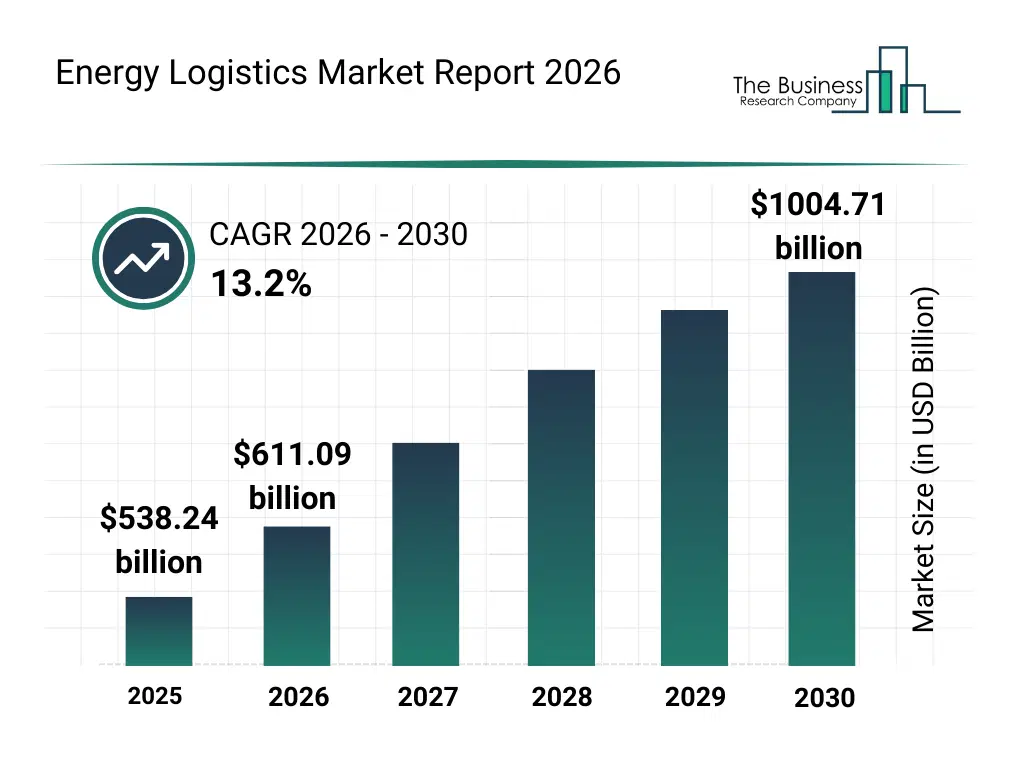
What Is The Energy Logistics Market Size and Share 2026?
The energy logistics market size has grown rapidly in recent years. It will grow from $538.24 billion in 2025 to $611.09 billion in 2026 at a compound annual growth rate (CAGR) of 13.5%. The growth in the historic period can be attributed to global oil and gas trade growth, pipeline and tanker infrastructure expansion, demand for reliable energy supply, government energy projects, fossil fuel dependency.What Is The Energy Logistics Market Growth Forecast?
The energy logistics market size is expected to see rapid growth in the next few years. It will grow to $1004.71 billion in 2030 at a compound annual growth rate (CAGR) of 13.2%. The growth in the forecast period can be attributed to growth of renewable energy distribution, smart grid expansion, digital tracking adoption, energy security initiatives, cross-border energy trade. Major trends in the forecast period include optimization of energy transportation networks, adoption of digital logistics platforms, growth of multimodal energy transport, expansion of renewable energy logistics, focus on supply chain resilience.
Global Energy Logistics Market Segmentation
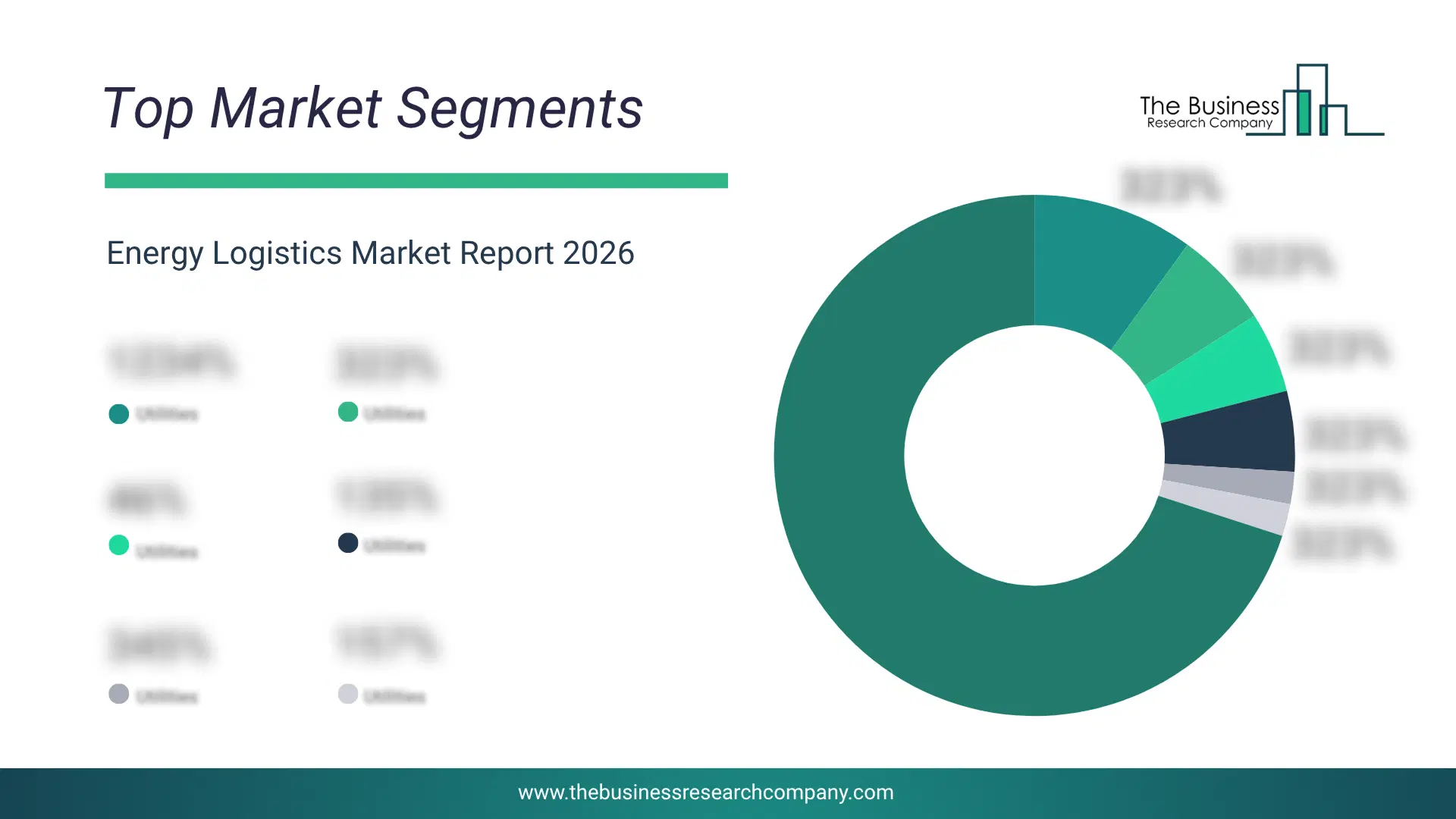
1) By Mode Of Transport: Railways, Airways, Roadways, Waterways 2) By Application: Oil And Gas, Renewable Energy, Power Generation, Energy Mining 3) By End-User: Government Sector, Private Sector Subsegments: 1) By Railways: Freight Trains, Tank Wagons, Container Trains 2) By Airways: Cargo Aircraft, Air Freight 3) By Roadways: Tanker Trucks, Fuel Delivery Trucks 4) By Waterways: Bulk Carriers, Tanker Ships, Container ShipsWhat Is The Driver Of The Energy Logistics Market?
The growing energy consumption in emerging markets is expected to propel the growth of the energy logistics market going forward. Growing energy consumption indicates an increase in the total amount of energy used within a specific geographic area, such as a country, region, or globally. Energy logistics are used in the transportation sector for management, transportation, and distribution of energy resources, where energy is consumed for moving people and goods to support economic growth, improve living standards, and mitigate environmental impacts. For instance, in April 2023, according to a report published by the United States Energy Information Administration (EIA), a US-based statistical agency, between 2022 and 2050, residential consumption of purchased electricity is projected to rise by approximately 14% to 22%, reaching 5.9 to 6.3 quads, while electricity purchased for transportation, driven by increased adoption of electric vehicles (EVs), is expected to surge from 0.1 quads in 2022 to between 0.6 and 1.3 quads in 2050, marking a substantial 900% to 2,000% increase across all scenarios. Therefore, the rise in energy consumption in emerging markets is driving the growth of the energy logistics industry.Key Players In The Global Energy Logistics Market
Major companies operating in the energy logistics market report include Saudi Aramco, Sinopec Group, PetroChina Company Limited, Exxon Mobil Corporation, Royal Dutch Shell plc, TotalEnergies SE, BP plc., Chevron Corporation, Phillips 66, Gazprom PJSC, Eni S.p.A., Energy Transfer LP, Rosneft Oil Company, CNOOC Limited, Enterprise Products Partners L.P., Qatar Petroleum, Enbridge Inc., Occidental Petroleum Corporation, Kinder Morgan, Inc., Williams Companies Inc.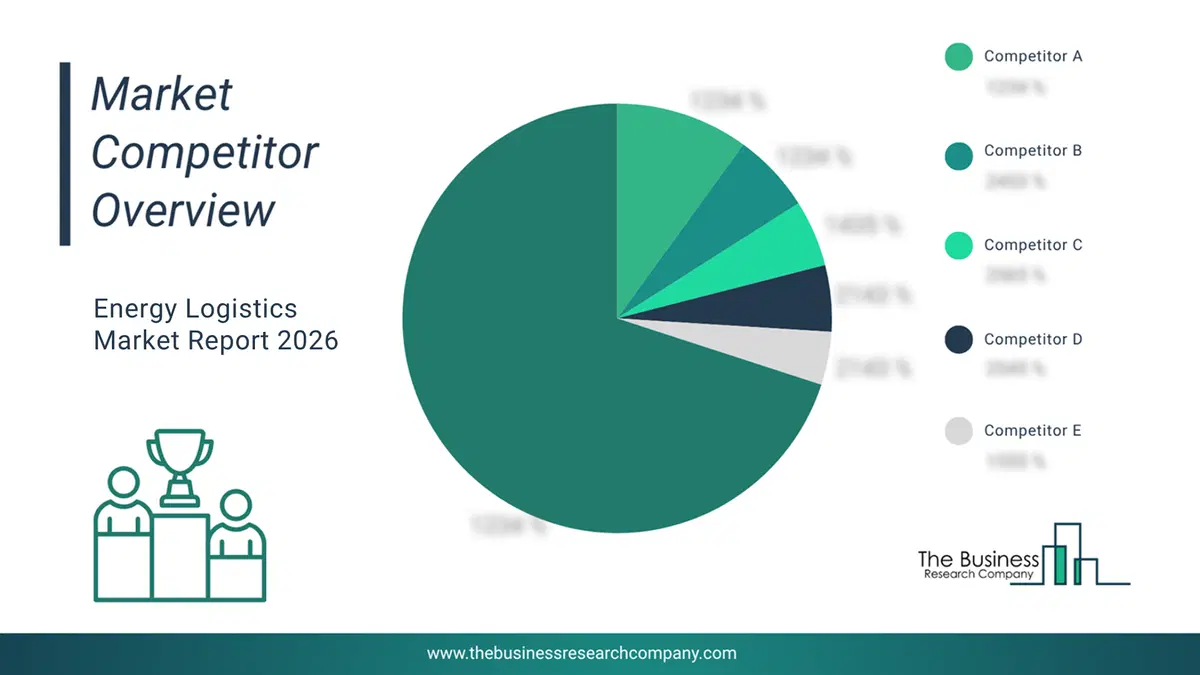
This chart is for illustrative purposes; the full report includes a detailed competitor analysis and comprehensive overview of the top 10 companies in the market.
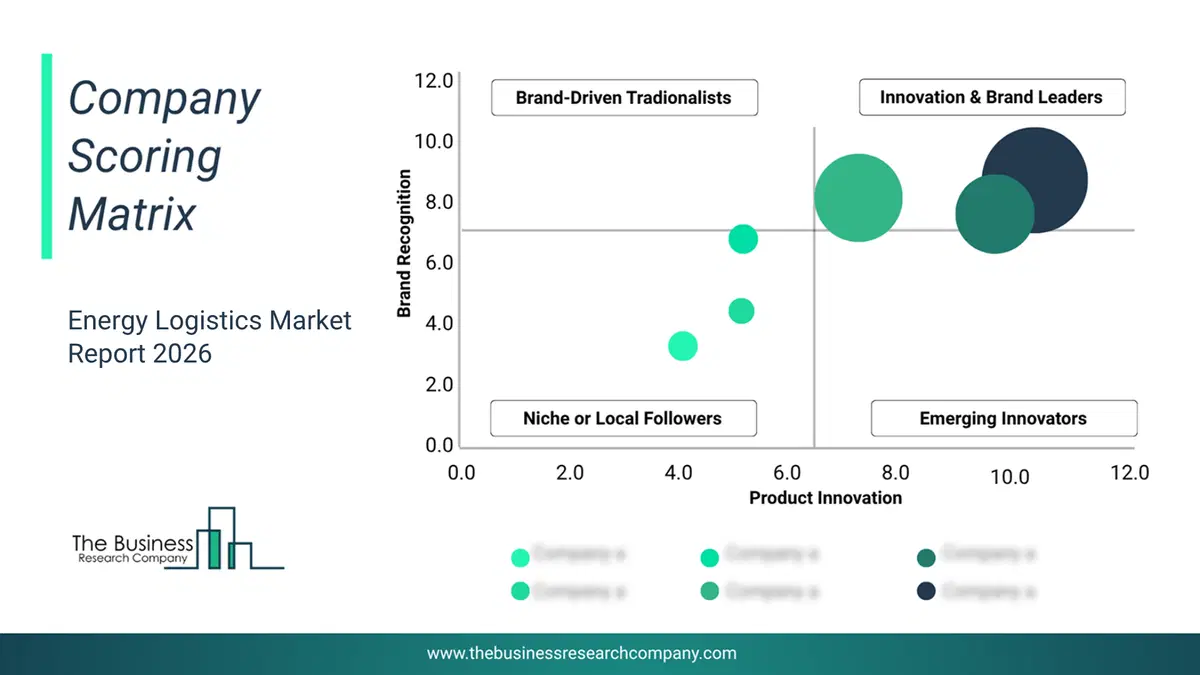
This chart maps companies by product innovation and brand strength, with bubble size indicating relative revenue, helping identify market leaders, challengers, and niche players. This is an illustrative chart; the full report provides a complete and accurate competitive analysis.
Global Energy Logistics Market Trends and Insights
Major companies operating in the energy logistics market are concentrating on the development of automation solution, such as the commodity transport web3 field automation solution, to meet regulatory requirements, address environmental concerns, and satisfy customer demands. The solution automates transport process, reducing manual validation, slow communication, and discrepancies. For instance, in October 2023, Blockchain for Energy (B4E), a US-based non-profit organization, launched a blockchain energy logistics solution called commodity transport web3 field automation. This solution is exclusively available through the B4E network and platform. The solution leverages blockchain smart contracts to validate sensors, GPS, and other IoT data to digitize and automate previously manual processes, and it is flexible enough to support various types of commodities and requirements in different regions.What Are Latest Mergers And Acquisitions In The Energy Logistics Market?
In August 2023, Endless LLP, a UK-based private equity company, acquired ASCO Group for an undisclosed amount. Through this acquisition, Endless aims to make a strategic move to gain exposure to the growing energy transition market while leveraging ASCO's existing strengths and potential for further development. ASCO Group is a UK-based provider of energy logistics services.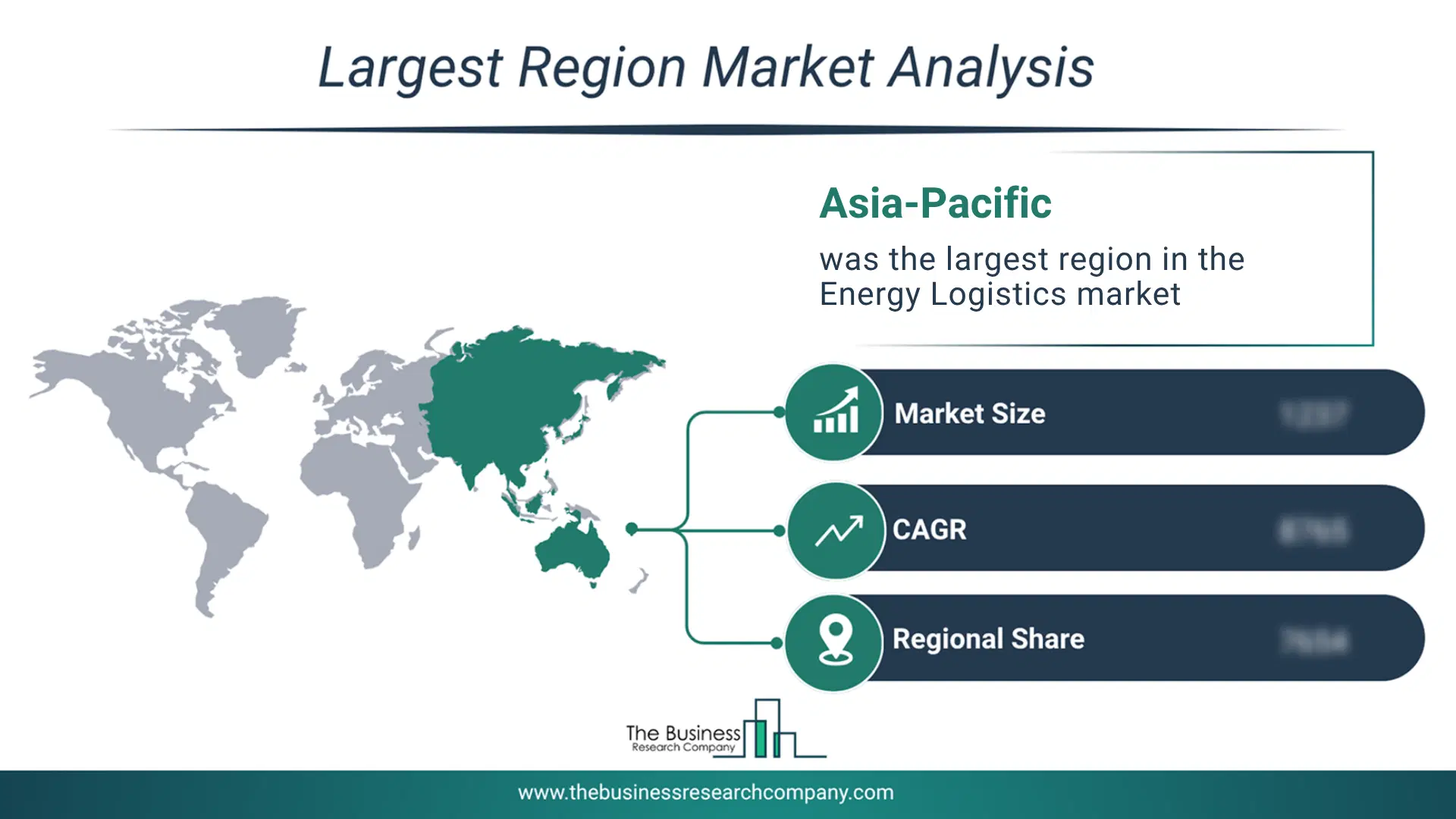
Regional Outlook
Asia-Pacific was the largest region in the energy logistics market in 2025. The regions covered in this market report include Asia-Pacific, South East Asia, Western Europe, Eastern Europe, North America, South America, Middle East, Africa. The countries covered in this market report include Australia, Brazil, China, France, Germany, India, Indonesia, Japan, Taiwan, Russia, South Korea, UK, USA, Canada, Italy, SpainWhat Defines the Energy Logistics Market?
The energy logistics market consists of revenues earned by entities by providing services such as energy management services and solutions aimed at optimizing the transportation, storage, and distribution of energy resources. The market value includes the value of related goods sold by the service provider or included within the service offering. The delta robots market also includes sales of transportation equipment, monitoring and control systems, safety and security equipment, and storage tank tools. Values in this market are ‘factory gate’ values, that is the value of goods sold by the manufacturers or creators of the goods, whether to other entities (including downstream manufacturers, wholesalers, distributors, and retailers) or directly to end customers. The value of goods in this market includes related services sold by the creators of the goods.How is Market Value Defined and Measured?
The market value is defined as the revenues that enterprises gain from the sale of goods and/or services within the specified market and geography through sales, grants, or donations in terms of the currency (in USD unless otherwise specified). The revenues for a specified geography are consumption values that are revenues generated by organizations in the specified geography within the market, irrespective of where they are produced. It does not include revenues from resales along the supply chain, either further along the supply chain or as part of other products.
This chart presents market attractiveness based on a quantitative evaluation of growth, competition, strategic alignment, and risk, offering a clear view of opportunity areas for decision-making. This chart is for illustrative purposes; the full report contains the complete analysis.

This chart highlights the Total Addressable Market (TAM) by estimating the maximum revenue opportunity using an assumption-driven approach, supporting strategic planning and opportunity sizing across markets. The chart is illustrative; the full report provides a more comprehensive analysis.
What Key Data and Analysis Are Included in the Energy Logistics Market Report 2026?
The energy logistics market research report is one of a series of new reports from The Business Research Company that provides market statistics, including industry global market size, regional shares, competitors with the market share, detailed market segments, market trends and opportunities, and any further data you may need to thrive in the energy logistics industry. The market research report delivers a complete perspective of everything you need, with an in-depth analysis of the current and future state of the industry.Energy Logistics Market Report Forecast Analysis
| Report Attribute | Details |
|---|---|
| Market Size Value In 2026 | $611.09 billion |
| Revenue Forecast In 2030 | $1004.71 billion |
| Growth Rate | CAGR of 13.5% from 2026 to 2030 |
| Base Year For Estimation | 2025 |
| Actual Estimates/Historical Data | 2020-2025 |
| Forecast Period | 2026 - 2030 - 2030 |
| Market Representation | Revenue in USD Billion and CAGR from 2026 to 2030 |
| Segments Covered | Mode Of Transport, Application, End-User |
| Regional Scope | Asia-Pacific, Western Europe, Eastern Europe, North America, South America, Middle East, Africa |
| Country Scope | The countries covered in the report are Australia, Brazil, China, France, Germany, India, Indonesia, Japan, Taiwan, Russia, South Korea, UK, USA, Canada, Italy, Spain. |
| Key Companies Profiled | Saudi Aramco, Sinopec Group, PetroChina Company Limited, Exxon Mobil Corporation, Royal Dutch Shell plc, TotalEnergies SE, BP plc., Chevron Corporation, Phillips 66, Gazprom PJSC, Eni S.p.A., Energy Transfer LP, Rosneft Oil Company, CNOOC Limited, Enterprise Products Partners L.P., Qatar Petroleum, Enbridge Inc., Occidental Petroleum Corporation, Kinder Morgan, Inc., Williams Companies Inc. |
| Customization Scope | Request for Customization |
| Pricing And Purchase Options | Explore Purchase Options |