
Energy Storage For Grid System Market Report 2026
Global Outlook – By Type (Lithium-Ion Batteries, Flow Batteries, Lead-Acid Batteries, Compressed Air Energy Storage (CAES)), By Technology Type (Electrochemical Energy Storage, Mechanical Energy Storage, Thermal Energy Storage, Electrical Energy Storage), By Ownership Model (Utility-Owned, Third-Party Owned, Customer-Owned), By Duration Of Discharge (Short-Duration Energy Storage, Long-Duration Energy Storage), By Application (Renewable Integration, Frequency Regulation, Peak Shaving And Load Management, Backup Power And Resilience) – Market Size, Trends, Strategies, and Forecast to 2030
Energy Storage For Grid System Market Overview
• Energy Storage For Grid System market size has reached to $15.12 billion in 2025 • Expected to grow to $39.45 billion in 2030 at a compound annual growth rate (CAGR) of 21.2% • Growth Driver: Rising Integration Of Renewable Energy Sources Driving The Growth Of The Market Due To Improved Grid Stability And Renewable Utilization • Market Trend: Development Of Integrated Medium-Voltage Solutions To Enhance Grid Flexibility • North America was the largest region in 2025 and Asia-Pacific is the fastest growing region.Market Gains By 2030 – Top Opportunities By Segment
Market Gain identifies the most promising market opportunities by highlighting the segments or products expected to generate the highest incremental revenue growth over the next five years.
What Is Covered Under Energy Storage For Grid System Market?
Energy storage for grid systems refers to technologies that store electrical energy when supply exceeds demand and deliver it back to the grid when needed. It helps stabilize the power network, supports renewable energy integration, and improves the reliability and efficiency of electricity delivery. The main types of energy storage for grid system are lithium-ion batteries, flow batteries, lead-acid batteries, and compressed air energy storage (CAES). Lithium-Ion Batteries refer to rechargeable electrochemical cells widely used for storing electrical energy in grid systems due to their high energy density and efficiency. These solutions are based on various technology types, including electrochemical energy storage, mechanical energy storage, thermal energy storage, and electrical energy storage, and follow different ownership models, such as utility-owned, third-party owned, and customer-owned. They support multiple durations of discharge, including short-duration energy storage and long-duration energy storage, and are applied across various applications, including renewable integration, frequency regulation, peak shaving and load management, and backup power and resilience.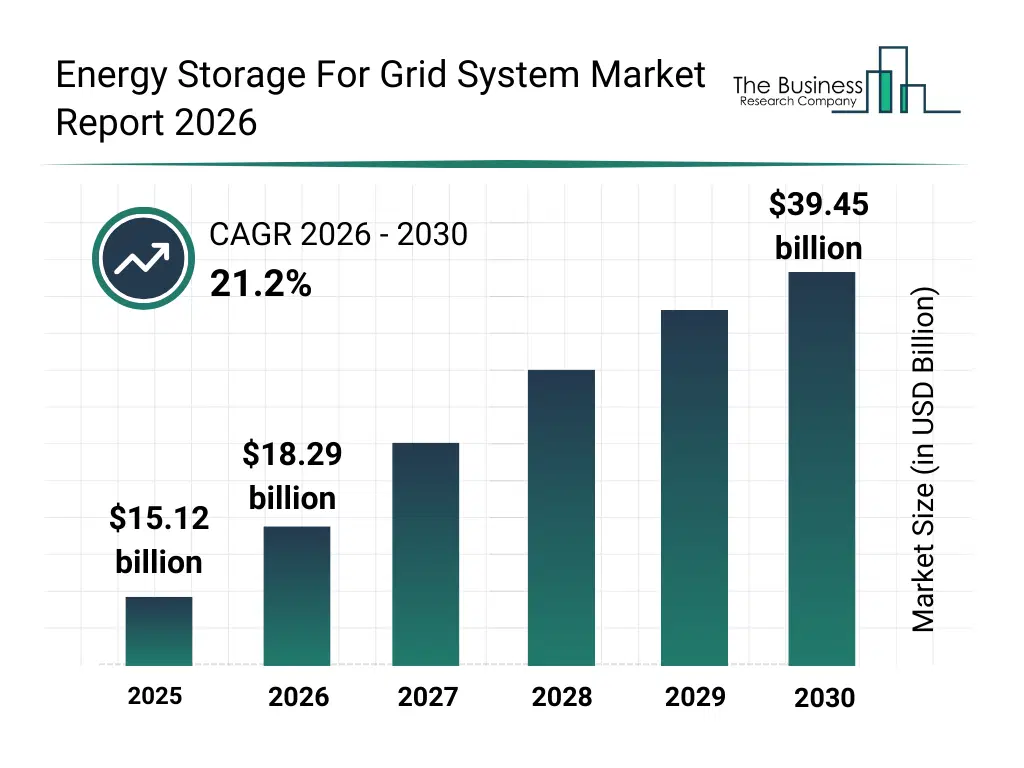
What Is The Energy Storage For Grid System Market Size and Share 2026?
The energy storage for grid system market size has grown exponentially in recent years. It will grow from $15.12 billion in 2025 to $18.29 billion in 2026 at a compound annual growth rate (CAGR) of 21.0%. The growth in the historic period can be attributed to growing renewable energy capacity, high dependence on fossil-fuel power plants, rising frequency regulation needs, limited grid flexibility, increasing power outages and reliability concerns.What Is The Energy Storage For Grid System Market Growth Forecast?
The energy storage for grid system market size is expected to see exponential growth in the next few years. It will grow to $39.45 billion in 2030 at a compound annual growth rate (CAGR) of 21.2%. The growth in the forecast period can be attributed to expansion of renewable energy penetration, adoption of utility-scale lithium-ion and flow batteries, investment in smart grid infrastructure, government incentives for energy storage, development of hybrid Energy Storage Systems. Major trends in the forecast period include grid stabilization solutions, long-duration energy storage adoption, integration with renewable energy sources, advanced power electronics and control systems, demand response enablement.
Global Energy Storage For Grid System Market Segmentation
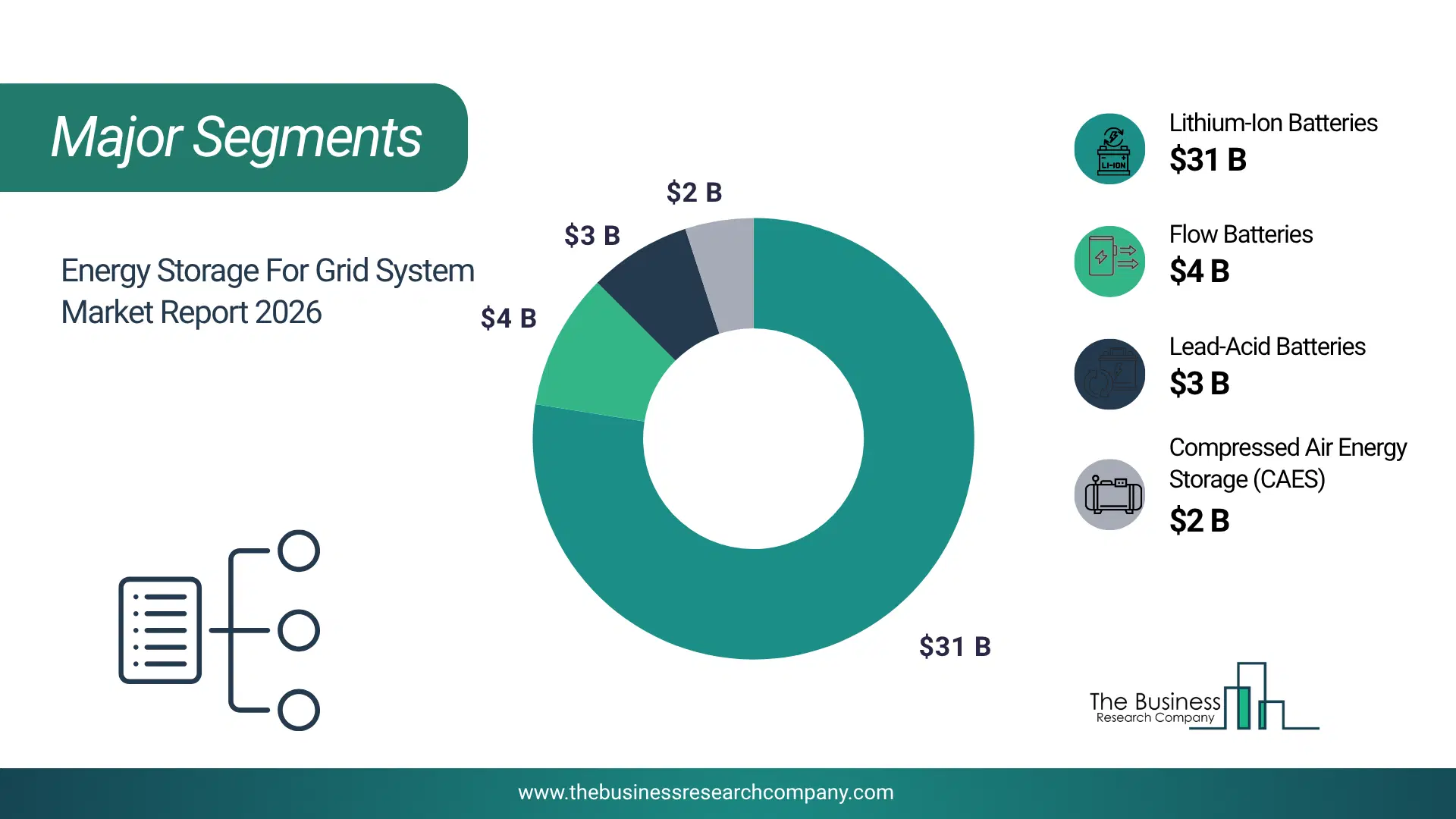
1) By Type: Lithium-Ion Batteries, Flow Batteries, Lead-Acid Batteries, Compressed Air Energy Storage (CAES) 2) By Technology Type: Electrochemical Energy Storage, Mechanical Energy Storage, Thermal Energy Storage, Electrical Energy Storage 3) By Ownership Model: Utility-Owned, Third-Party Owned, Customer-Owned 4) By Duration Of Discharge: Short-Duration Energy Storage, Long-Duration Energy Storage 5) By Application: Renewable Integration, Frequency Regulation, Peak Shaving And Load Management, Backup Power And Resilience Subsegments: 1) By Lithium-Ion Batteries: Lithium Iron Phosphate Batteries, Nickel Manganese Cobalt Batteries, Lithium Titanate Batteries 2) By Flow Batteries: Vanadium Redox Flow Batteries, Zinc Bromine Flow Batteries, Iron Flow Batteries 3) By Lead-Acid Batteries: Flooded Lead Acid Batteries, Absorbent Glass Mat Batteries, Gel Lead Acid Batteries 4) By Compressed Air Energy Storage (CAES): Diabatic Compressed Air Energy Storage, Adiabatic Compressed Air Energy Storage, Isothermal Compressed Air Energy Storage The top segments in the energy storage for grid system market will be: • Lithium-Ion Batteries will reach $31.15 Billion by 2030. • Flow Batteries will reach $3.65 Billion by 2030. • Lead-Acid Batteries will reach $2.8 Billion by 2030. • Compressed Air Energy Storage (CAES) will reach $2.16 Billion by 2030.What Is The Driver Of The Energy Storage For Grid System Market?
The rising integration of renewable energy sources is expected to propel the growth of the energy storage for grid system market going forward. Renewable energy is energy generated from natural resources that are replenished naturally and sustainably, such as sunlight, wind, water, geothermal heat, and biomass, which can be harnessed without depleting the Earth's resources. The rising integration of renewable energy sources is due to growing demand for sustainable power solutions that reduce carbon emissions, enhance energy security, and ensure reliable electricity supply with minimal environmental impact. Energy storage for grid systems supports renewable energy sources by storing excess electricity generated during periods of high renewable output and supplying power during periods of low generation or peak demand, thereby ensuring grid stability and reliability. For instance, in June 2025, according to the United States Energy Information Administration, a US-based environmental investigation agency, in 2024, the United States set a new energy production record of over 103 quadrillion British thermal units, a 1% increase from 2023. Therefore, the rising integration of renewable energy sources is driving the growth of the energy storage for grid system industry.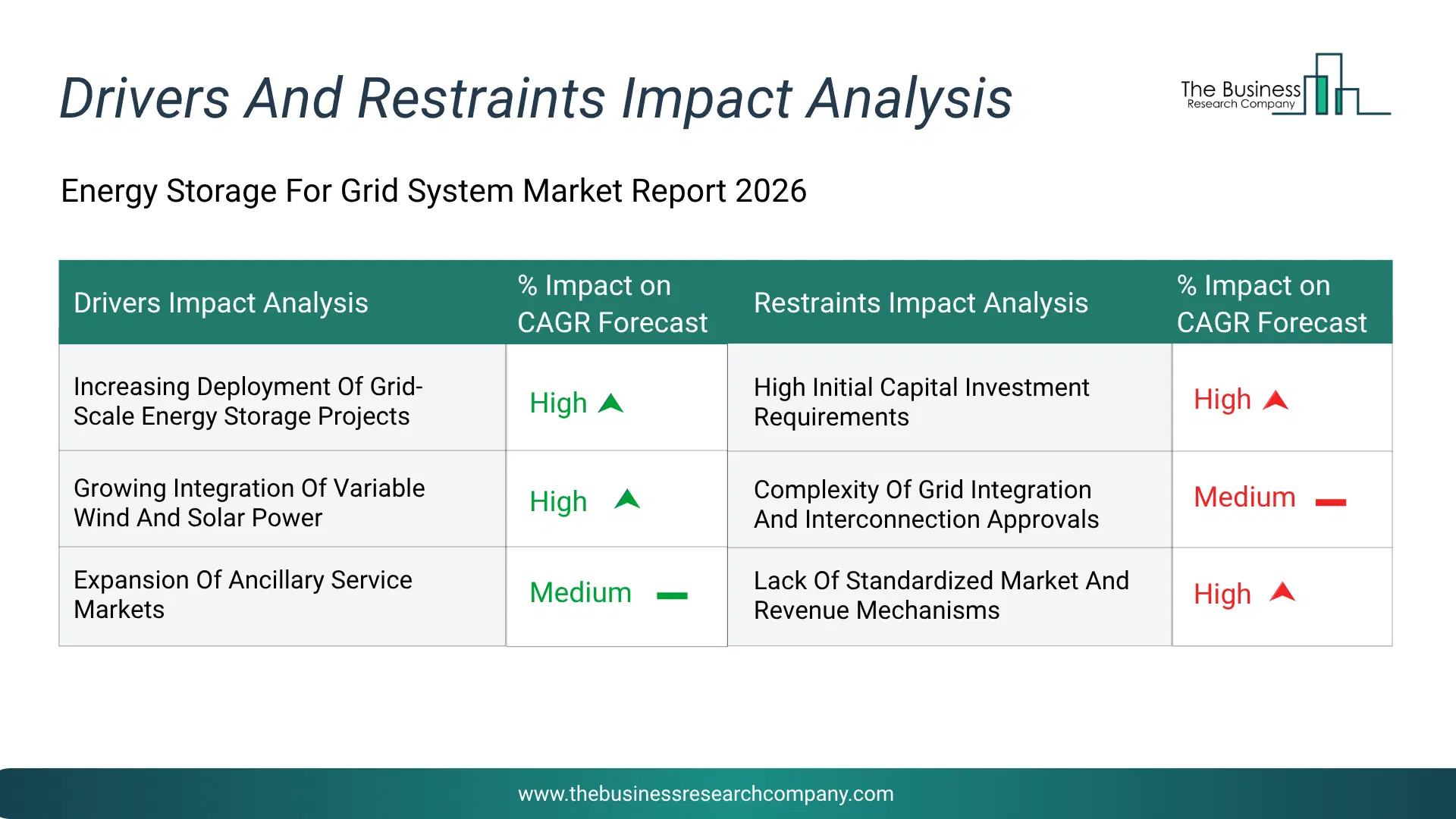
Infographic Chart Showing Key Market Drivers Analysis And Restraints For Energy Storage For Grid System Market
The chart presents an impact analysis of key drivers and restraints, quantifying their relative influence on the market's growth rate and helping assess the balance between growth enablers and limiting factors. This chart offers a high-level perspective; the full report contains more detailed insights.
How Will The Drivers Impact Growth In The Global Energy Storage For Grid System Market?
• Increasing Deployment Of Grid-Scale Energy Storage Projects (High) – During the forecast period, the increasing deployment of grid-scale energy storage projects is expected to become a key growth driver for the energy storage for grid system market by 2030. Utilities and grid operators are accelerating investments in large-capacity storage installations to manage peak demand fluctuations, enhance load balancing, and defer costly grid infrastructure upgrades. These projects enable better utilization of existing transmission and distribution networks while supporting stable power delivery during demand surges. The growing pipeline of utility-scale storage installations across developed and emerging markets is strengthening long-term market expansion. • Growing Integration Of Variable Wind And Solar Power (High) – During the forecast period, the growing integration of variable wind and solar power is expected to emerge as a major factor driving the expansion of the energy storage for grid system market by 2030. The intermittent nature of renewable energy generation requires advanced storage solutions to store excess generation and supply power during periods of low output. Grid operators are increasingly relying on storage systems to smooth power fluctuations, maintain grid frequency, and ensure consistent energy availability. As renewable energy penetration continues to rise globally, the dependency on storage technologies for grid stabilization is expected to intensify. • Expansion Of Ancillary Service Markets (Medium) – During the forecast period, the expansion of ancillary service markets is expected to act as a key growth catalyst for the energy storage for grid system market by 2030. Energy storage systems are increasingly being deployed to provide services such as frequency regulation, voltage support, spinning reserve, and black start capabilities. These services create additional revenue streams for storage operators while improving overall grid performance and reliability. Market liberalization and evolving electricity market structures are enabling wider participation of storage assets in ancillary service markets. As these markets expand globally, the economic viability of storage investments is expected to improve.How Will The Restraints Impact Growth In The Global Energy Storage For Grid System Market?
• High Initial Capital Investment Requirements (High) – During the forecast period, high initial capital investment requirements are restricting the growth of the energy storage for grid system market. Significant upfront costs for battery systems, supporting infrastructure, and installation are creating financial barriers for utilities and project developers, thereby limiting large-scale deployment • Complexity Of Grid Integration And Interconnection Approvals (High) – During the forecast period, complexity of grid integration and interconnection approvals is restricting the growth of the energy storage for grid system market. Lengthy approval processes, technical challenges in grid compatibility, and regulatory hurdles are delaying project timelines and increasing deployment risks • Lack Of Standardized Market And Revenue Mechanisms (Medium) – During the forecast period, lack of standardized market and revenue mechanisms is restricting the growth of the energy storage for grid system market. Absence of clear pricing structures, inconsistent policy support, and uncertainty in revenue streams are discouraging investments and slowing market expansionKey Players In The Global Energy Storage For Grid System Market
Major companies operating in the energy storage for grid system market are Tesla Inc., BYD Company Limited, Siemens AG, Hitachi Energy Ltd., Panasonic Corporation, Contemporary Amperex Technology Co. Limited, GE Renewable Energy, LG Energy Solution Ltd., EVE Energy Co. Ltd., EnerSys, Enphase Energy Inc., Fluence Energy Inc., Energy Vault Holdings Inc., Oriana Power Limited, GSL Energy, sonnen GmbH, Antora Energy Inc., Peak Energy, Form Energy Inc., and EnerVenue Inc.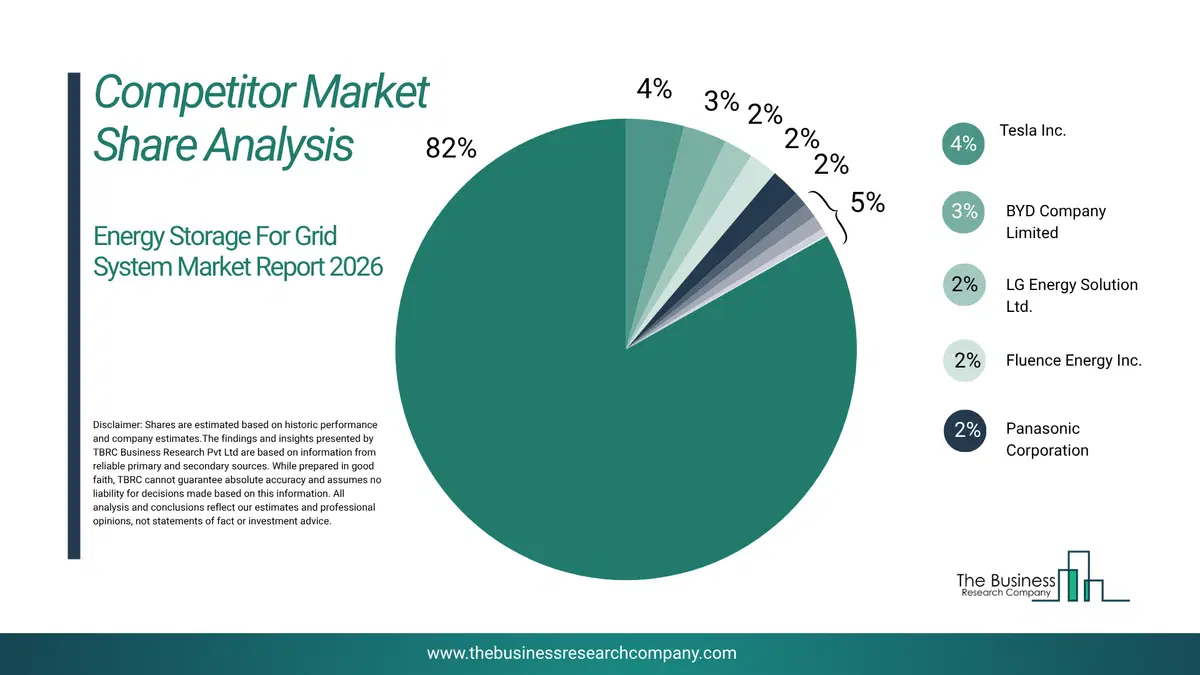
This chart is for illustrative purposes; the full report includes a detailed competitor analysis and comprehensive overview of the top 10 companies in the market.
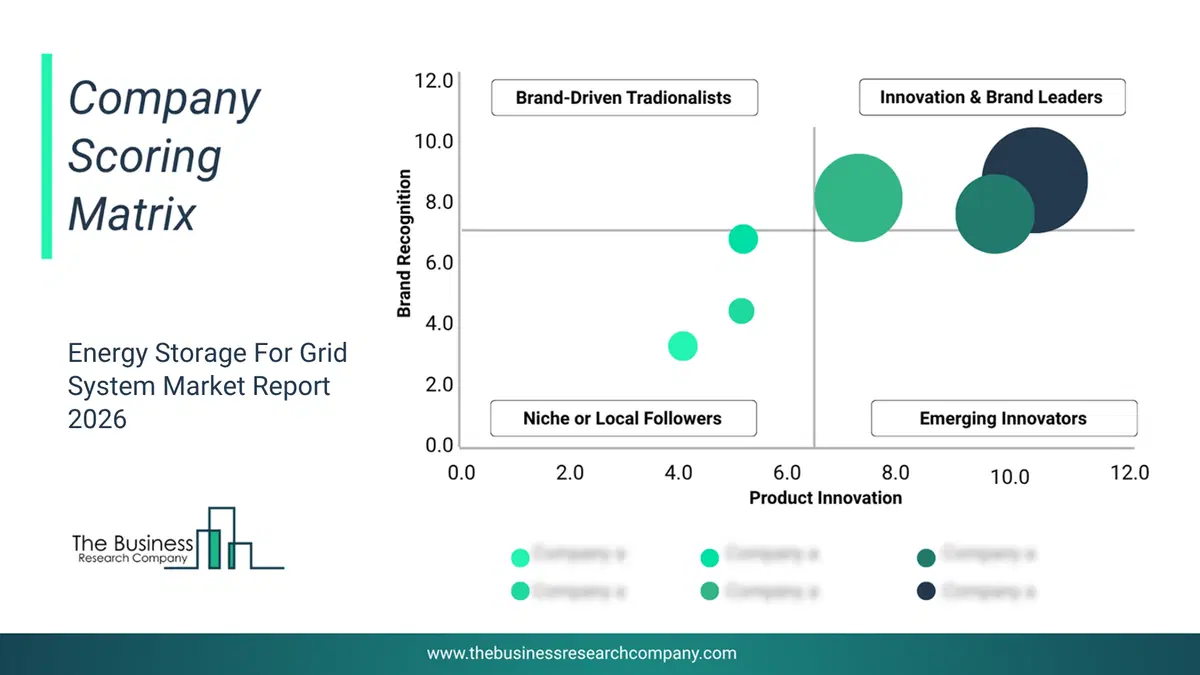
This chart maps companies by product innovation and brand strength, with bubble size indicating relative revenue, helping identify market leaders, challengers, and niche players. This is an illustrative chart; the full report provides a complete and accurate competitive analysis.
Global Energy Storage For Grid System Market Trends and Insights
Major companies operating in the energy storage for grid system market are focusing on advanced modular medium-voltage energy storage solutions to enhance grid flexibility, reduce deployment timelines, and support large-scale renewable energy integration. Advanced modular medium-voltage energy storage solutions are scalable, pre-engineered systems that integrate power conversion, control, and grid-support functionalities at medium voltage to enable flexible, efficient, and rapid deployment of large-scale energy storage for modern power grids. For instance, in June 2025, Dynapower Company, LLC, a US-based energy storage and power conversion systems company, launched the MV Integrated PowerSkid, a compact solution designed for renewable energy, battery energy storage systems (BESS), and green hydrogen applications. This is designed for quick installation and commissioning, that supports DC-coupled configurations, and includes features such as Islanded Operation, Black Start, and Frequency and VAR Compensation, enabling enhanced grid integration, operational flexibility, and optimized performance for large-scale energy storage and power-to-X projects.What Are Latest Mergers And Acquisitions In The Energy Storage For Grid System Market?
In August 2025, FlexGen Power Systems, a US-based energy storage company, acquired Powin Energy Corporation for an undisclosed amount. Through this acquisition, FlexGen aims to ensure uninterrupted support for existing grid-scale energy storage systems while strengthening its software, services, and operational capabilities to enhance the reliability and performance of energy storage for grid applications. Powin Energy Corporation is a US-based company that provides utility-scale battery energy storage systems and integrated solutions designed to support grid stability, renewable energy integration, and large-scale power management.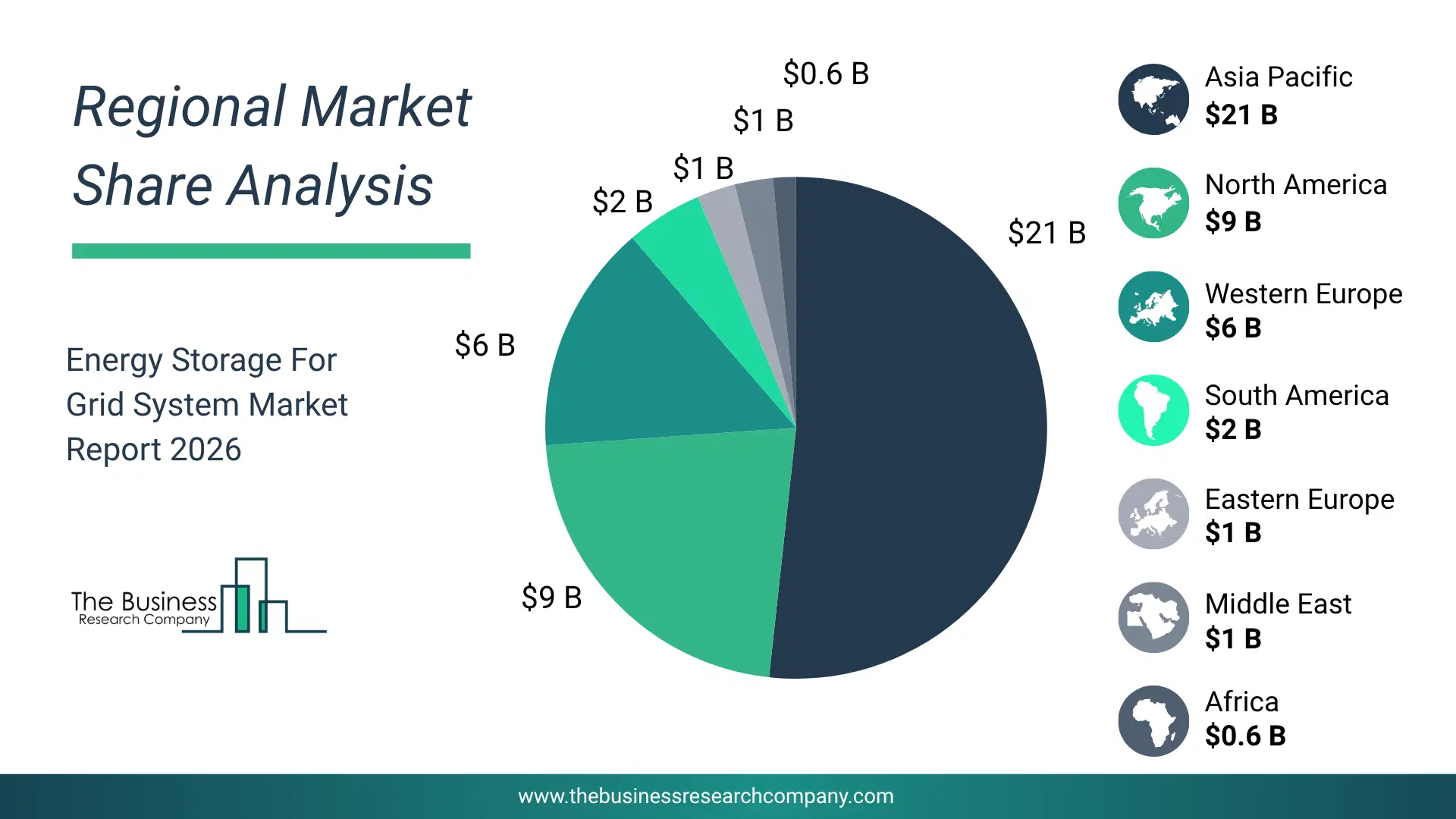
Regional Outlook
North America was the largest region in the energy storage for grid system market in 2025. Asia-Pacific is expected to be the fastest-growing region in the forecast period. The regions covered in this market report are Asia-Pacific, South East Asia, Western Europe, Eastern Europe, North America, South America, Middle East, Africa. The countries covered in this market report are Australia, Brazil, China, France, Germany, India, Indonesia, Japan, Taiwan, Russia, South Korea, UK, USA, Canada, Italy, Spain.What Defines the Energy Storage For Grid System Market?
The energy storage for grid system market consists of revenues earned by entities by providing services such as frequency regulation, renewable integration, spinning reserve replacement, power quality management, and demand response enablement. The market value includes the value of related goods sold by the service provider or included within the service offering. The energy storage for the grid system market also includes sales of complete energy storage systems, associated power electronics, control software, and integration components. Values in this market are ‘factory gate’ values, that is, the value of goods sold by the manufacturers or creators of the goods, whether to other entities (including downstream manufacturers, wholesalers, distributors, and retailers) or directly to end customers. The value of goods in this market includes related services sold by the creators of the goods.How is Market Value Defined and Measured?
The market value is defined as the revenues that enterprises gain from the sale of goods and/or services within the specified market and geography through sales, grants, or donations in terms of the currency (in USD unless otherwise specified). The revenues for a specified geography are consumption values that are revenues generated by organizations in the specified geography within the market, irrespective of where they are produced. It does not include revenues from resales along the supply chain, either further along the supply chain or as part of other products.
This chart presents market attractiveness based on a quantitative evaluation of growth, competition, strategic alignment, and risk, offering a clear view of opportunity areas for decision-making. This chart is for illustrative purposes; the full report contains the complete analysis.

This chart highlights the Total Addressable Market (TAM) by estimating the maximum revenue opportunity using an assumption-driven approach, supporting strategic planning and opportunity sizing across markets. The chart is illustrative; the full report provides a more comprehensive analysis.
What Key Data and Analysis Are Included in the Energy Storage For Grid System Market Report 2026?
The energy storage for grid system market research report is one of a series of new reports from The Business Research Company that provides market statistics, including industry global market size, regional shares, competitors with the market share, detailed market segments, market trends and opportunities, and any further data you may need to thrive in the energy storage for grid system industry. The market research report delivers a complete perspective of everything you need, with an in-depth analysis of the current and future state of the industry.Energy Storage For Grid System Market Report Forecast Analysis
| Report Attribute | Details |
|---|---|
| Market Size Value In 2026 | $18.29 billion |
| Revenue Forecast In 2030 | $39.45 billion |
| Growth Rate | CAGR of 21.0% from 2026 to 2030 |
| Base Year For Estimation | 2025 |
| Actual Estimates/Historical Data | 2020-2025 |
| Forecast Period | 2026 - 2030 |
| Market Representation | Revenue in USD Billion and CAGR from 2026 to 2030 |
| Segments Covered | Type, Technology Type, Ownership Model, Duration Of Discharge, Application |
| Regional Scope | Asia-Pacific, Western Europe, Eastern Europe, North America, South America, Middle East, Africa |
| Country Scope | The countries covered in the report are Australia, Brazil, China, France, Germany, India, Indonesia, Japan, Taiwan, Russia, South Korea, UK, USA, Canada, Italy, Spain. |
| Key Companies Profiled | Tesla Inc., BYD Company Limited, Siemens AG, Hitachi Energy Ltd., Panasonic Corporation, Contemporary Amperex Technology Co. Limited, GE Renewable Energy, LG Energy Solution Ltd., EVE Energy Co. Ltd., EnerSys, Enphase Energy Inc., Fluence Energy Inc., Energy Vault Holdings Inc., Oriana Power Limited, GSL Energy, sonnen GmbH, Antora Energy Inc., Peak Energy, Form Energy Inc., and EnerVenue Inc. |
| Customization Scope | Request for Customization |
| Pricing And Purchase Options | Explore Purchase Options |