
Esports Management Platforms Market Report 2026
Global Outlook – By Type (Tournament Management, Team Management, Player Analytics, Streaming and Broadcasting, Sponsorship Management), By Revenue Model (Advertisement, Freemium, Licensing, Subscription, Transaction Fee), By Deployment Mode (Cloud, Hybrid, On-Premise), By Organization Size (Large Enterprises, Small And Medium Enterprises), By End-User (Tournament Organizers, Esports Teams or Players) – Market Size, Trends, Strategies, and Forecast to 2030
Esports Management Platforms Market Overview
• Esports Management Platforms market size has reached to $7.15 billion in 2025 • Expected to grow to $21.46 billion in 2030 at a compound annual growth rate (CAGR) of 24.5% • Growth Driver: Cloud Computing Adoption Fueling The Growth Of The Market Due To Secure, Modular, And Edge-Ready Infrastructure • Market Trend: Interactive Multi-Perspective Streaming Platforms Enhance Fan Engagement And Experience • North America was the largest region in 2025 and Asia-Pacific is the fastest growing region.What Is Covered Under Esports Management Platforms Market?
Esports management platforms are specialized software solutions that help organizers, teams, and leagues run competitive gaming operations, including tournaments, schedules, rosters, results, and stakeholder communication. Their purpose is to streamline end-to-end esports administration, improve competitive integrity and player experience, and enable scalable monetization through better operations, data, and audience engagement. The main types of esports management platforms include tournament management, team management, player analytics, streaming and broadcasting, and sponsorship management solutions. Tournament management platforms enable the organization, scheduling, and administration of esports events, while team management solutions support roster management, performance tracking, and coordination. The key revenue models in the esports management platforms market include advertisement, freemium, licensing, subscription, and transaction fee-based models, supporting diverse monetization strategies. The various deployment modes include cloud, hybrid, and on-premise solutions, offering flexibility in scalability, control, and data management. The including large enterprises and small and medium enterprises, enabling adoption across professional and emerging esports ecosystems. These platforms are used by several end-users such as tournament organizers and esports teams or players.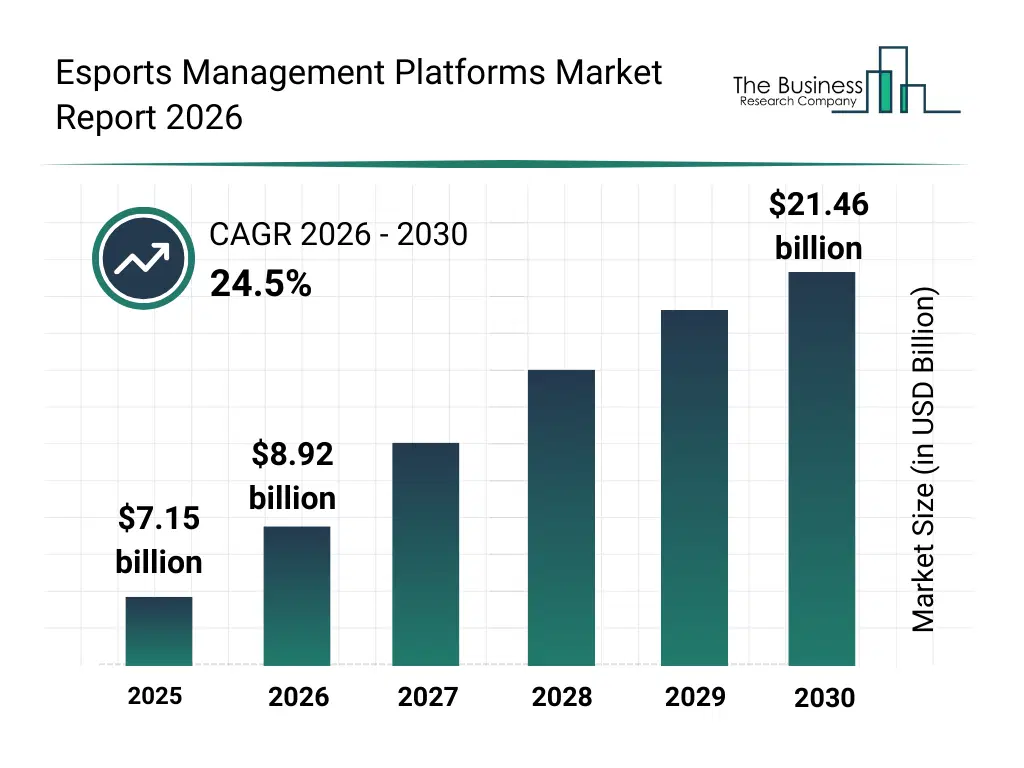
What Is The Esports Management Platforms Market Size and Share 2026?
The esports management platforms market size has grown exponentially in recent years. It will grow from $7.15 billion in 2025 to $8.92 billion in 2026 at a compound annual growth rate (CAGR) of 24.8%. The growth in the historic period can be attributed to the increasing popularity of esports tournaments, the rising number of professional gamers, growing investments in esports infrastructure, increasing audience engagement through online platforms, and the rising adoption of digital tools for tournament management.What Is The Esports Management Platforms Market Growth Forecast?
The esports management platforms market size is expected to see exponential growth in the next few years. It will grow to $21.46 billion in 2030 at a compound annual growth rate (CAGR) of 24.5%. The growth in the forecast period can be attributed to growing adoption of cloud-based esports platforms, increasing integration of analytics and artificial intelligence (AI) in tournament management, rising investments in esports ecosystem development, growing demand for automated scheduling and performance tracking, and increasing focus on improving fan engagement and event experience. Major trends in the forecast period include advancement in artificial intelligence (AI)-driven performance analytics, innovation in cloud-based tournament management platforms, integration of real-time data tracking for players and matches, advancement in interactive fan engagement tools, and innovation in mobile esports management applications.
Global Esports Management Platforms Market Segmentation
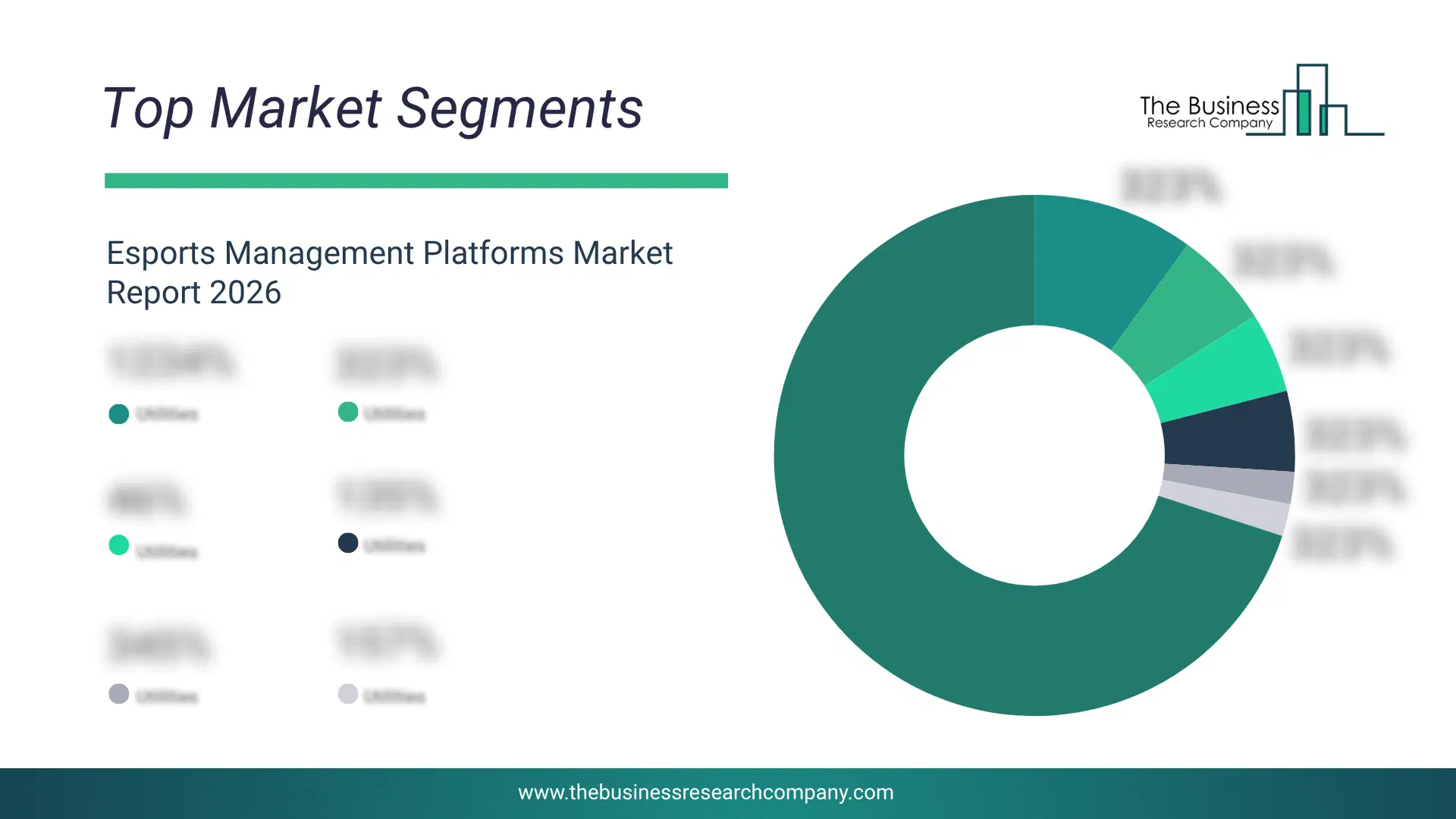
1) By Type: Tournament Management, Team Management, Player Analytics, Streaming and Broadcasting, Sponsorship Management 2) By Revenue Model: Advertisement, Freemium, Licensing, Subscription, Transaction Fee 3) By Deployment Mode: Cloud, Hybrid, On-Premise 4) By Organization Size: Large Enterprises, Small And Medium Enterprises 5) By End-User: Tournament Organizers, Esports Teams or Players Subsegments: 1) By Tournament Management: Match Scheduling And Brackets, Registration And Participant Management, Score Tracking And Leaderboard Updates, Rules And Compliance Management, Prize Distribution And Reward Management, Tournament Analytics And Reporting 2) By Team Management: Player Roster And Contract Management, Training And Practice Scheduling, Communication And Collaboration Tools, Performance Tracking And Evaluation, Team Resource Allocation, Internal Workflow Automation 3) By Player Analytics: Individual Performance Metrics, Skill Progression Tracking, Behavioral And Engagement Analytics, Health And Wellness Monitoring, Coaching Insights And Recommendations, Statistical Benchmarking Against Peers 4) By Streaming and Broadcasting: Live Streaming Integration, Multi-Platform Broadcasting Tools, Overlay And Production Management, Audience Engagement Tracking, Revenue Tracking From Streams, VOD (Video on Demand) Management 5) By Sponsorship Management: Sponsor Onboarding And Contracts, Campaign And Promotion Tracking, ROI Measurement For Sponsors, Brand Integration Tools, Collaboration With Marketing Teams, Reporting And Analytics For SponsorshipsWhat Is The Driver Of The Esports Management Platforms Market?
The increasing adoption of cloud computing is expected to propel the growth of the esports management platforms market going forward. Cloud computing refers to the delivery of computing resources such as servers, storage, databases, networking, software, and analytics over the internet to offer faster innovation, flexible resources, and economies of scale. The adoption of cloud computing is driven by scalability, as it allows businesses to easily adjust computing resources based on demand and reduce infrastructure costs. Esports management platforms enhance cloud computing by leveraging scalable, remote infrastructure to host tournaments, track player data, and deliver real-time analytics. They improve operational efficiency by enabling seamless access, collaboration, and performance monitoring across distributed teams and events. For instance, in December 2023, according to Eurostat, a Luxembourg-based government organization, 45.2% of enterprises across the European Union purchased cloud computing services, with 77.6% of large enterprises, 59% of medium-sized enterprises, and 41.7% of small businesses adopting cloud services. Therefore, the increasing adoption of cloud computing is driving the growth of the esports management platforms industry.Key Players In The Global Esports Management Platforms Market
Major companies operating in the esports management platforms market are V Group Inc., CrustLab, Adcore ApS, MOBIWEB TECHNOLOGIES SERVICES PRIVATE LIMITED, Play Versus Inc., GAMMASTACK SERVICES PRIVATE LIMITED, G-Loot Global Esports AB, Battlefy Technologies Inc., E-Sports Entertainment Association LLC, Challengermode AB, Challonge LLC, Macrofix, Game.TV Inc., TOORNAMENT SAS, CEVO LLC, GamerzArena LLC, ggCircuit LLC, Start.gg Inc, binary Beast B.V., Tournahub Solutions Private Limited, XPULZ Gaming GmbH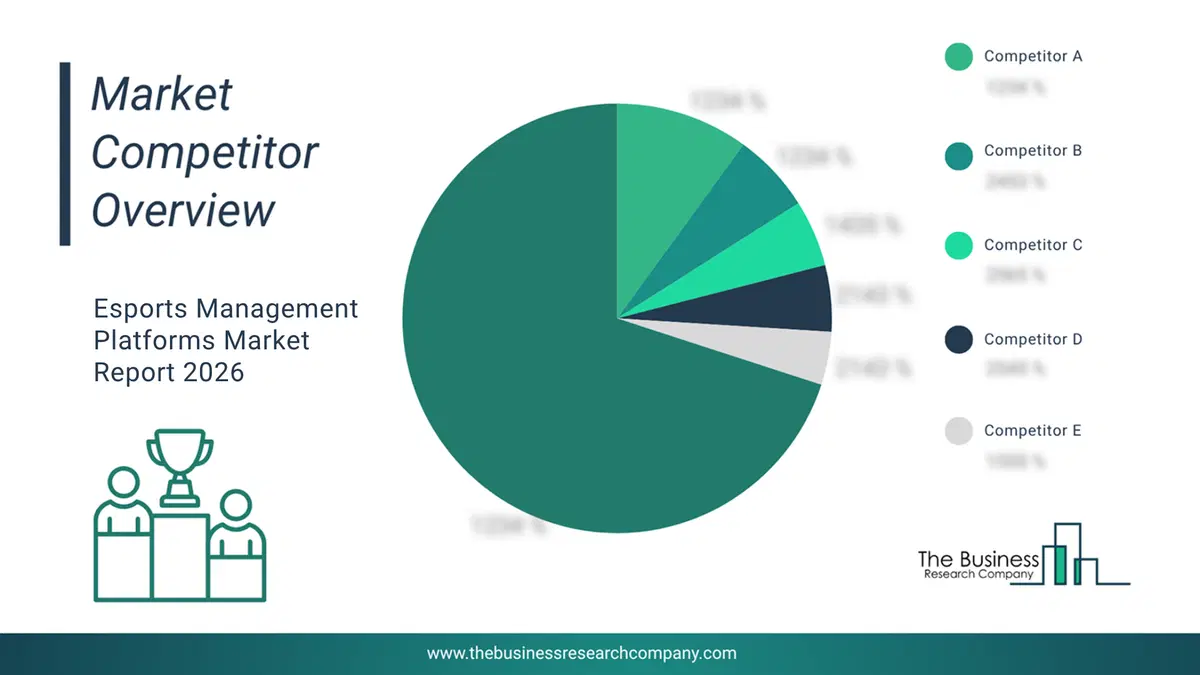
This chart is for illustrative purposes; the full report includes a detailed competitor analysis and comprehensive overview of the top 10 companies in the market.
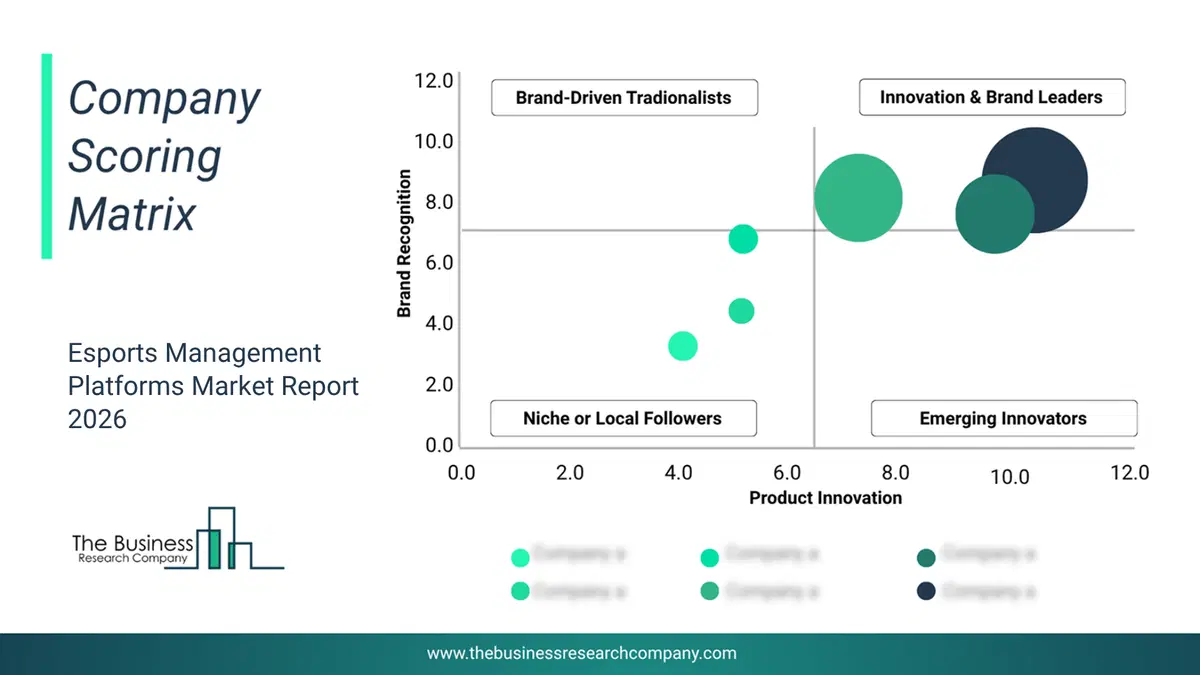
This chart maps companies by product innovation and brand strength, with bubble size indicating relative revenue, helping identify market leaders, challengers, and niche players. This is an illustrative chart; the full report provides a complete and accurate competitive analysis.
Global Esports Management Platforms Market Trends and Insights
Major companies operating in the esports management platforms market are focusing on developing advanced products, such as interactive and multi-perspective streaming platforms, to boost user engagement, enhance fan experience, and build stronger community connections. Interactive and multi-perspective streaming platforms refer to digital services that allow viewers to watch esports matches from multiple player perspectives simultaneously, control their audio mix, and access interactive features such as kill cams and live-generated highlights, all designed to create a personalized viewing experience. For instance, in February 2024, ESL FACEIT Group, a UK-based global esports company, launched FACEIT Watch. It is a new, free digital streaming platform that directly integrates advanced viewer control into the esports ecosystem. It includes a unique multi-perspective view selector, enabling fans to watch their favorite player's first-person perspective directly alongside the main broadcast stream. This core feature is supported by an interactive sound mixer (to adjust caster and in-game audio), a kill cam, and live-generated highlights, allowing for deep personalization without spoilers. The platform also incorporates a rewards program tied to the broader FACEIT ecosystem, offering points for engagement to foster loyalty and provide tangible value for the dedicated competitive gaming community.What Are Latest Mergers And Acquisitions In The Esports Management Platforms Market?
In April 2025, PlayVS Inc., a US-based provider of scholastic and collegiate esports platforms, acquired Generation Esports Inc. and Playfly College Esports for an undisclosed amount. With this acquisition, PlayVS aims to expand its esports ecosystem across high school and collegiate programs, integrating competitive leagues, educational curricula, and community engagement under a unified platform, enabling a seamless progression for student gamers from middle school through college. Generation Esports Inc. is a US-based US-based company focused on scholastic esports programs, competitive leagues, and educational curriculum. Playfly College Esports is a US-based based collegiate esports community and competitive league operator.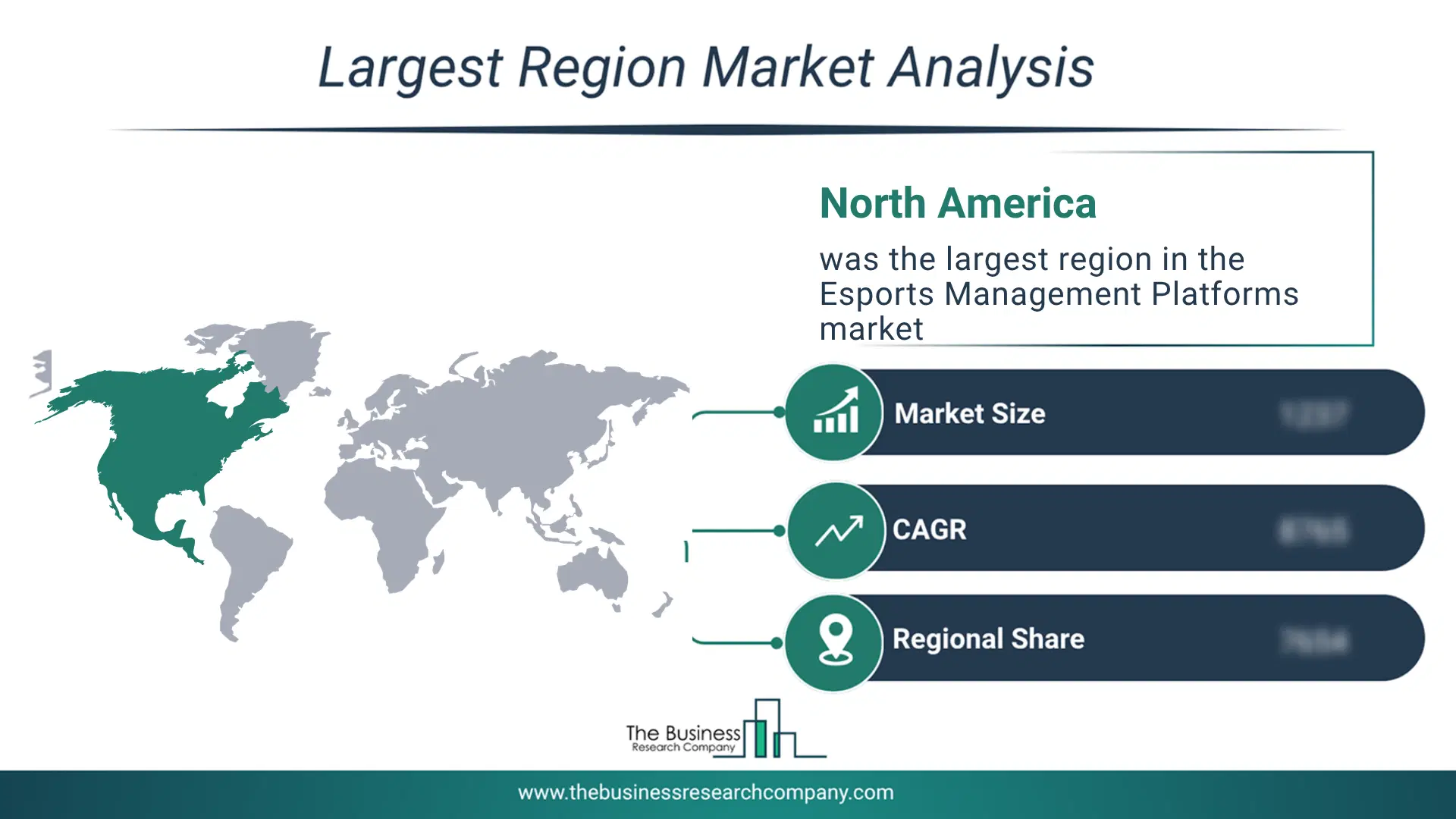
Regional Insights
North America was the largest region in the esports management platforms market in 2025. Asia-Pacific is expected to be the fastest-growing region in the forecast period. The regions covered in this market report are Asia-Pacific, South East Asia, Western Europe, Eastern Europe, North America, South America, Middle East, Africa. The countries covered in this market report are Australia, Brazil, China, France, Germany, India, Indonesia, Japan, Taiwan, Russia, South Korea, UK, USA, Canada, Italy, Spain.What Defines the Esports Management Platforms Market?
The esports management platforms market consists of revenues earned by entities by providing services such as organizing and managing tournaments, tracking player performance, automating scheduling, offering analytics and reporting tools, and facilitating online event coordination. The market value includes the value of related goods sold by the service provider or included within the service offering. The esports management platforms market includes sales of digital tournament management software, performance analytics tools, event scheduling platforms, player tracking systems, and cloud-based esports management solutions. alues in this market are ‘factory gate’ values, that is, the value of goods sold by the manufacturers or creators of the goods, whether to other entities (including downstream manufacturers, wholesalers, distributors, and retailers) or directly to end customers. The value of goods in this market includes related services sold by the creators of the goods.How is Market Value Defined and Measured?
The market value is defined as the revenues that enterprises gain from the sale of goods and/or services within the specified market and geography through sales, grants, or donations in terms of the currency (in USD unless otherwise specified). The revenues for a specified geography are consumption values that are revenues generated by organizations in the specified geography within the market, irrespective of where they are produced. It does not include revenues from resales along the supply chain, either further along the supply chain or as part of other products.
This chart presents market attractiveness based on a quantitative evaluation of growth, competition, strategic alignment, and risk, offering a clear view of opportunity areas for decision-making. This chart is for illustrative purposes; the full report contains the complete analysis.

This chart highlights the Total Addressable Market (TAM) by estimating the maximum revenue opportunity using an assumption-driven approach, supporting strategic planning and opportunity sizing across markets. The chart is illustrative; the full report provides a more comprehensive analysis.
What Key Data and Analysis Are Included in the Esports Management Platforms Market Report 2026?
The esports management platforms market research report is one of a series of new reports from The Business Research Company that provides market statistics, including industry global market size, regional shares, competitors with the market share, detailed market segments, market trends and opportunities, and any further data you may need to thrive in the esports management platforms industry. The market research report delivers a complete perspective of everything you need, with an in-depth analysis of the current and future state of the industry.Esports Management Platforms Market Report Forecast Analysis
| Report Attribute | Details |
|---|---|
| Market Size Value In 2026 | $8.92 billion |
| Revenue Forecast In 2030 | $21.46 billion |
| Growth Rate | CAGR of 24.5% from 2026 to 2030 |
| Base Year For Estimation | 2025 |
| Actual Estimates/Historical Data | 2020-2025 |
| Forecast Period | 2026 - 2030 |
| Market Representation | Revenue in USD Billion and CAGR from 2026 to 2030 |
| Segments Covered | Type, Revenue Model, Deployment Mode, Organization Size, End-User |
| Regional Scope | Asia-Pacific, Western Europe, Eastern Europe, North America, South America, Middle East, Africa |
| Key Companies Profiled | V Group Inc., CrustLab, Adcore ApS, MOBIWEB TECHNOLOGIES SERVICES PRIVATE LIMITED, Play Versus Inc., GAMMASTACK SERVICES PRIVATE LIMITED, G-Loot Global Esports AB, Battlefy Technologies Inc., E-Sports Entertainment Association LLC, Challengermode AB, Challonge LLC, Macrofix, Game.TV Inc., TOORNAMENT SAS, CEVO LLC, GamerzArena LLC, ggCircuit LLC, Start.gg Inc, binary Beast B.V., Tournahub Solutions Private Limited, XPULZ Gaming GmbH |
| Customization Scope | Request for Customization |
| Pricing And Purchase Options | Explore Purchase Options |