

Fish Oil Alternatives Market Report 2026
Global Outlook – By Product Type (Chia Seed Oil, Soybean Oil, Canola Oil, Hemp Seed Oil, Algae Oil, Walnut Oil, Flaxseed Oil, Other Product Types), By Application (Food And Beverage Industry, Cosmetics And Personal Care, Animal Feed, Pet Food Additive, Pharmaceuticals, Nutraceuticals, Other Applications), By End Use (Human Dietary Supplements, Functional Foods & Beverages, Animal Nutrition & Pet Supplements) – Market Size, Trends, Strategies, and Forecast to 2030
Fish Oil Alternatives Market Overview
• Fish Oil Alternatives market size has reached to $2.87 billion in 2025 • Expected to grow to $4.12 billion in 2030 at a compound annual growth rate (CAGR) of 7.5% • Growth Driver: Growing Popularity Of Vegan Food Propelling The Growth Of Fish Oil Alternatives Market • Market Trend: Innovative Plant-Based Omega Supplements Drive Growth In The Fish Oil Alternatives Market • Asia-Pacific was the largest region in 2025.What Is Covered Under Fish Oil Alternatives Market?
Fish oil alternatives refer to sustainable sources of omega-3 fatty acids derived from non-fish sources such as algae, krill, flaxseed, and chia seeds, providing nutritional benefits similar to traditional fish oil. These alternatives are used primarily as dietary supplements to support cardiovascular health, cognitive function, joint health, and overall well-being, catering to consumers seeking vegan or sustainable options. The main types of fish oil alternatives are chia seed oil, soybean oil, canola oil, hemp seed oil, algae oil, walnut oil, flaxseed oil, and others. Chia seed oil is a nutrient-rich oil extracted from chia seeds, used for its high omega-3 fatty acid content in food products, dietary supplements, and skincare formulations. The species includes anchovy, cod liver, menhaden, tuna, sardine, salmon, and others, and it is used for various applications such as the food and beverage industry, cosmetics and personal care, animal feed, pet food additives, pharmaceuticals, nutraceuticals, biofuels, and other applications.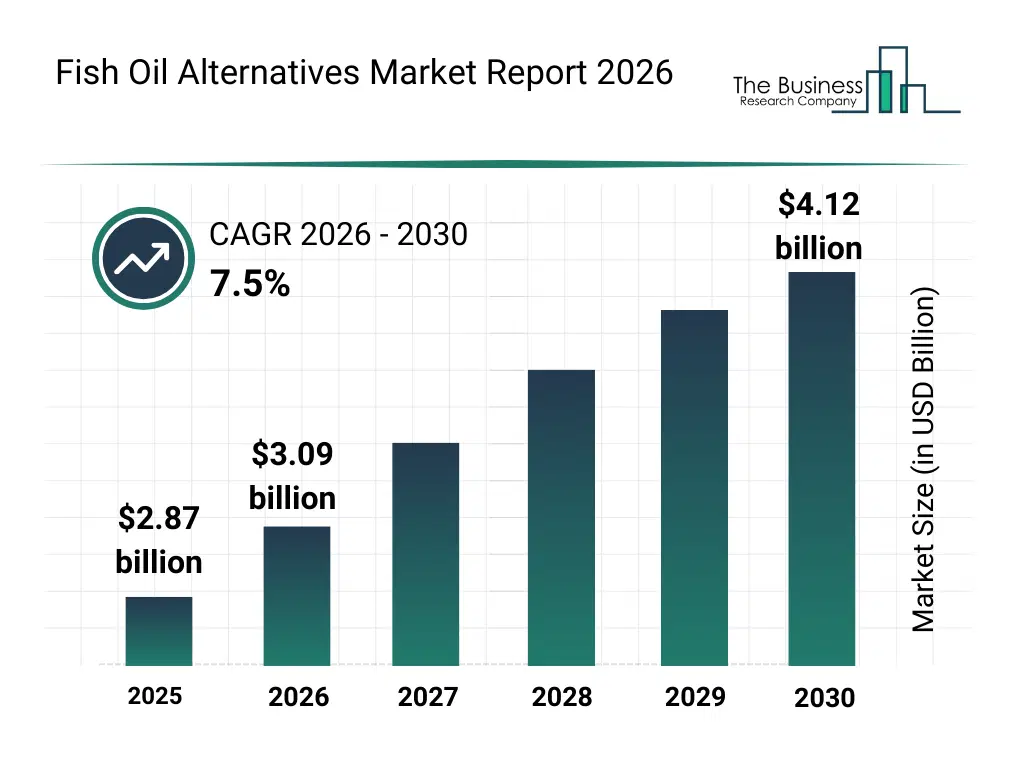
What Is The Fish Oil Alternatives Market Size and Share 2026?
The fish oil alternatives market size has grown strongly in recent years. It will grow from $2.87 billion in 2025 to $3.09 billion in 2026 at a compound annual growth rate (CAGR) of 7.5%. The growth in the historic period can be attributed to increasing consumer awareness of omega-3 health benefits, declining trust in traditional fish oil sourcing, growth of plant-based nutrition trends, expansion of dietary supplement consumption, improvements in algae cultivation technologies.What Is The Fish Oil Alternatives Market Growth Forecast?
The fish oil alternatives market size is expected to see strong growth in the next few years. It will grow to $4.12 billion in 2030 at a compound annual growth rate (CAGR) of 7.5%. The growth in the forecast period can be attributed to rising demand for sustainable nutrition solutions, increasing investments in precision fermentation and algae processing, growing preference for vegan supplements, expansion of nutraceutical applications, stronger regulatory focus on sustainability claims. Major trends in the forecast period include increasing adoption of algae-based omega-3 sources, rising demand for vegan and plant-based supplements, growing focus on sustainable omega-3 production, expansion of clean-label nutritional ingredients, enhanced emphasis on traceability and certification.
Global Fish Oil Alternatives Market Segmentation
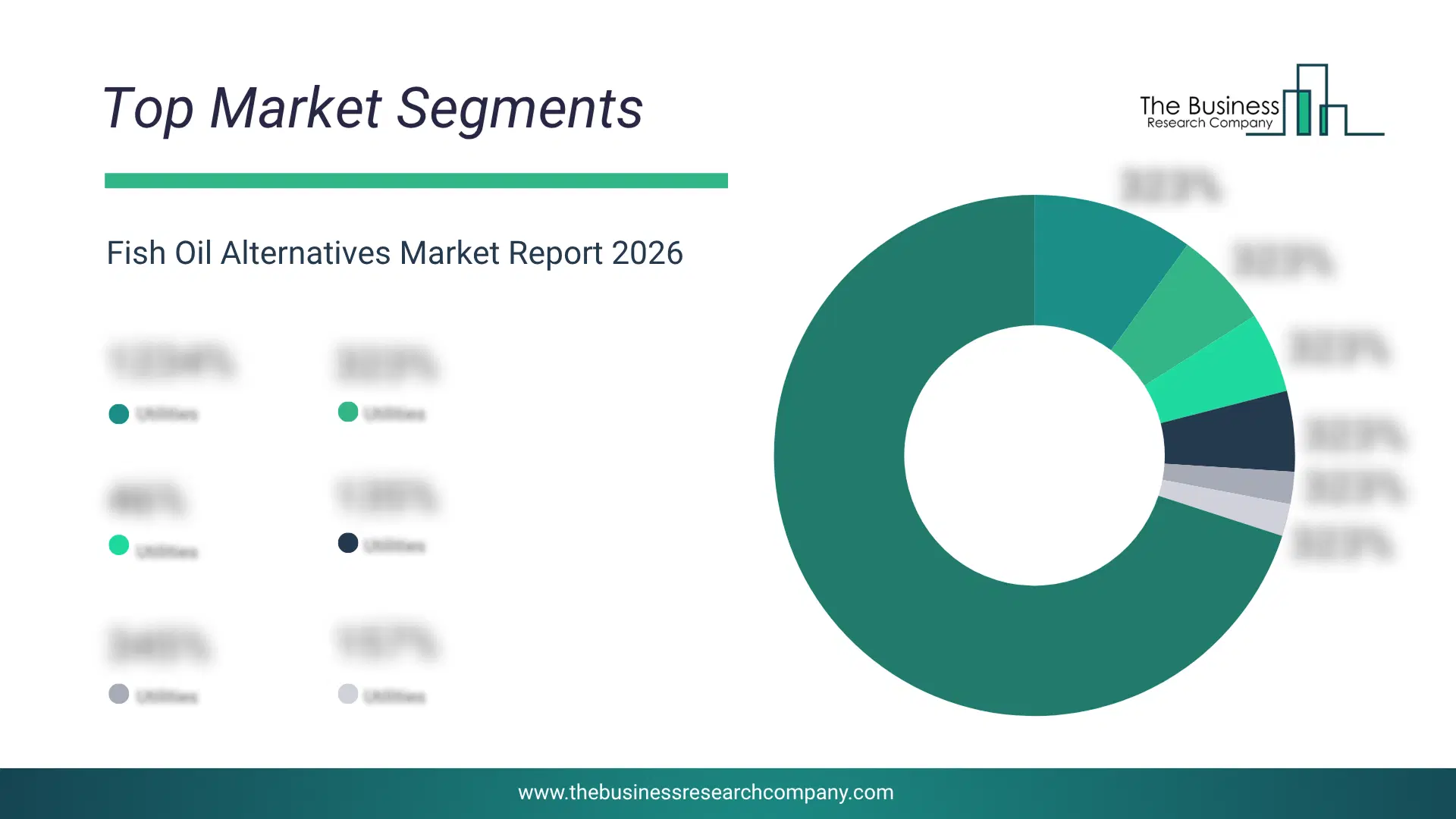
1) By Product Type: Chia Seed Oil, Soybean Oil, Canola Oil, Hemp Seed Oil, Algae Oil, Walnut Oil, Flaxseed Oil, Other Product Types 2) By Application: Food And Beverage Industry, Cosmetics And Personal Care, Animal Feed, Pet Food Additive, Pharmaceuticals, Nutraceuticals, Other Applications 3) By End Use: Human Dietary Supplements, Functional Foods & Beverages, Animal Nutrition & Pet Supplements Subsegments: 1) By Chia Seed Oil: Organic Chia Seed Oil, Conventional Chia Seed Oil 2) By Soybean Oil: Organic Soybean Oil, Conventional Soybean Oil 3) By Canola Oil: Organic Canola Oil, Conventional Canola Oil 4) By Hemp Seed Oil: Cold-Pressed Hemp Seed Oil, Refined Hemp Seed Oil 5) By Algae Oil: DHA-rich Algae Oil, EPA-rich Algae Oil, DHA & EPA Blend Algae Oil 6) By Walnut Oil: Cold-Pressed Walnut Oil, Refined Walnut Oil 7) By Flaxseed Oil: Cold-Pressed Flaxseed Oil, Refined Flaxseed Oil 8) By Other Product Types: Sacha Inchi Oil, Pumpkin Seed Oil, Poppy Seed OilWhat Are The Drivers Of The Fish Oil Alternatives Market?
The growing popularity of vegan food is expected to propel the growth of the fish oil alternatives market going forward. Vegan food is food made entirely from plants and plant-based ingredients, without using any animal products such as meat, dairy, eggs, or honey. The popularity of vegan food is increasing due to growing health consciousness, environmental concerns, and ethical considerations regarding animal welfare. Fish oil alternatives in vegan food, such as algae oil and flaxseed oil, provide essential omega-3 fatty acids without relying on animal sources. These alternatives support cardiovascular health and are environmentally sustainable options for vegans. For instance, in May 2025, according to the Plant Based Foods Association, a US-based trade organization, U.S. retail sales of plant-based foods reached $8.1 billion. 59% of U.S. households purchased plant-based foods in 2024, with a 79% repeat-purchase rate. Therefore, the growing popularity of vegan food is driving the growth of the fish oil alternatives industry. The rising food and beverage industry is expected to propel the growth of the fish oil alternatives market going forward. The rising food and beverage industry refers to the expanding sector that encompasses the production, distribution, and consumption of food and drink products. The rising food and beverage industry is instrumental in advancing the development of sustainable fish oil alternatives through its focus on research, sustainability, nutrition, economic viability, and consumer preferences. For instance, in April 2024, according to the Australian Bureau of Statistics, an Australia-based government statistical agency, in 2022-23, a total of 14.8 million tonnes of food and non-alcoholic beverages were sold. Therefore, the rising food and beverage industry is driving the growth of the fish oil alternative industry.Key Players In The Global Fish Oil Alternatives Market
Major companies operating in the fish oil alternatives market are Cargill Inc., Archer Daniels Midland Company (ADM), BASF SE, Wilmar International, CHS Inc., Dupont De Nemours, Koninklijke DSM N.V., Croda International, Corbion, Olvea Group, Connoils LLC, Sonic Biochem, TerraVia Holdings, Bioway Organic Group Limited, Veramaris, AlgiSys BioSciences Inc., Bioriginal Food & Science Corp., Barlean’s Organic Oils LLC, Medix Laboratoires, Qualitas Health (iwi Life)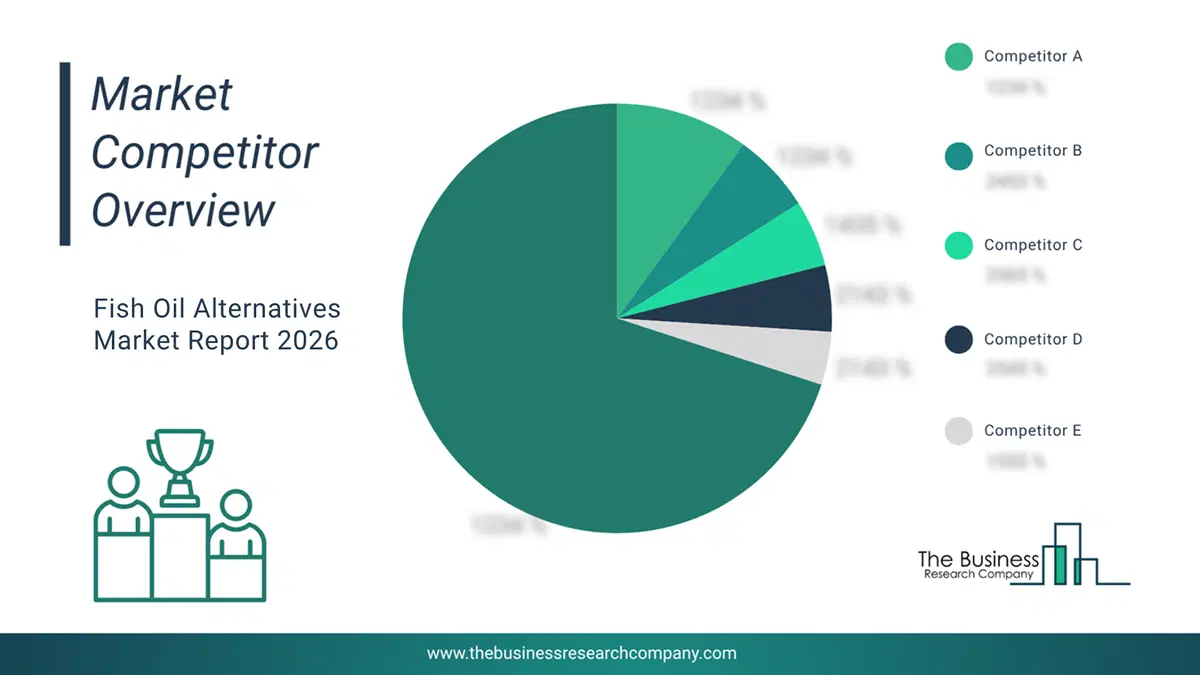
This chart is for illustrative purposes; the full report includes a detailed competitor analysis and comprehensive overview of the top 10 companies in the market.
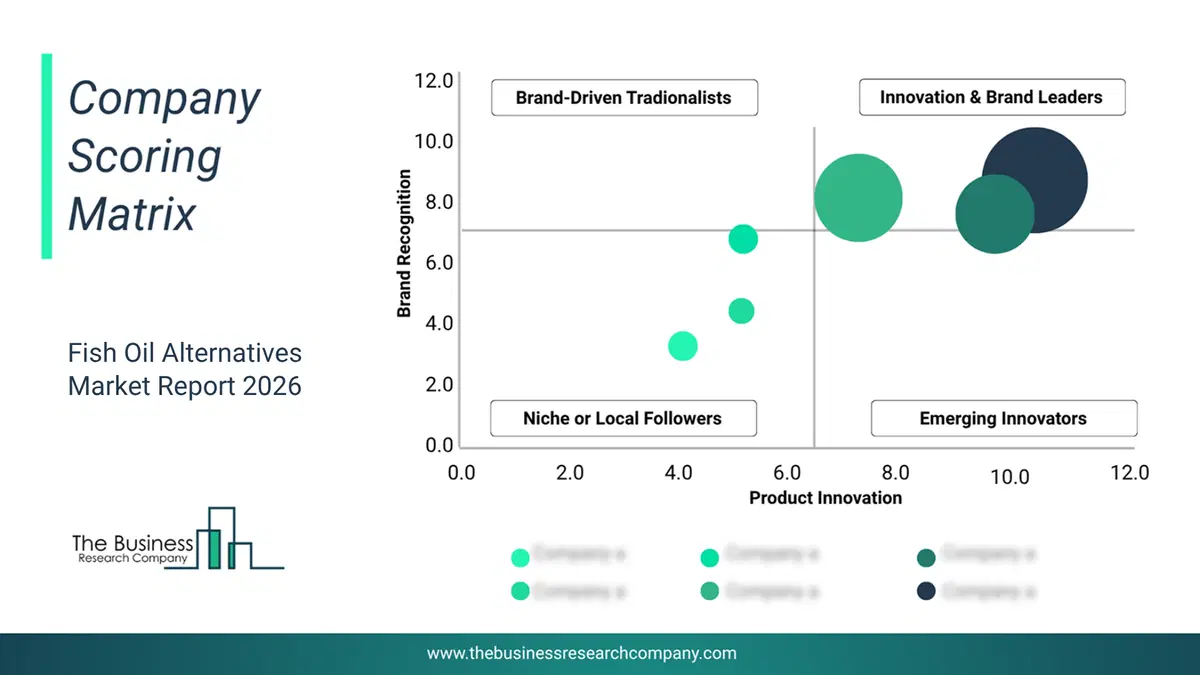
This chart maps companies by product innovation and brand strength, with bubble size indicating relative revenue, helping identify market leaders, challengers, and niche players. This is an illustrative chart; the full report provides a complete and accurate competitive analysis.
What Are Latest Mergers And Acquisitions In The Fish Oil Alternatives Market?
Regional Outlook
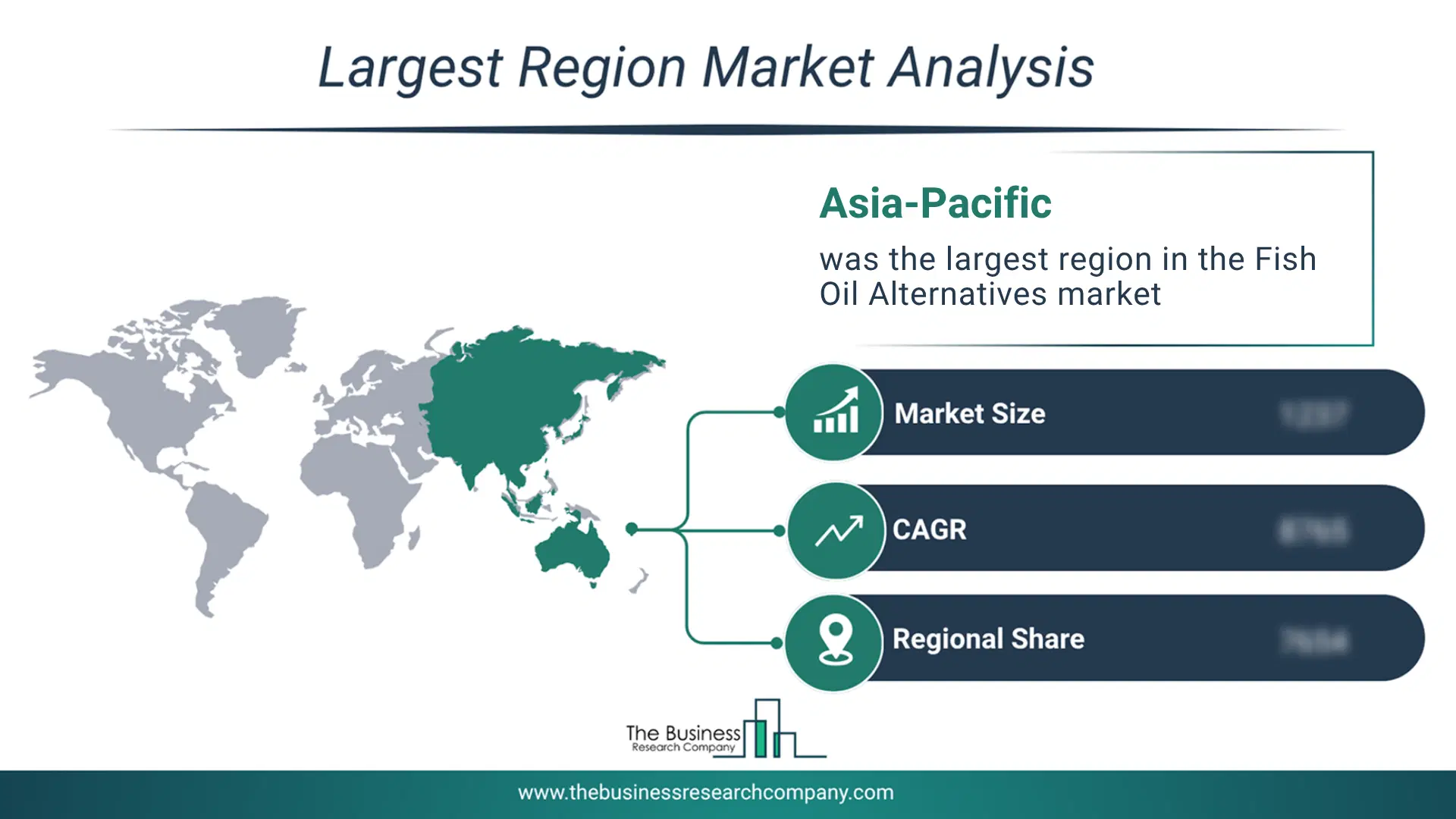
Asia-Pacific was the largest region in the fish oil alternatives market in 2025. The regions covered in this market report are Asia-Pacific, South East Asia, Western Europe, Eastern Europe, North America, South America, Middle East and Africa. The countries covered in this market report are Australia, Brazil, China, France, Germany, India, Indonesia, Japan, Taiwan, Russia, South Korea, UK, USA, Italy, Spain, CanadaWhat Defines the Fish Oil Alternatives Market?
The fish oil alternatives market consists of sales of sacha inchi oil, perilla seed oil, evening primrose oil, pumpkin seed oil, olive oil, and blackcurrant seed oil. Values in this market are ‘factory gate’ values, that is the value of goods sold by the manufacturers or creators of the goods, whether to other entities (including downstream manufacturers, wholesalers, distributors, and retailers) or directly to end customers. The value of goods in this market includes related services sold by the creators of the goods.How is Market Value Defined and Measured?
The market value is defined as the revenues that enterprises gain from the sale of goods and/or services within the specified market and geography through sales, grants, or donations in terms of the currency (in USD unless otherwise specified). The revenues for a specified geography are consumption values that are revenues generated by organizations in the specified geography within the market, irrespective of where they are produced. It does not include revenues from resales along the supply chain, either further along the supply chain or as part of other products.
This chart presents market attractiveness based on a quantitative evaluation of growth, competition, strategic alignment, and risk, offering a clear view of opportunity areas for decision-making. This chart is for illustrative purposes; the full report contains the complete analysis.

This chart highlights the Total Addressable Market (TAM) by estimating the maximum revenue opportunity using an assumption-driven approach, supporting strategic planning and opportunity sizing across markets. The chart is illustrative; the full report provides a more comprehensive analysis.
What Key Data and Analysis Are Included in the Fish Oil Alternatives Market Report 2026?
The fish oil alternatives market research report is one of a series of new reports from The Business Research Company that provides market statistics, including industry global market size, regional shares, competitors with the market share, detailed market segments, market trends and opportunities, and any further data you may need to thrive in the fish oil alternatives industry. The market research report delivers a complete perspective of everything you need, with an in-depth analysis of the current and future state of the industry.Fish Oil Alternatives Market Report Forecast Analysis
| Report Attribute | Details |
|---|---|
| Market Size Value In 2026 | $3.09 billion |
| Revenue Forecast In 2030 | $4.12 billion |
| Growth Rate | CAGR of 7.5% from 2026 to 2030 |
| Base Year For Estimation | 2025 |
| Actual Estimates/Historical Data | 2020-2025 |
| Forecast Period | 2026 - 2030 |
| Market Representation | Revenue in USD Billion and CAGR from 2026 to 2030 |
| Segments Covered | Product Type, Application, End Use |
| Regional Scope | Asia-Pacific, Western Europe, Eastern Europe, North America, South America, Middle East, Africa |
| Country Scope | The countries covered in the report are Australia, Brazil, China, France, Germany, India, Indonesia, Japan, Taiwan, Russia, South Korea, UK, USA, Canada, Italy, Spain. |
| Key Companies Profiled | Cargill Inc., Archer Daniels Midland Company (ADM), BASF SE, Wilmar International, CHS Inc., Dupont De Nemours, Koninklijke DSM N.V., Croda International, Corbion, Olvea Group, Connoils LLC, Sonic Biochem, TerraVia Holdings, Bioway Organic Group Limited, Veramaris, AlgiSys BioSciences Inc., Bioriginal Food & Science Corp., Barlean’s Organic Oils LLC, Medix Laboratoires, Qualitas Health (iwi Life) |
| Customization Scope | Request for Customization |
| Pricing And Purchase Options | Explore Purchase Options |