
Fitness Equipment Market Report 2026
Global Outlook – By Type (Cardiovascular Training Equipment, Strength Training Equipment, Other Types), By Buyer Type (Individual, Institution, Other Buyer Types), By Gender (Male, Female), By Application (Weight Loss, Body Building, Physical Fitness, Other Applications), By End User (Health Clubs Or Gyms, Home Consumer, Hotels, Corporates, Hospital And Medical Centers, Public Institutions) – Market Size, Trends, Strategies, and Forecast to 2030
Fitness Equipment Market Overview
• Fitness Equipment market size has reached to $15 billion in 2025 • Expected to grow to $19.47 billion in 2030 at a compound annual growth rate (CAGR) of 5.3% • Growth Driver: Rising Obesity Rates Fuel Fitness Equipment Market Growth • Market Trend: Strength Training Equipment Gains Momentum In The Fitness Market • North America was the largest region in 2025 and Asia-Pacific is the fastest growing region.Market Gains By 2030 – Top Opportunities By Segment
Market Gain identifies the most promising market opportunities by highlighting the segments or products expected to generate the highest incremental revenue growth over the next five years.
What Is Covered Under Fitness Equipment Market?
Fitness equipment refers to a tool used to provide fitness services. Fitness equipment is made to help users and athletes improve their fitness. They come in a variety of design sand each one has elements that focus on particular body areas or muscle groups. The main types of fitness equipment include cardiovascular training equipment, strength training equipment and others. Cardiovascular training equipment refers to a piece of exercise machinery used for a cardiovascular workout. Both male and female individuals, institutions and other buyer types use these for various applications including weight loss, bodybuilding, physical fitness, mental fitness and others by end users such as health clubs or gyms, home consumer, hotels, corporates, hospital and medical center sand public institutions.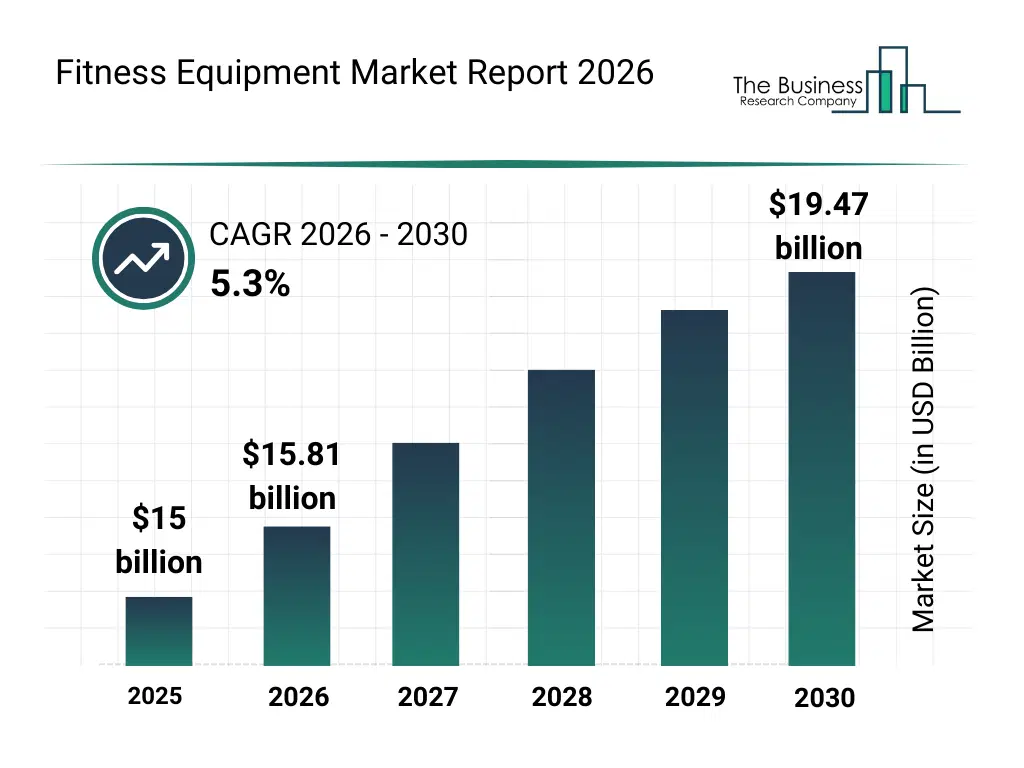
What Is The Fitness Equipment Market Size and Share 2026?
The fitness equipment market size has grown strongly in recent years. It will grow from $15 billion in 2025 to $15.81 billion in 2026 at a compound annual growth rate (CAGR) of 5.4%. The growth in the historic period can be attributed to growth of commercial gyms and fitness centers, rising health awareness among consumers, expansion of strength and cardio training adoption, increasing disposable income levels, availability of diverse fitness equipment options.What Is The Fitness Equipment Market Growth Forecast?
The fitness equipment market size is expected to see strong growth in the next few years. It will grow to $19.47 billion in 2030 at a compound annual growth rate (CAGR) of 5.3%. The growth in the forecast period can be attributed to growing adoption of smart fitness ecosystems, rising demand for hybrid home-gym solutions, expansion of virtual and guided workout programs, increasing focus on preventive healthcare, growing investments in digitally enabled fitness equipment. Major trends in the forecast period include increasing adoption of connected fitness equipment, rising demand for home-based workout solutions, growing integration of digital training platforms, expansion of compact and space-saving equipment designs, enhanced focus on personalized fitness experiences.
Global Fitness Equipment Market Segmentation
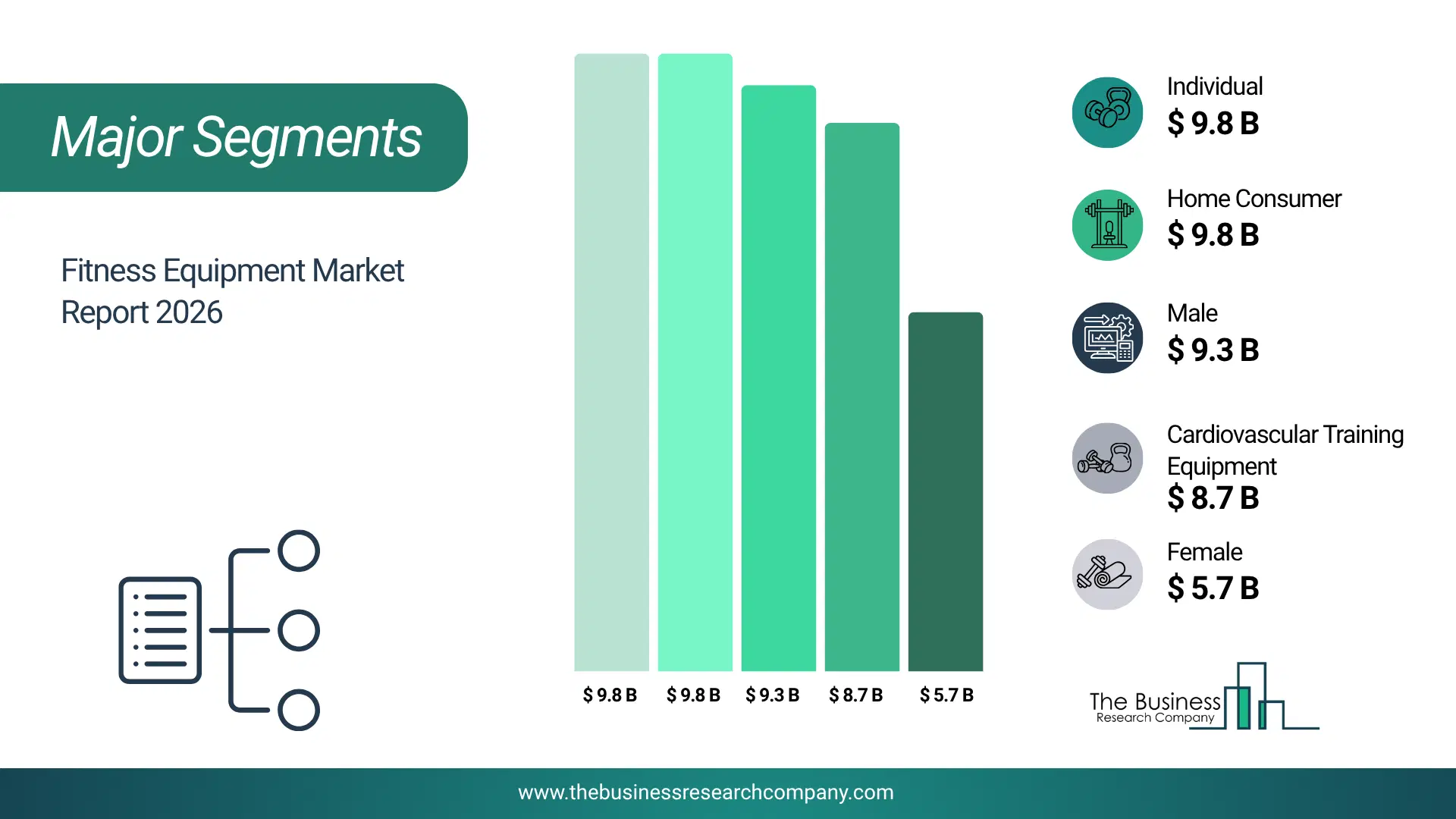
1) By Type: Cardiovascular Training Equipment, Strength Training Equipment, Other Types 2) By Buyer Type: Individual, Institution, Other Buyer Types 3) By Gender: Male, Female 4) By Application: Weight Loss, Body Building, Physical Fitness, Other Applications 5) By End User: Health Clubs Or Gyms, Home Consumer, Hotels, Corporates, Hospital And Medical Centers, Public Institutions Subsegments: 1) By Cardiovascular Training Equipment: Treadmills, Ellipticals, Stationary Bikes, Rowing Machines 2) By Strength Training Equipment: Free Weights, Weight Machines, Resistance Bands, Kettlebells 3) By Other Types: Flexibility Equipment, Balance Equipment, Functional Training Equipment The top segments in the fitness equipment market will be: • Individual will reach $9858.69 Million by 2025. • Home Consumer will reach $9858.69 Million by 2025. • Male will reach $9379.22 Million by 2025. • Cardiovascular Training Equipment will reach $8792.65 Million by 2025. • Female will reach $5772.59 Million by 2025.What Is The Driver Of The Fitness Equipment Market?
The increasing prevalence of obesity is expected to boost the growth of the fitness equipment market going forward. Obesity refers to a medical condition that increases the risk of a number of diseases and ailments, such as heart disease, diabetes, high blood pressure and several cancers. Fitness equipment by providing aerobic workout, raise the heart rate, boost metabolism and burn calories to lose weight. For instance, in October 2025, according to the Trust for America's Health, a US-based non-profit health policy organization, in 2024, the highest adult obesity rates were recorded in West Virginia (41.4%), followed by Mississippi (40.4%) and Louisiana (39.2%). Therefore, increasing the prevalence of obesity is driving the growth of the fitness equipment industry.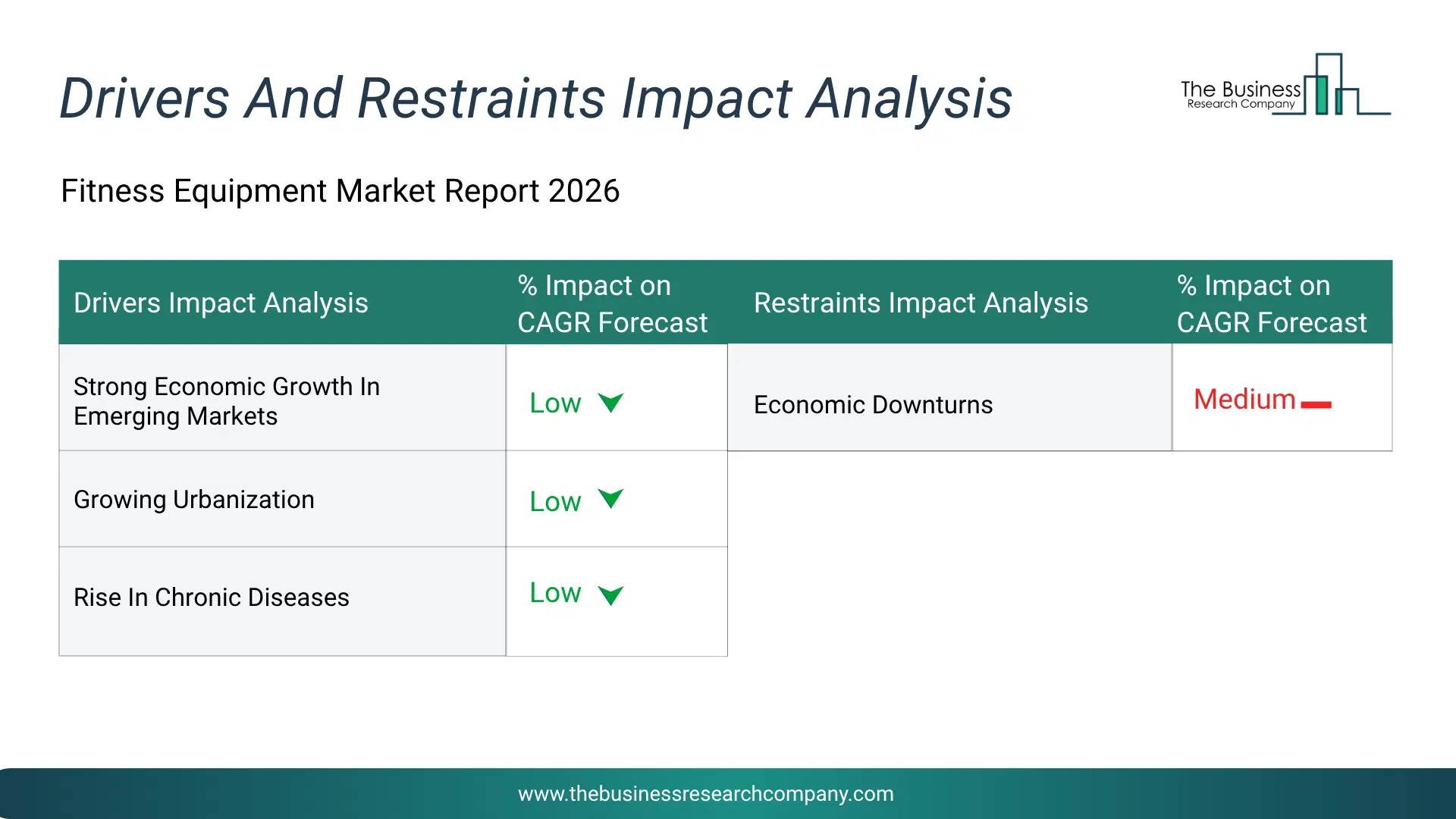
Infographic Chart Showing Key Market Drivers Analysis And Restraints For Fitness Equipment Market
The chart presents an impact analysis of key drivers and restraints, quantifying their relative influence on the market's growth rate and helping assess the balance between growth enablers and limiting factors. This chart offers a high-level perspective; the full report contains more detailed insights.
How Will The Drivers Impact Growth In The Global Fitness Equipment Market?
• Strong Economic Growth In Emerging Markets (Low) – The strong economic growth in emerging markets will become a key driver of growth in the fitness equipment market by 2030. As emerging markets experience economic growth, enhanced infrastructure and greater access to technology facilitate easier consumer purchases of fitness equipment. The rise of online shopping, improved logistics and expanded retail options in urban areas make acquiring fitness gear more convenient. Additionally, as companies increasingly invest in employee well-being, the demand for corporate wellness programs and fitness equipment grows. Many businesses in these markets are implementing on-site gyms and wellness initiatives to boost productivity and promote employee health. As a result, the strong economic growth in emerging markets is anticipated to contributing to annual growth in the market. • Growing Urbanization (Low) – The growing urbanization will emerge as a major factor driving the expansion of the fitness equipment market by 2030. As urban populations grow and living spaces become more compact, individuals increasingly invest in multifunctional, space-saving fitness equipment like foldable treadmills, resistance bands and compact home gyms. These solutions offer flexibility for busy schedules, allowing convenient at-home workouts without the need to commute, supporting the rising demand for diverse home gym setups ranging from cardio to strength training equipment. Consequently, the growing urbanization is projected to contributing to annual growth in the market. • Rise In Chronic Diseases (Low) – The rise in chronic diseases will serve as a key growth catalyst for the fitness equipment market by 2030. The chronic diseases like heart disease, diabetes, obesity and hypertension has increased awareness of the importance of regular exercise. As individuals focus on preventative health, there is growing demand for fitness equipment, both for home use and rehabilitation. This trend reflects a shift towards health management, where fitness tools play a critical role in disease prevention and recovery. Therefore, the rise in chronic diseases is projected to supporting to annual growth in the market. • Increasing Aging Population (Low) – The increasing aging population will become a significant driver contributing to the growth of the fitness equipment market by 2030. Older adults increasingly seek fitness equipment that is joint-friendly and supports mobility, strength and flexibility. Low-impact options like recumbent bikes, elliptical machines and resistance bands are popular for minimizing injury risk. The rise of smart fitness devices and personalized equipment that adapts to fitness levels is expected to attract this demographic, especially as they prioritize health post-retirement. Consequently, the increasing aging population is projected to contributing to annual growth in the market.How Will The Restraints Impact Growth In The Global Fitness Equipment Market?
• Economic Downturns (Low) – Economic Downturns will restrict the growth of the Fitness Equipment market during the forecast period. Fitness equipment is a discretionary purchase, sensitive to changes in consumer spending during economic downturns. Reduced disposable income leads to lower spending on fitness equipment for both home and commercial use. Economic uncertainty can affect gym investments and consumer purchases, limiting market growth.Key Players In The Global Fitness Equipment Market
Major companies operating in the fitness equipment market are Core Health & Fitness LLC, Impulse Health Tech Co. Ltd., Nautilus Inc., Johnson Health Tech. Co. Ltd., Technogym S.p.A, True Fitness Technology Inc., Icon Health & Fitness Inc., Peloton Interactive Inc., Torque Fitness LLC, iFIT.com, Rogue Fitness, Jerai Fitness Private Limited, Cosco Sports Equipment, Shuhua Sports Co. Ltd., Body-Solid Inc., Shandong Aoxinde Fitness Equipment Co. Ltd., BFT Fitness, Shanghai Define Health Tech Co. Ltd., Realleader Fitness Co. Ltd., Amer Sports Corporation, Dyaco International Inc., Decathlon Group, NordicTrack, Matrix Fitness, Horizon Fitness, Synca Wellness, Tempo Fitness, Yanre Fitness, Origin Fitness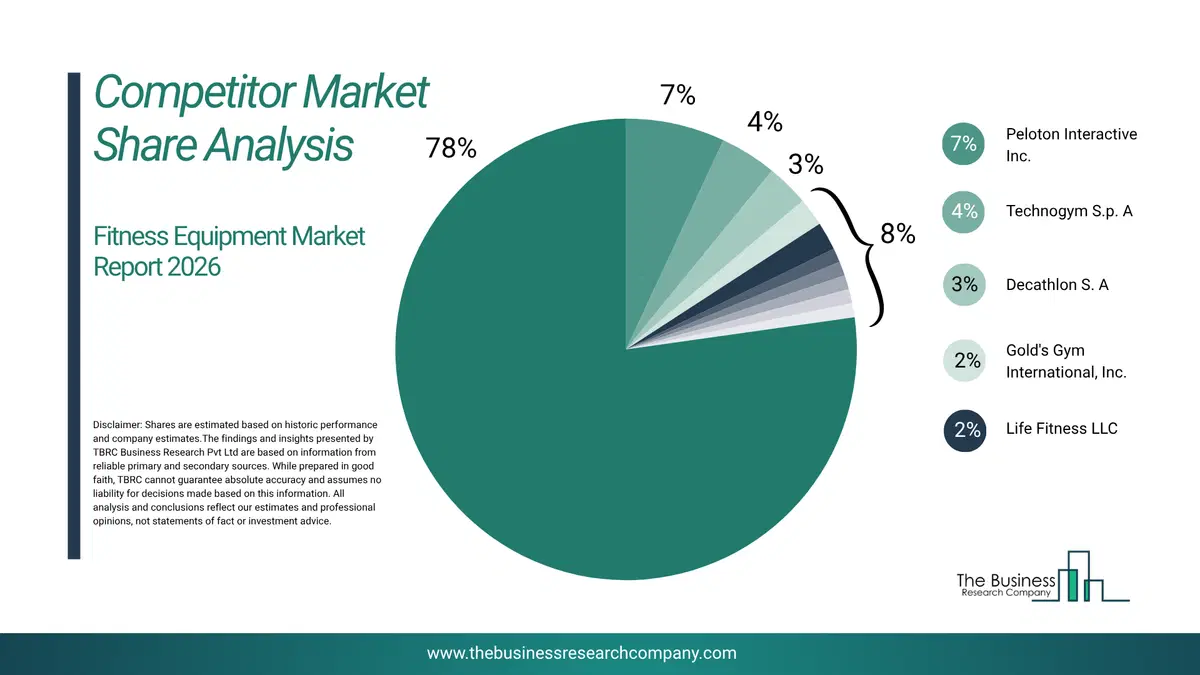
This chart is for illustrative purposes; the full report includes a detailed competitor analysis and comprehensive overview of the top 10 companies in the market.
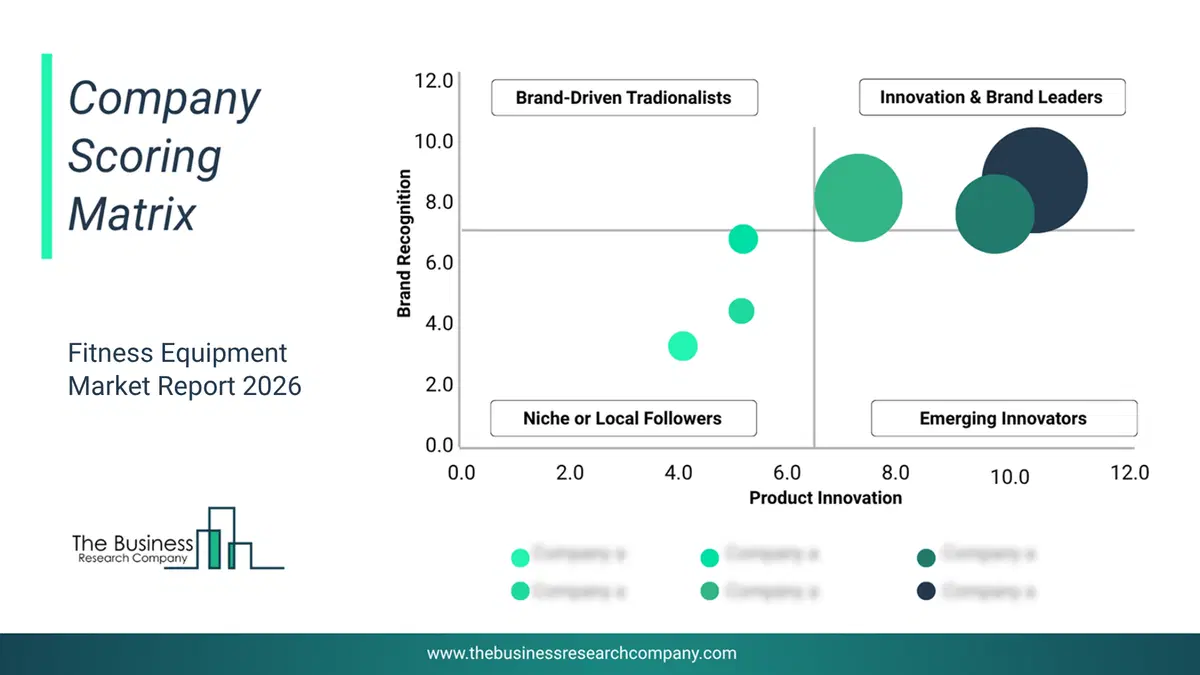
This chart maps companies by product innovation and brand strength, with bubble size indicating relative revenue, helping identify market leaders, challengers, and niche players. This is an illustrative chart; the full report provides a complete and accurate competitive analysis.
Global Fitness Equipment Market Trends and Insights
Major companies operating in the fitness equipment market are increasing their focus on introducing strength training equipment to gain a competitive edge in the market. Strength training equipment refers to a variety of tools and devices designed to facilitate resistance-based exercises aimed at enhancing muscular strength, endurance, and overall physical fitness. For instance, in October 2023, Nike Inc., a US-based fitness company, expanded into a new category with the launch of a new line of strength training equipment called Nike Strength. The Nike Strength line is designed to cater to the needs of all athletes and is available at select Nike retailers, such as Dick's Sporting Goods. It includes a variety of equipment, such as dumbbells, barbells, kettlebells, and bumper plates.What Are Latest Mergers And Acquisitions In The Fitness Equipment Market?
In June 2023, TRX, a US-based functional training equipment and education providing company, acquired YBell Fitness, for an undisclosed amount. This acquisition aims to enhance TRX's multi-purpose, patented product offerings and training solutions. The acquisition will further strengthen TRX's ecosystem, providing fitness enthusiasts, personal trainers, and gym owners with access to an extensive array of functional training equipment and educational resources. YBell Fitness is an Australia-based fitness equipment company recognized for its groundbreaking designs and adaptable training tools.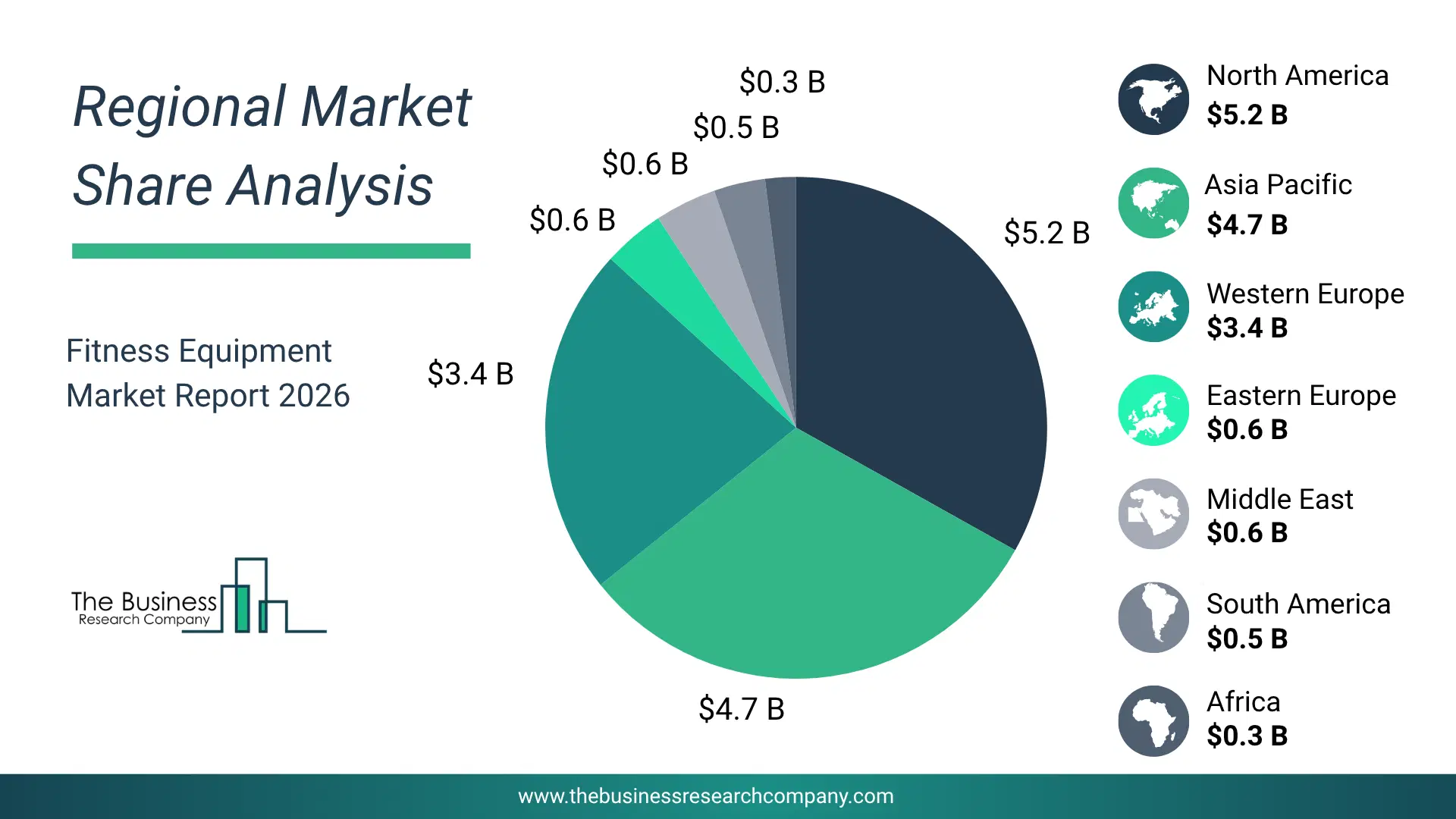
Regional Outlook
North America was the largest region in the fitness equipment market in 2025. Asia-Pacific is expected to be the fastest-growing region in the fitness equipment market report during the forecast period. The regions covered in this market report are Asia-Pacific, South East Asia, Western Europe, Eastern Europe, North America, South America, Middle East, Africa. The countries covered in this market report are Australia, Brazil, China, France, Germany, India, Indonesia, Japan, Taiwan, Russia, South Korea, UK, USA, Canada, Italy, Spain.What Defines the Fitness Equipment Market?
The fitness equipment market consists of sales of treadmills, stationary cycles and ellipticals. Values in this market are ‘factory gate’ values, that is the value of goods sold by the manufacturers or creators of the goods, whether to other entities (including downstream manufacturers, wholesalers, distributors and retailers) or directly to end customers. The value of goods in this market includes related services sold by the creators of the goods.How is Market Value Defined and Measured?
The market value is defined as the revenues that enterprises gain from the sale of goods and/or services within the specified market and geography through sales, grants, or donations in terms of the currency (in USD unless otherwise specified). The revenues for a specified geography are consumption values that are revenues generated by organizations in the specified geography within the market, irrespective of where they are produced. It does not include revenues from resales along the supply chain, either further along the supply chain or as part of other products.
This chart presents market attractiveness based on a quantitative evaluation of growth, competition, strategic alignment, and risk, offering a clear view of opportunity areas for decision-making. This chart is for illustrative purposes; the full report contains the complete analysis.

This chart highlights the Total Addressable Market (TAM) by estimating the maximum revenue opportunity using an assumption-driven approach, supporting strategic planning and opportunity sizing across markets. The chart is illustrative; the full report provides a more comprehensive analysis.
What Key Data and Analysis Are Included in the Fitness Equipment Market Report 2026?
The fitness equipment market research report is one of a series of new reports from The Business Research Company that provides market statistics, including Market Report 2026?global market size, regional shares, competitors with the market share, detailed market segments, market trends and opportunities, and any further data you may need to thrive in the fitness equipment Market Report 2026? The market research report delivers a complete perspective of everything you need, with an in-depth analysis of the current and future state of the Market Report 2026?Fitness Equipment Market Report Forecast Analysis
| Report Attribute | Details |
|---|---|
| Market Size Value In 2026 | $15.81 billion |
| Revenue Forecast In 2030 | $19.47 billion |
| Growth Rate | CAGR of 5.4% from 2026 to 2030 |
| Base Year For Estimation | 2025 |
| Actual Estimates/Historical Data | 2020-2025 |
| Forecast Period | 2026 - 2030 |
| Market Representation | Revenue in USD Billion and CAGR from 2026 to 2030 |
| Segments Covered | Type, Buyer Type, Gender, Application, End User |
| Regional Scope | Asia-Pacific, Western Europe, Eastern Europe, North America, South America, Middle East, Africa |
| Country Scope | The countries covered in the report are Australia, Brazil, China, France, Germany, India, Indonesia, Japan, Taiwan, Russia, South Korea, UK, USA, Canada, Italy, Spain. |
| Key Companies Profiled | Core Health & Fitness LLC, Impulse Health Tech Co. Ltd., Nautilus Inc., Johnson Health Tech. Co. Ltd., Technogym S.p.A, True Fitness Technology Inc., Icon Health & Fitness Inc., Peloton Interactive Inc., Torque Fitness LLC, iFIT.com, Rogue Fitness, Jerai Fitness Private Limited, Cosco Sports Equipment, Shuhua Sports Co. Ltd., Body-Solid Inc., Shandong Aoxinde Fitness Equipment Co. Ltd., BFT Fitness, Shanghai Define Health Tech Co. Ltd., Realleader Fitness Co. Ltd., Amer Sports Corporation, Dyaco International Inc., Decathlon Group, NordicTrack, Matrix Fitness, Horizon Fitness, Synca Wellness, Tempo Fitness, Yanre Fitness, Origin Fitness |
| Customization Scope | Request for Customization |
| Pricing And Purchase Options | Explore Purchase Options |