
Graphics Processing Unit (GPU) As A Service Market Report 2026
Global Outlook – By Component (Solution, Services), By Deployment Model (Public Cloud, Private Cloud, Hybrid Or Multi-cloud), By Enterprise Size (Small And Medium Enterprises, Large Enterprises), By Application (Artificial Intelligence, High-Performance Computing, Cloud Gaming And Media Rendering, Other Applications), By End-User Industry (Banking Financial Services And Insurance (BFSI), Automotive And Mobility, Healthcare And Life Sciences, IT And Communications, Media And Entertainment, Other Industries) – Market Size, Trends, Strategies, and Forecast to 2030
Graphics Processing Unit (GPU) As A Service Market Overview
• Graphics Processing Unit (GPU) As A Service market size has reached to $5.8 billion in 2025 • Expected to grow to $19.34 billion in 2030 at a compound annual growth rate (CAGR) of 27.2% • Growth Driver: The Increase In Security Breaches Is Driving The Market Due To Enhanced Cybersecurity Capabilities • Market Trend: Expanding Enterprise-Grade GPU services To Power Scalable AI Workloads • North America was the largest region in 2025 and Asia-Pacific is the fastest growing region.Market Gains By 2030 – Top Opportunities By Segment
Market Gain identifies the most promising market opportunities by highlighting the segments or products expected to generate the highest incremental revenue growth over the next five years.
What Is Covered Under Graphics Processing Unit (GPU) As A Service Market?
Graphics processing unit as a service is a cloud-based model that delivers on-demand access to virtualized graphics processing unit resources through scalable infrastructure, enabling organizations and individuals to perform computationally intensive tasks such as parallel processing, machine learning, or advanced visualization without the need for significant capital investment in physical hardware. It is primarily utilized to enhance performance, optimize resource allocation, and support innovation across data-driven and graphics-intensive applications. The main components in graphics processing unit (GPU) as a service are solutions and services. The solution component refers to ready-to-use GPU-powered tools and platforms that enable organizations to run AI, machine learning, and high-performance computing workloads without managing physical hardware. This is having deployment models such as public cloud, private cloud, and hybrid or multi-cloud, used by enterprises having sizes including small and medium enterprises and large enterprises, in applications such as artificial intelligence, high-performance computing, cloud gaming and media rendering, and others, by the end-users including industry banking, financial services and insurance (BFSI), automotive and mobility, healthcare and life sciences, IT and communications, media and entertainment, and others.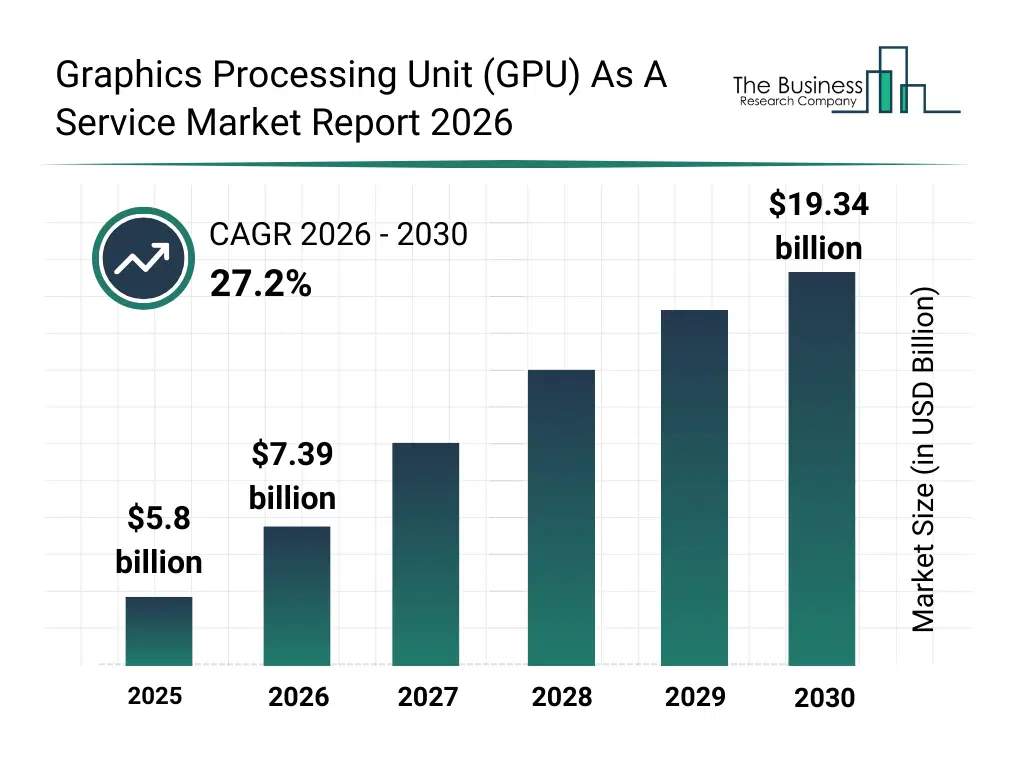
What Is The Graphics Processing Unit (GPU) As A Service Market Size and Share 2026?
The graphics processing unit (gpu) as a service market size has grown exponentially in recent years. It will grow from $5.8 billion in 2025 to $7.39 billion in 2026 at a compound annual growth rate (CAGR) of 27.4%. The growth in the historic period can be attributed to growth in cloud computing adoption, expansion of machine learning workloads, rising demand for high performance computing, increase in digital content creation, adoption of virtualized infrastructure.What Is The Graphics Processing Unit (GPU) As A Service Market Growth Forecast?
The graphics processing unit (gpu) as a service market size is expected to see exponential growth in the next few years. It will grow to $19.34 billion in 2030 at a compound annual growth rate (CAGR) of 27.2%. The growth in the forecast period can be attributed to expansion of generative AI workloads, rising demand for cloud gaming infrastructure, growth in data science computing needs, increasing enterprise cloud migration, adoption of real time rendering platforms. Major trends in the forecast period include on demand gpu virtualization, AI model training acceleration, cloud based rendering platforms, elastic compute resource scaling, pay per use gpu infrastructure.
Global Graphics Processing Unit (GPU) As A Service Market Segmentation
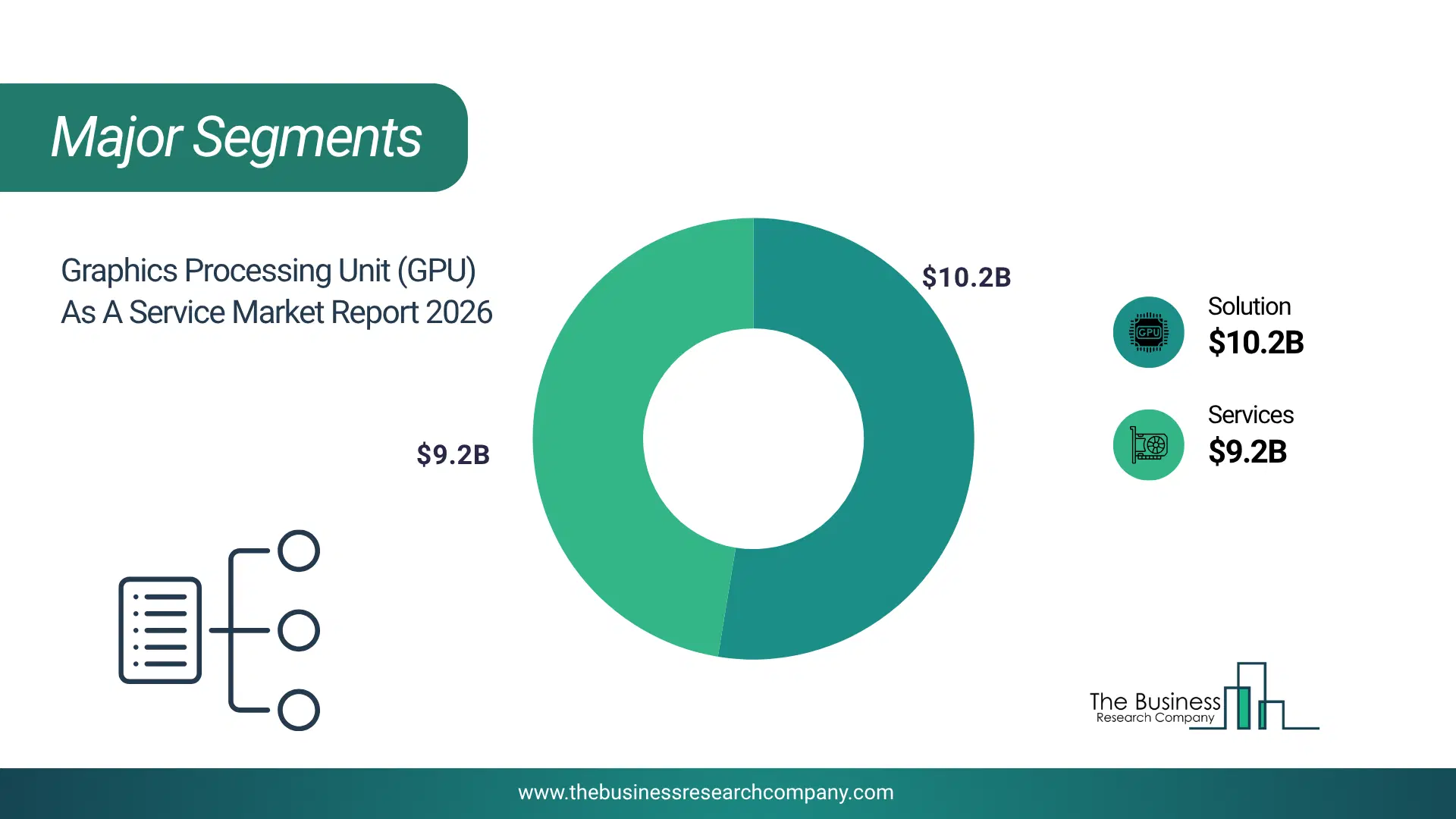
1) By Component: Solution, Services 2) By Deployment Model: Public Cloud, Private Cloud, Hybrid Or Multi-cloud 3) By Enterprise Size: Small And Medium Enterprises, Large Enterprises 4) By Application: Artificial Intelligence, High-Performance Computing, Cloud Gaming And Media Rendering, Other Applications 5) By End-User Industry: Banking Financial Services And Insurance (BFSI), Automotive And Mobility, Healthcare And Life Sciences, IT And Communications, Media And Entertainment, Other Industries Subsegments: 1) By Solution: Software, Platform 2) By Services: Consulting, Deployment And Integration, Support And Maintenance The top segments in the graphics processing unit (gpu) as a service market will be: • Solution will reach $10.16 billion by 2030. • Services will reach $9.18 billion by 2030.What Is The Driver Of The Graphics Processing Unit (GPU) As A Service Market?
The increase in the number of security breaches is expected to propel the growth of the graphics processing unit (GPU) as a service market going forward. Security breaches refer to incidents in which unauthorized individuals or entities gain access to confidential systems, networks, or data, thereby compromising the integrity, availability, or confidentiality of critical information assets. A key factor driving the increase in the number of security breaches is the growing sophistication of cyberattacks, as malicious actors continuously develop advanced techniques that exploit vulnerabilities more effectively, making it increasingly challenging for organizations to maintain robust defenses. GPU as a Service enhances cybersecurity measures against security breaches by enabling faster data processing, real-time threat detection, and advanced AI-driven security analytics. For instance, in April 2025, according to the Department for Science, Innovation and Technology, a UK-based government department, the share of businesses affected by ransomware crimes rose from less than 0.5% in 2024 to 1% in 2025, representing an estimated 19,000 businesses in 2025. Therefore, the increase in the number of security breaches is driving the growth of the graphics processing unit (GPU) as a service industry.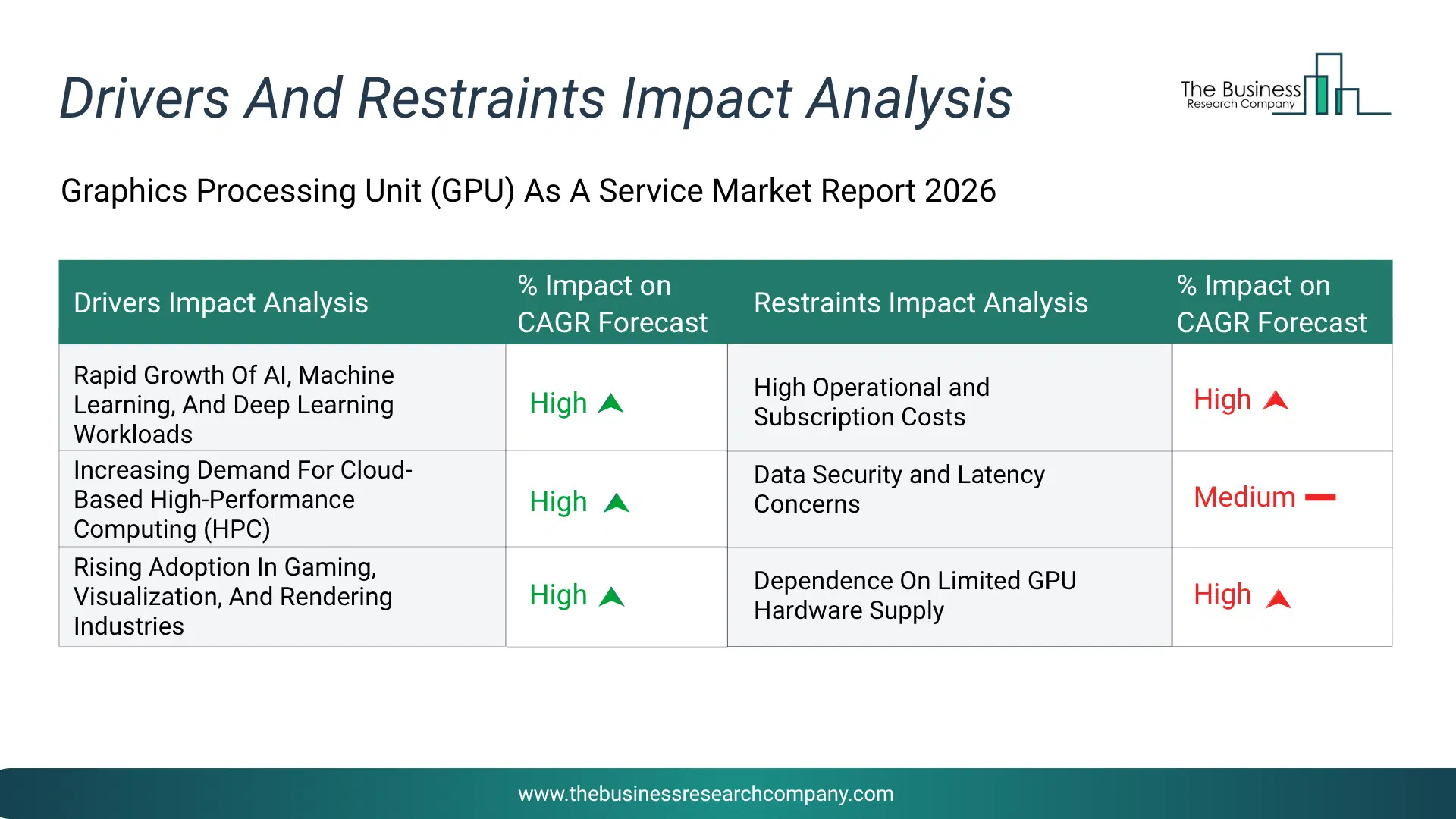
Infographic Chart Showing Key Market Drivers Analysis And Restraints For Graphics Processing Unit (Gpu) As A Service Market
The chart presents an impact analysis of key drivers and restraints, quantifying their relative influence on the market's growth rate and helping assess the balance between growth enablers and limiting factors. This chart offers a high-level perspective; the full report contains more detailed insights.
How Will The Drivers Impact Growth In The Global Graphics Processing Unit (GPU) As A Service Market?
• Rapid Growth Of AI, Machine Learning, And Deep Learning Workloads (High) – During the forecast period, the rapid growth of ai, machine learning, and deep learning workloads is expected to become a key growth driver for the graphics processing unit (gpu) as a service market by 2030. Training advanced neural networks, performing large -scale simulations, and processing data -intensive analytics require substantial gpu computing capabilities. Cloud -based gpu services allow organizations to access this high -performance computing power without the need for significant upfront investments in hardware infrastructure. Gpuaas provides scalable, on -demand resources for enterprises, startups, and research institutions, helping reduce operational costs while enabling flexible management of fluctuating workloads. The increasing reliance on gpu -accelerated computing to support artificial intelligence and data -driven applications continues to drive the expansion of the global market. • Increasing Demand For Cloud-Based High-Performance Computing (HPC) (High) – During the forecast period, the increasing demand for cloud-based high-performance computing (hpc) is expected to emerge as a major factor driving the expansion of the graphics processing unit (gpu) as a service market by 2030. Organizations across industries such as healthcare, automotive, finance, gaming, and entertainment increasingly require high-performance computing for applications including simulations, rendering, and predictive analytics. Gpu-as-a-service (gpuaas) platforms provide scalable, cloud-based hpc infrastructure that enables enterprises to execute compute-intensive workloads without the need to invest in costly on-premise hardware or ongoing maintenance. By leveraging cloud gpus, organizations can reduce capital expenditure, gain flexibility to handle burst workloads, and enable efficient remote collaboration. The rising adoption of cloud computing along with the growing demand for scalable and elastic computing resources is significantly driving the growth of the gpuaas market. • Rising Adoption In Gaming, Visualization, And Rendering Industries (High) – During the forecast period, the rising adoption in gaming, visualization, and rendering industries is expected to act as a key growth catalyst for the graphics processing unit (gpu) as a service market by 2030. Gpuaas adoption is expanding across gaming, media, and visualization sectors where applications such as real-time rendering, 3d modeling, and virtual reality require significant graphical processing power. Cloud-based gpu services enable game developers, animation studios, and digital content creators to access advanced gpu resources for rendering complex graphics and performing large-scale simulations. By offering on-demand and scalable gpu capabilities, these platforms support faster production cycles, reduce infrastructure costs, and enhance creative flexibility. The growing demand for high-quality digital content, along with the rapid expansion of e-sports and cloud gaming, is further accelerating the adoption of gpuaas solutions globally.How Will The Restraints Impact Growth In The Global Graphics Processing Unit (GPU) As A Service Market?
• High Operational and Subscription Costs (High) – During the forecast period, the despite the flexibility offered by gpuaas, high subscription fees and operational costs for accessing top-tier gpu resources can act as a restraint. Small and medium enterprises (smes) or startups may find pricing prohibitive for continuous or large-scale workloads. Additionally, cost management becomes critical for long-term projects that require sustained gpu usage. These financial considerations can limit adoption among budget-sensitive organizations, slowing overall market penetration. • Data Security and Latency Concerns (Medium) – During the forecast period, the organizations leveraging gpuaas for sensitive computations or proprietary data face concerns regarding data security, compliance, and network latency. Cloud-based gpu platforms require robust encryption, secure data handling, and reliable infrastructure to prevent breaches or unauthorized access. Latency in data transfer and remote computation can impact real-time workloads such as ai inference and high-end graphics rendering. These factors act as a restraint, particularly for enterprises with strict data privacy or latency-sensitive applications. • Dependence On Limited GPU Hardware Supply (High) – During the forecast period, the the gpu-as-a-service market is highly dependent on the availability of advanced gpu hardware from a small number of semiconductor manufacturers. Supply shortages, production delays, and growing demand from ai and high-performance computing applications can create capacity constraints. Service providers may face difficulties scaling infrastructure while maintaining competitive pricing. This dependence can limit service availability and slow market growth.Key Players In The Global Graphics Processing Unit (GPU) As A Service Market
Major companies operating in the graphics processing unit (gpu) as a service market are Alphabet Inc., Microsoft Corporation, Alibaba Cloud, Amazon Web Services Inc., International Business Machines Corporation (IBM), Oracle Corporation, Hewlett Packard Enterprise Development, NVIDIA Corporation, OVH SAS, Lambda Labs, Coreweave, The Constant Company LLC (Vultr), Linode Llc, Latitude.Sh, Scaleway, Paperspace, Neysa.ai, Seeweb, Genesis Cloud GmbH., RunPod Inc.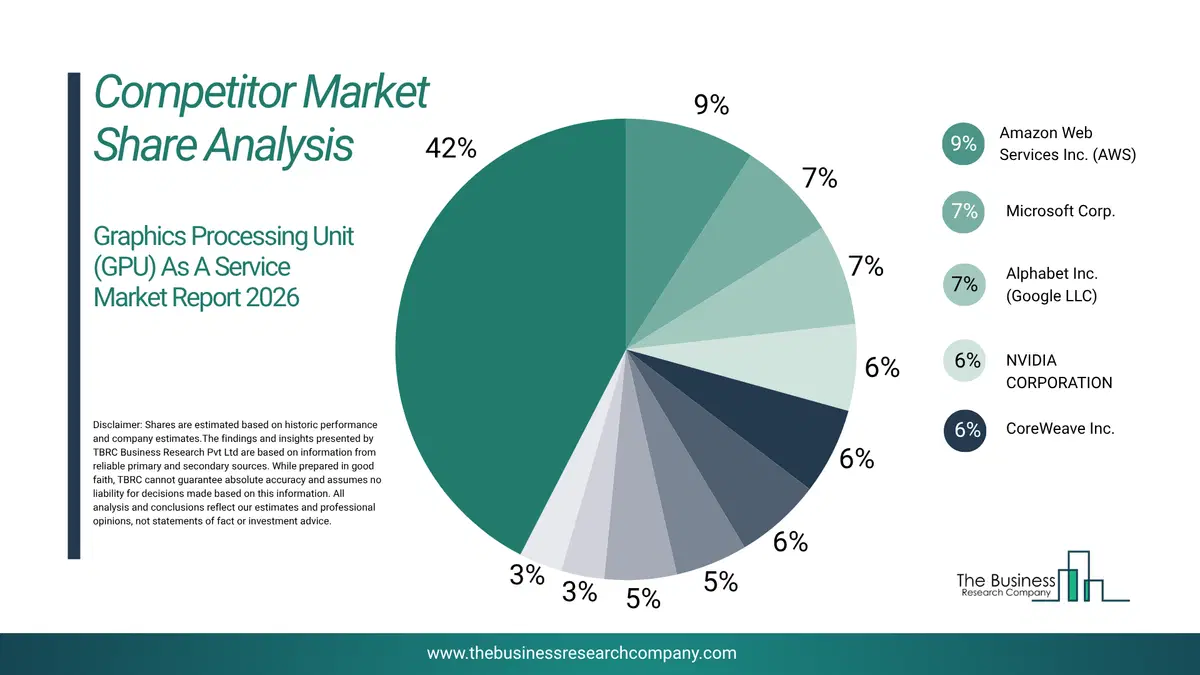
This chart is for illustrative purposes; the full report includes a detailed competitor analysis and comprehensive overview of the top 10 companies in the market.
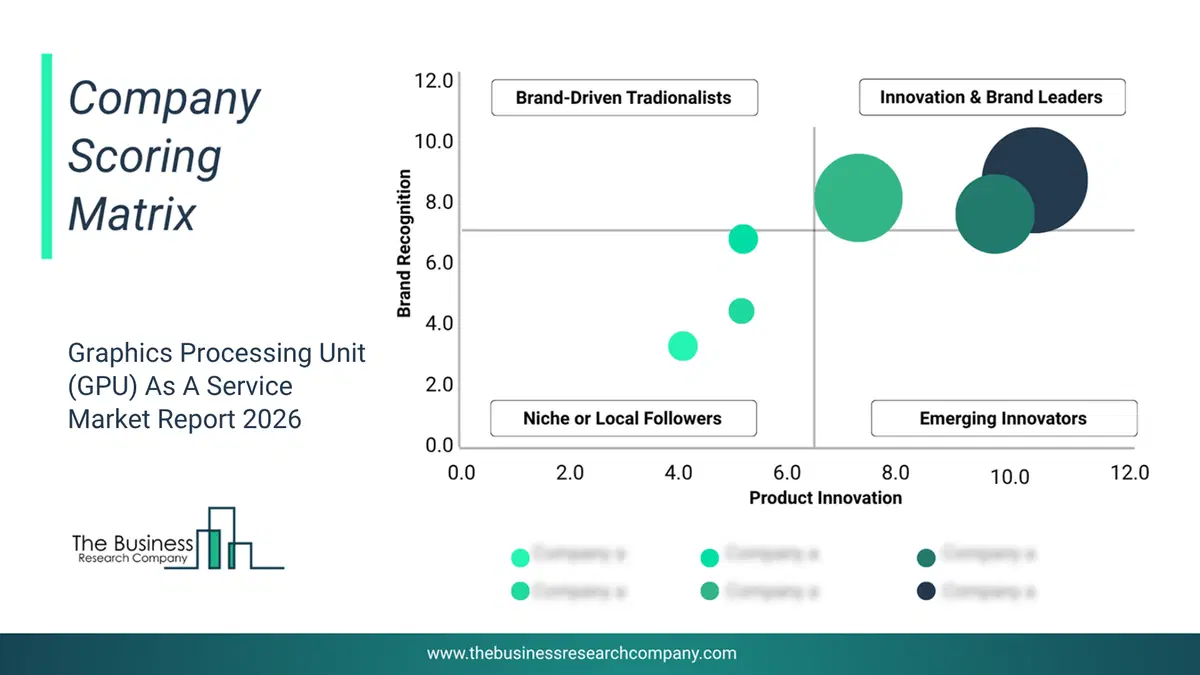
This chart maps companies by product innovation and brand strength, with bubble size indicating relative revenue, helping identify market leaders, challengers, and niche players. This is an illustrative chart; the full report provides a complete and accurate competitive analysis.
Global Graphics Processing Unit (GPU) As A Service Market Trends and Insights
Major companies operating in the graphics processing unit (GPU) as a service market are focusing on expanding enterprise-grade infrastructure solutions, such as subscription-based GPU resource provisioning, to gain a competitive advantage. This approach allows organizations to access powerful graphics processing capabilities without owning or managing physical hardware, thereby supporting scalable AI and high-performance computing workloads. For instance, in September 2024, Lenovo, a China-based technology company, introduced its TruScale GPU-as-a-Service offering. This service delivers access to NVIDIA H100 and L40S GPUs through a fully managed, pay-as-you-go model. It incorporates Lenovo Intelligent Computing Orchestration (LiCO) for workload scheduling and monitoring and offers optional power and cooling services to enhance on-premises deployments. This launch responds to the increasing demand for flexible GPU access in private environments while reducing capital expenditures. However, the dependence on proprietary orchestration tools could restrict interoperability with third-party platforms.What Are Latest Mergers And Acquisitions In The Graphics Processing Unit (GPU) As A Service Market?
In December 2024, NVIDIA Corporation, a US-based semiconductor company, acquired Run:AI for $700 million. With this acquisition, NVIDIA aimed to strengthen its AI infrastructure stack by enabling more efficient GPU resource management and orchestration. Run:AI is an Israel-based AI platform optimizing GPU use and streamlining AI/ML development.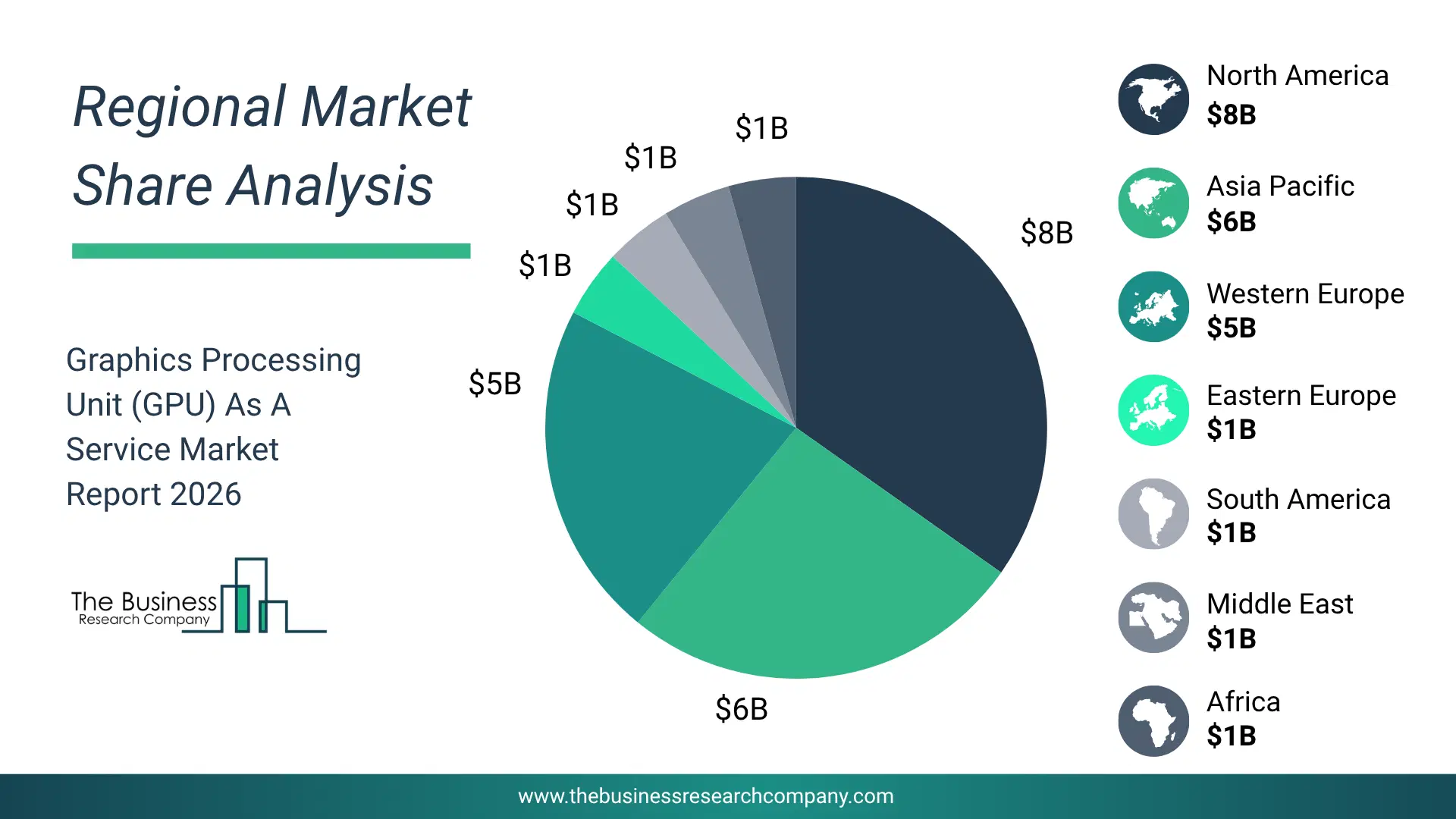
Regional Insights
North America was the largest region in the graphics processing unit (GPU) as a service market in 2025. Asia-Pacific is expected to be the fastest-growing region in the forecast period. The regions covered in this market report are Asia-Pacific, South East Asia, Western Europe, Eastern Europe, North America, South America, Middle East, Africa. The countries covered in this market report are Australia, Brazil, China, France, Germany, India, Indonesia, Japan, Taiwan, Russia, South Korea, UK, USA, Canada, Italy, Spain.What Defines the Graphics Processing Unit (GPU) As A Service Market?
The graphics processing unit (GPU) as a service market includes revenues earned by entities by providing services such as managed GPU hosting, workload orchestration services, GPU resource provisioning, and training and optimization services. The market value includes the value of related goods sold by the service provider or included within the service offering. The graphics processing unit (GPU) as a service market also includes sales of products such as GPU instances, GPU-accelerated virtual machines, high-performance computing clusters, and GPU-based cloud workstations. Values in this market are ‘factory gate’ values, that is, the value of goods sold by the manufacturers or creators of the goods, whether to other entities (including downstream manufacturers, wholesalers, distributors, and retailers) or directly to end customers. The value of goods in this market includes related services sold by the creators of the goods.How is Market Value Defined and Measured?
The market value is defined as the revenues that enterprises gain from the sale of goods and/or services within the specified market and geography through sales, grants, or donations in terms of the currency (in USD unless otherwise specified). The revenues for a specified geography are consumption values that are revenues generated by organizations in the specified geography within the market, irrespective of where they are produced. It does not include revenues from resales along the supply chain, either further along the supply chain or as part of other products.
This chart presents market attractiveness based on a quantitative evaluation of growth, competition, strategic alignment, and risk, offering a clear view of opportunity areas for decision-making. This chart is for illustrative purposes; the full report contains the complete analysis.

This chart highlights the Total Addressable Market (TAM) by estimating the maximum revenue opportunity using an assumption-driven approach, supporting strategic planning and opportunity sizing across markets. The chart is illustrative; the full report provides a more comprehensive analysis.
What Key Data and Analysis Are Included in the Graphics Processing Unit (GPU) As A Service Market Report 2026?
The graphics processing unit (gpu) as a service market research report is one of a series of new reports from The Business Research Company that provides market statistics, including industry global market size, regional shares, competitors with the market share, detailed market segments, market trends and opportunities, and any further data you may need to thrive in the graphics processing unit (gpu) as a service industry. The market research report delivers a complete perspective of everything you need, with an in-depth analysis of the current and future state of the industry.Graphics Processing Unit (GPU) As A Service Market Report Forecast Analysis
| Report Attribute | Details |
|---|---|
| Market Size Value In 2026 | $7.39 billion |
| Revenue Forecast In 2030 | $19.34 billion |
| Growth Rate | CAGR of 27.2% from 2026 to 2030 |
| Base Year For Estimation | 2025 |
| Actual Estimates/Historical Data | 2020-2025 |
| Forecast Period | 2026 - 2030 |
| Market Representation | Revenue in USD Billion and CAGR from 2026 to 2030 |
| Segments Covered | Component, Deployment Model, Enterprise Size, Application, End-User Industry |
| Regional Scope | Asia-Pacific, Western Europe, Eastern Europe, North America, South America, Middle East, Africa |
| Country Scope | The countries covered in the report are Australia, Brazil, China, France, Germany, India, ... |
| Key Companies Profiled | Alphabet Inc., Microsoft Corporation, Alibaba Cloud, Amazon Web Services Inc., International Business Machines Corporation (IBM), Oracle Corporation, Hewlett Packard Enterprise Development, NVIDIA Corporation, OVH SAS, Lambda Labs, Coreweave, The Constant Company LLC (Vultr), Linode Llc, Latitude.Sh, Scaleway, Paperspace, Neysa.ai, Seeweb, Genesis Cloud GmbH., RunPod Inc. |
| Customization Scope | Request for Customization |
| Pricing And Purchase Options | Explore Purchase Options |