
H2 Antagonists Market Report 2026
Global Outlook – By Drug Type (Prescription H2 Antagonists, Over-The-Counter H2 Antagonists), By Indication (Gastroesophageal Reflux Disease (GERD), Peptic Ulcer Disease, Zollinger-Ellison Syndrome, Other Indications), By Dosage Form (Tablets, Capsules, Injectable Solutions, Liquid Formulations), By Distribution Channel (Retail Pharmacies, Hospital Pharmacies, Online Pharmacies, Drug Stores) – Market Size, Trends, Strategies, and Forecast to 2030
H2 Antagonists Market Overview
• H2 Antagonists market size has reached to $18.32 billion in 2025 • Expected to grow to $25.14 billion in 2030 at a compound annual growth rate (CAGR) of 6.5% • Growth Driver: Increasing Prevalence Of Gastrointestinal Disorders Fueling The Growth Of The Market Due To Rising Demand For Acid-Reducing Therapies And Symptom Relief • Market Trend: Fixed-Dose Combination Therapies Gain Traction with Endo International Launch • North America was the largest region in 2025 and Asia-Pacific is the fastest growing region.What Is Covered Under H2 Antagonists Market?
H2 antagonists are medications that block H2 receptors in the stomach lining. They work by decreasing the production of stomach acid, which promotes healing and relieves symptoms caused by excess acid. These drugs are commonly used to treat ulcers and are available in both prescription and over-the-counter forms, making them widely accessible to patients. The main types of H2 antagonists are prescription H2 antagonists and over-the-counter H2 antagonists. Prescription H2 antagonists refer to a class of medications that are available only with a doctor's prescription and are used to reduce the amount of acid produced by the stomach. These are used for various indications, including gastroesophageal reflux disease, peptic ulcer disease, zollinger-ellison syndrome, and others. The dosage forms include tablets, capsules, injectable solutions, and liquid formulations distributed through various distribution channels such as retail pharmacies, hospital pharmacies, online pharmacies, and drugstores.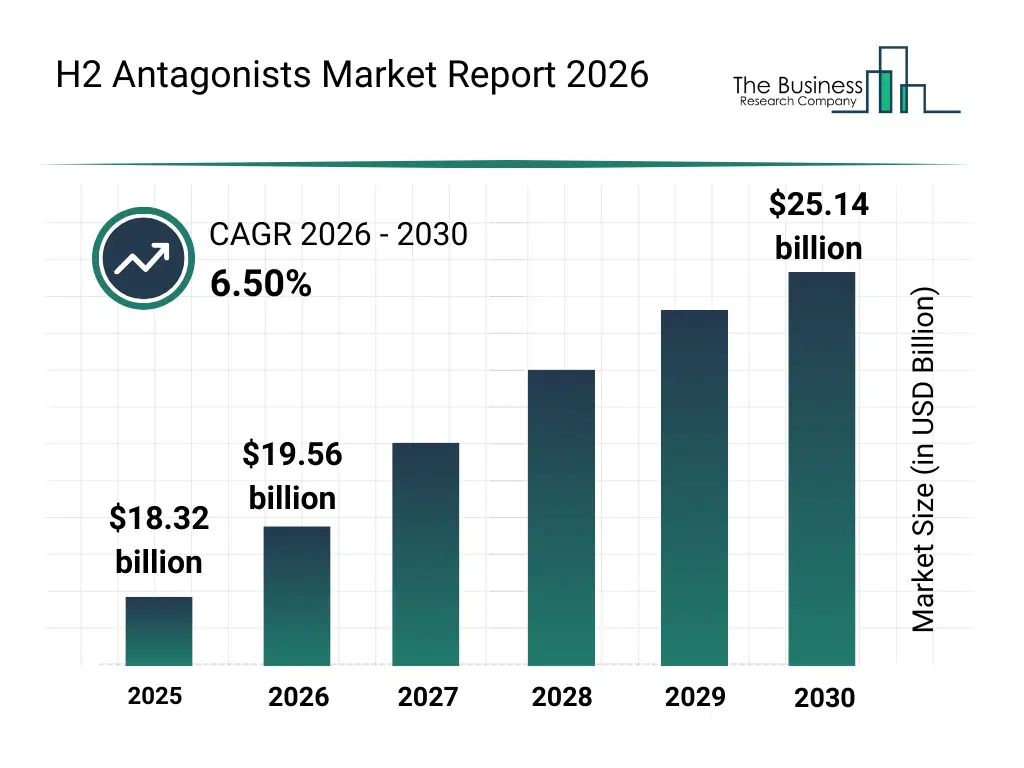
What Is The H2 Antagonists Market Size and Share 2026?
The h2 antagonists market size has grown strongly in recent years. It will grow from $18.32 billion in 2025 to $19.56 billion in 2026 at a compound annual growth rate (CAGR) of 6.8%. The growth in the historic period can be attributed to peptic ulcer prevalence, gerd incidence, otc drug adoption, hospital pharmacy expansion, gastrointestinal disorder awareness.What Is The H2 Antagonists Market Growth Forecast?
The h2 antagonists market size is expected to see strong growth in the next few years. It will grow to $25.14 billion in 2030 at a compound annual growth rate (CAGR) of 6.5%. The growth in the forecast period can be attributed to aging population, demand for affordable acid reducers, self-medication growth, online pharmacy expansion, chronic gerd management. Major trends in the forecast period include continued demand for acid suppression therapies, growing otc availability of h2 antagonists, increased use in mild gerd and ulcer management, expansion of liquid and injectable formulations, rising preference for cost-effective acid control drugs.
Global H2 Antagonists Market Segmentation
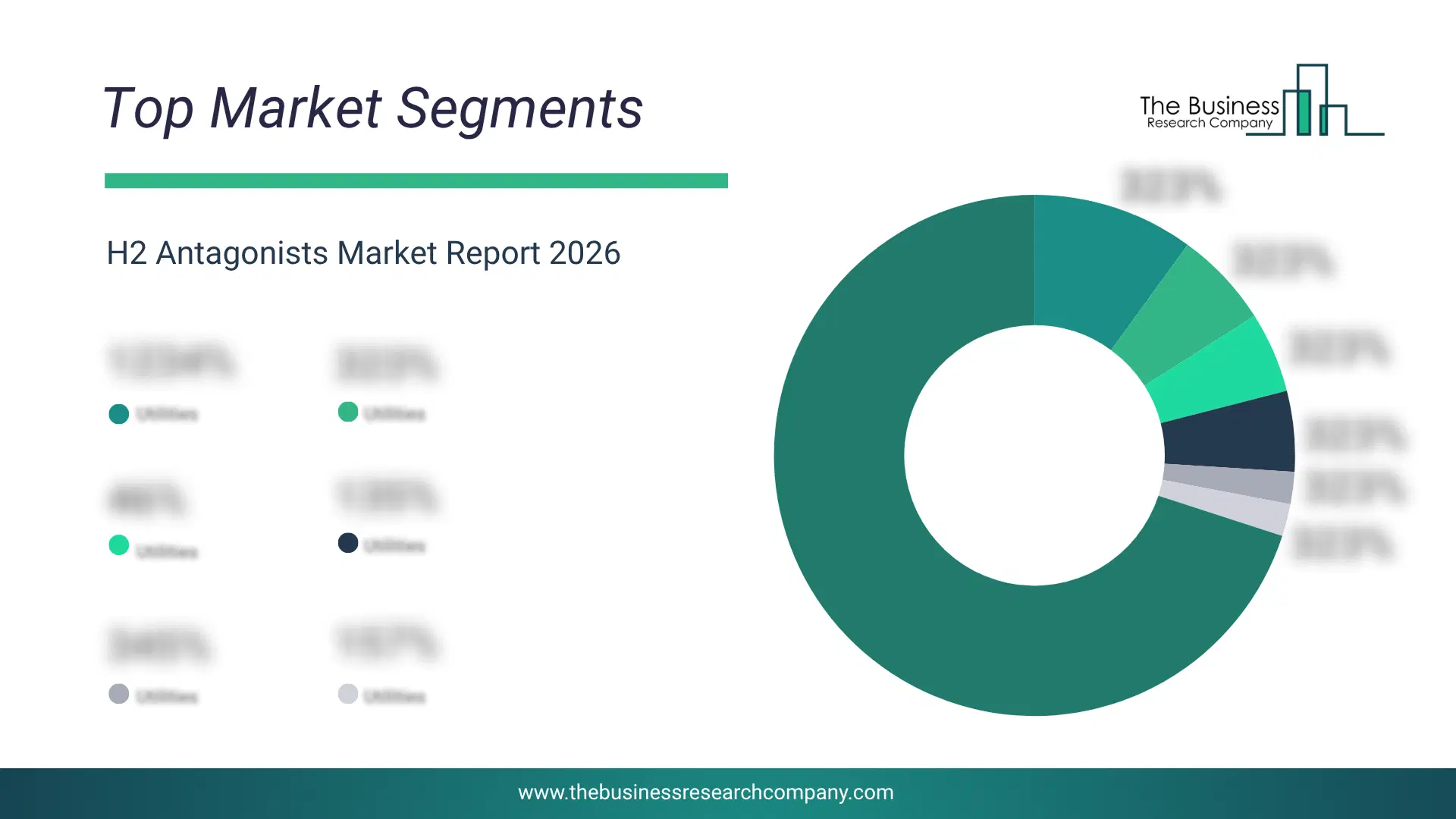
1) By Drug Type: Prescription H2 Antagonists, Over-The-Counter H2 Antagonists 2) By Indication: Gastroesophageal Reflux Disease (GERD), Peptic Ulcer Disease, Zollinger-Ellison Syndrome, Other Indications 3) By Dosage Form: Tablets, Capsules, Injectable Solutions, Liquid Formulations 4) By Distribution Channel: Retail Pharmacies, Hospital Pharmacies, Online Pharmacies, Drug Stores Subsegments: 1) By Prescription H2 Antagonists: Gastroesophageal Reflux Disease (GERD), Peptic Ulcers, Zollinger-Ellison Syndrome 2) By Over-The-Counter (OTC) H2 Antagonist: Heartburn, Occasional Acid Reflux, IndigestionWhat Are The Drivers Of The H2 Antagonists Market?
The increasing prevalence of gastrointestinal disorders is expected to propel the growth of the H2 antagonists market going forward. Gastrointestinal (GI) disorders refer to health conditions that affect the digestive system, which includes the esophagus, stomach, intestines, liver, pancreas, and gallbladder. The increasing prevalence of gastrointestinal (GI) disorders is due to unhealthy dietary habits, as they stimulate excess stomach acid production and irritate the digestive tract. H2 antagonists help manage gastrointestinal disorders by reducing stomach acid production, making them effective for treating conditions like acid reflux and ulcers. They enhance patient comfort by relieving symptoms quickly and supporting long-term digestive health. For instance, in March 2024, according to the World Health Organization (WHO), a Switzerland-based specialized agency of the United Nations, diarrheal diseases account for approximately 1.7 billion cases annually and result in the deaths of around 443,832 children under the age of 5, along with an additional 50,851 deaths among children aged 5 to 9. Therefore, the increasing prevalence of gastrointestinal disorders is driving the growth of the H2 antagonists industry. The increasing healthcare expenditure is expected to propel the growth of the H2 antagonists market going forward. Healthcare expenditure refers to the total amount of money spent on medical services, treatments, facilities, research, and public health initiatives to maintain or improve health outcomes. The increasing healthcare expenditure is due to the rising burden of chronic diseases, as they require ongoing treatment and management, leading to higher medical costs over time. Healthcare expenditure aids in H2 antagonist market growth by increasing funding for advanced treatments and medication accessibility. It supports research and development, leading to improved drug formulations and better patient outcomes. For instance, in December 2024, according to the Centers for Medicare and Medicaid Services (CMS), a US-based federal agency, the national health expenditures (NHE) grew by 7.5% to $4.9 trillion in 2023, accounting for 17.6% of gross domestic product (GDP). Additionally, between 2023 and 2032, average national health expenditures (NHE) are projected to grow at an average annual rate of 5.6%, resulting in an increase in the health spending share of gross domestic product (GDP) from 17.3% in 2022 to 19.7% in 2032. Therefore, the increasing healthcare expenditure is driving the growth of the H2 antagonists industry.Key Players In The Global H2 Antagonists Market
Major companies operating in the h2 antagonists market are Aurobindo Pharma Limited, Cipla Limited, Lupin Limited, Alkem Laboratories Limited, Intas Pharmaceuticals Limited, Mylan N.V. (Viatris Inc.), Glenmark Pharmaceuticals Limited, Hikma Pharmaceuticals PLC, Zydus Lifesciences Limited, Wockhardt Limited, Sandoz International GmbH, Alembic Pharmaceuticals Limited, Micro Labs Limited, IPCA Laboratories Limited, Emcure Pharmaceuticals Limited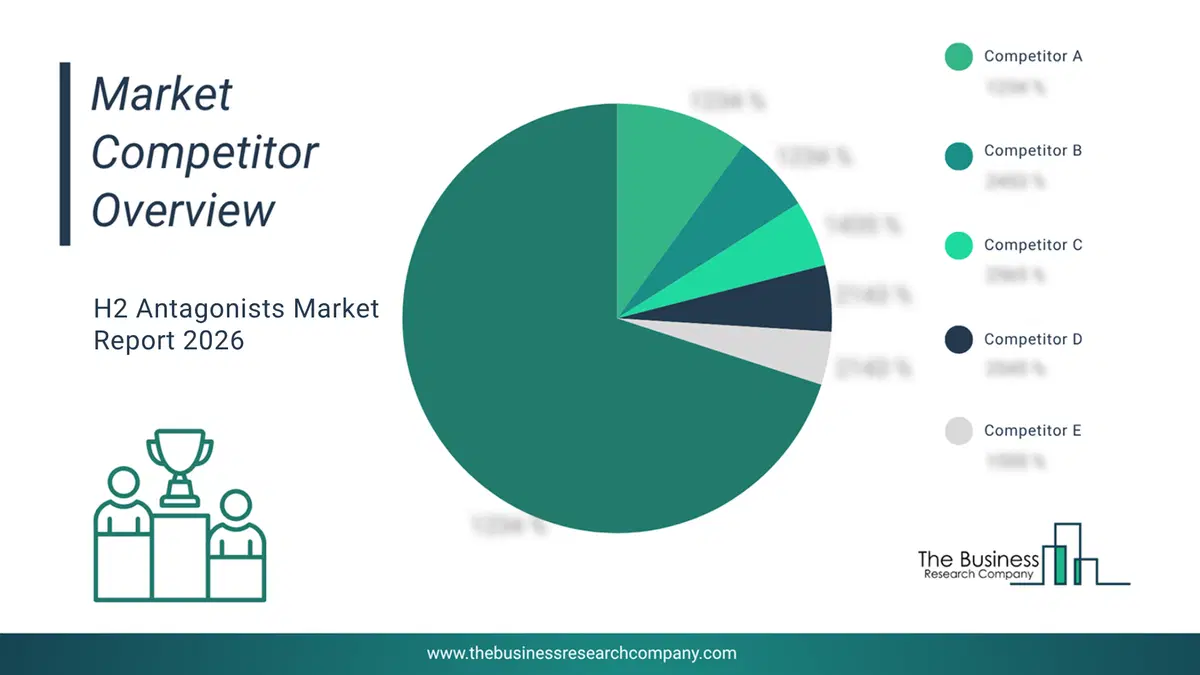
This chart is for illustrative purposes; the full report includes a detailed competitor analysis and comprehensive overview of the top 10 companies in the market.
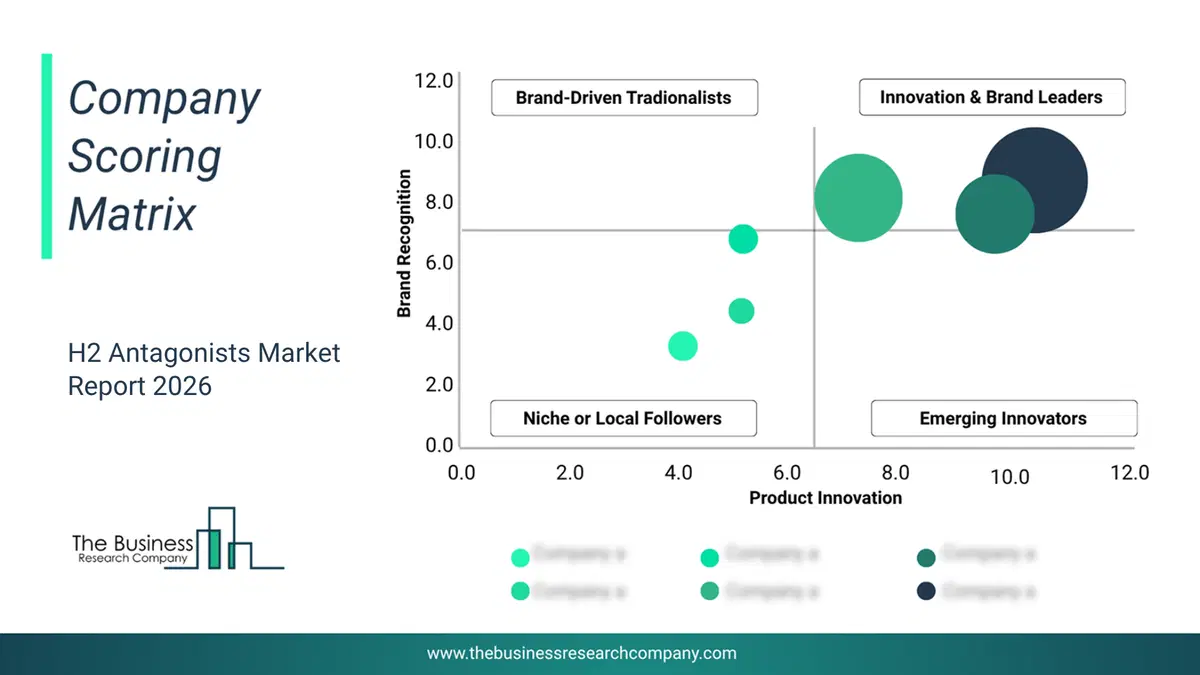
This chart maps companies by product innovation and brand strength, with bubble size indicating relative revenue, helping identify market leaders, challengers, and niche players. This is an illustrative chart; the full report provides a complete and accurate competitive analysis.
Global H2 Antagonists Market Trends and Insights
Major companies operating in the H2 antagonists market are focusing on developing innovative solutions, such as fixed-dose combination therapies to enhance patient compliance and reduce gastrointestinal side effects. Fixed-dose combination therapies are medications that combine two or more active drugs in a single dosage form, helping simplify treatment regimens, improve patient adherence, and reduce the risk of side effects compared to taking multiple separate drugs. For instance, in March 2024, Endo International plc, a US-based pharmaceutical company, launched ibuprofen-famotidine 800 mg/26.6 mg tablets, a generic version of the brand combination previously marketed as Duexis. The novel product consists of 800 mg of the non-steroidal anti-inflammatory drug ibuprofen plus 26.6 mg of the H2-receptor antagonist famotidine, designed to relieve the symptoms of rheumatoid arthritis and osteoarthritis (via ibuprofen) while simultaneously reducing the risk of NSAID-induced upper gastrointestinal ulcers (via famotidine). Unique features include the fixed-dose co-formulation in a single tablet, simplifying regimen compared to separate administration of an NSAID and a gastro-protective agent; applicability to patients requiring chronic NSAID therapy with concomitant ulcer-risk mitigation; and the benefit of cost-effective generic access in the US market.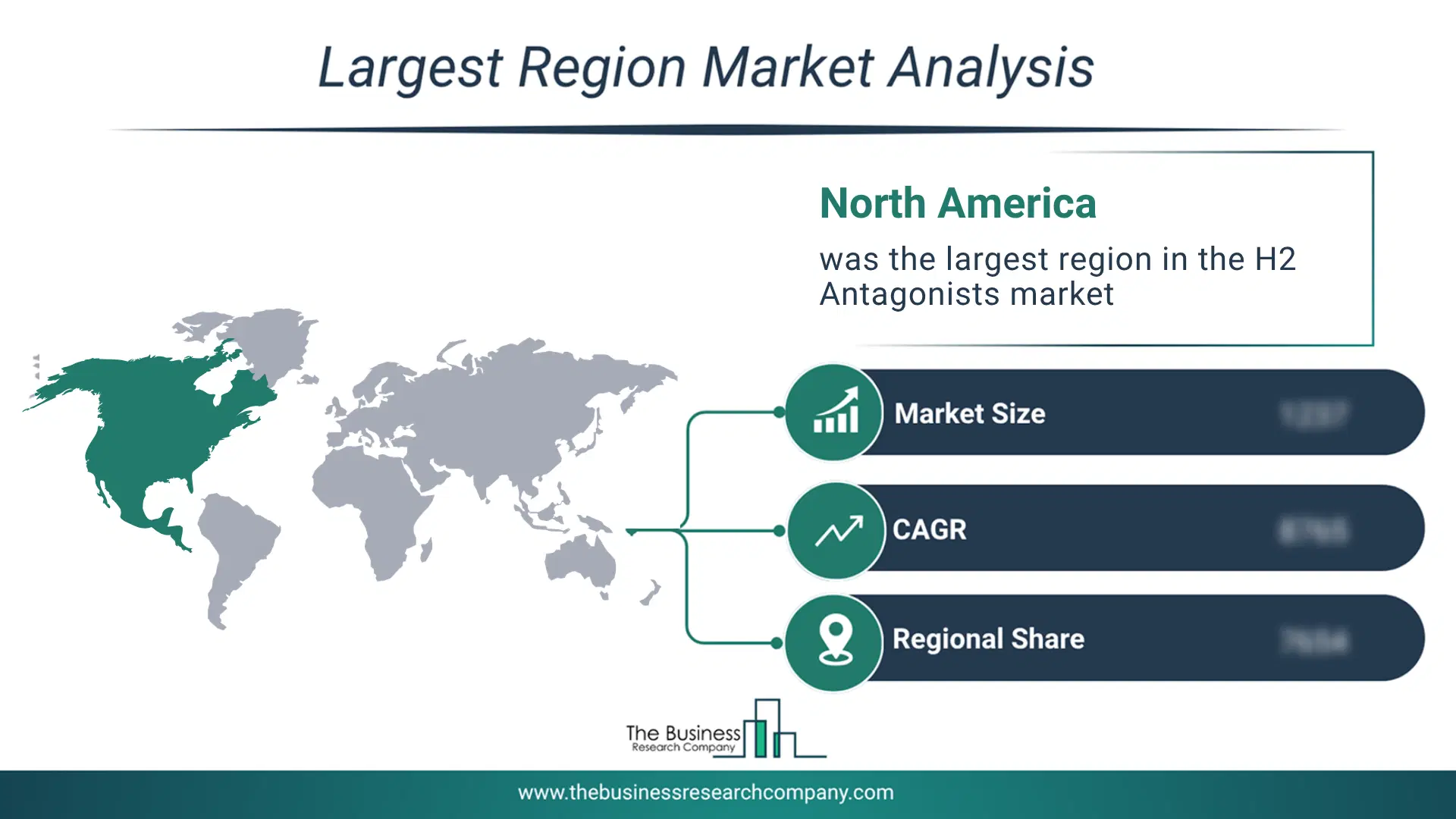
Regional Insights
North America was the largest region in the H2 receptor antagonists market in 2025. Asia-Pacific is expected to be the fastest-growing region in the forecast period. The regions covered in this market report are Asia-Pacific, South East Asia, Western Europe, Eastern Europe, North America, South America, Middle East, Africa. The countries covered in this market report are Australia, Brazil, China, France, Germany, India, Indonesia, Japan, Taiwan, Russia, South Korea, UK, USA, Canada, Italy, Spain.What Defines the H2 Antagonists Market?
The H2 antagonists market consists of sales of ranitidine, famotidine, cimetidine, and nizatidine. Values in this market are ‘factory gate’ values, that is, the value of goods sold by the manufacturers or creators of the goods, whether to other entities (including downstream manufacturers, wholesalers, distributors, and retailers) or directly to end customers. The value of goods in this market includes related services sold by the creators of the goods.How is Market Value Defined and Measured?
The market value is defined as the revenues that enterprises gain from the sale of goods and/or services within the specified market and geography through sales, grants, or donations in terms of the currency (in USD unless otherwise specified). The revenues for a specified geography are consumption values that are revenues generated by organizations in the specified geography within the market, irrespective of where they are produced. It does not include revenues from resales along the supply chain, either further along the supply chain or as part of other products.
This chart presents market attractiveness based on a quantitative evaluation of growth, competition, strategic alignment, and risk, offering a clear view of opportunity areas for decision-making. This chart is for illustrative purposes; the full report contains the complete analysis.

This chart highlights the Total Addressable Market (TAM) by estimating the maximum revenue opportunity using an assumption-driven approach, supporting strategic planning and opportunity sizing across markets. The chart is illustrative; the full report provides a more comprehensive analysis.
What Key Data and Analysis Are Included in the H2 Antagonists Market Report 2026?
The h2 antagonists market research report is one of a series of new reports from The Business Research Company that provides market statistics, including industry global market size, regional shares, competitors with the market share, detailed market segments, market trends and opportunities, and any further data you may need to thrive in the h2 antagonists industry. The market research report delivers a complete perspective of everything you need, with an in-depth analysis of the current and future state of the industry.H2 Antagonists Market Report Forecast Analysis
| Report Attribute | Details |
|---|---|
| Market Size Value In 2026 | $19.56 billion |
| Revenue Forecast In 2030 | $25.14 billion |
| Growth Rate | CAGR of 6.8% from 2026 to 2030 |
| Base Year For Estimation | 2025 |
| Actual Estimates/Historical Data | 2020-2025 |
| Forecast Period | 2026 - 2030 |
| Market Representation | Revenue in USD Billion and CAGR from 2026 to 2030 |
| Segments Covered | Drug Type, Indication, Dosage Form, Distribution Channel |
| Regional Scope | Asia-Pacific, Western Europe, Eastern Europe, North America, South America, Middle East, Africa |
| Country Scope | The countries covered in the report are Australia, Brazil, China, France, Germany, India, Indonesia, Japan, Taiwan, Russia, South Korea, UK, USA, Canada, Italy, Spain. |
| Key Companies Profiled | Aurobindo Pharma Limited, Cipla Limited, Lupin Limited, Alkem Laboratories Limited, Intas Pharmaceuticals Limited, Mylan N.V. (Viatris Inc.), Glenmark Pharmaceuticals Limited, Hikma Pharmaceuticals PLC, Zydus Lifesciences Limited, Wockhardt Limited, Sandoz International GmbH, Alembic Pharmaceuticals Limited, Micro Labs Limited, IPCA Laboratories Limited, Emcure Pharmaceuticals Limited |
| Customization Scope | Request for Customization |
| Pricing And Purchase Options | Explore Purchase Options |