

Healthcare EDI Market Report 2026
Global Outlook – By Component (Software, Services), By Transaction (Claim Management, Healthcare Supply Chain, Other Transactions), By Mode of Delivery (VAN, Web And Cloud-based, Point-to-point), By End User (Healthcare Provider, Payer, Pharmacies, Other End Users) - Market Size, Trends, Strategies, and Forecast to 2030
Healthcare EDI Market Overview
• Healthcare EDI market size has reached to $5.62 billion in 2025 • Expected to grow to $9.93 billion in 2030 at a compound annual growth rate (CAGR) of 12% • Growth Driver: Government Support Catalyzing Growth In The Healthcare Edi Market • Market Trend: Advancements in the Healthcare EDI Market to Enhance Interoperability and Compliance • North America was the largest region in 2025 and Asia-Pacific is the fastest growing region.What Is Covered Under Healthcare EDI Market?
Healthcare electronic data interchange (EDI) is the software medium for the transaction of data among various healthcare providers and payers via computer systems. The organizer can process and track claims through the entire billing cycle via the EDI service. The healthcare EDI is used to manage the patient's medical history, medication data, and emergency services record, which are considered critical data in the healthcare sector. The main types of transactions in healthcare EDI are claim management, healthcare supply chain, and others. Claim management is the organization, billing, filing, updating, and procedure of healthcare claims connected to patient diagnoses, medication, and treatment. The different components include software, hardware, and services and include various delivery modes such as mobile, VAN, web & cloud-based, and point-to-point. These are used by healthcare providers, payers, pharmacies, and other end users.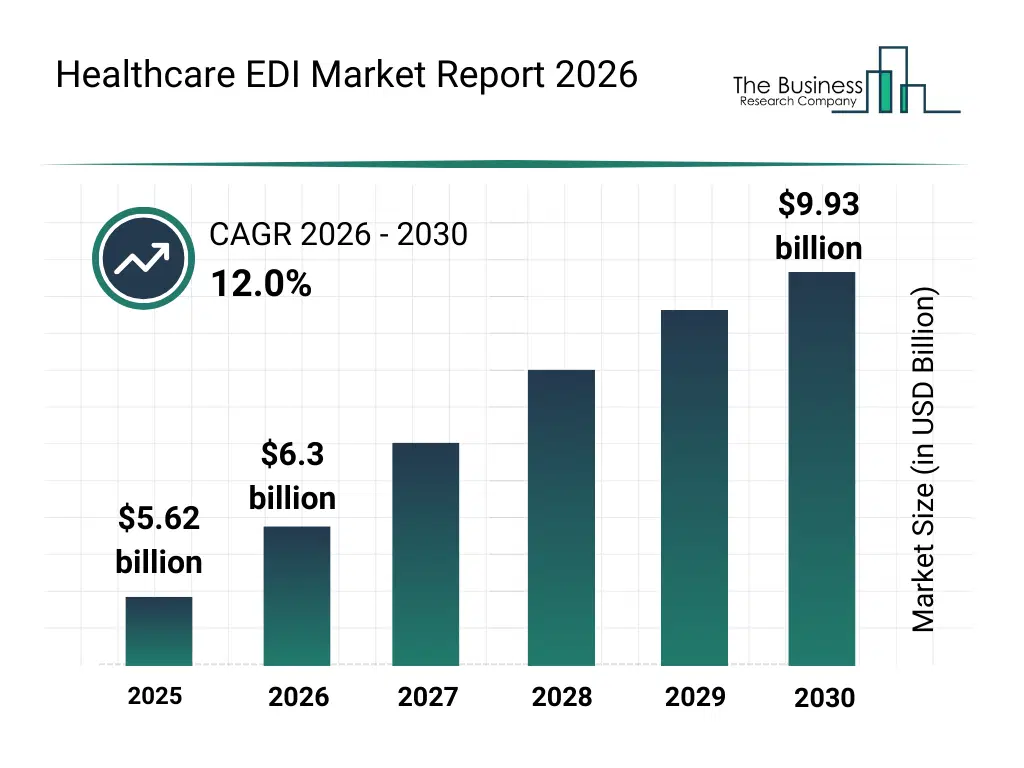
What Is The Healthcare EDI Market Size and Share 2026?
The healthcare edi market size has grown rapidly in recent years. It will grow from $5.62 billion in 2025 to $6.3 billion in 2026 at a compound annual growth rate (CAGR) of 12.2%. The growth in the historic period can be attributed to expansion of digital healthcare billing systems, increasing insurance claim volumes, adoption of standardized healthcare transaction formats, growth of payer-provider networks, rising need for administrative efficiency.What Is The Healthcare EDI Market Growth Forecast?
The healthcare edi market size is expected to see rapid growth in the next few years. It will grow to $9.93 billion in 2030 at a compound annual growth rate (CAGR) of 12.0%. The growth in the forecast period can be attributed to increasing investments in automated revenue cycle management, rising demand for real-time eligibility verification, expansion of cloud-native edi solutions, growing focus on interoperability compliance, increasing adoption of ai-assisted claims processing. Major trends in the forecast period include increasing adoption of cloud-based edi platforms, growing automation of claims and billing processes, rising integration of edi with hospital information systems, expansion of real-time transaction processing, enhanced focus on compliance and data accuracy.
Global Healthcare EDI Market Segmentation
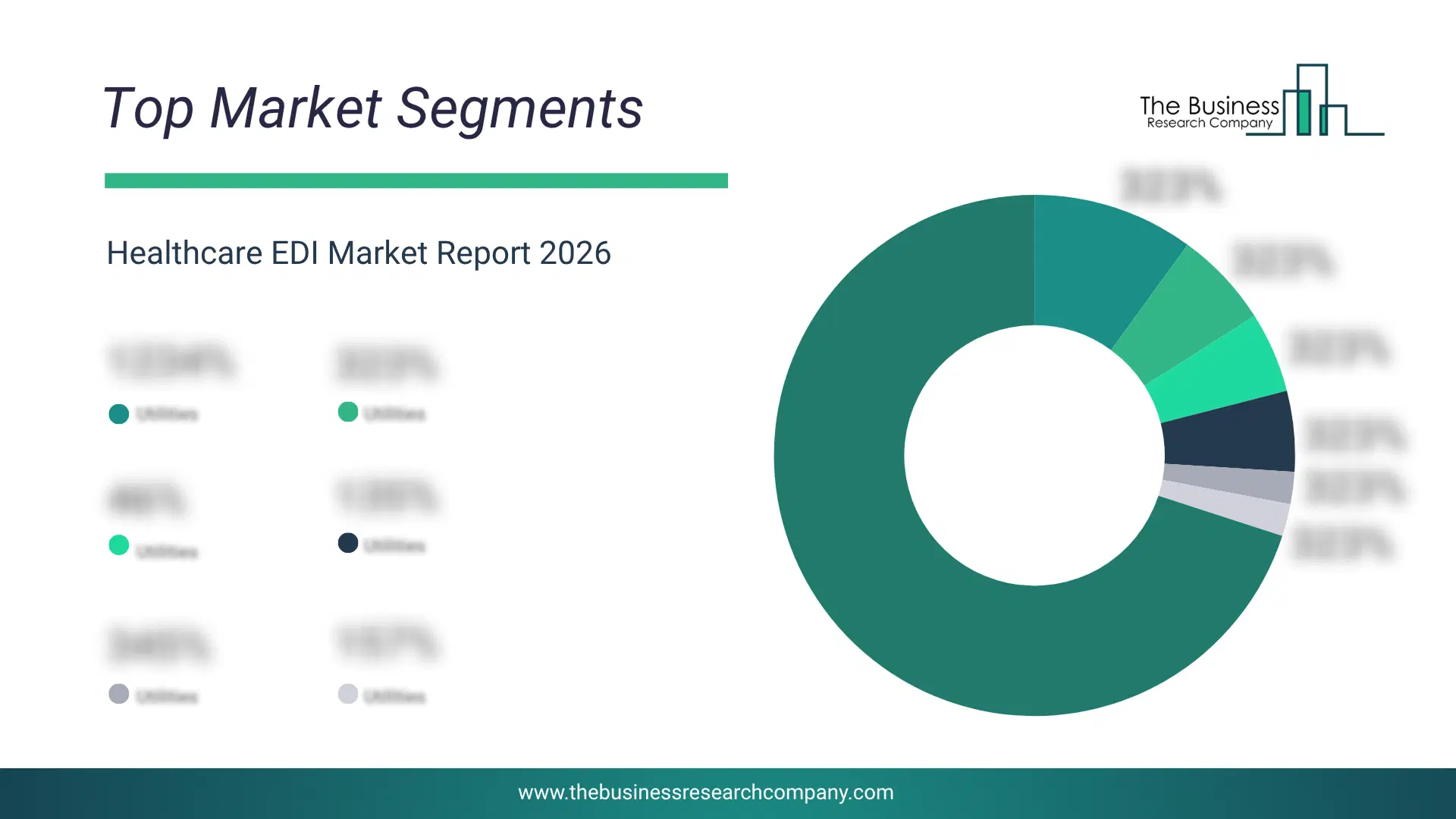
1) By Component: Software, Services 2) By Transaction: Claim Management, Healthcare Supply Chain, Other Transactions 3) By Mode of Delivery: VAN, Web And Cloud-based, Point-to-point 4) By End User: Healthcare Provider, Payer, Pharmacies, Other End Users Subsegments: 1) By Software: EDI Solutions, Integration Software, EDI Mapping And Translation Software 2) By Services: EDI Consulting Services, Managed EDI Services, Technical Support And Maintenance ServicesWhat Is The Driver Of The Healthcare EDI Market?
The increasing government support for healthcare is expected to propel the growth of the healthcare EDI market growing forward. Healthcare EDI is used to share information between the departments and branches in super-specialty hospitals. Healthcare EDI software helps to transmit details including coordination of benefits, claims status and information, insurance data, payment data, and eligibility forms among healthcare. Rising government support for the healthcare industry helps the healthcare sector develop new equipment and provide better services for the people. It also helps to increase technology in government hospitals. For instance, in May 2024, according to the Office for National Statistics, a UK-based government department, reported that total healthcare expenditure saw a 5.6% increase in nominal terms from 2022 to 2023, marking a significant acceleration compared to the 0.9% growth observed in 2022. Therefore, the increasing government support for healthcare drives the demand for the healthcare EDI industry.Key Players In The Global Healthcare EDI Market
Major companies operating in the healthcare edi market are McKesson Corporation, Optum Inc, Allscripts, Cognizant Technology Solutions India Pvt Ltd, Cerner Corporation, The SSI Group, Quadax Inc, AthenaHealth, Change Healthcare Inc, Conduent Inc, Epic Systems Corporation, NextGen Healthcare, Edifecs Inc, Waystar Inc, Availity LLC, eClinicalWorks, Ability Network, PracticeSuite Inc, Jopari Solutions Inc, Alpha II LLC, TransUnion Healthcare, Healthpac Computer Systems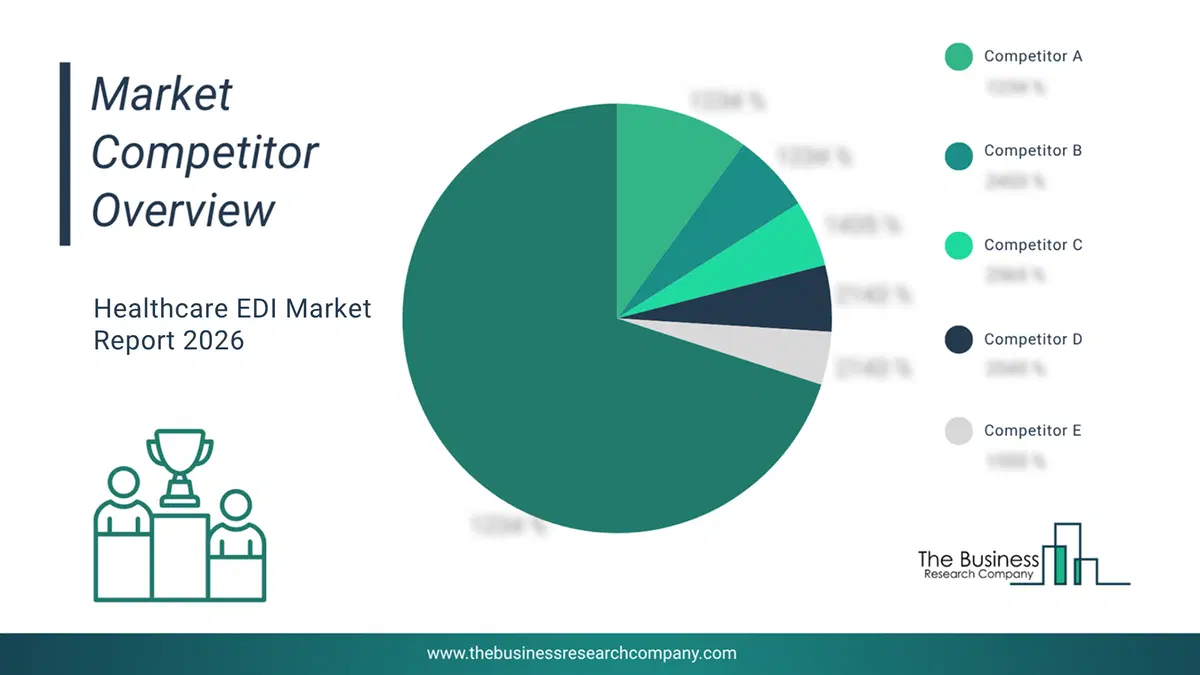
This chart is for illustrative purposes; the full report includes a detailed competitor analysis and comprehensive overview of the top 10 companies in the market.
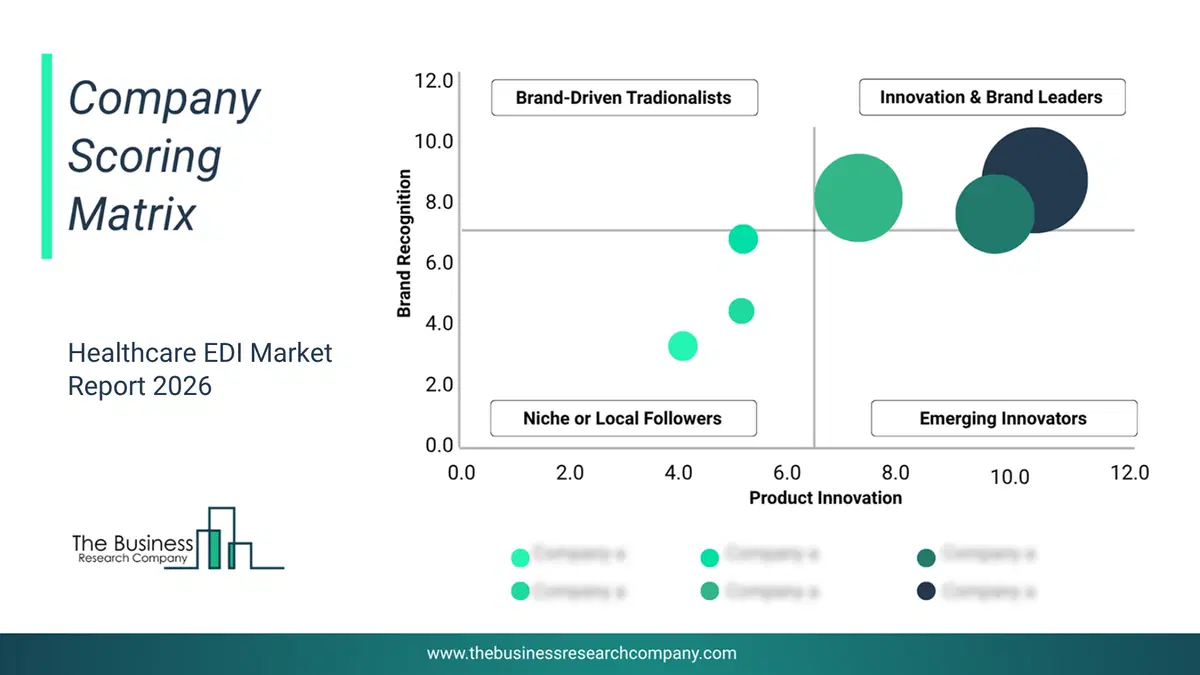
This chart maps companies by product innovation and brand strength, with bubble size indicating relative revenue, helping identify market leaders, challengers, and niche players. This is an illustrative chart; the full report provides a complete and accurate competitive analysis.
Global Healthcare EDI Market Trends and Insights
Major companies operating in the healthcare EDI (Electronic Data Interchange) market are focusing on technological advancements, such as cloud‑native interoperability platforms that unify EDI, FHIR, and HL7, to meet the rising demand for regulatory compliance, seamless data exchange, and scalable connectivity across payers and providers. A cloud‑native interoperability platform brings together traditional EDI (e.g., HIPAA X12), modern healthcare APIs (like FHIR), and clinical messaging standards (HL7) into a single, elastic, secure infrastructure which contrasts with legacy on‑premises EDI gateways that are often siloed, rigid, and costly to scale. For instance, in February 2025, Edifecs, a US-based health information‑technology company, launched its Healthcare Interoperability Cloud, a next‑generation platform for payers. The platform supports the seamless exchange of administrative and clinical data across EDI, FHIR, HL7v2, and proprietary formats; it’s designed for regulatory compliance (e.g., CMS-9115-F, CMS-0057-F), offers strategic orchestration of workflows, enables shared automation between systems, and incorporates AI (including ML and NLP) to provide deeper insights and faster, more “evergreen” integration. The solution helps reduce data friction, accelerate payer-provider collaboration, and future‑proof interoperability infrastructure.What Are Latest Mergers And Acquisitions In The Healthcare EDI Market?
In March 2025, Cotiviti, a US-based provider of data‑driven healthcare solutions, acquired Edifecs for an undisclosed amount. With this acquisition, Cotiviti strengthened its interoperability and data‑exchange capabilities by integrating Edifecs’ health‑data cloud and EDI platform into its analytics and claims‑processing suite to drive more efficient, connected payer-provider workflows. Edifecs is a US-based company that offers health operations and interoperability software, including EDI, data‑management platforms, and cloud-native connectivity solutions.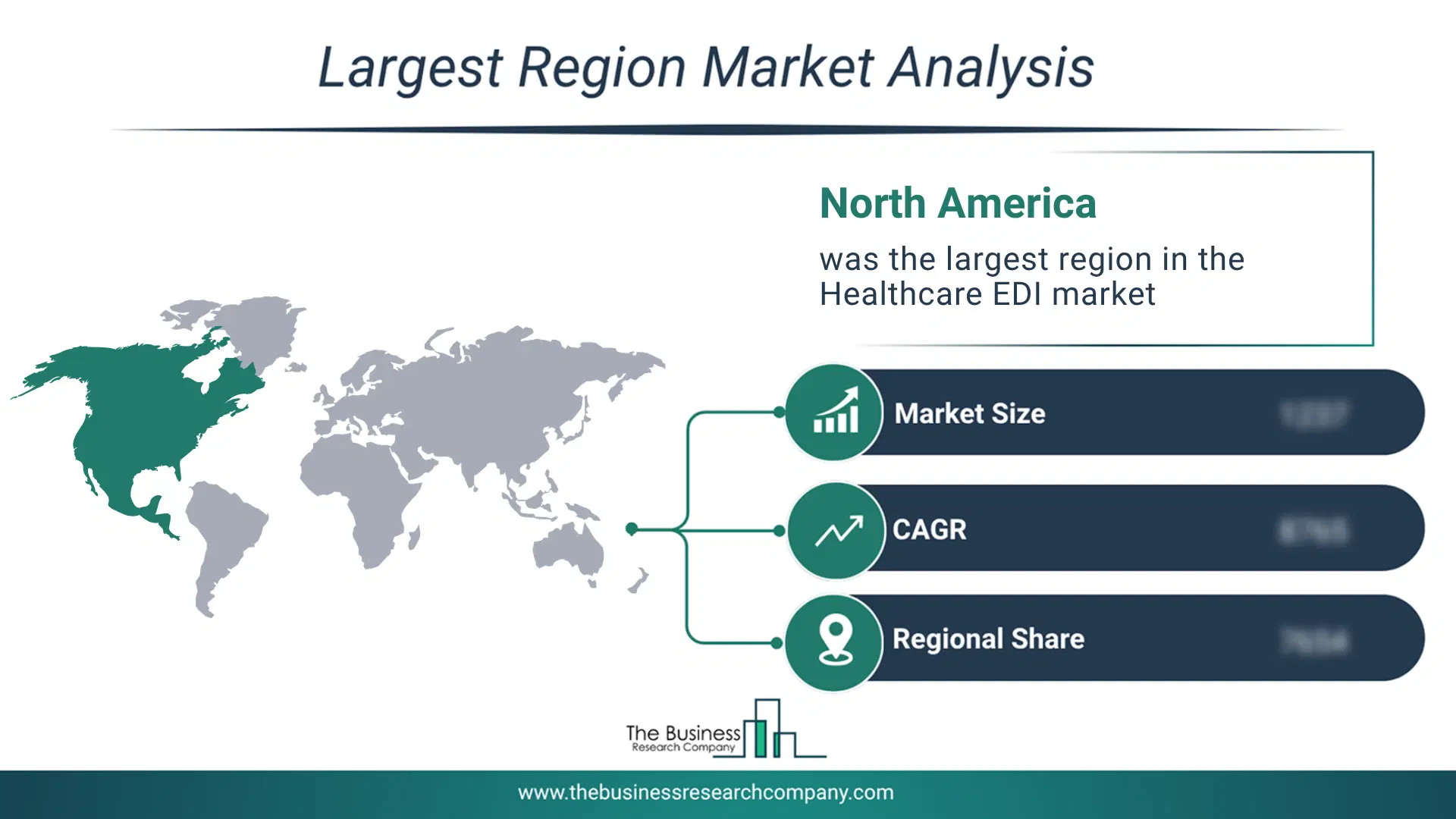
Regional Outlook
North America was the largest region in the healthcare EDI market in 2025. Asia-Pacific is expected to be the fastest-growing region in the forecast period. The regions covered in this market report are Asia-Pacific, South East Asia, Western Europe, Eastern Europe, North America, South America, Middle East, Africa. The countries covered in this market report are Australia, Brazil, China, France, Germany, India, Indonesia, Japan, Taiwan, Russia, South Korea, UK, USA, Canada, Italy, Spain.What Defines the Healthcare EDI Market?
The healthcare electronic data interchange (EDI) market includes revenues earned by Web & Cloud-based EDI, EDI Value Added Network, Direct EDI and Mobile EDI. The market value includes the value of related goods sold by the service provider or included within the service offering. Only goods and services traded between entities or sold to end consumers are included.How is Market Value Defined and Measured?
The market value is defined as the revenues that enterprises gain from the sale of goods and/or services within the specified market and geography through sales, grants, or donations in terms of the currency (in USD unless otherwise specified). The revenues for a specified geography are consumption values that are revenues generated by organizations in the specified geography within the market, irrespective of where they are produced. It does not include revenues from resales along the supply chain, either further along the supply chain or as part of other products.
This chart presents market attractiveness based on a quantitative evaluation of growth, competition, strategic alignment, and risk, offering a clear view of opportunity areas for decision-making. This chart is for illustrative purposes; the full report contains the complete analysis.

This chart highlights the Total Addressable Market (TAM) by estimating the maximum revenue opportunity using an assumption-driven approach, supporting strategic planning and opportunity sizing across markets. The chart is illustrative; the full report provides a more comprehensive analysis.
What Key Data and Analysis Are Included in the Healthcare EDI Market Report 2026?
The healthcare edi market research report is one of a series of new reports from The Business Research Company that provides market statistics, including industry global market size, regional shares, competitors with the market share, detailed market segments, market trends and opportunities, and any further data you may need to thrive in the healthcare edi industry. The market research report delivers a complete perspective of everything you need, with an in-depth analysis of the current and future state of the industry.Healthcare EDI Market Report Forecast Analysis
| Report Attribute | Details |
|---|---|
| Market Size Value In 2026 | $6.3 billion |
| Revenue Forecast In 2030 | $9.93 billion |
| Growth Rate | CAGR of 12% from 2026 to 2030 |
| Base Year For Estimation | 2025 |
| Actual Estimates/Historical Data | 2020-2025 |
| Forecast Period | 2026 - 2030 |
| Market Representation | Revenue in USD Billion and CAGR from 2026 to 2030 |
| Segments Covered | Component, Transaction, Mode of Delivery, End User |
| Regional Scope | Asia-Pacific, Western Europe, Eastern Europe, North America, South America, Middle East, Africa |
| Country Scope | The countries covered in the report are Australia, Brazil, China, France, Germany, India, Indonesia, Japan, Taiwan, Russia, South Korea, UK, USA, Canada, Italy, Spain |
| Key Companies Profiled | McKesson Corporation, Optum Inc, Allscripts, Cognizant Technology Solutions India Pvt Ltd, Cerner Corporation, The SSI Group, Quadax Inc, AthenaHealth, Change Healthcare Inc, Conduent Inc, Epic Systems Corporation, NextGen Healthcare, Edifecs Inc, Waystar Inc, Availity LLC, eClinicalWorks, Ability Network, PracticeSuite Inc, Jopari Solutions Inc, Alpha II LLC, TransUnion Healthcare, Healthpac Computer Systems |
| Customization Scope | Request for Customization |
| Pricing And Purchase Options | Explore Purchase Options |