
Herbal Shampoo Market Report 2026
Global Outlook – By Product Type (Anti-Dandruff, Anti-Hair Fall, Nourishing, Volumizing, Other Product Types), By Hair Type (Damaged, Normal, Dry, Oily, Colored, Curly), By Ingredient (Aloe Vera, Neem, Tea Tree, Amla, Shikakai, Other Ingredients), By Distribution Channel (Online Stores, Supermarkets Or Hypermarkets, Specialty Stores, Other Distribution Channels), By End-User (Men, Women, Unisex) - Market Size, Trends, Strategies, and Forecast to 2030
Herbal Shampoo Market Overview
• Herbal Shampoo market size has reached to $6.13 billion in 2025 • Expected to grow to $8.83 billion in 2030 at a compound annual growth rate (CAGR) of 7.5% • Growth Driver: Surge In E-Commerce Driving The Growth Of The Market Due To Increasing Accessibility And Consumer Convenience • Market Trend: Introduction Of Innovative Lightweight Herbal Shampoos With Natural Ingredients For Nourished And Voluminous Hair • Asia-Pacific was the largest region in 2025 and North America is the fastest growing region.What Is Covered Under Herbal Shampoo Market?
Herbal shampoo is a hair cleanser made from natural ingredients such as plant extracts and essential oils, designed to gently clean the scalp and hair without harsh chemicals. It is ideal for sensitive skin and eco-conscious users, promoting healthy hair growth, reducing dandruff, and nourishing the scalp. The main herbal shampoo products are anti-dandruff, anti-hair fall, nourishing, volumizing, and others. Anti-dandruff herbal shampoo is formulated with natural ingredients such as neem, tea tree oil, and aloe vera to combat dandruff and soothe the scalp. The various hair types addressed include damaged, normal, dry, oily, coloured, and curly, and it is formulated with ingredients such as aloe vera, neem, tea tree, amla, shikakai, and other herbal extracts. These products are distributed through multiple channels, including online stores, supermarkets or hypermarkets, specialty stores, and others, and are used by men, women, and unisex consumers.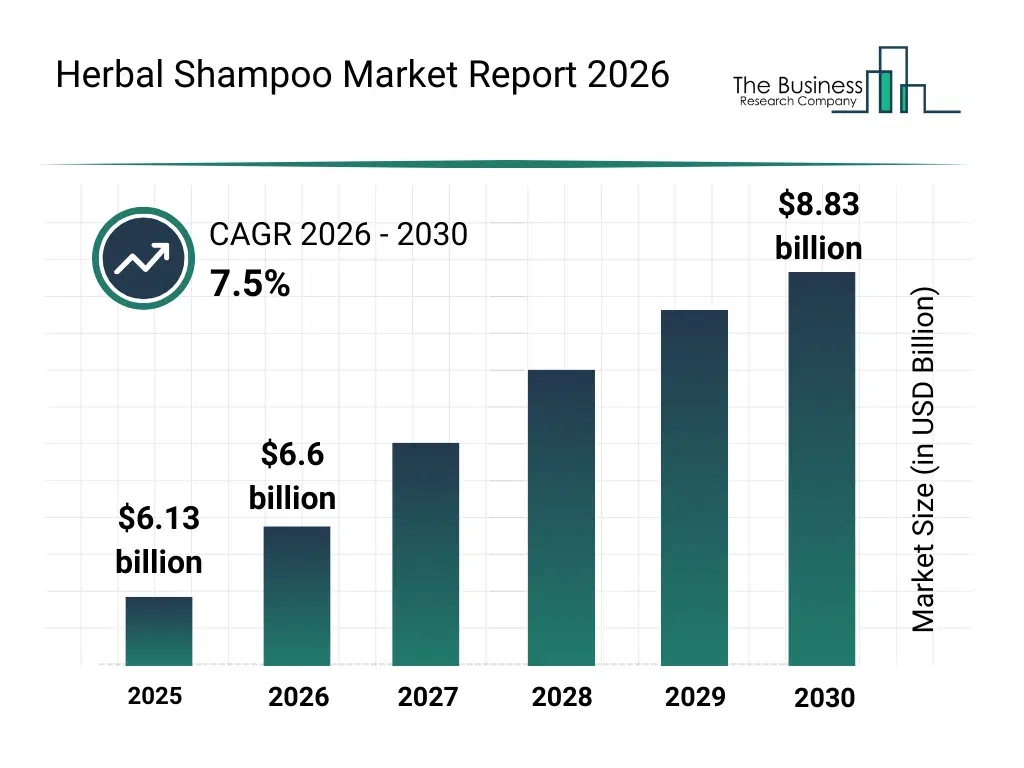
What Is The Herbal Shampoo Market Size and Share 2026?
The herbal shampoo market size has grown strongly in recent years. It will grow from $6.13 billion in 2025 to $6.6 billion in 2026 at a compound annual growth rate (CAGR) of 7.8%. The growth in the historic period can be attributed to increasing consumer awareness of natural personal care, rising prevalence of scalp sensitivity issues, growth of ayurvedic and herbal traditions, expansion of retail distribution networks, increased availability of herbal raw materials.What Is The Herbal Shampoo Market Growth Forecast?
The herbal shampoo market size is expected to see strong growth in the next few years. It will grow to $8.83 billion in 2030 at a compound annual growth rate (CAGR) of 7.5%. The growth in the forecast period can be attributed to increasing demand for eco-friendly personal care products, rising adoption of clean beauty standards, expansion of online beauty retail platforms, growing focus on sustainable sourcing, increasing product innovation in herbal formulations. Major trends in the forecast period include increasing demand for chemical-free hair care products, growing use of plant-based active ingredients, expansion of dermatologically tested herbal formulations, rising preference for sensitive scalp solutions, enhanced focus on sustainable packaging.
Global Herbal Shampoo Market Segmentation
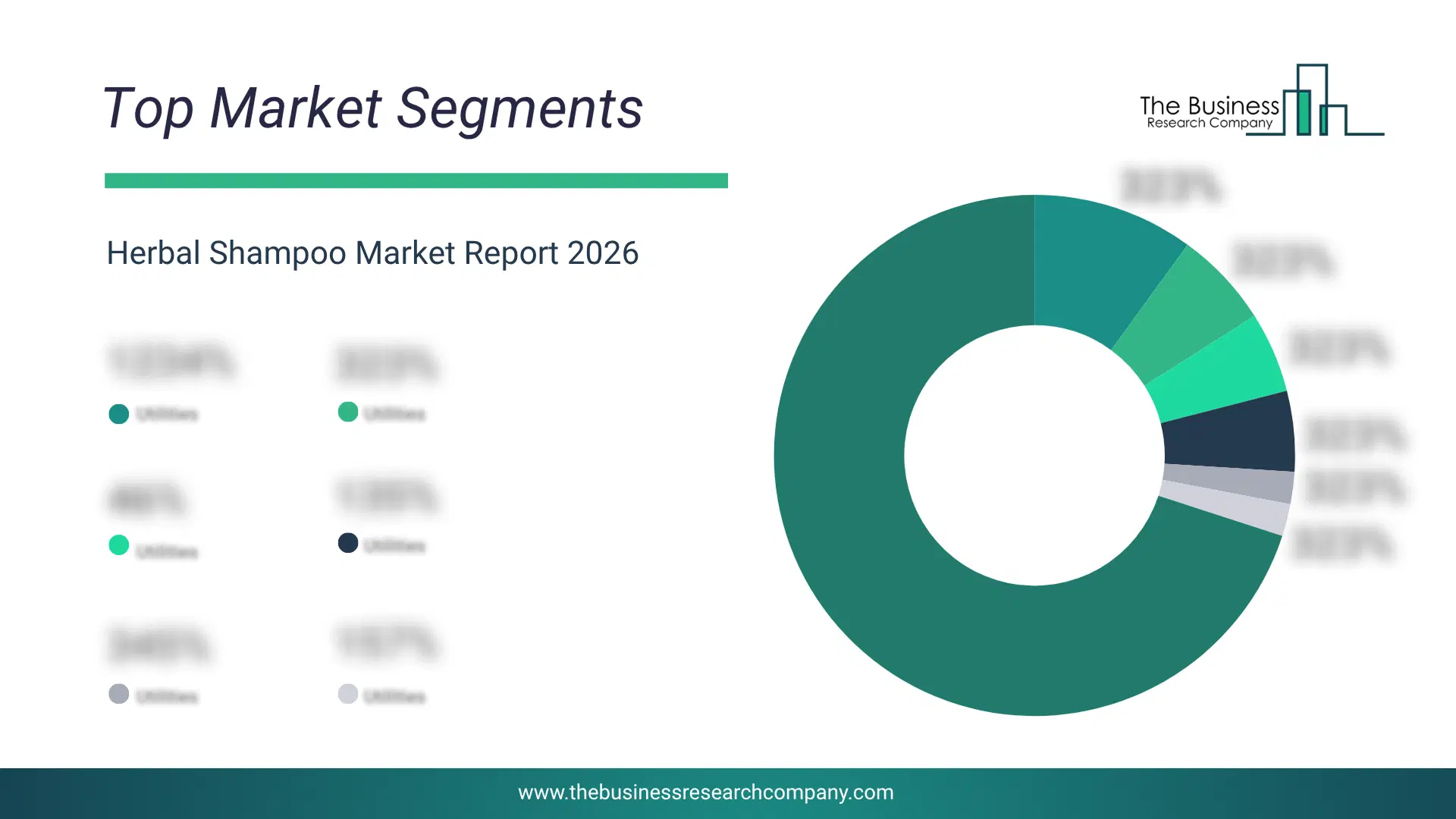
1) By Product Type: Anti-Dandruff, Anti-Hair Fall, Nourishing, Volumizing, Other Product Types 2) By Hair Type: Damaged, Normal, Dry, Oily, Colored, Curly 3) By Ingredient: Aloe Vera, Neem, Tea Tree, Amla, Shikakai, Other Ingredients 4) By Distribution Channel: Online Stores, Supermarkets Or Hypermarkets, Specialty Stores, Other Distribution Channels 5) By End-User: Men, Women, Unisex Subsegments: 1) By Anti-Dandruff: Neem-Based Shampoo, Tea Tree Oil Shampoo, Aloe Vera And Turmeric Shampoo, Zinc And Herbal Extract Shampoo, Ayurvedic Anti-Dandruff Shampoo 2) By Anti-Hair Fall: Amla And Bhringraj Shampoo, Onion Extract Shampoo, Caffeine-Infused Herbal Shampoo, Ginseng And Ginkgo Biloba Shampoo, Keratin-Enriched Herbal Shampoo 3) By Nourishing: Coconut Milk Shampoo, Argan Oil And Shea Butter Shampoo, Hibiscus And Aloe Vera Shampoo, Rice Water And Protein-Rich Herbal Shampoo, Vitamin E-Infused Herbal Shampoo 4) By Volumizing: Biotin And Collagen Herbal Shampoo, Green Tea Extract Shampoo, Bamboo And Ginseng Shampoo, Honey And Lemon Shampoo, Fenugreek And Flaxseed Shampoo 5) By Other Product Types: Herbal Dry Shampoo, Color-Protect Herbal Shampoo, PH-Balancing Herbal Shampoo, Herbal Baby ShampooWhat Is The Driver Of The Herbal Shampoo Market?
The rise of e-commerce is anticipated to propel the growth of the herbal shampoo market in the coming years. E-commerce is the practice of purchasing and selling products and services online, enabling transactions to occur via the internet. E-commerce is growing as it offers the convenience of shopping from home, easy product comparison, faster delivery, and access to global markets. E-commerce positively impacts herbal shampoo by providing a wider reach to consumers, allowing brands to directly connect with a global audience, and increasing accessibility and convenience for customers to purchase their preferred products online. For instance, in February 2025, according to a report published by the Census Bureau, a US-based government agency, the fourth quarter of 2024 showed a 9.4% (±1.1) growth in e-commerce sales over the same period in 2023, while total retail sales increased 3.8% (±0.5). Therefore, the rise of e-commerce will drive the growth of the herbal shampoo industry.Key Players In The Global Herbal Shampoo Market
Major companies operating in the herbal shampoo market are Shiseido Company Limited, Amway Corp., Hain Celestial Group, Avalon Organics, Dabur India Limited, Patanjali Ayurved, Himalaya Wellness Company, Lotus Herbals Pvt. Ltd., Burt’s Bees, Mamaearth, CavinKare Pvt. Ltd., Desert Essence, Biotique, Dr. Organic, Giovanni Cosmetics, Kama Ayurveda, MAC Biosciences Private Limited, Vaadi Herbals Private Limited, Khadi Natural, Forest Essentials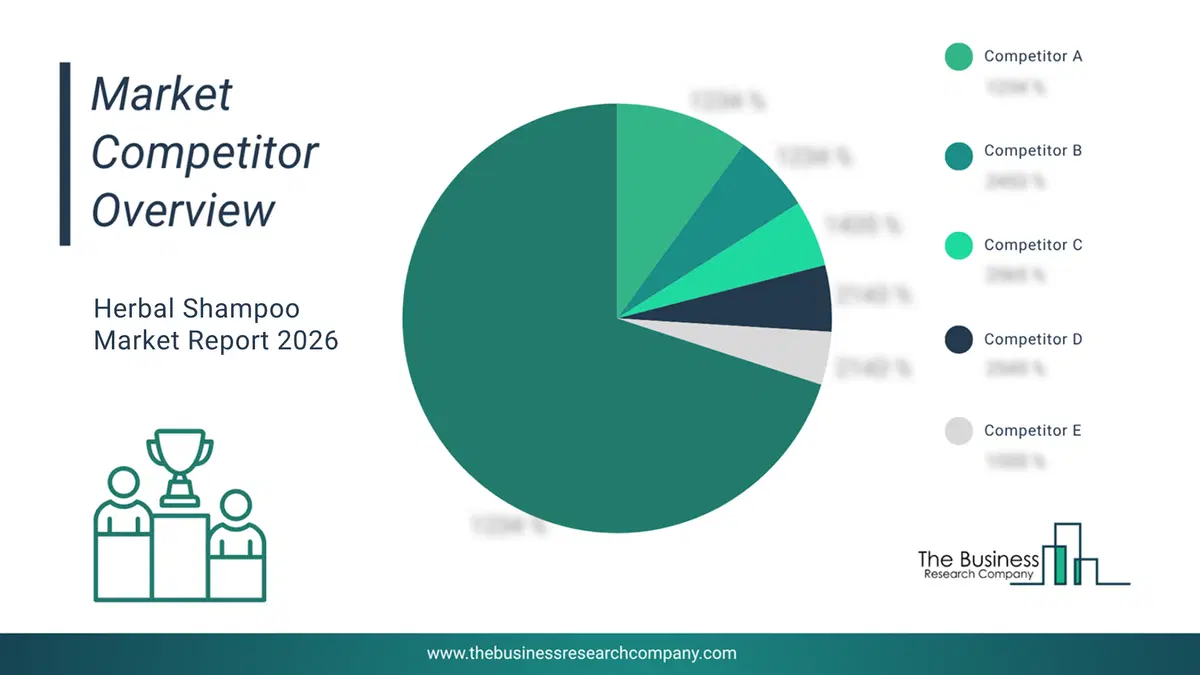
This chart is for illustrative purposes; the full report includes a detailed competitor analysis and comprehensive overview of the top 10 companies in the market.
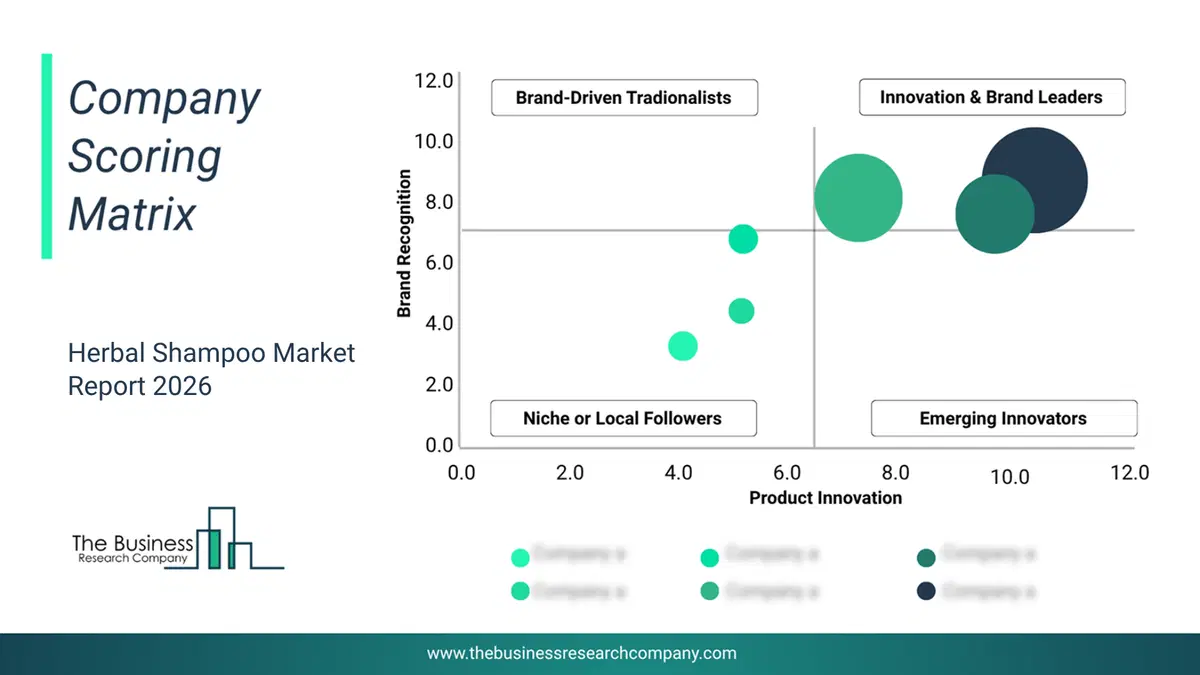
This chart maps companies by product innovation and brand strength, with bubble size indicating relative revenue, helping identify market leaders, challengers, and niche players. This is an illustrative chart; the full report provides a complete and accurate competitive analysis.
Global Herbal Shampoo Market Trends and Insights
Major companies operating in the herbal shampoo market are introducing innovative products, such as lightweight herbal shampoos, to cleanse and nourish hair without making it feel heavy or greasy, promoting a natural, bouncy texture. Lightweight herbal shampoos are hair care products formulated with natural ingredients that cleanse and nourish the hair without weighing it down, leaving it feeling soft, fresh, and voluminous. For instance, in February 2024, Herbal Essences, a US-based hair care brand, launched 11 newly formulated herbal shampoos and conditioners. Each new formula features a blend of pure aloe and camellia oil, with camellia oil pressed from the seeds of the camellia plant, closely resembling the natural oils in healthy hair. This oil absorbs quickly into the hair, enhancing the moisturizing and protective benefits of pure aloe. The aloe used is certified pure, handpicked, and extracted to preserve its antioxidant properties, making it a key feature of the shampoo.What Are Latest Mergers And Acquisitions In The Herbal Shampoo Market?
In January 2023, Procter & Gamble, a US-based consumer goods company, acquired Mielle Organics for an undisclosed amount. With this acquisition, P&G aimed to strengthen its presence in the multicultural haircare market and expand its portfolio of textured hair products. The move also reflects P&G’s commitment to diversity, equity, and inclusion by supporting Black-founded and Black-led brands. Mielle Organics is a US-based hair care company specializing in products formulated for textured hair, including herbal shampoos.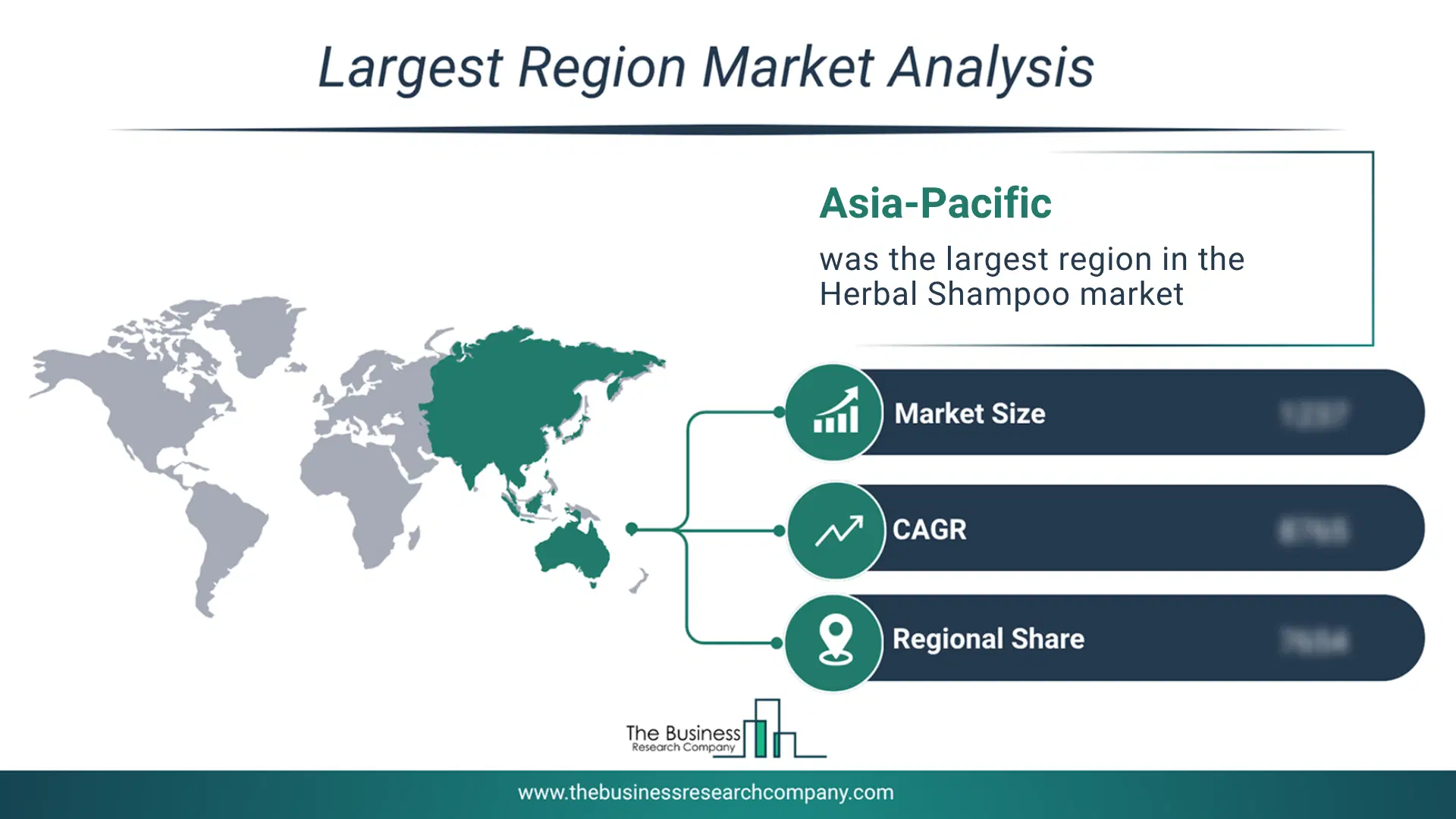
Regional Outlook
Asia-Pacific was the largest region in the herbal shampoo market in 2025. North America is expected to be the fastest-growing region in the forecast period. The regions covered in this market report are Asia-Pacific, South East Asia, Western Europe, Eastern Europe, North America, South America, Middle East, Africa. The countries covered in this market report are Australia, Brazil, China, France, Germany, India, Indonesia, Japan, Taiwan, Russia, South Korea, UK, USA, Canada, Italy, Spain.What Defines the Herbal Shampoo Market?
The herbal shampoo market consists of sales of herbal shampoo for coloured hair, herbal shampoo bars, ayurvedic herbal shampoo, and herbal scalp treatment shampoo. Values in this market are ‘factory gate’ values, that is, the value of goods sold by the manufacturers or creators of the goods, whether to other entities (including downstream manufacturers, wholesalers, distributors, and retailers) or directly to end customers. The value of goods in this market includes related services sold by the creators of the goods.How is Market Value Defined and Measured?
The market value is defined as the revenues that enterprises gain from the sale of goods and/or services within the specified market and geography through sales, grants, or donations in terms of the currency (in USD unless otherwise specified). The revenues for a specified geography are consumption values that are revenues generated by organizations in the specified geography within the market, irrespective of where they are produced. It does not include revenues from resales along the supply chain, either further along the supply chain or as part of other products.
This chart presents market attractiveness based on a quantitative evaluation of growth, competition, strategic alignment, and risk, offering a clear view of opportunity areas for decision-making. This chart is for illustrative purposes; the full report contains the complete analysis.

This chart highlights the Total Addressable Market (TAM) by estimating the maximum revenue opportunity using an assumption-driven approach, supporting strategic planning and opportunity sizing across markets. The chart is illustrative; the full report provides a more comprehensive analysis.
What Key Data and Analysis Are Included in the Herbal Shampoo Market Report 2026?
The herbal shampoo market research report is one of a series of new reports from The Business Research Company that provides market statistics, including industry global market size, regional shares, competitors with the market share, detailed market segments, market trends and opportunities, and any further data you may need to thrive in the herbal shampoo industry. The market research report delivers a complete perspective of everything you need, with an in-depth analysis of the current and future state of the industry.Herbal Shampoo Market Report Forecast Analysis
| Report Attribute | Details |
|---|---|
| Market Size Value In 2026 | $6.6 billion |
| Revenue Forecast In 2030 | $8.83 billion |
| Growth Rate | CAGR of 7.5% from 2026 to 2030 |
| Base Year For Estimation | 2025 |
| Actual Estimates/Historical Data | 2020-2025 |
| Forecast Period | 2026 - 2030 |
| Market Representation | Revenue in USD Billion and CAGR from 2026 to 2030 |
| Segments Covered | Product Type, Hair Type, Ingredient, Distribution Channel, End-User |
| Regional Scope | Asia-Pacific, Western Europe, Eastern Europe, North America, South America, Middle East, Africa |
| Country Scope | The countries covered in the report are Australia, Brazil, China, France, Germany, India, Indonesia, Japan, Taiwan, Russia, South Korea, UK, USA, Canada, Italy, Spain |
| Key Companies Profiled | Shiseido Company Limited, Amway Corp., Hain Celestial Group, Avalon Organics, Dabur India Limited, Patanjali Ayurved, Himalaya Wellness Company, Lotus Herbals Pvt. Ltd., Burt’s Bees, Mamaearth, CavinKare Pvt. Ltd., Desert Essence, Biotique, Dr. Organic, Giovanni Cosmetics, Kama Ayurveda, MAC Biosciences Private Limited, Vaadi Herbals Private Limited, Khadi Natural, Forest Essentials |
| Customization Scope | Request for Customization |
| Pricing And Purchase Options | Explore Purchase Options |