
Immersive Simulator Market Report 2026
Global Outlook – By Type (Console Operator Training, Field Operator Training), By Offering (Hardware, Software And Services), By Application (Oil And Gas, Chemicals, Power Energy, Metals Mining, Medical Biotech, Aerospace And Defense, Automotive Marine, Other Applications) – Market Size, Trends, Strategies, and Forecast to 2030
Immersive Simulator Market Overview
• Immersive Simulator market size has reached to $17.62 billion in 2025 • Expected to grow to $55.34 billion in 2030 at a compound annual growth rate (CAGR) of 25.6% • Growth Driver: Growing Popularity Of Virtual Reality Gaming To Propel Growth In The Immersive Simulator Market • Market Trend: Technological Advancements In Interactive Learning Experiences For Immersive simulators • North America was the largest region in 2025.Market Gains By 2030 – Top Opportunities By Segment
Market Gain identifies the most promising market opportunities by highlighting the segments or products expected to generate the highest incremental revenue growth over the next five years.
What Is Covered Under Immersive Simulator Market?
An immersive simulator is a type of simulation designed to create a highly realistic and engaging experience, often using advanced technologies to mimic real-world environments or scenarios. They are used in various fields, including gaming, training (such as flight simulators for pilots), education, and therapy, to provide users with a deep, engaging experience that resembles real-life situations. The main types of immersive simulators are console operator training and field operator training. Console operator training involves immersive simulation systems designed to train operators who manage control panels and consoles. It is further divided by offerings such as hardware and software and services for various applications, including oil and gas, chemicals, power energy, metals mining, medical biotech, aerospace and defense, automotive marine, and others.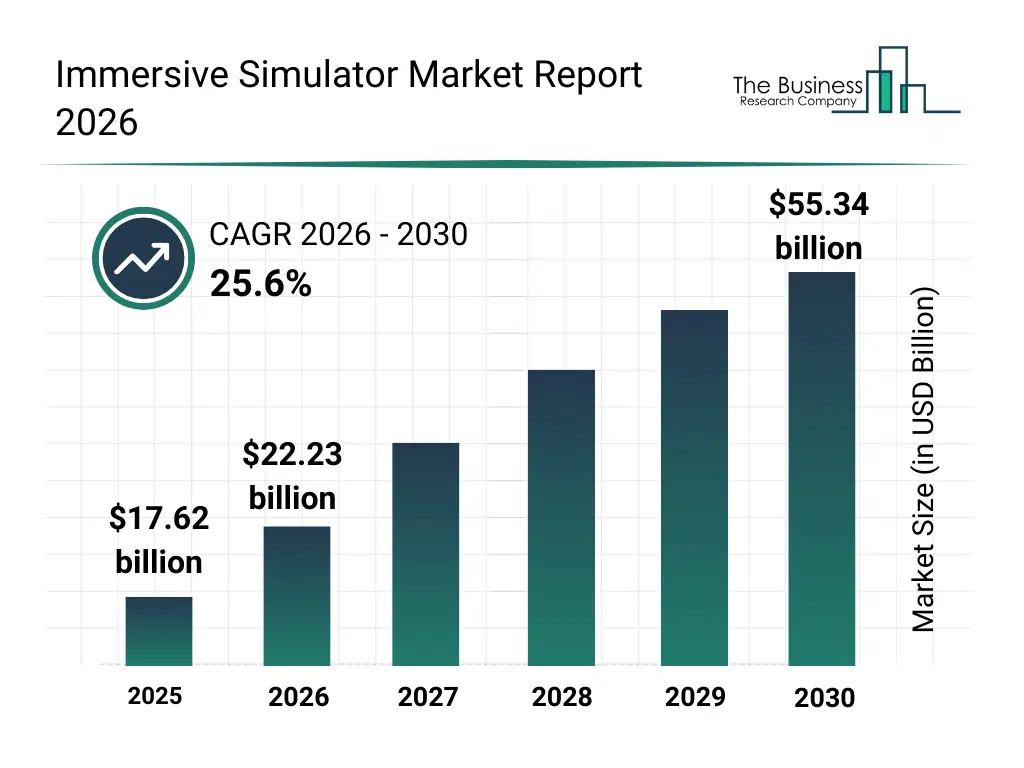
What Is The Immersive Simulator Market Size and Share 2026?
The immersive simulator market size has grown exponentially in recent years. It will grow from $17.62 billion in 2025 to $22.23 billion in 2026 at a compound annual growth rate (CAGR) of 26.1%. The growth in the historic period can be attributed to use of simulators in aviation training, early defense simulation systems, adoption of virtual training tools, growing industrial safety requirements, increasing training cost optimization needs.What Is The Immersive Simulator Market Growth Forecast?
The immersive simulator market size is expected to see exponential growth in the next few years. It will grow to $55.34 billion in 2030 at a compound annual growth rate (CAGR) of 25.6%. The growth in the forecast period can be attributed to expansion of virtual training across industries, growth of immersive learning models, rising investment in digital twins, increasing demand for remote training, integration of AI in simulation platforms. Major trends in the forecast period include advanced virtual reality training systems, real time physics based simulation, AI driven scenario generation, multi user immersive environments, high fidelity visual and sensory simulation.
Global Immersive Simulator Market Segmentation
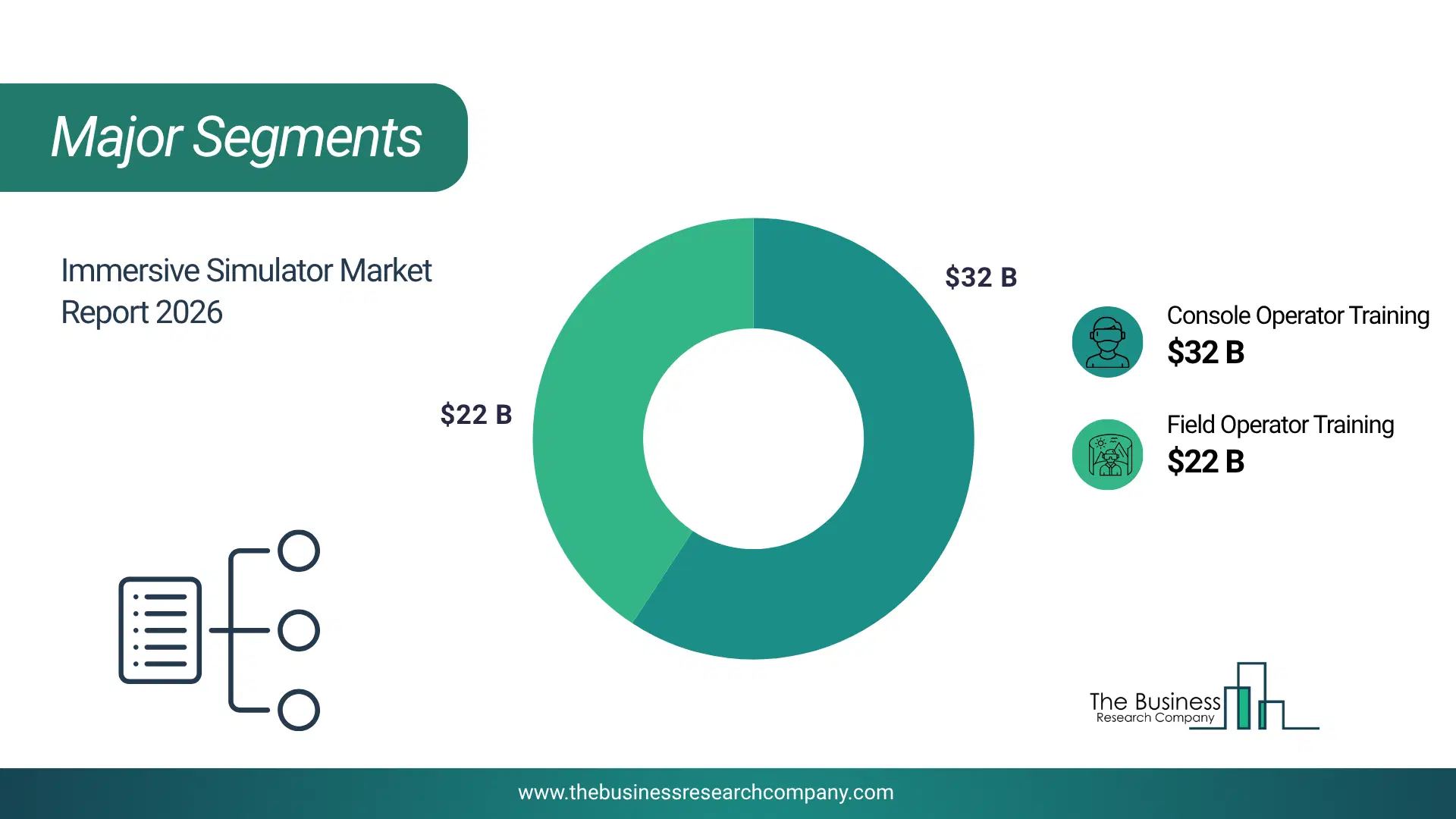
1) By Type: Console Operator Training, Field Operator Training 2) By Offering: Hardware, Software And Services 3) By Application: Oil And Gas, Chemicals, Power Energy, Metals Mining, Medical Biotech, Aerospace And Defense, Automotive Marine, Other Applications Subsegments: 1) By Console Operator Training: Power Plant Console Operator Training, Oil & Gas Console Operator Training, Chemical Plant Console Operator Training, Mining Console Operator Training 2) By Field Operator Training: Power Plant Field Operator Training, Oil & Gas Field Operator Training, Chemical Plant Field Operator Training, Manufacturing Field Operator Training The top segments in the immersive simulator market will be: • Console Operator Training will reach $31.94 Billion by 2030. • Field Operator Training will reach $22.16 Billion by 2030.What Is The Driver Of The Immersive Simulator Market?
The growing popularity of virtual reality gaming is expected to propel the growth of the immersive simulator market going forward. Virtual reality gaming is an interactive digital experience in which players use virtual reality headsets and controllers to immerse themselves in and interact with a simulated 3D environment. The popularity of virtual reality gaming is due to its delivering highly immersive and interactive experiences that significantly enhance player engagement and enjoyment. Immersive simulators enhance virtual reality gaming by creating highly realistic and interactive environments that deepen player engagement and provide a more engaging gaming experience. For instance, in January 2023, according to Security.org, a US-based centerfield media company, an estimated 53 million U.S. adults will own a virtual reality system in 2023, and 8% of non-owners will likely purchase one in the next six months. Therefore, the growing popularity of virtual reality gaming is driving the growth of the immersive simulator industry.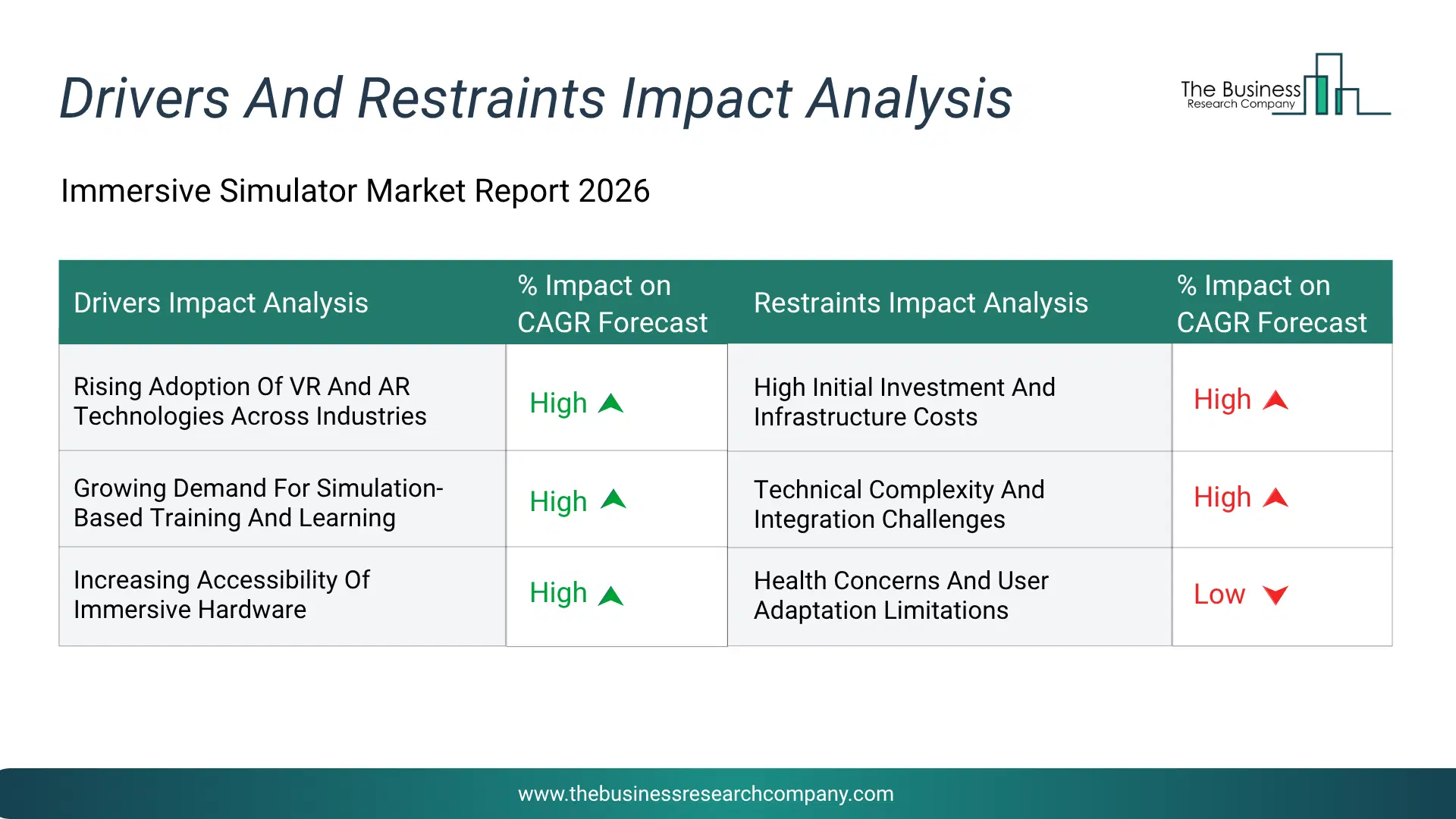
Infographic Chart Showing Key Market Drivers Analysis And Restraints For Immersive Simulator Market
The chart presents an impact analysis of key drivers and restraints, quantifying their relative influence on the market's growth rate and helping assess the balance between growth enablers and limiting factors. This chart offers a high-level perspective; the full report contains more detailed insights.
How Will The Drivers Impact Growth In The Global Immersive Simulator Market?
• Rising Adoption Of VR And AR Technologies Across Industries (High) – During the forecast period, the rising adoption of VR and AR technologies across industries is expected to become a key growth driver for the immersive simulator market by 2030. Rising adoption of VR and AR technologies across industries is a major driver for the immersive simulation market as organizations increasingly utilize virtual reality (VR) and augmented reality (AR) technologies to create realistic, interactive, and risk-free simulation environments for training, design, maintenance, and operational planning. Industries such as healthcare, aerospace and defense, manufacturing, automotive, education, and entertainment are leveraging immersive simulations to improve workforce efficiency, enhance learning outcomes, reduce operational errors, and lower training costs. Continuous advancements in hardware affordability, real-time rendering, AI integration, and cloud connectivity are further accelerating enterprise adoption of VR- and AR-based immersive simulation solutions globally. • Growing Demand For Simulation-Based Training And Learning (High) – During the forecast period, the growing demand for simulation-based training and learning is expected to emerge as a major factor driving the expansion of the immersive simulator market by 2030. Growing demand for simulation-based training and learning is driving the immersive simulation market as organizations increasingly adopt virtual training environments to enhance employee skills, improve safety, and reduce operational risks. Industries such as healthcare, aviation, defense, manufacturing, and education are utilizing immersive simulations to provide realistic hands-on experiences without the costs and dangers associated with real-world training. These solutions improve knowledge retention, accelerate skill development, and enable scalable remote learning, further supporting widespread adoption across global industries. • Increasing Accessibility Of Immersive Hardware (High) – During the forecast period, the increasing accessibility of immersive hardware is expected to act as a key growth catalyst for the immersive simulator market by 2030. Increasing accessibility of immersive hardware is accelerating the growth of the immersive simulation market as the declining costs of VR headsets, AR devices, motion sensors, and haptic technologies make immersive experiences more affordable for businesses and consumers. Advancements in hardware performance, portability, and user comfort are enabling broader adoption across industries such as healthcare, education, manufacturing, gaming, and defense. Improved connectivity, cloud integration, and compatibility with advanced software platforms are further enhancing the scalability and effectiveness of immersive simulation solutions globally.How Will The Restraints Impact Growth In The Global Immersive Simulator Market?
• High Initial Investment And Infrastructure Costs (High) – During the forecast period, the high initial investment and infrastructure costs act as a major restraint for the immersive simulation market as deploying advanced VR and AR systems requires substantial spending on hardware, software, high-performance computing, motion tracking systems, and network infrastructure. Organizations also face additional expenses related to system integration, content development, maintenance, and employee training. These high upfront costs can limit adoption, particularly among small and medium-sized enterprises with constrained technology budgets. • Technical Complexity And Integration Challenges (High) – During the forecast period, the technical complexity and integration challenges restrain the immersive simulation market as organizations often face difficulties in integrating immersive technologies with existing enterprise systems, operational workflows, and legacy infrastructure. Developing high-quality simulation content, ensuring real-time responsiveness, and maintaining compatibility across multiple hardware and software platforms require specialized technical expertise and significant resources. These complexities can increase implementation time, operational costs, and deployment risks for enterprises. • Health Concerns And User Adaptation Limitations (High) – During the forecast period, the health concerns and user adaptation limitations restrain the immersive simulation market as prolonged use of virtual and augmented reality systems can cause motion sickness, eye strain, fatigue, headaches, and user discomfort. In addition, some users may face difficulties adapting to immersive technologies due to limited technical familiarity or resistance to behavioral change. These factors can reduce user acceptance and slow the widespread adoption of immersive simulation solutions across certain industries and applications.Key Players In The Global Immersive Simulator Market
Major companies operating in the immersive simulator market are Microsoft Corporation, Siemens AG, Qualcomm Incorporated, NVIDIA Corporation, Dassault Systèmes SE, Saab AB, Indra Sistemas, AVEVA Group plc, Unity Software Inc., 3D Systems Corporation, Epic Games Inc., Magic Leap Inc., Pimax Technology (Shanghai) Co. Ltd., Linden Research Inc., Varjo Technologies Oy, Immersive Technologies Pty Ltd, EON Reality Inc., Strivr Labs Inc., VirtaMed AG, Mass Virtual Inc., Immerse Learning Ltd, Simul8 Corporation, Wikitude GmbH, Designing Digitally Inc.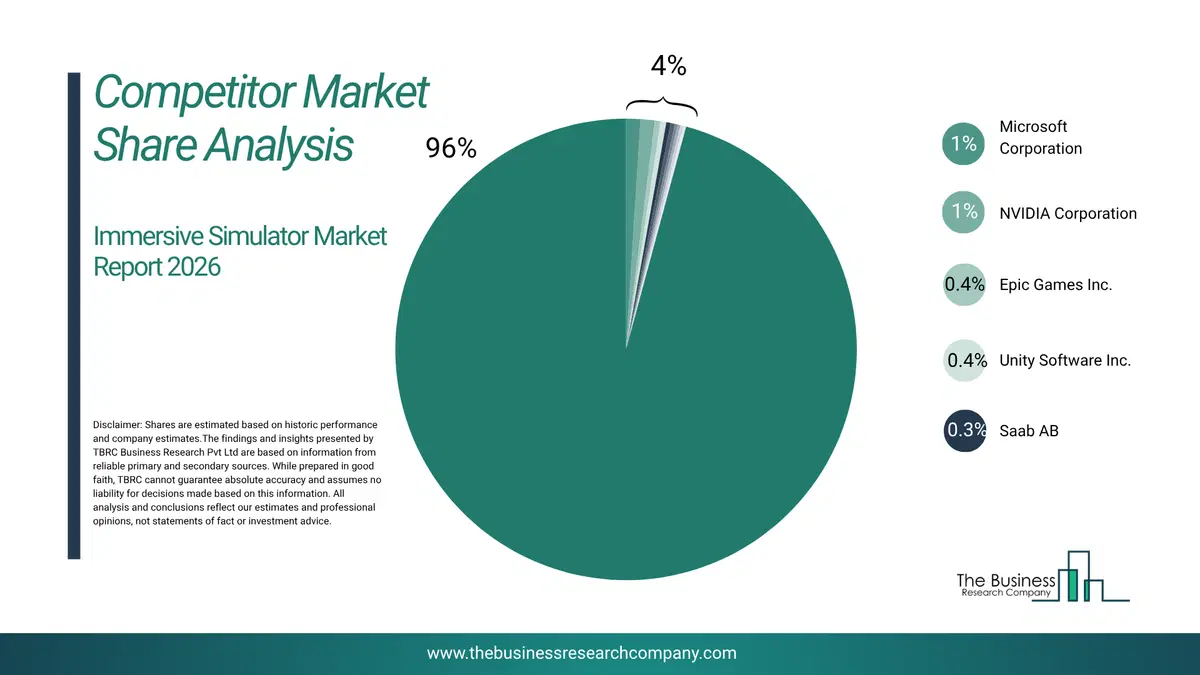
This chart is for illustrative purposes; the full report includes a detailed competitor analysis and comprehensive overview of the top 10 companies in the market.
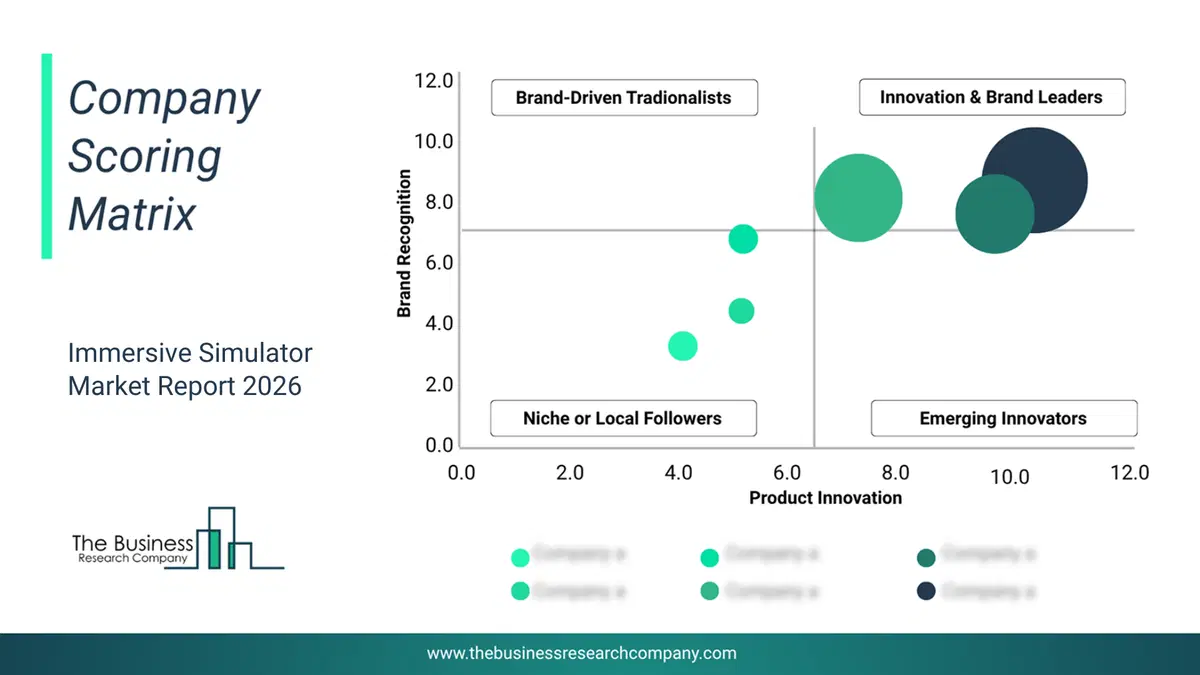
This chart maps companies by product innovation and brand strength, with bubble size indicating relative revenue, helping identify market leaders, challengers, and niche players. This is an illustrative chart; the full report provides a complete and accurate competitive analysis.
Global Immersive Simulator Market Trends and Insights
Major companies operating in the immersive simulator market are focusing on developing technologically advanced solutions, such as AI-powered immersive simulators, to enhance realism, improve user experiences, and expand applications across various industries. AI-powered immersive simulators are advanced simulation systems that integrate artificial intelligence to create highly realistic and interactive environments. For instance, in August 2024, EON Reality, a US-based virtual and augmented reality technology company, launched AI Skill Simulator, an innovative augmented reality (AR) training platform that leverages artificial intelligence to enhance skill development across various industries. This immersive platform allows users to practice complex procedures in a safe virtual environment, utilizing AI-generated avatars for demonstrations and real-time performance assessments. The training process involves demonstrating techniques, hands-on practice, and personalized feedback, making it applicable in technical training and education fields. It aims to address critical needs in workforce training by providing a safe and efficient means of skill acquisition, enhancing learning outcomes, and ensuring workplace safety.What Are Latest Mergers And Acquisitions In The Immersive Simulator Market?
In October 2025, American Bureau of Shipping (ABS), a United States-based provider of classification services, maritime safety and digital training solutions, acquired MetaSHIP from Orka Informatics for an undisclosed amount. With this acquisition, ABS aims to broaden its immersive maritime training offering through advanced simulation and gamified learning to better serve a worldwide seafarer workforce. MetaSHIP, a Turkey-based provider of vessel simulator software and immersive maritime training platforms, delivers virtual vessel, port and waterway simulations combined with assessment and training-management tools.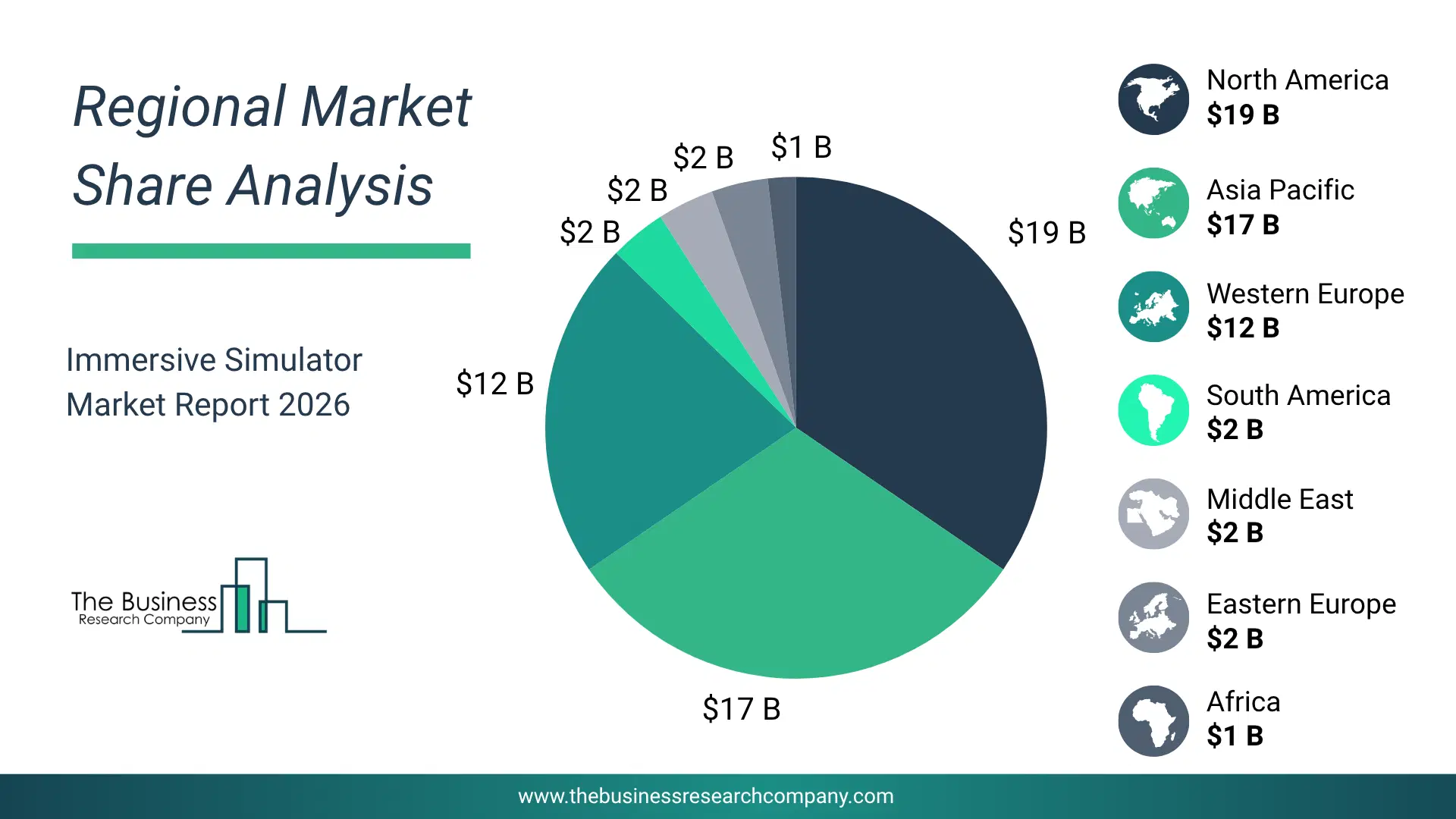
Regional Insights
North America was the largest region in the immersive simulator market in 2025. The regions covered in this market report are Asia-Pacific, South East Asia, Western Europe, Eastern Europe, North America, South America, Middle East, Africa. The countries covered in this market report are Australia, Brazil, China, France, Germany, India, Indonesia, Japan, Taiwan, Russia, South Korea, UK, USA, Canada, Italy, Spain.What Defines the Immersive Simulator Market?
The immersive simulator market consists of revenues earned by entities by providing services such as simulation development, system integration, training and support, content creation, and maintenance and upgrades. The market value includes the value of related goods sold by the service provider or included within the service offering. The immersive simulator market also includes sales of interactive peripherals, augmented reality (AR) devices, virtual reality (VR) headsets, and mixed reality (MR) systems. Values in this market are ‘factory gate’ values, that is, the value of goods sold by the manufacturers or creators of the goods, whether to other entities (including downstream manufacturers, wholesalers, distributors, and retailers) or directly to end customers. The value of goods in this market includes related services sold by the creators of the goods.How is Market Value Defined and Measured?
The market value is defined as the revenues that enterprises gain from the sale of goods and/or services within the specified market and geography through sales, grants, or donations in terms of the currency (in USD unless otherwise specified). The revenues for a specified geography are consumption values that are revenues generated by organizations in the specified geography within the market, irrespective of where they are produced. It does not include revenues from resales along the supply chain, either further along the supply chain or as part of other products.
This chart presents market attractiveness based on a quantitative evaluation of growth, competition, strategic alignment, and risk, offering a clear view of opportunity areas for decision-making. This chart is for illustrative purposes; the full report contains the complete analysis.

This chart highlights the Total Addressable Market (TAM) by estimating the maximum revenue opportunity using an assumption-driven approach, supporting strategic planning and opportunity sizing across markets. The chart is illustrative; the full report provides a more comprehensive analysis.
What Key Data and Analysis Are Included in the Immersive Simulator Market Report 2026?
The immersive simulator market research report is one of a series of new reports from The Business Research Company that provides market statistics, including industry global market size, regional shares, competitors with the market share, detailed market segments, market trends and opportunities, and any further data you may need to thrive in the immersive simulator industry. The market research report delivers a complete perspective of everything you need, with an in-depth analysis of the current and future state of the industry.Immersive Simulator Market Report Forecast Analysis
| Report Attribute | Details |
|---|---|
| Market Size Value In 2026 | $22.23 billion |
| Revenue Forecast In 2030 | $55.34 billion |
| Growth Rate | CAGR of 26.1% from 2026 to 2030 |
| Base Year For Estimation | 2025 |
| Actual Estimates/Historical Data | 2020-2025 |
| Forecast Period | 2026 - 2030 |
| Market Representation | Revenue in USD Billion and CAGR from 2026 to 2030 |
| Segments Covered | Type, Offering, Application |
| Regional Scope | Asia-Pacific, Western Europe, Eastern Europe, North America, South America, Middle East, Africa |
| Country Scope | The countries covered in the report are Australia, Brazil, China, France, Germany, India, Indonesia, Japan, Taiwan, Russia, South Korea, UK, USA, Canada, Italy, Spain. |
| Key Companies Profiled | Microsoft Corporation, Siemens AG, Qualcomm Incorporated, NVIDIA Corporation, Dassault Systèmes SE, Saab AB, Indra Sistemas, AVEVA Group plc, Unity Software Inc., 3D Systems Corporation, Epic Games Inc., Magic Leap Inc., Pimax Technology (Shanghai) Co. Ltd., Linden Research Inc., Varjo Technologies Oy, Immersive Technologies Pty Ltd, EON Reality Inc., Strivr Labs Inc., VirtaMed AG, Mass Virtual Inc., Immerse Learning Ltd, Simul8 Corporation, Wikitude GmbH, Designing Digitally Inc. |
| Customization Scope | Request for Customization |
| Pricing And Purchase Options | Explore Purchase Options |