

InsurTech (Insurance Technology) Market Report 2026
Global Outlook – By Offering (Solution, Service), By Insurance Type (Commercial Insurance, Property And Casualty Insurance, Health Insurance, Life Insurance, Other Insurance Types), By Technology (Cloud Computing, Blockchain, Big Data And Analytics, Artificial Intelligence, Internet Of Things (IoT), Machine Learning, Other Technologies), By Deployment Model (On-Premise, Cloud), By End-Use (Banking, Financial Services, And Insurance (BFSI), Healthcare, Manufacturing, Government, Retail, Other End Users) – Market Size, Trends, Strategies, and Forecast to 2030
InsurTech (Insurance Technology) Market Overview
• InsurTech (Insurance Technology) market size has reached to $25.68 billion in 2025 • Expected to grow to $128.12 billion in 2030 at a compound annual growth rate (CAGR) of 38% • Growth Driver: Insurtech’s Impact On Insurance Industry Dynamics • Market Trend: The Rise Of Robotics Ecosystems In Insurtech • North America was the largest region in 2025 and Asia-Pacific is the fastest growing region.Market Gains By 2030 – Top Opportunities By Segment
Market Gain identifies the most promising market opportunities by highlighting the segments or products expected to generate the highest incremental revenue growth over the next five years.
What Is Covered Under InsurTech (Insurance Technology) Market?
InsurTech (insurance technology) refers to the use of technological innovations and advancements to enhance the insurance industry. It encompasses various technological solutions, platforms, and applications that aim to improve efficiency, customer experience, and risk management in the insurance sector. The main types of insurance technologies are solutions and services. Solution refers to a specific product, system, or approach that is designed to address a particular problem or fulfil a specific need and Insurance technology solutions are used to establish, expand, and run the insurance sector to meet various challenges and opportunities within the industry. They are applied for different types of insurance commercial insurance, property and casualty insurance, health insurance, life insurance, and other types of insurance deployed on-premises and in the cloud. The various insurance technologies include cloud computing, blockchain, big data and analytics, artificial intelligence, internet of things (IoT), machine learning, and others that are used by banking, financial services, and insurance (BFSI), healthcare, manufacturing, government, retail, and others.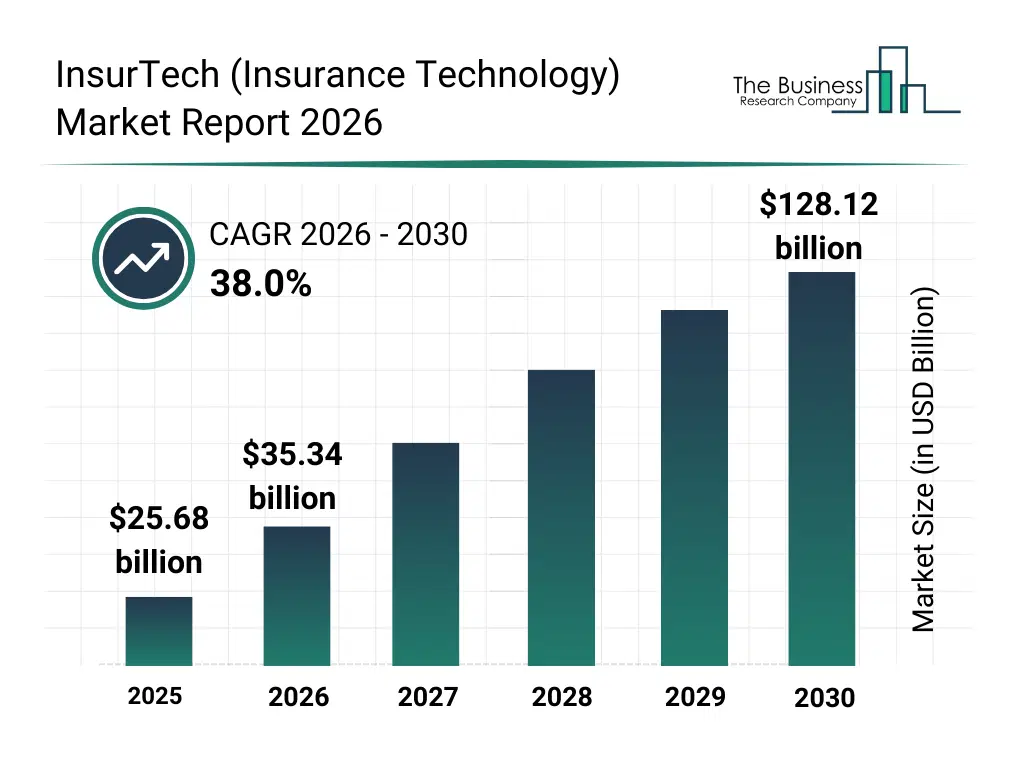
What Is The InsurTech (Insurance Technology) Market Size and Share 2026?
The insurtech (insurance technology) market size has grown exponentially in recent years. It will grow from $25.68 billion in 2025 to $35.34 billion in 2026 at a compound annual growth rate (CAGR) of 37.6%. The growth in the historic period can be attributed to growth of online insurance distribution, rising adoption of core insurance platforms, increasing customer demand for faster claims processing, expansion of mobile insurance applications, early growth of insurtech startups.What Is The InsurTech (Insurance Technology) Market Growth Forecast?
The insurtech (insurance technology) market size is expected to see exponential growth in the next few years. It will grow to $128.12 billion in 2030 at a compound annual growth rate (CAGR) of 38.0%. The growth in the forecast period can be attributed to AI driven underwriting expansion, rising demand for hyper personalized insurance products, growth of embedded insurance ecosystems, increasing investment in insurtech platforms, expansion of data driven risk assessment. Major trends in the forecast period include digital claims automation, usage based insurance, embedded insurance models, fraud detection analytics, personalized policy pricing.
Global InsurTech (Insurance Technology) Market Segmentation
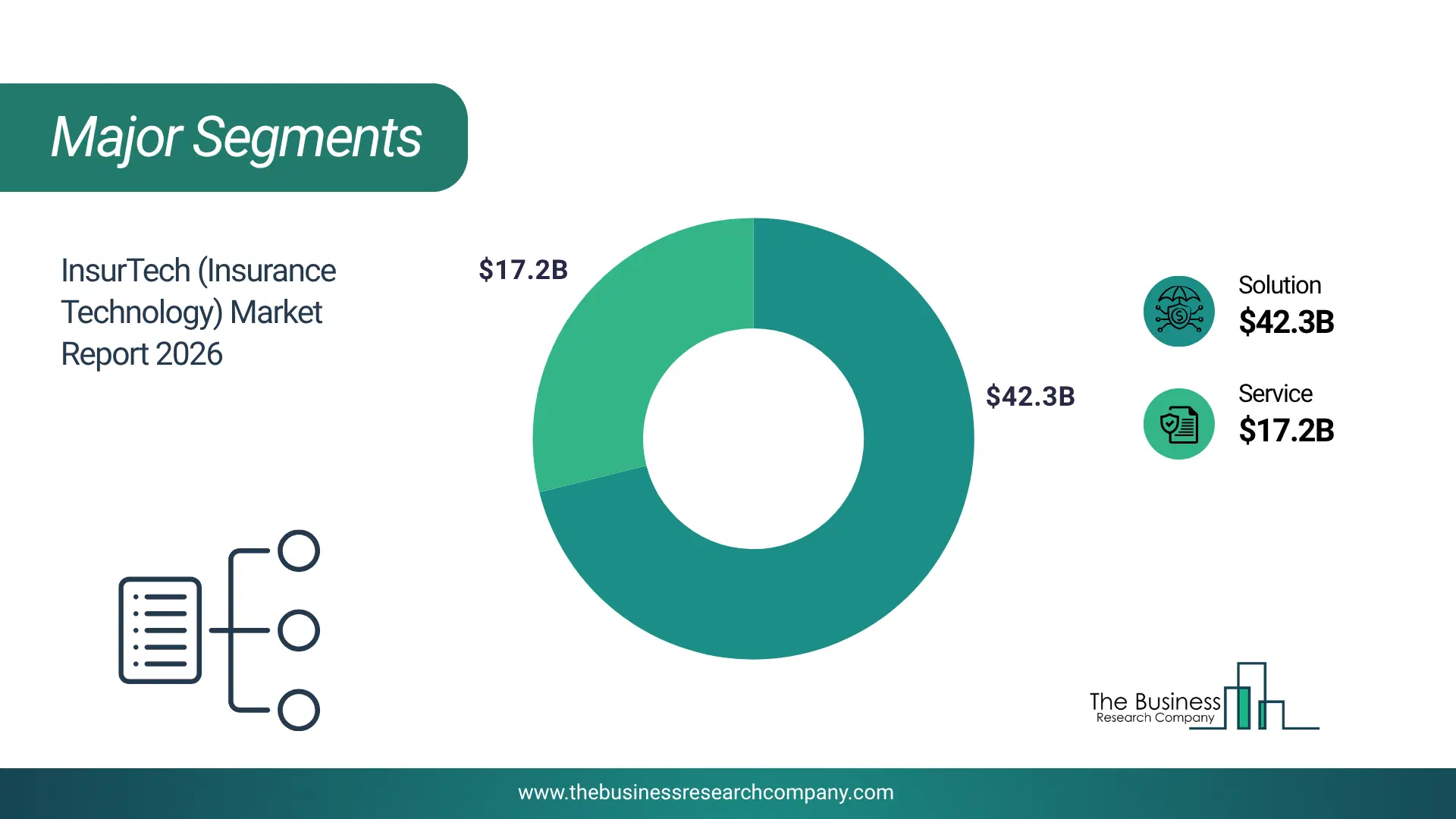
1) By Offering: Solution, Service 2) By Insurance Type: Commercial Insurance, Property And Casualty Insurance, Health Insurance, Life Insurance, Other Insurance Types 3) By Technology: Cloud Computing, Blockchain, Big Data And Analytics, Artificial Intelligence, Internet Of Things (IoT), Machine Learning, Other Technologies 4) By Deployment Model: On-Premise, Cloud 5) By End-Use: Banking, Financial Services, And Insurance (BFSI), Healthcare, Manufacturing, Government, Retail, Other End Users Subsegments: 1) By Solution: Claims Management Solutions, Policy Administration Systems, Analytics And Reporting Solutions, Customer Relationship Management (CRM) Solutions, Fraud Detection Solutions 2) By Service: Managed Services, Consulting Services, Implementation Services, Support And Maintenance Services The top segments in the insurtech (insurance technology) market will be: • Solution will reach $42.23 billion by 2030. • Service will reach $17.17 billion by 2030.What Is The Driver Of The InsurTech (Insurance Technology) Market?
The increasing demand for insurance is expected to propel the growth of the insurtech (insurance technology) market going forward. Insurance is a contract between an individual or an entity (known as the insured) and an insurance company (known as the insurer), which is given as protection against financial loss. Insurance companies are increasingly adopting insurance technology, often referred to as insurtech, to enhance their operations, improve customer experiences, and increase efficiency. For instance, in September 2024, according to the U.S. Census, a U.S.-based government agency, in 2023 approximately 92.0% of individuals in the United States had health insurance at some point during the year, maintaining a high level from 2022. Within this, coverage through direct-purchase plans increased slightly to 10.2%, Medicare coverage rose to 18.9%, and overall public insurance participation showed modest growth. Therefore, the increasing demand for insurance is driving the growth of the insurtech (insurance technology) industry.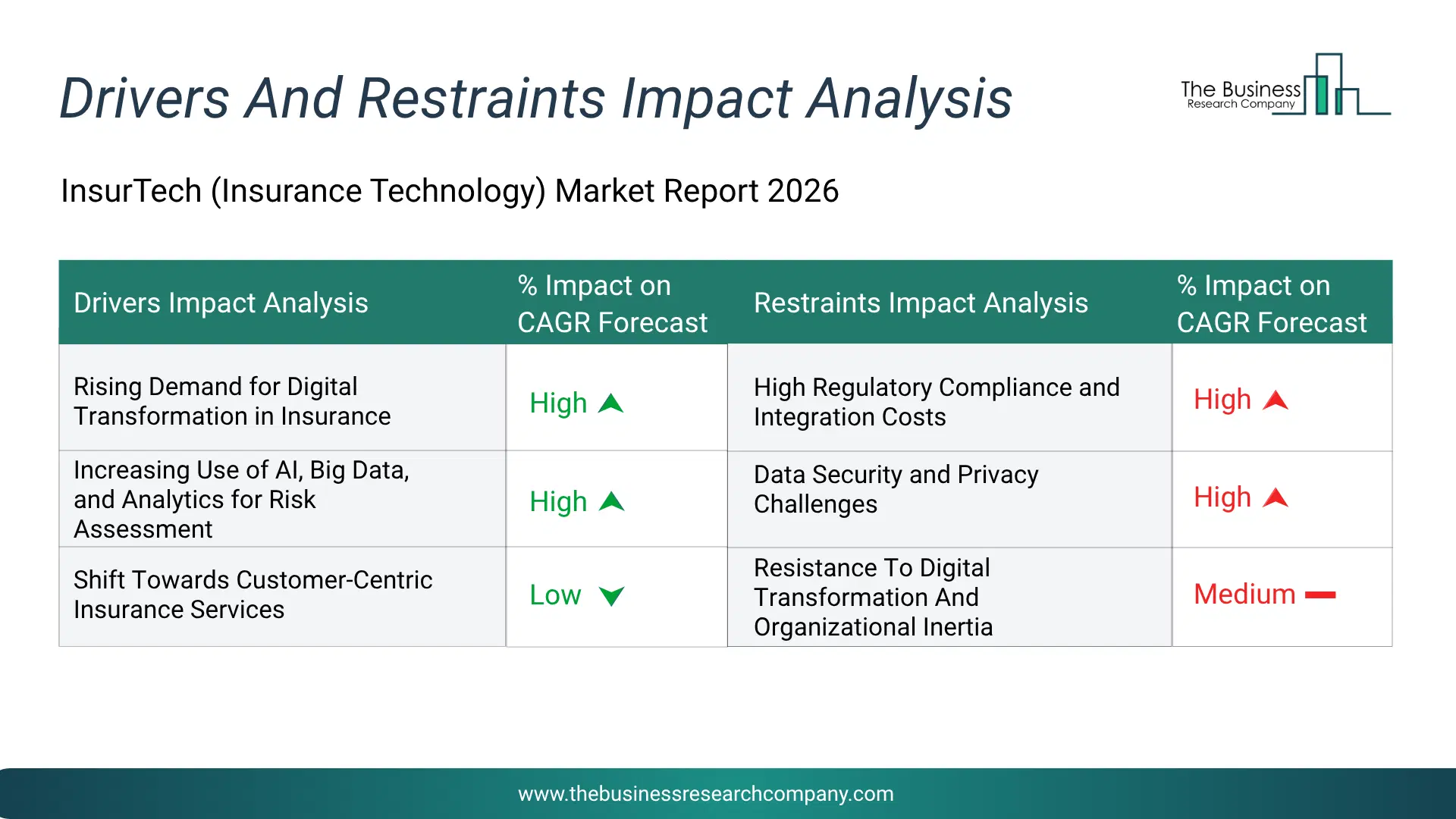
Infographic Chart Showing Key Market Drivers Analysis And Restraints For Insurtech (Insurance Technology) Market
The chart presents an impact analysis of key drivers and restraints, quantifying their relative influence on the market's growth rate and helping assess the balance between growth enablers and limiting factors. This chart offers a high-level perspective; the full report contains more detailed insights.
How Will The Drivers Impact Growth In The Global InsurTech (Insurance Technology) Market?
• Rising Demand for Digital Transformation in Insurance (High) – During the forecast period, the rising demand for digital transformation in insurance is expected to become a key growth driver for the insurtech (insurance technology) market by 2030. Insurance companies worldwide are under increasing pressure to modernize and digitize their operations to meet evolving customer expectations and remain competitive in a rapidly changing market. Insurtech solutions enable insurers to automate and streamline processes such as policy administration, claims processing, underwriting, and customer service. By reducing manual intervention and operational inefficiencies, these solutions significantly lower costs, improve turnaround times, and increase accuracy. Additionally, digital transformation empowers insurers to offer innovative products, flexible policy structures, and real -time service delivery, all of which enhance customer experience and loyalty. • Increasing Use of AI, Big Data, and Analytics for Risk Assessment (High) – During the forecast period, the increasing use of ai, big data, and analytics for risk assessment is expected to emerge as a major factor driving the expansion of the insurtech (insurance technology) market by 2030. The adoption of advanced technologies such as artificial intelligence, machine learning, and big data analytics is transforming how insurers assess and manage risk. Insurtech platforms leverage these technologies to analyze vast volumes of structured and unstructured data from multiple sources, including social media, iot devices, and telematics. This enables insurers to accurately evaluate risk profiles, detect potential fraud, predict claim probabilities, and personalize premiums. By delivering faster, data-driven insights, these solutions enhance operational efficiency and reduce losses. The growing importance of predictive analytics, coupled with the need for smarter, faster decision-making, continues to drive the widespread adoption of insurtech solutions across the insurance ecosystem. • Shift Towards Customer-Centric Insurance Services (Low) – During the forecast period, the shift towards customer-centric insurance services is expected to act as a key growth catalyst for the insurtech (insurance technology) market by 2030. Modern consumers increasingly demand personalized, convenient, and accessible insurance services. Insurtech solutions enable insurance providers to meet these expectations by offering self-service portals, mobile apps, ai-powered chatbots, and real-time claim processing capabilities. Customers can manage policies, file claims, and access support anytime and anywhere, which significantly improves satisfaction and retention. Moreover, data analytics tools provide insights into customer behavior, preferences, and feedback, allowing insurers to design targeted products and proactive service interventions. As insurers focus on delivering superior customer experiences to differentiate themselves in a competitive market, the adoption of insurtech solutions that enhance engagement and personalization is a critical driver of market growth.How Will The Restraints Impact Growth In The Global InsurTech (Insurance Technology) Market?
• High Regulatory Compliance and Integration Costs (High) – During the forecast period, the implementing insurtech solutions involves substantial investment in technology infrastructure, software licenses, integration with existing legacy systems, and employee training. Additionally, insurance companies must navigate complex regulatory environments across different regions, ensuring compliance with local and international standards such as solvency ii, gdpr, and other insurance-specific regulations. These factors increase both initial deployment and ongoing operational costs, creating barriers for smaller insurers and startups. The high financial and technical requirements for adoption may slow down implementation, restraining overall market growth despite increasing interest in technology-driven insurance services. • Data Security and Privacy Challenges (High) – During the forecast period, the insurtech platforms handle highly sensitive personal, financial, and health-related data, making them prime targets for cyberattacks, data breaches, and unauthorized access. Maintaining data security and ensuring compliance with privacy regulations such as gdpr, ccpa, and local insurance laws is crucial for insurers to protect both their reputation and customers. Any compromise in data security can result in significant financial penalties, loss of customer trust, and reputational damage. These security and privacy concerns often make insurers cautious about implementing new digital solutions, creating a restraint on market expansion, particularly in regions with stringent regulatory oversight or where cybersecurity infrastructure is still developing. • Resistance To Digital Transformation And Organizational Inertia (Medium) – During the forecast period, the resistance to digital transformation and organizational inertia act as a restraint for the insurtech market by slowing the adoption of advanced technologies within traditional insurance companies. Many established insurers rely on legacy systems and conventional workflows, making it difficult to shift toward fully digital platforms. Employees and management may also resist change due to fear of job displacement or lack of technical expertise. This slows down implementation timelines and reduces the effectiveness of insurtech solutions. As a result, overall market growth is restrained despite increasing demand for digital insurance services.Key Players In The Global InsurTech (Insurance Technology) Market
Major companies operating in the insurtech (insurance technology) market are DXC Technology Company; Shift Technology; Wipro Limited; Oscar Insurance Corporation; Quantemplate; Zhongan Insurance Company; Trov Insurance Solutions LLC; Clover Health Insurance; Insurance Technology Services; EIS Group; Acko General Insurance Company; Policy Bazaar; Simplesurance GmbH; Amodo; MetLife Inc.; The Travelers Companies Inc.; Root Insurance; Next Insurance; Hippo Insurance; Government Employees Insurance Company; Haven Life; Clearcover Insurance; Slice Labs Inc.; Kin Insurance; Collective Health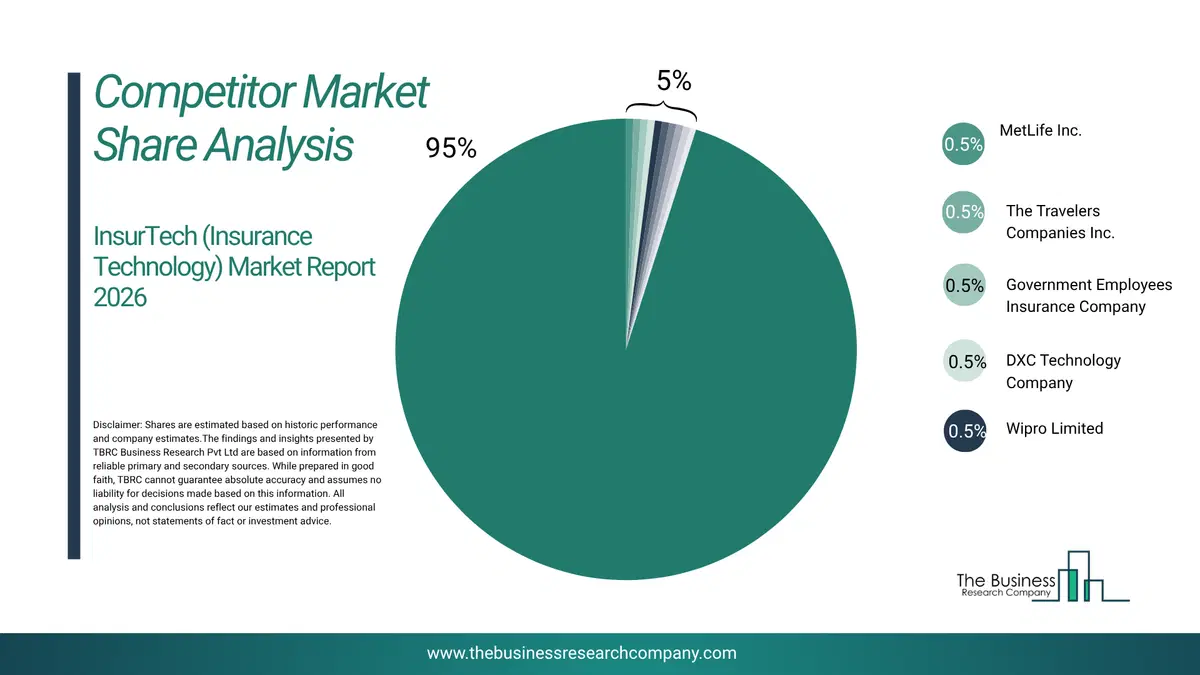
This chart is for illustrative purposes; the full report includes a detailed competitor analysis and comprehensive overview of the top 10 companies in the market.
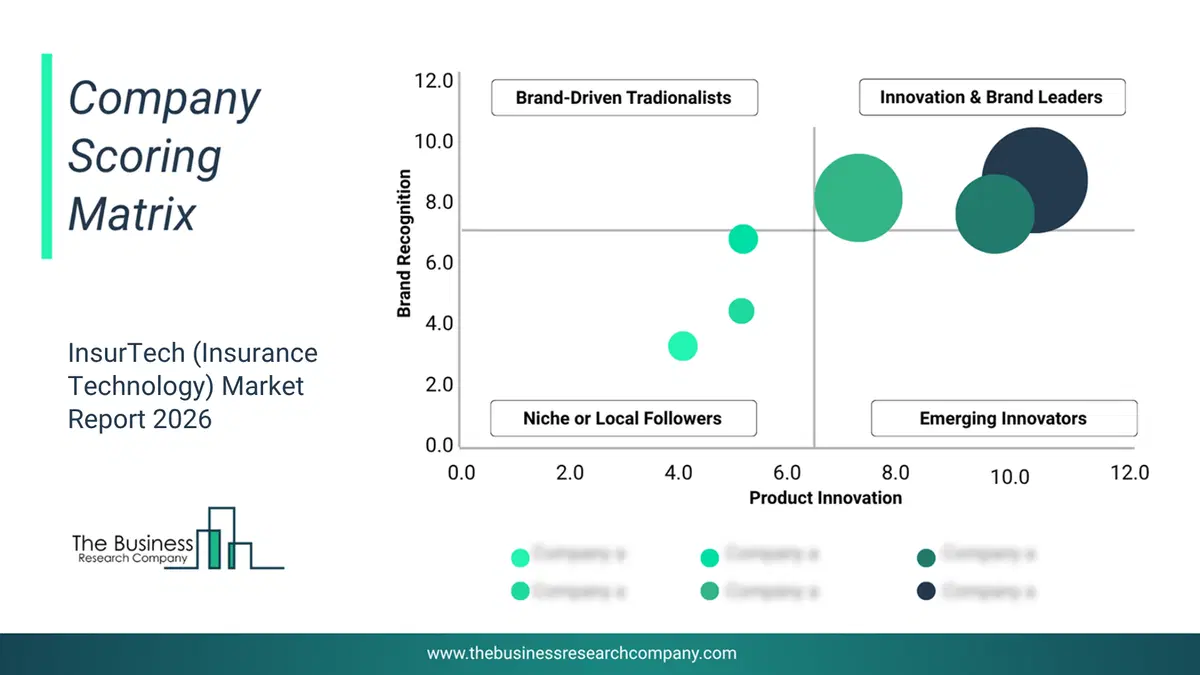
This chart maps companies by product innovation and brand strength, with bubble size indicating relative revenue, helping identify market leaders, challengers, and niche players. This is an illustrative chart; the full report provides a complete and accurate competitive analysis.
Global InsurTech (Insurance Technology) Market Trends and Insights
Major companies operating in the insurtech market are increasingly focusing on advanced robotics and AI-driven solutions to strengthen their competitive position and meet the rising demand for automated, high-accuracy insurance processes. Robotics-enabled platforms that enhance data extraction, streamline workflows, and improve underwriting efficiency are emerging as significant developments in this space. For instance, in October 2024, Insurity, a US-based provider of cloud-based software for insurance carriers, brokers, and MGAs, launched Insurity Document Intelligence, a solution powered by OIP Robotics. This technology leverages advanced AI to extract data from documents with 99% accuracy, reduce operational costs, and accelerate submission processing by 50%, significantly minimizing manual-entry errors. Designed for carriers and managing general agents (MGAs), the solution automates routine submissions and enhances underwriting operations by converting complex documents into structured data through AI-powered document understanding and insurance-native rules.What Are Latest Mergers And Acquisitions In The InsurTech (Insurance Technology) Market?
In April 2023, Zinnia, a US-based annuity insurance technology and digital services company, acquired Policygenius for an undisclosed amount. Through this acquisition, Zinnia will combine the digital services and technology provided by both businesses to build a platform that is more effective and user-friendly for insurance clients. Policygenius is a US-based digital insurance company.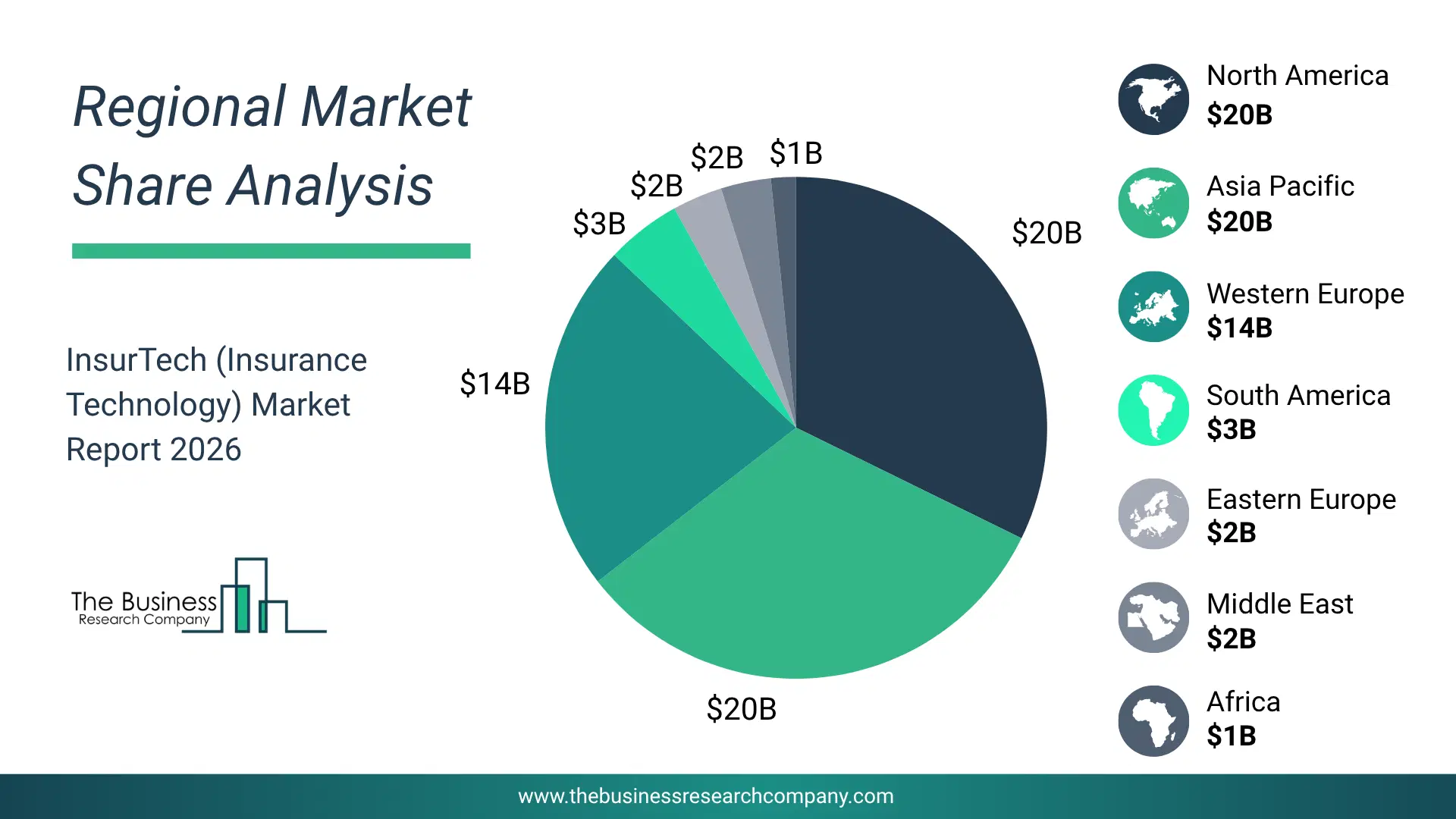
Regional Insights
North America was the largest region in the InsurTech (insurance technology) market in 2025.Asia-Pacific is expected to be the fastest-growing region in the global InsurTech (insurance technology) market report during the forecast period. The regions covered in this market report are Asia-Pacific, South East Asia, Western Europe, Eastern Europe, North America, South America, Middle East, Africa. The countries covered in this market report are Australia, Brazil, China, France, Germany, India, Indonesia, Japan, Taiwan, Russia, South Korea, UK, USA, Canada, Italy, SpainWhat Defines the InsurTech (Insurance Technology) Market?
The insurtech (insurance technology) market includes revenues earned by entities by providing insurance technology services for business insurance, travel insurance, and auto insurance. The market value includes the value of related goods sold by the service provider or included within the service offering. Only goods and services traded between entities or sold to end consumers are included. The insurtech (insurance technology) market consists of sales of insurance technology products, including insurance automation tools, digital insurance platforms, and Internet of Things (IoT) devices. Values in this market are ‘factory gate’ values, that is, the value of goods sold by the manufacturers or creators of the goods, whether to other entities (including downstream manufacturers, wholesalers, distributors, and retailers) or directly to end customers. The value of goods in this market includes related services sold by the creators of the goods.How is Market Value Defined and Measured?
The market value is defined as the revenues that enterprises gain from the sale of goods and/or services within the specified market and geography through sales, grants, or donations in terms of the currency (in USD unless otherwise specified). The revenues for a specified geography are consumption values that are revenues generated by organizations in the specified geography within the market, irrespective of where they are produced. It does not include revenues from resales along the supply chain, either further along the supply chain or as part of other products.
This chart presents market attractiveness based on a quantitative evaluation of growth, competition, strategic alignment, and risk, offering a clear view of opportunity areas for decision-making. This chart is for illustrative purposes; the full report contains the complete analysis.

This chart highlights the Total Addressable Market (TAM) by estimating the maximum revenue opportunity using an assumption-driven approach, supporting strategic planning and opportunity sizing across markets. The chart is illustrative; the full report provides a more comprehensive analysis.
What Key Data and Analysis Are Included in the InsurTech (Insurance Technology) Market Report 2026?
The insurtech (insurance technology) market research report is one of a series of new reports from The Business Research Company that provides market statistics, including industry global market size, regional shares, competitors with the market share, detailed market segments, market trends and opportunities, and any further data you may need to thrive in the insurtech (insurance technology) industry. The market research report delivers a complete perspective of everything you need, with an in-depth analysis of the current and future state of the industry.InsurTech (Insurance Technology) Market Report Forecast Analysis
| Report Attribute | Details |
|---|---|
| Market Size Value In 2026 | $35.34 billion |
| Revenue Forecast In 2030 | $128.12 billion |
| Growth Rate | CAGR of 38% from 2026 to 2030 |
| Base Year For Estimation | 2025 |
| Actual Estimates/Historical Data | 2020-2025 |
| Forecast Period | 2026 - 2030 |
| Market Representation | Revenue in USD Billion and CAGR from 2026 to 2030 |
| Segments Covered | Offering, Insurance Type, Technology, Deployment Model, End-Use |
| Regional Scope | Asia-Pacific, Western Europe, Eastern Europe, North America, South America, Middle East, Africa |
| Country Scope | The countries covered in the report are Australia, Brazil, China, France, Germany, India, ... |
| Key Companies Profiled | DXC Technology Company; Shift Technology; Wipro Limited; Oscar Insurance Corporation; Quantemplate; Zhongan Insurance Company; Trov Insurance Solutions LLC; Clover Health Insurance; Insurance Technology Services; EIS Group; Acko General Insurance Company; Policy Bazaar; Simplesurance GmbH; Amodo; MetLife Inc.; The Travelers Companies Inc.; Root Insurance; Next Insurance; Hippo Insurance; Government Employees Insurance Company; Haven Life; Clearcover Insurance; Slice Labs Inc.; Kin Insurance; Collective Health |
| Customization Scope | Request for Customization |
| Pricing And Purchase Options | Explore Purchase Options |