

Joint Compounds Market Report 2026
Global Outlook – By Product (Ready-Mixed Joint Compound, Setting-Type Joint Compound, All-Purpose Joint Compound, Lightweight Joint Compound), By Packaging Size (Small Packs (Up To 5 Kg), Medium Packs (6-15 Kg), Bulk (15 Kg And Above)), By Distribution Channel (Offline Or Retail Stores, Online Platforms), By Application (Drywall Joints, Ceiling Joints, Corner Bead, Texturing, Other Applications), By End Use (Residential Construction, Commercial Construction, Institutional Construction, Industrial Construction) – Market Size, Trends, Strategies, and Forecast to 2030
Joint Compounds Market Overview
• Joint Compounds market size has reached to $5.37 billion in 2025 • Expected to grow to $7.4 billion in 2030 at a compound annual growth rate (CAGR) of 6.6% • Growth Driver: Growth In The Construction Industry Fueling The Market Due To Rising Demand For Housing And Infrastructure Development • Market Trend: Innovation In Joint Compounds Accelerates With Launch Of Ultra-Rapid And Super-Fine Setting Solutions To Meet Demand For Faster And Smoother Finishes • North America was the largest region in 2025 and Asia-Pacific is the fastest growing region.What Is Covered Under Joint Compounds Market?
Joint compounds, also known as drywall mud, are thick pastes made primarily from gypsum powder mixed with water and are used to fill and seal joints, seams, and imperfections between drywall panels to create a smooth, seamless surface for painting or finishing. They are an essential material in drywall installation, helping to cover fasteners, embed joint tape, and repair minor wall or ceiling damage. The main types of products in joint compounds are ready-mixed joint compound, setting-type joint compound, all-purpose joint compound, and lightweight joint compound. Ready-mixed joint compound is a pre-formulated, ready-to-use product that requires no mixing before application, making it highly convenient for both professionals and DIY users. It is available in different packaging sizes, such as small packs (up to 5 kg), medium packs (6-15 kg), and bulk (15 kg and above), and is distributed through offline or retail stores and online platform channels. This type of joint compound is widely used in applications such as drywall joints, ceiling joints, corner bead, texturing, and others, serving end users across residential construction, commercial construction, institutional construction, and industrial construction.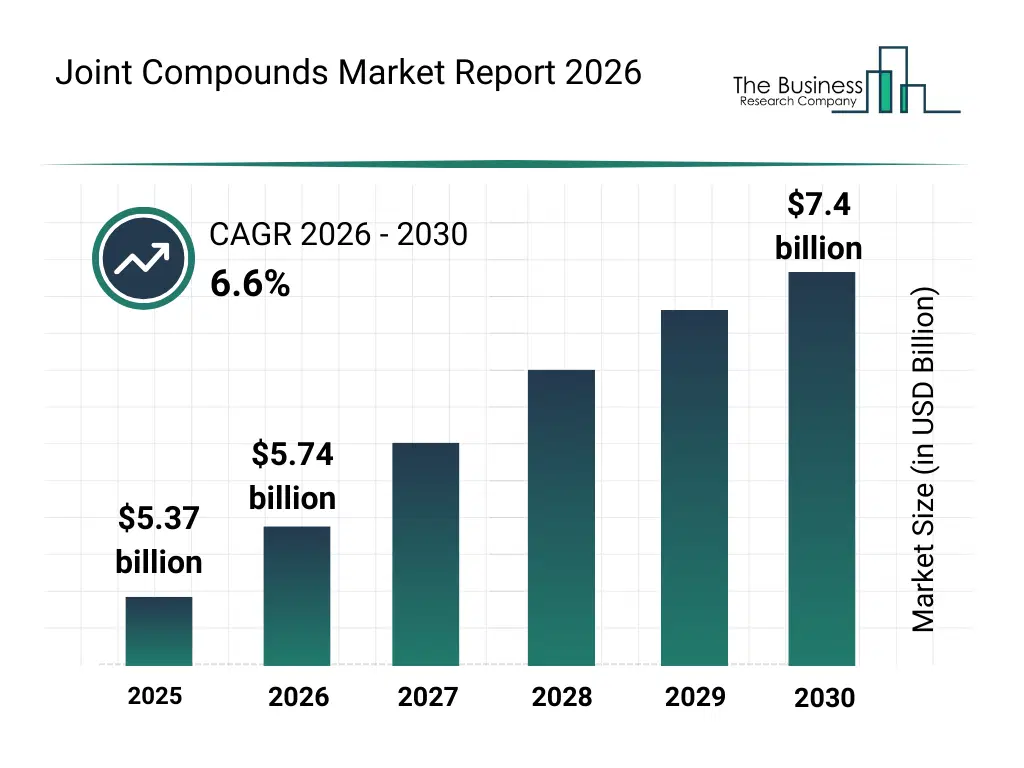
What Is The Joint Compounds Market Size and Share 2026?
The joint compounds market size has grown strongly in recent years. It will grow from $5.37 billion in 2025 to $5.74 billion in 2026 at a compound annual growth rate (CAGR) of 6.9%. The growth in the historic period can be attributed to growth in residential and commercial drywall installation activities, increased adoption of ready-mixed joint compounds for faster application, development of lightweight formulations to improve handling efficiency, expansion of renovation and remodeling projects, advancements in gypsum processing technologies improving product consistency.What Is The Joint Compounds Market Growth Forecast?
The joint compounds market size is expected to see strong growth in the next few years. It will grow to $7.4 billion in 2030 at a compound annual growth rate (CAGR) of 6.6%. The growth in the forecast period can be attributed to rising demand for low-dust and low-VOC joint compounds meeting environmental standards, growing adoption of high-performance setting-type compounds for rapid construction cycles, expansion of construction activities in emerging markets, increasing use of automated taping and finishing tools driving compound optimization, development of specialty formulations for enhanced crack resistance and durability. Major trends in the forecast period include rising preference for ready-mixed and all-purpose joint compounds to reduce on-site preparation time, growing adoption of lightweight joint compounds to improve handling and reduce worker fatigue, increasing demand for small-pack joint compounds driven by diy and repair applications, expansion of specialized performance formulations such as moisture-resistant, high-strength, and crack-resistant compounds, rapid growth in joint compound consumption in emerging markets due to urbanization and increased drywall-based construction.
Global Joint Compounds Market Segmentation
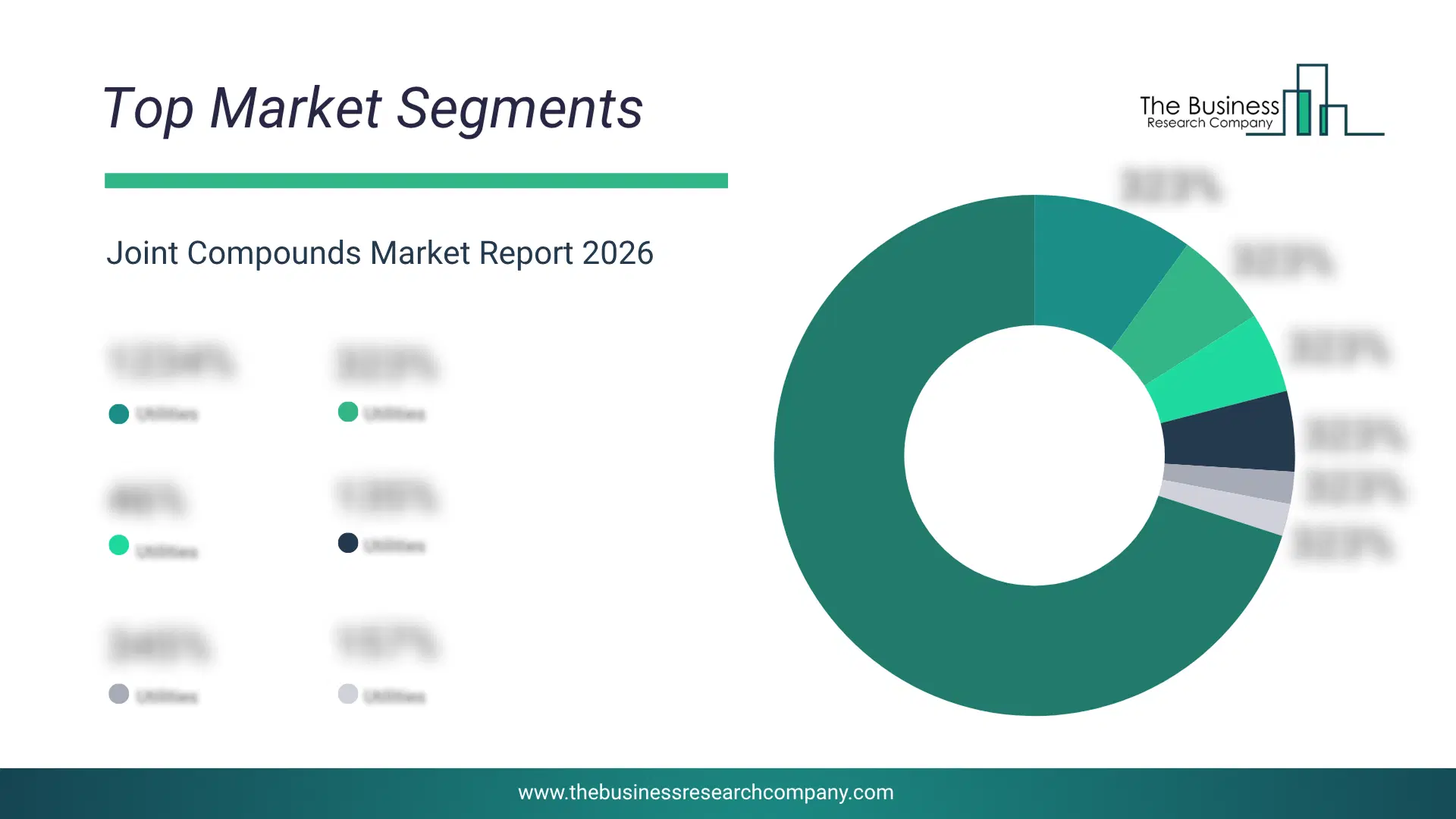
1) By Product: Ready-Mixed Joint Compound, Setting-Type Joint Compound, All-Purpose Joint Compound, Lightweight Joint Compound 2) By Packaging Size: Small Packs (Up To 5 Kg), Medium Packs (6-15 Kg), Bulk (15 Kg And Above) 3) By Distribution Channel: Offline Or Retail Stores, Online Platforms 4) By Application: Drywall Joints, Ceiling Joints, Corner Bead, Texturing, Other Applications 5) By End Use: Residential Construction, Commercial Construction, Institutional Construction, Industrial Construction Subsegments: 1) By Ready-Mixed Joint Compound: Taping Compound, Topping Compound, All-Purpose Ready-Mixed, Lightweight Ready-Mixed, Low Dust Formulation, Specialized Finishing Compounds 2) By Setting-Type Joint Compound: Quick-Set Compound, Mid-Set Compound, Extended-Set Compound, Moisture-Resistant Formulation, High-Strength Setting Compound 3) By All-Purpose Joint Compound: Interior Use All-Purpose, Exterior Use All-Purpose, Sandable All-Purpose, Mold And Mildew Resistant, Crack-Resistant All-Purpose 4) By Lightweight Joint Compound: Lightweight All-Purpose, Lightweight Topping, Lightweight Taping, Dust-Control Lightweight, Ultra-Lightweight FormulaWhat Is Driver Of The Joint Compounds Market?
The growing construction industry is expected to propel the growth of the joint compounds market going forward. The construction industry refers to the sector responsible for planning, designing, constructing, and maintaining buildings, infrastructure, and other physical structures across residential, commercial, and industrial segments. The construction industry is growing as population growth drives the need for more housing, infrastructure, and public facilities to accommodate expanding urban and suburban communities. Joint compounds are useful for construction as they are essential for finishing drywall installations by filling joints, seams, and screw holes, creating smooth and seamless wall and ceiling surfaces. For instance, in March 2025, according to the Bureau of Labor Statistics, a US-based government agency, the construction industry is expected to grow by 4.7% between 2023 and 2033, outpacing the 4.0% growth projected for all industries. This expansion is anticipated to create approximately 380,100 new jobs, bringing total employment in the construction sector to nearly 8.4 million by 2033. Therefore, the growing construction industry is driving the growth of the joint compounds industry.Key Players In The Global Joint Compounds Market
Major companies operating in the joint compounds market are Dow Inc., Compagnie de Saint-Gobain, Henkel AG & Co. KGaA, PPG Industries Inc., National Gypsum Company, Sika AG, USG Corporation, Etex NV, ASG Group, ParexGroup Limited, Pidilite Industries Limited, DAP Products Inc., Knauf Gips KG, Holcim Ltd., Zawawi Minerals LLC, Freeman Products Inc., Wacker Chemie AG, Mapei S.p.A., Solid Products Inc., Mada Gypsum Company, VANS Gypsum Private Limited.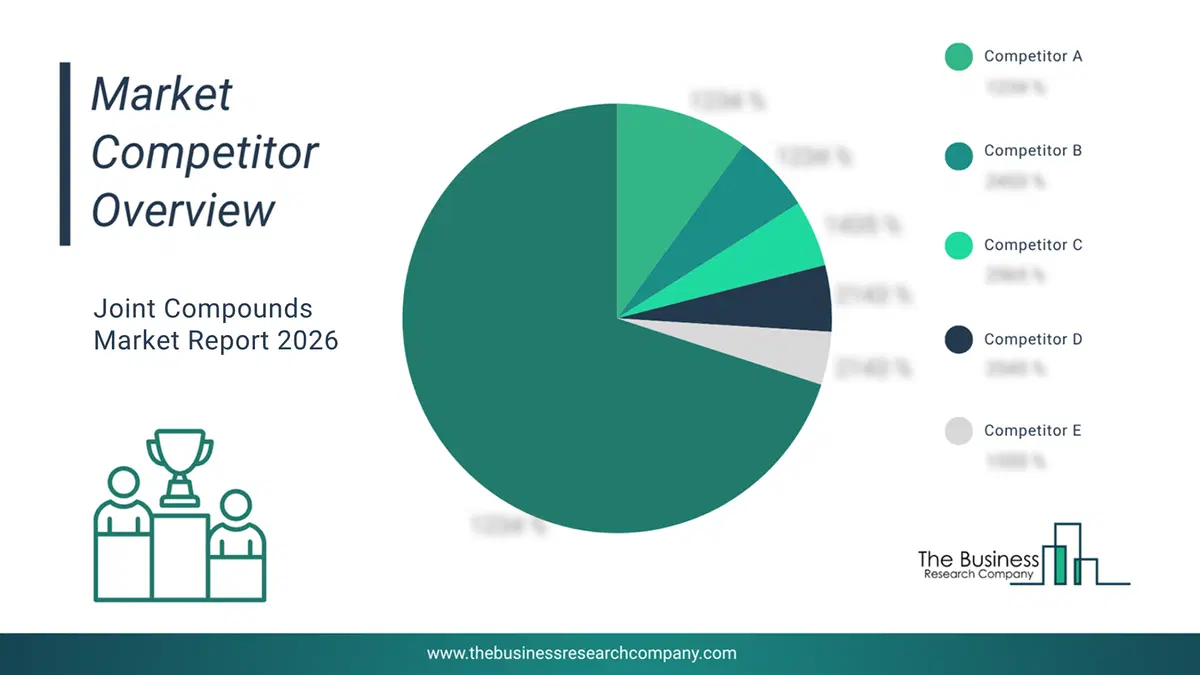
This chart is for illustrative purposes; the full report includes a detailed competitor analysis and comprehensive overview of the top 10 companies in the market.
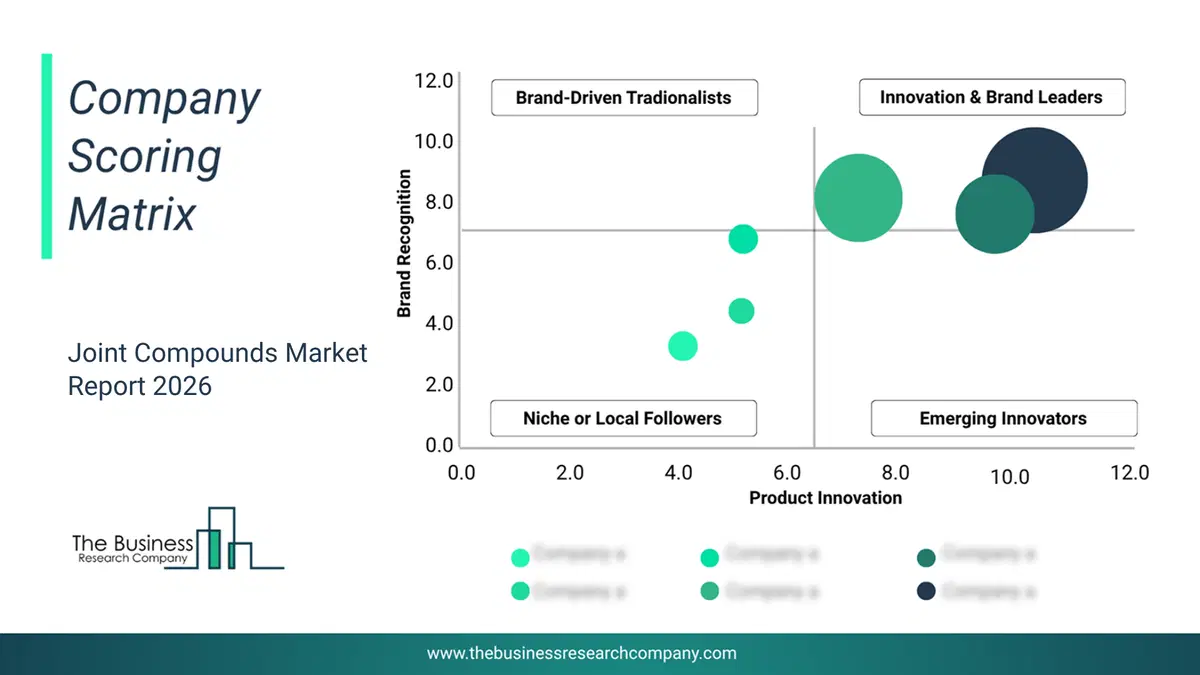
This chart maps companies by product innovation and brand strength, with bubble size indicating relative revenue, helping identify market leaders, challengers, and niche players. This is an illustrative chart; the full report provides a complete and accurate competitive analysis.
Global Joint Compounds Market Trends and Insights
Major companies operating in the joint compounds market are focusing on introducing innovative solutions, such as super-fine setting joint compounds, to meet the rising demand for faster project turnarounds, enhanced workability, and consistent finishes in both residential and commercial construction. Super-fine setting joint compounds are advanced formulations designed to significantly accelerate setting times while providing a smoother, finer surface finish compared to traditional ready-mix or standard gypsum-based compounds. For instance, in February 2025, Pladur Gypsum S.A., a Spain-based manufacturer of gypsum products, launched two new joint compounds, Pasta Pladur ST2 Superfina and Pasta Pladur ST30. The ST2 Superfina is a powdered compound designed for manual joint treatment in cold and humid climates, with a consistent 120-minute set time and easy sandability suitable for Q1–Q3 finish levels. The ST30 delivers ultra-rapid setting in just 30 minutes and a superior fine finish ideal for same-day minor repairs while offering excellent workability and sanding ease. These additions underscore Pladur’s commitment to sustainability, energy efficiency, and ergonomic application methods.What Are Latest Mergers And Acquisitions In The Joint Compounds Market? Saint-Gobain Acquires Fosroc To Expand Presence In Emerging Markets And Strengthen Sustainable Construction Portfolio
In February 2025, Compagnie de Saint-Gobain S.A., a France-based manufacturing company, acquired Fosroc International Limited for an undisclosed amount. With this acquisition, Saint-Gobain aims to strengthen its presence in high-growth emerging markets, notably India and the Middle East, and to advance its strategy of becoming the worldwide leader in light and sustainable construction. Fosroc International Limited is a UK-based company that manufactures and supplies high-performance chemicals for the construction industry, including joint compounds.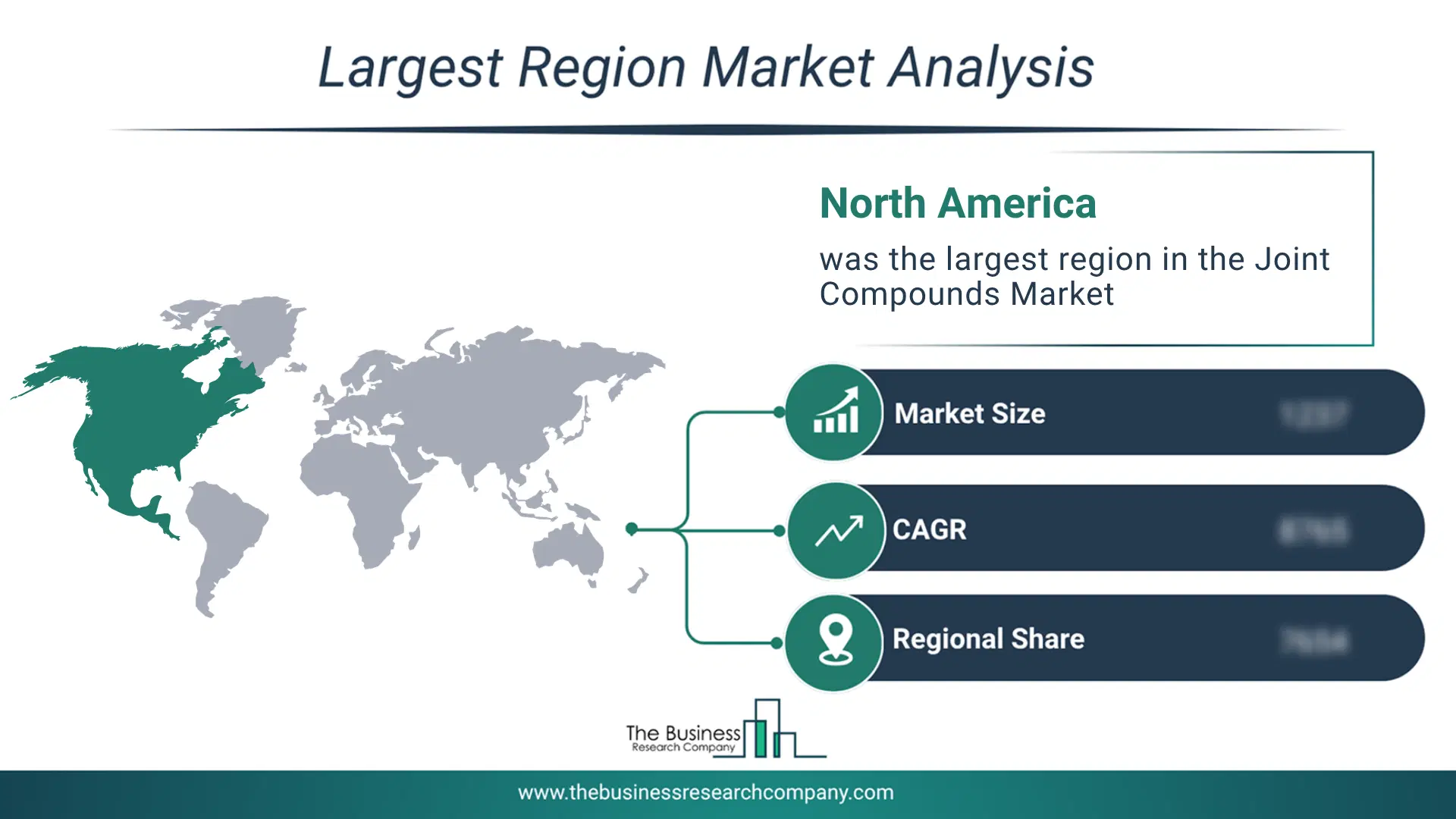
Regional Insights
North America was the largest region in the joint compounds market in 2025. Asia-Pacific is expected to be the fastest-growing region in the forecast period. The regions covered in this market report are Asia-Pacific, South East Asia, Western Europe, Eastern Europe, North America, South America, Middle East, Africa. The countries covered in this market report are Australia, Brazil, China, France, Germany, India, Indonesia, Japan, Taiwan, Russia, South Korea, UK, USA, Canada, Italy, SpainWhat Defines the Joint Compounds Market?
The joint compounds market consists of sales of ready-mixed joint compounds, setting-type joint compounds, all-purpose joint compounds, topping compounds, and lightweight joint compounds. Values in this market are ‘factory gate’ values, that is, the value of goods sold by the manufacturers or creators of the goods, whether to other entities (including downstream manufacturers, wholesalers, distributors, and retailers) or directly to end customers. The value of goods in this market includes related services sold by the creators of the goods.How is Market Value Defined and Measured?
The market value is defined as the revenues that enterprises gain from the sale of goods and/or services within the specified market and geography through sales, grants, or donations in terms of the currency (in USD unless otherwise specified). The revenues for a specified geography are consumption values that are revenues generated by organizations in the specified geography within the market, irrespective of where they are produced. It does not include revenues from resales along the supply chain, either further along the supply chain or as part of other products.
This chart presents market attractiveness based on a quantitative evaluation of growth, competition, strategic alignment, and risk, offering a clear view of opportunity areas for decision-making. This chart is for illustrative purposes; the full report contains the complete analysis.

This chart highlights the Total Addressable Market (TAM) by estimating the maximum revenue opportunity using an assumption-driven approach, supporting strategic planning and opportunity sizing across markets. The chart is illustrative; the full report provides a more comprehensive analysis.
What Key Data and Analysis Are Included in the Joint Compounds Market Report 2026?
The joint compounds market research report is one of a series of new reports from The Business Research Company that provides market statistics, including industry global market size, regional shares, competitors with the market share, detailed market segments, market trends and opportunities, and any further data you may need to thrive in the joint compounds industry. The market research report delivers a complete perspective of everything you need, with an in-depth analysis of the current and future state of the industry.Joint Compounds Market Report Forecast Analysis
| Report Attribute | Details |
|---|---|
| Market Size Value In 2026 | $5.74 billion |
| Revenue Forecast In 2030 | $7.4 billion |
| Growth Rate | CAGR of 6.6% from 2026 to 2030 |
| Base Year For Estimation | 2025 |
| Actual Estimates/Historical Data | 2020-2025 |
| Forecast Period | 2026 - 2030 |
| Market Representation | Revenue in USD Billion and CAGR from 2026 to 2030 |
| Segments Covered | Product, Packaging Size, Distribution Channel, Application, End Use |
| Regional Scope | Asia-Pacific, Western Europe, Eastern Europe, North America, South America, Middle East, Africa |
| Country Scope | The countries covered in the joint compounds market report are Australia, Brazil, China, France, Germany, India, Indonesia, Japan, Taiwan, Russia, South Korea, UK, USA, Canada, Italy, Spain |
| Key Companies Profiled | Dow Inc., Compagnie de Saint-Gobain, Henkel AG & Co. KGaA, PPG Industries Inc., National Gypsum Company, Sika AG, USG Corporation, Etex NV, ASG Group, ParexGroup Limited, Pidilite Industries Limited, DAP Products Inc., Knauf Gips KG, Holcim Ltd., Zawawi Minerals LLC, Freeman Products Inc., Wacker Chemie AG, Mapei S.p.A., Solid Products Inc., Mada Gypsum Company, VANS Gypsum Private Limited. |
| Customization Scope | Request for Customization |
| Pricing And Purchase Options | Explore Purchase Options |