

Kitchenware Market Report 2026
Global Outlook – By Product (Cookware, Bakeware, Other Products), By Distribution Channel (Online, Offline), By End-User (Residential Kitchen, Commercial Kitchens) – Market Size, Trends, Strategies, and Forecast to 2030
Kitchenware Market Overview
• Kitchenware market size has reached to $71.95 billion in 2025 • Expected to grow to $92.44 billion in 2030 at a compound annual growth rate (CAGR) of 5.4% • Growth Driver: Expansion Of Food Retail And Hospitality Industry Drives Growth In The Kitchenware Market • Market Trend: Revolutionizing Kitchenware With Smart Appliance Technologies • North America was the largest region in 2025 and Asia-Pacific is the fastest growing region.Market Gains By 2030 – Top Opportunities By Segment
Market Gain identifies the most promising market opportunities by highlighting the segments or products expected to generate the highest incremental revenue growth over the next five years.
What Is Covered Under Kitchenware Market?
Kitchenware refers to a broad category of tools and equipment used in cooking, food preparation and serving within a kitchen setting. These items are essential for tasks ranging from chopping and cooking to baking and serving that enhance cooking and food-related activities. The main product types of kitchenware are cookware, bakeware and others. Cookware refers to a set of kitchen appliances and containers made especially for cooking that provide effective heat distribution and cooking surfaces for a variety of culinary procedures and are used for cooking, sautéing, boiling and frying dishes. These products are distributed through online and offline channels to be used in residential and commercial kitchens.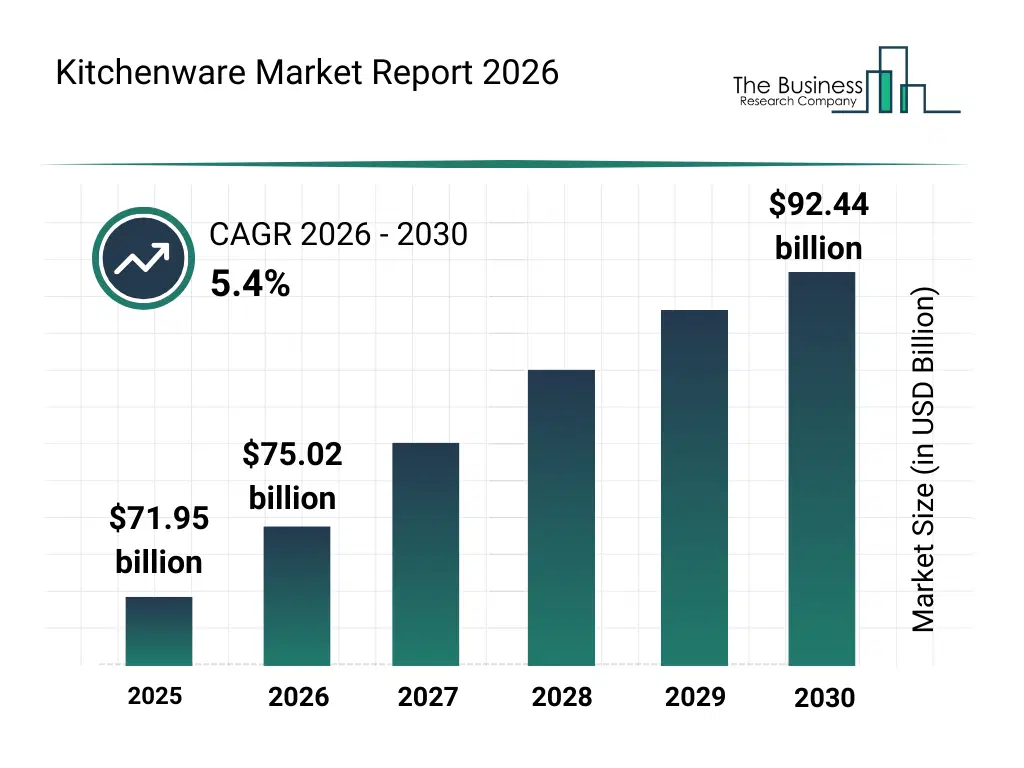
What Is The Kitchenware Market Size and Share 2026?
The kitchenware market size has grown steadily in recent years. It will grow from $71.95 billion in 2025 to $75.02 billion in 2026 at a compound annual growth rate (CAGR) of 4.3%. The growth in the historic period can be attributed to expansion of residential cooking activities, growth in food service establishments, increasing household kitchen upgrades, availability of affordable cookware products, rising influence of cooking culture and media.What Is The Kitchenware Market Growth Forecast?
The kitchenware market size is expected to see strong growth in the next few years. It will grow to $92.44 billion in 2030 at a compound annual growth rate (CAGR) of 5.4%. The growth in the forecast period can be attributed to increasing demand for premium and smart kitchen tools, rising focus on eco-friendly materials, expansion of commercial kitchen infrastructure, growing adoption of online direct-to-consumer sales, increasing innovation in durable cookware coatings. Major trends in the forecast period include increasing demand for sustainable and non-toxic kitchenware, rising adoption of modular and multi-functional kitchen tools, growing popularity of premium cookware materials, expansion of online kitchenware retail, enhanced focus on ergonomic and user-friendly designs.
Global Kitchenware Market Segmentation
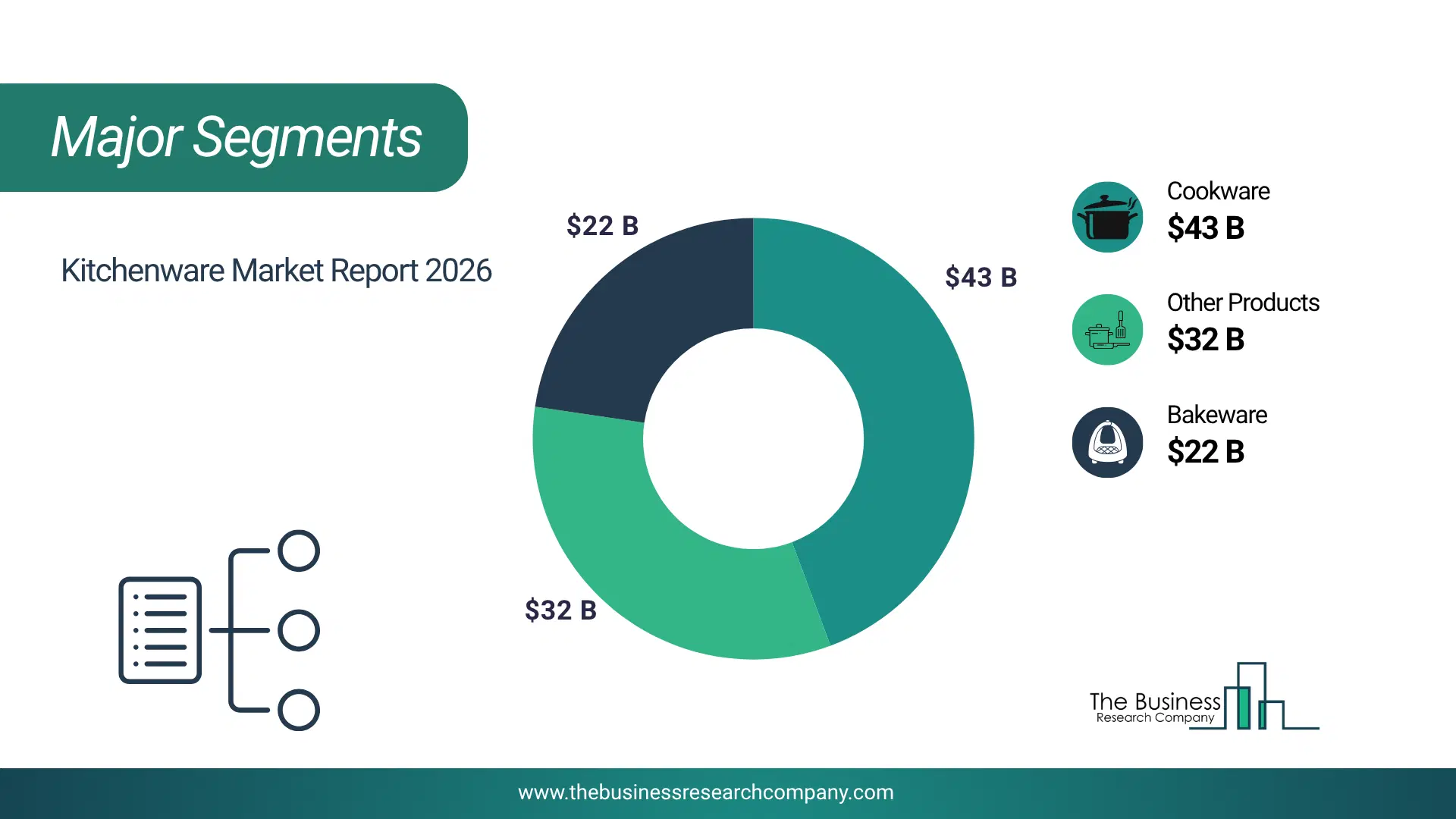
1) By Product: Cookware, Bakeware, Other Products 2) By Distribution Channel: Online, Offline 3) By End-User: Residential Kitchen, Commercial Kitchens Subsegments: 1) By Cookware: Frying Pans, Saucepans, Stock Pots, Dutch Ovens, Woks 2) By Bakeware: Baking Sheets, Cake Pans, Muffin Tins, Pie Dishes, Loaf Pans 3) By Other Products: Utensils, Mixing Bowls, Cutting Boards, Kitchen Gadgets, Storage Containers The top segments in the missiles market will be: • Ballistic Missiles will reach $20.08 Billion by 2030. • Cruise Missiles will reach $14.37 Billion by 2030. The top segments in the kitchenware market will be: • Cookware will reach $43.18 Billion by 2030. • Other Products will reach $31.91 Billion by 2030. • Bakeware will reach $21.66 Billion by 2030.What Is The Driver Of The Kitchenware Market?
The increasing number of food retail chains, restaurants and hotels is expected to propel the growth of the kitchenware market going forward. Food retail chains refer to networks of interconnected stores offering diverse food products. At the same time, restaurants and hotels provide prepared meals, beverages and accommodations with varying on-site dining options for consumers. The expansion of food preparation leads to increased demand for kitchenware as more dining facilities require equipment, utensils and appliances, thereby triggering a ripple effect in the kitchenware industry's growth. For instance, in 2024, according to the Department for Environment, Food & Rural Affairs (Defra), a UK-Based government department, the organic food and beverage sector in the UK achieved approximately £3.7?($4.31) billion in value sales in 2024, marking a 7.3% growth compared to 2023. Therefore, an increasing number of food retail chains, restaurants and hotels will drive the kitchenware industry.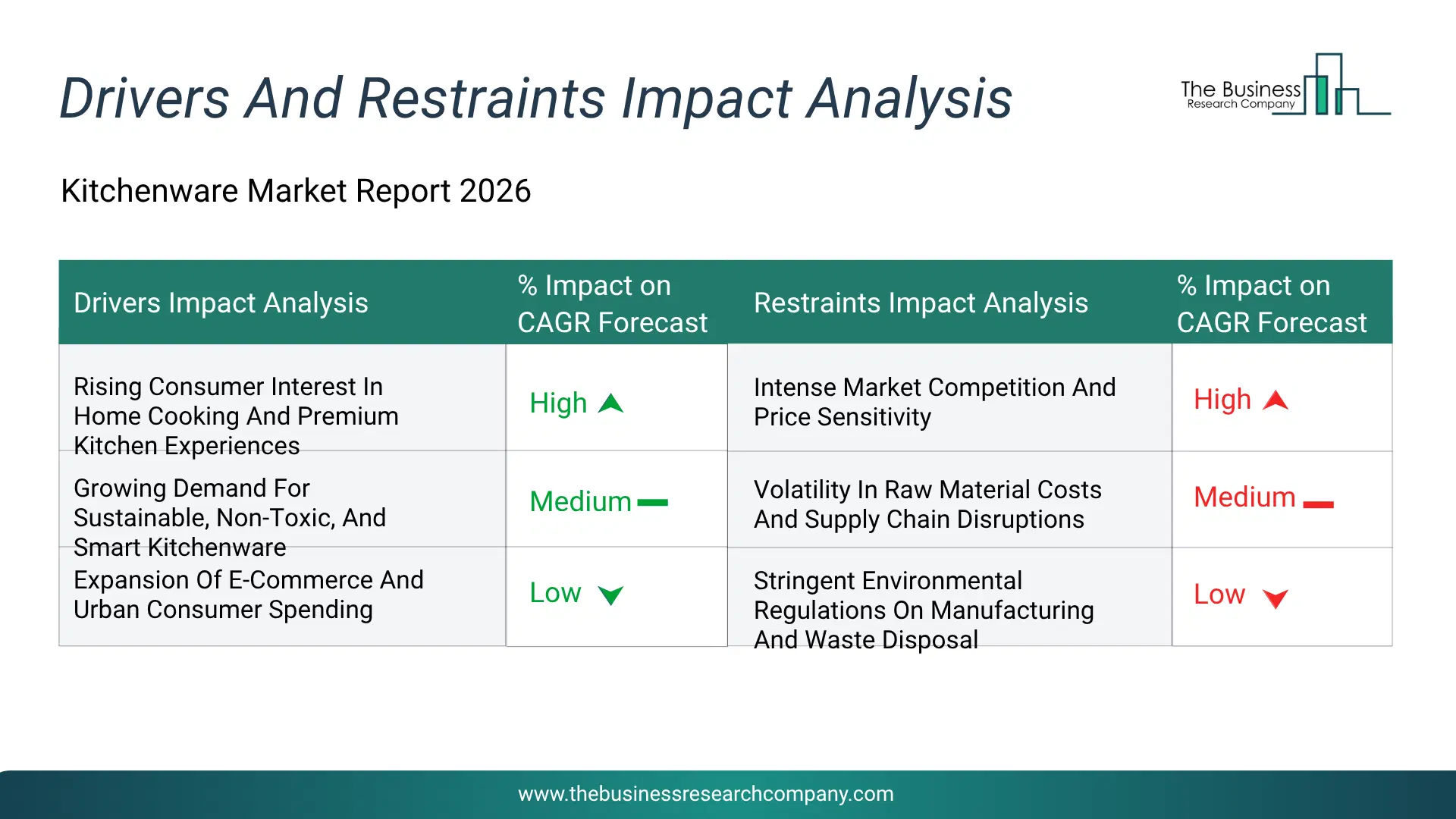
Infographic Chart Showing Key Market Drivers Analysis And Restraints For Kitchenware Market
The chart presents an impact analysis of key drivers and restraints, quantifying their relative influence on the market's growth rate and helping assess the balance between growth enablers and limiting factors. This chart offers a high-level perspective; the full report contains more detailed insights.
How Will The Drivers Impact Growth In The Global Kitchenware Market?
• Rising Consumer Interest In Home Cooking And Premium Kitchen Experiences (High) – During the forecast period, the rising consumer interest in home cooking and premium kitchen experiences is expected to become a key growth driver for the kitchenware market by 2030. Increasing consumer engagement in home cooking, baking, and gourmet meal preparation is driving demand for advanced and aesthetically appealing kitchenware products. As consumers spend more time preparing meals at home, they are increasingly investing in high-quality cookware, bakeware, and kitchen accessories that improve convenience and cooking performance. This trend is further supported by the influence of food content across social media and digital platforms, encouraging experimentation with new cuisines and cooking techniques. Additionally, growing preference for premium kitchen experiences is strengthening demand for durable and multifunctional kitchen products. • Growing Demand For Sustainable, Non-Toxic, And Smart Kitchenware (Medium) – During the forecast period, the growing demand for sustainable, non-toxic, and smart kitchenware is expected to emerge as a major factor driving the expansion of the kitchenware market by 2030. Increasing consumer awareness regarding health, environmental sustainability, and product safety is accelerating the adoption of eco-friendly and chemical-free kitchenware products. Consumers are increasingly preferring cookware made from stainless steel, ceramic, cast iron, and recycled materials that offer long-term durability and safer cooking experiences. At the same time, manufacturers are introducing technologically advanced smart kitchenware products with temperature control, energy efficiency, and connected cooking features to enhance user convenience. These innovations are encouraging consumers to replace conventional products with modern alternatives, thereby supporting steady market expansion. • Expansion Of E-Commerce And Urban Consumer Spending (Low) – During the forecast period, the expansion of e-commerce and urban consumer spending is expected to act as a key growth catalyst for the kitchenware market by 2030. The rapid growth of online retail platforms and digital shopping channels is significantly improving consumer access to a wide range of kitchenware products across urban and semi-urban regions. E-commerce platforms enable consumers to compare designs, materials, and prices conveniently, which supports higher product visibility and purchasing frequency. In addition, rising disposable incomes and changing lifestyle preferences among urban households are increasing spending on modern kitchen upgrades and premium dining solutions. The growing penetration of organized retail and direct-to-consumer brands is also strengthening product availability and market reach.How Will The Restraints Impact Growth In The Global Kitchenware Market?
• Intense Market Competition And Price Sensitivity (High) – During the forecast period, the the kitchenware market remains highly fragmented, with strong competition from regional manufacturers, low-cost imports, and private-label brands. Price-sensitive consumers in developing economies often prioritize affordability over premium quality, limiting the adoption of high-margin branded products. Additionally, frequent discounting and competitive pricing strategies across online marketplaces create pressure on manufacturer profitability and reduce long-term pricing power within the industry. • Volatility In Raw Material Costs And Supply Chain Disruptions (Medium) – During the forecast period, the fluctuations in the prices of stainless steel, aluminum, glass, plastics, and other raw materials significantly affect production costs for kitchenware manufacturers. Global supply chain disruptions, rising transportation costs, and geopolitical uncertainties continue to impact inventory management and product availability. These challenges increase operational expenses and create pricing instability, particularly for manufacturers dependent on international sourcing and exports. • Stringent Environmental Regulations On Manufacturing And Waste Disposal (Low) – During the forecast period, the cookware manufacturers are increasingly facing strict environmental regulations related to emissions, chemical coatings, waste management, and sustainable production practices. Compliance with environmental safety standards for non-stick coatings, metal processing, and packaging materials is increasing operational and certification costs for manufacturers. Additionally, growing regulatory scrutiny regarding recyclable materials and eco-friendly manufacturing processes is creating challenges for small and mid-sized market participants, limiting production flexibility and increasing overall compliance burdens.Key Players In The Global Kitchenware Market
Major companies operating in the kitchenware market are Whirlpool Corporation, Newell Brands Inc., Groupe SEB, Wilton Industries Inc., Conair Corporation, Meyer Corporation, Tupperware Brands Corporation, Rubbermaid Commercial Products, Hamilton Beach Brands Holding Company, Anchor Hocking Company, Fissler GmbH, TTK Prestige Ltd, ITW Food Equipment Group LLC, ZWILLING J.A. Henckels AG, Scavolini S.p.A., Calphalon Corporation, OXO International Ltd., Gibson Overseas Inc., Wüsthof Dreizack, Lodge Manufacturing Company, Viners (Rayware Limited), Tramontina USA Inc., Clipper Corporation, The Cookware Company, Pyrex Cookware, All-Clad Metalcrafters LLC, Anolon, Mauviel USA Inc., Kenwood Limited, Le Creuset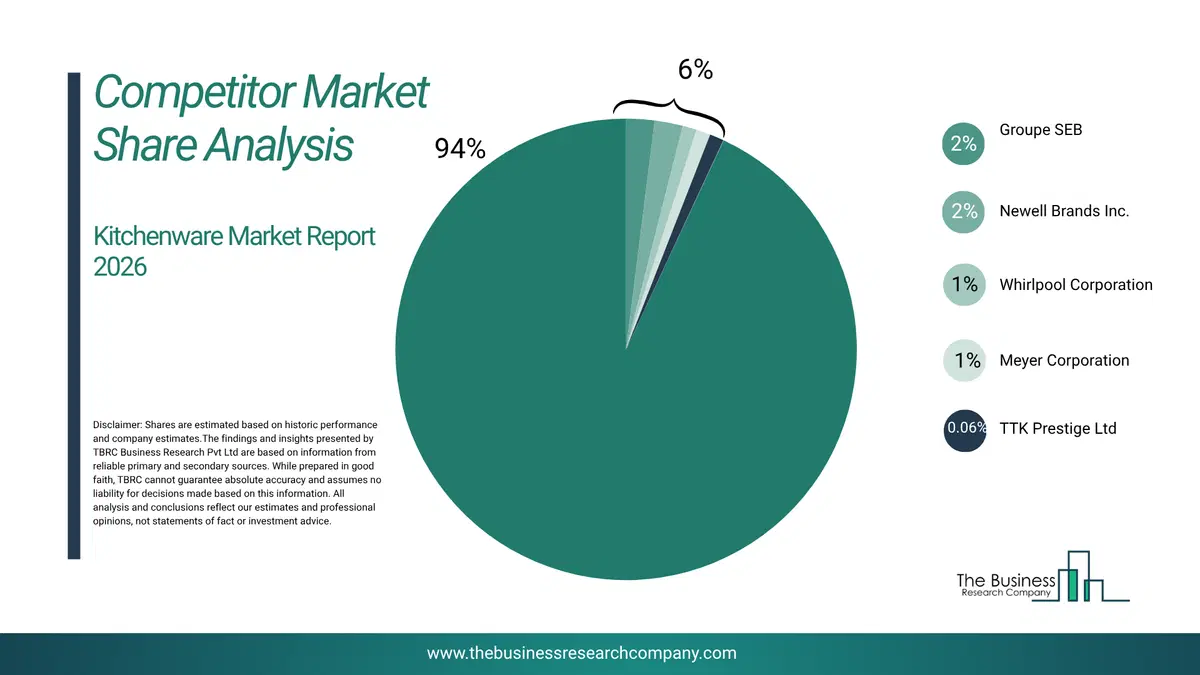
This chart is for illustrative purposes; the full report includes a detailed competitor analysis and comprehensive overview of the top 10 companies in the market.
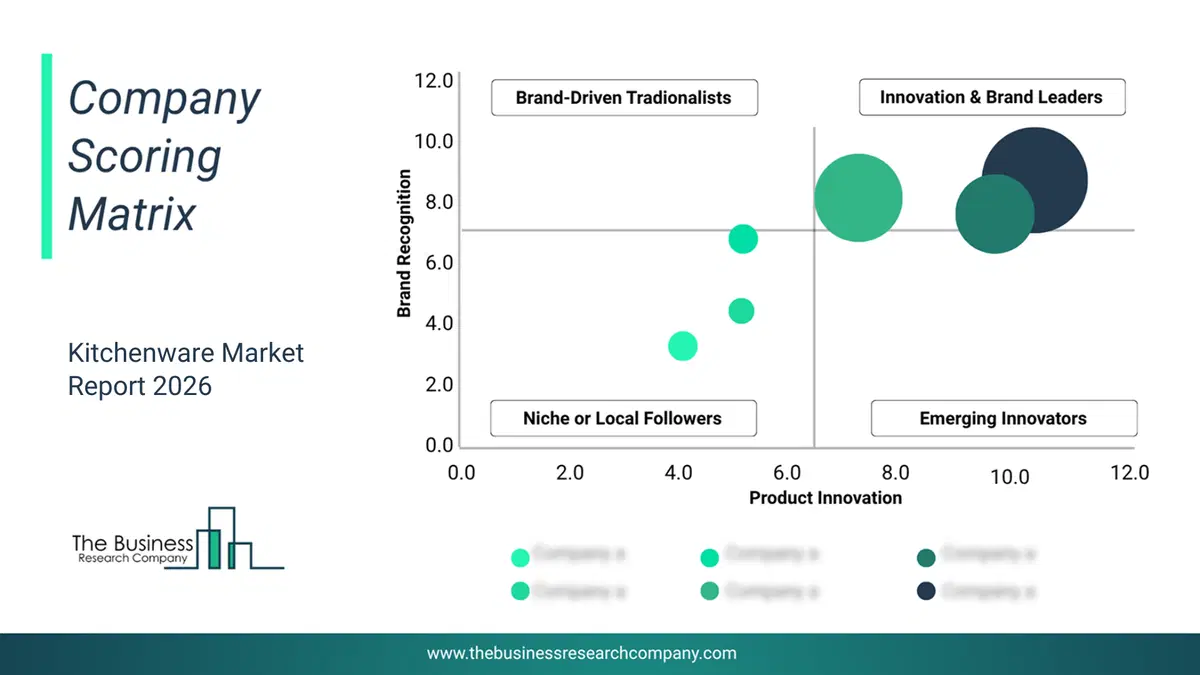
This chart maps companies by product innovation and brand strength, with bubble size indicating relative revenue, helping identify market leaders, challengers, and niche players. This is an illustrative chart; the full report provides a complete and accurate competitive analysis.
Global Kitchenware Market Trends and Insights
Major companies operating in the kitchenware market are adopting smart appliance technologies to enhance user convenience, streamline cooking processes and provide personalized culinary experiences. Smart kitchen appliances are technologically advanced cooking and food preparation devices equipped with features like sensors, connectivity and automation to streamline and enhance kitchen tasks. For instance, in January 2023, VersaWare Technologies Inc., a US-based manufacturer of smart kitchen appliances, launched the next generation of smart kitchen appliances with a nutrition AI approach to the health and wellness space with a user-friendly appliance line composed of two connected smart kitchen appliances, including a mixing bowl and a cutting board. It also launched the VersaWare mobile app, which helps users cook meals that satisfy their preferred nutritional goals. Leveraging OpenAPI, their nutrition system incorporates an extensive product database, enabling users to scan various brands. Using VersaWare, users can scan barcodes for packaged items and input details for fresh ingredients, which are then used for calculations within the digital appliances. The AI component enables the real-time creation of diverse meals based on nutritional profiles, presenting comprehensive meal nutrition information.What Are Latest Mergers And Acquisitions In The Kitchenware Market?
In August 2024, Vinod Cookware Private Limited, an India-based provider of cookware products, acquired Healux International Private Limited for an undisclosed amount. With this acquisition, Vinod Cookware aims to strengthen its existing B2C reach by bringing high-quality, sustainable kitchen solutions to a wider customer base. Healux International Private Limited is an India-based provider of premium, sustainable kitchenware products.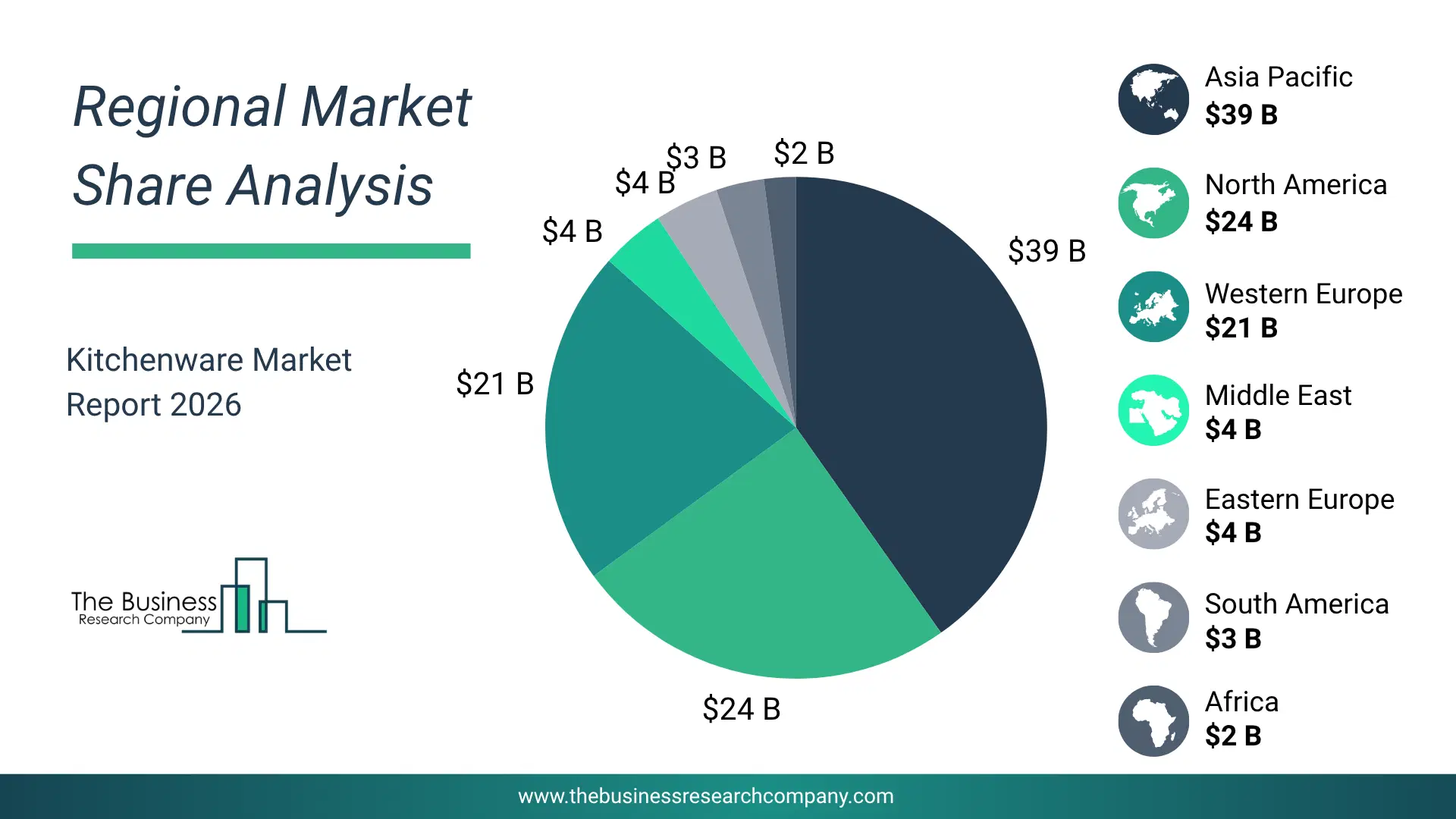
Regional Outlook
North America was the largest region in the kitchenware market in 2025. Asia-Pacific is expected to be the fastest-growing region in the forecast period. The regions covered in this market report are Asia-Pacific, South East Asia, Western Europe, Eastern Europe, North America, South America, Middle East, Africa. The countries covered in this market report are Australia, Brazil, China, France, Germany, India, Indonesia, Japan, Taiwan, Russia, South Korea, UK, USA, Canada, Italy, Spain.What Defines the Kitchenware Market?
The kitchenware market consists of sales of utensils, cutting boards, food storage containers and coffee makers. Values in this market are ‘factory gate’ values, that is the value of goods sold by the manufacturers or creators of the goods, whether to other entities (including downstream manufacturers, wholesalers, distributors and retailers) or directly to end customers.How is Market Value Defined and Measured?
The market value is defined as the revenues that enterprises gain from the sale of goods and/or services within the specified market and geography through sales, grants, or donations in terms of the currency (in USD unless otherwise specified). The revenues for a specified geography are consumption values that are revenues generated by organizations in the specified geography within the market, irrespective of where they are produced. It does not include revenues from resales along the supply chain, either further along the supply chain or as part of other products.
This chart presents market attractiveness based on a quantitative evaluation of growth, competition, strategic alignment, and risk, offering a clear view of opportunity areas for decision-making. This chart is for illustrative purposes; the full report contains the complete analysis.

This chart highlights the Total Addressable Market (TAM) by estimating the maximum revenue opportunity using an assumption-driven approach, supporting strategic planning and opportunity sizing across markets. The chart is illustrative; the full report provides a more comprehensive analysis.
What Key Data and Analysis Are Included in the Kitchenware Market Report 2026?
The kitchenware market research report is one of a series of new reports from The Business Research Company that provides market statistics, including Market Report 2026?global market size, regional shares, competitors with the market share, detailed market segments, market trends and opportunities, and any further data you may need to thrive in the kitchenware Market Report 2026? The market research report delivers a complete perspective of everything you need, with an in-depth analysis of the current and future state of the Market Report 2026?Kitchenware Market Report Forecast Analysis
| Report Attribute | Details |
|---|---|
| Market Size Value In 2026 | $75.02 billion |
| Revenue Forecast In 2030 | $92.44 billion |
| Growth Rate | CAGR of 4.3% from 2026 to 2030 |
| Base Year For Estimation | 2025 |
| Actual Estimates/Historical Data | 2020-2025 |
| Forecast Period | 2026 - 2030 |
| Market Representation | Revenue in USD Billion and CAGR from 2026 to 2030 |
| Segments Covered | Product, Distribution Channel, End-User |
| Regional Scope | Asia-Pacific, Western Europe, Eastern Europe, North America, South America, Middle East, Africa |
| Country Scope | The countries covered in the report are Australia, Brazil, China, France, Germany, India, Indonesia, Japan, Taiwan, Russia, South Korea, UK, USA, Canada, Italy, Spain. |
| Key Companies Profiled | Whirlpool Corporation, Newell Brands Inc., Groupe SEB, Wilton Industries Inc., Conair Corporation, Meyer Corporation, Tupperware Brands Corporation, Rubbermaid Commercial Products, Hamilton Beach Brands Holding Company, Anchor Hocking Company, Fissler GmbH, TTK Prestige Ltd, ITW Food Equipment Group LLC, ZWILLING J.A. Henckels AG, Scavolini S.p.A., Calphalon Corporation, OXO International Ltd., Gibson Overseas Inc., Wüsthof Dreizack, Lodge Manufacturing Company, Viners (Rayware Limited), Tramontina USA Inc., Clipper Corporation, The Cookware Company, Pyrex Cookware, All-Clad Metalcrafters LLC, Anolon, Mauviel USA Inc., Kenwood Limited, Le Creuset |
| Customization Scope | Request for Customization |
| Pricing And Purchase Options | Explore Purchase Options |