
Laboratory Automation Systems Market Report 2026
Global Outlook – By Type (Modular Automation, Total Lab Automation), By Equipment And Software (Automated Liquid Handling, Microplate Readers, Standalone Robots, Automated Storage, Retrieval), By Application (Drug Discovery, Clinical Diagnostics, Genomics Solutions, Proteomics Solutions, Others), By End User (Biotechnology And Pharmaceutical Industries, Research Institutes, Hospitals And Private Labs, Academic Institutes) – Market Size, Trends, Strategies, and Forecast to 2030
Laboratory Automation Systems Market Overview
• Laboratory Automation Systems market size has reached to $5.85 billion in 2025 • Expected to grow to $8.4 billion in 2030 at a compound annual growth rate (CAGR) of 7.4% • Growth Driver: The Growth Of The Pharmaceutical And Biotechnology Sector Driving The Expansion Of The Laboratory Automation Systems Market • Market Trend: Advanced Robotic Technology To Strengthen Laboratory Automation Capabilities • North America was the largest region in 2025 and Asia-Pacific is the fastest growing region.Market Gains By 2030 – Top Opportunities By Segment
Market Gain identifies the most promising market opportunities by highlighting the segments or products expected to generate the highest incremental revenue growth over the next five years.
What Is Covered Under Laboratory Automation Systems Market?
Laboratory automation systems refer to the use of instruments to carry out laboratory tasks with a minimum of human involvement. Clinical laboratories operate more efficiently because of laboratory automation, which helps to standardize tests. The main equipment and software of laboratory automation systems are automated liquid handling, microplate readers, standalone robots, and automated storage and retrieval. The microplate reader is an instrument that is used to measure biological, chemical or physical reactions of analytes within the wells of the microplate. The various types include modular automation, total lab automation that is used in applications such as drug discovery, clinical diagnostics, genomics solutions, proteomics solutions, and other applications. The end users covered in this market are biotechnology and pharmaceutical industries, research institutes, hospitals, private labs, and academic institutes.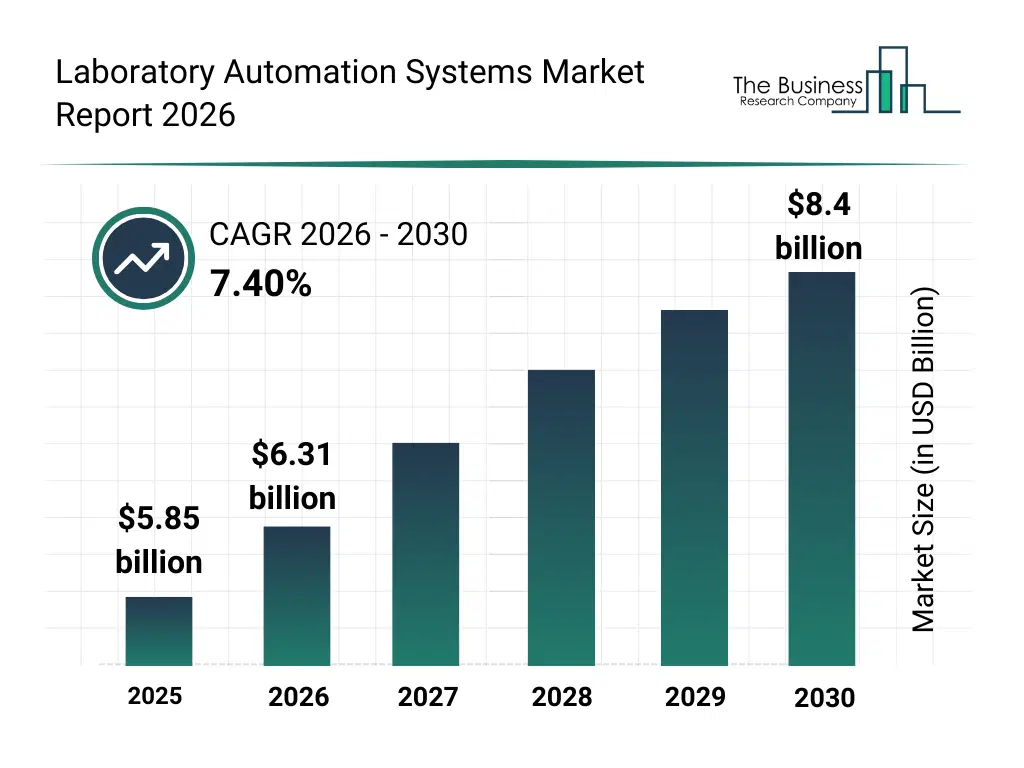
What Is The Laboratory Automation Systems Market Size and Share 2026?
The laboratory automation systems market size has grown strongly in recent years. It will grow from $5.85 billion in 2025 to $6.31 billion in 2026 at a compound annual growth rate (CAGR) of 7.9%. The growth in the historic period can be attributed to increasing test volume in clinical laboratories, rising need for standardized diagnostics, expansion of pharmaceutical research activities, shortage of skilled laboratory personnel, growing complexity of laboratory workflows.What Is The Laboratory Automation Systems Market Growth Forecast?
The laboratory automation systems market size is expected to see strong growth in the next few years. It will grow to $8.4 billion in 2030 at a compound annual growth rate (CAGR) of 7.4%. The growth in the forecast period can be attributed to increasing adoption of AI-driven lab automation, rising investments in smart laboratories, growing demand for high-throughput testing, expansion of genomics and proteomics research, increasing focus on error reduction and efficiency. Major trends in the forecast period include increasing adoption of end-to-end laboratory automation, rising deployment of robotic sample handling systems, growing integration of data management platforms, expansion of modular automation solutions, enhanced focus on workflow standardization.
Global Laboratory Automation Systems Market Segmentation
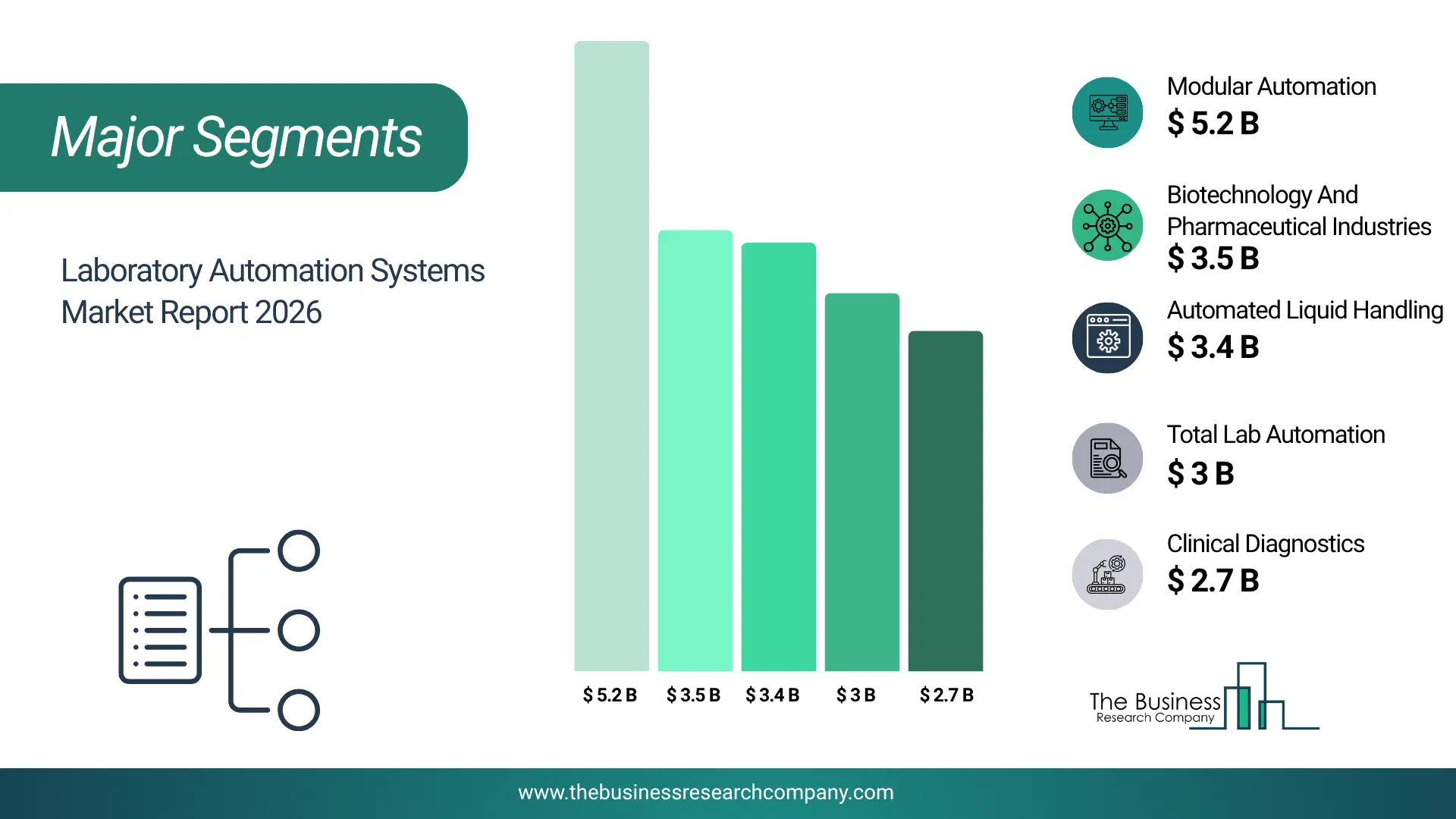
1) By Type: Modular Automation, Total Lab Automation 2) By Equipment And Software: Automated Liquid Handling, Microplate Readers, Standalone Robots, Automated Storage, Retrieval 3) By Application: Drug Discovery, Clinical Diagnostics, Genomics Solutions, Proteomics Solutions, Others 4) By End User: Biotechnology And Pharmaceutical Industries, Research Institutes, Hospitals And Private Labs, Academic Institutes Subsegments: 1) By Modular Automation: Robotic Systems for Sample Handling, Automated Liquid Handling Systems, Modular Sample Storage Systems 2) By Total Lab Automation: Integrated Workflow Systems, Fully Automated Laboratory Analyzers, Comprehensive Data Management Solutions The top segments in the laboratory automation systems market will be: • Modular Automation will reach $5230.76 Million by 2030. • Automated Liquid Handling will reach $3456.14 Million by 2030. • Biotechnology And Pharmaceutical Industries will reach $3588.73 Million by 2030. • Total Lab Automation will reach $3035.82 Million by 2030. • Clinical Diagnostics will reach $2727.8 Million by 2030.What Is The Driver Of The Laboratory Automation Systems Market?
The increasing growth of the pharmaceutical and biotechnology sector is expected to propel the growth of the laboratory automation systems market going forward. The pharmaceutical and biotechnology sector refers to companies engaged in drug discovery, development, biologics manufacturing, and advanced therapeutic research, characterized by high R&D intensity and rapid innovation. The sector’s growth is driven by rising investments in R&D, which necessitate automation systems such as robotic liquid handlers, automated sample preparation, and high-throughput screening to enhance efficiency, reduce errors, and accelerate discovery. For instance, in June 2023, according to the European Federation of Pharmaceutical Industries and Associations (EFPIA), a Belgium-based trade association that represents the pharmaceutical industry in Europe, the total pharmaceutical production in Europe accounted for €390,000 million ($422,803 million) in 2023, up from €363,300 million ($393,857 million) in 2022. Therefore, the growth of the pharmaceutical and biotechnology sectors is driving the expansion of the laboratory automation systems industry.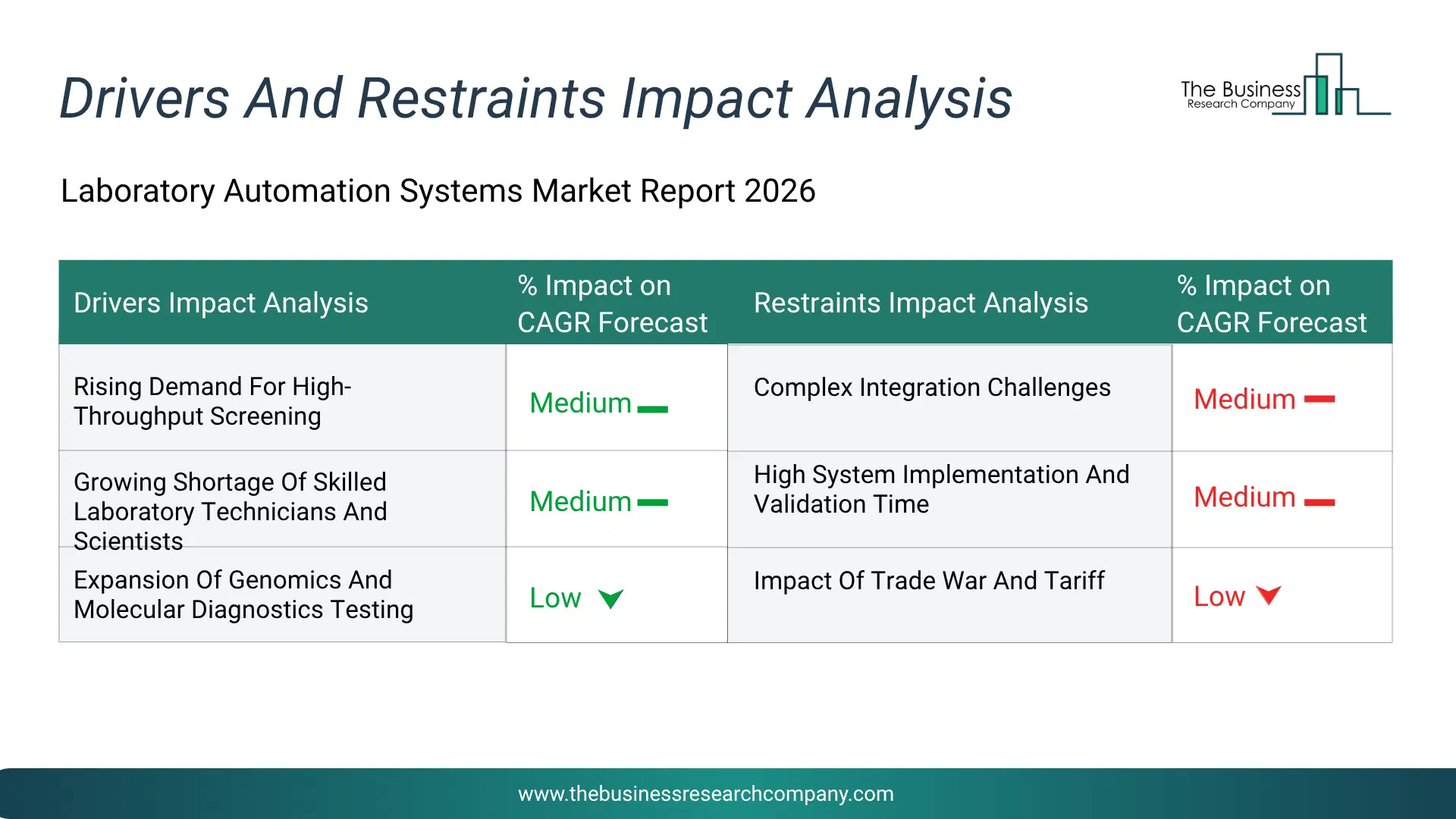
Infographic Chart Showing Key Market Drivers Analysis And Restraints For Laboratory Automation Systems Market
The chart presents an impact analysis of key drivers and restraints, quantifying their relative influence on the market's growth rate and helping assess the balance between growth enablers and limiting factors. This chart offers a high-level perspective; the full report contains more detailed insights.
How Will The Drivers Impact Growth In The Global Laboratory Automation Systems Market?
• Rising Demand For High-Throughput Screening (Medium) – During the forecast period, the rising demand for high-throughput screening is expected to driver the expansion in the laboratory automation systems market. Increasing demand for rapid drug discovery and biological research requires laboratories to analyze thousands of samples simultaneously with high accuracy. High-throughput screening techniques generate large volumes of experimental data that are difficult to manage using manual workflows. Automated liquid handling, robotic sample preparation, and integrated analytical platforms significantly improve speed, precision, and reproducibility. These technologies allow researchers to process large sample batches while minimizing human intervention. As pharmaceutical and biotechnology research activities expand, laboratories increasingly deploy automated platforms to support faster experimentation and data generation. The rising demand for high-throughput screening growth contribution during the forecast period in 2025 is 1.5%. • Growing Shortage Of Skilled Laboratory Technicians And Scientists (Medium) – During the forecast period, the growing shortage of skilled laboratory technicians and scientists is expected to propel the growth in the laboratory automation systems market. Many clinical and research laboratories face a growing shortage of trained technicians and scientists capable of performing complex experimental procedures. Limited skilled personnel often results in slower workflows, increased workload for existing staff, and higher chances of manual errors. Automated instruments and robotic systems help address this challenge by performing repetitive tasks such as sample preparation, pipetting, and data recording with minimal human involvement. This improves operational efficiency while maintaining consistent quality and accuracy. As workforce constraints intensify, laboratories increasingly rely on automation technologies to sustain productivity. The growing shortage of skilled laboratory technicians and scientists growth contribution during the forecast period in 2025 is 1.1%. • Expansion Of Genomics And Molecular Diagnostics Testing (Low) – During the forecast period, the expansion of genomics and molecular diagnostics testing are expected to be a key driver propelling growth in the laboratory automation systems market. Rapid advancements in genomics and molecular diagnostics have significantly increased the volume and complexity of biological testing. Techniques such as DNA sequencing, PCR-based assays, and biomarker analysis require precise handling of samples and reagents. Automated platforms streamline these processes by integrating sample preparation, amplification, and analysis into coordinated workflows. This reduces processing time while improving data reliability and throughput. As genetic testing and precision medicine initiatives expand globally, laboratories increasingly depend on automated systems to manage growing testing demands. The expansion of genomics and molecular diagnostics testing growth contribution during the forecast period in 2025 is 0.8%. • Rising Investment In Healthcare And Life-Science Infrastructure (Low) – During the forecast period, the rising investment in healthcare and life-science infrastructure is expected to driver growth in the laboratory automation systems market. Governments and private organizations are significantly increasing funding for healthcare facilities, biotechnology research centers, and advanced diagnostic laboratories. Such investments enable the establishment of modern laboratories equipped with robotics, automated analyzers, and digital workflow management technologies. Enhanced infrastructure supports faster diagnostic services, large-scale clinical studies, and advanced biomedical research. Automation solutions help optimize resource utilization and improve laboratory productivity in these newly developed facilities. As healthcare and life-science infrastructure continues to expand, adoption of advanced automated laboratory technologies rises accordingly. The rising investment in healthcare and life-science infrastructure growth contribution during the forecast period in 2025 is 0.5%.How Will The Restraints Impact Growth In The Global Laboratory Automation Systems Market?
• Complex Integration Challenges (Medium) – During the forecast period, complex integration challenges are restricting the growth of the laboratory automation systems market. Implementing advanced automation platforms in laboratories often requires integration with existing instruments, data management platforms, and laboratory information systems such as laboratory information management system and electronic lab notebook. Differences in software architecture, communication protocols, and data formats can create compatibility issues during deployment. Laboratories must customize interfaces, configure workflows, and ensure smooth data exchange between multiple devices. These technical complexities increase installation effort and require specialized expertise. As a result, organizations may delay or limit adoption due to the operational challenges associated with integrating multiple technologies. Growth affected by the complex integration challenges during the forecast period in 2025 is -1.8%. • High System Implementation And Validation Time (Medium) – During the forecast period, high system implementation and validation time the growth of the laboratory automation systems market. Deploying advanced robotic and analytical platforms in laboratories requires extensive setup, calibration, and regulatory validation before they become fully operational. Facilities must conduct performance testing, workflow optimization, and compliance verification to meet quality standards used in pharmaceutical and diagnostic laboratories. Systems handling clinical samples or diagnostic testing often need validation under regulatory frameworks such as U.S. Food and Drug Administration guidelines or International Organization for Standardization laboratory standards. This lengthy process increases implementation timelines and delays operational benefits. Consequently, many laboratories adopt automation gradually due to the time required for system validation and compliance approvals. Growth affected by the high system implementation and validation time during the forecast period in 2025 is -1.0%. • Impact Of Trade War And Tariff (Low) – During the forecast period, the impact of trade wars and tariffs is restricting the growth of the laboratory automation systems market. Global trade tensions and tariff policies can increase the cost of importing advanced laboratory instruments, robotics, and electronic components. Many automation platforms rely on internationally sourced hardware such as sensors, microchips, and precision mechanical parts. Trade disputes between major economies, including policies influenced by governments such as World Trade Organization trade frameworks and tariffs imposed during events like the China–United States Trade War, can disrupt supply chains. Higher import duties raise procurement costs and create uncertainty for manufacturers and research institutions. These factors can slow investment decisions related to advanced laboratory technologies. Growth affected by the impact of trade wars and tariffs during the forecast period in 2025 is -0.3%.Key Players In The Global Laboratory Automation Systems Market
Major companies operating in the laboratory automation systems market are Abbott Laboratories, Danaher Corporation, Thermo Fisher Scientific, Agilent Technologies Inc., Tecan Group Ltd., PerkinElmer Inc., QIAGEN N.V., Becton Dickinson and Company, Siemens AG, Brooks Automation Inc., Hamilton Company, Eppendorf AG, Biotek Instruments Inc., Bee Robotics Ltd, Gilson Inc., Biomerieux, Sysmex Corporation, Formulatrix, Beckman Coulter, Roche Diagnostics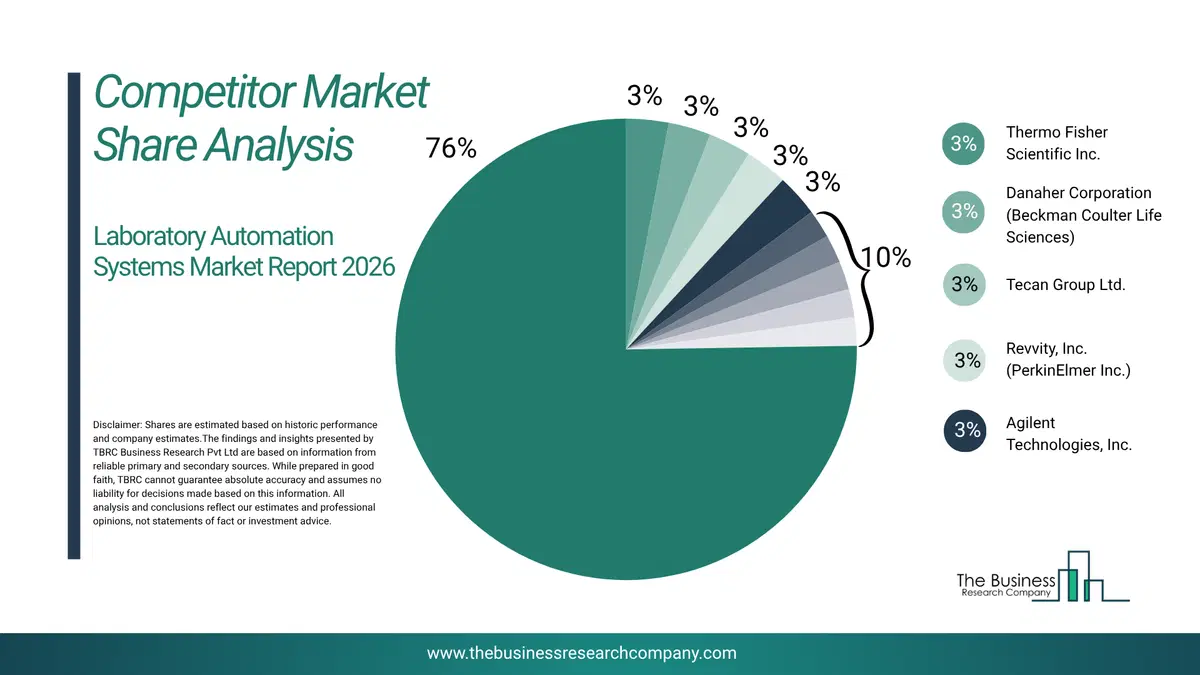
This chart is for illustrative purposes; the full report includes a detailed competitor analysis and comprehensive overview of the top 10 companies in the market.
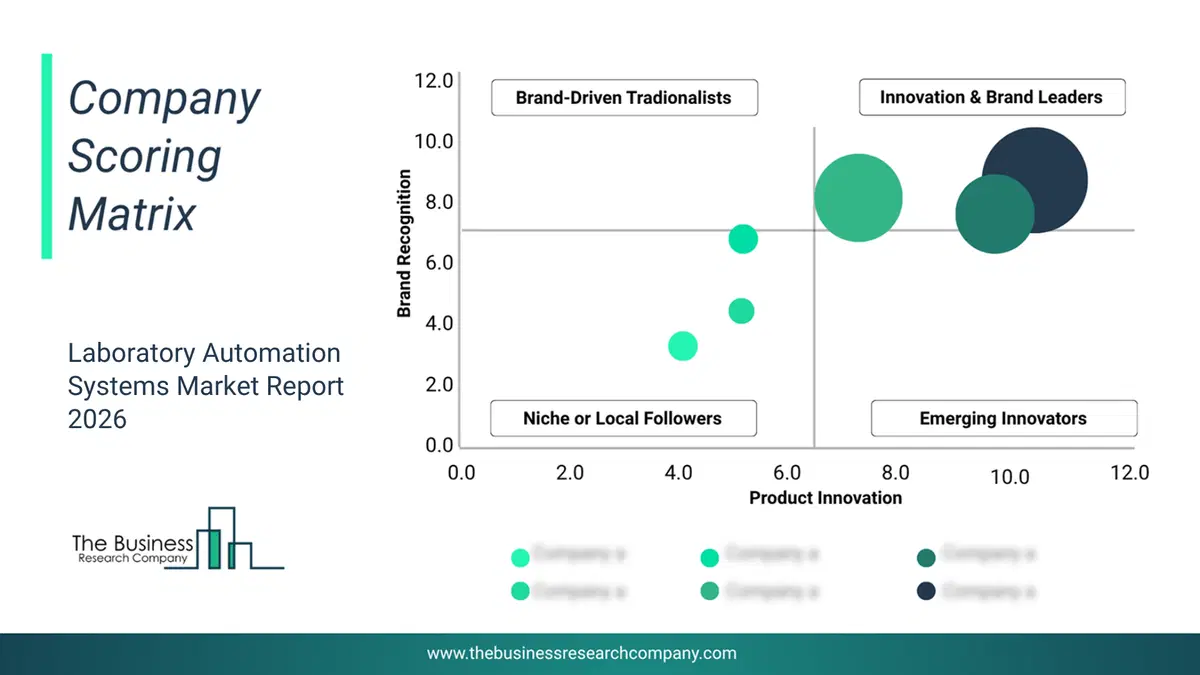
This chart maps companies by product innovation and brand strength, with bubble size indicating relative revenue, helping identify market leaders, challengers, and niche players. This is an illustrative chart; the full report provides a complete and accurate competitive analysis.
Global Laboratory Automation Systems Market Trends and Insights
Major companies in the laboratory automation market are introducing innovative technologies such as Flex Robot to gain a competitive edge in the market. The Flex robot is engineered to provide a technologically advanced yet cost-effective automation platform tailored for life scientists. For instance, in May 2023, Opentrons, a US-based lab automation company, launched its latest innovation, the Flex robot, with the goal of expanding the availability of advanced lab automation solutions to life scientists. The robot is programmed to perform a wide range of experiments, including those formulated by large language models (LLMs) like ChatGPT.What Are Latest Mergers And Acquisitions In The Laboratory Automation Systems Market?
In December 2023, Hudson Robotics, Inc., a US-based technology company that focuses on automation solutions for laboratory environments, acquired Tomtec Inc. for an undisclosed amount. With this acquisition, Hudson Robotics, Inc. aims to enhance its product offerings, expand its market reach, and strengthen its position as a leader in laboratory automation solutions. Tomtec Inc. is a US-based technology company that manufactures automated liquid handling systems and laboratory automation solutions.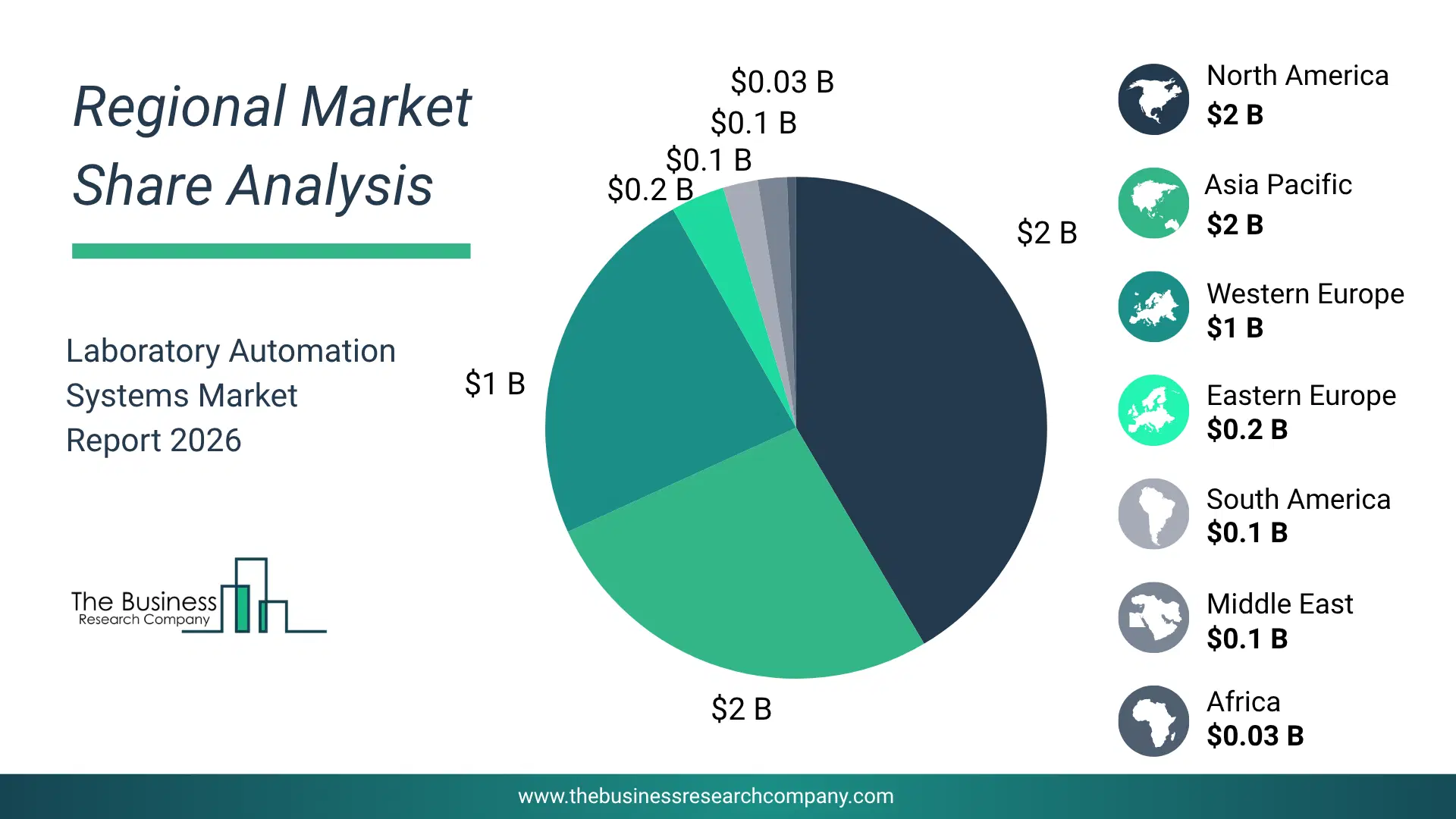
Regional Outlook
North America was the largest region in the laboratory automation systems market in 2025. Asia-Pacific is expected to be the fastest-growing region in the forecast period. The regions covered in this market report are Asia-Pacific, South East Asia, Western Europe, Eastern Europe, North America, South America, Middle East, Africa. The countries covered in this market report are Australia, Brazil, China, France, Germany, India, Indonesia, Japan, Taiwan, Russia, South Korea, UK, USA, Canada, Italy, SpainWhat Defines the Laboratory Automation Systems Market?
The laboratory automation systems market consists of sales of clinical laboratory machines, equipment, and instruments. Values in this market are factory gate values, that is the value of goods sold by the manufacturers or creators of the goods, whether to other entities (including downstream manufacturers, wholesalers, distributors and retailers) or directly to end customers. The value of goods in this market includes related services sold by the creators of the goods.How is Market Value Defined and Measured?
The market value is defined as the revenues that enterprises gain from the sale of goods and/or services within the specified market and geography through sales, grants, or donations in terms of the currency (in USD unless otherwise specified). The revenues for a specified geography are consumption values that are revenues generated by organizations in the specified geography within the market, irrespective of where they are produced. It does not include revenues from resales along the supply chain, either further along the supply chain or as part of other products.
This chart presents market attractiveness based on a quantitative evaluation of growth, competition, strategic alignment, and risk, offering a clear view of opportunity areas for decision-making. This chart is for illustrative purposes; the full report contains the complete analysis.

This chart highlights the Total Addressable Market (TAM) by estimating the maximum revenue opportunity using an assumption-driven approach, supporting strategic planning and opportunity sizing across markets. The chart is illustrative; the full report provides a more comprehensive analysis.
What Key Data and Analysis Are Included in the Laboratory Automation Systems Market Report 2026?
The laboratory automation systems market research report is one of a series of new reports from The Business Research Company that provides market statistics, including industry global market size, regional shares, competitors with the market share, detailed market segments, market trends and opportunities, and any further data you may need to thrive in the laboratory automation systems industry. The market research report delivers a complete perspective of everything you need, with an in-depth analysis of the current and future state of the industry.Laboratory Automation Systems Market Report Forecast Analysis
| Report Attribute | Details |
|---|---|
| Market Size Value In 2026 | $6.31 billion |
| Revenue Forecast In 2030 | $8.4 billion |
| Growth Rate | CAGR of 7.9% from 2026 to 2030 |
| Base Year For Estimation | 2025 |
| Actual Estimates/Historical Data | 2020-2025 |
| Forecast Period | 2026 - 2030 - 2035 |
| Market Representation | Revenue in USD Billion and CAGR from 2026 to 2030 |
| Segments Covered | Type, Equipment And Software, Application, End User |
| Regional Scope | Asia-Pacific, Western Europe, Eastern Europe, North America, South America, Middle East, Africa |
| Country Scope | The countries covered in the report are Australia, Brazil, China, France, Germany, India, Indonesia, Japan, Taiwan, Russia, South Korea, UK, USA, Canada, Italy, Spain. |
| Key Companies Profiled | Abbott Laboratories, Danaher Corporation, Thermo Fisher Scientific, Agilent Technologies Inc., Tecan Group Ltd., PerkinElmer Inc., QIAGEN N.V., Becton Dickinson and Company, Siemens AG, Brooks Automation Inc., Hamilton Company, Eppendorf AG, Biotek Instruments Inc., Bee Robotics Ltd, Gilson Inc., Biomerieux, Sysmex Corporation, Formulatrix, Beckman Coulter, Roche Diagnostics |
| Customization Scope | Request for Customization |
| Pricing And Purchase Options | Explore Purchase Options |